250 résultats
2002Q-0634037935Hal Leonard 2002-09-12. Hardcover. New. New. In shrink wrap. Looks like an interesting title! Hal Leonard hardcover
1959041086New York: GAC-Super Productions 1959. First Edition. Softcover. Very Good. 24pp; illustrated throughout from photographs some full-page. Bound in pictorial wrappers 12.75" x 9.75" This concert tour program features Ahmad Jamal and Dakota Staton as well as Benny Goodman and his Orchestra. Unrecorded by WorldCat. GAC-Super Productions unknown
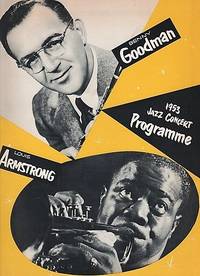
1953041135New York: Columbia Records 1953. First Edition. Softcover. Fine. 24pp; illustrations from photographs throughout some full-page. Text includes "The Benny Goodman Story" by Hal Webman "The Louis Armstrong Story" "The Fletcher Henderson Fund" by John Hammond and brief biographies and photographs of all of the musicians. Bound in pictorial stiff wrappers 12" x 9" The Benny Goodman portion of the concert includes Teddy Wilson Gene Krupa Charles Shavers Ziggy Elman Georgie Auld Willie Smith and Helen Ward. The Armstrong All Stars featured Louis on trumpet Joe Bushkin-piano Cozy Cole-drums Arvell Shaw-bass Barney Bigard-clarinet Trummy Young and Vernon Brown-trombone Velma Middleton-vocalist. WorldCat locates three holdings of this fine program: Newberry Lib U Missouri McGill. Columbia Records unknown
1993571110111008Denon 1993-01-25. Audio CD. Like New. CD looks new. No scratches. Original artwork on CD and literature in case. Denon unknown
19860354191986. Original edition. Framed. Very Good. Broadside printed in black and white. Large photo of Hampton in tux posed over his vibraphone. Laid into a black plastic frame glazed. Image 22" x 17". Frame 25" x 18.5" Inscribed in blue ink upper left: "Good-Luck / To Andy Scotty / Lionel / Hampton. unknown
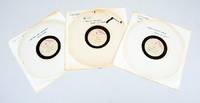
1960149122Chicago: Hugh Hefner c.1960s. Lay back and think of Ellington A trio of discs cut specially for Playboy founder Hugh Hefner comprising two recordings by Duke Ellington "Mood Indigo" and "Sophisticated Lady" and one by Artie Shaw "Begin the Beguine". Each label printed in pink: "Custom Pressed by Jukeboxes Unlimited for Hugh M. Hefner" and bearing Playboy's rabbit logo and typed identification. "Hugh Hefner's initial exposure to music and especially to jazz like that of most people was through vinyl recordings and he's always been a record collector" Farmer p. 71. He was also the owner of a magnificent 1946 Wurlitzer 1015 jukebox see his sale at Julien's Auctions 30 November 2018. That lot was offered with 24 "original" 78rpm recordings by a group of artists including Artie Shaw Frank Sinatra Lena Horne and Harry James. Whether these discs were specially cut as here we have not been able to ascertain. What is certain however is the Playboy kingpin's love of jazz. "In this invented lifestyle for the modern age Hef decided that jazz was the go-to soundtrack. Jazz was the hippest music around and had been for decades. Playboy championed jazz at a time when most music critics were looking in all the wrong places for a truly American art form. Even the most forward-thinking composers of the era the Aaron Coplands and their ilk were still just building upon the European tradition. Jazz was bursting at the seams of the staid and academic classical world ripe with musical development rivalling the greatest of the old European masters. In 1957 Playboy produced a two-record set of their Jazz All-Star series featuring performers from Pops to Frank Sinatra to Dave Brubeck. They produced a second edition in 1958 and a third in 1959. Hefner then held the first Playboy Jazz Festival at Chicago Stadium in 1959" Jeff Fitzgerald at allaboutjazz website 28 September 2017. As a coda the jazz-soaked "Playboy's Theme" written and performed by Cy Coleman was the signature tune of the regular late night TV show Playboy's Penthouse. 3 aluminium-cored one-sided 10 inch acetate discs each with original label both Ellington discs with additional drive-pin hole; original plain paper sleeves annotated in ink possibly in Hefner's hand. Sleeves rather brittle torn and chipped with some loss but just about intact; a few abrasions and finger marks to discs. Patty Farmer and Will Friedwald Playboy Swings!: How Hugh Hefner and Playboy Changed the Face of Music 2015. unknown
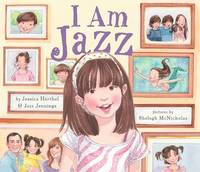
SKU0626968Dial Books 2014-09-04. hardcover. New. 10x0x9. New Textbook Ships with Tracking Dial Books hardcover
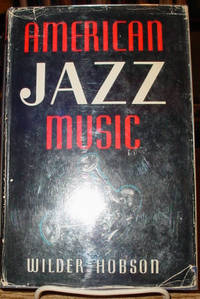
193934468NY: W. W. Norton. Very Good in Good dust jacket; Jacket rubbed and worn at corners and head . and tail of spine. 1939. First Edition. Hardcover. Blue cloth binding. Index. Five photos. "American Jazz Music is the first book by an American to deal with the subject as a whole in its technical as well as its historical aspects." from front jacket flap. ; 8vo 8" - 9" tall; 230 pages . W. W. Norton hardcover
49747502like new. unknown
1038312779.Ghardcover. Good. Access codes and supplements are not guaranteed with used items. May be an ex-library book. hardcover
2025x-1038312779FriesenPress 2025. Hardcover. New. 330 pages. 6.00x0.88x9.00 inches. FriesenPress hardcover
DADAX0967037700Brand: Jazz at Lincoln Center Inc 0000-00-00. First Edition. paperback. New. 8.25x0.75x12.00. Buy with confidence. Excellent Customer Service & Return policy. Brand: Jazz at Lincoln Center Inc paperback
0878559655.Gpaperback. Good. Access codes and supplements are not guaranteed with used items. May be an ex-library book. paperback
1562242148.Gpaperback. Good. Access codes and supplements are not guaranteed with used items. May be an ex-library book. paperback
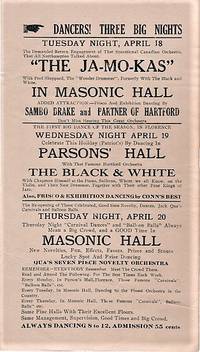
1900040492Northampton MA: s.n. 1900. Original document. Fine. Printed in display type on tan stock 11" x 6.25". In part: "April 18.That Sensational Canadian Orchestra 'The Ja-mo-kas' with Fred Sheppard the 'Wonder Drummer' formerly with the Black and White .Frisco and Exhibition Dancing by Sambo Drake and Partner of Hartford . April 19. Celebrate This Holiday Patriot's by Dancing in Parsons' Hall.the Black & White with Chapman Himself at the Piano Sullivan whom we all Know on the Violin and their New Drummer. Together with their other Four Kings of Jazz . April 20.'Carnival Dances' and 'Balloon Balls' always mean a big Crowd . Qua's Seven Piece Novelty Orchestra . Always Dancing 8 to 12 Admission 55 cents." Unrecorded by WorldCat. s.n. unknown
19682080202103701141Not Available 1968. Soft Cover. Fine. Size: B5 books: 7 books Not Available paperback
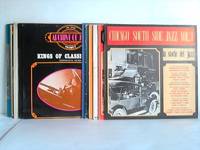
2J7278Verschiedene Verlage und Orte 1971-1979. Ohne Laufzeitangaben in Original-Hüllen quart teils etwas fleckig und berieben. - Enthalten: La storia del Jazz. Clarence Williams Orchestra / La storia del Jazz. Great Jazz Trumpets 1924-1937. Bix Beiderbecke Bunny Berigan Jimmy Mc Partland / Chicago South Side Jazz Vol. 1 und 2. La storia del Jazz / History if Jazz. Jazz Panorama of the 20's / Muggsy Spanier featuring Miff Mole Lou McGarity Pee Wee Russell u.a. / Jelly Roll Morton Volume 2 / Down by the riverside. The Original All-Star Dixiecompany / Archive of Jazz Volume 17: Kings of classics Jazz. Georges Lewis Kid Ory / Archive of Jazz Volume 19: New Orleans rhythm kings. Clarinet Marmalade London Blues Marguerite / Essie Condon's World of Jazz. Doppelalbum - unknown
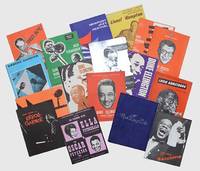
1950137205Late 1950s - early 70s. Excellent group of UK tour programmes for a constellation of jazz greats: Armstrong 2 Basie 8 Bechet Brubeck 2 Nat King Cole Eddie Condon Sammy Davis Jr. 2 Tommy Dorsey Ellington 4 Errol Garner 3 Lionel Hampton Ella Fitzgerald and Oscar Peterson Woody Herman Harry James JATP 4 Newport Jazz Festival Glen Miller Earl Hines and Jack Teagarden Bal du Moulin Rouge. 36 programmes quarto. Illustrated throughout. Original pictorial wrappers wire-stitched as issued. Overall in excellent condition. unknown
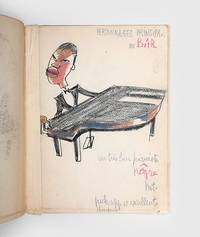
1937171091Paris: c.1937. Jazz à la parisienne From the collection of Rolling Stones drummer and jazz aficionado Charlie Watts with his posthumous bookplate: a delightful and highly unusual illustrated "prospectus" of the requisites for running a successful bar in Paris in the late 1930s. First and foremost you'll need "un très bon pianiste nêgre" along with "2 barmaids" and of course "2 ou 3 nêgresses à laisser vagabonder dans le bar". There then follow three pages that offer pen portraits of various artists that you might like to include on the bill along with their contact details. These include "acteurs animant la soirée ou la nuit": character actor and singer Yves Deniaud 1901-1959 Neapolitan sinti jazz guitarist Henri Crolla 1920-1960 "a travaillé avec Djingo Rainart sic du Hot-club de France" "Trois Jeunes - chanteurs s'accompagnant à la guitare et à la flute" including another well-known actor Guy Decomble 1910-1964 and the photographer Pierre Jamet 1910-2000 a close friend of Robert Doisneau and Willy Ronis. The flamboyant impresario Henri Leduc winds up the volume described as a "personnage comique indispensable à l'atmosphere d'un bar". After the Liberation Leduc a native of Montmartre set up Le Bar Vert on the rue Jacob "the first café-restaurant to play American music" Cowan & Steward p. 234. Our unidentified artist concludes by remarking "We can find for you absolutely everything that you could possibly need elephants - naked ladies - non naked ladies - a 'bus - &c. &c. - whales". Quarto. Five pages of original artwork in pencil crayon and pastel with accompanying text. Commercial sketchbook by L. Bourdillon original blue card wrappers. Variably sunning to wrappers which show lght signs of handling contents toned pale tidemark to edges of leaves front blank professionally restored at the corners but overall very good. Alexander Cowan & Jill Steward eds. The City and the Senses: Urban Culture Since 1500 2007. unknown
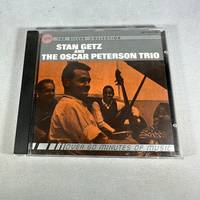
CD1483Stan Getz And The Oscar Peterson Trio Getz Stan / Peterson Oscar Jazz International Music Getz Stan / Peterson Oscar.Condition: Pre-Owned Like NewPreowned in good condition.CD1483 unknown
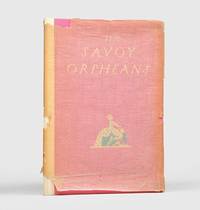
1924139822London: Published Privately at the Savoy 1924. First and only edition one of 1000 copies issued as a "first birthday" celebratory publication; scarce particularly so in the fragile glassine jacket. Loosely inserted in this copy is a slip printing soprano Luisa Tetrazzini's birthday wishes in green. The Savoy Orpheans were formed by former army bandmaster Debroy Somers in 1923 and were resident at the Savoy Hotel until contractual wrangles between W. F. De Mornys entertainments manager at the Savoy and the hotel company led to the orchestra disbanding on New Year's Eve 1927. During their four year tenure the Orpheans were among the cream of British dance bands and "patterned their instrumentation arrangements and classy presentations upon Whiteman's model" Baade p. 25. This attractive publication was printed at the Baynard Press which "employed highly skilled craftsmen. and printed many of London Transport's pictorial posters. the Baynard Press was amongst the largest and most technically accomplished printing firms in Britain" Science Museum. Library Hub locates only the British Library copy among British and Irish institutional libraries; WorldCat adding another copy at Rutgers University New Jersey. Square octavo pp. 16. With 3 tipped-in photogravures 2 showing the Orpheans the other the Savoy-Havana band all in situ in the Savoy Ballroom title page printed in green and pink decorative head- and tailpieces and occasional decorative sprays of notes in pink. Original white quarter cloth pink pictorial boards endpapers with musical notation in pink. With the glassine jacket Negligible rubbing to board edges faintest offsetting to endpapers; else a fine copy in the toned jacket with creasing and a couple of closed tears and chips to edges. Christina L. Baade Victory through Harmony: The BBC and Popular Music in World War II 2012. hardcover
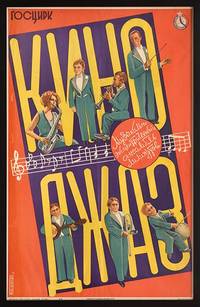
1937124905Moscow: Upravlenie tsirkov V.K.I. Circus Administration 1937. Uncommon print run of just 8000 copies. An advertisement for the Soviet Little peoples' circus group the "Musical and Eccentric Group of Lilliputians" founded in late 1920s under direction of Mikhail Kachuriner 1896-1976 and continued until shortly after his death. The main accent was always on musical talent the performers having musical instruments specially made for them although the group did include performers of "normal" height. "Lilliputian Jazz"was probably the most popular of similar circus groups of the time their first programme "Cinema Jazz" was a parody of some the great stars of the silver screen; Mary Pickford Charlie Chaplin Douglas Fairbanks and the like. A striking example of the work of Mikhail Dlugach 1893-1988 prolific graphic designer and poster artist whose early career centred on the film industry joining Reklam Film the dvertising department of the Soviet film agency. A member of AKhRR The Association of the Artists of the Revolution and ORRP The Association of Revolutionary Poster Artists in the 30s he continued to work in film but diversified into agitprop and exhibition design. In 1940 he helped to design the exhibition pavilion at the All-Union Agricultural Exhibition in Moscow. During the Second World War Dlugach he was was evacuated to Ufa and worked for Okna TASS creating war propaganda. After the war he continued working as a poster designer in politics and the arts including circus promotions. In 1958 he was one of the team involved in the design and building of the Soviet pavilion at the International Exhibition in Brussels. An attractive and unusual piece much enhanced by the presence of the pictorial programme. Lithographically printed colour poster 905 x 580 mm; together with Kino-dzhaz. Odessa: 1935. 4-page "broadsheet" promotional brochure graphics and images printed in sepia letterpress in black. A few minor chips and splits professionally repaired light creases from old folds consequent whitening of the print surface but remains very good. Presented in a black wooden frame with conservation acrylic glazing; the brochure lightly browned creases from folds some edge-slits but overall very good. unknown
1950190253London: 1950s. Vivid images of jazz greats by one of the "obscure guys" of British jazz photography - from the collection of Charlie Watts From the collection of Rolling Stones drummer and jazz aficionado Charlie Watts: a delightful and absorbing archive of largely unpublished photographs by Jamie Hodgson an unsung hero of British jazz photography capturing both the exuberance and inwardness of the music. Among the jazz greats pictured are Dizzy Gillespie Ella Fitzgerald Duke Ellington Billy Strayhorn and Louis Armstrong. Perhaps the stand out photographs here are two superb studio images of Strayhorn one a memorable image showing him observing a goldfish in its bowl used on the cover of David Hajdu's 1996 biography Lush Life but unattributed another a delightful and unforgettable portrait of "Strays" lying on the studio floor cigarette in hand legs crossed wine glass within reach working on a score marked in 12/8 time with a quill pen and ink stand. A sequence of eight images focus on Louis Armstrong and date from 1956 through to 1970: one a particularly exuberant portrait of Pops sharing the limelight with Trummy Young Barrett Deems at the kit. These were nearly all taken in concert the exception being one marked "solo visit. Rehearsing with Norman del Mar conductor of the Royal Philharmonic Orchestra at the Royal Festival Hall for a concert in aid of the Hungarian Releif sic Fund. December 10th 1956". There are two fine shots of Dizzy Gillespie both in tux in his dressing room looking thoughtful and another of his up-tilted horn in its case the tag from his recent visit to France still attached to the handle. There is a witty bleached-out studio shot of Jimmy Rushing leaning into the horn of a gramophone and further images of the great singer one a boisterous backstage portrait of Rushing with Harry Carney and Jimmy Hamilton sitting in Rushing's capacious lap! smiling and laughing gathered on the stairs leading up to the gents' toilets and holding a gamut of reed instruments; plus a terrific image of "Mr. Five by Five" raising a pint behind the bar of a pub recalling Basie's reminiscence that "Me and old Rush. We were some pair. We just wanted to have a good time" Basie p. 37. Other portraits include a petulant Ella Fitzgerald Duke Ellington and individual images of Ellington alumni Paul Gonsalves Johnny Hodges Ray Nance Harry Carney Barrett Deems and Sam Woodyard; a chuckling Oscar Peterson; Lionel Hampton with Humphrey Lyttelton; Bud Freeman; a humorous shot of Eddie Condon sitting at a bar and scowling playfully; a tight close-up of a beaming Lionel Hampton; drummer Gus Johnson accompanying bassist Bob Haggart; and Ray Charles performing at the Capital Radio Jazz Festival in 1982. A full listing is available on request. For Hodgson 1930-2006 jazz was a private passion and these remarkable photographs did not see the light of day until a 2006 exhibition Masters of Jazz: Unseen Portraits held in the foyer of the National Theatre. In 2007 Jazz Improv magazine described him as one of the "obscure guys" of British jazz photography. His Guardian obituary noted that he "became known for his hobby rather than his profession. The man who owned the Kinnerton Street studio in London's Knightsbridge for many years earned his living in fashion and family photography. But it was the recent exhibition of 50 of his pictures in the National Theatre foyer that attracted more attention than anything previously shown by the largely anonymous Hodgson. Few knew of his work within the music world and fewer still knew of these unguarded often intimate images which were Hodgson's personal homage to the stars he observed and worshipped. All were taken during British tours many in the privacy of dressing rooms across London or in Hodgson's studio The Guardian jazz critic John Fordham regards these images as 'wonderful pictures'. 'They catch the mood on the night of jazz on and offstage' he said 'and they are very expressive of the big personalities of a lot of those old guys who started touring here in the 1950s and 60s after there had been a dearth of live US jazz in Britain'. Hodgson was a Londoner who took up photography after completing his national service in 1950. Starting out as a freelance he began by taking whatever commissions came his way - news and features aerial and architectural photography or commercial and children's pictures. A stint with the Mayflower Studios brought him into contact with advertising and various television personalities including Frankie Howerd Harry Secombe the Crazy Gang and the Ted Heath Band. In 1956 he set up his own studio where he did fashion shoots with Tania Mallet Jean Shrimpton and Sandra Paul He caught the change in mood from the snooty static haute couture fashion shoots of the 1950s to the more playful popular looks of swinging London in the 1960s. And at night he sneaked out to shoot his favourite jazz and blues bands playing across the capital". An important and captivating collection of jazz images imbued with the photographer's deep affection for the musicians the spontaneity of the portraits matching that of the music itself. Together 95 black and white photographs 46 measuring 223 x 170 mm; 49 measuring 402 x 305 mm each with identifying caption on verso by the photographer some with studio wet stamps or labels a number signed by Hodgson. Preserved in the photographer's own commercial boxes. Three prints Duke Ellington Billy Sytrayhorn Louis Armstrong framed and glazed by auction house overall measuring 445 x 620 mm. In excellent condition. Count Basie Good Morning Blues: The Autobiography of Count Basie 1987. unknown
2006BN73405Klartext 2006. 2006. Sounds like Whoopataal Wuppertal in der Welt des Jazz Wuppertal in der Welt des Jazz <br/><br/> Klartext unknown
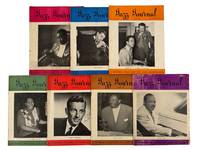
1948223231948. 1 Traill Sinclair ed. Jazz Journal issues 1948 document postwar British jazz culture as readers collectors critics and musicians rebuilt access to American jazz after wartime disruption and expanding record scarcity. Founded by Sinclair Traill in 1948 Jazz Journal became a major English-language jazz periodical; its inaugural year placed African American performers blues aesthetics revivalist debate discography and record reviews at the center of British jazz criticism. These issues support research into jazz reception in the United Kingdom transatlantic music journalism record collecting racialized cultural admiration and the postwar circulation of African American musical authority through British print culture. <br /> <br /> Jazz Journal. Volume 1 Nos. 1-3 5-6 8-9. London: J.J. Publications May-November 1948. Seven issues each approximately 12 pages in pictorial wrappers. The run includes the May June July September October and November 1948 issues with one additional issue represented by number rather than month in the supplied description and contains record reviews discographies artist profiles editorials criticism and jazz news. The premier issue opens with Traill's editorial appeal to jazz readers recalling that "Even in those far-off days between the two wars when paper was to be had for the asking and printers' costs didn't resemble a millionaire's hotel bill it was always a dubious endeavour" and closing with the hope that readers would see "a new issue of JAZZ JOURNAL on the first of each month for many years to come." Contents cited in the supplied description include "Make Way for Dixieland or Return to Sanity" a Thomas Waller discography a September 1948 appreciation of Hoagy Carmichael with signed portrait cover and Hugues Panassié's November essay "Count Basie and the Blues" which argues that "Count Basie knows how to play the blues as well as it seems possible to do so on the piano." Cover portraits include Louis Armstrong Nellie Lutcher Count Basie and Humphrey Lyttelton placing African American jazz innovators alongside British revivalist musicians within a magazine aimed at a postwar readership hungry for recordings biographical knowledge and critical guidance.<br /> <br /> Traill Sinclair ed. Jazz Journal. Vol. 1 No. 1. London: J.J. Publications 1948. The opening issue establishes the magazine's postwar purpose through Traill's editorial address to jazz enthusiasts and its promise of sustained monthly criticism. Its contents including revivalist commentary and discographical attention to Thomas "Fats" Waller show the early publication's effort to organize jazz knowledge for British readers dependent on print mediation and record collecting. 2 Traill Sinclair ed. Jazz Journal. Vol. 1 No. 2. London: J.J. Publications 1948. This issue continues the magazine's early program of criticism record commentary and performer-centered coverage for a readership attentive to American jazz and its British reception. It belongs to the first sequence of issues issued after the May 1948 relaunch from Traill's earlier Pick Up whose final issue preceded the first Jazz Journal in May 1948. 3 Traill Sinclair ed. Jazz Journal. Vol. 1 No. 3. London: J.J. Publications 1948. The third issue forms part of the magazine's initial attempt to stabilize a postwar jazz readership through recurring reviews essays and documentation of recordings and artists. Its position in the first volume is useful for tracing how British jazz criticism developed a regular periodical form in 1948. 4 Traill Sinclair ed. Jazz Journal. Vol. 1 No. 5. London: J.J. Publications 1948. This issue continues the first-year sequence with the supplied description emphasizing the magazine's mix of artist portraits discographical writing and critical essays. The issue contributes to the archive's broader value as evidence of how British jazz readers encountered American performers through images reviews and commentary. 5 Traill Sinclair ed. Jazz Journal. Vol. 1 No. 6. London: J.J. Publications 1948. The September 1948 issue features an appreciation of Hoagy Carmichael with a signed portrait cover connecting jazz readership to popular song composition and the American music industry. Its treatment of Carmichael alongside coverage of African American jazz performers demonstrates the publication's wide understanding of jazz-adjacent culture in the late 1940s. 6 Traill Sinclair ed. Jazz Journal. Vol. 1 No. 8. London: J.J. Publications 1948. This issue belongs to the later portion of the inaugural-year run and continues the magazine's regular pattern of record culture criticism and performer documentation. In the context of the seven-issue group it helps show the durability of Traill's monthly editorial project beyond the launch months. 7 Traill Sinclair ed. Jazz Journal. Vol. 1 No. 9. London: J.J. Publications 1948. The November issue includes Hugues Panassié's "Count Basie and the Blues" a critical essay distinguishing blues feeling and phrasing from commercialized improvisation. Its attention to Basie foregrounds African American musical authority within British jazz discourse and gives the archive direct relevance to the study of blues reception swing-era memory and postwar criticism. Moderate soiling and creasing to wrappers occasional spine chipping intact stapled bindings delicate covers and vivid photographic contrasts good overall. Substantial inaugural-year run of a long-lived British jazz periodical preserving the early critical vocabulary through which postwar British readers studied African American jazz swing-era performers blues expression and record collecting. unknown