4 427 résultats
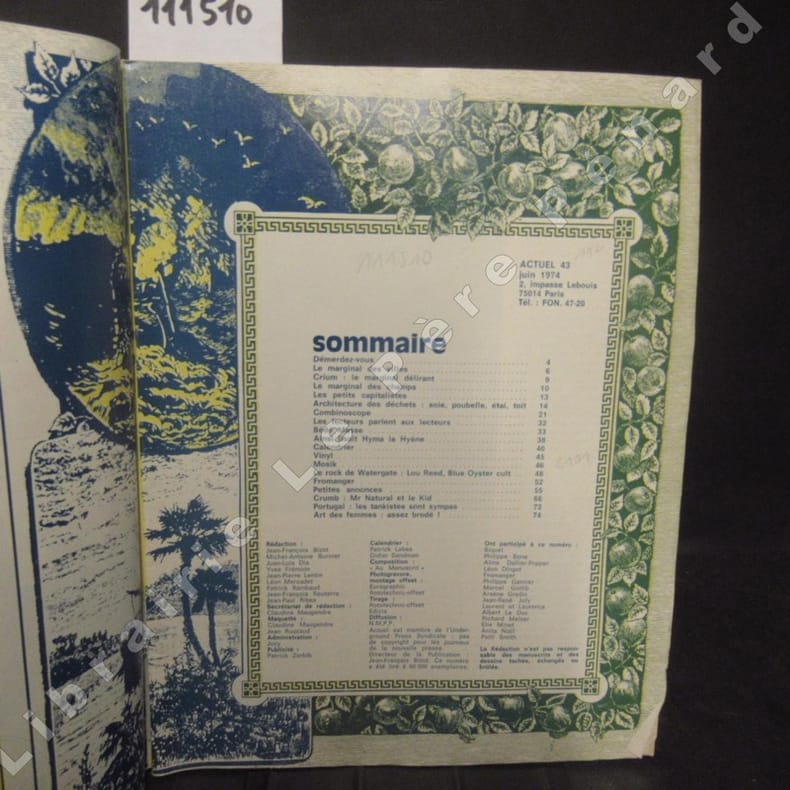
19741115101974 N°43 - Juin 1974 - Novapress - 79 pages - (sommaire en photo)
19741064501974 N°44/45 - Juillet/Août 1974 - Novapress - 79 p.
Copertina illustrata a colori in fascicolo originale completo de "La Domenica del Corriere" del 30/10/1955
2012500073682Macmillan US 2012 204 pages 13 716x1 778x20 828cm. 2012. Broché. 204 pages.
2003va1747Klincksieck Broché 2003 In-8 (16 x 24 cm), broché, 159 pages ; quelques petits frottements et marques d'usage aux plats, rousseurs aux tranches et gardes, quelques annotations au crayon à papier (effaçables) dans les marges, par ailleurs assez bon état général. Livraison a domicile (La Poste) ou en Mondial Relay sur simple demande.
192550606New York: A. Koenigsberg 648 Broadway ca. 1925. 8vo. 12 pp. Photo illustrated throughout colour-tinted centerfold. Colour-illustrated softcovers model wearing a stylish hat printed in red & black stapled as issued sewn through punch hole at head of spine w/ gold silk braid slight shelfwear 1 very small closed tear at fore-edge front cover still VG copy. First edition of this very scarce and beautiful catalogue of hat frames and hat bases for millinery shops during the 1920s. The company could supply for hat designers Zibeline hatters plush hats Lyons Velvet Brims Satins Velours Ribbon bound fur and felt hats as well as millinery supplies and hat boxes. Koenigsberg b. 1889 emigrated from England in 1889 to New York where he worked as a furrier for many years with his father Wolf before setting up his own successful millinery supply shop and 4200 square foot factory which successfully operated until the Great Depression. After his shop closed Koenigsberg moved into selling pin ball machines. No copies located in Worldcat; See: New York State Industrial Bulletin of the Department of Labor 1921 Vol. 1 p. 171. A. Koenigsberg, 648 Broadway, paperback
199254921ECM Records, 1992. ECM 1463 CD CD
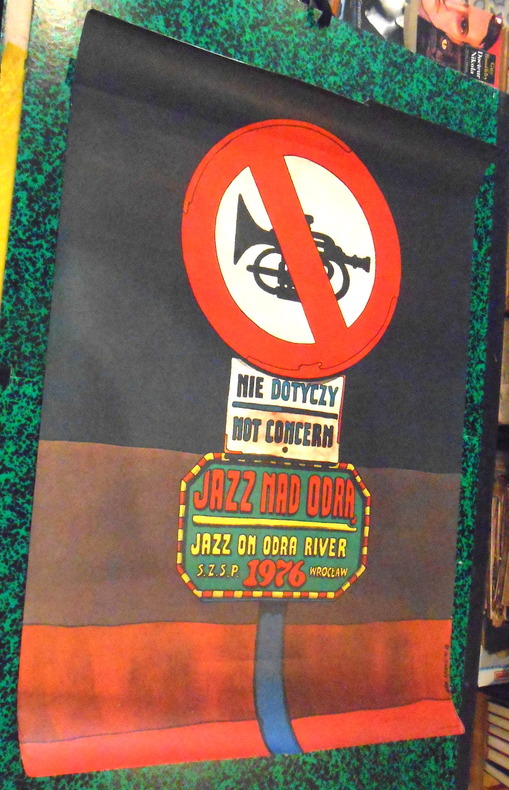
15022674entoilée de Jan Sawka pour le festival de jazz de Wroclaw (Pologne), 67 cm x 97 cm. Très bon état
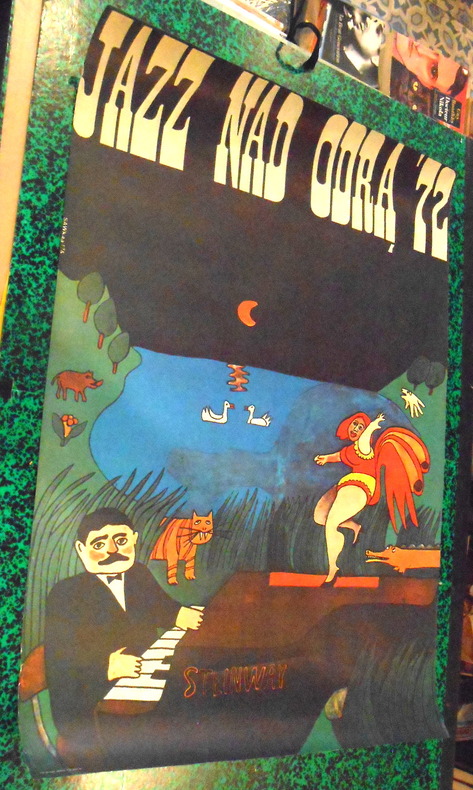
197222673Wroclaw, P.Z.G., 1972. Affiche non entoilée de Jan Sawka pour le festival de jazz de Wroclaw (Pologne), 67 cm x 97 cm. Accroc bord inférieur sans manque, légers accrocs sur les côtés sinon bon état
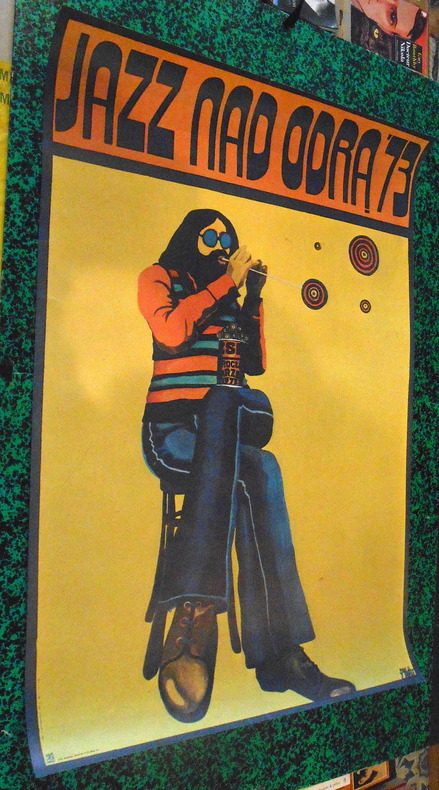
197322671Wroclaw, P.Z.G., 1973. Affiche non entoilée de Jan Sawka pour le festival de jazz de Wroclaw (Pologne), 67 cm x 97 cm. Léger accroc bord supérieur sinon très bon état
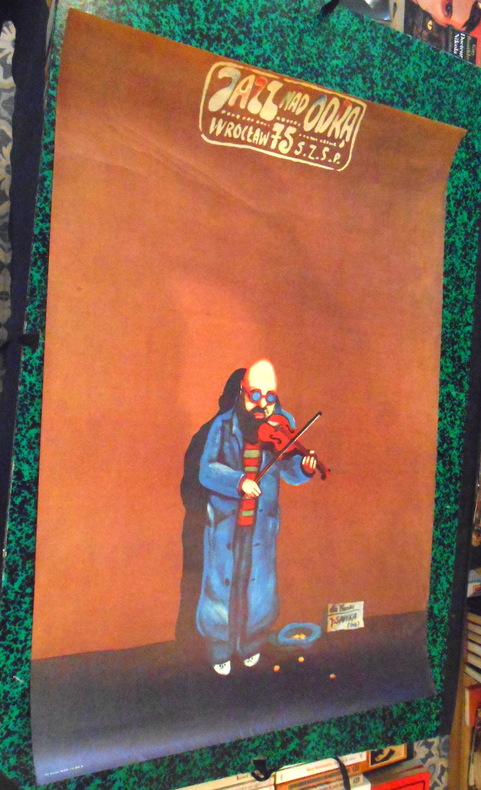
197522670Wroclaw, P.S.G., 1975. Affiche non entoilée de Jan Sawka pour le festival de jazz de Wroclaw (Pologne), 67 cm x 97 cm. Très bon état
197622672Wroclaw, P.Z.G., 1976. Affiche non entoilée de Jan Sawka pour le festival de jazz de Wroclaw (Pologne), 67 cm x 97 cm. Accroc bord supérieur sans manque, léger accroc au bas de l ‘affiche sinon bon état
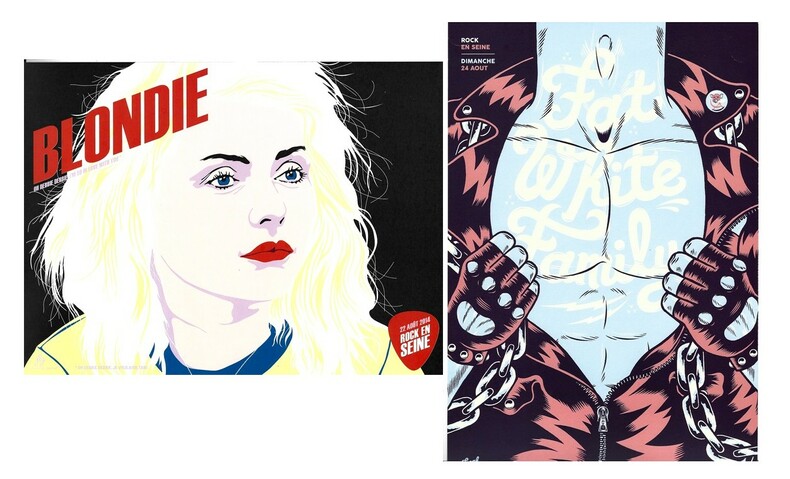
198031010Superbe Affichette imprimée recto/verso pour les concerts de Blondie et Fat White Family, du dimanche 24 août 2014 au Festival de Rock en Seine. Illustrations de Francis le Gaucher et Freak City. Format 31,5 x 21 cm. Rare édition originale en superbe état.
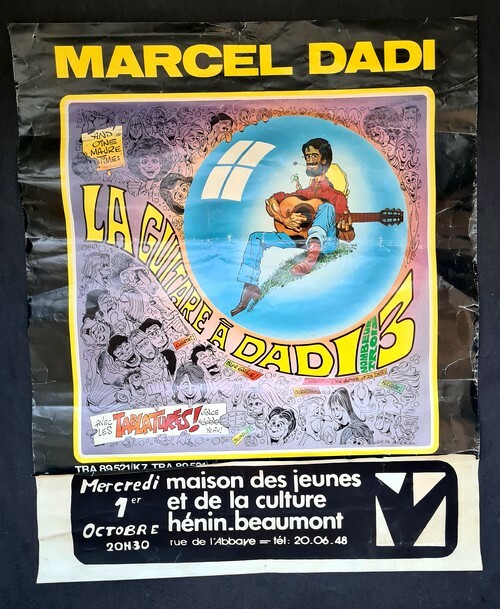
193728484Superbe affichette au format 49 x 40 cm, pour un concert de Marcel Dadi, dessinée par Marcel Gotlib au début des années 70. Le dessin reprend la couverture de l'album " La Guitare à Dadi, nombeur trois " paru en 1974. Plis et petite déchirures aux bord de l'affichette. Assez bel état général. Rare. ( Colissimo obligatoire ).
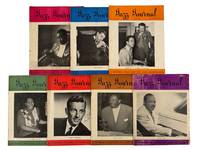
1948223231948. 1 Traill Sinclair ed. Jazz Journal issues 1948 document postwar British jazz culture as readers collectors critics and musicians rebuilt access to American jazz after wartime disruption and expanding record scarcity. Founded by Sinclair Traill in 1948 Jazz Journal became a major English-language jazz periodical; its inaugural year placed African American performers blues aesthetics revivalist debate discography and record reviews at the center of British jazz criticism. These issues support research into jazz reception in the United Kingdom transatlantic music journalism record collecting racialized cultural admiration and the postwar circulation of African American musical authority through British print culture. <br /> <br /> Jazz Journal. Volume 1 Nos. 1-3 5-6 8-9. London: J.J. Publications May-November 1948. Seven issues each approximately 12 pages in pictorial wrappers. The run includes the May June July September October and November 1948 issues with one additional issue represented by number rather than month in the supplied description and contains record reviews discographies artist profiles editorials criticism and jazz news. The premier issue opens with Traill's editorial appeal to jazz readers recalling that "Even in those far-off days between the two wars when paper was to be had for the asking and printers' costs didn't resemble a millionaire's hotel bill it was always a dubious endeavour" and closing with the hope that readers would see "a new issue of JAZZ JOURNAL on the first of each month for many years to come." Contents cited in the supplied description include "Make Way for Dixieland or Return to Sanity" a Thomas Waller discography a September 1948 appreciation of Hoagy Carmichael with signed portrait cover and Hugues Panassié's November essay "Count Basie and the Blues" which argues that "Count Basie knows how to play the blues as well as it seems possible to do so on the piano." Cover portraits include Louis Armstrong Nellie Lutcher Count Basie and Humphrey Lyttelton placing African American jazz innovators alongside British revivalist musicians within a magazine aimed at a postwar readership hungry for recordings biographical knowledge and critical guidance.<br /> <br /> Traill Sinclair ed. Jazz Journal. Vol. 1 No. 1. London: J.J. Publications 1948. The opening issue establishes the magazine's postwar purpose through Traill's editorial address to jazz enthusiasts and its promise of sustained monthly criticism. Its contents including revivalist commentary and discographical attention to Thomas "Fats" Waller show the early publication's effort to organize jazz knowledge for British readers dependent on print mediation and record collecting. 2 Traill Sinclair ed. Jazz Journal. Vol. 1 No. 2. London: J.J. Publications 1948. This issue continues the magazine's early program of criticism record commentary and performer-centered coverage for a readership attentive to American jazz and its British reception. It belongs to the first sequence of issues issued after the May 1948 relaunch from Traill's earlier Pick Up whose final issue preceded the first Jazz Journal in May 1948. 3 Traill Sinclair ed. Jazz Journal. Vol. 1 No. 3. London: J.J. Publications 1948. The third issue forms part of the magazine's initial attempt to stabilize a postwar jazz readership through recurring reviews essays and documentation of recordings and artists. Its position in the first volume is useful for tracing how British jazz criticism developed a regular periodical form in 1948. 4 Traill Sinclair ed. Jazz Journal. Vol. 1 No. 5. London: J.J. Publications 1948. This issue continues the first-year sequence with the supplied description emphasizing the magazine's mix of artist portraits discographical writing and critical essays. The issue contributes to the archive's broader value as evidence of how British jazz readers encountered American performers through images reviews and commentary. 5 Traill Sinclair ed. Jazz Journal. Vol. 1 No. 6. London: J.J. Publications 1948. The September 1948 issue features an appreciation of Hoagy Carmichael with a signed portrait cover connecting jazz readership to popular song composition and the American music industry. Its treatment of Carmichael alongside coverage of African American jazz performers demonstrates the publication's wide understanding of jazz-adjacent culture in the late 1940s. 6 Traill Sinclair ed. Jazz Journal. Vol. 1 No. 8. London: J.J. Publications 1948. This issue belongs to the later portion of the inaugural-year run and continues the magazine's regular pattern of record culture criticism and performer documentation. In the context of the seven-issue group it helps show the durability of Traill's monthly editorial project beyond the launch months. 7 Traill Sinclair ed. Jazz Journal. Vol. 1 No. 9. London: J.J. Publications 1948. The November issue includes Hugues Panassié's "Count Basie and the Blues" a critical essay distinguishing blues feeling and phrasing from commercialized improvisation. Its attention to Basie foregrounds African American musical authority within British jazz discourse and gives the archive direct relevance to the study of blues reception swing-era memory and postwar criticism. Moderate soiling and creasing to wrappers occasional spine chipping intact stapled bindings delicate covers and vivid photographic contrasts good overall. Substantial inaugural-year run of a long-lived British jazz periodical preserving the early critical vocabulary through which postwar British readers studied African American jazz swing-era performers blues expression and record collecting. unknown
198754299Enja, 1987. CD 4030-17 CD CD
197354298ECM Records, [1973]. 835 020-2 CD CD
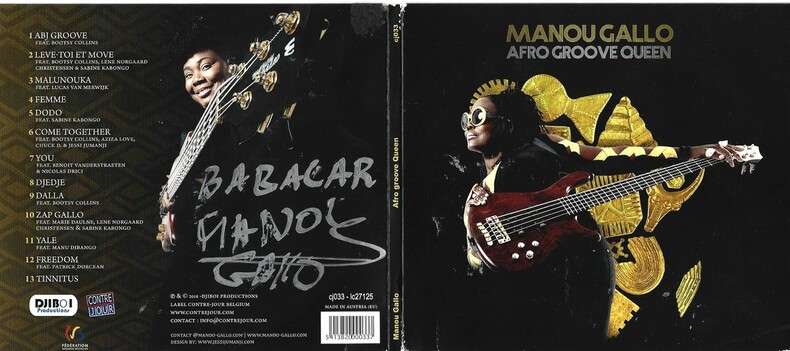
202330794Djiboi Productions Records 2018. CD digipack avec petit frottis aux coins. Support CD comme neuf. Album de fusion Jazz, Funk et musique africaine. Signé au verso par la bassiste Manou Gallo. Obtenu en concert. Collection personnelle. Rare.
2000Q-087930619XBackbeat 2000-11-30. Paperback. New. In shrink wrap. Looks like an interesting title! Backbeat paperback
Un volume (23 cm) di 212 pagine, con foto nel testo. In lingua inglese. Brossura editoriale illustrata. Ottime condizioni. Musicians covered include: Tito Puente, Cal Tjader, Willie Bobo, Machito, Poncho Sanchez, Chucho Valdes, Arturo Sandoval, Mongo Santamaria, Gato Barbieri, Eddie Palmieri, and many more.
199945049Superclasse, 1999. SUC 9907 CD CD CD
200451241Univision Records, 2004. 0883100750 CD/DVD CD
199045345DMP, 1990. CD 478 CD CD
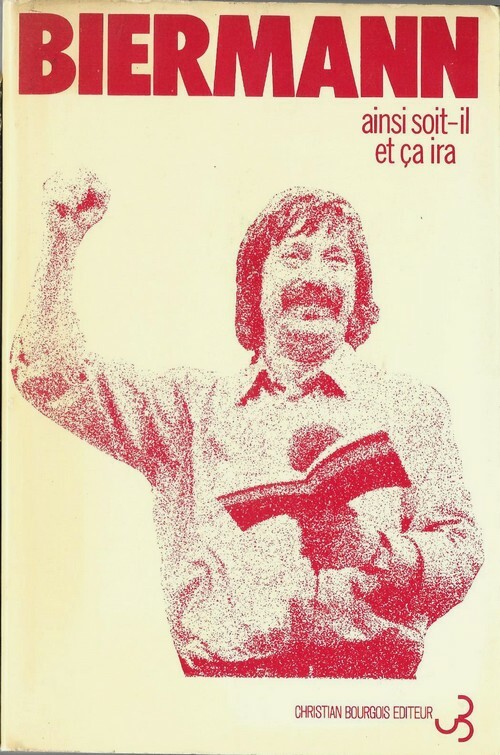
197813003Editions Christian Bourgois 1978. In-8 broché de 280 pages au format 20 x 13 cm. Couverture à rabats avec photographie de Wolf Biermann prise par Isolde Ohlbaum. Dos resté carré avec de légères plissures du pelliculage. Plats et intérieur frais. Traduction et présentation par Jean-Pierre Hammer. Première et unique édition française, bilingue, avec le texte original en allemand et la traduction française en regard. En fin d'ouvrage quelques partitions sont reproduites. Rare édition originale en superbe état général.
199451194Traumton, 1994. 2406 CD CD