BERLIOZ, Hector 1803-1869Biblio.com
1 236 résultats
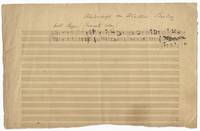
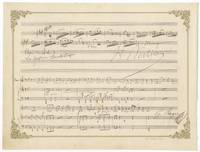
3929115 measures titled and signed below the music: "Thème e Bal e La Symphonie Fantastique. H. Berlioz." Undated but ca. 1840-1850. The complete main theme of the second movement "Un Bal" carried by the violins in measures 38 to 54 of the full score. 1 leaf. Notated in dark brown ink within decorative dark gold borders on Lard-Esnault paper. Oblong quarto 227 x 300 mm. <br /> <br /> With:<br /> - ROGER Gustave-Hippolyte 1825-1879. Autograph musical quotation signed "G. Roger" being a 12-measure song for voice and piano commencing "d'autiens tu beau miage" to lower portion of recto. <br /> <br /> With to verso:<br /> - ADAM Adolphe 1803-1856. Autograph musical quotation signed "Ad. Adam" being a 16-measure waltz for piano<br /> - HALÉVY Fromental 1799-1862. Autograph musical quotation signed "F. Halévy" being a 22-measure work for piano titled "Suite" "The composition of the 'Symphonie fantastique' was a momentous event in Berlioz's career his first full-scale masterpiece and equally momentous in the history of music as the first unequivocal declaration of romantic ideas in style and musical language and its echo has pervaded all music of passion and personal experience to this day . Of Harriet Smithson's identity as the 'beloved' portrayed by an 'idée fixe' in the form of an obsessive theme that recurs in all the movements there can be no question." MacDonald: Berlioz p. 18.<br /> <br /> A unique artifact incorporating a rare quotation from one of the most outstanding works of the symphonic repertoire of the Romantic period the whole uniting Berlioz with three important French musical figures of the mid-19th century. unknown
233541 page. Folio. In French with translation. <br/><br/>Berlioz outlines fees for musicians singers and tuners and costs for rehearsals composition and copying associated with the premiere of the work. <br/><br/>Slightly worn; creased at folds; a few very small holes as a result of ink oxidation. Berlioz was the leading French composer conductor and critic of his age. <br/><br/>"In many senses the Romantic movement found its fullest embodiment in him yet he had deep Classical roots and stood apart from many manifestations of that movement. His life presents the archetypal tragic struggle of new ideas for acceptance. and though there were many who perceived greatness in his music from the beginning his genius only came to full recognition in the 20th century." Hugh Macdonald in Grove Music Online. <br/><br/>Berlioz's Requiem the Grande Messe des Morts was first performed on December 5 1837 at St. Louis des Invalides on the occasion of the funeral of General Danrémont. <br/><br/>"Berlioz admits that when the chance of composing a Requiem came his way he fell on it like a man possessed. The opportunity was a philanthropic commission set up by Gasparin Minister of the Interior in order to re-establish the prestige of sacred music and Berlioz was the first to receive such a commission. It was briskly composed in a fever of inspiration in the summer of 1837 but as is the way with bureaucratic patronage the performance was cancelled for political reasons after Berlioz had gone to the expense of copying the parts and engaging performers. Only after urgent appeals and persistent complaints was an excuse found for staging the performance after all: the death of a French general in the war of conquest in Algeria. So the Requiem was first heard in the church of the Invalides. in a ceremony of pomp and grandeur which the French do with particular style. It was a stirring public occasion and although it was marred for Berlioz by the conductor Habeneck taking a pinch of snuff at the most dramatic entry of the Tuba mirum the truth of the anecdote is disputed it signified for him the blessing of official approval and the wider knowledge in Parisian circles of how powerful and novel his music was. No one was left in any doubt of the force and originality of Berlioz's genius." Macdonald: Berlioz pp. 33-34. unknown books
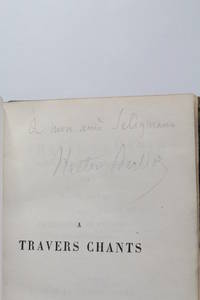
186271549Paris: Michel Lévy frères 1862. Fine. Michel Lévy frères Paris 1862 12.50 x 19 cm relié First edition. Half shagreen binding spine with five raised bands with gilt decorations date at foot marbled paper covers original soft front cover preserved. Rare and precious signed autograph inscription by the composer: à mon ami Seligmann - Hector Berlioz ""to my friend Seligmann - Hector Berlioz"" Hippolyte-Prosper Seligmann 1817-1882 cellist and composer was an active member of the Philharmonic Society founded by Berlioz in 1849. Provenance: R. & B. L. library with his bookplate pasted on the back of the first endpaper. Michel Lévy frères hardcover
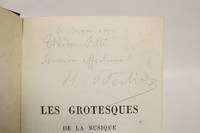
185968513Paris: A. Bourdilliat & Cie 1859. Fine. A. Bourdilliat & Cie Paris 1859 11.50 x 18 cm reliure de l'éditeur Les Grotesques de la musique The Musical Madhouse A. Bourdilliat & Cie Paris 1859 11.5 x 18 cm publisher's original binding First edition. Publisher's green cloth spine and boards ruled in blind yellow endpapers and pastedowns pastedowns soiled edges spotted. A little light foxing. A rare and handsome autograph inscription signed by Hector Berlioz in pencil to title: ""à mon ami Théodore Ritter souvenirs affectueux"" Théodore Ritter son of composer Eugène Prévost was Berlioz's student for whom he composed a piano arrangement of L'Enfance du Christ The Childhood of Christ Berlioz inscriptions are rare and highly sought-after. A. Bourdilliat & Cie hardcover
393097 measures notated in black ink on one side of the leaf. Several notes crossed out and a final passage rewritten. 1 leaf. Oblong folio 268 x ca. 170 mm.<br /> <br /> A first draft of a polyphonic theme. Identified in German in contemporary manuscript at head: "Handschrift von Hector Berlioz Erste Skizze. Benvenuto Cellini."<br /> <br /> Some wear and browning; slightly creased at folds; lower edge unevenly trimmed. The present manuscript not recorded in Holoman.<br /> <br /> Benvenuto Cellini an opéra semi-seria in two acts to a libretto by Léon de Wailly and Auguste Barbier assisted by Alfred de Vigny was based on the memoirs of Benvenuto Cellini. Set in 16th century Rome during the papacy of Clement VII the work premiered in Paris on 10 September 1838 at the Opéra and was produced in a revised version in Weimar at the Grossherzogliches Hoftheater on 20 March 1852 and with further revision in three acts on 17 November 1852.<br /> <br /> "Whether it originated as a serious or a comic opera the result in all its many versions is a compound a characteristic blend of idealism and farce grandeur and wit breadth and vivacity. Berlioz poured into Benvenuto Cellini every drop of invention and feeling at his command in a torrent of notes that make up a long and very lively opera and its heterogeneity so baffling to Parisians in 1838 and Londoners in 1853 is one of its main virtues." Macdonald: Berlioz p. 106. <br /> <br /> "Berlioz stands as the leading musician of his age in a country France whose principal artistic endeavour was then literary in an art music whose principal pioneers were then German. In many senses the Romantic movement found its fullest embodiment in him yet he had deep Classical roots and stood apart from many manifestations of that movement. His life presents the archetypal tragic struggle of new ideas for acceptance to which he gave his full exertions as composer critic and conductor. And though there were many who perceived greatness in his music from the beginning his genius only came to full recognition in the 20th century. . <br /> <br /> In Berlioz's own words Benvenuto Cellini 'contains a variety of ideas an energy and exuberance and a brilliance of colour such as I may perhaps never find again.' " Hugh Macdonald in Grove Music Online<br /> <br /> While musical quotations in Berlioz's hand are not rare his sketchleaves are very rare to the market; we have located only one example at auction in over 30 years. unknown
186271549Michel Lévy frères | Paris 1862 | 12.50 x 19 cm | relié
185968513A. Bourdilliat & Cie | Paris 1859 | 11.50 x 18 cm | reliure de l'éditeur
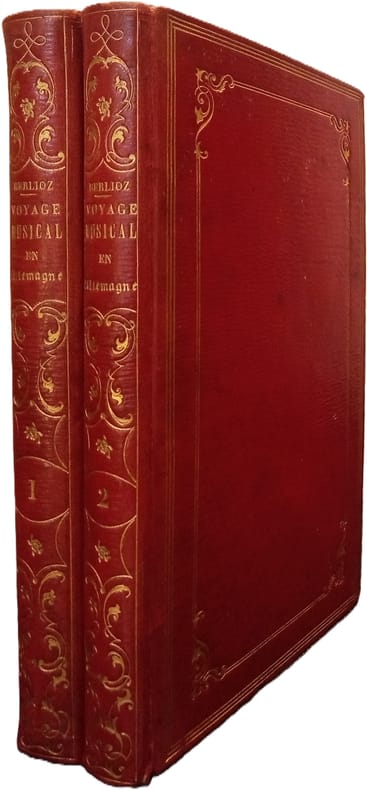
18441131Paris, Jules Labitte, 1844 ; 2 vol. in-8 de [3] ff., 422 pp. ; [2] ff., 370 pp., 1 f. bl., reliures de l'époque maroquin à long grain cerise, double encadrement de filets dorés sur les plats, fleurons dans les angles, dos lisses ornés en long, roulette intérieure, tranches dorées.
18441165Paris, Jules Labitte, 1844 ; 2 vol. in-8 de [3] ff., 422 pp. ; [2] ff., 370 pp., 1 f. bl., reliures de l’époque maroquin à long grain cerise, double encadrement de filets dorés sur les plats, fleurons dans les angles, dos lisses ornés en long, roulette intérieure, tranches dorées.
13288Used; Like New/Used; Like New. Scarce AMQS from the important French romantic composer and shaper of the modern orchestra mounted together with a cdv portrait photograph without photographer's imprint. Berlioz has penned six measures from the "Love Scene" of his Roméo et Juliette indicated as "Adagio" and boldly signed below the the music. Dated perhaps in another hand at the lower left: Paris 1861. Toned else fine. AMQS measuring approx. 18 x 5 cm the full presentation measuring 29.5 x 21 cm. <br style="">In Roméo et Juliette 1839 Berlioz revisits his passion for Shakespeare and by extension for the woman whose renditions of Juliet and Ophelia had completely captivated him more than a decade earlier Harriet Smithson. By the time he composed Roméo Berlioz' love for her had become harsh reality: He was married to Harriet but the match had proven unsuccessful and the two were effectively separated.  But Berlioz had seen Romeo and Juliet at the Odéon during the 1827 Shakespeare season and had found himself overwhelmed writing that "more experiences of that kind would have killed me." Berlioz conducted the first three performances of Roméo et Juliette in Paris in November and December 1839. After hearing a performance of the work in Vienna in January 1846 he revised it thoroughly and conducted the premiere of this final version in Prague on April 17 1846. In his Memoirs Berlioz wrote that the "Love Scene" was his favorite among his works and described the fevered period during which he had composed Roméo et Juliette: "Oh the ardent existence I lived during that time! I struck out boldly across that great ocean of poetry caressed by the wild sweet breeze of fancy under that fiery sun of love that Shakespeare kindled. I felt within me the strength to reach the enchanted isle where the temple of pure art stands under a clear sky. It is not for me to determine whether I succeeded."<br style=""><br style=""><br style=""> unknown books
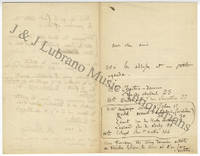
232892 pp. of a bifolium. Octavo. Dated ca. late October 1864-1865. In French with translation. <br/><br/>An important letter in which Berlioz includes information for the first playbill of a projected concert performance of excerpts from his grand opera Les Troyens. He lists the names and addresses of the singers who are to appear: Mme. Anne Charton-Demeur Mlle. Palmyre Wertheimber Mr. Jules Montjauze Mr. Louise-Émile Wartel Mr. Péront Mr. Legrand and Mlle. Estagel. He also mentions a Mr. Prosper Bagier likely the director of the Théâtre-Italien in Paris. Finally he includes a number of special woodwind and percussion instruments that must be added to the orchestra. <br/><br/>"Here are the addresses and a short agenda. You will find the last five artists at the Théâtre Lyrique on evenings when they play Violetta. You will include the names of the artists only later in order not to upset Mr. Bagier."<br/><br/>Slightly worn and stained; creased at folds. Berlioz was the leading French composer conductor and critic of his age. "In many senses the Romantic movement found its fullest embodiment in him yet he had deep Classical roots and stood apart from many manifestations of that movement. His life presents the archetypal tragic struggle of new ideas for acceptance. and though there were many who perceived greatness in his music from the beginning his genius only came to full recognition in the 20th century." Hugh Macdonald in Grove Music Online.<br/><br/>Although Berlioz finished Les Troyens in 1858 it was not performed in its complete form until years after his death in 1890. The première of Acts 3-5 which included several of the singers mentioned in this letter occurred at the Théâtre Lyrique in Paris on November 4 1863. The performance mentioned in this letter may have taken place in late 1864 or 1865. "Violetta" i.e. the French version of Verdi's La Traviata enjoyed 102 performances at the Théatre Lyrique between October 27 1864 and 1865. The intended recipient of this letter was perhaps Georges Hainl 1807-1873 conductor of the Paris Opéra and the Société des Concerts du Conservatoire from 1863 until 1872. unknown books
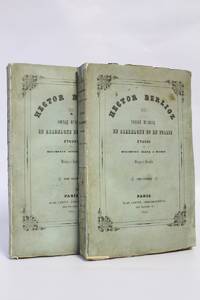
184462537Paris: Jules Labitte 1844. Fine. Jules Labitte Paris 1844 14.50 x 22.50 cm 2 volumes brochés sous chemises et étuis Rare first edition of Hector Berlioz's first book. Some restorations to the top spine-end volume label on the spine of the second volume not fully visible boards strengthened or lined first board of the first volume some stains on the first boards of both volumes. Fine condition inside almost without any foxing. Our copy is housed in green half shagreen chemises and slipcases marbled paper boards slipcases lined with the same shagreen gilt titles and dates on the spine. Rare. Jules Labitte hardcover
354342 pp. of a bifolium. Octavo. Dated "31 Juillet" no year. To an unidentified male correspondent. On lined paper. In French with translation.<br/><br/>Berlioz apologizes for not being able to edit his article on Bortnyansky with which he hopes his correspondent will be satisfied.<br/><br/>"The fragment of musical criticism which I wanted to add to the item on Bortnianski is in the hands of Mr. M. Levy's printer who is at present bringing out a book which contains this article. It is impossible for me - since the printer is not in Paris - to rework my manuscript. Therefore be good enough to be satisfied with the Russian article; it is accurate on the whole and it would be difficult for me to redo a study on Bortnianski and Emperor of Russia's singers that is already done." <br/><br/>The composer/critic goes on say that he would be happy for extracts of the article to appear in L'Illustration and in a postscript asks his correspondent to send him a copy of the periodical in which his article appears. <br/><br/>Slightly worn; creased at folds and very slightly overall. Dmitri Stepanovich Bortnyansky 1751-1825 was a Ukrainian singer composer and music director active in Russia. "During the 19th century Bortnyansky choral concertos and hymns gained popularity across Western Europe; some copies of concertos preserved in the library of the Hofkapelle in Vienna date from as early as 1780. Berlioz who heard the concertos in Russia in the 1840s praised the 'incredible freedom' of their approach to choral sonority Les soirées de l'orchestre Paris 1852 and included Bortnyansky's music in several of his own concerts in Paris." Marika Kuzma in Grove Music Online<br/><br/>"Berlioz stands as the leading musician of his age in a country-France-whose principal artistic endeavour was then literary and in an art-music-whose principal pioneers were then German. In many senses the Romantic movement found its fullest embodiment in him yet he had deep Classical roots and stood apart from many manifestations of that movement. His life presents the archetypal tragic struggle of new ideas for acceptance to which he gave his full exertions as composer critic and conductor. And though there were many who perceived greatness in his music from the beginning his genius only came to full recognition in the 20th century." <br/><br/>"Berlioz's views were presented regularly to readers of the Paris press . He published three collections of criticism: Les soirées de l'orchestre 1852 Les grotesques de la musique 1859 and A travers chants 1862. In his feuilletons he wrote of new operas and singers .; his opinion on momentous occasions was of crucial interest for example at the première of Le prophète in 1849. He reviewed most of the concerts of the Société des Concerts; he wrote of new instruments and musical gadgets of his own impressions of music abroad and of important musicians visiting France; he wrote biographical notices of Gluck Beethoven Spontini Méhul and himself; he wrote fiction and fantasy often with a critical purpose; he wrote serialized treatises on orchestration and conducting. There are in short few facets of musical practice of the time untouched in his feuilletons . In general Berlioz's opinions are trenchant and clearly expressed." Hugh Macdonald in Grove Music Online. unknown books
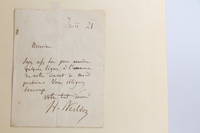
188876843Paris: Librairie de l'art 1888. Fine. Librairie de l'art Paris 1888 24.50 x 32.50 cm relié First edition one of 30 numbered copies on Japan paper deluxe issue. Work illustrated with 14 original lithographs by Adolphe Fantin-Latour printed on China paper as well as 12 portraits of Hector Berlioz 3 plates hors-texte and 122 engravings facsimiles of autographs caricatures. Binding in full red morocco spine with five raised bands gilt rolls on headcaps endpapers and pastedowns of combed paper fine engraved bookplate mounted on one pastedown gilt dentelle border on pastedowns covers preserved all edges gilt double gilt fillets on edges perfect contemporary binding signed Cuzin. Our copy is enhanced with an autograph note signed by Hector Berlioz mounted on an endpaper: ""Jeudi 21 / Monsieur soyez assez bon pour accorder quelques lignes à l'annonce de notre concert de mardi prochain. Vous obligerez beaucoup votre tout dévoué H. Berlioz."" ""Thursday 21st / Sir please be so kind as to grant a few lines to the announcement of our concert next Tuesday. You would greatly oblige your most devoted H. Berlioz."" Fine copy perfectly established and enhanced with an autograph note signed by Hector Berlioz. Librairie de l'art hardcover
184462537Jules Labitte | Paris 1844 | 14.50 x 22.50 cm | 2 volumes brochés sous chemises et étuis
354342 pp. of a bifolium. Octavo. Dated "31 Juillet" no year. To an unidentified male correspondent. On lined paper. In French with translation.<br /> <br /> Berlioz apologizes for not being able to edit his article on Bortnyansky with which he hopes his correspondent will be satisfied.<br /> <br /> "The fragment of musical criticism which I wanted to add to the item on Bortnianski is in the hands of Mr. M. Levy's printer who is at present bringing out a book which contains this article. It is impossible for me - since the printer is not in Paris - to rework my manuscript. Therefore be good enough to be satisfied with the Russian article; it is accurate on the whole and it would be difficult for me to redo a study on Bortnianski and Emperor of Russia's singers that is already done." <br /> <br /> The composer/critic goes on say that he would be happy for extracts of the article to appear in L'Illustration and in a postscript asks his correspondent to send him a copy of the periodical in which his article appears. <br /> <br /> Slightly worn; creased at folds and very slightly overall. Dmitri Stepanovich Bortnyansky 1751-1825 was a Ukrainian singer composer and music director active in Russia. "During the 19th century Bortnyansky choral concertos and hymns gained popularity across Western Europe; some copies of concertos preserved in the library of the Hofkapelle in Vienna date from as early as 1780. Berlioz who heard the concertos in Russia in the 1840s praised the 'incredible freedom' of their approach to choral sonority Les soirées de l'orchestre Paris 1852 and included Bortnyansky's music in several of his own concerts in Paris." Marika Kuzma in Grove Music Online<br /> <br /> "Berlioz stands as the leading musician of his age in a country-France-whose principal artistic endeavour was then literary and in an art-music-whose principal pioneers were then German. In many senses the Romantic movement found its fullest embodiment in him yet he had deep Classical roots and stood apart from many manifestations of that movement. His life presents the archetypal tragic struggle of new ideas for acceptance to which he gave his full exertions as composer critic and conductor. And though there were many who perceived greatness in his music from the beginning his genius only came to full recognition in the 20th century." <br /> <br /> "Berlioz's views were presented regularly to readers of the Paris press . He published three collections of criticism: Les soirées de l'orchestre 1852 Les grotesques de la musique 1859 and A travers chants 1862. In his feuilletons he wrote of new operas and singers .; his opinion on momentous occasions was of crucial interest for example at the première of Le prophète in 1849. He reviewed most of the concerts of the Société des Concerts; he wrote of new instruments and musical gadgets of his own impressions of music abroad and of important musicians visiting France; he wrote biographical notices of Gluck Beethoven Spontini Méhul and himself; he wrote fiction and fantasy often with a critical purpose; he wrote serialized treatises on orchestration and conducting. There are in short few facets of musical practice of the time untouched in his feuilletons . In general Berlioz's opinions are trenchant and clearly expressed." Hugh Macdonald in Grove Music Online. unknown
188876843Librairie de l'art | Paris 1888 | 24.50 x 32.50 cm | relié
13739Used; Like New/Used; Like New. A short autograph letter from the French Romantic composer addressed to the French journalist music critic and music publisher Léon Escudier and thanking him for a "superb and warm" article about his works. Translated from the French in full: "My dear Escudier I believe it was Leon who was the author I came to shake your hand and thank you for the superb and warm article. There has rarely been written on my compositions something which is so remarkable in its insights and which has made me so happy. Yours H. Berlioz." 1 p. with an additional cover page addressed to Escudier. No place no date. One tear some small chips smudges and toning; overall in very good condition. 4.25 x 5 inches 10.5 x 13 cm. Together with a later sepia postcard portrait of the composer 5 x 7 inches 12.5 x 17.7 cm.<br style="">In 1837 together with his brother Marie Escudier and Jules Maurel Leon Escudier founded the weekly La France musicale as well as a music publishing company. In December 1860 he founded the journal L'Art musical.<br> unknown books
4805...Je ne suis pas all ce matin interrompre votre sommeil, ainsi que vous my aviez autoris. Ceut t inutile. Mr F. De Conches [Feuillet de Conches] est encore Fontainebleau o le Prsident chasse aujourdhui. Quand vous verrez Mr F. De Conches veuillez tre assez bon pour lui dire que ma demande a pour objet de faire quelque chose de grand, dexceptionnel, et non dobtenir les moyens ncessaires une excution musicale seulement plus pompeuse que de coutume. Pour que mon but fut atteint, il faudrait faire au moins ce que les associations dartistes ont fait dernirement, en excutant mon Requiem pour le Baron de Trmont. On ne couronne pas un Empereur tous les jours ; et lglise de Notre-Dame nest pas une glise de village....Le baron de Trmont, auquel Berlioz fait allusion dans sa lettre, dcd en juillet 1852, tait un rudit, bienfaiteur d'art et de musique, connu pour sa collection d'autographes. Une messe solennelle lui fut ddie dans lglise Saint-Eustache de Paris, pendant laquelle fut excut le Requiem de Berlioz, comme le rapporte Le petit courrier des Dames : Tout le monde sait (...) que le Requiem de M. Berlioz est une de ses Suvres les plus remarquables et les plus compltes. Lexcution a t parfaite, et grce lempressement des artistes, chanteurs et instrumentistes, lSuvre du matre a produit un effet immense... .Corr. gnrale (Pierre Citron, Flammarion, 1972-75), T IV, N 1530.
4814Berlioz est charg dune commission par Franz Liszt.Berlioz s'affaire avant son dpart pour la Belgique ...Je ne puis donc aller vous voir pour la commission dont Liszt ma charg. Il sagirait de lui procurer les livrets, rglemens, et documents de toute espce qui se rattachent lorganisation de nos socits dartistes. Il a lintention de former une association allemande de la mme nature et il a besoin dun guide tel que vous ; car cest vous qui avez en quelque sorte dict page page tous les crits relatifs ces belles institutions...Fonde en 1843 et prside par le baron Taylor (1789-1879), lAssociation des artistes musiciens se constituait afin de pourvoir lamlioration du statut social du musicien, notamment par un fonds de pension et de secours, et la promotion de lart musical. Runissant plusieurs milliers de membres partout en France mais aussi ltranger, elle organise, pour alimenter sa caisse, diverses manifestations dont de nombreux concerts, et parvient fdrer dans un esprit fraternel dentraide les actions des artistes musiciens. Dirige par un comit form dminentes personnalits (Berlioz, Liszt, Meyerbeer, Auber, Thalberg, Zimmerman, Herz, rard, etc.), lassociation laissa dimposantes archives, qui stendent jusquen 1968.
18643769Mai 1864 Berlioz, en habitu du festival de Bade [il y avait cr son opra Batrice et Bndict], organis tous les ans par Edouard Bnazet, annonce David Hermann Engel, la suppression du rendez-vous musical allemand :...M. Bnazet est venu passer quelques jours Paris, et la saison de Bade est supprime. Il m'a dit de suspendre tous mes prparatifs ; il n'y aura pas de festival. J'avais dj parl de vous et vous tiez adopt. Si cela se raccommode, je vous le ferai savoir.. Il ajoute, sans espoir ...Mais, ...Bellum ruit... Il nous manquait cela....Dans ses Mmoires, au chapitre 59, Berlioz crivit : M. Bnazet, le directeur des jeux, m'a engag plusieurs fois venir organiser et diriger le festival annuel de Bade, en mettant ma disposition pour excuter mes Suvres, tout ce que je pouvais demander. Sa gnrosit, en pareil cas, a dpass de beaucoup ce qu'ont jamais fait pour moi les souverains de l'Europe dont j'ai le plus me louer , puis dans une lettre sa sSur Adle, date du 11 mars 1858 (Corr. Gnrale, n 2283) : Bade c'est diffrent; on y gagne de l'argent, et on y fait de bonne musique, et on y trouve une foule de gens d'esprit, et on y parle franais ..BERLIOZ ET LE FESTIVAL DE BADE EN ALLEMAGNE : Bade tient une place de choix dans la longue histoire des rapports entre Berlioz et l'Allemagne : nulle autre ville allemande ne sera visite avec une telle frquence. De 1853 1863 le compositeur franais se rendra Bade plus d'une dizaine de fois et y retournera chaque anne partir de 1856. Ce qui l'amenait Bade : les Bnazet : le pre Jacques Bnazet (mort en 1848), puis le fils douard Bnazet (1801-1867) qui prit la succession de son pre la direction du casino de Bade. douard Bnazet, qui a tudi au Conservatoire de Paris, tait un homme cultiv qui entretenait de nombreuses connaissances dans le monde des arts. L'ambition de Bnazet tait de rehausser la petite ville thermale au rang de centre artistique qui attirerait l'lite de la socit europenne.Dans les annes 1850, Bnazet s'emploie raliser son projet ; il cre de nouvelles salles de jeux, un grand champ de course Iffezheim; un nouveau thtre qui ouvre ses portes avec l'opra de Berlioz Batrice et Bndict en 1862 (d'aprs la pice de Shalespeare "Beaucoup de bruit pour rien"). Mais, Bnazet, se dsintresse peu peu de Bade. Dans une lettre Camille Pal, Berlioz livre sa crainte...de perdre 2000 f de rente, par cessation de mon engagement annuel pour Bade, la suppression des jeux est toujours annonce et ds lors plus de musique. En outre, Bnazet parat dcid ne plus donner de festival... David Hermann Engel avait tenu l'harmonium au festival de Bade en 1859.Correspondance gnrale d'Hector Berlioz (P. Citron - Mac Donald, Flammarion 2001), Vol. VII, N 2859.
20031<b>BERLIOZ HECTOR.</b> 1803-1869. French composer; creator of <i>Harold in Italy</i> <i>Symphonie Fantastique</i> and other masterpieces. ALS. <i>"Hector Berlioz"</i>. 2pp. 4to. Paris October 9 1834. To l'intendant general de la liste civile. In French with translation.<p><i>"I am planning to give three concerts over the course of next November. The Salle des Menus Plaisirs which you have been kind enough to make available to me several times in the past is really the only venue in Paris that lends itself to these kinds of musical events. So I request that you will grant me permission to hold mine there. These concerts just like the ones I gave last years would take place on Sundays at 2 in the afternoon. With all my respect dear General Intendant your humble servant…"</i></p><p>The 1830s were difficult for Berlioz. Bereft of the recognition he craved and unable to earn a steady income from composing he worked as a critic for several journals and newspapers and accepted the few commissions that came his way. Nevertheless he produced a number of works including the symphony <i>Harold en Italie</i>which premiered on November 23 1834 about a month and a half after writing our letter at the Paris Conservatoire then housed in the Salle des Menus Plaisirs a theater attached to the Hôtel des Menus-Plaisirs and the venue for most of Berlioz's symphonic works. <i>Harold en Italie</i> based on Byron's narrative poemso captivated Italian violinist and composer Niccolo Paganini for whom it was written that in 1838 he presented Berlioz with a gift of 20000 francs. Several weeks before the premiere the Paris Conservatoire was also the venue for another Berlioz program on November 9 which included his <i>Symphonie fantastique</i> as well as the first performances of <i>Sara la baigneuse</i> version H69A and <i>la Belle voyageuse. </i>A plaque outside the Salle du Conservatoire commemorates Berlioz's performances there.</p><p>Our letter was written from 34 rue de Londres Berlioz's home between 1834 and 1836. </p><p>Docketed in the top margin. Folded and slightly creased; a very early letter and as such uncommon.</p><br /><br /><br />
197337118New York: Vienna House Inc. As New. 1973. Paperback. 0844301140 . FREE UPGRADE to Courier/Priority Shipping Upon Request IN STOCK AND IMMEDIATELY AVAILABLE FOR SHIPMENT - AS NEW THE TEXT BLOCK IS PRISTINE CLEAN UNMARKED AND IN EXCELLENT CONDITION - -- with a bonus offer-- . Vienna House, Inc. paperback
188894091Librairie De L Art. As New. 1888. Paperback. FREE UPGRADE to Courier/Priority Shipping Upon Request - IN STOCK AND IMMEDIATELY AVAILABLE FOR SHIPMENT - AS NEW THE TEXT BLOCK IS PRISTINE CLEAN UNMARKED AND IN EXCELLENT CONDITION - - Text in French. 338 pages. -- with a bonus offer-- . Librairie De L Art paperback
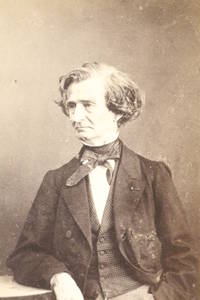
186073029Paris: Nadar 1860. Fine. Nadar Paris s. d. circa 1860 6.50 x 10.30 cm une photographie Original albumen photograph carte-de-visite format mounted on card from Nadar studio 35 boulevard des Capucines. Manuscript annotations on verso. A copy of this photograph is held in the Music Department of the Bibliothèque Nationale de France. Nadar unknown