Chinese OperaBiblio.com
133 résultats
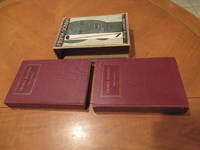
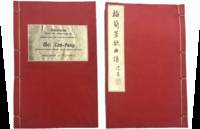
1929AG20057<p><br /></p><p><b>SELECTIONS FROM REPERTOIRE OF OPERATIC SONGS AND TERPSICHOREAN MELODIES OF MEI LAN-FANG - by Professor Liu T</b><b>'</b><b>ien. Hua </b><b>梅兰芳æŒæ›²è°±</b></p><p>Published in 1929 specially edited and printed for Mei Lan-Fang's performance in the United States. Mei Lan-Fang was invited by America in the winter of 1929 to help the people better understand Chinese Opera the master of Chinese songs Liu Tianhua produced two volumes of books one in Chinese 126pp. and the other in English 118pp. which includes 18 Kunqu Opera with music script and score. Signed and stamped by the Author on the English version 1050 copies printed and only 50 copies were signed this is No. 43 on Chinese art paper 4to matching red silk sewn thread binding with printed gold paper labels very fine condition. </p><p><br /></p><p>本套书å°åˆ·äºŽ1929年,共分为2册,精装,æ¤ä¹¦ä¸ºæ¢…兰芳赴美演出特制,共1050部,其ä¸çš„50部为æˆåŒ–宣纸å°åˆ¶ï¼Œåˆ—有编å·ï¼Œç¬¬ä¸€å·ä»·æ ¼äº”百美元,二至五åå·ä¸€ç™¾ç¾Žå…ƒï¼Œæ¤å¥—为50部ä¸çš„第43å·ï¼Œæœ‰åˆ˜å¤©åŽäº²å°å¹¶è‹±æ–‡ç¾å。两套书分别为ä¸è‹±æ–‡ç‰ˆï¼Œå…±æ”¶å½•äº†18æ¡æ˜†æ›²çš„å”±è¯ã€å”±è…”工尺谱和五线谱,历ç»æ•°æœˆå®Œæˆ å“相如新,ä¿å˜å¦‚æ¤å®Œå¥½çš„éžå¸¸å°‘è§ã€‚</p> paperback
1949293881949. Good overall. An impressive collection of post W.W.II German opera stars dancers & directors and the stunning sets from the Hamburg Opera Ensemble. The 1st page is a dedication of farewell to Edward Groth US Consul General dated 24th May 1949. Groth had a long career in the Foreign Service including Consul in Afghanistan and India. <br /> <br /> Photographs of vocalists dancers directors - many signed - include: Günther Rennert staging director Arthur Grüber Günter Hertel Martina Wulf Theo Herrmann Ilse Koegel Helene Werth Lore Hoffman Hedy Gura Sigmund Roth Peter Markworth Hermann Mendt Nikola Eva Poser Rudolf Zerber Adolph Meyer-Bremen Johannes Drath Elfriede Wasserthal Richard Holm Irma Handler Cornelia Händel Elisabeth de Freitas and Danelies Rothenberger Otti Tenzel Bico von Larsky and several others signed and unsigned but unidentified. = signed. <br /> <br /> There are 20 programs for operas performed between April 1946 Die Entfuhrung aus dem Serail to April 1949 Raskolnikoff. Opera programs include: Tosca La Traviata Peter Grimes Othello Carmen Barber of Seville La Boheme Rigoletto and many others.<br /> <br /> Many of the performers were known through Europe. The portfolio starts with photo portraits which someone has annotated with sticky notes then includes many 1 sheet programs laid down and superb photographs of elegant sets for the varying operas. <br /> <br /> Fabric covered card covers cream cloth no title 38pp stiff card each page with 1 2 3 or 4 b&w photos later pages with programs from various operas dating 1946-1949. 38 portraits many silvertone 53 set photographs 20 programs for a total of 111 pieces. Photos varying in size 24 4 1/2 x 3.1/2" 42 6 329387/8 x 4 ¼" 20 5 ½ x 3 3/8" 4 9 3/8 x 7 1/8" and 20 programs all laid down on heavy card stock. Covers marked and dusty internally clean.<br /> <br /> Considering the Opera House was almost completely destroyed during the war this is a remarkable record of the Hamburg Opera and their artists. unknown
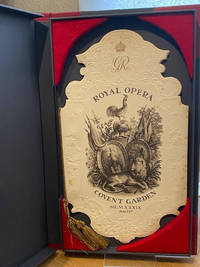
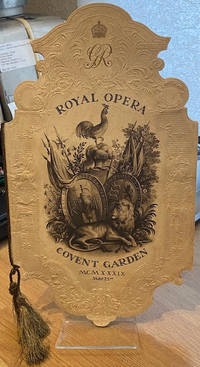
1939ABE-1538494660313Royal Opera House Covent Garden 1939 EXTREMELY RARE! REX WHISTLER designed this glorious programme for the State Performance in Honour of The President of the French Republic and Madame Lebrun at the Royal Opera House March 22 1939. WHISTLER's cover design is an elaborate affair; the embossed card covers are ingeniously cut away in curves. It is fabulously decorated by Rex Whistler on the front and back. A gold cord with tassels forms the binding round the twelve folded pages. Dancers included Margot Fonteyn Robert Helpmann William Chappell Frank Staff and Frederick Ashton. Sir Thomas Beecham conducted the London Philharmonic Orchestra. This is a great collectable example of ephemera in its own right but it is of especial value for admirers of Rex Whistler. Soft cover. Fine. Royal Opera House Covent Garden paperback
196088091<p><b>CULTURAL REVOLUTION MODEL OPERA</b></p><p>Manuscript Ledger Master Inventory: General Record of Stage Props for a traveling Chinese theatrical repertory company introducing Revolutionary Opera into its program including costs for creating silk stage props sets costumes and scenery with various paper slip receipts some loose dated from 1963 to 1969. Oblong album measuring 7-3/4 x 10-5/8 inches contents with 20 numbered leaves of double-sided ruled ledger; bound in brown cloth-backed plain light blue paper board with lettered pink paper label decorative pattern endpapers originally with ribbon-tied spine now lost contents loose.</p><p>Includes entries for the revolutionary opera <i>Taking Tiger Mountain</i> 1968 with one entry bearing signature of Wang Xiu Wen dated 12 September 1967. Includes a pink silk armband laid into the album inscribed "Mei Ying Shan" which could be translated as Huaying Mountain. </p><p>https://www.youtube.com/watchv=cjE0LDNycE8</p><p>There is also reference to a 1961 novel which the Bejing Film Studio made into a movie called <i>Lie Huo Zhong Yong Sheng</i> Living Forever in Burning Flame its IMDB title translated as <i>Red Crag</i> based partly on fact by Chinese authors Luo Guangbin and Yang Yiyan former inmates in a Kuomintang prison in Sichuan. It was set in Chongqing during the Chinese Civil War 1949 and featured underground communist agents under the command of Zhou Enlai fighting an espionage battle against the Kuomintang. The story takes place in Huaying Mountain.</p> hardcover
199914955JAbsecon: MagicImage 1999. First Edition First Printing. Laid in is an Autograph Letter Signed by Mary Philbin co-star with Lon Chaney Sr. in the classic film written to the book’s author Philip J. Riley. Dated September 11 1989 Philbin writes: “Dear Mr Riley: I am sorry about the delay in returning the book and papers. I would appreciate eleven complimentary copies of The Phantom of the Opera book or if you cannot then as many as possible. Thank you Mary Philbinâ€. Accompanied by the original hand-addressed envelope from Philbin’s home in Los Angeles. Philbin died before the book was published so this is as close as one can come to a signed copy. Large 317 page paperbound book. Profusely illustrated. Near fine copy enclosed in a handsome morocco leather and cloth clamshell box. MagicImage hardcover
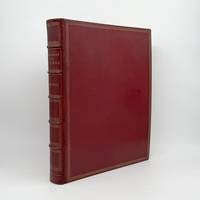
1923370639New York 1923. Mounted photograph of the Opera House. Calligraphic presentation leaf extracts from programs inlaid in large folio leaves 120 2 index ff. 1 vols. Folio. Full deep red morocco gilt spine with five raised bands boards with triple fillet borders navy blue doublures silk flyleaves t.e.g. Faintest traces of rubbing. Fine. Mounted photograph of the Opera House. Calligraphic presentation leaf extracts from programs inlaid in large folio leaves 120 2 index ff. 1 vols. Folio. Elaborate and attractive album of extracts from the printed programs of the Metropolitan Opera House in New York a record of opera productions from 1915 to 1922 listing the principal performances and also retaining the lists of box holders which functions as a who's-who of New York society. There are several newspaper clippings including an account of the farewell performance of Mrs. Geraldine Farrar in Tosca.<br /> <br /> Presented to Henry Fletcher by his wife Ethel née Thompson on the tenth anniversary of their wedding. Henry Fletcher 1877-1953 of Greenwich Connecticut was a member of the Grolier Club until his death and a major benefactor of the Yale libraries. unknown
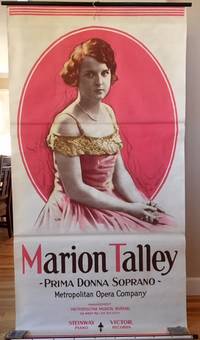
192451696New York NY; Hollywood CA; Taos NM: Underwood & Underwood Anderson Lumiere Guard Vitaphone Studios Metropolitan Music Bureau 1924-1927. Twenty seven items. With 24 photographs 3 sized 3.5 x 5.5 in.; 6 sized 5 x 7.75 in.; 1 w/ colour-tinted blue sized 7.25 x 9.5 in.; 16 sized 8 x 10 in.; many w/ annotations dating the photos in pencil some of the press photos and studio photos stamped on versos with attached newsreel information blurbs many w/ text in negative at lower corner of image; 1 very large colour lithograph poster printed on linen showing the young opera star seated and colours of pink gold and black sized 40 x 80 in. w/ wood bars at upper & lower for hanging some minor creasing from rolling but in Fine condition; and TLS from Lawrence H. Smith at Underwood & Underwood Inc. News Picture Division to Miss Marion Talley. These photographs and giant lobby poster provide splendid artifacts for the lavish attention paid to a young star at the beginning of her career during the Jazz Age. The very large poster is a beautiful example of colour lithography showing her demurely seated against a pink lozenge background with advertisements at the foot of the poster for Steinway Piano and Victor Records. Marion Talley 1906-1983 was the daughter of a telegraph operator for the Missouri Pacific Railroad and by 15 she was appearing in the Kansas City Grand Opera Company of Mignon by Abroise Thomas and quickly became a local celebrity often performing benefit concerts. She studied with music teacher Frank LaForge famed soprano composer who maintained a close relationship with the Metropolitan Opera and was placed under contract in 1925 by Giulio Gatti-Casazza at age 19 becoming the youngest principal female performer in the Met’s history to that point. Her debut performance was Feb. 17 1926 as Gilda the daughter of the title character in Verdi’s Rigoletto. The press photos show her surrounded by the many flowers she received in the 18 encores her performance on stage meeting the opera diva Ernestine Schumann-Heinck d. 1936 as well as her appearance on radio with Marguerite D’Alvarez and Giovanni Martinelli singing Home! Sweet Home!. In addition she also starred in the first Vitaphone short sound films released in 1926 with Don Juan starring John Barrymore and another Vitaphone short performing “Bella figlia dell’amore†from Rigoletto but the critics were savage criticizing her performances and her lack of appeal on camera. During this period she traveled extensively to Europe and through the southwest as evidenced by the series of photos showing her in Taos with the burros young Native American children and adults in regalia as well as her automobile. The photo of the young star by Samuel Lumiere 1878-1971 is a very nice example of his portrait work during the height of the 1920s when he was under contract to shoot celebrities for the Chicago Tribune. See: Barrios A Song in the Dark: The Birth of the Musical Film pp. 20-29; Vitaphone Marks 80th Anniversary Vitaphone News The Vitaphone Project Vol. 8 No. 1 2006; Crafton The Talkies: American Cinema’s Transition to Sound 1926-1931 1999. Underwood & Underwood, Anderson, Lumiere, Guard, Vitaphone Studios, Metropolitan Music Bureau, unknown
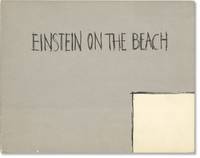
1976171236Various cities: Various 1976. First Edition. Collection of material relating to the seminal 1976 opera including a First Edition copy of the 1976 EOS Enterprises publication a circa 1976 program for two Dutch stagings of the opera at Rotterdamse Schouwburg and Theater Carré and a program for a 1976 German staging of the opera at Deutsches Schauspielhaus in Hamburg. Text variously in English Dutch and German.<br /> <br /> Book Near Fine in perfect-bound wrappers with light rubbing and toning to the spine and wrapper extremities.<br /> <br /> Programs Near Fine one unbound and measuring 8.25 x 11.25 inches the other saddle-stapled and measuring 6.25 x 8.25 inches. Various unknown
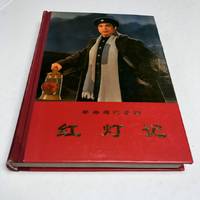
1972AG-10057<p><b><i>The Red Lantern Script</i></b><b><i>红ç¯è®°</i></b><b><i> Hong Deng Ji</i></b><br /></p><p>Beijing: Published by People's Publishing House printed by Beijing Xinhua Printing Factory distributed by Xinhua Bookstore Beijing Distributing Agency February 1972 <b>FIRST EDITION</b> 8vo. The May 1970 Script Revised Collectively by the China Peking Opera Troupe. iv374 pp. colophon consists of scripts stage photos selected theme score stage action instructions and designs beginning with quotations from Chairman Mao on the second and third pages printed pictorial stiff cover wrappers <i>fine condition.</i></p><p>京剧《红ç¯è®°ã€‹å‰§æœ¬</p><p>北京:人民出版社出版,ä¸å›½äº¬å‰§å›¢é›†ä½“制作,基于1970年五月演出本,1970å¹´12月第一版,书的å‰ä¸¤é¡µæœ‰æ¯›ä¸»å¸è¯å½•ï¼Œå…±374页主体内容。精装,å“相éžå¸¸å¥½ã€‚</p> People’s Publishing House hardcover
19392091202133104999Takarazuka Girls Opera Company 1939. Soft Cover. Fine. Volume: 1 Takarazuka Girls Opera Company paperback
1934DEMO016439INew York: Random House 1934. First edition. Hardcover. Very Good/good. Octavo 57pp. black cloth; dj chipped archivally repaired chips; inked name of Nancy Doss on front pastedown some toning to endpapers from dust jacket. <br/><br/>Wilson A21a. Full-page inscription by Gertrude Stein to O. J. Kedlec a collector from Forest Park Illinois. Stein's inscription repeats the title of this work and she wrote it from Bilignin par Belley Ain France." Random House hardcover
193963657London: Royal Opera House 1939. Folio. 8 pp. Large pictorial stiff card wrappers with tassels at spine. In custom made half red morocco solander box with leather title label and felt corner-pieces. Front and rear cover designs by Rex Whistler. Printed programme. Spotting to covers. Internally fresh. A performance by the Vic-Wells Ballet under the direction of Ninette de Valois and The London Philharmonic Orchestra conducted by Constant Lambert and Sir Thomas Beecham. Scarce. Very good example. . Near Fine. Wraps. 1939. Royal Opera House 1939 paperback
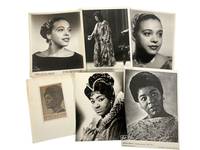
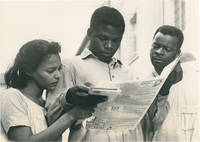
1957208291957. Press photograph archive of African American women opera singers 1957-1977 documents the emergence and international recognition of Black performers within mid twentieth century classical music and operatic institutions. The images center on four prominent singers whose careers developed during and after the era of segregation when access to major stages and audiences expanded unevenly for Black artists. Figures such as Marian Anderson who broke barriers at the Metropolitan Opera in 1955 established a precedent for subsequent generations; the performers represented here advanced that presence through sustained international careers providing visual evidence of African American participation in elite cultural institutions during a period of social and cultural change.<br /> <br /> Six black and white silver gelatin press photographs each approximately 8 x 10 inches with captions and markings on recto and verso. Subjects include Adele Addison in two studio portraits from the 1950s later known as the singing voice for Bess in Porgy and Bess 1959; Shirley Verrett in two images including an early news photograph prior to a performance at Ambassador College Auditorium and a later 1976 stage portrait in formal concert dress; Martina Arroyo in a 1977 portrait during the height of her international career; and Grace Bumbry depicted in costume as Princess Eboli in Verdi's Don Carlos at the Metropolitan Opera in 1965. The photographs capture both staged publicity portraits and performance contexts documenting professional presentation and artistic identity.<br /> <br /> Produced during decades of expanding civil rights advocacy and gradual institutional integration the archive situates African American women within a field historically shaped by exclusion and limited access. Their visibility in major opera houses and concert venues reflects broader shifts in cultural recognition and professional opportunity while also underscoring the continued significance of performance as a site of racial and gendered representation. Minor edge wear; captions remain legible; overall very good condition. unknown
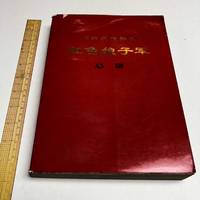
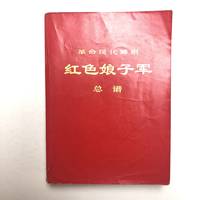
1970AG-10062<p><b><i>Red Detachment of Women full Score </i></b><b><i>红色娘å军总谱</i></b><b><i> Hong Se Niang Zi Jun</i></b><br /></p><p>Beijing: Published by People's Publishing House printed by Beijing Xinhua Printing Factory distributed by Xinhua Bookstore December 1970<b> FIRST EDITION</b>. The July 1970 Script Revised and Performed Collectively by Shanghai Peking Opera Troupe. 25×18 cm. xiv 534 1 pp. Colophon. Quotations from Chinaman Mao on the second and third page printed red tilted wrappers <i>minor tear to the cover slight tears to the foot of the binding else very fine condition.</i></p><p>北京:人民出版社,1970å¹´12月第一版,新åŽä¹¦åº—å‘行。本总谱由上海京剧演出团于1970年演出本集体改编,å‰ä¸¤é¡µå¸¦æœ‰æ¯›ä¸»å¸è¯å½•ï¼Œä¹¦çš®æœ‰è½»å¾®ç£¨æŸï¼Œå…¶ä»–å“相éžå¸¸å¥½ã€‚</p><p>In China revolutionary operas or model operas Chinese: yangban xi æ ·æ¿æˆ were a series of shows planned and engineered during the Cultural Revolution 1966–1976 by Jiang Qing the wife of Chairman Mao Zedong. They were considered revolutionary and modern in terms of thematic and musical features when compared with traditional Chinese operas. Many of them were adapted to film.</p><p>Originally eight revolutionary operas Chinese: Ba Ge Yangban Xi å…«ä¸ªæ ·æ¿æˆ were produced eighteen by the end of the period. Instead of the "emperors kings generals chancellors maidens and beauties" of the traditional Peking opera which was banned as "feudalistic and bourgeois" they told stories from China's recent revolutionary struggles against foreign and class enemies. They glorified the People's Liberation Army and the bravery of the common people and showed Mao Zedong and his thought as playing the central role in the victory of socialism in China. Although they originated as operas they soon appeared on LPs in comic books lianhuanhua on posters postcards and stamps; on plates teapots wash basins cigarette packages vases and calendars. They were performed or played from loudspeakers in schools factories and fields by special performing troupes. The Eight Model Operas dominated the stage in all parts of the country during these years leading to the joke "Eight hundred million people watched eight shows."</p><p>本组剧本属于文é©æ—¶æœŸçš„å…«å¤§æ ·æ¿æˆï¼Œç”±æ¯›ä¸»å¸å¤«äººæ±Ÿé’负责制作和演出。很多被æ‹æˆäº†ç”µå½±ã€‚</p><p>最åˆæœ‰å…«ä¸ªæ ·æ¿æˆï¼ŒåŽæ¥åœ¨æ–‡é©æ—¶æœŸçš„åŽæœŸå‘展到了18个。ä¸åƒå› å°å»ºå’Œèµ„产阶级的被ç¦äº†çš„ä¼ ç»Ÿäº¬å‰§ï¼Œé‡Œé¢å‡ºçŽ°çš„ä¸çš„国王大臣少女和美人,é©å‘½çŽ°ä»£äº¬å‰§ä¸»è¦è®²è¿°ä¸å›½è¿‘å¹´æ¥çš„抗战故事,宣扬人民解放军的光辉è£è€€å’Œæ¯›ä¸»å¸çš„英勇。虽然是京剧,很快就å˜æˆäº†å„ç§å½¢å¼å‡ºçŽ°åœ¨è¿žçŽ¯ç”»ã€æµ·æŠ¥ã€æ˜Žä¿¡ç‰‡ã€é‚®ç¥¨ã€é¦™çƒŸã€èŠ±ç“¶ã€æ—¥åŽ†ç‰å„ç§åœ°æ–¹ï¼Œç”¨æ‰©éŸ³å–‡å在å¦æ ¡ã€å·¥åŽ‚ç‰åœ°æ–¹ï¼Œç”±æ¼”出团进行表演。8ä¸ªæ ·æ¿æˆä¸»å¯¼äº†å…¨å›½æ‰€æœ‰çš„舞å°ï¼Œå› æ¤æœ‰äº†8亿人看8个剧的笑è¯ã€‚</p> People’s Publishing House paperback
1971AG-10054<p>Beijing: Published by People's Publishing House printed by Beijing Xinhua Printing Factory distributed by Xinhua Bookstore January 1971 <b>FIRST EDITION</b>. The July 1970 Script Revised and Performed Collectively by Shanghai Peking Opera Troupe. 8vo vi 397 pp. colophon consists of scripts stage photos selected theme score stage action instruction and the stage design started with quotations from Chairman Mao on the second and third page printed color stage photos and instructions inside printed pictorial wrappers <i>slightly curled at the head and foot of the wrappers else very good condition.</i><br /></p><p><i>北京:人民出版社出版,1971年第一版,由上海京剧团《智å–å¨è™Žå±±ã€‹å‰§ç»„集体改编åŠæ¼”出。本书包括了剧本ã€ä¸»æ—‹å¾‹ã€å‰§ç…§ã€åŠ¨ä½œæŒ‡å¯¼ã€èˆžå°ç¾Žæœ¯ç‰å†…容。包括éžå¸¸å¤šçš„照片。书皮上下ç¨å¾®å·èµ·ï¼Œæ— ç ´æŸï¼Œå“相éžå¸¸å¥½ã€‚</i></p><p>In China revolutionary operas or model operas Chinese: yangban xi æ ·æ¿æˆ were a series of shows planned and engineered during the Cultural Revolution 1966–1976 by Jiang Qing the wife of Chairman Mao Zedong.1 They were considered revolutionary and modern in terms of thematic and musical features when compared with traditional Chinese operas. Many of them were adapted to film.<br /></p><p>Originally eight revolutionary operas Chinese: Ba Ge Yangban Xi å…«ä¸ªæ ·æ¿æˆ were produced eighteen by the end of the period. Instead of the "emperors kings generals chancellors maidens and beauties" of the traditional Peking opera which was banned as "feudalistic and bourgeois" they told stories from China's recent revolutionary struggles against foreign and class enemies. They glorified the People's Liberation Army and the bravery of the common people and showed Mao Zedong and his thought as playing the central role in the victory of socialism in China. Although they originated as operas they soon appeared on LPs in comic books lianhuanhua on posters postcards and stamps; on plates teapots wash basins cigarette packages vases and calendars. They were performed or played from loudspeakers in schools factories and fields by special performing troupes. The Eight Model Operas dominated the stage in all parts of the country during these years leading to the joke "Eight hundred million people watched eight shows."</p><p>本剧是文é©æ—¶æœŸçš„å…«å¤§æ ·æ¿æˆä¹‹ä¸€ã€Šæ™ºå–å¨è™Žå±±ã€‹ï¼Œç”±æ¯›ä¸»å¸å¤«äººæ±Ÿé’负责制作和演出。很多被æ‹æˆäº†ç”µå½±ã€‚</p><p>最åˆæœ‰å…«ä¸ªæ ·æ¿æˆï¼ŒåŽæ¥åœ¨æ–‡é©æ—¶æœŸçš„åŽæœŸå‘展到了18个。ä¸åƒå› å°å»ºå’Œèµ„产阶级的被ç¦äº†çš„ä¼ ç»Ÿäº¬å‰§ï¼Œé‡Œé¢å‡ºçŽ°çš„ä¸çš„国王大臣少女和美人,é©å‘½çŽ°ä»£äº¬å‰§ä¸»è¦è®²è¿°ä¸å›½è¿‘å¹´æ¥çš„抗战故事,宣扬人民解放军的光辉è£è€€å’Œæ¯›ä¸»å¸çš„英勇。虽然是京剧,很快就å˜æˆäº†å„ç§å½¢å¼å‡ºçŽ°åœ¨è¿žçŽ¯ç”»ã€æµ·æŠ¥ã€æ˜Žä¿¡ç‰‡ã€é‚®ç¥¨ã€é¦™çƒŸã€èŠ±ç“¶ã€æ—¥åŽ†ç‰å„ç§åœ°æ–¹ï¼Œç”¨æ‰©éŸ³å–‡å在å¦æ ¡ã€å·¥åŽ‚ç‰åœ°æ–¹ï¼Œç”±æ¼”出团进行表演。8ä¸ªæ ·æ¿æˆä¸»å¯¼äº†å…¨å›½æ‰€æœ‰çš„舞å°ï¼Œå› æ¤æœ‰äº†8亿人看8个剧的笑è¯ã€‚</p><p><i><br /></i></p> People’s Publishing House paperback
1972AG-10053<p>Beijing: Published by C printed by Beijing Xinhua Printing Factory distributed by Xinhua Bookstore Beijing Distributing Agency February 1972 <b>FIRST EDITION</b> 8vo. The May 1970 Script Revised Collectively by the China Peking Opera Troupe. iv 374 pp. colophon consists of scripts stage photos selected theme score stage action instruction and the stage design started with quotations from Chairman Mao on the second and third page printed pictorial wrappers <i>slightly curled at the head and foot of the wrappers minor tears to the edge of the wrappers else fine condition.</i></p><p>北京:人民出版社出版。本书å‰ä¸¤é¡µå¸¦æœ‰æ¯›ä¸»å¸è¯å½•ï¼Œå†…容包括了剧本ã€å‰§ç…§ã€ä¸»æ—‹å¾‹ã€åŠ¨ä½œè¯´æ˜Žç‰è¯¦ç»†å†…容,由照片和文å—çš„å½¢å¼ç»„æˆï¼Œç…§ç‰‡å›¾ç‰‡å¾ˆå¤šï¼Œä¹Ÿæ˜¯æœ¬ä¹¦çš„一大特色。书皮上下两段ç¨å¾®å·èµ·ï¼Œå…¶ä»–部分å“相éžå¸¸å¥½ã€‚</p><p>In China revolutionary operas or model operas Chinese: yangban xi æ ·æ¿æˆ were a series of shows planned and engineered during the Cultural Revolution 1966–1976 by Jiang Qing the wife of Chairman Mao Zedong.1 They were considered revolutionary and modern in terms of thematic and musical features when compared with traditional Chinese operas. Many of them were adapted to film.</p><p>Originally eight revolutionary operas Chinese: Ba Ge Yangban Xi å…«ä¸ªæ ·æ¿æˆ were produced eighteen by the end of the period. Instead of the "emperors kings generals chancellors maidens and beauties" of the traditional Peking opera which was banned as "feudalistic and bourgeois" they told stories from China's recent revolutionary struggles against foreign and class enemies. They glorified the People's Liberation Army and the bravery of the common people and showed Mao Zedong and his thought as playing the central role in the victory of socialism in China. Although they originated as operas they soon appeared on LPs in comic books lianhuanhua on posters postcards and stamps; on plates teapots wash basins cigarette packages vases and calendars. They were performed or played from loudspeakers in schools factories and fields by special performing troupes. The Eight Model Operas dominated the stage in all parts of the country during these years leading to the joke "Eight hundred million people watched eight shows."</p><p>本剧是文é©æ—¶æœŸçš„å…«å¤§æ ·æ¿æˆä¹‹ä¸€ï¼Œç”±æ¯›ä¸»å¸å¤«äººæ±Ÿé’负责制作和演出。很多被æ‹æˆäº†ç”µå½±ã€‚</p><p>最åˆæœ‰å…«ä¸ªæ ·æ¿æˆï¼ŒåŽæ¥åœ¨æ–‡é©æ—¶æœŸçš„åŽæœŸå‘展到了18个。ä¸åƒå› å°å»ºå’Œèµ„产阶级的被ç¦äº†çš„ä¼ ç»Ÿäº¬å‰§ï¼Œé‡Œé¢å‡ºçŽ°çš„ä¸çš„国王大臣少女和美人,é©å‘½çŽ°ä»£äº¬å‰§ä¸»è¦è®²è¿°ä¸å›½è¿‘å¹´æ¥çš„抗战故事,宣扬人民解放军的光辉è£è€€å’Œæ¯›ä¸»å¸çš„英勇。虽然是京剧,很快就å˜æˆäº†å„ç§å½¢å¼å‡ºçŽ°åœ¨è¿žçŽ¯ç”»ã€æµ·æŠ¥ã€æ˜Žä¿¡ç‰‡ã€é‚®ç¥¨ã€é¦™çƒŸã€èŠ±ç“¶ã€æ—¥åŽ†ç‰å„ç§åœ°æ–¹ï¼Œç”¨æ‰©éŸ³å–‡å在å¦æ ¡ã€å·¥åŽ‚ç‰åœ°æ–¹ï¼Œç”±æ¼”出团进行表演。8ä¸ªæ ·æ¿æˆä¸»å¯¼äº†å…¨å›½æ‰€æœ‰çš„舞å°ï¼Œå› æ¤æœ‰äº†8亿人看8个剧的笑è¯ã€‚</p> People’s Publishing House paperback
1959161071New York: United Press International 1959. Two vintage reference photographs from the set of the 1959 film including one glossy and single weight and one matte finish borderless and double weight. One photograph shows actor Sidney Poitier talking with producer Sam Goldwyn and the other shows Poitier with actors Dorothy Dandridge and Brock Peters. One with a provenance stamp on the verso and both with annotations in manuscript ink identifying subjects on the versos. <br /> <br /> Based on DuBose Heyward's 1925 novel "Porgy" and its subsequent 1927 opera adaptation by DuBose Heyward and his wife Dorothy with music and lyrics by George and Ira Gershwin. <br /> <br /> One of the great enduring American musicals following a disabled man in a small fishing village in South Carolina who harbors a woman attempting to flee her disreputable past.<br /> <br /> Set in South Carolina shot on location in Stockton California with some scenes shot near the San Joaquin-Sacramento River Delta in California. <br /> <br /> Matte photograph 11 x 8 inches glossy photograph 10 x 8 inches. Very Good plus lightly edgeworn with matte photograph slightly curled. <br /> <br /> National Film Registry. United Press International unknown
193963656London: Royal Opera House 1939. Folio. 8 pp. Large pictorial stiff card wrappers with tassels at spine. Front and rear cover designs by Rex Whistler. Printed programme. Spotting to covers. A performance by the Vic-Wells Ballet under the direction of Ninette de Valois and The London Philharmonic Orchestra conducted by Constant Lambert and Sir Thomas Beecham. Scarce. . Good. Wraps. 1939. Royal Opera House 1939 paperback
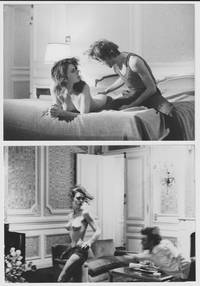
1983162315N.p.: N.p. 1983. Four vintage borderless reference photographs from the 1983 film including two reference photographs showing director Jean-Luc Godard on the set.<br /> <br /> Loosely based on Georges Bizet's 1875 opera. A young woman involved in a terrorist gang is embroiled in a plan to rob a bank but her plans are waylaid when she falls for the security guard.<br /> <br /> Set and shot on location in Paris. <br /> <br /> 7 x 5 inches. Near Fine.<br /> <br /> Godard Histoires du Cinema. N.p. unknown
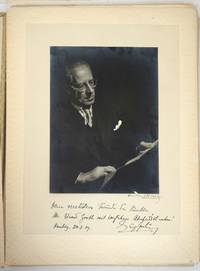
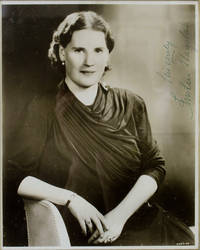
1930144431930. Image 9 1/2 x 7 1/2 inches matted and framed to 14 1/4 x 12 1/4 inches overall. 1 vols. Fine condition. Image 9 1/2 x 7 1/2 inches matted and framed to 14 1/4 x 12 1/4 inches overall. 1 vols. An attractive image showing the great Wagnerian soprano in street clothes seated. unknown
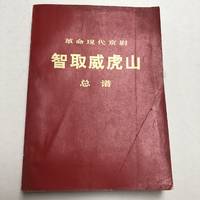
1971AG10051<p>Beijing: Published by People's Publishing House printed by Beijing Xinhua Printing Factory distributed by Xinhua Bookstore August 1971<b> FIRST EDITION</b>. The July 1970 Script Revised and Performed Collectively by Shanghai Peking Opera Troupe. 8vo. xii 425 3 pp. Colophon. Quotations from Chinaman Mao on the second and third page. Printed red tilted wrappers <i>minor crease to the cover minor tear to the foot of the binding else fine condition.</i><br /></p><p>《智å–å¨è™Žå±±ã€‹æ€»è°±</p><p>北京: 人民出版社出版,å‰2页带有毛主å¸è¯å½•ï¼Œ1971å¹´8月出版,由上海京剧团《智å–å¨è™Žå±±ã€‹å‰§ç»„改å˜é›†ä½“演出,1970年演出本。第一版第一å°ã€‚å°çš®ç¨å¾®æœ‰åˆ’痕,其他完好。</p><p>In China revolutionary operas or model operas Chinese: yangban xi æ ·æ¿æˆ were a series of shows planned and engineered during the Cultural Revolution 1966–1976 by Jiang Qing the wife of Chairman Mao Zedong.1 They were considered revolutionary and modern in terms of thematic and musical features when compared with traditional Chinese operas. Many of them were adapted to film.</p><p>Originally eight revolutionary operas Chinese: Ba Ge Yangban Xi å…«ä¸ªæ ·æ¿æˆ were produced eighteen by the end of the period. Instead of the "emperors kings generals chancellors maidens and beauties" of the traditional Peking opera which was banned as "feudalistic and bourgeois" they told stories from China's recent revolutionary struggles against foreign and class enemies. They glorified the People's Liberation Army and the bravery of the common people and showed Mao Zedong and his thought as playing the central role in the victory of socialism in China. Although they originated as operas they soon appeared on LPs in comic books lianhuanhua on posters postcards and stamps; on plates teapots wash basins cigarette packages vases and calendars. They were performed or played from loudspeakers in schools factories and fields by special performing troupes. The Eight Model Operas dominated the stage in all parts of the country during these years leading to the joke "Eight hundred million people watched eight shows."</p><p>本剧是文é©æ—¶æœŸçš„å…«å¤§æ ·æ¿æˆä¹‹ä¸€ã€Šæ™ºå–å¨è™Žå±±ã€‹ï¼Œç”±æ¯›ä¸»å¸å¤«äººæ±Ÿé’负责制作和演出。很多被æ‹æˆäº†ç”µå½±ã€‚</p><p>最åˆæœ‰å…«ä¸ªæ ·æ¿æˆï¼ŒåŽæ¥åœ¨æ–‡é©æ—¶æœŸçš„åŽæœŸå‘展到了18个。ä¸åƒå› å°å»ºå’Œèµ„产阶级的被ç¦äº†çš„ä¼ ç»Ÿäº¬å‰§ï¼Œé‡Œé¢å‡ºçŽ°çš„ä¸çš„国王大臣少女和美人,é©å‘½çŽ°ä»£äº¬å‰§ä¸»è¦è®²è¿°ä¸å›½è¿‘å¹´æ¥çš„抗战故事,宣扬人民解放军的光辉è£è€€å’Œæ¯›ä¸»å¸çš„英勇。虽然是京剧,很快就å˜æˆäº†å„ç§å½¢å¼å‡ºçŽ°åœ¨è¿žçŽ¯ç”»ã€æµ·æŠ¥ã€æ˜Žä¿¡ç‰‡ã€é‚®ç¥¨ã€é¦™çƒŸã€èŠ±ç“¶ã€æ—¥åŽ†ç‰å„ç§åœ°æ–¹ï¼Œç”¨æ‰©éŸ³å–‡å在å¦æ ¡ã€å·¥åŽ‚ç‰åœ°æ–¹ï¼Œç”±æ¼”出团进行表演。8ä¸ªæ ·æ¿æˆä¸»å¯¼äº†å…¨å›½æ‰€æœ‰çš„舞å°ï¼Œå› æ¤æœ‰äº†8亿人共看8个剧的笑è¯ã€‚</p> People’s Publishing House paperback
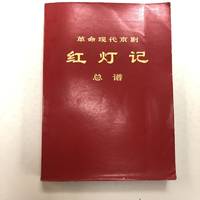
1971AG-10050<p><b><i>The Red Lantern Full Score</i></b><b><i>红ç¯è®°</i></b><b><i> Hong Deng Ji</i></b></p><p>Beijing: Published by People's Publishing House printed by Beijing Xinhua Printing Factory distributed by Xinhua Bookstore Beijing Distributing Agency,August 1971<b> FIRST EDITION</b>. The May 1970 Script Created Collectively by the China Peking Opera troupe. Quotations from Chinaman Mao on the second and third page 8vo. xii 380 2 pp. colophon printed titled wrappers <i>crease to the cover very slight tear to the foot of the binding else fine condition.</i></p><p>In China revolutionary operas or model operas Chinese: yangban xi æ ·æ¿æˆ were a series of shows planned and engineered during the Cultural Revolution 1966–1976 by Jiang Qing the wife of Chairman Mao Zedong. They were considered revolutionary and modern in terms of thematic and musical features when compared with traditional Chinese operas. Many of them were adapted to film.</p><p>京剧《红ç¯è®°ã€‹æ€»è°±</p><p>北京:人民出版社出版,ä¸å›½äº¬å‰§å›¢é›†ä½“制作,基于1970年五月演出本,第一版,书的å‰ä¸¤é¡µæœ‰æ¯›ä¸»å¸è¯å½•ï¼Œå…±380页主体内容。书皮ç¨æœ‰ä¸€é“上下方å‘折痕,其他å“相éžå¸¸å¥½ã€‚</p><p>In China revolutionary operas or model operas Chinese: yangban xi æ ·æ¿æˆ were a series of shows planned and engineered during the Cultural Revolution 1966–1976 by Jiang Qing the wife of Chairman Mao Zedong.1 They were considered revolutionary and modern in terms of thematic and musical features when compared with traditional Chinese operas. Many of them were adapted to film.</p><p>Originally eight revolutionary operas Chinese: Ba Ge Yangban Xi å…«ä¸ªæ ·æ¿æˆ were produced eighteen by the end of the period. Instead of the "emperors kings generals chancellors maidens and beauties" of the traditional Peking opera which was banned as "feudalistic and bourgeois" they told stories from China's recent revolutionary struggles against foreign and class enemies. They glorified the People's Liberation Army and the bravery of the common people and showed Mao Zedong and his thought as playing the central role in the victory of socialism in China. Although they originated as operas they soon appeared on LPs in comic books lianhuanhua on posters postcards and stamps; on plates teapots wash basins cigarette packages vases and calendars. They were performed or played from loudspeakers in schools factories and fields by special performing troupes. The Eight Model Operas dominated the stage in all parts of the country during these years leading to the joke "Eight hundred million people watched eight shows."</p><p>本剧是文é©æ—¶æœŸçš„å…«å¤§æ ·æ¿æˆä¹‹ä¸€ã€Šçº¢ç¯è®°ã€‹ï¼Œç”±æ¯›ä¸»å¸å¤«äººæ±Ÿé’负责制作和演出。很多被æ‹æˆäº†ç”µå½±ã€‚</p><p>最åˆæœ‰å…«ä¸ªæ ·æ¿æˆï¼ŒåŽæ¥åœ¨æ–‡é©æ—¶æœŸçš„åŽæœŸå‘展到了18个。ä¸åƒå› å°å»ºå’Œèµ„产阶级的被ç¦äº†çš„ä¼ ç»Ÿäº¬å‰§ï¼Œé‡Œé¢å‡ºçŽ°çš„ä¸çš„国王大臣少女和美人,é©å‘½çŽ°ä»£äº¬å‰§ä¸»è¦è®²è¿°ä¸å›½è¿‘å¹´æ¥çš„抗战故事,宣扬人民解放军的光辉è£è€€å’Œæ¯›ä¸»å¸çš„英勇。虽然是京剧,很快就å˜æˆäº†å„ç§å½¢å¼å‡ºçŽ°åœ¨è¿žçŽ¯ç”»ã€æµ·æŠ¥ã€æ˜Žä¿¡ç‰‡ã€é‚®ç¥¨ã€é¦™çƒŸã€èŠ±ç“¶ã€æ—¥åŽ†ç‰å„ç§åœ°æ–¹ï¼Œç”¨æ‰©éŸ³å–‡å在å¦æ ¡ã€å·¥åŽ‚ç‰åœ°æ–¹ï¼Œç”±æ¼”出团进行表演。8ä¸ªæ ·æ¿æˆä¸»å¯¼äº†å…¨å›½æ‰€æœ‰çš„舞å°ï¼Œå› æ¤æœ‰äº†8亿人看8个剧的笑è¯ã€‚</p><p><i><br /></i></p> People’s Publishing House paperback
19383114056NP: Merle Armtage. Very Good with no dust jacket. 1938. First Edition; First Printing. Softcover. Souvenir program for the first revival of George Gershwin's operatic masterpiece staged in Los Angeles and San Francisco in 1938 in the pattern of director Rouben Mamoulian original production. Very good in yellow oversize printed wrappers. 9" X 12" 22pp. Couple short edge tears and traces of mild shelf-soiling. Features several photographs of the principal artists involved as well Gershwin and others. Surprisingly uncommon. ; 9" X 12"; 22 pages . Merle Armtage. paperback
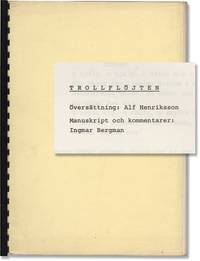
1973146818N.p.: N.p. 1973. Agency Draft script for the 1975 film. With 31 pages of director Ingmar Bergman's commentary bound in after the script. Text in Swedish.<br /> <br /> Based on the 1791 German opera about a young prince tasked with rescuing a princess from a mysterious high priest. Widely considered one of the most successful operatic adaptations to film ever released. <br /> <br /> Shot on location in Stockholm Sweden. <br /> <br /> Pale yellow untitled wrappers. Title page present dated November 1973 with credits for director Ingmar Bergman and screenwriter Alf Henrikson. 93 leaves with last page of text numbered 61. Xerographic duplication rectos only. Pages Very Good plus wrapper Very Good plus with a black comb binding.<br /> <br /> Criterion Collection 71. N.p. unknown
1929008486New York / London / Toronto: Longmans Green and Co. 1929. First Edition 1st Printing. Red Cloth. Very Good/Good Slipcase. Two Volumes. Slipcase With Modernist Illustration Of A Woman's Head And A Single Musical Note In Blue Gray Black And White By "H. M."; Preliminary Reviews On Rear Panel; Publisher's Summary On Rear Panel With $5.00 Price. Stated First Editions. A Well Received Novel But Reprinted Almost Immediately In The Book League Monthly In Two Parts Hence Never Receiving A Further Trade Printing. A Tight Clean Lightly Used Set Binding And Hinges Tight Spine Gilt Dull But Readable. Inscribed On Front Endpaper To Miss Pearl Besuner And Dated March 11 1929; She Was A Soprano From Cincinnati Who Made Her Debut With The Metropolitan Opera In 1928 And Was Favorably Reviewed By Sanborn For Her Performance In "The Emperor Jones" In 1933. Her History Mirrors That Of The Main Character Of This Novel Making This A Likely Dedication Copy. Pitts Sanborn 1879-1941 Was Music Critic For The New York Globe And Then The New York World Telegram. "He Also Write Books Such As The Metropolitan Book Of The Opera Prima Donna : A Novel Of The Opera Ludwig Van Beethoven." Wikipedia. Sanborn Was Also Remarked Upon As One Of The Great Originals Of 1920'S / 1930'S Culture. His Friendship With Wallace Stevens Included A Great Influence Upon Stevens' Interest In Music And Thus His Poetry. With A Long Two-Column Review From A Contemporary Newspaper Not Identified. Signed Material From Sanborn Is Scarce; Most Of His Personal Estate Was Lost Thrown Out On Street By His Ny Landlord Immediately After His Death In 1941. <br/> <br/> Longmans, Green and Co. hardcover