Dürer, AlbrechtAntiquariat.de

19 848 résultats
160463098Arnhem, Johan Jansen (Jan Jansz), (1603-)1604. Fol. Mit einem Kupferportrait Dürers (monogr. ?DM?) u. zahlr. tlw. ganzs. bzw. gefalt. Holzschnitten (davon 2 m. mont. Einschlagstreifen) von Albrecht Dürer. 2; 90 (das letzte weiß); 131 (davon 4 gefalt.; das letzte weiß); 26 (davon 10 gefalt.) nn. Bll., Etw. späterer orangegefärbter Pgmt.-Bd. m. durchzogenen Bünden u. am Vorderdeckel den Initialen ?HVZ? sowie der Jahreszahl ?1674?.
In-folio (mm 298 195). Carte [250], con la prima bianca; [52]. Collazione: a-G8 H10 i-U8 x10 A8 B12 C-I8; AA-DD8 EE FF10. Spazio delle iniziali vuoto con suggerimento di lettere. Carattero romani (R 94) su 55 righe. Copia con ampie ma leggere macchie di umidità alle pagine iniziali, alcune più marginali alla fine. Legatura in pelle coeva su tavole di legno, con motivi arabeschi impressi sui piatti, dorso con titolo manoscritto su carta; con difetti. Ex-dono del XVI secolo sulla pagina del titolo, alcune glosse dalla stessa mano nel testo.
In 2°, (16) cc. (inclusi i due frontespizi), 489 (1) pp., (14) cc., doppio frontespizio in latino e italiano, entrambi con vignette tipografiche, con 79 tavole fuori testo, bianche al verso di cui 69 a piena pagina e 10 piu' volte ripiegate, legatura coeva in mezza pergamena e carta decorata con angoli.
1491915<p>Terviso or Venice: Michael Manzolus 1491. First Edition with the commentary of Acron and Pomponius Porphyrio. Bound in modern marbled gilt calf. A very large and clean copy with marginal indexing on a few signatures in red others in brown ink. A very Large copy of a very very rare edition of Horace https://data.cerl.org/istc/ih00451000 GW 13457; Goff H451; BMC V 315 IB. 21815; Bod-inc H-203; CIBN H-275. Located copies:The Walters Art Museum Bancroft Library Yale Free Library of Philadelphia Princeton Univ. Brown University Pauline Fore Moffitt Library University of California General Library. The unique charm of Horace's lyric poetry arises from his combination of the metre and style of the distant past—the world of the Archaic Greek lyric poets—with descriptions of his personal experience and the important moments of Roman life. He creates an intermediate space between the real world and the world of his imagination populated with fauns nymphs and other divinities.<br />He denounces corrupt morals praises the integrity of the people of Italy and shows a ruler who carries on his shoulders the burden of power. Other Augustan themes that appear in Horace's lyric verse include the idea of the universal character and eternity of Roman political dominion and the affirmation of the continuity of the republican tradition with the Augustan principate. At some stage Augustus offered Horace the post of his private secretary but the poet declined on the plea of ill health. Not withstanding Augustus did not resent his refusal and indeed their relationship became closer.<br />"Horace's success as a poet can be measured partly by how difficult he is to imitate and translate and by how many admirers have sought to do both. Readers in the Middle Ages looked to Horace as a moralist and as a literary critic and appreciated the Satires and Epistles more than the more difficult Odes. The enthusiasm of the Italian Renaissance poets Petrarch 14th century Landinio and Politian late 15th century for the Odes encouraged the popularity of Horace's lyric. Horace was one of Montaigne's 16th century favorite poets. The themes and poetics of both the lyrics and the satires greatly influenced Ben Jonson late 16th early 17th century Robert Herrick Andrew Marvell Milton and Dryden 17th century. The Odescontinued to be springboards for much of both public and private 17th-century English lyrics. Pope was the leading Horatian poet writing in English during the 18th century the Age of Augustanism especially imitating Horace's hexameter poetry while Alfred Lord Tennyson Matthew Arnold Byron and Rudyard Kipling were among Horace's enthusiasts in the 19th century. Horace continued to inspire modern poets among them Ezra Pound. <br /><br />While the different genres of his work have specific qualities they all share in being Horatian a quality that many have tried to define. In Nietzsche's view Horace's peerless artistry separates him from all other poets. Compared to Horace's Odes "All the rest of poetry becomes in contrast something too popular—a mere garrulity of feelings" "What I owe to the ancients" Twilight of the Idols 1 https://www.poetryfoundation.org/poets/horace . Folio 30 x 20cm Signatures: A8B10C8D4E8F-G6a–q8r6. 184 leaves First Edition of Horace with both of his ancient commentators Acron and Porphyrio. Bound in modern marbled gilt calf. A very large and clean copy with marginal indexing on a few signatures in red others in brown ink.<br /><br />The history of the printing of editions of Horace and his commentators.<br /><br />First printed in Venice about 1471-2 then in Milan about 1475 14761477 Venice again 1478 &1479. The next edition was Leipzig 1492 All of these editions are without commentary. Acron's commentary was Published with out the Opera in Milan in 1479. At Florence in 1482 there is an edition of the Opera with the Landinus commentary then again in Venice 1483-86. The Edition offered here is the FIRST to have the commentary of Helenius Acron and Pomponius Porphyrion who are both said to have flourished in the third century these commentaries are revised by Raphael Rgius ƒl. 1480-1500 and Ludovicus de Strazarolis which make up the first 50 pages of this book.</p> Michael Manzolus
149047651Venedig, Bernardinus de Choris u. Simon de Luere, 5. Oktober 1490. Fol. 3 nn., 147; 65 num., 1 weißes (= 216) Bll. (Rom. Type, 62 Zeilen; Min. f. Initialen), Mod. Pgmt. unter Verwendung einer lateinischen Handschrift des 15. Jhds. mit zahlr. roten u. blauen Fleuronné-Initialen.
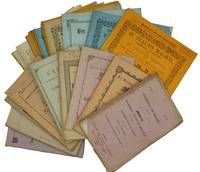
AQ25079vs.: vs. c. 1820s-1930s 12mo 8vo and quarto. The majority preserved within original publisher's wrappers. An extensive archive of theatrical publications and ephemera emanating from the recently dispersed library of Howth Castle County Dublin seat of the Gaisford-St. Lawrence family comprised of theatre programmes and libretti representing productions spanning from the late 1820s up to the 1930s both domestic and Continental in origin. The 94 individual publications comprehend: Eight playscripts and libretti printed in Paris between including an 1828 edition of Théaulon and Choquart's comic vaudeville Monsieur Jovial ou l'huissier-chansonnier 1827 and an 1882 issue of Charles Gounod's five-act opera Faust set to a French libretto by Jules Barbier and Michel Carré from Carré's play Faust et Marguerite. 15 Italian productions variously printed at Rome Milan Florence and Naples in the latter half of the nineteenth century including an 1848 Neapolitan edition of Verdi's four-act opera Nabucodonosor composed to an Italian libretto by Temistocle Solera first performed at La Scala in Milan 9th March 1842; and a programme to accompany the first performance of Verdi's Attila at La Fenice in Venice 17th March 1846. An Italian language edition printed at Barcelona in 1845 of Jacopo Ferretti's libretto Eran due or son tre 1834. 70 theatre programmes operas and Italian-language libretti printed in London spanning the century between the 1830s and 1930s including: 15 issued in the 1870s as a part of 'Davidson's Musical Opera-Books' series published in conjunction with performances at 'London's Italian Opera Houses' of productions of inter alia Rossini's The Barber of Seville Bizet's Carmen and Mozart's Don Giovanni and The Magic Flute each with a parallel English translation and 'the music of the principal airs'. The first appearance in print of the libretti for five Gilbert and Sullivan productions: Patience 1881 Princess Ida 1884 The Mikado 1885 The Yeomen of the Guard 1888 and Utopia 1893. A magazine-programme for a run of performances at the Shaftesbury Theatre in 1926 of J. M. Barrie's Peter Pan; or the Boy Who Wouldn't Grow Up 1904 - a production with which Barrie was directly involved - with Dorothy Dickson in the lead role. A run of 12 programmes for the 1925/26 1926/27 seasons at the The Old Vic including 11 productions of Shakespeare's plays all notably featuring leading Shakespearean actor Baliol Holloway d. 1967. Notable members of the Gaisford-St. Lawrence family included Thomas Gaisford 1789-1855 English classical scholar sometime curator of the Bodliean Library Regius Professor of Greek at Oxford and Dean of Christ Church. Gaisford’s eldest son Thomas Gaisford of Offington Sussex 1816-1898 British Army officer married in 1859 as his second of three wives Lady Emily St Lawrence d. 1868 eldest daughter of the third Earl of Howth. Their eldest surviving son Royal Navy officer Julian Charles Gaisford-St Lawrence 1862-1932 succeeded in 1909 his uncle the fourth and last Earl of Howth and came to reside at Howth Castle in Co. Dublin. A rare opportunity to acquire an ephemeral archive which not only exemplifies the theatrical passions of a single family across least three generations but documents the evolution of nineteenth century stage production charts the popular progress of Italian-language libretti in both Britain and on the Continent and exhibits the situation of English theatre prior to the post-war dominance of television and film. . [vs.], [c. 1820s-1930s] unknown
27956Paris Maurice Dreyfous, Editeur 1886 in 4 (30x24) 1 fort volume reliure plein maroquin vert lierre, dos lisse, dos et plats ornés d'un original décor géométrique à base de petits points estampés à froid, dentelle intérieure assortie, tête dorée, couverture conservée, 373 pages [1], étui bordé. Reliure signée de René Kieffer. Jean Richepin, Médéa 1849 - Paris 1926, poète, romancier et auteur dramatique français. Edition originale, tirage limité à 500 exemplaires numérotés. Notre exemplaire non numéroté est imprimé sur papier fort de Hollande. Ce Précieux exemplaire unique est truffé de 80 beaux dessins originaux riches en coloris, aquarelles, lavis, qui illustrent superbement ce texte sur le monde de la mer et ses gens. Richepin Jean, 1849-1926, poète et romancier français. Dufour, Emilien-Léon-Jean. Superbe et très précieux exemplaire ( Photographies sur demande / We can send pictures of this book on simple request )
1892127Paris, 1892 ; in-folio, reliure moderne demi-maroquin bleu marine à coins, filets dorés, dos lisse orné en long, tête dorée, deux couvertures de livraison illustrées conservées.
In-folio (mm 304x205). Pagine [12], 152, [2] con 2 tavole in una carta fuori testo. Numerose figure incise in legno nel testo, anche a piena pagina. Stemma mediceo al frontespizio e grande marca dello stampatore in fine. Piccoli strappi e lacune riparati al frontespizio, rimontato, altro strappo marginale riparato alle carte ff3-ff4 e alla tavola fuori testo in fine, lievi ma ampie gore d'acqua lungo il volume. Legatura inglese settecentesca in pieno vitello spruzzato con cornice a motivi floreali impressa a secco ai piatti e titoli dorati su tassello al dorso. Ex-libris Macclesfield al contropiatto anteriore.
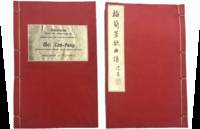
1929AG20057<p><br /></p><p><b>SELECTIONS FROM REPERTOIRE OF OPERATIC SONGS AND TERPSICHOREAN MELODIES OF MEI LAN-FANG - by Professor Liu T</b><b>'</b><b>ien. Hua </b><b>梅兰芳æŒæ›²è°±</b></p><p>Published in 1929 specially edited and printed for Mei Lan-Fang's performance in the United States. Mei Lan-Fang was invited by America in the winter of 1929 to help the people better understand Chinese Opera the master of Chinese songs Liu Tianhua produced two volumes of books one in Chinese 126pp. and the other in English 118pp. which includes 18 Kunqu Opera with music script and score. Signed and stamped by the Author on the English version 1050 copies printed and only 50 copies were signed this is No. 43 on Chinese art paper 4to matching red silk sewn thread binding with printed gold paper labels very fine condition. </p><p><br /></p><p>本套书å°åˆ·äºŽ1929年,共分为2册,精装,æ¤ä¹¦ä¸ºæ¢…兰芳赴美演出特制,共1050部,其ä¸çš„50部为æˆåŒ–宣纸å°åˆ¶ï¼Œåˆ—有编å·ï¼Œç¬¬ä¸€å·ä»·æ ¼äº”百美元,二至五åå·ä¸€ç™¾ç¾Žå…ƒï¼Œæ¤å¥—为50部ä¸çš„第43å·ï¼Œæœ‰åˆ˜å¤©åŽäº²å°å¹¶è‹±æ–‡ç¾å。两套书分别为ä¸è‹±æ–‡ç‰ˆï¼Œå…±æ”¶å½•äº†18æ¡æ˜†æ›²çš„å”±è¯ã€å”±è…”工尺谱和五线谱,历ç»æ•°æœˆå®Œæˆ å“相如新,ä¿å˜å¦‚æ¤å®Œå¥½çš„éžå¸¸å°‘è§ã€‚</p> paperback
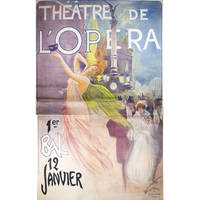
188019742<p><strong>Superb huge lithographed poster for a ball at the Opéra Garnier by painter and poster artist Edouard Charles Lucas 1866-1925 aka Charle Lucas.</strong></p> Impr. Chardin 17 passage Daudin
In-4 p. (mm. 288x200), p. pergamena antica (risg. rifatti), titolo ms. al dorso, 10 cc.nn., 583 cc.num., (1) c.nn.; frontespizio col titolo incluso nella grande cornice xilografica (già usata per le precedenti ediz.) con la marca del giglio araldico: stemma di Firenze e iniziali L.A.; al recto dell’ultima carta: Registro e sottoscrizione, Venetiis, apud Haeredes Lucantonii Iuntae florentini, mense martio 1544, al verso grande marca (giglio fiorentino e iniziali L.A. circondati da ghirlanda sorretta da due putti); al recto della c. v1 (145) altro frontespizio: “P. Virgilii Maronis Aeneis accuratissime recognita cum commentariis.. Venetiis 1543, con la marca del giglio fiorentino. Mancano le ultime due carte (D5 e D6) che sono bianche. La ns. è un’edizione della Variante ‘A’, che non comprende in fine i "Priapea", ultimo degli opuscoli, di 4 carte (584-587 + 1 c.nn.), Collazionato con esemplare presente su ICCU. Questa splendida edzione “è illustrata da 113 silografie ripodotte dal Grueninger (ed. 1502) giudicate di una ‘naiveté amusante’. Il commento dell’"Eneide" è di Tiberio Claudio Donato; gli altri commentatori sono: Servio per le "Bucoliche" e "Georgiche", Probo e Mancinelli per le "Bucoliche" e "Georgiche", Ascensio per lo opere complete, Agostino Dati per qualche passo dell’"Eneide", Jacopo Costanzo Fanense per diversi passi delle "Georgiche", Domizio Calderini per gli opuscoli. Vi sono pure annotazioni di J. Pierio Valeriano, di Filippo Beroaldo e di Angelo Poliziano”. Cosi’ Mambelli “Gli annali delle edizioni virgiliane”,195. Cfr. anche Camerini “Annali dei Giunti”, nn. 493 e 220 (x l’ed. del 1519): “Le xilografie provengono sempre dai disegni disposti per il prototipo del 1519. Settima replica delle Opere di Virgilio illustrate, con i Commenti antichi e più recenti. Il contenuto del volume è il seguente: a) Preliminari - b) Bucolica - c) Georgica - d) Aeneidos: Lib. XII - e) Aeneidos: Lib. XIII a M. Vegio composito - f) Appendix Virgiliana - g) Priapea. Le numerose xilografie che l’adornano, ne fanno uno dei libri più significativi dell’arte veneziana di quel tempo. Esse si differenziano in modo singolare da quelle contemporanee e - da inspirazione tedesca - sono trattate nella figurazione e nel disegno, con magistrale armonia tutta veneziana. Non si conosce il nome del Maestro che incise i legni, dopo averne ideati i disegni, ma egli dovette essere dotato di immaginazione fervida e di rara abilità. Benchè inspirati ai legni creati in Germania per il Virgilio di Strasburgo: Joh. Grueninger, 1502, sono strettamente originali, trattati in modo vivace, notevolissimi per la storia del costume, in quanto illustrano gli episodi dell’opera virgiliana come fossero contemporanei: vedute di città, figure di navi, armi, ecc. domostrano, per molti aspetti, la vita comune del primo cinquecento. Varii di dimensioni, alcuni sono grandissimi - fino ad occupare quasi tutta la facciata - ed il loro numero è di quasi 200. Questa ediz. (1519) venne ristampata negli anni: 1522, 1525, 1532, 1542, 1544, 1552, ma nelle repliche non compaiono tutte - né le stesse - xilografie che si trovano nella prima edizione”. Ns. esemplare: molto corto del marg. super. a partire dalla c. 512; frontesp. restaur. per mancanze solo margin. e con tracce di colore rosso sulle figure della cornice architettonica; ultima carta, priva dei margini, è stata sapientem. restaur. e applic. su un foglio antico; anche le cc. 581, 582, 583 sono state restaur. per mancanza del marg. interno ed esterno bianco; ca. 60 carte con ritagli a due margini bianchi, fatti da antico possessore; le cc. 244 e 245 con macchie; le cc. 566, 571 e 583 prive del marg. super.; con qualche arrossatura e alone. Malgrado tutti i difetti elencati, questo splendido libro illiustrato è conservato più che discretamente.
176813828Genf, de Tournes, 1768. 6 in 7 Bdn. 1 gefalt. Kupferporträt, 41 gefalt. Kupfertafeln und 1 gefalt. Tabelle. Kl.-4°. Pgmt. der Zeit mit Rückenschild (etw. verzogen, fleckig, bestoßen und wurmstichig).
157945077Paris, H. Thierry für Sebastian Nivelle, 1579. Fol. (39 x 27 cm). Mit 9 (wiederh.) Holzschn.-Druckermarken a. d. Titeln u. zahlr. Holzschn.-Vignetten u. -Initialen im Text. Ldr.-Bde. d. Zt. a. 6 Bünden m. goldgepr. Deckelfileten, Rückenverg. u. goldgepr. Rückentiteln.
92281930-1952. 5 fort volumes in-8 (environ 220 x 175 mm). Maroquin et chagrin prune, titre et nom dorés sur le premier plat, dos à nerfs, dentelle ou deux filets intérieurs dorés, têtes dorées (Bernasconi; H. Lapersonne).
In 4 (29,5x22) Quattro volumi. Cartonato con legatura in tela, rilegato im mezza pelle amatoriale e marmorizzatura, cofanetto con finiture in pelle. Incisioni in rame.Tomo I pp.428, tomo II: pp.534, tomo III: pp.594, tomo IV: pp.528. Ottimo.
167457834Basel, Johann König, 1674. Fol. Titel m. breiter illustr. Kupferbordüre. Mit einem ganzs. Kupferportrait, über 1300 Textholzschnitten u. zahlr. Holzschn.-Vignetten u. -Initialen. 61 Bll., 1027 (recte 1029) S., 11 Bll.; 236 S., 3 Bll., Marmor. Pgmt. d. Zt. m. überstehenden Kanten, durchzogenen Bünden, goldgepr. Rückenschild u. dreiseitig gespränkeltem Farbschnitt.
30832Executed in ink pencil gouache and silver paint on wove paper. Unsigned but with monogrammatic handstamp to lower left corner. With annotations in ink in Russian relative to various parts of the costume. 13.125" x 8.75" 332 x 222 mm.<br /> <br /> Slightly worn and soiled; some edge tears and repairs; upper right corner with erasure resulting in minor paper loss. Korovine designed costumes for productions of Russian operas including Borodin's Prince Igor Mussorgsky's Khovanshchina and Rimsky-Korsakov's Sadko and Le Coq d'Or.<br /> <br /> "Konstantine Korovine is one of the most famous of Russia's twentieth-century stage designers . He made his debut as a theatrical painter in 1885 when he executed the sets and costumes for the production of Snegurochka at Savva Mamontov's Private Opera after Vasnetsov's designs and thereafter he emerged rapidly as an independent stage designer - decorating according to one souce 80 operas 37 ballets and 17 dramas during his lifetime. Korovine brought to the Russian stage a vibrancy and richness that was lacking in the traditional Imperial theaters . He felt more at ease when called upon to design operas and ballets treating of Russian history and legend such as Prince Igor Sadko and The Golden Cockerel and he designed sets and costumes for such spectacles at home and abroad." Bowlt: Russian Stage Design Scenic Innovation 1900-1930 from the Collection of Mr. & Mrs. Nikita D. Lobanov-Rostovsky pp. 175-176. Provenance: MacDougall Arts Ltd. London auction June 9 2011 lot 413 catalogue p. 17. unknown
In-8° oblungo (25 x 35,1 cm), pp. 187, (1), legatura coeva in mezza pergamena. Tracce d'uso e del tempo alla legatura, in particolare, mancanza del dorso, sostituito da rinforzo in carta giapponese da recente intervento di restauro e abrasioni agli angoli dei piatti. Tagli decorati a spruzzo. Pochi, piccoli, lievi segni d'umido al frontespizio e a qualche pagina. Piccoli strappi, senza perdite, ben rimarginati con carta giapponese, nei bordi dei fogli con le pagine dalla 31 alla 38, 53-54, 81-82, 117-118, 161-162, 167-168, 177-178. Reintegrato, sempre con carta giapponese, l'angolo inferiore esterno del foglio con le pagine 73-74. Per il resto, ben conservato. Pagina 3 ospita l'indice, pagina 4 i personaggi del melodramma, con gli attori della prima rappresentazione, andata in scena al Teatro Argentina di Roma il 3 novembre 1844; alle pagine 5-187 è contenuto, inciso, lo spartito. Rara variante della prima edizione completa della seconda versione dell'opera verdiana, Hopkinson 42 B (b): tra le differenze rispetto alle copie della prima tiratura, la cui uscita era stata pubblicizzata sulla Gazzetta Musicale di Milano del 10 agosto 1845, un nuovo frontespizio, con differente incorniciatura, in nero, e il nome dell'editore Escudier, al posto di Blanchet, quale agente a Parigi, Escudier cui Verdi aveva ceduto i diritti dei suoi lavori, per la Francia, nell'ottobre del 1845. Pubblicata, per la prima volta, nel 1844, in diciannove fascicoli sciolti (numeri di catalogo Ricordi dal 16797 al 16815), ciascuno con frontespizio, indicazione di prezzo e numerazione propri, con il titolo di I due Foscari. Tragedia lirica di Francesco Maria Piave posta in musica da Giuseppe Verdi. Riduzione per Canto con accompagnamento di Pianoforte del maestro L. Truzzi, l'opera venne riproposta l'anno seguente, come volume unitario, ristampando i fascicoli della precedente prima edizione, le sole parti con la musica, inserendo una nuova numerazione progressiva (anche se le tavole con lo spartito, oltre al prezzo, conservano la numerazione interna ai singoli fascicoli), e nuovi frontespizio e indice. Personaggi e attori: Francesco Foscari, Doge di Venezia, ottuagenario, Achille De Bassini (Baritono); Jacopo Foscari, suo figlio, Giacomo Roppa (Primo Tenore); Lucrezia Contarini, di lui moglie, Marianna Barbieri Nini (Prima Donna Soprano); Jacopo Loredano, membro del Consiglio de' Dieci, Baldassare Mirri (Basso comprimario); Barbarigo, Senatore, membro della Giunta, Atanasio Pozzolini (Secondo Tenore); Pisana, amica e confidente di Lucrezia, Giulia Ricci (Seconda Donna); Fante del Consiglio de' Dieci, N. N. (Secondo Tenore); Servo del Doge, N. N. (Secondo Basso). Cori: Membri del Consiglio dei Dieci e Giunta, Ancelle di Lucrezia, Dame veneziane, Popolo e Maschere d'ambo i sessi; Comparse: il Messer grande, due figliuoletti di Jacopo Foscari, Comandadori, Carcerieri, Gondolieri, Marinai, Popolo, Maschere, Paggi del Doge. La scena è in Venezia, l'epoca il 1457. Indice: 16797. N. 1-2. Àtto I. Preludio ed Introduzione, Silenzio, mistero. 16798. N. 3. Scena e Cavatina, Dal più remoto esilio, per T. 16799. N. 4. Scena, Coro e Cavatina, Tu al cui sguardo onnipossente, per S. 16800. N. 5. Coro, Tacque il reo! 16801. N. 6. Scena e Romanza, O vecchio cor, che batti, per Bar. 16802. N. 7. Scena e Duetto-Finale I, Tu pur lo sai, che giudice, per S. e Bar. 16803. N. 8. Atto II. Preludio, Scena e Preghiera, Non maledirmi, o prode, per T. 16804. N. 9. Scena e Duetto, No, non morrai, chè i perfidi, per S. e T. 16805. N. 10. Scena e Terzetto, Nel tuo paterno amplesso, per S., T. e Bar. 16806. N. 11. Scena e Quartetto, Ah sì, il tempo, per S., T., Bar. e Basso. 16807. N. 12. Coro precedente il Finale II, Che più si tarda? 16808. N. 13. Scena e Finale II, Non hai, padre, un solo detto. 16809. N. 14. Sestetto nel Finale II, Queste innocenti lagrime, per 2 S., 2 T., Bar. e Basso. 16810. N. 15. Atto III. Introduzione, Alla gioja! Alle giostre, alle gare... 16811. N. 16. Scena e Barcarola, Tace il vento, è queta l'onda. 16812. N. 17. Scena, La giustizia del Leone! 16813. N. 18. Scena ed Aria, All'infelice veglio, per T. 16814. N. 19. Scena ed Aria, Più non vive!… l'innocente, per S. 16815. N. 20. Scena ed Aria finale, Questa dunque è l'iniqua mercede, per Bar.
1cb23in folio reliure à coins moderne, titres et filets dorés, plats marbrés. Pas de page de titre, mais page de dédicace à Monsieur de Prony
153645587Köln, Gottfried Hittorp für Eucharius Cervicornus, 1536. Fol. Mit breiter figürl. Holzschn.-Titelbordüre, zahlr. meist figürl. Holzschn.-Initialen u. 22 Textholzschnitten. 12 Bll., 442 S, 1 weißes Bl. - Angeb. - Dionysius Areopagita. S. Dionysii Areopagitae libros commentaria, studiosis omnibus hactenus multum desiderata, sed nunc primum utilitati publicae donata. Praeter haec adest hic quadruplex operum sanctissimi martyris è graeco in latinum translatio [...]. Prima [...] Iohannis Scoti Benedictini [...]. Secunda, Iohannis Sarraceni. Tertia, Ambrosii abbatis Camaldulensis. Quarta [...] Marsilij Ficini. Quinta [...] abbatis Vercellensis [...]. Köln, Peter Quentel, 1536. Mit breiter figürl. Holzschn.-Titelbordüre, einem Wappenholzschnitt u. zahlr. meist figürl. Holzschn.-Initialen von Anton Woensam. 12 nn., CCCCXIX (recte 421) num., 1 nn. Bll., Blindgepr. Ldr.-Bd. d. Zt. a. 4 Bünden.
24941Paris L. Carteret, Editeur 1927 grand in 8 (27x19) 1 volume reliure plein maroquin grenat, dos à nerfs orné d'un original décor géométrique de filets dorés avec 8 petits carrés d'angle de cuir mosaïqué gris, triple filet doré d'encadrement sur les plats, dentelle intérieure composée de 5 filets dorés orné 8 petits carrés de cuir mosaïqué gris, tranches dorées, grande étiquette ex-dono de maroquin rouge sur la première garde interne avec en lettres dorées: ''A M. Pierre Chéreau, Régisseur général de l'Opéra, Chevalier de la Légion d'Honneur, Les Chefs de services et les Artistes du Théâtre National de l'Opéra, Janvier 1928'', couverture conservée, 432 pages [1], exemplaire exempt de rousseurs, étui bordé. Reliure signée de Ch. Septier. Cet exemplaire d'exception est de plus enrichi de 2 faux-feuillets volants ajoutés avec plus de 90 signatures (signatures des Chefs de services et les Artistes du Théâtre National de l'Opéra: G(G(eorges) Thyll, Jeanne Montfort, Germaine Lubin, Maurice Faure.). Tirage limité à 300 exemplaires numérotés sur papier vélin du marais au filigrane de l'éditeur, avec un portrait de l'auteur par Emile Lévy en frontispice en deux états, et deux états des 24 compositions de François Schommer gravées à l'eau-forte en noir et en couleurs par Charles Thévenin. Jules Amédée Barbey d'Aurevilly, Saint-Sauveur-le-Vicomte (Normandie) 1808 - Paris 1889, écrivain français. Superbe exemplaire, très frais ( Photographies sur demande / We can send pictures of this book on simple request )
<p>40 cm, in folio, rilegatura novecentesca in mezza tela con titolo al dorso su tassello, p. (1) 12 tav. numerate protette da velina. Frontespizio calcografico con titoli entro cornice tipografica e 12 splendide illustrazioni litografiche colorate a mano, con i ritratti di famose ballerine che danzano in costume di scena. Le tavole ritraggono alcune delle più importanti e famose ballerine della prima metà del XIX secolo come Carlotta Grisi, Fanny Cerrito, Louse Fleury che si esibivano nei teatri di Parigi e Londra. Tutte le tavole sono firmate dall'incisore e disegnatore Haugental, le ultime due a doppia firma "Haugental e Fagonde lith". Pubblicazione senza data ma della fine degli anni 40 dell'ottocento confrontando le informazioni sugli anni di attività dell'incisore, dell'editore e delle ballerine (cfr. New York Public Library System). I soggetti delle tavole sono: No. 1. Carlotta Grisi [dans Giselle, acte 2]. No. 2. Fanny Cerrito [dans La Lithuanienne]. No. 3. Carlotta Grisi, ballet de La peri. No. 4. Mary Stéphan, dans La Cracovienne No. 5. Fanny Elssler, La Cracovienne dans Gipsy. No. 6. Fanny Cerrito, dans Alma ou la fille du feu. No. 7. Fanny Cerrito, dans La vivandière. No. 8. Melle. Taglioni, dans L'ombre (ballet). No. 9. Melle. Cerito [sic], dans La polka. No. 10. Louise Fleury, rôle de Diane. No.11. Carlotta Grisi & Perrot, dansant La polka. No. 12. Louise Fleury, dans un ballet anglais. Segni del tempo e qualche traccia d'uso subiti dal fascicolo prima di essere rilegato, con sporadici aloni lontano dalle illustrazioni. Importante documento sulla storia del balletto, della moda e dello spettacolo. Rarissima pubblicazione con pochissimi esemplari censiti a livello mondiale.</p>
9791280717443<p>Maria Callas 100 Vissi d'Amore</p><p>The art of Maria Callas the soprano that changed the history of the Opera before and after.</p><p>The main protagonists and historians from the Opera sphere narrate Callas's vocal abilities and her performing charisma none other than the 'Divina'. With her repertoire and her heroines she was able to create a definitive myth of a unique way of interpreting the roles.</p><p>Exclusive images published for the first time from the Ragni-Cuoco collection and from the personal Archives of the Authors that narrate the most significant moments regarding the career of the Artist and the Woman herself.</p><p><strong>Limited edition hand numbered 777 exemplars</strong></p> SCRIPTA MANEANT hardcover
In-4 p. (mm. 288x198), 20 volumi, solida legatura in mz. pelle coeva con ang. (abrasioni), dorso a cordoni con titolo in oro, conservate le brossure originali. L’edizione è così composta: Vol. I: "Discorsi letterari e storici" - Vol. II: "Primi saggi" - Vol. III: "Bozzetti e scherme" - Vol. IV: "Confessioni e battaglie" - Vol. V: "Ceneri e faville, serie prima 1859-1870" - Vol. VI: "Juvenilia e Levia Gravia" - Vol. VII: "Ceneri e faville, serie seconda 1871-1876" - Vol. VIII: "Studi letterari" - Vol. IX: "Giambi ed epodi e rime nuove" - Vol. X: "Studi, saggi e discorsi" - Vol. XI: "Ceneri e faville, serie terza 1877-1901" - Vol. XII: "Confessioni e battaglie, serie seconda" - Vol. XIII: "Studi su Giuseppe Parini. Il Parini Minore" - Vol. XIV: "Studi su Giuseppe Parini. Il Parini Maggiore" - Vol. XV: "Su Ludovico Ariosto e Torquato Tasso" - Vol. XVI: "Poesia e storia" - Vol. XVII: "Ordi barbare e rime e ritmi" - Vol. XVIII: "Archeologia poetica" - Vol. XIX: "Melica e lirica del settecento con altri studi di varia letteratura" - Vol. XX: "Cavalleria e umanesimo". "Rara prima edizione" dell’Opera Omnia di Carducci nell’edizione definitiva curata dallo stesso Autore. Cfr. Diz. Biograf. Italiani,XX, p. 38. Uno dei cento esemplari su carta grande a mano, numerati da 1 a 100. Il ns., 63, è un esemplare marginoso, con barbe, parzialmente intonso, molto ben conservato.