[Opera Program Paris, 1929]Biblio.com
908 résultats
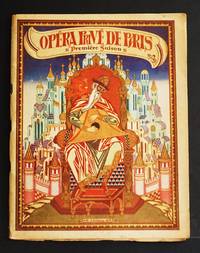
192920354Paris: Opéra Privé de Paris 1929. Good/No Dust Jacket As Issued. <br /> RUSSIAN MODERNISM REBORN ON THE PARISIAN STAGE.<br /> A visually striking Première Saison program documenting the post-Diaghilev continuation of Russian operatic and theatrical culture in interwar Paris. Issued by the newly founded Opéra Privé de Paris in 1929 this richly illustrated production program for Rimsky-Korsakov's 'Tsar Saltan' preserves the artistic language of the Ballets Russes through tipped-in color costume and scenic designs after Ivan Bilibin and Alexandre Korovine.<br /> <br /> Founded immediately following the death of Sergei Diaghilev the Opéra Privé de Paris sought to sustain the creative energy of Russian émigré theater in Western Europe. This production united performers designers and musicians associated with the Russian diaspora transforming Pushkin's fairy-tale opera into a vivid expression of émigré modernism transplanted into the cultural life of Paris.<br /> <br /> PHYSICAL DESCRIPTION: Quarto format approximately 9.5 × 12.5 inches. Stapled illustrated wraps with full-color chromolithographic cover after Ivan Bilibin. Illustrated with six tipped-in color chromolithographs of costume designs after Bilibin executed from stage maquettes by Alexandre Korovine together with two additional tipped-in scenic plates and a tipped-in color portrait of Madame Maria Kousnezoff-Massenet by Nicolas Kousnezoff. Numerous illustrated period advertisements throughout including several full-page advertisements.<br /> <br /> CONDITION: One advertisement leaf detached but present. Plates remain vivid and visually strong with only light handling wear to the wraps. Staples sound. A well-preserved and unusually attractive example of interwar Parisian opera ephemera. Première Saison issue.<br /> <br /> Première Saison programs of the Opéra Privé de Paris survive in comparatively small numbers particularly examples retaining the full suite of tipped-in color plates after Ivan Bilibin. Comparable illustrated programs from this short-lived company appear only intermittently in the market especially in near-complete condition. HISTORICAL SIGNIFICANCE -<br /> The Opéra Privé de Paris was co-directed by the Russian soprano Maria Kousnezoff-Massenet and functioned as an important cultural bridge for displaced Russian artists after the Revolution. Though short-lived the company preserved important elements of Russian operatic staging and Ballets Russes visual identity during a transitional moment in European theater history.<br /> <br /> Ivan Bilibin's influence on Russian stage aesthetics remained profound well into the twentieth century and his designs for productions such as 'Tsar Saltan' helped define the visual mythology of Russian folklore on the international stage.<br /> <br /> This program captures a pivotal moment in the evolution of Russian theatrical modernism after the dissolution of the Ballets Russes. Following Diaghilev's death in 1929 Russian émigré artists in Paris sought new institutional forms through which to continue the aesthetic innovations that had transformed European stage culture during the previous two decades.<br /> <br /> The production of Rimsky-Korsakov's 'Tsar Saltan' adapted from Pushkin's fairy-tale poem provided an ideal vehicle for this visual and musical continuity. The decorative richness of Ivan Bilibin's folkloric imagery combined with the scenic interpretation of Alexandre Korovine preserves the highly ornamental stage language that became synonymous with Russian theatrical design in the early twentieth century.<br /> <br /> Beyond its theatrical importance the program also presents a vivid portrait of interwar Parisian cultural life. Its advertisements portraiture typography and chromolithographic inserts collectively illustrate the commercial and artistic environment surrounding Russian émigré performance culture in France between the wars.<br /> <br /> SUBJECTS: Ballets Russes Legacy Ivan Bilibin Stage Design Russian Émigré Art Paris Theater History Rimsky-Korsakov Tsar Saltan Interwar Opera Culture Russian Opera In Paris Chromolithographic Illustration Illustrated Performance Programs Opera Ephemera Theater History Russian Modernism Illustrated Programs. Opéra Privé de Paris unknown
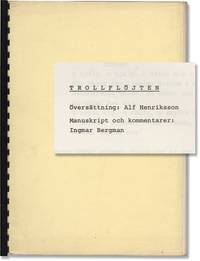
1973146818N.p.: N.p. 1973. Agency Draft script for the 1975 film. With 31 pages of director Ingmar Bergman's commentary bound in after the script. Text in Swedish.<br /> <br /> Based on the 1791 German opera about a young prince tasked with rescuing a princess from a mysterious high priest. Widely considered one of the most successful operatic adaptations to film ever released. <br /> <br /> Shot on location in Stockholm Sweden. <br /> <br /> Pale yellow untitled wrappers. Title page present dated November 1973 with credits for director Ingmar Bergman and screenwriter Alf Henrikson. 93 leaves with last page of text numbered 61. Xerographic duplication rectos only. Pages Very Good plus wrapper Very Good plus with a black comb binding.<br /> <br /> Criterion Collection 71. N.p. unknown
68-8866Leicester UK: Royal Opera House 1960. Theatre Poster Broadside. 35 x 24.5 cm. Good with marginal tears and minor losses. Leicester, UK: Royal Opera House, 1960. unknown
0365703273.Gpaperback. Good. Access codes and supplements are not guaranteed with used items. May be an ex-library book. paperback
24586Arnold’s six communications between 1942 and 1959; two on his Shaftesbury Avenue letterhead two others from the same address and two from 112 Jermyn Street London. Agreement: 15 April 1943. Poster: 1950 / 1951 Glasgow Alhambra. From the Macqueen-Pope papers. See his entry in the Oxford DNB. Eleven items in fair overall condition on lightly aged and creased paper. All six of Arnold’s communications are signed ‘Tom Arnold’. Arnold’s two TLsS are dated 2 October 1942 and 23 July 1959. In the second of these 1p landscape 8vo he thanks MP for a producing a piece of writing which ‘suits the mood’: ‘I appreciate your doing this and the speed with which you tackled it for me. . And I am sending you my cheque as you say “on friendship terms†which I also appreciate.’ He hopes they will have lunch one day ‘and have a nice chat about this and that - to which I shall look forward.’ The letter is accompanied by unsigned carbons of MP’s receipt for payment five guineas for the work and its covering letter both typed and dated 24 July 1959. In the letter MP suggests a meeting writing that he will be ‘writing a book about the Palace Theatre and would like to do you justice therein and I have an idea which I think would be of interest to you in another direction. Indeed it might be just what you are looking for.’ A note by Arnold of 4 January 1957 thanks MP ‘for the material you sent me for the Lecture’ and is accompanied by a carbon of a typed short biography clearly by MP of ‘Tom Arnold’ 1p 4to. In it MP refers to Arnold as ‘the very epitome of Show Business. Never before in theatrical history has one manager had so many or so varied interests. He is King of Pantomime presenter of great circuses theatre proprietor revue musical comedy and straight play producer. He runs an ice rink he is the man whose amazingly beautiful and expert shows on ice dazzle - not only people in this country - but all over the Continent indeed all over the world. He finds time to have a share in running piers at seaside resorts and also pleasure cruises. In other words he is a Napoleon of Show Business. And in his spare time he writes excellent short stories. And he has made Films as well.’ In two of the other Arnold TNsS he thanks MP for telegrams wishing him good luck over his productions of ‘The Glorious Days’ 1952 and ‘Over the Moon’ 1953. The tenth item is a Memorandum of Agreement for MP to work as a press agent between ‘TOM ARNOLD LIMITED / and / W. J. MACQUEEN-POPE Esq.’ dated 15 April 1943. 3pp foolscap 8vo typed and folded into the customary packet. Signed by ‘Tom Arnold’ over a stamp and ‘Walter James Macqueen Pope’. The final item is a small poster for a Tom Arnold production of ‘Cinderella’ produced by Robert Nesbitt at the Glasgow Alhambra. Text on one side in red and blue with illustrations of the stars Harry Gordon Alec Finlay Robert Wilson and Duncan Macrae. Most of the other side is taken up with an attractive illustration of Cinderella and an old crone printed in black red and grey with text at top left. Arnold’s six communications between 1942 and 1959; two on his Shaftesbury Avenue letterhead, two others from the same address, unknown
2010A220426ahmug174992Opus Arte 2010. dvd. Acceptable. 5x0x7. Ex-library item. Expect stickers on the disc artwork and case. We fully expect this to work fine but it is sold untested. Priority shipping available on this item. NO international shipping Opus Arte unknown
1963x00605<p>Minerva 1963. 4to. 351 pp. Very Good. Lettering to spine a bit faded 1" tear to rear endpaper. Facsimile.<br /><br /></p> Minerva hardcover
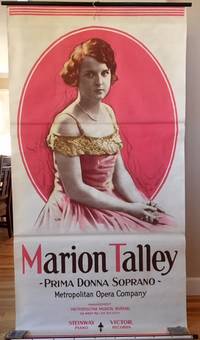
192451696New York NY; Hollywood CA; Taos NM: Underwood & Underwood Anderson Lumiere Guard Vitaphone Studios Metropolitan Music Bureau 1924-1927. Twenty seven items. With 24 photographs 3 sized 3.5 x 5.5 in.; 6 sized 5 x 7.75 in.; 1 w/ colour-tinted blue sized 7.25 x 9.5 in.; 16 sized 8 x 10 in.; many w/ annotations dating the photos in pencil some of the press photos and studio photos stamped on versos with attached newsreel information blurbs many w/ text in negative at lower corner of image; 1 very large colour lithograph poster printed on linen showing the young opera star seated and colours of pink gold and black sized 40 x 80 in. w/ wood bars at upper & lower for hanging some minor creasing from rolling but in Fine condition; and TLS from Lawrence H. Smith at Underwood & Underwood Inc. News Picture Division to Miss Marion Talley. These photographs and giant lobby poster provide splendid artifacts for the lavish attention paid to a young star at the beginning of her career during the Jazz Age. The very large poster is a beautiful example of colour lithography showing her demurely seated against a pink lozenge background with advertisements at the foot of the poster for Steinway Piano and Victor Records. Marion Talley 1906-1983 was the daughter of a telegraph operator for the Missouri Pacific Railroad and by 15 she was appearing in the Kansas City Grand Opera Company of Mignon by Abroise Thomas and quickly became a local celebrity often performing benefit concerts. She studied with music teacher Frank LaForge famed soprano composer who maintained a close relationship with the Metropolitan Opera and was placed under contract in 1925 by Giulio Gatti-Casazza at age 19 becoming the youngest principal female performer in the Met’s history to that point. Her debut performance was Feb. 17 1926 as Gilda the daughter of the title character in Verdi’s Rigoletto. The press photos show her surrounded by the many flowers she received in the 18 encores her performance on stage meeting the opera diva Ernestine Schumann-Heinck d. 1936 as well as her appearance on radio with Marguerite D’Alvarez and Giovanni Martinelli singing Home! Sweet Home!. In addition she also starred in the first Vitaphone short sound films released in 1926 with Don Juan starring John Barrymore and another Vitaphone short performing “Bella figlia dell’amore†from Rigoletto but the critics were savage criticizing her performances and her lack of appeal on camera. During this period she traveled extensively to Europe and through the southwest as evidenced by the series of photos showing her in Taos with the burros young Native American children and adults in regalia as well as her automobile. The photo of the young star by Samuel Lumiere 1878-1971 is a very nice example of his portrait work during the height of the 1920s when he was under contract to shoot celebrities for the Chicago Tribune. See: Barrios A Song in the Dark: The Birth of the Musical Film pp. 20-29; Vitaphone Marks 80th Anniversary Vitaphone News The Vitaphone Project Vol. 8 No. 1 2006; Crafton The Talkies: American Cinema’s Transition to Sound 1926-1931 1999. Underwood & Underwood, Anderson, Lumiere, Guard, Vitaphone Studios, Metropolitan Music Bureau, unknown
HALL512134Paperback. 193. 36pp 4to card covers Paris 1931 Detailed programme with illustrations and photographs. Covers slightly worn. . paperback
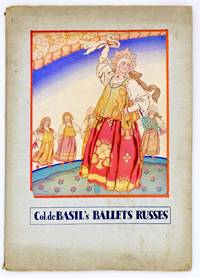
1936300382Paris: Alliance de Publicite et de’Impression 1936. Full color program for the 1936-1937 season of Ballet Russe de Monte Carlo presented by Col. de Basil. Cover illustration by I. Bilibine on silver paper jacket folded over plain covers~ ~66pp. with 4 pages of tipped-in color plates on both sides picturing different aspects of the production such as the costumes and scenery. Some wear to cover edges and bottom of spine. Good. Alliance de Publicite et de’Impression unknown
1982Q-0961054204The Washington Opera 1982-06-01. Paperback. New. In shrink wrap. Looks like an interesting title! The Washington Opera paperback
1994Q-0961054212Washington Opera Women&S Committee 1994-01-01. Spiral-bound. New. In shrink wrap. Looks like an interesting title! Washington Opera Women&S Committee unknown
1924191217New Jersey: Victor Talking Machine Company 1924. Seventh Edition; revised. Hardcover. Very Good in boards. Top text block edge gilded fading. Victor Talking Machine Company hardcover
17903On letterhead of the Royal Italian Opera Covent Garden. 6 June 1866. 1p. landscape 12mo. In good condition on lightly-aged paper. Reads with manuscript text in square brackets: 'Royal Italian Opera Covent Garden. Madle Vestris Londres Le 6 Juin 1866. Recu de M. Gye la somme de £40 - - G Vestris B.V £40 : - : -''. On letterhead of the Royal Italian Opera, Covent Garden. 6 June 1866. unknown
1333587694.Gpaperback. Good. Access codes and supplements are not guaranteed with used items. May be an ex-library book. paperback
1334051658.Gpaperback. Good. Access codes and supplements are not guaranteed with used items. May be an ex-library book. paperback
1332922651.Gpaperback. Good. Access codes and supplements are not guaranteed with used items. May be an ex-library book. paperback
133457832X.Gpaperback. Good. Access codes and supplements are not guaranteed with used items. May be an ex-library book. paperback
194952974New York:: Metropolitan Opera House October 9 1949. original printed wrappers. . Some light creasing and use to the wrappers. 8vo. Boldly signed by Margot Fonteyn on the first text page of the program. Metropolitan Opera House, unknown
1956HALL512162Paperback. 1956. 58pp illustrated throughout card covers 4to London 1956. Loosely inserted are programmes for the 1956 production of The Sleeping Beauty and the 1957 productions of The Prince of the Pagodas & Le Lac des Cygnes. Silver covers slightly rubbed. . paperback
1786829193.Gpaperback. Good. Access codes and supplements are not guaranteed with used items. May be an ex-library book. paperback
1972203FOREIGN LANGUAGE PRESS PEKING 1972. Soft cover. As New/As New. RARE.; Book <br/> <br/> FOREIGN LANGUAGE PRESS PEKING paperback
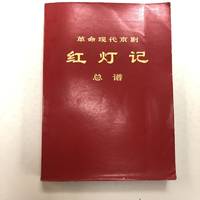
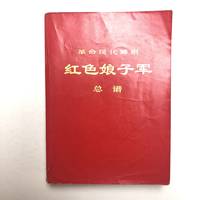
1971AG-10050<p><b><i>The Red Lantern Full Score</i></b><b><i>红ç¯è®°</i></b><b><i> Hong Deng Ji</i></b></p><p>Beijing: Published by People's Publishing House printed by Beijing Xinhua Printing Factory distributed by Xinhua Bookstore Beijing Distributing Agency,August 1971<b> FIRST EDITION</b>. The May 1970 Script Created Collectively by the China Peking Opera troupe. Quotations from Chinaman Mao on the second and third page 8vo. xii 380 2 pp. colophon printed titled wrappers <i>crease to the cover very slight tear to the foot of the binding else fine condition.</i></p><p>In China revolutionary operas or model operas Chinese: yangban xi æ ·æ¿æˆ were a series of shows planned and engineered during the Cultural Revolution 1966–1976 by Jiang Qing the wife of Chairman Mao Zedong. They were considered revolutionary and modern in terms of thematic and musical features when compared with traditional Chinese operas. Many of them were adapted to film.</p><p>京剧《红ç¯è®°ã€‹æ€»è°±</p><p>北京:人民出版社出版,ä¸å›½äº¬å‰§å›¢é›†ä½“制作,基于1970年五月演出本,第一版,书的å‰ä¸¤é¡µæœ‰æ¯›ä¸»å¸è¯å½•ï¼Œå…±380页主体内容。书皮ç¨æœ‰ä¸€é“上下方å‘折痕,其他å“相éžå¸¸å¥½ã€‚</p><p>In China revolutionary operas or model operas Chinese: yangban xi æ ·æ¿æˆ were a series of shows planned and engineered during the Cultural Revolution 1966–1976 by Jiang Qing the wife of Chairman Mao Zedong.1 They were considered revolutionary and modern in terms of thematic and musical features when compared with traditional Chinese operas. Many of them were adapted to film.</p><p>Originally eight revolutionary operas Chinese: Ba Ge Yangban Xi å…«ä¸ªæ ·æ¿æˆ were produced eighteen by the end of the period. Instead of the "emperors kings generals chancellors maidens and beauties" of the traditional Peking opera which was banned as "feudalistic and bourgeois" they told stories from China's recent revolutionary struggles against foreign and class enemies. They glorified the People's Liberation Army and the bravery of the common people and showed Mao Zedong and his thought as playing the central role in the victory of socialism in China. Although they originated as operas they soon appeared on LPs in comic books lianhuanhua on posters postcards and stamps; on plates teapots wash basins cigarette packages vases and calendars. They were performed or played from loudspeakers in schools factories and fields by special performing troupes. The Eight Model Operas dominated the stage in all parts of the country during these years leading to the joke "Eight hundred million people watched eight shows."</p><p>本剧是文é©æ—¶æœŸçš„å…«å¤§æ ·æ¿æˆä¹‹ä¸€ã€Šçº¢ç¯è®°ã€‹ï¼Œç”±æ¯›ä¸»å¸å¤«äººæ±Ÿé’负责制作和演出。很多被æ‹æˆäº†ç”µå½±ã€‚</p><p>最åˆæœ‰å…«ä¸ªæ ·æ¿æˆï¼ŒåŽæ¥åœ¨æ–‡é©æ—¶æœŸçš„åŽæœŸå‘展到了18个。ä¸åƒå› å°å»ºå’Œèµ„产阶级的被ç¦äº†çš„ä¼ ç»Ÿäº¬å‰§ï¼Œé‡Œé¢å‡ºçŽ°çš„ä¸çš„国王大臣少女和美人,é©å‘½çŽ°ä»£äº¬å‰§ä¸»è¦è®²è¿°ä¸å›½è¿‘å¹´æ¥çš„抗战故事,宣扬人民解放军的光辉è£è€€å’Œæ¯›ä¸»å¸çš„英勇。虽然是京剧,很快就å˜æˆäº†å„ç§å½¢å¼å‡ºçŽ°åœ¨è¿žçŽ¯ç”»ã€æµ·æŠ¥ã€æ˜Žä¿¡ç‰‡ã€é‚®ç¥¨ã€é¦™çƒŸã€èŠ±ç“¶ã€æ—¥åŽ†ç‰å„ç§åœ°æ–¹ï¼Œç”¨æ‰©éŸ³å–‡å在å¦æ ¡ã€å·¥åŽ‚ç‰åœ°æ–¹ï¼Œç”±æ¼”出团进行表演。8ä¸ªæ ·æ¿æˆä¸»å¯¼äº†å…¨å›½æ‰€æœ‰çš„舞å°ï¼Œå› æ¤æœ‰äº†8亿人看8个剧的笑è¯ã€‚</p><p><i><br /></i></p> People’s Publishing House paperback
1972AG-10053<p>Beijing: Published by C printed by Beijing Xinhua Printing Factory distributed by Xinhua Bookstore Beijing Distributing Agency February 1972 <b>FIRST EDITION</b> 8vo. The May 1970 Script Revised Collectively by the China Peking Opera Troupe. iv 374 pp. colophon consists of scripts stage photos selected theme score stage action instruction and the stage design started with quotations from Chairman Mao on the second and third page printed pictorial wrappers <i>slightly curled at the head and foot of the wrappers minor tears to the edge of the wrappers else fine condition.</i></p><p>北京:人民出版社出版。本书å‰ä¸¤é¡µå¸¦æœ‰æ¯›ä¸»å¸è¯å½•ï¼Œå†…容包括了剧本ã€å‰§ç…§ã€ä¸»æ—‹å¾‹ã€åŠ¨ä½œè¯´æ˜Žç‰è¯¦ç»†å†…容,由照片和文å—çš„å½¢å¼ç»„æˆï¼Œç…§ç‰‡å›¾ç‰‡å¾ˆå¤šï¼Œä¹Ÿæ˜¯æœ¬ä¹¦çš„一大特色。书皮上下两段ç¨å¾®å·èµ·ï¼Œå…¶ä»–部分å“相éžå¸¸å¥½ã€‚</p><p>In China revolutionary operas or model operas Chinese: yangban xi æ ·æ¿æˆ were a series of shows planned and engineered during the Cultural Revolution 1966–1976 by Jiang Qing the wife of Chairman Mao Zedong.1 They were considered revolutionary and modern in terms of thematic and musical features when compared with traditional Chinese operas. Many of them were adapted to film.</p><p>Originally eight revolutionary operas Chinese: Ba Ge Yangban Xi å…«ä¸ªæ ·æ¿æˆ were produced eighteen by the end of the period. Instead of the "emperors kings generals chancellors maidens and beauties" of the traditional Peking opera which was banned as "feudalistic and bourgeois" they told stories from China's recent revolutionary struggles against foreign and class enemies. They glorified the People's Liberation Army and the bravery of the common people and showed Mao Zedong and his thought as playing the central role in the victory of socialism in China. Although they originated as operas they soon appeared on LPs in comic books lianhuanhua on posters postcards and stamps; on plates teapots wash basins cigarette packages vases and calendars. They were performed or played from loudspeakers in schools factories and fields by special performing troupes. The Eight Model Operas dominated the stage in all parts of the country during these years leading to the joke "Eight hundred million people watched eight shows."</p><p>本剧是文é©æ—¶æœŸçš„å…«å¤§æ ·æ¿æˆä¹‹ä¸€ï¼Œç”±æ¯›ä¸»å¸å¤«äººæ±Ÿé’负责制作和演出。很多被æ‹æˆäº†ç”µå½±ã€‚</p><p>最åˆæœ‰å…«ä¸ªæ ·æ¿æˆï¼ŒåŽæ¥åœ¨æ–‡é©æ—¶æœŸçš„åŽæœŸå‘展到了18个。ä¸åƒå› å°å»ºå’Œèµ„产阶级的被ç¦äº†çš„ä¼ ç»Ÿäº¬å‰§ï¼Œé‡Œé¢å‡ºçŽ°çš„ä¸çš„国王大臣少女和美人,é©å‘½çŽ°ä»£äº¬å‰§ä¸»è¦è®²è¿°ä¸å›½è¿‘å¹´æ¥çš„抗战故事,宣扬人民解放军的光辉è£è€€å’Œæ¯›ä¸»å¸çš„英勇。虽然是京剧,很快就å˜æˆäº†å„ç§å½¢å¼å‡ºçŽ°åœ¨è¿žçŽ¯ç”»ã€æµ·æŠ¥ã€æ˜Žä¿¡ç‰‡ã€é‚®ç¥¨ã€é¦™çƒŸã€èŠ±ç“¶ã€æ—¥åŽ†ç‰å„ç§åœ°æ–¹ï¼Œç”¨æ‰©éŸ³å–‡å在å¦æ ¡ã€å·¥åŽ‚ç‰åœ°æ–¹ï¼Œç”±æ¼”出团进行表演。8ä¸ªæ ·æ¿æˆä¸»å¯¼äº†å…¨å›½æ‰€æœ‰çš„舞å°ï¼Œå› æ¤æœ‰äº†8亿人看8个剧的笑è¯ã€‚</p> People’s Publishing House paperback
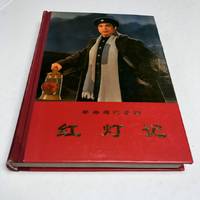
1972AG-10057<p><b><i>The Red Lantern Script</i></b><b><i>红ç¯è®°</i></b><b><i> Hong Deng Ji</i></b><br /></p><p>Beijing: Published by People's Publishing House printed by Beijing Xinhua Printing Factory distributed by Xinhua Bookstore Beijing Distributing Agency February 1972 <b>FIRST EDITION</b> 8vo. The May 1970 Script Revised Collectively by the China Peking Opera Troupe. iv374 pp. colophon consists of scripts stage photos selected theme score stage action instructions and designs beginning with quotations from Chairman Mao on the second and third pages printed pictorial stiff cover wrappers <i>fine condition.</i></p><p>京剧《红ç¯è®°ã€‹å‰§æœ¬</p><p>北京:人民出版社出版,ä¸å›½äº¬å‰§å›¢é›†ä½“制作,基于1970年五月演出本,1970å¹´12月第一版,书的å‰ä¸¤é¡µæœ‰æ¯›ä¸»å¸è¯å½•ï¼Œå…±374页主体内容。精装,å“相éžå¸¸å¥½ã€‚</p> People’s Publishing House hardcover