"HERO (HERON) OF ALEXANDRIA.Livre Rare Book
4 résultats
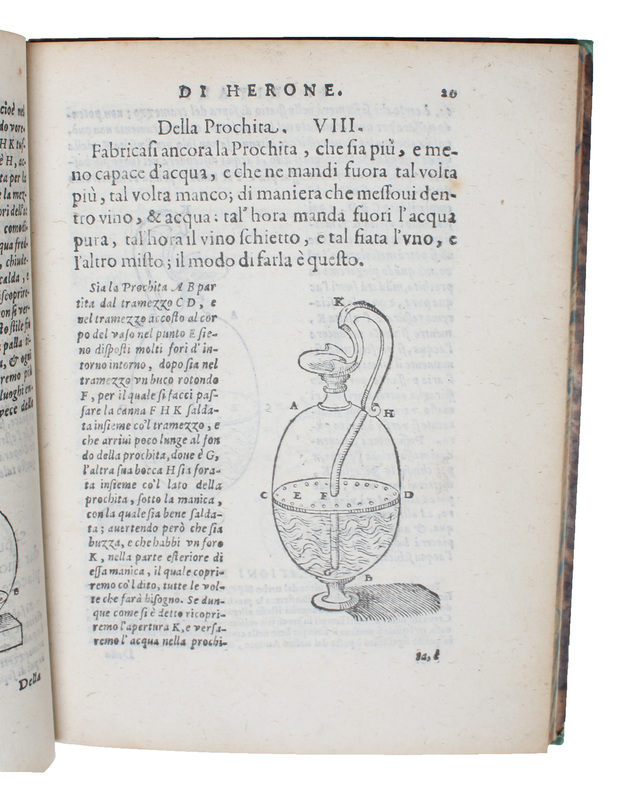
159254283Urbino, Bartholomeo, e Simone Ragusij fratelli, 1592. Small 4to. Hcalf (19th century), gilt spine, raised bands, titlelabel with gilt lettering. Spine a little rubbed and fronthinge weakening. Corners strenghtened with vellum. Ff (4),82. With around 90 woodcuts in the text including one on the title-page. A stamp on verso of titlepage (the Salamander Collection). Title-page with light browning. A few scattered brownspots, but internally clean. Verso of last leaf with errata. Light fraying to the first 3 leaves.
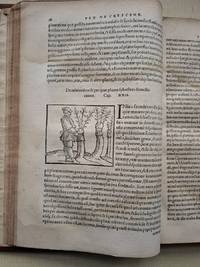
1548021454Basileae: Henrichum Petri 1548. LACKING ONE SIGNATURE. Latin text. Small quarto pp x - including an engraved bordered dedication page 385 lacking pages 197-208 rather age-toned a water stain throughout which is heavier and covering more of the early pages gradually fading after the first third of the book until almost imperceptible latterly a small hole in the title page leading to loss of one letter; with many attractive small square woodcuts throughout rebound in a twentieth century simple full calf by Theo Merrett the original front endpaper laid down and with the original spine laid down also. The Hartland Library copy with labels and manuscript notes attached to the front endpapers. RARE. The Library was formed by Edwin Sydney Hartland and was a diverse but major collection of herbals archaeology and anthropology. It was donated to Gloucestershire County Council in 1936 and was eventually dispersed around 2010. Crescenzi was born of a good family in Bologna Italy. He studied logic natural history medicine and law in the University of Bologna and became a lawyer and writer. Tired of law practice he decided to write about agricultural matters. His book entitled Ruralia Commoda contained much information relative to domestic plants and animals. The books is considered to be the best medieval treatise on agriculture about 1306. It was very popular in continental Europe was translated into several European languages and it exists in a large number of manuscripts. It was likewise printed many times. The book was composed with the purpose of providing the intelligent farmer with a practical account of all aspects of farming. It included material concerning plant growth extracted from the work of Albertus Magnus as well as the arrangement of farm buildings and water supply. Among the subjects treated were: Cultivation of cereals peas and beans. Cultivation of grapes and making of wines. Cultivation of fruit trees vegetables medicinal plants and flowers. Care of woods. His most original writing involved an elaborate presentation of grafting of grapes trees and the insect larvae destroying plants. he quoted Palladius Columella as well as other ancient authorities. Full-Leather. Good. Henrichum Petri Hardcover
15604483DBFrankfurt., W. Han., um 1560. 8°. (4) Blatt, 490 S., (9) Blatt. Mit Titelholzschnitt, 79 Textholzschnitten. Geprägter Schweinslederband der Zeit und zwei Messingschliessen. + Wichtig: Für unsere Kunden in der EU erfolgt der Versand alle 14 Tage verzollt ab Deutschland / Postbank-Konto in Deutschland vorhanden +
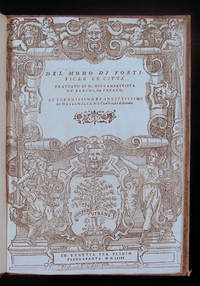
155413800Venice: Pinio Pietrasanta 1554. FIRST EDITION. Title within elaborate architectural border separate leaf with portrait of the author 17 decorative woodcut initials and 8 woodcut text illustrations 5 full-page. Bound in decorative modern boards. Other than a couple of very small and mild damp stains a lovely large copy. First edition of the first Italian book devoted exclusively to fortification of cities. It was preceded only by Durer’s Etliche underricht zur befestigung der Stett 1527. Italian works by Valle 1521 and Cataneo and Tartaglia both 1554 contained only chapters on the subject.<br /> <br /> Zanchi 1515-1586 a military engineer in the Venitian service under Marcantonio Colonna took part in several campaigns including the long siege of Siena where he became acquainted with Belluzzi and was a friend of Girolamo Maggi. He remarks that “the invention of artillery had necessitated a new system of fortifying cities and that those who might have been qualified by experience to write on the subject were not sufficiently versed in its theory to do so†Cockle 767. The system he describes herein is the favoured Italian bastion trace limited to the square with acute-angled bastions but already with an attempt to reinforce the curtains and the octagon again strengthening the curtains. This design improved the defense of the fortress as covering fire had to be provided often from multiple angles. The woodcuts are among the earliest showing the new pentagonal form of bastion.<br /> <br /> Zanchi left the manuscript of his work with Girolamo Ruscelli when he had to leave Venice; on his return Ruscelli sought and obtained permission to edit and publish the work which he recognized as a pioneering effort. Pinio Pietrasanta unknown