2 498 résultats
201412470München : Hanser, 2014. mit vielen fot. Textabb. OPbd., ill. OU., XII; 578 S., Gr.8° (=25 cm)
200854889Baden-Baden : Nomos 2008. 288 S. : graph. Darst. ; 23 cm Top Zustand, kart., Softcover/Paperback, Exemplar in sehr gutem Erhaltungszustand
2005100141518DUNOD 2005 688 pages in4. 2005. Broché. 688 pages.
2006021630Vitra Designstiftung, Weil am Rhein 2006. Unverletzter S.U Broschiert Neuwertig
2015ru885Les éditions du Net Dos carré collé 2015 In-4 (21 x 29,7 cm), dos carré collé, 252 pages ; très bon état. Livraison a domicile (La Poste) ou en Mondial Relay sur simple demande.
20051262312005 Editions Labussière - 2005 - In-8 broché, couverture illustrée - 207 pages
2006KOS00300185TBD 2006 Soft Cover Fine
2006KOS00300049TBD 2006 Soft Cover Fine
2004R240015682NESTLE. 2004. In-8. Broché. Bon état, Couv. convenable, Dos satisfaisant, Intérieur frais. 66 pages. Nombreuses illustrations en couleur, dans le texte et hors texte, par Nicolas Dolce.. . . A l'italienne. Classification Dewey : 663-Technologie des boissons
2011032106Selbstverlag, Windhagen 2011. Hardcover Wie neu
2020yl757L'Age d'homme Dos carré collé 2020 In-8 (15,5 x 22,5 cm), dos carré collé, 357 pages ; très bon état. Livraison a domicile (La Poste) ou en Mondial Relay sur simple demande.
200768595BBArles., Actes Sud., 2007. 29 x 23 cm. 172 S. Illustrierter OPappband., 68595B Erste Auflage. Buchrücken etwas nachgedunkelt, sonst sehr gutes, frisches Exemplar.
2017MUS446MRelié, 352 pages, paru le 13 septembre 2017 chez Textuel, livre en très bon état général.
20055963082Pearson Ed Asia 2005. This is an ex-library book and may have the usual library/used-book markings inside.This book has soft covers. In good all round condition. Please note the Image in this listing is a stock photo and may not match the covers of the actual item1300grams ISBN:9780131290051 Pearson Ed Asia paperback
2008167214: Cambridge University Press, 2008. ix.; 253 S. Gr.-8°, Broschur
20019883405McGraw-Hill 2001. This is an ex-library book and may have the usual library/used-book markings inside.This book has soft covers. In good all round condition. Please note the Image in this listing is a stock photo and may not match the covers of the actual item1500grams ISBN:9780071181730 McGraw-Hill paperback
2007009407London: Informa Healthcare 2007. Very informative book on this subject for medical practitioners 353 pages in very bright clean condition many colour B/w diagrams and illustrations all present as lpublished plus very informative text NO dustwrapper outer boards are very bright and clean just very light rubbing to two corners. A very nice example of this book SEE IMAGES. DETAILED IMAGES CAN BE TAKEN ON REQUEST . First UK Edition. Illustrated Laminated Boards. Very Good/No Jacket. 25.5 X 19.5 Cms. Hardcover. Informa Healthcare Hardcover
2006TECH0203Tulsa Oklahoma U. S. A.: PennWell Corporation. Very Good with no dust jacket. 2006. Hardcover. 159370027X . 302 pp. Spine bumped. A good survey of energy storage technologies that have the potential to increase the reliability and efficiency of energy markets. ; 8vo 8" - 9" tall . PennWell Corporation hardcover
201267790Washington DC: The National Academies Press 2012. PResumed first edition/first printing. Trade paperback. Very good. xx 200 p. Illustrations. References. Title continues: Nuclear and Radiation Studies Board DIvision of Earth and Life Studies Board on Higher Education and Workforce Division on Policy and Global Affairs National Research Council of the National Academies. This material is based upon work supported by the U.S. Department of Energy National Nuclear Security Administration and other agencies. The growing use of nuclear medicine the potential expansion of nuclear power generation and the urgent needs to protect the nation against external nuclear threats to maintain our nuclear weapons stockpile and to manage the nuclear wastes generated in past decades require a substantial highly trained and exceptionally talented workforce. Assuring a Future U.S. -Based Nuclear and Radiochemistry Expertise examines supply and demand for expertise in nuclear chemistry nuclear science and radiochemistry in the United States and presents possible approaches for ensuring adequate availability of these skills including necessary science and technology training platforms. Considering a range of reasonable scenarios looking to the future none of these areas are likely to experience a decrease in demand for expertise. However many in the current workforce are approaching retirement age and the number of students opting for careers in nuclear and radiochemistry has decreased dramatically over the past few decades. In order to avoid a gap in these critical areas increases in student interest in these careers in the research and educational capacity of universities and colleges and sector specific on-the-job training will be needed. Concise recommendations are given for actions to avoid a shortage of nuclear chemistry nuclear scientists and radiochemists in the future. From Wikipedia: "The National Research Council NRC is the working arm of the United States National Academies which produces reports that shape policies inform public opinion and advance the pursuit of science engineering and medicine. The National Academies include: National Academy of Sciences NAS National Academy of Engineering NAE Institute of Medicine IOM Unlike the other three organizations of the National Academies the National Research Council is not a membership organization. The National Research Council was organized in 1916 in response to the increased need for scientific and technical services caused by World War I. On June 1 1917 the council convened a meeting of scientific representatives of the UK and France with interested parties from the US on the subject of submarine detection. The results obtained and the problems in the work were discussed. A further meeting with the British and French was held in Paris in October 1918 at which more details of their work was disclosed. As a result of this the council recommended that US scientists be brought together to work on the problems. A New York Group worked on "supersonics" as did a San Pedro Group. A New London Group worked on binaural receivers while Chicago and Wisconsin Groups were assigned various problems in support of the other groups. Due to the success of Council-directed research in producing a sound-based method of detecting submarines as well as other military innovations the NRC was retained at the end of the war though it was gradually decoupled from the military. The Research Council is currently administered jointly by the National Academy of Sciences the National Academy of Engineering and the Institute of Medicine and its work is overseen by a Governing Board and an Executive Committee." The National Academies Press paperback
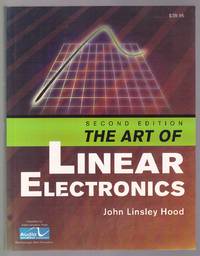
2006TECH0509Peterborough New Hampshire: Audio Amateur Press. Very Good-. 2006. Second Edition. Softcover. 1882580494 . 348 pp. Index. Diagrams. Light edgewear. Prev owner's name on the ffep. A great technical resource for learning amplifier design. ; Large 8vo 9" - 10" tall . Audio Amateur Press paperback
200622846Sandy Oregon: Action Mining Services. Fine. 2006. Fourth Edition. Softcover. 11"; 56 pages . Action Mining Services paperback
2009USD_9781597265508Island Press 2009. 1st. Paperback. UsedLikeNew/UsedLikeNew. Island Press paperback
2009AME_9781597265508Island Press 2009. 1st. Paperback. New/New. Island Press paperback
20031479Front cover has title and publisher and edition in gold gilt. Same on spineText Unmarked. Index. 585 pagesno blemishes<br /> National Cnetre for Asphalt Technology
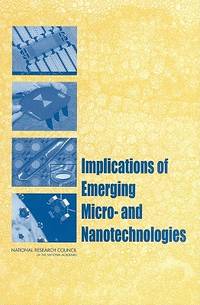
200267240Washington DC: The National Academies Press 2002. Presumed first edition/first printing. Trade paperback. Good. Cover has slight wear and soiling. Defect on page 33/34 with no impact on text. xxi 1 243 p. Illustrations Figures and Tables. References and Notes. Author continues: "Committee on Implications of Emerging Micro-And Nanotechnologies." Expansion of micro-technology applications and rapid advances in nano-science have generated considerable interest by the Air Force in how these developments will affect the nature of warfare and how it could exploit these trends. The report notes four principal themes emerging from the current technological trends: increased information capability miniaturization new materials and increased functionality. Recommendations about Air Force roles in micro-and nanotechnology research are presented including those areas in which the Air Force should take the lead. The report also provides a number of technical and policy findings and recommendations that are critical for effective development of the Air Force's micro-and nano-science and technology program. This report notes four principal themes emerging from the current technological trends: increased information capability miniaturization new materials and increased functionality. Recommendations about Air Force roles in micro-and nanotechnology research are presented including those areas in which the Air Force should take the lead. The report also provides a number of technical and policy findings and recommendations that are critical for effective development of the Air Forceís micro-and nano-science and technology program. From Wikipedia: "Microtechnology is technology with features near one micrometre one millionth of a metre or 10− 6 metre or 1¼m. In the 1960s scientists learned that by arraying large numbers of microscopic transistors on a single chip microelectronic circuits could be built that dramatically improved performance functionality and reliability all while reducing cost and increasing volume. This development led to the Information Revolution. More recently scientists have learned that not only electrical devices but also mechanical devices may be miniaturized and batch-fabricated promising the same benefits to the mechanical world as integrated circuit technology has given to the electrical world. While electronics now provide the brains for today s advanced systems and products micromechanical devices can provide the sensors and actuators the eyes and ears hands and feet which interface to the outside world. Today micromechanical devices are the key components in a wide range of products such as automobile airbags ink-jet printers blood pressure monitors and projection display systems. It seems clear that in the not-too-distant future these devices will be as pervasive as electronics." From WIkipedia: "Nanotechnology sometimes shortened to "nanotech" is the manipulation of matter on an atomic and molecular scale. The earliest widespread description of nanotechnology1 2 referred to the particular technological goal of precisely manipulating atoms and molecules for fabrication of macroscale products also now referred to as molecular nanotechnology. A more generalized description of nanotechnology was subsequently established by the National Nanotechnology Initiative which defines nanotechnology as the manipulation of matter with at least one dimension sized from 1 to 100 nanometers. This definition reflects the fact that quantum mechanical effects are important at this quantum-realm scale and so the definition shifted from a particular technological goal to a research category inclusive of all types of research and technologies that deal with the special properties of matter that occur below the given size threshold. It is therefore common to see the plural form "nanotechnologies" as well as "nanoscale technologies" to refer to the broad range of research and applications whose common trait is size. With a variety of potential applications nanotechnologies are key for the future and governments have invested billions of dollars in their research. Through its National Nanotechnology Initiative the USA has invested 3.7 billion. The National Academies Press paperback