11 856 résultats
197960187Washington DC: U.S. Government Printing Office 1979. Presumed First Edition First printing. Wraps. Very good. iii 1 89l 3 pages. Illustrations. No dust jacket. Has some wear and soiling. NASA proposed to initiate a program designed to search for extraterrestrial intelligence which involved a systematic study of the radio frequency spectrum for evidence of intelligent transmissions from space. This hearing provided an opportunity to review the nature and scope of the program and to examine the rationale requirements and issues associated with establishing and maintaining a viable search capability. Among the witnesses were Richard Berendzen Philip Morrison Noel Hinners George Pimentel A. G. W. Cameron David Heeschen and Bernard Oliver. The witnesses came from NASA other government agencies academia and industry. Extraterrestrial Intelligence ETI research primarily known as SETI Search for Extraterrestrial Intelligence is the scientific endeavor to find signs of technologically advanced life beyond Earth using radio telescopes optical searches and data analysis to detect technosignatures like artificial signals or artifacts with major organizations like the SETI Institute leading efforts to understand humanity's place in the cosmos and whether we are alone. This field has grown from fringe to rigorous science exploring radio waves laser signals and atmospheric clues though debates continue about sending messages versus just listening. Key approaches: Radio SETI: Scanning the skies for narrow-band radio signals or patterned emissions that can't be natural using facilities like the Allen Telescope Array; Optical SETI: Searching for brief powerful laser pulses or other optical signals from alien civilizations; Technosignature Search: Looking for indirect signs of alien technology like waste heat or atmospheric pollution through advanced telescopes; Active SETI METI: Messaging the Extraterrestrial Intelligence-sending powerful signals into space. The Core Concepts & Significance include Technosignatures: Evidence of technology distinct from biosignatures chemical signs of life and the Drake Equation: A framework for estimating the number of communicative civilizations in our galaxy. This research is interdisciplinary in its nature and Involves astronomy physics computer science linguistics and philosophy. There remains high public belief in ETI that fuels some level of support even as funding for searches remains a challenge. U.S. Government Printing Office paperback
200669269Washington DC: United States National Science and Technology Council 2006. Presumed first edition/first printing. Wraps. Very good. Caras James J. x 2 122 p. Includes illustrations. Distribution letter laid in. This report sets our a framework for a multi-agency coordination of Federal R&D investments in technologies to better security the interconnected computing systems networks and information of the U.S. information technology infrastructure. From an official website: "The National Science and Technology Council NSTC was established by Executive Order on November 23 1993. This Cabinet-level Council is the principal means within the executive branch to coordinate science and technology policy across the diverse entities that make up the Federal research and development enterprise. Chaired by the President the membership of the NSTC is made up of the Vice President the Director of the Office of Science and Technology Policy Cabinet Secretaries and Agency Heads with significant science and technology responsibilities and other White House officials. A primary objective of the NSTC is the establishment of clear national goals for Federal science and technology investments in a broad array of areas spanning virtually all the mission areas of the executive branch. The Council prepares research and development strategies that are coordinated across Federal agencies to form investment packages aimed at accomplishing multiple national goals. The work of the NSTC is organized under five primary committees: Environment Natural Resources and Sustainability; Homeland and National Security; Science Technology Engineering and Math STEM Education; Science; and Technology. Each of these committees oversees subcommittees and working groups focused on different aspects of science and technology and working to coordinate across the federal government." United States, National Science and Technology Council paperback
198176490Washington DC: U. S. Government Printing Office 1981. Presumed First Edition First printing. Wraps. Good. iii 1 332 pages. Illustrations. Footnotes. Pencil erasure residue on front page. First page has a wrinkle. Book has some general wear and soiling. Witnesses included: Melvin Kranzberg Marvin Cetron Dennis Little David Hannah Stan Kent Joseph Pascente Thomas Stafford former Astronaut John Young Hank Koehn and W. O. Baker. Organizations represented included: Georgia Tech University Library of Congress Forecasting International Space Services Inc. Delta Vee Inc. Johns Hopkins Ferrofludics Bell Laboratories USAF Space Programs American University and Security Pacific National Bank. Daniel Boorstin and Bruce Friedman provided additional statements for the record. The Subcommittee chairman stated that "The reason for having these particular hearings at this time is that our civilian space program finds itself at a critical crossroads for many reasons. Among them are that the well-advertised economic recovery plan may fall heavily on discretionary programs such as NASA there is a new administration in the White House with new philosophies and there is a new management team in NASA. If we don't believe there is a future we won't begin preparing for it or if we have a muddled view of the future we are likely to have muddled plans for that future. Through these hearing we hope to begin to crystallize a view of the future for our space programs." U. S. Government Printing Office paperback
198162764Washington DC: U.S. Government Printing Office 1981. Presumed first edition/first printing. Wraps. Good. No dust jacket as issued. Cover has some wear and soiling. iv 580 p. : 24 cm. Illustrations. No. 54. To members of Congress it appeared that the national approach to the problem of health data collection was decentralized and uncoordinated and they needed to be concerned going forward that there was better planning for the better and more efficient use of information. U.S. Government Printing Office paperback
199468257Washington DC: U.S. Government Printing Office 1994. Presumed first edition/first printing. Wraps. Very good. No dust jacket. 4 x176 pages. Includes: illustrations index. Glossary. Cover has some wear at spine and other minor wear and corner creases. The goal of the Federal High Performance Computing and Communications HPCC Program is to accelerate the development of future generations of high performance computers and networks and the use of these resources in the Federal government and throughout the American economy. Scalable high performance computers advanced high speed computer communications networks and advanced software are critical components of a new National Information Infrastructure NII. This infrastructure is essential to our national competitiveness and will enable us to strengthen and improve the civil infrastructure digital libraries education and lifelong learning energy management the environment health care manufacturing processes and products national security and public access to government information. This document was prepared to supplement the President's Fiscal Year 1994 Budget. This report describes the Federal Coordinating Council for Science Engineering and Technology FCCSET Initiative in High Performance Computing and Communications. This initiative was aimed at developing computing communications and software technologies for the 21st century. The HPCC Program was fully supportive of and coordinated with the National Information Initiative NII which was part of the President's and Vice President's Technology Initiative that was released on February 22 1993. U.S. Government Printing Office paperback
198360168Washington DC: U.S. Government Printing Office 1983. Wraps. Very good. No dust jacket. iv 568 p. 24 cm. Illustrations. References. No. 170. This is the record of three days of hearings that looked at the basics of the science the application to human beings and then addressed religious and ethical moral concerns. U.S. Government Printing Office paperback
198577986Washington DC: United States Congress Office of Technology Assessments 1985. Presumed First Edition First printing. Trade paperback. Good. vii 1 348 pages. Footnotes. Tables. Figures. Appendix A through H including Glossary Acronyms and Abbreviations. The assessment was originally undertaken at the request of the House Committee on Merchant Marine and Fisheries and focused on the ocean disposal of nuclear waste. OTA later broadened the study to include all aspects of high-level waste disposal after expressions of interest and support by the Senate Committees on Energy and Natural Resources and on Commerce Science and Technology; by the Senate National Ocean Policy Study; and by the House Committees on Science and Technology and on Foreign Affairs. Additional requests for analysis were received from the Senate Committee on Environment and Public Works and from the House Committees on Interior and Insular Affairs and on Energy and Commerce. The original analysis findings were published in OTA's 1982 summary report. As part of its analysis of NWPA OTA has identified the elements of a Mission Plan that can meet the requirements of the Act using only the authority it provides. Comparison between this ''OTA Mission Plan" and DOE's Draft Mission Plan provides a basis for identifying the major strategic decisions in the Mission Plan. Comparison also reveals several areas in which additional analysis by DOE would provide valuable information for congressional deliberations during the 30 working days that the Mission Plan lies before Congress before becoming effective. In general the OTA Mission Plan represents an expansion rather than a redirection of the approach in DOE's Draft Mission Plan. None of DOE's ongoing repository siting or development activities need or should be deferred pending development of a final Mission Plan. The major difference between the two Mission Plans lies in the measures used to provide confidence that spent fuel will be removed from reactor sites within a reasonable period despite the technical and institutional uncertainties associated with siting and licensing the first geologic repository. United States Congress, Office of Technology Assessments paperback
198975983Washington DC: U. S. Government Printing Office 1989. Presumed First Edition First printing. Wraps. Good. iii 1 183 5 pages. Illustrations. Appendix. Ink notation and pencil erasure residue on front page. Mail label mark on back page. The hearing addressed: Usefulness of space power research to ground-based nuclear reactor systems --Personnel development and educational needs of the universities as they relate to the development of space nuclear power systems --Nuclear power plants for space vehicles developed --and Role of the universities in supporting the space nuclear power technology development. Witnesses from the Air Force National Aeronautics and Space Administration the Department of Energy the General Accounting Office Westinghouse Hanford Battelle Pacific Northwest Laboratory and the Los Alamos National Laboratory testified. Nuclear power in space is the use of nuclear power in outer space typically either small fission systems or radioactive decay for electricity or heat. One common type is a radioisotope thermoelectric generator which has been used on many space probes and on manned lunar missions and another is small fission reactors for Earth observation satellites such as the TOPAZ nuclear reactor. A radioisotope heater unit provides heat from radioactive decay of a material and can potentially produce heat for decades. R The United States tested a nuclear reactor in space for 43 days in 1965. While not yet tested in space the test of the Demonstration Using Flattop Fission DUFF on September 13 2012 was the first test of a nuclear reactor power system for space since then. Examples of nuclear power for space propulsion systems include nuclear electric rocket radioisotope rocket and radioisotope electric propulsion. One of the more explored is the nuclear thermal rocket which was tested in the NERVA program. U. S. Government Printing Office paperback
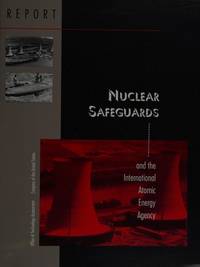
199565331Washington DC: United States Congress Office of Technology Assessment 1995. Presumed first edition/first printing. Wraps. Good. No dust jacket as issued. Ex-library. Usual library markings. Cover has some wear and soiling. Cover has modest curving/warping. ix 1. 147p. 28 cm. Illustrations. Abbreviations and Glossary. Index The limitation of the International Atomic Energy Agency's system of nuclear safeguards was demonstrated after the end of the Persian Gulf War when evidence was developed that Iran had mounted an extensive cover nuclear weapons program in addition to and partly in proximity to its open nuclear research activities that were under IAEA safeguards. Shortly after this international investigations showed that the North Koreans were concealing data about the extent of their nuclear material production. This report analyzed what IAEA safeguards could and could not be expected to accomplish it identified areas where the safeguards regime could perhaps be broadened or improved and it presented options for such actions. This report was the sixth publication from this now defunct Congressional organization on its assessments of the proliferation of weapons of mass destruction. This report was done at the request of the Senate Foreign Relateions and Governmental Affairs committees and endorsed by several other committees. United States, Congress, Office of Technology Assessment paperback
197960196Washington DC: U.S. Government Printing Office 1979. Wraps. Good. No dust jacket. Cover has some wear and soiling. iii 76 p.; 24 cm. No. 43. This was a field hearing held in Pittsburgh Pennsylvania. This was the first public hearing held to discuss a GAO report what came out in January of that year. The GAO report addressed the deteroration of bridge decks and found that essentially that we are suffering the first generation of salt erosion to the point that some bridges no longer function and that in some cases the understructure of the bridge have been so damaged by salt as to become usable. U.S. Government Printing Office paperback
199475543Washington DC: U. S. Government Printing Office 1994. Presumed First Edition First printing. Wraps. Very good. x 92 2 pages. Footnotes. Maps. Illustrations. Tables. Boxes. Index. Cover has slight wear and soiling. The report examines the whole range of consequences for proliferation of weapons of mass destruction of the Soviet Union's breakup and describes how U.S. assistance may reduce specific proliferation risks in the former Soviet Union. This report the fifth publication from OTA'S assessment on the proliferation of weapons of mass destruction examines the whole range of consequences for proliferation of the Soviet Union's breakup. One effect may be the erosion of international nonproliferation treaty regimes. In spite of the continuing desire of most of the newly independent states of the former Soviet Union to support nonproliferation goals these states face internal challenges: social and economic disruption are rampant and the degree of central governmental control over activities nominally within their jurisdictions is often questionable. Of particular concern are economic hardship and low morale among many individuals with access to vital weapon information or sensitive facilities--a situation aggravated by inadequate national systems to account for and secure nuclear materials to control exports and to police borders. The Office of Technology Assessment OTA was an office of the United States Congress from 1972 to 1995. OTA's purpose was to provide Congressional members and committees with objective and authoritative analysis of the complex scientific and technical issues of the late 20th century i.e. technology assessment. It was a leader in practicing and encouraging delivery of public services in innovative and inexpensive ways including early involvement in the distribution of government documents through electronic publishing. Its model was widely copied around the world. Princeton University hosts The OTA Legacy site which holds "the complete collection of OTA publications along with additional materials that illuminate the history and impact of the agency". On July 23 2008 the Federation of American Scientists launched a similar archive that includes interviews and additional documents about OTA. U. S. Government Printing Office paperback
199373964Washington DC: U. S. Government Printing Office 1993. Presumed First Edition First printing. Wraps. Very good. vii 1 123 1 pages. Illustrations. Footnotes. Index. Cover has slight wear and soiling. Since the end of the Cold War the proliferation of weapons of mass destruction has become much more prominent in U.S. national security and foreign policy planning. Revelations about Iraqi North Korean South African and Israeli nuclear weapon programs the possibility of a nuclear arms race in South Asia and the multidimensional conflicts in the Middle East all point to the immediacy of this problem. At least three main factors underlie this renewed emphasis on proliferation. First the reduced military threat from the former Soviet Union has increased the relative importance of lesser powers especially if armed with weapons of mass destruction. Second certain international political and technological trends are increasing the threat to international security from proliferation. Third new opportunities are opening for enhancing the current international regimes designed to stem proliferation. Since at least as far back as the 1960s the United States has recognized that proliferation is a global problem and combating it requires high levels of international cooperation. This country has also exerted unilateral influence to discourage proliferation. Nevertheless placing priority on nonproliferation will require the further development and enforcement of international norms and behavior supporting that objective. The Office of Technology Assessment OTA was an office of the United States Congress from 1972 to 1995. OTA's purpose was to provide Congressional members and committees with objective and authoritative analysis of the complex scientific and technical issues of the late 20th century i.e. technology assessment. It was a leader in practicing and encouraging delivery of public services in innovative and inexpensive ways including early involvement in the distribution of government documents through electronic publishing. Its model was widely copied around the world. Princeton University hosts The OTA Legacy site which holds "the complete collection of OTA publications along with additional materials that illuminate the history and impact of the agency". On July 23 2008 the Federation of American Scientists launched a similar archive that includes interviews and additional documents about OTA. U. S. Government Printing Office paperback
198975462Washington DC: United States Congress Office of Technology Assessment 1989. Presumed First Edition First printing. Trade paperback. Good. John Bergling Cover design. xii 116 4 pages. Illustrations. Boxes. Figures. Tables. Footnotes. Front cover has some sticker residue. Cover has some other wear and soiling. This special report examines a wide range of potential improvements to the Space Shuttle explores the future of space transportation for humans and presents policy options for congressional consideration. It is one of a series of products from abroad assessment of space transportation technologies undertaken by OTA requested by the Senate Committee on Commerce Science and Transportation and the House Committee on Science Space and Technology. In undertaking this effort OTA sought the contributions of a wide spectrum of knowledgeable individuals and organizations. Some provided information others reviewed drafts. OTA gratefully acknowledges their contributions of time and intellectual effort. OTA also appreciates the help and cooperation of NASA and the Air Force. The Office of Technology Assessment OTA was an office of the United States Congress from 1972 to 1995. OTA's purpose was to provide Congressional members and committees with objective and authoritative analysis of scientific and technical issues of the late 20th century i.e. technology assessment. It was a leader in practicing and encouraging delivery of public services in innovative and inexpensive ways including early involvement in the distribution of government documents through electronic publishing. Congress established the Office of Technology Assessment with the Technology Assessment Act of 1972.1 It was governed by a twelve-member board comprising six members of Congress from each party — half from the Senate and half from the House of Representatives. During its twenty-four-year life it produced about 750 studies on a wide range of topics including acid rain health care global climate change and polygraphs. Criticism of the agency was fueled by Fat City a book by Donald Lambro; it called OTA an "unnecessary agency" that duplicated government work done elsewhere. OTA was "de-funded" in the "Contract with America" period. United States, Congress, Office of Technology Assessment paperback
200263309Washington DC: U.S. Government Printing Office 2002. Presumed first edition/first printng. Wraps. Good. No dust jacket as issued. v 497 p. Includes: illustrations index. Serial No. 107-68. This hearing with two of the premier scientific advisors to Presidents addressed: What kind of research do we need to comprehensively address the threats posed by terrorism: What is required to enable us to harden civilian infrastructure systems; How does terrorism impact research and were there avenues of research that could help us understand and counter the motives scoiology and psychology of terrorist activity U.S. Government Printing Office paperback
198266799Washington DC: U.S. Government Printing Office 1982. Presumed first edition/first printing. Wraps. Good. No dust jacket. iii 141 3 p. 24 cm. No. 93 The hearing focused on the impact of reductions in Federal programs supporting science and engineering education on univeristies and on industry in the Pittsburgh area. There was great concern over the scientific state of the country. U.S. Government Printing Office paperback
198061693Washington DC: U.S. Government Printing Office 1980. Presumed first edition/first printing. Wraps. Good. No dust jacket as issued. Some edge soiling. xviii 791 p. 24 cm. Illustrations. No. 167. U.S. Government Printing Office paperback
17749Cleveland: United States Steel Corporation. Near Fine. N.D. Flexible cloth. Includes 13 samples in pockets in the back. No date but since the address includes a postal code we can assume the was published in the area of 1950. ; Small 4to 9" - 11" tall; 54 pages . United States Steel Corporation hardcover
198465587Washington DC: U.S. Government Printing Office 1984. Wraps. Very good. No dust jacket as issued. Stamped on top edge and title page "J.F. Coates .". iii 1 460 p. : ill.; 24 cm. "No. 47." These hearings sought to build upon joint heards in June by the Science and Technology Committee's Subcommittee on Energy Development and Applications and the Subcommittee on Energy Research and Production. This is an early look at supercomputers in response to the Japanese Fifth Generation initiative. U.S. Government Printing Office paperback
199465207Washington DC: United States Department of Energy Office of Environmental Management 1994. Presumed first edition/first printing. Wraps. Very good. No dust jacket as issued. 17 p. Includes illustrations. Acronyms. The purpose of the Supercritical Water Oxidation Program SCWOP was to develop and demonstrate this technology as a viable technology for treating DOE hazardous and mixed wastes and to coordinate the related research development demonstration testing and evaluation activities. United States Department of Energy, Office of Environmental Management paperback
199373962Washington DC: U. S. Government Printing Office 1993. Presumed First Edition First printing. Wraps. Good. viii 263 1 pages. Illustrations. Index. Cover has some wear and soiling. The Office of Technology Assessment produced some of the best writing on security-related technical issues. The authors summarize the principal technologies of chemical biological and nuclear weapons production. Purists will observe that chemical weapons are not really weapons of mass destruction but in this context that is a quibble. The report examines the variety of pathways states may pursue to acquire these weapons. Even more important it explains in mercifully clear language the variety of indicators that intelligence or inspection agencies may track to detect the production of such weapons. The discussion of the indicators or traces of proliferation efforts is good in itself but the authors go further by discussing the ways in which proliferators can conceal evidence or mislead would-be snoopers. In short an indispensable work. The Office of Technology Assessment OTA was an office of the United States Congress from 1972 to 1995. OTA's purpose was to provide Congressional members and committees with objective and authoritative analysis of the complex scientific and technical issues of the late 20th century i.e. technology assessment. It was a leader in practicing and encouraging delivery of public services in innovative and inexpensive ways including early involvement in the distribution of government documents through electronic publishing. Its model was widely copied around the world. Princeton University hosts The OTA Legacy site which holds "the complete collection of OTA publications along with additional materials that illuminate the history and impact of the agency". On July 23 2008 the Federation of American Scientists launched a similar archive that includes interviews and additional documents about OTA. U. S. Government Printing Office paperback
199157306Washington DC: U. S. Department of Energy 1991. Presumed first edition/first printing. Wraps. Very good. No dust jacket as issued. Includes illustrations. Approximately 300 pages. DOE/EP/12067-H1. Prepared for the Department of Energy Office of Technology Analysis under Contract DE-AC00-76RLO 1830. This document provides an overall summary instructions on the use of the document a summary of the aggregate results 172 case study summaries and details on the survey questionnaire and administration. This document was produced as part of the process the Department of Energy undertook to frame its implementation of the National Competitiveness Technology Transfer Act of 1989. Technology transfer is the process of transferring skills knowledge technologies methods of manufacturing samples of manufacturing and facilities among governments or universities and other institutions to ensure that scientific and technological developments are accessible to a wider range of users who can then further develop and exploit the technology into new products processes applications materials or services. U. S. Department of Energy paperback
198168195Washington DC: Congress of the U.S. Office of Technology Assessment: For sale by the. 1981. Presumed first edition/first printing. Wraps. Good. Cover has some wear and soiling. OTA press release laid in. vii 405 p. 26 cm. Illustrations. Footnotes. "November 1981"--rear cover. "OTA-ISC-153"--rear cover. From Wikipedia: "The Office of Technology Assessment OTA was an office of the United States Congress from 1972 to 1995. OTA's purpose was to provide Congressional members and committees with objective and authoritative analysis of the complex scientific and technical issues of the late 20th century i.e. technology assessment. It was a leader in practicing and encouraging delivery of public services in innovative and inexpensive ways including distribution of government documents through electronic publishing. Its model was widely copied around the world. Princeton University hosts The OTA Legacy site "the complete collection of OTA publications along with additional materials that illuminate the history and impact of the agency." On July 23 2008 the Federation of American Scientists launched a similar archive that includes interviews and additional documents about OTA. Congress created the Office of Technology Assessment in 1972 Public Law 92-484. It was governed by a twelve-member board comprising six members of Congress from each party half from the Senate and half from the House of Representatives. During its twenty-four-year life it produced about 750 studies on a wide range of topics including acid rain health care global climate change and polygraphs. The front and back of a tee shirt created and worn by some staff of the OTA to express their sentiments about the intent of the 104th Congress to terminate their service while simultaneously increasing the Library of Congress' budget by an amount equal to nearly twice that of OTA's. Compare to the official seal above and note the arm of Congress strangling the symbolic U.S.A. in the satirical version. Criticism of the agency was fueled by Fat City a 1980 book by Donald Lambro that was regarded favorably by the Reagan administration; it called OTA an "unnecessary agency" that duplicated government work done elsewhere. OTA was abolished technically "de-funded" in the "Contract with America" period of Newt Gingrich's Republican ascendancy in Congress. When the 104th Congress withdrew funding for OTA it had a full-time staff of 143 people and an annual budget of $21.9 million. The Office of Technology Assessment closed on September 29 1995. The move was criticized at the time including by Republican representative Amo Houghton who commented at the time of OTA s defunding that "we are cutting off one of the most important arms of Congress when we cut off unbiased knowledge about science and technology." Critics of the closure saw it as an example of politics overriding science and a variety of scientists such as biologist PZ Myers have called for the agency's reinstatement. While the OTA was closed down the very idea of technology assessment survived in particular in Europe. The European Parliamentary Technology Assessment EPTA network coordinates members of technology assessment units working for various European parliaments. The US Government Accountability Office has meanwhile established a TA unit taking on former duties of the OTA. While campaigning Hillary Clinton pledged to work to restore the OTA if elected President. On April 29 2009 House of Representatives member Rush Holt of New Jersey wrote an Op-Ed articulating the argument for restoring the OTA. In April 2010 The Woodrow Wilson International Center for Scholars released a report entitled "Reinventing Technology Assessment" that emphasized citizen engagement and called for performing the functions of the OTA by creating a nationwide network of non-partisan policy research organizations universities and science museums: the Expert & Citizen Assessment of Science & Technology ECAST network. ECAST would conduct both expert and participatory technology assessments for Congress and other clients. The author of the report was Dr. Richard Sclove of the Loka Institute. The report states that the drive to modernize OTA was initiated by. Congress of the U.S., Office of Technology Assessment: For sale by the.. paperback
199462724U.S. Government Printing Office 1994. Presumed first edition/first printing. Wraps. Good. No dust jacket as issued. iii 86 p. Illustrations. No. 118. This hearing reviewed the progress of the Department of Energy's termination process for the Superconducting Super Collider project. The Subcommittee was concerned in particular over the growth in the termination costs over what the Department of Energy had initially projected. U.S. Government Printing Office paperback
198763099Washington DC: U.S. Government Printing Office 1987. Presumed first edition/first printing. Wraps. Good. No dust jacket as issued. Cover has some wear and soiling. iii 341 p. 24 cm. Illustrations. Bibliography. No. 4. These two hearings were intended to take a long and hard look at the Landsat program and its prospects and problems. The United States Government had expended Over $1.5 billion to the time of the hearing on the development of remote sensing from space. The government's remote sensing program had been considered under the Reagan Administration for transfer to the private sector. U.S. Government Printing Office paperback
200864029Washington DC: U.S. Government Printing Office 2008. Presumed first edition/first printing. Wraps. Very good. No dust jacket as issued. iii 73 p. Serial No. 110-123. The purpose of this hearing was to examine the role of social behavioral and economic sciences in improving our nation's health and well being and reducing the economic burden of health care. U.S. Government Printing Office paperback