OILABAA
51 résultats
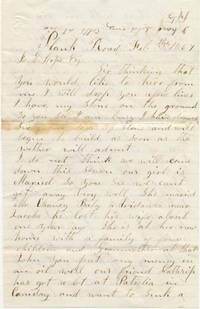
851ALS. 2pg. 4 ½" x 7". Feb 1867. Plank Road. An autograph letter signed "Wm H Ostrander" concerning early oil exploration. He wrote to J.E. Lipe: "Sir thinking that you would like to here from me I will drop you a few lines I have my Stone oil the ground so you see I am busy. I have drawed sixty five lodes of stone and will begin to build as soon as the wether sic will admit. John you put any money in an oil well our friend Lathrip has got a lot at Patrolia in Caniday and want to sink a well it is with in Six rods of the flowind sic well at Patrolia that flowes 400 barrels a day and there is no other well near it he thinks a shure sic thing or with very little risk and if he fails is willing to give the company the machinery witch sic is worth a portion of it he divides it in six shares at $500 each you can take a share or a portion of it do as you please. I will try a little for luck if you will take if you will take a share or a portion of it let me know immediately I think that will make the rich come try a little John for luck Mr Lathrip is all right. ". The letter has a light and small stain and is in fine condition unknown books
1917291406Self-published 1917. Jamsetji Tata is considered an architect of modern India; he founded TATA -- an enormous Indian business. During the first World War B.J. Padshah one of the Board of Directors of Tata Sons met on board a ship the author of this exhaustive report Edward Thompson. Thompson produced this report urging Tata to get heavily invested in the Copra industry at a time when American investors were investing heavily in copra in the Philippines. Copra proved to a less than immediately successful investement for Tata though Thompson grew rich cf. R. M. Lala The Creation of Wealth: the Tats from the 19th to the 21st Century Chapter 6. ~An uncommon report how could it be otherwise relating to Tatas the most inportant company in India. 179 pp. quarto. Rebacked. Self-published unknown books
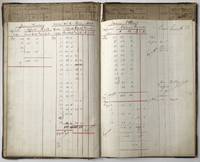
1892613N.p. but likely Pennsylvania 1892. Good. 28pp. Folio. Original black half sheep and marbled boards. Spine and corners heavily worn boards worn. Several leaves cut away with later French funeral notices pasted in on stubs. Ledger recording transactions for several companies and individuals extracting oil in Pennsylvania from 1889 to 1892. The ledger records the name of the company listing the date and then barrels of crude and refined oil "sound" and "broke." Named parties involved in the extraction include James Stewart Aetna Oil Co. Miles Stitt Crew Levick Co. Jos. Kelly & Co. James Harding and others. Several have street addresses listed below their names which would allow for firmer identification with some research. Notations are occasionally in French and taken together with the funeral notices pasted in at the front of the volume we surmise that the owner of the ledger may have been Francois Poulard of Philadelphia to whom one of the notices is addressed. unknown books
1902106482<p>Rectangular 8vo 9½x5¼" pamphlet 1 11 leaves printed on rectos only original brown paper wrappers red ribbon tie at top. A little normal aging but otherwise near fine. This is an early Standard Oil piece that appears to be designed to promote the stock which according to this brochure consisted of only 2500000 shares. At the time of publication the par value was only $1 per share. The brochure discusses various oil field potential and on the inside back cover is a "no wild cat" illustration hyping the stock. This was printed well before the 1911 breakup of the company for violating the "Sherman Antitrust Act." A wonderful piece of corporate memorabilia. OCLC locates only a single copy at the University of Wyoming.</p> books
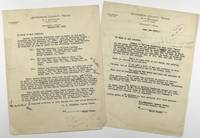
19091289Oakland 1909. About very good. Six pieces including three real photo postcards typed letter folding map and transmittal envelope. Light creasing to images; light tanning to letter and map. Interesting promotional material for the La Blanc Oil Company for their developments in the Sunset Oil Field in Kern County California in 1909. A folding plat map of the field near Maricopa southwest of Bakersfield shows La Blanc's holdings highlighted in red and a brief text touts the geographical relation to other producing wells. Also included is a typed progress report on the depth of drilling accomplished and the anticipated time before reaching the deposits which assures investors that "No doubt is expressed by any one of our ultimate success." The photo postcards show supposedly representative images of gushing oil pipes overflowing oil barrels and a very pleased group of men overseeing the scene. A nice group with the original transmittal envelope addressed to an Edgar Bonnemort of Oakland. unknown books
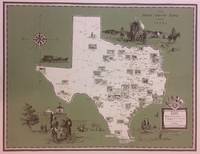
288858Humble Oil & Refining Company. unbound. very good. E.M. Schiwetz. Map. Lithograph. 17" x 22". In very good condition.<br/><br/> A map of Texas showing the locations of 39 historically significant buildings. Verso provides an extensive list of historically important structures many of which are not shown on front as well as text that gives an overview of architecture in Texas.<br/><br/> Humble Oil & Refining Company unknown books
1900569Boston 1900. Very good. 4pp. on a bifolium. Quarto. Previously folded. Light wear along old folds and a couple of short closed tears at lower edge. Rare illustrated prospectus for the potentially fraudulent Bernalillo Oil Company based in Boston and San Diego at the turn of the 20th century. The text promises astounding returns stating that "Few in the East appreciate the stupendous nature of this great industrial awakening and the unparalleled opportunity it affords for large profits on even limited investments." The promoters further advise readers to send away for more complete information about the company's holdings and business plans and provides a list of references to contact for confirmation of their bona fides. Strangely despite its extensive endorsement of the oil industry in California the land it advertises is 6400 acres in New Mexico between Fort Wingate and the Navajo Reservation as is the town of Bernalillo. A 1905 article in the business periodical United States Investor cast serious doubt on the venture writing in response to a query about the trustworthiness of the company that "The stocks have no market value and intrinsically they are not believed to be worth more than the paper they are printed on." We locate only one copy at Yale. unknown books
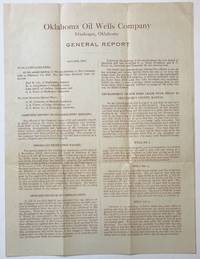
1918664Muskogee Ok 1918. Very good. 4pp. on a large bifolium. Previously folded. A couple of very minor losses at fold points. Light tanning. Scarce illustrated report from 1918 on the developments and production of the Oklahoma Oil Wells Company based in Muskogee Oklahoma. Much of the text is dedicated to an assessment of work completed on wells located at lease secured by the company near Sedan in Chautauqua County Kansas to which the majority of available funds was being directed. The progress of four wells is assessed and a report on construction and acquisition of other equipment necessary for the site is given. The production of other leases in Nowata and Muskogee Counties Oklahoma and Greenwood County Kansas is also discussed. The final page contains three photographic illustrations of a power plant and a well on the Sedan property as well as a lengthy exhortation to invest in Liberty Bonds to support the federal government's war effort as World War I continued through 1918. Also with a separate typed letter dated January 9 1917 soliciting investment from an Ohio resident. unknown books
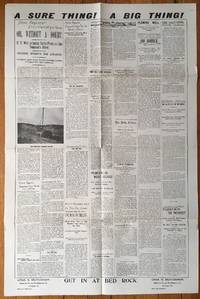
1902370Chicago 1902. Very good. Folded broadsheet 28 x 18.75 inches with several photographic reproductions. A couple of small separations along folds. A very scarce promotional from the early Wyoming oil boom. The Chicago firm of Charles O. Richardson here urges potential investors to "Get in at Bed Rock" and in particular promotes Richardson's interests in the Spring Valley Wyoming oil fields. Both sides of the large broadsheet reproduce numerous newspaper articles reporting new oil strikes across the state most in the area of Evanston with the dates and locations of the articles added in manuscript. Serious efforts to find oil began in Wyoming after statehood in 1890 with the first major oil boom not hitting until 1908; the present broadsheet therefore represents a rare and fascinating advertisement for the early industry in the state. OCLC locates only three copies at Yale the University of Oklahoma and SMU. unknown books
19541607Mystic Ct 1954. Overall very good. Approximately 210 individual documents of varying lengths. Light wear. Post-World War II business archive of George Deneke an Old Mystic Connecticut resident who invested heavily in oil and mining operations in the Western United States and Canada. Present here are well over 200 individual documents documents relating to numerous ventures in which Deneke had an interest or for which he had requested information. Included are large group of over fifty documents concerning the notorious Canadian stock scheme Gaspe Oil Ventures Limited which in 1954 the New York state Attorney General called "the largest fraud case in 15 years." Also here are about thirty items relating to the Landowners' Royalties Company a curious husband and wife operation based in Framingham New Mexico that offered wildcat investment opportunities in Montana's Williston Basin of which there is a large and detailed map. Another sizable and attractive map depicts "Oil in the Rockies August 1953" and there is also a fascinating map showing the fields of the South Texas Oil Co. in the early 1950s. A sizable subset of documents provides information regarding uranium mining in Utah which enjoyed a significant boom in the years after the war. With ephemera relating to at least a dozen additional businesses across the West and Canada much with captivating illustrated material. unknown books
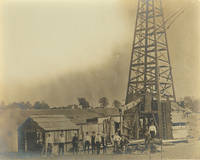
1900WRCAM49847N.p. perhaps Pennsylvania 1900. Silver gelatin photograph 15 3/4 x 19 1/2 inches. Mounted to backing board and framed to an overall size of 20 1/2 x 25 inches. Slight silvering of part of the image light edge wear minor chipping to frame. A very good image. A fascinating image featuring eleven men standing in front of an oil rig complete from engine house to the oil derrick the latter extending beyond the frame of the picture. Most of the men are fairly well dressed and perhaps picture the management of the rig or the oil company that owns the rig. Among the better-dressed subjects is a young boy perhaps in his early teenage years. Two of the men are dressed in overalls and are likely the roughnecks for this particular rig. A rare large photograph capturing the early days of the oil business in America. unknown books
1921802Colusa Ca. 1921. About very good. 8pp. Pictorial self wrappers stapled. Light wear and creasing; a few short closed tears at wrapper edges. Contemporary ownership inscription on front wrap. Even tanning. A scarce promotional for the Young Oil Company and its development of an apparently lucrative oil strike at Bear Creek in Colusa County during 1921. The pamphlet prints a story first published in the local Colusa Sun newspaper which documents history of oil production at the site chronicles the purchase of the lease by Young Oil in 1915 and relates positive comments from several contemporary geologists' reports that convinced the company to significantly increase its investment and work on the property including the imminent arrival of an industrial drilling rig from Texas. The remainder of the text publishes a letter from a Sacramento oil man William Babcock which describes the operation as "The best oil venture that I know of -- in fact it looks so good to me that while I have for all intents and purposes retired from active participation in the development of the oil business I shall in this case make an exception." The final leaf prints an enjoinder from the company to "Buy all the Young Oil Company stock you can afford" and gives the organizational information of the firm. Illustrated with five halftone images of the site; not in OCLC. unknown books
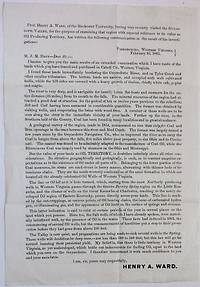
186534056Parkersburg 1865. Printed Broadside 7-3/4" x 11". Old folds Very Good.<br/><br/> This is an early report on the development of the petroleum industry in West Virginia. Professor Ward reports on the mineral resources of lands which Mr. Day purchased in Cabell County "Western Virginia." Although navigable waters salt coal and iron have been found in abundance "The value of your lands as OIL TERRITORY is doubtless infinitely above all other considerations. Its situation geographically and geologically is such as to warrant sanguine expectations as to the existence of Oil under all parts of it." Ward describes the "Oil belt" which graces Davy's land and assures him "There is little territory in Western Virginia as yet undeveloped which holds out inducements for finding Oil equal to the value which you own on the Guyandotte."<br/>Not located on OCLC as of October 2020. unknown books
1927910Whiting In 1927. About very good. 119 leaves printed on rectos only; interleaved with fifteen additional leaves containing pasted brochures and ephemera. Small folio. Original half cloth and boards brad-bound; one brad lacking. Cloth worn hinges tender. Light soiling and wear to contents. Wonderful mimeographed handbook produced for and distributed to bulk station operators of Standard Oil of Indiana a subdivision of the original Standard Oil trust. Standard Oil of Indiana covered a broad territory ranging across Indiana Illinois Michigan Wisconsin Minnesota the Dakotas Iowa Kansas and Missouri. The first three leaves draw the reader in: "Stop! Look! Read! / YOU can make more money / This book show YOU how. Let's you and I read it over very carefully and see how it can help us." There follows a page discussing "What is a Salesman" and a discussion of the products Standard offers and why they're the best. Each page is printed with illustrations and a small amount of text -- easy to comprehend like a children's book and certainly designed to be used in one's sales pitch. Bulk station operators were charged with maintaining large storage tanks of gasoline or oil distributing large shipments of product to farmers and other small-scale businesses across the Midwest. This particular book belonged to agent Alf Anderson of Viroqua Wisconsin a remote village on the eastern end of the state near the borders with Iowa and Minnesota. In addition to Standard's iconic brands of fuel and motor oil such as Red Crown and Vis operators like Anderson were also charged with marketing a wide array of additional products made by Standard many of which are advertised in the brochures pasted to the additional leaves within this volume. These include Eureka Harness Oil Eureka Belt Dressing Cream Separator Lubricant Mica Axle Grease Neolite Burning Oil Perfection Kerosene KIP Insecticide and more. A mimeo production chock full of sales tactics and tips for the enterprising agent with the promise of success as reward for careful study. Rare with unique components. unknown books
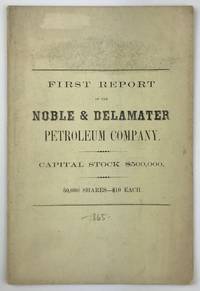
18651597Philadelphia 1865. Still very good. 411-14pp. Original printed wrappers. Light dust soiling to wraps. Moderate tanning and light foxing internally. Unrecorded report that documents the first annual shareholder meeting of the Noble & Delamater Petroleum Company which took place on April 10 1865 the day after Lee's surrender at Appomattox. The pamphlet presents the current financial circumstances of the company delineates levels of production and revenue over the past year and presents the by-laws of the company. The Noble well was one of the most significant and famous early bonanzas in the oil country of northwestern Pennsylvania. The well was first bored on farm land leased by Orange Noble and George Delamater in 1860. It produced no oil for three years until the decision was made to drill deeper at which point the well turned into a gusher producing thousands of barrels of oil per day for the next two years. By the time this public company was formed production was declining rapidly and according to contemporary reports the well was in the process of being closed up by the end of 1865 with both Noble and Delamater having sold their interests in the company. An excellent document of a famous episode in the early oil history of Pennsylvania. books
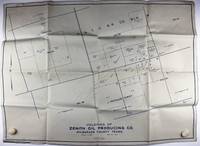
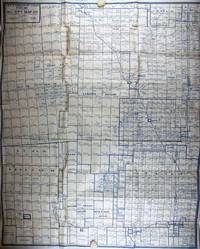
19291995Wichita Falls Tx: Montgomery & Ward 1929. Very good plus. Large blue line map approximately 22 x 29 inches. Folded. Very light tanning and a few small spots of soiling. Scattered contemporary pencil annotations. Unrecorded map showing the extent of mineral rights held in a section of Wilbarger County Texas by the Zenith Oil Producing Company and several competing interests. The county is located in North Texas on the border with Oklahoma west of the oil rich areas surrounding Wichita Falls and Burkburnett. Indeed the land here was mapped by a civil engineering firm from Wichita Falls Montgomery & Ward certainly not to be confused with the famed mail order and department store business. The Zenith Oil Producing Company for whom this map was created owned mineral rights in seven contiguous plots in the charted region but seems to have been active only for a short period of time at the end of the 1920s and solely in the area of Wichita Falls. We locate no other copies of the present map and only one other recorded example of a map by the Montgomery & Ward firm a 1931 plan of Wichita Falls. Montgomery & Ward unknown books
34620Original bust oil portrait 11-1/2" x 14". The canvas is mounted to a 1/2" thick piece of wood held with small nails along the fore-edges. Framed in a later dark brown recessed molded wood frame behind a burnt orange velvet mat with oval opening measuring approximately 9-1/2" x 12". The painting's surface has some usual age cracks and crackling patterns some very small spots where paint has rubbed off along the line of the oval beneath the matting. Very Good. <br/><br/> We can identify neither the subject nor artist. Her dress is of high quality possibly of European design with an empire waist sleeves with large puffs at the top which sit off the shoulders the top line of the dress being a bit demure and cut above the cleavage and nearly straight across with lace trimmed netting leading up to the neckline and ending in a collar. A brooch is placed at the center where the dress material and netting meet. This type of apparel was popular during the early to mid-1800s. unknown books
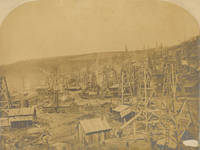
1865250221Benninghoff Run Pennsylvania 1865. Vintage albumen print rounded at top corners mounted on card captioned in pen beneath image. Image: 10 x 13 3/8 in. Image lightly faded some surface abrasion mount soiled. Vintage albumen print rounded at top corners mounted on card captioned in pen beneath image. Image: 10 x 13 3/8 in. Benninghoff Run Oil Derricks. Vintage albumen print showing the oil derricks and pump house of Benninghoff Run an important early oil field in Pennsylvania's Oil Creek Valley. The site's Ocean Well dug in 1865 was the first to prove that oil could be extracted from hilly terrain. Benninghoff Run was the scene of violence when teamsters angered over loss of work attempted to destroy the pipeline that comission dealer Henry Harvey built from Benninghoff Run to tanks at the Shaffer railroad two miles away. The right-of-way of the Benninghoff-Shaffer pipeline can be seen in this image as a white streak extending vertically from the fields to the hill in the distance cf. www.petroleumhistory.org. unknown books
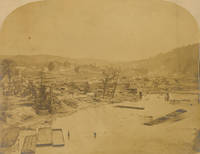
1860250325Petroleum Centre 1860. Vintage albumen print rounded at top corners mounted on card captioned in pen beneath image. 1 vols. Image: 10 x 13 3/8 in. Image lightly faded some surface abrasion mount soiled and worn. Vintage albumen print rounded at top corners mounted on card captioned in pen beneath image. 1 vols. Image: 10 x 13 3/8 in. Oil Creek. Vintage albumen print of Petroleum Centre Pennsylvania with Oil Creek in the foreground with a few scattered derricks and the town proper on the far bank. Petroleum Centre sprang up in 1861 with the birth of the oil industry in western Pennsylvannia. By 1873 the town was nearly deserted; it is now part of Oil Creek State Park. unknown books
19301996Fort Worth: Oil City Map Co 1930. Very good. Large blue line map 34.25 x 27.5 inches. Folded. Scattered contemporary pencil annotations. Minor wear and a couple of short separations along fold lines. Small cut into neat line near upper right corner. Rare and detailed oil map of the oil fields in Shackelford and Callahan Counties just east of Abilene Texas. The map indicates the locations of well being drilled those producing gas wells dry holes and abandoned wells. The owners of the mineral rights are named and well as many of the surface owners which include various railroads and also the Lunatic Asylum. Deaf & Dumb Asylum Bayland Orphan Asylum and other institutions. A large number of the producing wells both oil and gas were owned by Texas Company Texaco the Magnolia Petroleum Co. but many major and small oil companies had obtained mineral rights on lands in the area when this map was produced. The area around the town of Moran as indicated by the number of wells in the vicinity was one of the major sites of oil production in Texas during the 1920s and was indicative of the spread of the oil business to the western and southern portions of the state during that decade. The publishers of this map the Oil City Map Company of Fort Worth were not particularly prolific -- we locate six examples of their other cartographic work all recorded in single institutional copies and no copies of the present map. Oil City Map Co unknown books
19321450Various places mostly Texas Tennessee Kentucky and Virginia 1932. Overall good plus. Eighty-five typed and manuscript letters including thirty mimeographed copies of a form response. Moderate chipping and wear to a few letters most previously folded but otherwise in strong condition. A fascinating collection of correspondence relating to spurious Depression-era claims on the famed Beaumont estate of Pelham Humphries 1810-1835. In 1834 Humphries a colonist in the disputed lands along the US border with Mexico filed a claim for a league some 4428 acres of land to the west of the Neches River a few miles south of what is now Beaumont in Jefferson County Texas. The land a patchwork of swamp and grassland good only for grazing was deemed valueless until oil was discovered there in 1901 by which time it had become known as Spindletop and the area became the epicenter of the Texas oil boom. <br/><br/>No one made more money than William Perry Herring McFadden 1856-1935 a rancher who had bought Spindletop in 1883 but ownership of the land was in dispute when he made the purchase. Humphries had died in obscurity possibly killed in a gunfight or perhaps hanged for stealing horses and there was no clear transfer of title. The first suit over the Humphries Land Grant was filed in 1880. McFadden purchased the rights of both parties in the suit but later claimants argued that neither had had a legitimate interest. When geologists stuck oil hundreds of people discovered their fortunate genealogy as a story swiftly spread that the heirs to the Humphries estate were due a share in the profits from the great companies that extracted oil from Spindletop. Numerous lawsuits followed beginning shortly after the discovery and continuing through the 2010s some extending over decades and involving thousands of claimants.<br/><br/>After one such suit entitled Anderson v. Lucas was settled in 1906 the Humphries story appears to have been forgotten for several decades before it emerged again during the depths of the Great Depression. Humphries reportedly hailed originally from Tennessee and in October 1931 the Knoxville Journal reported that members of the Humphreys family were gathering in Madisonville Tennessee to discuss their options. In November another meeting was held in Knoxville drawing over 200 attendees. Responding to the growing number of inquiries sent to his office W. T. Blackmon the Jefferson County Clerk wrote to the Knoxville Journal to set the record straight - "the Humphreys have absolutely no chance of getting $40000000 worth of oil land" the Journal summarized. "And so far as he is concerned he had rather hear no more about it. . He informed the Journal that he had quit opening letters from the Tennessee Humphreys." But Blackmon's letter had no effect. The next day the paper ran a piece in which Oscar Humphrey a stringer for the Associated Press voiced his suspicion at the clerk's response and urged people to fight for their millions.<br/><br/>The documents present here constitute Blackmon's file of inquiries from various Humphries claimants and their representatives all dated 1931 to 1932. A defiant letter here from Oscar Humphrey encloses clippings from the Knoxville Journal and informs Blackmon that "You may rest assured that I am going to have these stories reproduced in other papers in several cities in Tennessee and Georgia." The bulk of the archive consists of over fifty letters containing requests and claims from eleven states including Tennessee Virginia Kentucky Louisiana and Texas as well as the District of Columbia suggest that Humphrey's threat was not an idle one. Some of the letters are a few typed lines and comprise simple requests for information while others are handwritten and run on for pages with elaborate descriptions of the supplicant's claims and genealogy. Also present are carbon copies of general Blackmon's response which he adapted as a mimeographed form letter as well as copies of two more personalized . To dissuade inquirers from further correspondence his form letter notes that a full abstract of the survey of claims to Spindletop would cost "about $2500.00." Additional material here suggests that this may have been side scam Blackmon had with Earl Singleton the proprietor of the Jefferson County Abstract Company. At any rate the fresh rounds of claims on Spindletop delineated here came to nothing and Blackmon gave up his duties as County Clerk and accepted a new position as tax assessor and collector for Jefferson County the pursuit of tax delinquents perhaps seeming a restful occupation by comparison.<br/><br/>An excellent collection of documents detailing one episode in the long saga concerning the rights to the Spindletop fortune. unknown books
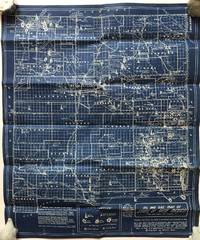
19361182Los Angeles: Brooks Bros 1936. Very good plus. Blueprint map 21.5 x 18.25 inches. Old fold lines minor wear. A few pencil annotations. An interesting and quite attractive blueprint map that shows the oil and gas fields of New Mexico where oil was first discovered in 1924. The map was compiled and drawn by Fabius and Sam Brooks Los Angeles publishers and was based on a 1931 map by Dean Winchester and "corrected to date" likely in the mid-1930s. The map shows the locations of oil and gas fields across the state and delineates sites of oil drilling their proprietors and the depths at which they hit oil or gas. Also included are the routes of major gas and oil pipelines. At the lower left corner of the map is a list of principal lease holders in New Mexico broken into tiers by acreage with Standard Oil holding over a million acres and the next group holding 100000 to 500000 each down to 5000 individuals and small companies who hold anywhere from 40 to 5000 acres. We locate a handful of copies of the Winchester map and one copy of a later dated Brooks map with a different title but none of the present issue. A highly attractive and informative New Mexico oil map. Brooks Bros unknown books
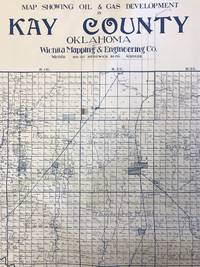
19351420Wichita: Wichita Mapping & Engineering Co 1935. Very good. Large blueline map 40.75 x 47 inches. Rolled. Some excess blue ink along bottom edge. Light wear at edges. Minor toning and dust soiling. Scattered neat contemporary manuscript annotations. Imposing and detailed oil and gas map showing developments in Kay County Oklahoma bordering Kansas directly south of Wichita. The present map delineates all the oil and gas wells being planned and drilled and all wells actively producing and abandoned. These are several large concentrations of activity the largest being between the towns of Blackwell Braman Dilworth and Peckham northeast of the Chikaskia River with others located near Tonkawa Ponca City and between Newkirk and Kaw. The map also notes land ownership for every section of every township in the county."The oil and gas industry stimulated an economic boom in the early 1900s. As early as 1894 gas had been discovered on the Marcus McClaskey farm southeast of Newkirk. However he kept the discovery a secret until he could prove up his land claim. By 1902 approximately six gas wells had been drilled northeast of Blackwell. In 1910 Ernest W. Marland founder of the 101 Ranch Oil Company drilled seven gas wells on the Millers' 101 Ranch. However the great oil boom in Kay County was precipitated by the discovery of oil by Marland on the Ponca allotment of Willie Cries Crys-for-War in June 1911. Louis H. Wentz soon entered the foray to locate oil in Kay County. The oil boom and bust created temporary peaks in population and several ghost towns such as Mervine Dilworth and Three Sands" - Encyclopedia of Oklahoma History and Culture.Not in OCLC. We locate records for four other maps produced by the Wichita Mapping & Engineering Co. with only one being noted in any appreciable amount of copies. Wichita Mapping & Engineering Co unknown books
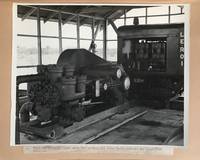
1943540Venezuela 1943. Very good. 48 original photographs each 8 x 10 inches. Quarto. Plain leather boards twin-bolt binding. Some photos detached from mounts some wear to covers but images generally fine with typed captions affixed beneath each photo. A rare photographic document of Venezuelan oil production in the early 20th century. This album contains nearly fifty large-format original images that depict the construction of a 157-mile crude oil pipeline from Las Mercedes Del Llano Guanico to a deep-sea terminal at Pamatacual in 1943 by the Sociedad Anonima Petrolera las Mercedes owned jointly by the Texas Company later Texaco and British-controlled Caracas Petroleum S. A. Venezuelan oil reserves attracted foreign investment as early as 1908: "In 1908 General Juan Vicente Gomez took power to become the strongest dictator of the 20th century with 27 years in office. He opened the gate to foreign oil investors.World War I was the trigger introducing Venezuela into the world oil market. After 1919 the investment and the exportation of Venezuelan oil increased tremendously. By 1922 Venezuela became an important supplier of oil in the world and biggest reserves of oil were discovered in the Lake of Maracaibo. During World War II Venezuela was the most secure provider of oil to the United States." -- Johannes Alvarez and James Fiorito Venezuelan Oil Unifying Latin-America. Venezuela increased its production 42 percent in 1943 and 1944 to satisfy the Allied demand for wartime oil. The images contained in the present album show various features of the pipeline oil wells and storage facilities at the inland stations as well as the path of the pipeline through the jungle to the sea. Several photos depict groups of men at work on the line in several locations. Another series of images depict views of the terminal station and the construction of its structures as well as its shipping facilities and the operations surrounding the loading of tankers there. From a research perspective this album is a fascinating look into the development of the now-critical oil industry in a lesser known region of mid-20th century Venezuela the involvement of American in this case Texan companies in South American industrial growth as well as the importance of South American resources to the United States war effort during World War II. We were unable to find any examples of large format photographs from the Venezuelan oil industry from this period in auction records or on the market. Photographs of Venezuelan oil production from outside of the Lake Maracaibo region where the bulk of early oil development occurred are equally difficult to locate. The printed title page suggests that more than one of these albums was produced but we are unable to uncover another example in OCLC or archived sales records. unknown books
186538685Philadelphia 1865. Broadside with a table of the rates of fare on verso. Woodcut illustration of a locomotive. Sheet size: 19 x 8 inches. Extraordinary survival: a railroad broadside advertising a route to America's first oil boom.<br/> <br/>The first oil well in the United States was drilled by E. L. Drake in Oil Creek Pennsylvania near Titusville in 1859. On the 29th of August oil was struck and the first boom was on. Towns such as Oil City and Pithole sprang up. The Titusville population exploded from 250 residents to over 10000 in little more than five years; Pithole expanded from four log-cabin farmhouses to a bustling city with over 50 hotels over the span of five months in 1865. At its peak the Pennsylvania wells were producing one third of the world's oil. An ephemeral survival of America's first oil rush. unknown books