25 résultats
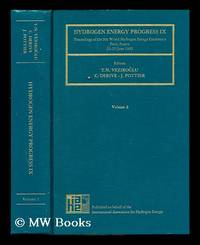
1992244057Paris : M.C.I. Manifestations et Communications Internationales 1992. First Edition. Hardcover. Near fine copy in the original title-blocked pictorial cloth. Slightest suggestion only of dust-dulling to the spine bands and panel edges. Remains particularly well-preserved overall; tight bright clean and strong. Physical description; 677-1372 pp. : ill. ; 25 cm. Notes; ""Published on behalf of the IAHE""--cover. Includes bibliographical references. Subject; Hydrogen as fuel. Genres; Conference publication. Illustrated. Paris : M.C.I. (Manifestations et Communications Internationales) hardcover
19852080202104501755Japan Council Against Atomic and Hydrogen Bombs 1985. Soft Cover. Fine. The book is in fine condition. Japan Council Against Atomic and Hydrogen Bombs paperback
198720827021146057337800 Yen Japan Council Against Atomic and Hydrogen Bombs 1987. Soft Cover. Fine. Number of books: 1 7,800 Yen Japan Council Against Atomic and Hydrogen Bombs paperback
20112090202120415058Published by the National Congress Against Atomic and Hydrogen Bombs 2011. Soft Cover. Fine. Number of books: 1 Published by the National Congress Against Atomic and Hydrogen Bombs paperback
19692090202120416016Asahishinbunsha 1969. Soft Cover. Fine. Number of books: 1 Asahishinbunsha paperback
19692090202120411739Not Available 1969. Soft Cover. Fine. Number of books: 1 Not Available paperback
19702090202118101160Heiwa Shobo Osaka 1970. Soft Cover. Fine. The book is in fine condition. Heiwa Shobo (Osaka) paperback
19712083002116000156Japan Seinen Publishing Company 1971. Soft Cover. Fine. Number of pages: 214p Map size: 18cm Japan Seinen Publishing Company paperback
19942111902160301415New Japan Publishing Company 1994. Soft Cover. Fine. The book is in fine condition. New Japan Publishing Company paperback
19942090202120409862New Japan Publishing Company 1994. Soft Cover. Fine. Number of books: 1 New Japan Publishing Company paperback
19702082402113800812Heiwa shobo 1970. Soft Cover. Fine. Number of books: 1 Heiwa shobo paperback
19732090202122700768Not Available 1973. Soft Cover. Fine. Number of books: 1 Not Available paperback
20022091202132704391Nanatsumorishokan 2002. Soft Cover. Fine. The book is in fine condition. Nanatsumorishokan paperback
20022090202117901266Nanatsumorishokan 2002. Soft Cover. Fine. The book is in fine condition. Nanatsumorishokan paperback
19642091202133102335Okinawa Jiji Press 1964. Soft Cover. Fine. Volume: 1 Okinawa Jiji Press paperback
19942080302106800030Japan National Assembly Against Atomic and Hydrogen Bombs 1994. Soft Cover. Fine. Size: New book 246 pages Number of books: 1 Japan National Assembly Against Atomic and Hydrogen Bombs paperback
19942090202120402037Japan National Congress Against Atomic and Hydrogen Bombs 1994. Soft Cover. Fine. Number of books: 1 Japan National Congress Against Atomic and Hydrogen Bombs paperback
19712090202120410540Japan Seinen Publishing Company 1971. Soft Cover. Fine. Number of books: 1 Japan Seinen Publishing Company paperback
201185215Washington DC: U.S. Department of Energy Office of Nuclear Energy Nuclear Hydrogen Initiative c2011. Presumed First Edition First printing thus. DVD. Very good/In Plastic Case. The information contained includes annual funding information baseline change information deliverables Headquarters guidance work packages reports conference call summaries and more. Nuclear technologies have the potential to produce hydrogen in a clean efficient manner and at the potential scale required to drive decarbonization in hard-to-abate energy sectors without the space constraints of other means of hydrogen production. The initial goal of the Office of Nuclear Energy Nuclear Hydrogen Initiative was to demonstrate<br /> the commercial-scale production of hydrogen using nuclear energy by 2017. Primary topics discussed in the R&D Plan: • Thermochemical Processes; • High-Temperature Electrolysis; and • Alternative Methods. The Nuclear Hydrogen Initiative is a nonpartisan global collaboration of more than 50 companies academic institutions government agencies and non-profit organizations working to elevate the role of nuclear-derived hydrogen to decarbonize the global energy system. U.S. Department of Energy, Office of Nuclear Energy, Nuclear Hydrogen Initiative unknown
181046377Paris J. Klostermann 1810. Contemp. hcalf. Spine gilt. Slightly rubbed. A few scratches to binding. Small stamps on verso of titlepage.In: "Annales de Chimie ou Recueil de Mémoires concernant la Chemie" Tome 75. 336 pp. a. 2 folded engraved plates. Some scattered brownspots. The papers: pp. 27-77 129-175 256-263 264-273 274-289 a. 290-316. <br/><br/><em>First French version of Davy's "The Bakerian Lecture for 1809. On some new Electrochemical Researches on various Objects particularly the metallic Bodies from the Alkalies and Earth and on some Combinations of Hydrogene. Read November 16 1809." together with the controversy papers by Davy and Gay-Lussac & Thenard."Mr. Davy having from the commencement of his electro-chemical researches communicated the several steps of his progress to the Society The Royal Society takes the present opportunity of reporting the results of his further inquiries under four principal heads. First on the nature of the metals of the fixed alkalis. Second on the nature of Hydrogen and composition of ammonia. Thirdly on the metals of the earth; and Fourthly he makes a comparison between the antiphlogistic doctrine and a modified phlogistic hypothesis."Abstract. He further gives arguments for considering potassium and sodium which he discovered in 1808 as a element.""Gay-Lussac had a slight rivalry between himself and the creation scientist Sir Humphry Davy. Davy was chemically preparing Potassium and Sodium through an electrical current and this made Gay-Lussac and Thénard envious of his success. They too decided to perform the same task but they had no battery at their disposal as Davy had so they had to form another way to chemically prepare the two elements. In 1808 they used a red-hot iron fused to potash the water-soluble form of a manufactured salt containing potassium to perform this task a method that Davy admitted had its advantageous qualities. Gay-Lussac and Thénard were successful in preparing Potassium and continued to make a full analysis of its chemical properties and began to use it for their own experiments. In 1809 Davy performed the same task using it to reduce Boron in Boracic acid." </em> unknown
186244063Leipzig Johann Ambrosius Barth 1862. Without wrappers as issued in "Annalen der Physik und Chemie. Hrsg. von J.C. Poggendorff" Vierte Reihe Bd. 27 117 Stück Zwei No. 10. The entire issue offered. Titlepage to vol. 27. Pp. 193-352 a. 1 engraved plate. Ångströms paper: pp. 290-302. <br/><br/><em>First appearance in German of Ångström's famous paper in which he announced the discovery of hydrogen in the atmosphere of the sun and in which he also confirmed the probable existence of of other elements there. The paper appeared in "Oefversigt af K. Vet. Acad. Förhandl." in 1861. The German paper here is expanded. At the same time it was translated into English and publishe as "On the Fraunhofer Lines Visible in the Solar Spectrum".Ångström was one of the early formulators of the science of modern spectroscopy; he wrote extensively on terrestrial magnetism the conduction of heat and especially spectroscopy. He published a monumental map of the normal solar spectrum that expressed the length of light waves in units of one ten-millionth of a millimeter a unit of length now known as the angstrom. He discovered that hydrogen is present in the sun's atmosphere and he was the first to examine the spectrum of the aurora borealis. </em> unknown
181042219London W. Bulmer and Co. 1810. 4to. No wrappers as extracted from "Philosophical Transactions" 1810 - Part I. Pp. 16-74 and 2 engraved plates showing Davy's electrochemical apparatus for decomposing substances. The plates dampstained. Text fine and clean. <br/><br/><em>First appearence of this historical chemical paper Davy' fifth Bakerian Lecture in which he announced his discovery of hydrogen telluride."Mr. Davy having from the commencement of his electro-chemical researches communicated the several steps of his progress to the Society The Royal Society takes the present opportunity of reporting the results of his further inquiries under four principal heads. First on the nature of the metals of the fixed alkalis. Second on the nature of Hydrogen and composition of ammonia. Thirdly on the metals of the earth; and Fourthly he makes a comparison between the antiphlogistic doctrine and a modified phlogistic hypothesis."Abstract. He further gives arguments for considering potassium and sodium which he discovered in 1808 as a element."Humphry Davy was one of the most brilliant chemists of the early nineteenth century. His early study of nitrous oxide brought him his first reputation but his later and most importent investigations were devoted to electrochemistry. Following Galvani's experiments and the discovery of the voltaic pile interest in galvanic electricity had become widespread. The first electrolysis by means of the pile was carried out in 1800 by Nicholson and Carisle who obtained oxygen and hydrogen from water. Davy began to examine the chemical effects of electricity in 1800 and his numerous discoveries were presented in his Bakerian lectures." - Wheeler Gift: 2518. </em> unknown
181045887London W. Bulmer and Co. 1810. 4to. No wrappers as extracted from "Philosophical Transactions" 1810 - Part I. Pp. 16-74 and 2 engraved plates showing Davy's electrochemical apparatus for decomposing substances Davy's versions of the Voltaic-pile. Plates a bit brownspotted otherwise clean and fine wide-margined. <br/><br/><em>First appearence of this historical chemical paper Davy' fifth Bakerian Lecture in which he announced his discovery of hydrogen telluride."Mr. Davy having from the commencement of his electro-chemical researches communicated the several steps of his progress to the Society The Royal Society takes the present opportunity of reporting the results of his further inquiries under four principal heads. First on the nature of the metals of the fixed alkalis. Second on the nature of Hydrogen and composition of ammonia. Thirdly on the metals of the earth; and Fourthly he makes a comparison between the antiphlogistic doctrine and a modified phlogistic hypothesis."Abstract. He further gives arguments for considering potassium and sodium which he discovered in 1808 as a element."Humphry Davy was one of the most brilliant chemists of the early nineteenth century. His early study of nitrous oxide brought him his first reputation but his later and most importent investigations were devoted to electrochemistry. Following Galvani's experiments and the discovery of the voltaic pile interest in galvanic electricity had become widespread. The first electrolysis by means of the pile was carried out in 1800 by Nicholson and Carisle who obtained oxygen and hydrogen from water. Davy began to examine the chemical effects of electricity in 1800 and his numerous discoveries were presented in his Bakerian lectures." - Wheeler Gift: 2518.Also with William Hyde Wollaston "The Croonian Lecture. Read November 16 1809.On Muscular Action - On Sea-Sickness - On the salutary Effects of Riding and other Modes of Gestation. Pp. 1-15. </em> unknown
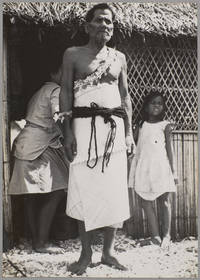
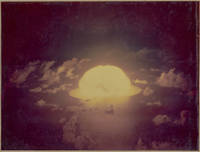
195142820836<p>This rare album documents Operation Greenhouse the first series of tests in the nascent American thermonuclear weapons program. The four tests were performed in April and May 1951 at the Enewetak Atoll of the Marshall Islands. Following the Soviet Union's successful test of an atomic bomb in August 1949 the United States made the controversial decision to proceed with the development of thermonuclear weapons. These fusion weapons the "Super" or hydrogen bomb would be orders of magnitude more destructive than the fission weapons used against Japan.</p><p>"Greenhouse consisted of four tests. The first two—Dog and Easy—were weapon development tests. The third—George—used a large fission yield to ignite for the first time a small mass of thermonuclear fuel. With an overall yield of 225 kilotons George was the most impressive and largest shot to date more than ten times the size of the Trinity blast. Greenhouse Task Force Commander Elwood Quesada declared it 'the greatest spectacle within recorded history' as the 'white day became dark by comparison with the brilliant light radiating' from George. … The fourth shot—Item—provided the initial demonstration of a technique called 'boosting' in which a fission device contained some thermonuclear fuel that enhanced the yield of the fission explosion" Battlefield of the Cold War. Volume I. Atmospheric Nuclear Weapons Testing 1951-1963.</p><p>The George test created "the first small thermonuclear flame ever to burn on Earth. According to Edward Teller the success of the 'George' shot was pivotal in the development of the Super the hydrogen bomb and provided scientists with the confidence to proceed along further speculations of thermonuclear design principles" Atomic Heritage Foundation.</p><p>The album contains nine photographs of the blasts themselves six in color showing the fireballs mushroom clouds and smoke trails used to gauge shockwaves. Other photographs show top brass including task force's commander General Elwood Richard Quesada visiting dignitaries as well as the construction of bases housing and testing structures and detonation towers. Monitoring devices and equipment include a small blimp tracer rockets cameras airplanes including radio-controlled drones and tanks and other equipment to be placed within the blast radius. Two photographs show the unloading of beagles to be monitored for the effects of radiation. Photographs of life on the base include Black and white men gathering at mess a church entertainment facilities a wall covered in pinups and portraits of two indigenous Marshall Islanders in traditional clothing.</p><p>VERY RARE. We can locate only one other example University of Illinois Urbana-Champaign. The casual group portraits of top officers and the absence of printed captions suggest that the album was prepared in very small numbers for well-informed insiders.</p><p>Provenance: Commander Elbert W. Pate of the United States Navy with his name gilt-stamped on the upper board. Pate was Deputy Officer for meteorology a key role given the importance of radioactive fallout in the tests. Pate was co-author of the Operation Greenhouse Meteorological Technical Report. Laid in is Pate's certificate for "Meritorius sic Service Performed with Operation Greenhouse" signed by the task force's commander General Elwood Richard Quesada and dated 15 July 1951. Also laid in is a membership certificate in the Grand Council Exclusive Order of Guinea Pigs issued to Commander Pate on 7 September 1951 acknowledging that he has "through an exaggerated sense of patriotism subjected his body to the rigors attendant to atom bombs hundred-foot tidal waves mermaids vampires sandfleas …"</p><p>Printed title page detached with Official Use Only at top. 90 gelatin silver photographs including 6 in color various sizes mainly approx. 8½ x 6½ in. mounted on 35 album leaves one color photograph loose another a little discolored. Original dark green cloth ring-bound album 14 x 12 in. gilt-stamped "Operation Greenhouse." Some wear and soiling. Very good.</p> United States Air Force Lookout Mt. Laboratory hardcover
195142820856<p>This rare album documents Operation Greenhouse the first series of tests in the nascent American thermonuclear weapons program. The four tests were performed in April and May 1951 at the Enewetak Atoll of the Marshall Islands. Following the Soviet Union's successful test of an atomic bomb in August 1949 the United States made the controversial decision to proceed with the development of thermonuclear weapons. These fusion weapons the "Super" or hydrogen bomb would be orders of magnitude more destructive than the fission weapons used against Japan.</p><p>"Greenhouse consisted of four tests. The first two—Dog and Easy—were weapon development tests. The third—George—used a large fission yield to ignite for the first time a small mass of thermonuclear fuel. With an overall yield of 225 kilotons George was the most impressive and largest shot to date more than ten times the size of the Trinity blast. Greenhouse Task Force Commander Elwood Quesada declared it 'the greatest spectacle within recorded history' as the 'white day became dark by comparison with the brilliant light radiating' from George. … The fourth shot—Item—provided the initial demonstration of a technique called 'boosting' in which a fission device contained some thermonuclear fuel that enhanced the yield of the fission explosion" Battlefield of the Cold War. Volume I. Atmospheric Nuclear Weapons Testing 1951-1963.</p><p>The George test created "the first small thermonuclear flame ever to burn on Earth. According to Edward Teller the success of the 'George' shot was pivotal in the development of the Super the hydrogen bomb and provided scientists with the confidence to proceed along further speculations of thermonuclear design principles" Atomic Heritage Foundation.</p><p>The album contains nine photographs of the blasts themselves six in color showing the fireballs mushroom clouds and smoke trails used to gauge shockwaves. Other photographs show top brass including task force's commander General Elwood Richard Quesada visiting dignitaries as well as the construction of bases housing and testing structures and detonation towers. Monitoring devices and equipment include a small blimp tracer rockets cameras airplanes including radio-controlled drones and tanks and other equipment to be placed within the blast radius. Two photographs show the unloading of beagles to be monitored for the effects of radiation. Photographs of life on the base include Black and white men gathering at mess a church entertainment facilities a wall covered in pinups and portraits of two indigenous Marshall Islanders in traditional clothing.</p><p>VERY RARE. We can locate only one other example University of Illinois Urbana-Champaign. The casual group portraits of top officers and the absence of printed captions suggest that the album was prepared in very small numbers for well-informed insiders.</p><p>Provenance: Commander Elbert W. Pate of the United States Navy with his name gilt-stamped on the upper board. Pate was Deputy Officer for meteorology a key role given the importance of radioactive fallout in the tests. Pate was co-author of the Operation Greenhouse Meteorological Technical Report. Laid in is Pate's certificate for "Meritorius sic Service Performed with Operation Greenhouse" signed by the task force's commander General Elwood Richard Quesada and dated 15 July 1951. Also laid in is a membership certificate in the Grand Council Exclusive Order of Guinea Pigs issued to Commander Pate on 7 September 1951 acknowledging that he has "through an exaggerated sense of patriotism subjected his body to the rigors attendant to atom bombs hundred-foot tidal waves mermaids vampires sandfleas …"</p><p>Printed title page detached with Official Use Only at top. 90 gelatin silver photographs including 6 in color various sizes mainly approx. 8½ x 6½ in. mounted on 35 album leaves one color photograph loose another a little discolored. Original dark green cloth ring-bound album 14 x 12 in. gilt-stamped "Operation Greenhouse." Some wear and soiling. Very good.</p> United States Air Force Lookout Mt. Laboratory hardcover