56 résultats
Ex-library with the usual stamps, stickers, etc. Binding is solid and text/interior is clean and free of marking of any kind. 238 pages with graphs, charts, formulae, tables. 4 appendices and index.
1889SPN-87Demi-reliure in-4 en cuir, dos à titrage, filets et frises de points dorés. Paris : H. Lecène et H. Oudin, "Nouvelle bibliothèque illustrée de vulgarisation", 1889. 319 pages illustrées par Gil Baer en noir in-texto et hors-texte (11 planches en noir, dont 1 en frontispice), plans, dessins, tableaux, photographies, 1 carte des itinéraires suivis par les aérostiers militaires pendant la Campagne du Tonkin - 1884. Coins émoussés, mors fragiles, coiffe de tête arasée.
19702090202118101160Heiwa Shobo Osaka 1970. Soft Cover. Fine. The book is in fine condition. Heiwa Shobo (Osaka) paperback
19712083002116000156Japan Seinen Publishing Company 1971. Soft Cover. Fine. Number of pages: 214p Map size: 18cm Japan Seinen Publishing Company paperback
19712090202120410540Japan Seinen Publishing Company 1971. Soft Cover. Fine. Number of books: 1 Japan Seinen Publishing Company paperback
19692090202120411739Not Available 1969. Soft Cover. Fine. Number of books: 1 Not Available paperback
Second printing of the 1954 first English edition. pp. xvi, [16] plates, xvii-xviii, [2]-281. Index. Sixteen fabulous black and white photographic plates illustrate the V-2 and related personages. "The inside story of Hitler's 'secret weapon' - and the men and events behind it - that almost changed the course of history." - dust jacket. Author was a German General and head of the Peenemunde Rocket Station. Book is clean and unmarked with moderate wear to publisher's green cloth. Binding sound. Average wear to dust jacket which is now preserved in glossy new archival-grade Brodart. A quality copy of this fascinating work. Enser p.373. Book
181046377Paris J. Klostermann 1810. Contemp. hcalf. Spine gilt. Slightly rubbed. A few scratches to binding. Small stamps on verso of titlepage.In: "Annales de Chimie ou Recueil de Mémoires concernant la Chemie" Tome 75. 336 pp. a. 2 folded engraved plates. Some scattered brownspots. The papers: pp. 27-77 129-175 256-263 264-273 274-289 a. 290-316. <br/><br/><em>First French version of Davy's "The Bakerian Lecture for 1809. On some new Electrochemical Researches on various Objects particularly the metallic Bodies from the Alkalies and Earth and on some Combinations of Hydrogene. Read November 16 1809." together with the controversy papers by Davy and Gay-Lussac & Thenard."Mr. Davy having from the commencement of his electro-chemical researches communicated the several steps of his progress to the Society The Royal Society takes the present opportunity of reporting the results of his further inquiries under four principal heads. First on the nature of the metals of the fixed alkalis. Second on the nature of Hydrogen and composition of ammonia. Thirdly on the metals of the earth; and Fourthly he makes a comparison between the antiphlogistic doctrine and a modified phlogistic hypothesis."Abstract. He further gives arguments for considering potassium and sodium which he discovered in 1808 as a element.""Gay-Lussac had a slight rivalry between himself and the creation scientist Sir Humphry Davy. Davy was chemically preparing Potassium and Sodium through an electrical current and this made Gay-Lussac and Thénard envious of his success. They too decided to perform the same task but they had no battery at their disposal as Davy had so they had to form another way to chemically prepare the two elements. In 1808 they used a red-hot iron fused to potash the water-soluble form of a manufactured salt containing potassium to perform this task a method that Davy admitted had its advantageous qualities. Gay-Lussac and Thénard were successful in preparing Potassium and continued to make a full analysis of its chemical properties and began to use it for their own experiments. In 1809 Davy performed the same task using it to reduce Boron in Boracic acid." </em> unknown
181042219London W. Bulmer and Co. 1810. 4to. No wrappers as extracted from "Philosophical Transactions" 1810 - Part I. Pp. 16-74 and 2 engraved plates showing Davy's electrochemical apparatus for decomposing substances. The plates dampstained. Text fine and clean. <br/><br/><em>First appearence of this historical chemical paper Davy' fifth Bakerian Lecture in which he announced his discovery of hydrogen telluride."Mr. Davy having from the commencement of his electro-chemical researches communicated the several steps of his progress to the Society The Royal Society takes the present opportunity of reporting the results of his further inquiries under four principal heads. First on the nature of the metals of the fixed alkalis. Second on the nature of Hydrogen and composition of ammonia. Thirdly on the metals of the earth; and Fourthly he makes a comparison between the antiphlogistic doctrine and a modified phlogistic hypothesis."Abstract. He further gives arguments for considering potassium and sodium which he discovered in 1808 as a element."Humphry Davy was one of the most brilliant chemists of the early nineteenth century. His early study of nitrous oxide brought him his first reputation but his later and most importent investigations were devoted to electrochemistry. Following Galvani's experiments and the discovery of the voltaic pile interest in galvanic electricity had become widespread. The first electrolysis by means of the pile was carried out in 1800 by Nicholson and Carisle who obtained oxygen and hydrogen from water. Davy began to examine the chemical effects of electricity in 1800 and his numerous discoveries were presented in his Bakerian lectures." - Wheeler Gift: 2518. </em> unknown
181045887London W. Bulmer and Co. 1810. 4to. No wrappers as extracted from "Philosophical Transactions" 1810 - Part I. Pp. 16-74 and 2 engraved plates showing Davy's electrochemical apparatus for decomposing substances Davy's versions of the Voltaic-pile. Plates a bit brownspotted otherwise clean and fine wide-margined. <br/><br/><em>First appearence of this historical chemical paper Davy' fifth Bakerian Lecture in which he announced his discovery of hydrogen telluride."Mr. Davy having from the commencement of his electro-chemical researches communicated the several steps of his progress to the Society The Royal Society takes the present opportunity of reporting the results of his further inquiries under four principal heads. First on the nature of the metals of the fixed alkalis. Second on the nature of Hydrogen and composition of ammonia. Thirdly on the metals of the earth; and Fourthly he makes a comparison between the antiphlogistic doctrine and a modified phlogistic hypothesis."Abstract. He further gives arguments for considering potassium and sodium which he discovered in 1808 as a element."Humphry Davy was one of the most brilliant chemists of the early nineteenth century. His early study of nitrous oxide brought him his first reputation but his later and most importent investigations were devoted to electrochemistry. Following Galvani's experiments and the discovery of the voltaic pile interest in galvanic electricity had become widespread. The first electrolysis by means of the pile was carried out in 1800 by Nicholson and Carisle who obtained oxygen and hydrogen from water. Davy began to examine the chemical effects of electricity in 1800 and his numerous discoveries were presented in his Bakerian lectures." - Wheeler Gift: 2518.Also with William Hyde Wollaston "The Croonian Lecture. Read November 16 1809.On Muscular Action - On Sea-Sickness - On the salutary Effects of Riding and other Modes of Gestation. Pp. 1-15. </em> unknown
19711110531971 Editions Edita - 1971 - In-4, cartonnage toilé orange sous jaquette illustrée en couleurs de l'éditeur - 197 p. - Très nombreuses illustrations in et hors-texte en N&B, et nombreuses illustrations contrecollées en couleurs
A clean, unmarked book with a tight binding. Light wear to cover. 6 5/8"w x 9 1/2"h. Approx. 600 pages.
28 pages plus advertorial covers. Extensive WWII coverage including: Karsh cover photo of Churchill and Mackenzie King; Five photos of "Huge Military Convoy Reaching India Without Losing a Ship or Man - Disembarkation Scenes"; Two-page illustration of "The Relative Size, Velocity and Weight of Shell Used in the Latest North African Battles - General Grant Tanks, The Mark IV, and the German 88-m.m. anti-tank gun"; Ten Photos of devastation in Malta, "The Heroic Island, continuously battered from the air, unfailing courage of the most bombed place in the world"; Article on the Threat to Egypt; Eight photos of bomb damage to Canterbury and other historic sites; Photo-illustrated review of "Last Train From Berlin" by Howard K. Smith; One-page photo of 'starboard vista' view of British aircraft carrier; Six illustrations of the fighting in Africa by Captain McIntyre of New Zealand; Six aerial photos of Mersa Matruh, Libya, now in the hands of Rommel; Centerfold illustration of Senior army officers being trained to fix trucks; Photos of scorched earth in Sollum, Libya; Aerial photo of bomb damage to 'Gneisenau' at Brest; Photo of King Feisal II of Iraq on his 7th birthday; Photo of emblems of Yugoslavia's guerilla army - featuring skull and crossbones; Photo of U.S. sailor being trained to swim in a sea of buring oil!; Excellent photo illustrates the 56 personnel needed to maintain, service and fly a heavy bomber of the 'Sterling' type, including plane, fuel truck, bomb trailers, etc.; Photo of King George of the Hellenes addressing joint session in Washtington; Royal Visit to Ulster; Excellent one-page photos of dozens of 'General Grant' tanks, used in the Battle of Libya, under construction at the giant Chrysler tank arsenal in Detroit; Photo-illustrated article on Sir James Dewar and his pursuit of liquid air and liquid hydrogen; Five photos of the British Army training in troop-carrier gliders; Twelve excellent photos illustrating "Sebastapol's heroic defence against overwhelming odds in Crimea - scenes from the Russian battlefronts opposing Germany's gathering offensive; Photos of personalities of the week including Mervyn Haigh, Dwight Eisenhower, C.S. Staniland, Elinor Mordaunt, parents of Kenneth Campbell, V.C., Churchill with Attlee, Eden and Sinclair, Churchill with wife and daughter, Wife of able seaman Savage, V.C., Sir Edwin Cooper, V.A. Crutchley, V.C., Lord Glanely, Tom Driberg, and parents of Petty Officer Sephton, V.C. Unmarked with average wear. Spine taped. A sound vintage copy. Book
Pages 381-428.. Features: Guinness ad inside front cover features Jane Welsh Carlyle; Nice one-page Benson & Hedges ad features ritzy scene aboard trainr; One-page ad for the David Brown companies features welder at work; Nice half-page ad for Westland helicopters; One-page ad for Cossor shows auto assembly line at Morris Motors; One-page Fairey Aviation Company ad honours the H.M. S. Illustrious; Two pages of photos of Princess Margaret being welcomed in St. Kitts, Jamaica and the Bahamas; Turkey and Iraq sign mutual defence treaty; King Hussein of Jordan engaged to Princess Dina Abd-El-Hamid Aoun; Passing of M. Paul Claudel and Huseyin Ragip Baydur; Farewell photos of the Shaw of Iran and his wife as they leave London; Czech skater Miss Miroslava NNachodska seeks asylum in the U.S.; Amazing photos of the underground thermal power of Wairakei, New Zealand - which will supply heavy water for Britain's atomic power stations; M. Edgar Faure; Page of photos of the Royal Navy's most formidable fighting unit - H.M.S. Ark Royal and its commissioning; Photo of snow in Riviera town; Missing Belgian airliner found after eight days on Mt. Terminillo; One-page colour-photo portrait of Princess Margaret; Six colour photos describe the "Powder Keg of Asia" - Chinese Nationalist troops on Formosa; Excavating an important site inthe Malayan jungles at Gua Cha, in Kelantan; One page photo portrait of Dame Edith Evans; Two pages of photos of/in the first American hotel ever built in London - the Wesbury is the West End's first new hotel for over twenty years; Damage from fire at Shell refinery at Shell Haven, Essex - the three men who kep the fire from spreading - R.A. Jackson, T. Brookbank and H. Dobson; Storm and Explosion in Genoa Harbour - the Nordanland was carrying calcium carbide; Snow scenes in the Pennines and Cornwall; Launching of new British submarine "Excalibur" which uses hydrogen peroxide fuel; Huge wool fire dockside in New Zealand; Voting on the SAAR and Paris agreements; Photos of the amazing Ibex in the Alps;Toronto landmark destroyed by fire - Anglican Church of the Martyr;Nuclear device exploded at Yucca Flat; Nice colour photo ad for Dow-Mac (Products) Ltd.; Back cover colour ad for Johnnie Walker with billiards theme; and more. Moderate wear. Unmarked. A sound vintage copy. Magazine
20112090202120415058Published by the National Congress Against Atomic and Hydrogen Bombs 2011. Soft Cover. Fine. Number of books: 1 Published by the National Congress Against Atomic and Hydrogen Bombs paperback
19692090202120416016Asahishinbunsha 1969. Soft Cover. Fine. Number of books: 1 Asahishinbunsha paperback
32 pages. Features: Front cover Thompson Valves ad salutes Canadian Airways Limited; Shank Proportions of Aircraft Connecting Rods; Construction of Aircraft Fuel Tanks; The Effect of Change of Weight on Airplane Performance; The Value of Weight Saving in Aircraft Design; Notes on Stresses in Metal Covering Under the Action of a Uniformly Distributed Load; Copper Hydrogen Electric Welding; The New Boeing Transport; Pratt & Whitney Two-Row Engine Development; World Aviation; The Servo Control System; Bumps Due to Gusts; A Radio System for Fog Landings; The Debrie Camera; New features of the Macon; New Products; Haskelite ad features prominent illustration of the Boeing 247; Back cover Racon Electric Co. ad includes photo of huge crowd at Cleveland air races last year; and more. Unmarked with average wear. A sound vintage copy. Book
Light wear and spots to yellow paper cover. First combined edition. 46 pages.
186244063Leipzig Johann Ambrosius Barth 1862. Without wrappers as issued in "Annalen der Physik und Chemie. Hrsg. von J.C. Poggendorff" Vierte Reihe Bd. 27 117 Stück Zwei No. 10. The entire issue offered. Titlepage to vol. 27. Pp. 193-352 a. 1 engraved plate. Ångströms paper: pp. 290-302. <br/><br/><em>First appearance in German of Ångström's famous paper in which he announced the discovery of hydrogen in the atmosphere of the sun and in which he also confirmed the probable existence of of other elements there. The paper appeared in "Oefversigt af K. Vet. Acad. Förhandl." in 1861. The German paper here is expanded. At the same time it was translated into English and publishe as "On the Fraunhofer Lines Visible in the Solar Spectrum".Ångström was one of the early formulators of the science of modern spectroscopy; he wrote extensively on terrestrial magnetism the conduction of heat and especially spectroscopy. He published a monumental map of the normal solar spectrum that expressed the length of light waves in units of one ten-millionth of a millimeter a unit of length now known as the angstrom. He discovered that hydrogen is present in the sun's atmosphere and he was the first to examine the spectrum of the aurora borealis. </em> unknown
188610727Paris, Blétry Frères, 1886 ; in-8, broché ; 16 pp., couverture bleue imprimée.
1983LFA00880N° 143 - Avril 1983 Une revue d'environ 140 pages, format 295 x 220 mm, brochée, illustrée
19852080202104501755Japan Council Against Atomic and Hydrogen Bombs 1985. Soft Cover. Fine. The book is in fine condition. Japan Council Against Atomic and Hydrogen Bombs paperback
198720827021146057337800 Yen Japan Council Against Atomic and Hydrogen Bombs 1987. Soft Cover. Fine. Number of books: 1 7,800 Yen Japan Council Against Atomic and Hydrogen Bombs paperback
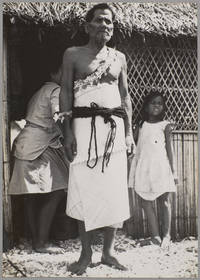
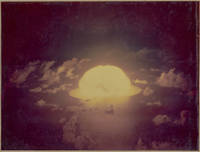
195142820836<p>This rare album documents Operation Greenhouse the first series of tests in the nascent American thermonuclear weapons program. The four tests were performed in April and May 1951 at the Enewetak Atoll of the Marshall Islands. Following the Soviet Union's successful test of an atomic bomb in August 1949 the United States made the controversial decision to proceed with the development of thermonuclear weapons. These fusion weapons the "Super" or hydrogen bomb would be orders of magnitude more destructive than the fission weapons used against Japan.</p><p>"Greenhouse consisted of four tests. The first two—Dog and Easy—were weapon development tests. The third—George—used a large fission yield to ignite for the first time a small mass of thermonuclear fuel. With an overall yield of 225 kilotons George was the most impressive and largest shot to date more than ten times the size of the Trinity blast. Greenhouse Task Force Commander Elwood Quesada declared it 'the greatest spectacle within recorded history' as the 'white day became dark by comparison with the brilliant light radiating' from George. … The fourth shot—Item—provided the initial demonstration of a technique called 'boosting' in which a fission device contained some thermonuclear fuel that enhanced the yield of the fission explosion" Battlefield of the Cold War. Volume I. Atmospheric Nuclear Weapons Testing 1951-1963.</p><p>The George test created "the first small thermonuclear flame ever to burn on Earth. According to Edward Teller the success of the 'George' shot was pivotal in the development of the Super the hydrogen bomb and provided scientists with the confidence to proceed along further speculations of thermonuclear design principles" Atomic Heritage Foundation.</p><p>The album contains nine photographs of the blasts themselves six in color showing the fireballs mushroom clouds and smoke trails used to gauge shockwaves. Other photographs show top brass including task force's commander General Elwood Richard Quesada visiting dignitaries as well as the construction of bases housing and testing structures and detonation towers. Monitoring devices and equipment include a small blimp tracer rockets cameras airplanes including radio-controlled drones and tanks and other equipment to be placed within the blast radius. Two photographs show the unloading of beagles to be monitored for the effects of radiation. Photographs of life on the base include Black and white men gathering at mess a church entertainment facilities a wall covered in pinups and portraits of two indigenous Marshall Islanders in traditional clothing.</p><p>VERY RARE. We can locate only one other example University of Illinois Urbana-Champaign. The casual group portraits of top officers and the absence of printed captions suggest that the album was prepared in very small numbers for well-informed insiders.</p><p>Provenance: Commander Elbert W. Pate of the United States Navy with his name gilt-stamped on the upper board. Pate was Deputy Officer for meteorology a key role given the importance of radioactive fallout in the tests. Pate was co-author of the Operation Greenhouse Meteorological Technical Report. Laid in is Pate's certificate for "Meritorius sic Service Performed with Operation Greenhouse" signed by the task force's commander General Elwood Richard Quesada and dated 15 July 1951. Also laid in is a membership certificate in the Grand Council Exclusive Order of Guinea Pigs issued to Commander Pate on 7 September 1951 acknowledging that he has "through an exaggerated sense of patriotism subjected his body to the rigors attendant to atom bombs hundred-foot tidal waves mermaids vampires sandfleas …"</p><p>Printed title page detached with Official Use Only at top. 90 gelatin silver photographs including 6 in color various sizes mainly approx. 8½ x 6½ in. mounted on 35 album leaves one color photograph loose another a little discolored. Original dark green cloth ring-bound album 14 x 12 in. gilt-stamped "Operation Greenhouse." Some wear and soiling. Very good.</p> United States Air Force Lookout Mt. Laboratory hardcover
195142820856<p>This rare album documents Operation Greenhouse the first series of tests in the nascent American thermonuclear weapons program. The four tests were performed in April and May 1951 at the Enewetak Atoll of the Marshall Islands. Following the Soviet Union's successful test of an atomic bomb in August 1949 the United States made the controversial decision to proceed with the development of thermonuclear weapons. These fusion weapons the "Super" or hydrogen bomb would be orders of magnitude more destructive than the fission weapons used against Japan.</p><p>"Greenhouse consisted of four tests. The first two—Dog and Easy—were weapon development tests. The third—George—used a large fission yield to ignite for the first time a small mass of thermonuclear fuel. With an overall yield of 225 kilotons George was the most impressive and largest shot to date more than ten times the size of the Trinity blast. Greenhouse Task Force Commander Elwood Quesada declared it 'the greatest spectacle within recorded history' as the 'white day became dark by comparison with the brilliant light radiating' from George. … The fourth shot—Item—provided the initial demonstration of a technique called 'boosting' in which a fission device contained some thermonuclear fuel that enhanced the yield of the fission explosion" Battlefield of the Cold War. Volume I. Atmospheric Nuclear Weapons Testing 1951-1963.</p><p>The George test created "the first small thermonuclear flame ever to burn on Earth. According to Edward Teller the success of the 'George' shot was pivotal in the development of the Super the hydrogen bomb and provided scientists with the confidence to proceed along further speculations of thermonuclear design principles" Atomic Heritage Foundation.</p><p>The album contains nine photographs of the blasts themselves six in color showing the fireballs mushroom clouds and smoke trails used to gauge shockwaves. Other photographs show top brass including task force's commander General Elwood Richard Quesada visiting dignitaries as well as the construction of bases housing and testing structures and detonation towers. Monitoring devices and equipment include a small blimp tracer rockets cameras airplanes including radio-controlled drones and tanks and other equipment to be placed within the blast radius. Two photographs show the unloading of beagles to be monitored for the effects of radiation. Photographs of life on the base include Black and white men gathering at mess a church entertainment facilities a wall covered in pinups and portraits of two indigenous Marshall Islanders in traditional clothing.</p><p>VERY RARE. We can locate only one other example University of Illinois Urbana-Champaign. The casual group portraits of top officers and the absence of printed captions suggest that the album was prepared in very small numbers for well-informed insiders.</p><p>Provenance: Commander Elbert W. Pate of the United States Navy with his name gilt-stamped on the upper board. Pate was Deputy Officer for meteorology a key role given the importance of radioactive fallout in the tests. Pate was co-author of the Operation Greenhouse Meteorological Technical Report. Laid in is Pate's certificate for "Meritorius sic Service Performed with Operation Greenhouse" signed by the task force's commander General Elwood Richard Quesada and dated 15 July 1951. Also laid in is a membership certificate in the Grand Council Exclusive Order of Guinea Pigs issued to Commander Pate on 7 September 1951 acknowledging that he has "through an exaggerated sense of patriotism subjected his body to the rigors attendant to atom bombs hundred-foot tidal waves mermaids vampires sandfleas …"</p><p>Printed title page detached with Official Use Only at top. 90 gelatin silver photographs including 6 in color various sizes mainly approx. 8½ x 6½ in. mounted on 35 album leaves one color photograph loose another a little discolored. Original dark green cloth ring-bound album 14 x 12 in. gilt-stamped "Operation Greenhouse." Some wear and soiling. Very good.</p> United States Air Force Lookout Mt. Laboratory hardcover