Melbourne Stereoscopic CompanyBiblio.com
36 résultats
189047371890. Albumen stereoview photograph. 87mm by 177mm card. Depicts James Edwards & Sons boat builders business on the other side of the Yarra. James Edwards was first listed in Melbourne directories in 1869. <br /> <br /> Titled 'New Series' on right hand side of the card. Printed title on the right hand side. Reverse has ink stamp of Melbourne Stereoscopic Company 744 Lygon St North Carlton Stockwell Photo. and previous owner's name in pencil. <br /> <br /> CONDITION : Some fading and faint soiling. Faint mark in sky of left hand photo. Bottom right corner of the card missing. unknown
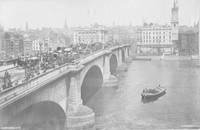
60803c.1860s. . Albumen print. Mounted on card.<br /> The London Stereoscopic and Photographic Company was begun in 1854 by George Swan Nottage. It specialised in the mass production of stereoscopic photographs where two almost identical photographs merged to form a three dimensional picture. The Company published many thousands of views during the 1850s and 1860s and became one of the largest photographic publishing companies in the world.<br /> [c.1860s]. unknown
60800c.1880s. . Albumen print. Mounted on card.<br /> The London Stereoscopic and Photographic Company was begun in 1854 by George Swan Nottage. It specialised in the mass production of stereoscopic photographs where two almost identical photographs merged to form a three dimensional picture. The Company published many thousands of views during the 1850s and 1860s and became one of the largest photographic publishing companies in the world.<br /> [c.1880s]. unknown
40072London Stereoscopic and Photographic Company 1862. Stereoscopic albumen print photograph 80 x 80 mm each image arched format on yellow mount 84 x 173 mm; recto with printed title: The International Exhibition of 1862: No. 141 - N. E. Transcept and Australian Gold Case; under magnification the sign on the case reads: The Stamping Machine / Victoria - Australia / GOLD / Eastern Annex; both of the prints and the mount are in fine condition. One of a series of views of the display of gold from the Colony of Victoria at the International Exhibition in London in 1862 published by the exhibition's official photographers the London Stereoscopic and Photographic Company. A different photograph taken from the same vantage point includes a diorama with wax figures illustrating men at work on the diggings. The centrepiece of the Victorian display also not shown in this particular view was a 44-feet-high gilded obelisk a symbol of the enormous quantity of gold which had been mined in Victoria in the ten years or so since the gold rush had commenced. Part of the Tasmanian display can be seen in the middle ground: a thylacine pelt hanging vertically can clearly be discerned directly to the right of the whale jawbone at the centre of the image. unknown
60801c.1860s. . Albumen print. Mounted on card.<br /> The London Stereoscopic and Photographic Company was begun in 1854 by George Swan Nottage. It specialised in the mass production of stereoscopic photographs where two almost identical photographs merged to form a three dimensional picture. The Company published many thousands of views during the 1850s and 1860s and became one of the largest photographic publishing companies in the world.<br /> [c.1860s]. unknown
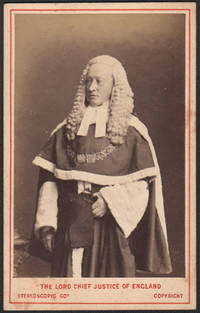
18701161870. Albumen photograph. 100mm by 62mm. Sir Alexander James Edmund Cockburn 12th Baronet QC 1802-1880 was a Scottish lawyer politician and judge. As Lord Chief Justice he heard some of the leading causes celebres of the 19th century including the Tichborne Trial.<br /> CONDITION : Faint foxing in title area. unknown
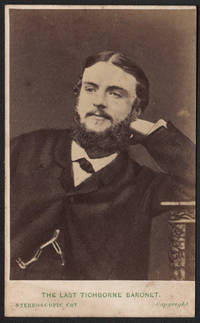
187212621872. Albumen photograph. 102mm by 62mm. Portrait of Sir Alfred Joseph Doughty-Tichborne 11th Bt 1839-1866. CONDITION : Faint foxing in title area. Trimmed very slightly on right hand side. unknown
60802. Albumen print. Mounted on card.<br /> The London Stereoscopic and Photographic Company was begun in 1854 by George Swan Nottage. It specialised in the mass production of stereoscopic photographs where two almost identical photographs merged to form a three dimensional picture. The Company published many thousands of views during the 1850s and 1860s and became one of the largest photographic publishing companies in the world.<br /> unknown
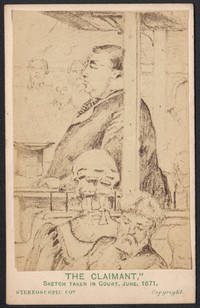
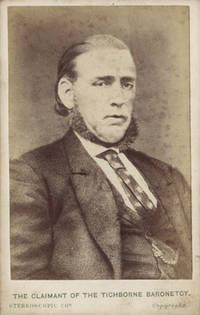
187212601872. Albumen photograph. 102mm by 62mm. Carte de visite portrait of Arthur Orton 1834-1898 The Tichborne Claimant. unknown
187211261872. Albumen photograph. 102mm by 65mm. Carte de visite portrait of Arthur Orton 1834-1898 The Tichborne Claimant.<br /> CONDITION : Some slight spotting and soiling. unknown
46750Albumen print photograph carte de visite format 102 x 63 mm mount; recto of mount with printed signature of Robert Moffatt to lower margin; verso with the back mark of the London Stereoscopic & Photographic Company; both the print and the mount are in excellent condition. 'Robert Moffatt Ormiston East Lothian Scotland December 21 1795-Leigh Kent England August 8 1883 was a missionary and a linguist who worked in South Africa and Botswana for more than 60 years. Of modest parentage he had an elementary education and was raised as a Presbyterian on strict religious principles by his mother a Scotswoman née Anne Gardiner. He first worked as a gardener in Scotland and England. Influenced by Methodism he determined to become a missionary and in 1816 joined the London Missionary Society LMS. He had already met and become engaged to Mary Smith who came from Lancashire near Manchester. He was sent out to South Africa where he arrived in Cape Town on January 13 1817. His fiancée however due to her father’s objections did not join him for another three years. He was to begin his service in Great Namaqualand south of the Orange River but at first was refused permission to travel there by the local authorities. Therefore he began instead to study Dutch at Stellenbosch University until January 1818 when he began work in Great Namaqualand. He had an early success in the conversion of local ruler Jager Christian Afrikaner circa 1800-1823 a Hottentot freebooter this while traveling in South West Africa now Namibia and Bechuanaland now Botswana. In April 1819 in Cape Town he met with an LMS deputation investigating LMS work in Southern Africa. They invited him to act as their interpreter in Dutch. He traveled with them until the Fifth Frontier War of 1819 forced them to stop. At the same time his fiancée arrived from England and they were married in Cape Town in December 1819. She was to prove a strong loyal and dedicated companion. The delegation persuaded him to work amongst the Tswana Bechuana and he settled at first at Dithakong in 1821 among the Tlhaping a Tswana people. Unrest swept this region as a result of the wars of the Zulu Chief Shaka but invaders were driven off by armed Griquas led by Andries Waterboer. Unsettled conditions continued until 1829. At that time Moffatt baptized his first converts. In this same year he established what was to prove a lifelong friendship with Mzilikazi chief of the Matabele. Having moved to Kuruman he began to translate the Bible into the Tlhaping dialect. He took the manuscript to Cape Town where with his own hands he prepared it for printing on the government press. He then acquired a printing press which he took to Kuruman by ox-wagon where he produced more religious literature. He had however to travel to Britain to have his translation of the New Testament published in 1840. While in London in 1841 he met with David Livingstone whom he persuaded to travel to Africa. It was from Kuruman that Livingstone began his African travels in 1849. Meanwhile back in Kuruman he continued to translate and print the Old Testament. The result was the first translation of the Bible into any South African language. In 1857 he led a mission to meet with Mzilikazi in Matabeleland. Suspicious of his influence Afrikaner burghers prepared to attack Kuruman. A request to the British govemor at the Cape Sir George Grey led to a successful appeal to Pretorius not to make the attack. Moffatt then remained at Kuruman working on a translation of Pilgrim’s Progress. In 1870 Moffatt and his wife retired to England where she died at Brixton in 1871. He died in 1883. His son John Smith Moffatt continued his work in Botswana and his daughter Mary married David Livingstone. Kuruman had been the northernmost European outpost in southern Africa and played a key role in the establishment of relations with the more northerly peoples. Although involved with diplomatic relations Moffatt’s work was essentially evangelical in character.' Keith Irvine Dictionary of African Christian Biography   unknown
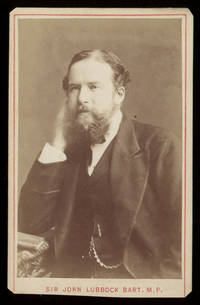
187019981870. Albumen photograph. 100mm by 62mm. Lubbock was a banker Liberal politician philanthropist scientist and polymath. He took a keen interest in archaeology and evolutionary theory. He spoke in support of the evolutionist Thomas Henry Huxley at the famous 1860 Oxford evolution debate. CONDITION : Bottom slightly trimmed. unknown
60796c.1860s. . Albumen print. Mounted on card.<br /> The London Stereoscopic Company was begun in 1854 by George Swan Nottage. It specialised in the mass production of stereoscopic photographs where two almost identical photographs merged to form a three dimensional picture. The Company published many thousands of views during the 1850s and 1860s and became one of the largest photographic publishing companies in the world.<br /> [c.1860s]. unknown
60797. Albumen print. Tear on top left corner. Mounted on card.<br /> The London Stereoscopic Company was begun in 1854 by George Swan Nottage. It specialised in the mass production of stereoscopic photographs where two almost identical photographs merged to form a three dimensional picture. The Company published many thousands of views during the 1850s and 1860s and became one of the largest photographic publishing companies in the world.<br /> unknown
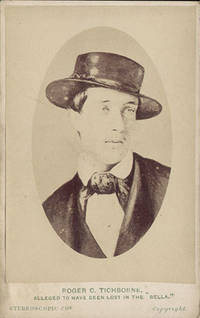
187111211871. Albumen photograph. 100mm by 62mm. Roger C Tichborne Alleged to have been lost in the 'Bella'.'<br /> Photo of reverse available on request. Ink inscription on the reverse which reads 'Purchased in July 1871'.Roger Charles Doughty-Tichborne 1829-1854 was the eldest son of Sir James Tichborne 10th Bt and his wife Harriette-Felicite Roger was raised in Paris by his mother until his father brought him to England in 1845. Educated at Stonyhurst College he later joined the 6th Dragoon Guards. He spent his leave with his uncle Sir Edward Doughty 9th Bt and aunt Katherine at Tichborne House where he fell in love with his cousin Katherine 'Kattie' Doughty. Her parents resisted the romance and later suggested they wait until Kattie came of age. With this delay Roger left the army in 1853 to travel in South America. He was last seen boarding a ship the Bella bound for Kingston Jamaica from Rio de Janeiro in 1854. The ship was wrecked with no known survivors. unknown
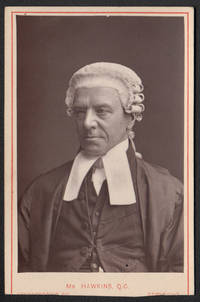
18701221870. Carrte de Visite. 97mm by 63mm. Henry Hawkins Q.C. later made Lord Brampton was the counsel against the Tichborne Claimant. CONDITION :Trimmed at bottom of card losing some of the text. unknown
60795. Albumen print. Small tear on right side. Mounted on card.<br /> The London Stereoscopic Company was begun in 1854 by George Swan Nottage. It specialised in the mass production of stereoscopic photographs where two almost identical photographs merged to form a three dimensional picture. The Company published many thousands of views during the 1850s and 1860s and became one of the largest photographic publishing companies in the world.<br /> unknown
63-2652London: London Stereoscopic And Photographic Company ca. 1867. Print of Black and White Photograph Mounted on Card Stock 4 x 2.5 inches Very Good. London: London Stereoscopic And Photographic Company, [ca. 1867]. unknown
60794c.1860s. . Albumen print. Small rip in top left corner. Mounted on card.<br /> The London Stereoscopic Company was begun in 1854 by George Swan Nottage. It specialised in the mass production of stereoscopic photographs where two almost identical photographs merged to form a three dimensional picture. The Company published many thousands of views during the 1850s and 1860s and became one of the largest photographic publishing companies in the world.<br /> [c.1860s]. unknown
18804718London: Stereoscopic Company 1880. Very good. One carte de visite measuring about 2.5" x 4". Photograph depicts two adult little people both women and an infant. The CDV is in very good condition with a few tiny spots to the image but no fixing and a scuffmark to the reverse. The subjects are unidentified. The individual photographer is also not identified but the firm Stereoscopic Company is noted here as the photographer to the Prince of Wales. Stereoscopic Company unknown
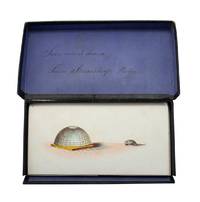
189569607Germany: Verlag von Leopold Voss 1895. STEREOSCOPIC CARDS. Stereoscopical Pictures for the use of squint-eyed people. A Set of 26 Stereoscopic Cards with a Collapsible Stereoscope Viewer. Germany: Verlag von Leopold Voss n.d.c.a. 1895.<br> <br> Early edition possibly 3rd revised edition. A set of 26 lovely chromolithograph stereoscopic cards including one which allows for two sides to be slid back and forth. Accompanied by a collapsible Stereoscope with which to view the cards. This was used in the diagnosis and theraputic care of children with optical difficulties. 7 1/4 x 3 3/4 inches; 190 x 95 mm. Each card is numbered 1-26. The cards are housed in a small faux leather box. Box with the stamp of "August. F. W. Vogt of Amsterdam." The stereoscope is in matching faux leather and is able to fold flat. A very nice attractive set with cute color pictures mainly of animals and children. A few cards with letters that create the names Elise Africa and Rafael. Previous owner's inscription on inside on the box. Some minor rubbing to edges of the box and the stereoscope. Overall very good.<br> <br> This set though without any printed labels or the instructional leaflet matches other copies of Kroll's and can be identified as possible the third revised edition as this was the first edition to include a sliding card according to a listing in 1896's "Zeitschrift für Psychologie und Physiologie der Sinnesorgane 10." Journal of Psychology and Physiology of the Sense Organs 10 Published by Arthur Konig. According to Konig<br> <br> "The reappearance of a new edition of these stereoscopic images attests to the wide circulation they have achieved. They are designed for use by children with intermittent strabismus who are intended- through exercises performed with the aid of these plates-to gradually and permanently correct the faulty alignment of their eyes. In preparing this new edition the guiding principle was in essence to stimulate the impulse toward the stereoscopic fusion of the image halves more strongly than in previous editions. Serving this purpose are 12 new plates which contain- partly- images featuring congruent main figures alongside incongruent secondary figures and- partly- text-based exercises designed according to the same fundamental principle. A newly added image allows for the adjustment of the distance between its two halves.<br> <br> "A stereoscope or stereo viewer is a device used for viewing a pair of stereoscopic separate images mounted on a stereograph card. These images depict a left-eye and right-eye view of the same scene hosted on a card that when viewed through a stereoscope appear as a single three-dimensional image. This apparatus consisted of two prismatic lenses and a wooden extension which held the stereo card at the correct distance from the viewer. The lenses made the image appear larger and more distant as well as shifting their position so that the two images fuse into one stereo window. A view-limiting feature such as a divider is usually present on stereoscopes to prevent each eye by being distracted by the image intended for the other eye. Sir David Brewster debuted his lenticular stereoscope at the Great Exhibition of 1851 in England. Brewster is credited as the inventor of the stereoscope and stereographs intended for use by the general public. Oliver Wendell Holmes made further contributions to the stereoscope by introducing a handheld stereoscopic viewer in 1861 that was both streamlined and more economical than what had previously been available. The hype over this novel form of entertainment led to an industry in producing images for public consumption. Stereographs stereoviews stereo cards and stereo pairs were produced and sold by the thousands. They usually included the pair of images on piece of cardstock of cardboard along with some explanatory text. Stereographers traveled the world to capture images that would appear in 3D back home on the Victorian parlor. Subjects included famous people and places historic events dramatic recreations beautiful settings and flower arrangements among other things. By the last quarter of the nineteenth century viewing stereographs was a popular form of entertainment in Victorian homes. Almost as common as a television set is today each American home typically had a collection of stereographs and a hand-held or table-stand stereoscope through which to view them." Smithsonian Museum.<br> <br> HBS 69607.<br> <br> $2000. [Verlag von Leopold Voss] unknown
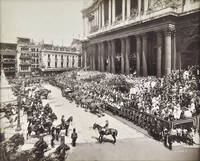
872551897. . Albumen print mounted. Fine photograph with very good tonal range. <br />Dimensions: photograph 24 x 29cm mount 41 x 44.5cm.<br /> Photograph showing Queen Victoria's Diamond Jubilee procession in front of St. Paul's Cathedral London. <br /> 1897. unknown
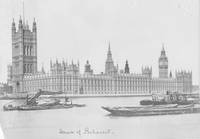
60804c.1860s. . Albumen print. Tears on top and bottom right corners. Mounted on card.<br /> The London Stereoscopic and Photographic Company was begun in 1854 by George Swan Nottage. It specialised in the mass production of stereoscopic photographs where two almost identical photographs merged to form a three dimensional picture. The Company published many thousands of views during the 1850s and 1860s and became one of the largest photographic publishing companies in the world.<br /> [c.1860s]. unknown
1333873697.Gpaperback. Good. Access codes and supplements are not guaranteed with used items. May be an ex-library book. paperback
001667London: The London Stereoscopic & Photographic Co. No Binding. Good/None. G/N. This item is a cart de viste of General Grant President of the United States a vintage photograph. Image is mounted to card stock with company information on reverse. Mounted in protective plastic case. 4" X 2.5" size as it should be. Image shows General Grant in uniform a handsom and distictive looking gentleman with full beard. 0 <br/> <br/> The London Stereoscopic & Photographic Co unknown