68 résultats
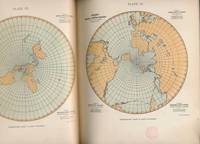
1843025510Leipzig: Weidmann'sche Buchhandlung 1843. First Edition . Quarter Cloth. Very Good. 8 3/4" Tall. Xx 315 I Errata 2 Double Page Folding Charts At End. Original Brown Cloth Spine Printed In Gilt Brown Marbled Paper Covered Boards Cloth Tips. Worn Along Top And Bottom Of Spine With A Little Loss A Few Small Losses Of Paper Along Edges Of Boards Covers Clean Contents Clean Small Stamped Seal Of P. Andries Astronomer And Name Stamp Of Later American Author Both On Front Endpaper No Other Names Or Marks Pages Clean With Just A Little Faint Foxing. <br/> <br/> Weidmann'sche Buchhandlung hardcover
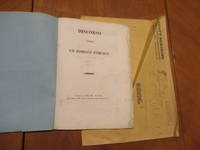
1845025962Vicenza: Dalla Tipografia Tremeschin / Annali Delle Scienze Del Regno Lombardo-Veneto 1845. First Separate Edition . Soft cover. Good. Folding Plate at End. Original Plain Blue Wrappers. Title Colophon 12 Un-Numbered Pages Folding Plate At End. Offprint From Issues Iii And Iv Of The Annali Delle Scienze Del Regno Lombardo-Veneto Of 1845. Small Label "Miscell. 7 / 23 Biblioteca E. Levi" On Front Cover No Other Names Or Marks. Short Edge Tears To Covers But Complete. <br/> <br/> Dalla Tipografia Tremeschin / Annali Delle Scienze Del Regno Lombardo-Veneto paperback
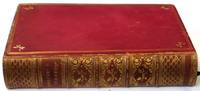
1857614349London: Longman Brown Green Longmans & Roberts 1857. Very good condition hardcover with gilt decorated red boards and gilt lettering on the spine no dust jacket. Page block is gilt edged with complementary marbled pastedowns and endpapers. Boards are scuffed with some surface colour loss noted. Edges corners and spine ends are bumped and rubbed. Previous owner's bookplate on front pastedown and name penned to FEP. A few light spots of foxing on a few of the pages which are otherwise clear and binding is sound. LW. Hardcover. Very Good/No Dust Jacket. Used. Longman, Brown, Green, Longmans, & Roberts Hardcover
180542389London W. Bulmer and Co. 1805. 4to. No wrappers as extracted from "Philosophical Transactions" 1805 - Part I. Pp. 31-64 and 1 engraved plate. Clean and fine. <br/><br/><em>First appearance of an importent paper founding the metric of interstellar space.It was the contemporous discoveries of the first minor planets ceres in 1801 Pallas in 1802 and Juno in 1803 that prompted Herschel to investigate the origin of the spurious diameters of stars. "Were their apparent diameters as real as those of planets or spurious as for stars To address this question Herschel conducted an extensive series of experiments in his garden in Slough examining through his telescope small globules of differing sizes and materials placed in a tree some 800 ft ca. 244 m away Herschel 1805. His observations showed that for the smallest globules the diameters were all spurious and all of the same size. Furthermore he found that if just the inner part of the aperture of the telescope were used the spurious diameters whether of globules or of stars were larger. If the whole aperture was employed the diameters were smaller and if only an outer annular aperture was used the diameters were smaller still. This experimental discovery that unfilled apertures can be used to obtain high angular resolution remains today the essential basis for interferometric imaging in astronomy in particular Aperture Masking Interferometry. The theoretical justification of this result came with Airy's analysis of the diffraction pattern of a circular aperture 30 years later Airy 1835 and it took a further 30 years before the idea of using multiple apertures was developed. In an early study the Reverend W. R. Dawes noted that he had `frequently found great advantage from the use of a perforated whole aperture' and that when observing Venus this produced `a central image of the planet perfectly colourless and very sharply dened' Dawes 1866. But it was left to Fizeau in his submission to the Commission for the Prix Bordin the following year to remark on `une relation remarquable et n´ecessaire entre la dimension des franges et celle de la source lumineuse' and suggest that by using an interferometric combination of light from two separated slits `il deviendra possible d'obtenir quelques donn´ees nouvelles sur les diametres angulaires de ces astres' Fizeau 1868." </em> unknown
180545883London W. Bulmer and Co. 1805. 4to. No wrappers as extracted from "Philosophical Transactions" 1805 - Part I. Pp. 31-64 and 1 engraved plate. Clean and fine. <br/><br/><em>First appearance of an importent paper founding the metric of interstellar space.It was the contemporous discoveries of the first minor planets ceres in 1801 Pallas in 1802 and Juno in 1803 that prompted Herschel to investigate the origin of the spurious diameters of stars. "Were their apparent diameters as real as those of planets or spurious as for stars To address this question Herschel conducted an extensive series of experiments in his garden in Slough examining through his telescope small globules of differing sizes and materials placed in a tree some 800 ft ca. 244 m away Herschel 1805. His observations showed that for the smallest globules the diameters were all spurious and all of the same size. Furthermore he found that if just the inner part of the aperture of the telescope were used the spurious diameters whether of globules or of stars were larger. If the whole aperture was employed the diameters were smaller and if only an outer annular aperture was used the diameters were smaller still. This experimental discovery that unfilled apertures can be used to obtain high angular resolution remains today the essential basis for interferometric imaging in astronomy in particular Aperture Masking Interferometry. The theoretical justification of this result came with Airy's analysis of the diffraction pattern of a circular aperture 30 years later Airy 1835 and it took a further 30 years before the idea of using multiple apertures was developed. In an early study the Reverend W. R. Dawes noted that he had `frequently found great advantage from the use of a perforated whole aperture' and that when observing Venus this produced `a central image of the planet perfectly colourless and very sharply dened' Dawes 1866. But it was left to Fizeau in his submission to the Commission for the Prix Bordin the following year to remark on `une relation remarquable et n´ecessaire entre la dimension des franges et celle de la source lumineuse' and suggest that by using an interferometric combination of light from two separated slits `il deviendra possible d'obtenir quelques donn´ees nouvelles sur les diametres angulaires de ces astres' Fizeau 1868." </em> unknown
1803002528London: J. Johnson 1803. Fourth edition. Hardcover. Fair. 8vo 443 pages 3/4 calf top cover detached; ex libris James Shuter with his leopard bookplate. <br/><br/>Illustrated with copper-plates. "He was appointed Professor of Mathematics at the Royal Military Academy Woolwich." J. Johnson hardcover
184231262New York: Dayton & Newman 1842. First Edition. Hardcover. Fair. 12mo. 252 pages. Dark brown cloth hardcover with gilt title on the spine. Cloth is edge torn head of spine. Covers have shelf and edge wear. 50 C written in the upper corner of the right front flyleaf in pen. Moderate damp stains and toning to the text. Inscribed not signed by the author on the right front flyleaf - "Rev. C. P. Bernard With the Respects of the Author." A fair copy. Dayton & Newman hardcover
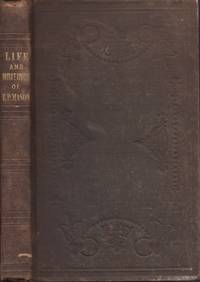
184254925Dayton & Newman New York 1842. Hardcover. Used - Good. NY: Dayton & Newman 1842. Copyright 1842. Stereotyped by Richard C. Valentine NY. Printed by George W. Wood & Co NY. 252 pages. 7.5x4.75" black cloth gold title blind stamped decorative panel on boards 'Elles & Middlebrook Binders' in border. 'L.J. Dudley' in ink on upper blank. Mason born Washington CT 1819 Yale 1839 abandoned graduate studies to join Maine boundary expedition 1840 published 'Observations on Nebulae' in Transactions of American Philosophical Society 'Introduction to Practical Astronomy' died Richmond VA 1840. Tips bit frayed cover rubbed spotted foxed else VG. Dayton & Newman, New York hardcover
1867j1944Edinburgh: A Fullerton & Co. Worn condition. Cover rubbed and heavily taped. Inner hinge cracking. Ex Paisley Free Library and Museum. Content in overall good condition. 1867. First Edition. Green hardback cloth cover. 240mm x 160mm 9" x 6". xvi 503pp. 115 b/w woodcuts. . A Fullerton & Co hardcover
18730005247New York: A. S. Barnes & Co. 1873. Revised & Enlarged edition. Hardcover. Fair. Octavo 142pp. stapled pictorial boards with quarter leather spine taped over with old masking tape. Offered "as is". <br/><br/>The second book in Monteith's National Geographical Series. This is the Edition for The Pacific Coast. It has an additional section after p. 124 titled "The Pacific Coast" with additional text and maps of CA OR WA and MT. This copy has a number of previous ownership markings including the daughter of a California pioneer Clara F. Van Winkle of Grayson CA dated Sept. 15 1874. Did you know that the Sea of Japan is shaped like a rabbit or that Cuba is like a lizard A. S. Barnes & Co. hardcover
189676030Kiel: Druck von S. Schsidt 1896. First offprint edition. Quarto. 140-47 1 pp. Publisher's printed gray wrappers. Old Crease through the middle cause short seperations at spine and fore-edge old tide mark to upper margin. Russell made measurements at Sydney for many years. Henry Chamberlain Russell Russell was an astronomer meteorologist and one of the most eminent men of science in Australia in the nineteenth century. Upon leaving the University at the end of 1859 he was appointed assistant to the Government Astronomer. He became the Government Astronomer in 1870 and subsequently held the position for 35 years. Druck von S. Schsidt unknown
1871830281871. PERIODICALS - ASTRONOMY. MEMOIRS OF THE ROYAL ASTRONOMICAL SOCIETY PART I VOL. XXXIX 1870-1871: ON THE GRAPHICAL CONSTRUCTION OF A SOLAR ECLIPSE BY PROF. ARTHUR CAYLEY. London: Published by the Society 1871. 17 pp. 1 two-color plate a diagram. 4to. text side-sewn within printed paper wrappers. Wrappers are age-toned and split along spine with a Small pencil initial to top of front wrapper. Text and plate clean and fresh. Very good. unknown
185395440London: John Weale 1853. 1853. Fair. FROM THE LIBRARY OF THE SCOTTISH-AMERICAN ASTRONOMER WILLIAM HARKNESS SIGNED BY HIM - Octavo 7-3/8 inches high by 4-1/2 inches wide. Three-quarter black leather & marbled boards titled in gilt with raised bands on the spine. The covers are rubbed and the leather is scuffed. The rear cover is detached. 279 pages illustrated with textual diagrams. There is offsetting to the endpapers and pastedowns with minor chipping to the edges of the endpapers. The edges of the title page are darkened and the pages are toned. A complete copy of the rare first edition well worth rebinding. <p>First edition.<p>A wonderful association copy from the library of the Scottish-born American astronomer William Harkness with his name and the date "April 26th 1858" signed in pencil on the front pastedown. 1858 was the year he graduated from the University of Rochester.<p>The Scottish-born American astronomer William Harkness 1837-1903 studied at LaFayette College and the University of Rochester before pursuing further studies in medicine in New York City. A surgeon in the Union armies during the Civil War he also served as an aid in astronomy at the United States Naval Observatory and subsequently on the USS Monadnock. He discovered the coronal line K1474 while observing the August 1869 solar eclipse. As a member of the Transit of Venus Commission he was in charge of the group at Hobart Tasmania in 1879 and subsequently of that in Washington in 1882. Harkness contributed to the construction and improvement of telescopes and invented several astronomical instruments including the spherometer caliper. He went on to serve as astronomical director of the Naval Observatory from 1894 through 1899 and director of the Nautical Almanac from 1897 through 99 and was president of the American Association for the Advancement of Science. His published works include "The Solar Parallax and its Related Constants" 1891. London: John Weale, 1853. hardcover
1892d3129bLondon: Longmans Green & Co. G: in good condition. Cover rubbed and marked. Inner hinge cracking. Browning to page edges. Ex-lib copy. 1892. First Edition. Black hardback cloth cover. 300mm x 200mm 12" x 8". viii 816pp plates. 31 plates 4 fold-out 5 with colour. Heavy item - shipping supplement may apply for overseas. . Longmans, Green, & Co hardcover
1883035730London: Macmillan And Co. 1883. 1st Edition 1st Printing. Hardcover. Near Fine. Plates. Xx 111 Pp. Salmon Cloth Gilt; Black Endpapers. First Printing. Lightly Used No Fraying Gilt Bright Hinges Very Tight Pages Crisp. Presentation Inscription From The Author To The Duke Of Bedford With An Additional Letter Of 23 April 1883 From Siemens To The Duke Francis Charles Hastings Russell 9Th Duke Of Bedford Kg 1819 -1891 The Dedication Is Dated April 4 1883 2 Pp. An Early British Essay On The Dynamics Of Solar Radiation With Reprinting Of Many Scientific Comments Thereupon. Per Wikipedia Charles William Siemens 1823- Received His Education At The Gymnasium Of Lubeck The Art School Of Madgeburg And The University Of Gottingen. In 1843 He Visited England And Again Came To England To Patent An Invention Becoming Naturalized Subject In 1859. In 1851 Mr. Siemens Introduced His Water-Meter. Between The Years 1856 And 1861 Mr. Siemens In Conjunction With His Brother Frederick Worked Out The Regenerative Gas Furnace. Siemens Became Interested In Telegraph Engineering And In 1858 He Established With His Brother Werner Siemens Mr. Halske Of Berlin And His Brother Carl Siemens The Firm Siemens Halske And Co. With Telegraph Works In London Laying Cable Throughout The World. Siemens Presented Many Scientific Papers To British Societies. His First Paper Was Presented To The Institution Of Civil Engineers On The 17Th Of May 1853 And Was Entitled "On The Conversion Of Heat Into Mechanical Effect." It Was The First Paper Published In Great Britain Which Considered The Subject Of Heat Engines From The Point Of View Of The Mechanical Theory Of Heat And Although A Quarter Of A Century Has Nearly Elapsed Since It Was Read It May Be To-Day Taken As A Guide To The Subjects To Which It Has Reference. Between This Period And 186O He Described His Governor Steam Engine And Water-Meters In Papers To The Institution Of Mechanical Engineers. On The 14Th February 1867 Was Read His Paper "On The Conversion Of Dynamical Into Electrical Force Without The Aid Of Permanent Magnetism" Which Is Peculiarly Interesting As Being The First Scientific Enunciation In The Uk Of The Dynamo-Electric Principle Upon Which The Most Powerful Light Producing Machines Depended. Another Scientific Paper Presented By Him To The Same Society In 1871 "On Electrical Resistance" Was Made The Bakerian Lecture For That Year. It Treats Of A Method Of Measuring Variation Of Temperature By Variation Of Electrical Resistance; And The New Instruments Described In This Paper The Electrical Resistance Thermometer And Pyrometer In Connection With The Differential Voltameter Became Appreciated As Valuable Auxiliaries In Thermometry And In Metallurgical Research. The Society Of Arts Presented Him With Its Gold Medal For His Regenerative Condenser In The Year 1850 And The Institution Of Civil Engineers In The Session 1852-53 With Its Telford Medal For The Paper Already Referred To. In 1851 And 1862 Dr. Siemens Received Prize Medals Of The London Exhibition And In 1867 Was Awarded A Grand Prix At The Universal Exhibition Of Paris For His Regenerative Gas Furnace And Steel Process. In 1869 The Degree Of Doctor Of Civil Law Honoris Causd Was Conferred Upon Him By The University Of Oxford And In 1874 He Received The Royal Albert Medal For His Researches On Heat And For His Metallurgical Processes. In 1875 He Received The Bessemer Medal Of The Iron And Steel Institute "In Recognition Of The Valuable Services He Has Rendered To The Iron And Steel Trades By His Important Inventions And Investigations." <br/> <br/> Macmillan And Co. hardcover
1867039052Cambridge / Washington: Welch Bigelow And Company 1860 / Washington Observations For 1865 1867 1867. 1st Edition 1st Printing. Hardcover. Very Good . Pp 123-1520; 29Pp. The First Paper Is An Offprint Of An Article In The Memoirs Of The American Academy New Series Vol V 1860 Preserving The Prited Cover With Title Etc.; The Second Paper Is Extracted From Washington Obervations For 1865 1867. The Two Papers Were Bound Together As Part Of A Larger Compilation. Simon Newcomb 1835 -1909 Was A Canadian-American Astronomer Applied Mathematician And Autodidactic Polymath. Newcomb Visited Paris France In 1870 Already Aware That The Table Of Lunar Positions Calculated By Peter Andreas Hansen Was In Error. While In Paris He Realized That In Addition To The Data From 1750 To 1838 That Hansen Had Used There Was Further Data Stretching As Far Back As 1672 And Newcomb Used The "New" Data To Revise Hansen's Tables. In 1878 Newcomb Started Planning For A New And Precise Measurement Of The Speed Of Light Starting Development A Refinement Of The Method Of Léon Foucault. A Letter From Albert Abraham Michelson Began A Long Collaboration And Friendship. In 1880 Michelson Assisted At Newcomb's Initial Measurement But Michelson Left To Start His Own Project. Miichelson Published His First Measurement In 1880 But Newcomb's Measurement Was Substantially Different And In 1883 Michelson Revised His Measurement To A Value Closer To Newcomb's. In 1881 Newcomb Discovered The Statistical Principle Now Known As Benford's Law Formulating The Principle That In Any List Of Numbers Taken From An Arbitrary Set Of Data More Numbers Will Tend To Begin With "1" Than With Any Other Digit.I N 1891 Within Months Of Seth Carlo Chandler's Discovery Of The 14-Month Variation Of Latitude Now Referred To As The Chandler Wobble Newcomb Explained The Apparent Conflict Between The Observed Motion And Predicted Period Of The Wobble As Due To Elasticiity; He Used The Variation Of Latitude Observations To Estimate The Elasticity Of Earth Finding It To Be Slightly More Rigid Than Steel. He Wrote On Economics And His Principles Of Political Economy 1885 Was Described By John Maynard Keynes As "One Of Those Original Works Which A Fresh Scientific Mind Not Perverted By Having Read Too Much Of The Orthodox Stuff Is Able To Produce From Time To Time In A Half-Formed Subject Like Economics." He Was Credited By Irving Fisher With The First-Known Enunciation Of The Equation Of Exchange Between Money And Goods Used In The Quantity Theory Of Money. His Reputation Suffers From His Hostility To C. S. Pierce And Also From Newcomb's Disbelief In The Possibility Of Manned Flight. Source: Wikipedia. <br/> <br/> Welch, Bigelow, And Company (1860) / Washington Observations For 1865 (1867) hardcover
1849614345London: Longman Brown Green and Longmans 1849. Hardcover no dust jacket complementary marbled page block and decorated pastedowns and endpapers in very good condition for its age. Boards are scuffed with surface wear to the rear board. Edges corners spine sides and spine ends are bumped and rubbed. First and last few pages are tanned and foxed with odd marks and spots of foxing on some of the pages which are otherwise clear. Hinge breaks noted however binding remains sound. LW. Hardcover. Very Good/No Dust Jacket. Used. Longman, Brown, Green, and Longmans Hardcover
1865036982London: Longmans Green & Co. 1865. 5th or later Edition . Hardcover. Near Fine. Plates. Xiv 731 Pp. 9 Plates. Eighth Edition The Last Issued In Herschel's Lifetime. Full Red Morocco 5 Raised Bands Black Morocco Spine Label Full Gilt In Other Compartments Covers With Gilt And Blindstamped Rules At Borders With Gilt Devices At Corners All Edges Of Boards Gilt Marbled Endpapers And Matching Marbled Edges Of Page Block. Binding Bright And Clean Hinges Tight Small Professionally Repaired Fray At Lower Rear Tip And Tiny Repairs At Other 3 Tips. Contents Immaculate. No Names Or Marks Or Bookplates. <br/> <br/> Longmans, Green & Co. hardcover
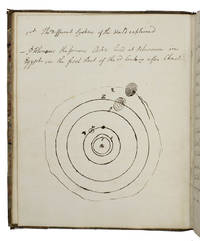
1820ABC_45977England 1820. Late 18th-century half calf marbled sides. 4to. Manuscript volume of notes on practical astronomy and mathematics in English written in ink on Dutch paper with a Maid of Dordrecht watermark without countermark. The leaves are numbered from the front 101 and 26 leaves of text and diagrams 39 blank leaves in the middle last 26 leaves in reverse order illustrated with several astronomical and mathematical diagrams including one of a solar system. A fascinating manual of astronomy written in English particularly as it relates to the form of the motions of the heavens dating from the period 1780-1825 probably from the beginning of that range. It is written in a single hand with the exception of one page though with some variations indicating that different parts of the MS were written at different times. The MS could have been prepared for personal use or as part of public tuition probably the former. The writer summarizes the subject matter of the manual on the first leaf: Astronomy is that part of Natural Philosophy which treats of the Phenomena of the heavenly Bodies. It is divided into 2 Parts Physical and Plain: by the latter we discover their Motions from the Apparent Motions; by the former the Causes of these real Motions. The manuscript comprises three parts with distinct subject matter. The first part covers the motion of the earth around the sun and its rotation about its axis with the consequences for the apparent motions of the sun and the heavens; with the moon and its phases and motion; and with lunar and solar eclipses. There are several references to John Keills An introduction to the true astronomy London 1721 or later editions. The second part principally discusses section 11 of Newtons Principia 1713 or later editions in particular as it relates to the motion of the moon. This part ends with a short section on algebra particularly polynomials which seems to have been composed more haphazardly than the remainder of the text. The third part which runs backwards starting from the end of the notebook gives demonstrations of various results in Book I of Principia notably the theorem that the orbits of the bodies in the solar system do not precess if and only if the central attractive force operating on them is exactly inverse-square. This is an important result not only for Newtons system of universal gravitation but also for the observational astronomy of the solar system which is discussed in the opening section of the book. Between the end of the second part and that of the third there are a few blank leaves and others have been torn out but the text appears to be complete.The manuscript appears to work through at least two different texts beginning with Keills on astronomy. There is a section devoted to what is called the precession of the equinoxes the westward drift of the points where the ecliptic and equator intersect due to the precession of the earths axis - the author notes that Sir Isaac Newton has demonstrated that it arises from the broad spheroidal figure of the earth. The author then turns to sunspots and the arguments for and against their being on the surface of the sun. Then comes a long discussion of the planets: the planes and periods of their orbits phases conjunctions retrograde motions apparent brightness and their distances from the sun. The second and third parts are notably more mathematical in nature than the first.The third part of the manuscript consists of a reading of various sections of Newtons Principia 1713 or later editions. Again it appears to work through and in some cases repeat Newtons proofs rather than representing a translation or paraphrase. It is not based on Mottes translation nor does it correspond with Thorps partial translation and edition. It does not appear to be based on any other intermediary between Newton and the writer such as Pemberton but to rely on Newtons Latin original here rendered in places pretty exactly into English. It renders propositions 43 to 59 of section 9 of book 1 of the Principia which concern the motion of bodies in moveable orbits and the motion of the apsides. This topic remains of considerable interest to astronomers and historians of astronomy. The manuscript hand remains fairly constant throughout the book: some variations more likely indicate the same writer at a different times or with a different pen than a different writer. The manuscript hand and paper together date the manuscript fairly securely to the period 1750-1825. If our hypothesis that the author used Thorps edition of Principia is correct that would date the manuscript no earlier than 1777. The section on the planets in the first part does not mention Uranus Georgium sidus discovered by William Herschel in 1781. Since the anonymous author seems to have followed astronomical discoveries closely this suggests a date no later than 1781. We therefore tentatively date the composition ca. 1777/81.We are indebted to Scott Mandelbrote for his assistance with the description of this notebook.Binding slightly rubbed. A couple pages have a tear at the foot and others are stained. Otherwise in very good condition. unknown
1872045652Boston: Estes and Lauriat 1872. Hardcover. Very Good/No Jacket. 12mo. Offprint or continued publication of a larger work. Pages 55-177 3 as issued. Hardcover bound in original brown cloth with spine titles in gilt. Moderate rubbing and wear to the binding. The spine has some white shelf numbers partly rubbed off at the headcap. An ex-library copy with a removed bookplate on the front pastedown and a library blind stamp on the title page. A sound copy with secure inner hinges and clean text. Contains two color plates including the frontis and several black and white text illustrations. This appears as an offprint but in fact it was published this way as a regularly published stand-alone work. It details the science of ascertaining information of distant stars the composition of their gasses etc. through analysis of the the light through telescopes. This was a ground-breaking tool in observing the universe beyond our solar system in the 19th century. <br/> <br/> Estes and Lauriat hardcover
189620110417127901Ginn & Company 1896. Hardcover. Acceptable. Top and bottom spine slightly torn; boards have minor scratches; owner's name and date on blank facing page; binding and text tight and clean old water damage to cover cracked cover Ginn & Company hardcover
1874A47183Philadelphia PA: J. B. Lipincott & Co. . 1874. First American Edition; First Printing. Hardcover. Very Good-. This book is in Very Good- condition and is lacking a dust jacket. The spine ends corners and edges of the book covers have bumping rubbing and fraying. Both top and bottom edges of of the spine have chips torn off. The text pages are generally clean though there are spots of foxing throughout. There is a previous owner's inked name and address on the first free page. "Proctor was elected a fellow of the Royal Astronomical Society in 1866. He became honorary secretary in 1872 and contributed eighty-three separate papers to its Monthly Notices. Of these the more noteworthy dealt with the distribution of stars star clusters and nebulae and the construction of the sidereal universe. He was an expert in all that related to map-drawing and published two star-atlases. A chart on an isographic projection exhibiting all the stars contained in the Bonner Durchmusterung was designed to show the laws according to which the stars down to the 9–10th magnitude are distributed over the northern heavens. His Theoretical Considerations respecting the Corona Monthly Notices xxxi. 184 254 also deserve mention as well as his discussions of the rotation of Mars by which be deduced its period with a probable error of 0.005. He also vigorously criticised the official arrangements for observing the transits of Venus of 1874 and 1882. He was elected as a member to the American Philosophical Society in 1874." from Wikipedia ; 438p. pages . J. B. Lipincott & Co. hardcover
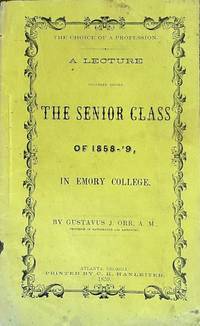
185936176Atlanta: Printed by C. R. Hanleiter 1859. First Edition. Wraps. Good. Stitched wraps. 16 pages. Yellow outer wraps present. A couple of dried spots on the front cover. Moderate toning to the contents. <br /> <br /> Emory College was founded in 1836 in Oxford Georgia. It was named after Methodist bishop John Emory. The main College relocated to Atlanta in the early 1900's and was renamed Emory University. The Oxford Emory College campus is still open today and is part of Emory University. Early Atlanta imprint by C. R. Hanleiter one of the first printers in Atlanta. Printed by C. R. Hanleiter unknown
181155844Philadelphia: Published by Kimber and Conrad No. 93 Market Street T.& G. Palmer printers 1811. 8vo. 4 242 pp. Numerous text diagrams and engravings 1 large folding copper-engraved plate at rear for the appendix. Contemporary speckled tree calf gilt ruling on spine red & gilt morocco spine label slight bumping rubbing to corners minor shelfwear very light occasional toning still VG bright copy. First American edition stated of the author’s informative work on astronomy including sections on determining longitude and latitude the discoveries of Kepler the Transits of Venus and Mercury as well as being the first introduction to the American market of the observations by Nevil Maskelyne on the Great Trigonometrical Survey reprinted in this volume. This copy includes the very scarce folding plate often lacking. Vince 1749-1821 was a mathematician astronomer and clergyman at the Univ. of Cambridge awarded the Copley Medal in 1780. Published by Kimber and Conrad, No. 93, Market Street, T.& G. Palmer, printers, unknown
185054740London: John Kendrick 1850. Revised edition. . Hardcover. G/No Jacket. 12mo - over 6¾" - 7¾" tall. Covers edge-rubbed and bumped and worn at corners; light foxing to frontis;; wear to head and tail of spine; all edges gilt; 218p frontis. Size: 12mo - over 6¾" - 7¾" tall <br/> <br/> John Kendrick hardcover