983 résultats
60776Paris, Albin Michel, 1937. 14 x 19, 189 pp., 16 planches, broché, bon état (couverture défraîchie).
19293187Félix Alcan Malicorne sur Sarthe, 72, Pays de la Loire, France 1929 Book condition, Etat : Bon relié, demi-cuir et papier In-8 1 vol. - 220 pages
28 cm, br. edit; pp. xi, 49, una tav. e una carta astronomica ripiegata f.t
2009100742EDP Sciences , Sciences et Histoire Malicorne sur Sarthe, 72, Pays de la Loire, France 2009 Book condition, Etat : Bon broché, sous couverture imprimée éditeur fuchsia et noir, illustrée d'une photographie astronomique en couleurs grand In-8 1 vol. - 479 pages
69853Paris, Editions du Seuil, 1972. 16 x 22, 199 pp., illustrations, broché, bon état (couverture défraîchie).
47640P., Le Seuil, 1972, in 8° broché, 199 pages ; illustrations in et hors texte.
1952030600China Lake : U S Naval Ordinance Test Station Inyokern Technical Publishing Division 1952. 1st Edition 1st Printing. Hardcover. Near Fine. Photographs And Charts. Viii 110 Pp. Blue Cloth Gilt #105 Of A Limited Issue Of 120 Copies. Exceptionally Scarce; Worldcat Locates Only One Institutional Copy At The U S Naval Postgraduate School In Monterey. This May Have Been The Caltech Hydrodynamics Laboratory Copy With A Single Datestamp"Received August 8 1952 Engineering" On Front Cover With Pages From The Rocketeer Laid In Loosely Referring To Both The Engineering Department And Another Article On The China Lake Facility And An Orange Flyer Laid In Loosely Regarding Congratulations Received On The 12Th Anniversary Of That Facility; No Other Marks Other Than The Circular Date Stamp. <br/> <br/> U S Naval Ordinance Test Station, Inyokern, Technical Publishing Division hardcover
1935049293New York City Ny: The Macmillan Company 1934 1935. 1st Edition 2nd Printing. Hardcover. Very Good . Photographs Drawings Diagrams. Xx 468 Pp. Green Cloth Gilt. First Edition Second Or Early Printing 1935 Date On Title Page Copyright 1934 And "Published May 1934". Lightly Used. Ownership Signature Of Engineer Harvey G. Chapman Jr. Developer Of The Garco Robot One Of The First Attempts At An All-Purpose Functional Humanoid Robot Although He Had Most Of His Success In Entertainment. Garco Was Built In 1953 By Harvey Chapman An Engineer For The Garrett Supply Company Of Los Angeles Which Explains The "Garrett" Name Plate On The Front Of Garco In Three Months In His Home Garage Out Of Discarded Airplane Parts. Garco Started Out As A Publicity Stunt But Chapman When He Was Interviewed By Popular Science Magazine For Its December 1953 Issue Felt That His Creation Should Be Taken More Seriously. Chapman Felt That Creations Like Garco Could Be Utilized To Do A Lot Of The Highly Dangerous But Necessary Jobs Like Mixing The Ingredients For Experimental Explosives Handle Deadly Bacteria Weld Handle Radioactive Material Salvage Items From Underwater And Perhaps Even Pilot The First Rocket To The Moon. "Chapman Brings Garco To Apparent Life By First Opening The Circuits And Sending Electricity Surging Into The Complex Metal Body. He Then Lays His Right Arm Along A Five-Jointed Electromechanical Control Arm Which Has A Handgrip At The End Of It. The Joints Can Be Moved Up And Down In And Out. As Chapman Twists And Turns His Own Arm-And The Control Arm Along With It-Garco'S Right Arm Moves In Exactly The Same Way. Garco Is So Sensitive In Fact That If Chapman'S Hand Shakes Garco'S Does Too." Garco Appeared With Walt Disney In Walt Disney'S Disneyland Mars And Beyond. He Can Also Be Seen On The Dvd Walt Disney Treasures - Tomorrowland: Disney In Space And Beyond. The Control Arm Of The Master-Slave Unit Pre-Dates The Harness Used By The Disney Imagineers For Their Audio-Animatronics By 10 Years. Garco Also Appeared In A Good Deal Of Other Promotional Opportunities. He Promoted The Sci-Fi Movie Called "Gog" 1954 About Robots . Garco Was Often Photographed With Star Sally Mansfield. Garco Consisted Of 1200 Feet Of Wire Cable. A Two-Way Radio Transmitter Enabled Garco To Make Pertinent Remarks. As The Joints In The Control Arm Move Through Six Electric Channels They Notify Sensing Devices In Garco'S "Electronic Brain" That They Have Disturbed The Balance In Many Wheatstone-Bridge Systems. The Disturbance Of Each Bridge Fires An Electronic Tube Which In Turn Activates A Relay Tube Which Actuates One Of The Five Actually .05-Rh Horsepower Motors In Garco'S Right Arm. Garco'S Left Is Manipulated By 22 Push Buttons Mounted On The Case Of The Control Arm. The Push Buttons In Addition To Working Garco'S Left Hand And Arm Move The Robot'S Jaws And Lips Increase His Height Six Inches Roll His Plastic Eyes And Enable Him To Bow At The Hips. Both Of Garco'S Arms Contain Five Tiny Actuator Motors. Three Apply Torque Representing The Ball Joints Of A Man'S Shoulder And Elbow; The Others Taking The Place Of Tendons Apply Linear Push And Pull. Chapman Received Patents D171439 Issued Feb 1954 And 2858947 Issued Nov 1958 For Garco. <br/> <br/> The Macmillan Company (1934) hardcover
30,8x23 cm; 7, (1) pp. Brossura editoriale con titolo impresso in nero entro cornice al piatto anteriore. Descrizione di un fulmine che colpì la città di Alatri in provincia di Frosinone dove Secchi aveva posizionato diversi parafulmini. Prima edizione in forma di estratto. Padre Pietro Angelo Secchi (Reggio nell'Emilia, 28 giugno 1818 - Roma, 26 febbraio 1878) fu celebre astronomo e geodeta appartenente all'Ordine dei Gesuti. Fu direttore dell'Osservatorio del Collegio Romano fu il primo a classificare le stelle in classi spettrali fondando la spettroscopia astronomica. Allievo di Giovanni Battista Pianciani (1784 - 1862) e Francesco De Vico (1805 - 1848), iniziò la sua brillante carriera astronomica nel 1848 quando, a causa delle condizioni politiche turbolente italiane ed in particolare romane, fu costretto ad emigrare in Inghilterra insieme ai suoi confratelli. Fuggito in Inghilterra venne assunto come assistente da padre Curley, direttore dell'Osservatorio della Georgetown University. Ritornato a Roma all'Osservatorio romano riprese il progetto di Boscovich di ammodernare la struttura per renderla una delle più avanguardistiche del mondo. Alla struttura vennero aggiunti alcuni ambienti riservati ad abitazione, uno studio, una biblioteca, quattro corpi di fabbrica per le osservazioni meridiane (una per il grande equatoriale, una per l'equatoriale minore di Chauchaoix e infine un gabinetto magnetico e uno meteorologico). Autore di numerosi trattati ed articoli di notevolissima importanza, prese parte a numerose spedizioni internazionali, venendo universalmente riconosciuto come uno delle più importanti figure del panorama astronomico mondiale della seconda metà del XIX° secolo. Le sue conoscenze ed interessi erano variegati. Lo Stato Pontificio lo mise a seguire lavori sugli acquedotti e la sanità e a studiare il clima e l'elettricità. Fu autore di diversi studi di geodetica. Nel 1867, fece scalpore il suo "Meteorografo", un'invenzione presentata a Parigi all'Esposizione Universale. Tale fu il successo di questo strumento che Napoleone III gli conferì la Legione d'Onore. Ma i suoi più grandi successi li ottenne nel campo della nascente astrofisica divenendone uno dei fondatori e delle figure chiave. Durante la sua vita osservò dal vivo numerose eclissi solari, organizzando importanti spedizioni per il loro studio e rilevando,insieme a Tacchini, le prime (e da quel momento ininterrotte fine ad oggi) serie di immagini spettroscopiche del bordo solare. "Alle prime notizie delle osservazioni di spettroscopia stellare il S. con un prisma obiettivo e con varî spettroscopî volle vedere, come egli stesso ebbe a scrivere, se, come sono innumerabili le stelle, fosse pure proporzionatamente varia la loro composizione, trovando "che mentre le stelle sono numerosissime, pure i loro spettri si riducono a poche forme ben definite e distinte che per brevità noi chiamiamo tipi". La scoperta dei suoi famosi tipi spettrali era avvenuta e l'esame di 4000 stelle gli permetteva di classificarle in 5 tipi" da Treccani, Enciclopedia Italiana 1936.
DISPONIBILITÀ GARANTITA AL 99%; SPEDIZIONE ENTRO 12 ORE DALL'ORDINE. COME NUOVO, MAI SFOGLIATO, LIEVISSIMI SEGNI DEL TEMPO. Informazioni bibliografiche Titolo: Di che cosa è fatto il mondo? Atomi, leptoni, quark e altre particelle Titolo originale: What is the world made of? Atoms, Leptons, Quarks, and Other Tantalizing Particles Autore: Gerald Feinberg Edizione italiana aggiornata dall'autore Traduzione dall'inglese di: Massimo Pirastu Editore: Milano: Rusconi, 1983 Lunghezza: 303 pagine, [4] c. di tav. : ill. ; 21 cm Collana: Scienza e vita nuova Soggetti: Fisica atomica e nucleare, Scienze, Atomi, Newton, Einstein, Particelle, Universo, Cosmologia, Laser, Specie Umana, Antiparticella, Divulgazione Scientifica, Astrofisica, Numeri Quantici, Energia, Esclusione, Storia Della Fotoni, Doppler, De Broglie Schrodinger, Adrioni, Barioni, Nucleo, Neutrini, subatomic particles, quantum mechanics, quark model, Heisenberg's relation, hydrogen
1987dl2157Grasset Dos carré collé 1987 In-8 (14.2 x 22.5 cm), dos carré collé avec bandeau d'édition, 235 pages ; pliures au dos, quelques marques d'usage à la couverture défraîchie, bon état. Livraison a domicile (La Poste) ou en Mondial Relay sur simple demande.
1834DEMO016653IStuttgart: Carl Hoffmann 1834. First edition. Hardcover. Good. 4 fold-out engravings. 12mo 362 pages contemporary marbled boards leather label on spine. Ex libris in 1841 Dr. Paalzow possibly German physicist Carl Adolf Paalzow. Some foxing tidal stain at gutter near heel. Scarce. <br/><br/>Von Littrow was the third Director of the Vienna Observatory the first university astronomical observatory. He also created the only conformal retroazimuthal map projection the Littrow projection. This treatise on theoretical astronomy is the first volume of a trilogy. 4 fold-out engravings. Carl Hoffmann hardcover
de 59, (1) pages et 5 planches exemplaire broché 1907, 1907, in-4, de 59, (1) pages et 5 planches, exemplaire broché, Première édition publiée au sein du périodique des "Publikationen" de l'Observatoire d'astrophysique de Postdam dirigé par Vogel. Dans la présente publication, Vogel décrit deux puissants télescopes binoculaires servant pour l'observation en astrophysique et pour la prise de photographie astronomique. 5 planches finales montrent l'observatoire de Postdam et les deux télescopes. Bon exemplaire
20001031022.35Astronomical Society of the Pacific San Francisco Calif 2000. Hardcover. Very Good. Large 8vo hardcover. No dj. Vg condition. Single ex-lib stamp on 1 early pg only marking. Binding tight contents bright and clean. xxi 685 xvii p. illus. graphs. Astronomical Society of the Pacific, San Francisco, Calif hardcover
ill., br. "Tutto è cominciato quando avevo undici anni, con un documentario sulla vita e il lavoro di Stephen Hawking. Ricordo ancora la sensazione di meraviglia e di inquietudine nello scoprire che domande come "è nato prima il tempo o l'Universo? E quale sarà il loro destino?" non riguardavano solo la filosofia, ma anche la fisica. A distanza di ventitré anni, quando di sera esco e alzo gli occhi al cielo, sono ancora quelle le emozioni che mi accompagnano: meraviglia e un po' di paura. È come se vedessi tutto: le infinite galassie che popolano il vuoto cosmico, i buchi neri, e più oltre, a circondarci come un guscio, la radiazione cosmica di fondo, la nenia celeste da cui tutto è venuto. Visto da lontano, il cielo è l'immagine della pace. Lì, invece, accadono cose di una violenza inaudita: miriadi di stelle che nascono e muoiono, la materia che si forma e si scompone, secondo un meccanismo perfetto. È uno spettacolo che non smette di affascinarci, sempre intriso di mistero e, per quanto si cerchi di esplorarlo, ogni risposta conduce solo ad altre domande. Sembra un gioco costruito apposta per noi, un enigma del quale non riusciremo mai a trovare davvero la soluzione, ma il divertimento sta proprio in questo: potremo continuare a giocare in eterno. E io questo gioco ve lo voglio raccontare." In "Dove va a finire il cielo" Licia Troisi si spoglia delle vesti di narratrice fantasy per accompagnarci in un viaggio tra le stelle... Con la consulenza scientifica di Luigi Pulone.
200335096Princeton: Princeton University Press. Fine in Fine dust jacket. 2003. Hardcover. 0691102783 . First printing. Fine in a fine dust jacket. . Princeton University Press hardcover books
199811433Paris Masson 1998 Un volume in-8 dos collé, couverture bleue illustrée, 272 pages. Sans le filtre d'observation. Bon état.
19071160505.01Harvard College Astronomical Observatory Cambridge 1907. Hardcover. Very Good. 4to hardcover no dj. Vg condition. Bound in contemporary quarter leather over marbled boards gilt spine lettering "Royal Observatory" and reference call letters stamped in gilt at lower spine. Contents mildly & uniformly age-toned as expected else quite clean no foxing or markings no brittleness to pgs; binding & hinges firm. Board edges mildly rubbed w/ thin chip across upper spine spine leather otherwise glossy & supple gilt lettering sharp & bright. 343 pp. 4 pgs of plates for Satellites I - IV. Harvard College Astronomical Observatory, Cambridge hardcover
28837Paris, Albin Michel, 1950. 13 x 20, 435 pp., quelques illustrations, broché, non coupé, bon état.
37516Paris, Editions Hier et Demain. 1979. 17 x 25, xxiii + 339 pages, 38 figures, broché, bon état.
154p., illus. Hardcover Very good condition good
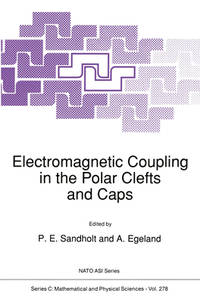
1989011245Dordrecht Netherlands: Kluwer Academic Publishers 1989. xvi 465pp index bw ills diagrams. Or laminated boards. Collection of highly technical articles on electromagnetic coupling in polar regions from the Proceedings of the NATO workshop held in Lillehammer in 1988. NATO ASI Series C:Mathematical and Physical Sciences Vol 278. First Edition. Hard Cover. Fine. 8vo. Kluwer Academic Publishers Hardcover
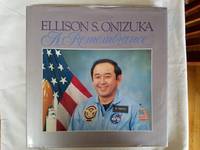
19861365Honolulu: Mutual Publishing and Signature Publishing 1986. First edition. Hardcover. Good/good. Oversize cloth hardcover 1st in dustjacket. Signed by Jim Buchli Space Shuttle Astronaut and Lorna Onizuka's wife and brother Claude Onizuka on the half-title page. A good copy with some discoloration to the gray cloth gilt titles still bright and attractive. Light bumping/rounding at the corners and spine tips. Interior is clean and unmarked other than the signatures. Binding solid though lacking in tightness. Dustjacket is also good with a crease to the rear flap and general shelfwear and bending at the panel edges. - light soil to the front panel. 160 pp. filled with color photos. A truly unique copy of this tribute to Onizuka who died on the Challenger. <br/><br/> Mutual Publishing and Signature Publishing hardcover
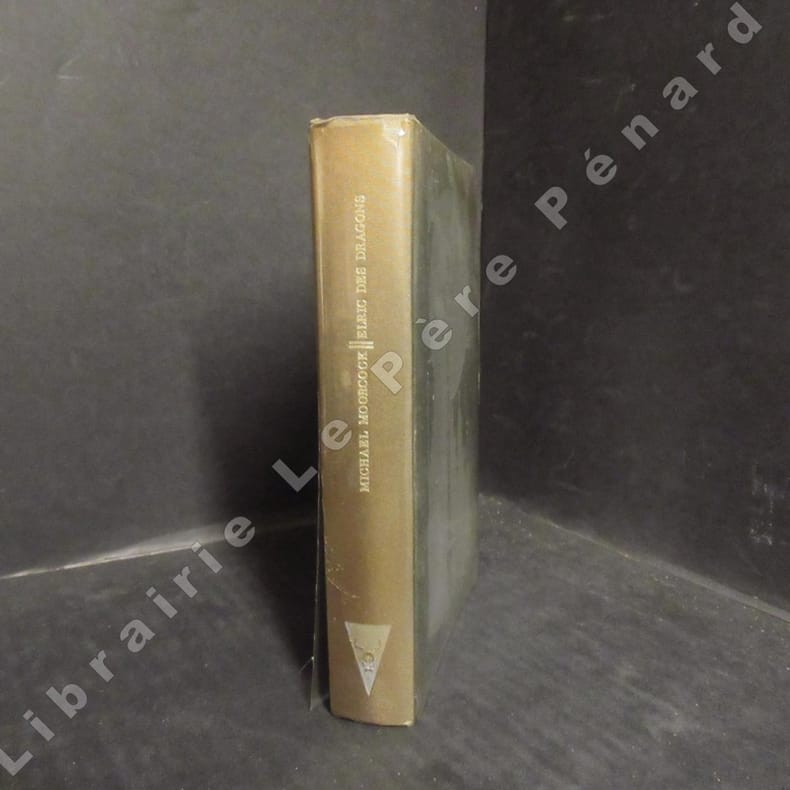
1975191201975 Editions Opta, Collection Aventures fantastiques N°13 - 1975 - In-8, reliure pleine toile verte, titres argenté en long sur le dos, décor argenté sur le premier plat, sous jaquette rhodoïd - 363 p. - Illustré de dessins originaux de François Allot - Edition limitée à 5000 exemplaires numérotés ainsi que 120 HC - Exemplaire 384/5000