Victore PalluLivre Rare Book
1 417 résultats
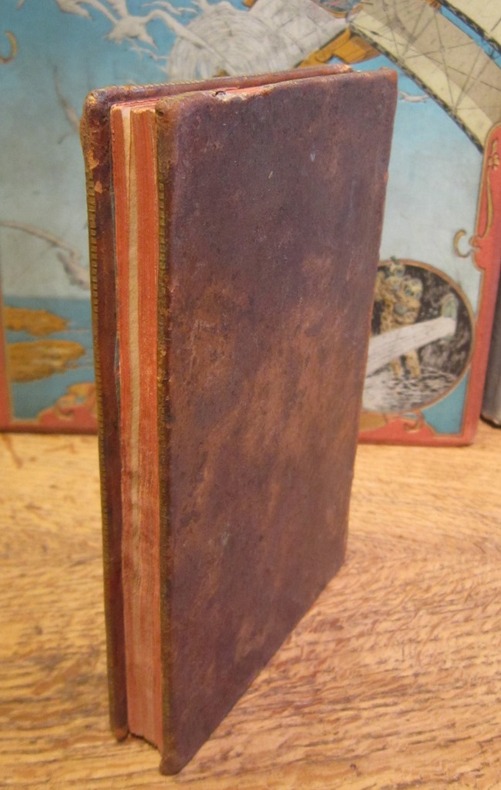
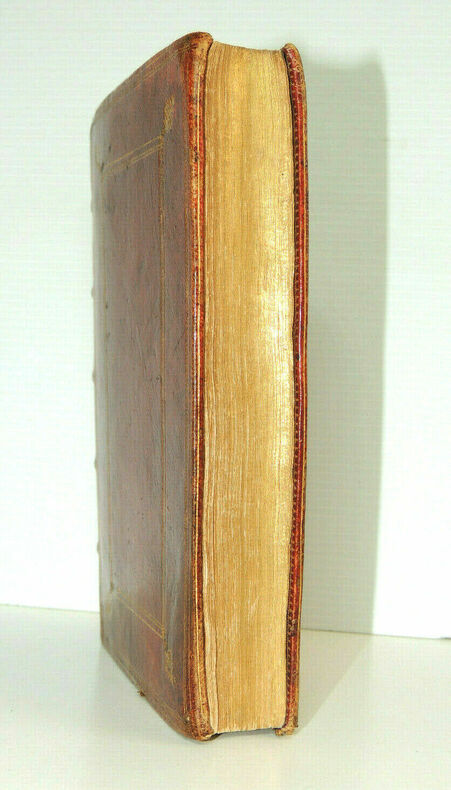
CZC-9527Emensvm a Victore Pallu anis 1628,1629 & 1630 Frontispice gravé, Édition Originale volume in8, 19x13, plein maroquin époque, frottements, dos à nerfs, ss deux gardes moirées, décors sur les plats, très état int., bien frais, toutes tranches dorées, 387pages. Bel et rare exemplaire ! Parisis, Ioannem Camusat, 1630
CZC-9527Emensvm a Victore Pallu anis 1628,1629 & 1630 Frontispice gravé, Édition Originale volume in8, 19x13, plein maroquin époque, frottements, dos à nerfs, ss deux gardes moirées, décors sur les plats, très état int., bien frais, toutes tranches dorées, 387pages. Bel et rare exemplaire ! Parisis, Ioannem Camusat, 1630
1961c2402100073xbvkBrünn und München (Ausfertigung bzw. Zusammenstellung), ca. 1903-1961+. I. TYPOSKRIPT: DinA4, 6 (2) unnummerierte Blätter 'Buchumschlag'(Entwurf mit 15. Foto), Titelblatt und 'Vorwort'; 70 nummer. einseitig beschriebene Blätter (inkl. der Bl. mit den mont. Fotos), am Ende mit einer detaillierten Tabelle 'Meine Körpermaße'(Vergleich ''im Jahre 1910 / 40 Jahre später, 1950''), ausführlicher Liste 'Meine Erfolge im Turnen und Sport'(1903-1924) und mit Inhaltsverzeichnis: 'Vorwort'; 'Lebensausschnitt eines Sportsmannes'; 'Charakter, Lebensweise u. Verschiedenes'; 'Morgen- und Abendgymnastik'; 'Übungsfolge'; 'Atmungsübungen'; 'Fingerdruck- und Handgelenksübung'; 'Lockerungsübungen'; 'Liegestützübungen'; 'Beinübungen'; 'Rumpfübungen'; 'Armübung (Kraftübung)'; 'Schultermuskelübung (Rollen)'; 'Rumpfübung (Ausgleichsübung)'; 'Hantelübungen'; 'Keulenschwingen'; 'Ringübungen (als Kraft- und Ausgleichsübungen)'; 'Sprossenwandübungen'; 'Streckapparate (Expander)'; 'Seilspringen'; 'Übungen mit dem Partner'; 'Steinstossen'; 'Laufen'; 'Betrachtungen im Sport'; 'Erfolge'; 'Körpermaße'; 'Ausklang'. - In graphisch gestalteter Kunstleder-Klemmmappe (um 1950?); gr.-4to (ca. 33 x 25 x 2 cm). / II. DOKUMENTATION: Grüne handgenähte Lederkladde (ca. 16,5 x 13,5 x 3 cm) m. 68 Blättern, die ersten 20 und die allerletzten Blätter einseitig mit handschriftlichen Wettkampf-Listen bzw -Erfolgen und rückseitig mit montierten seine Erfolge betreffenden Zeitungsausschnitten der jeweiligen Zeit, die restlichen Blätter beidseitig mit mont. tls. gefalteten Zeitungsauschnitten, wobei die Stritesky betreffenden Passagen fast immer markiert sind.
185446907Leipzig, Johann Ambrosius Barth, 1854. Contemp. marbled boards. In: ""Annalen der Physik und Chemie. Hrsg. von J.C. Poggendorff"", Vierte Reihe Bd. 3, (= Poggendorff Bd. 93,). Entire volume offered. Two stamps to titlepage. X,632 pp. and 4 folded engraved plates. Clausius's paper: pp. 481-506. Internally clean and fine.
185446907Leipzig Johann Ambrosius Barth 1854. Contemp. marbled boards. In: "Annalen der Physik und Chemie. Hrsg. von J.C. Poggendorff" Vierte Reihe Bd. 3 = Poggendorff Bd. 93. Entire volume offered. Two stamps to titlepage. X632 pp. and 4 folded engraved plates. Clausius's paper: pp. 481-506. Internally clean and fine. <br/><br/><em>First printing of this milestone paper in thermodynamics which together with his paper from 1850 established the second law of thermodynamics. In the offered paper Clausius introduces the symbol T for the universal function of temperature a 1 and he introduces the concept of "entropy" the greek word for 'transformation' but without using the word Clausius introduced the word later in 1865 he calls this new theorem "the principle of the equivalence of transformations". This principle paints a dramatic picture of the end of the world the so-called "heath-death of the universe"."Entropy on the other hand of the complementary experience of water seeking its own level of hot bodies cooling of springs untensing of magnetism wearing off and electrical charges leaking away of a destiny suchThat no life lives forever; - That dead men rise up never; that even the weariest river Winds somewhere safe to sea: a world getting old and running down."Gillespie in "The edge of Objectivity" p. 400-01."Clausius discovered that if he took the ratio of the heat content of a system and its absolute temperature this ration would always increase in any process taken place in a closed system. A closed system is one that loses no energy to the outside world and gains no energy from it. With perfect efficiency which is never realized in the real world of course the ratio would remain constant but i would never under any circumstances decrease."Asimov. - Parkinson: Breakthroughs 1854 C. </em> hardcover
185444808Leipzig, Johann Ambrosius Barth, 1854. No wrappers in ""Annalen der Physik und Chemie. Hrsg. von J.C. Poggendorff"", Bd. 93, No 12 (entire issue offered). Titlepage to vol. 93. Pp. 481-632. Clausius's paper pp. 481-506.
185444808Leipzig Johann Ambrosius Barth 1854. No wrappers in "Annalen der Physik und Chemie. Hrsg. von J.C. Poggendorff" Bd. 93 No 12 entire issue offered. Titlepage to vol. 93. Pp. 481-632. Clausius's paper pp. 481-506. <br/><br/><em>First printing of this MILESTONE PAPER IN THERMODYNAMICS which together with his paper from 1850 established the second law of thermodynamics. In the offered paper Clausius introduces the symbol T for the universal function of temperature a 1 and he introduces the concept of "entropy" the greek word for 'transformation' but without using the word Clausius introduced the word later in 1865 he calls this new theorem "the principle of the equivalence of transformations". This principle paints a dramatic picture of the end of the world the so-called "heath-death of the universe"."Entropy on the other hand of the complementary experience of water seeking its own level of hot bodies cooling of springs untensing of magnetism wearing off and electrical charges leaking away of a destiny suchThat no life lives forever; - That dead men rise up never; that even the weariest river Winds somewhere safe to sea: a world getting old and running down."Gillespie in "The edge of Objectivity" p. 400-01."Clausius discovered that if he took the ratio of the heat content of a system and its absolute temperature this ration would always increase in any process taken place in a closed system. A closed system is one that loses no energy to the outside world and gains no energy from it. With perfect efficiency which is never realized in the real world of course the ratio would remain constant but i would never under any circumstances decrease."Asimov. - Parkinson: Breakthroughs 1854 C. </em> unknown
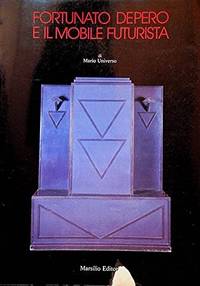
199074883Marsilio. New. 1990. Paperback. 8831753304 . FREE UPGRADE to Courier/Priority Shipping Upon Request - IN STOCK AND IMMEDIATELY AVAILABLE FOR SHIPMENT - Flawless copy brand new pristine never opened -- Text in Italian. 86 pp. With 47 ills. 24 col. . 28 x 21 cm. -- with a bonus offer-- . Marsilio paperback
201016127Paris, Firmin didot freres , 1837 ; grand in-12, cartonnage de l'éditeur dos frotté . Les 12 volumes. En12 volumes.
De Sphaera (Sphaerae coelestis et planetarum desriptio). Biblioteca Estense Universitaria, Modena (α.X.2.14 = Lat.209). Il Bulino 2010. Facsimile di uno dei più bei manoscritti miniati di astrologia (metà XV secolo). Il miniatore Christoforo de Predis rappresenta i diversi aspetti della vita quotidiana con scene che sono nell’ambito del tema principale: i pianeti. Legatura in pelle rossa con, sul primo piatto, lo stemma dei Visconti-Sforza. Formato 17x25. Pagine 32. Commentario, in italiano, a cura di Venturi Gianni, Bellingeri Luca, Lazzi Giovanna, Battini Annalisa, Bertozzi Marco, Incerti Manuela. Cofanetto di custodia in seta blu con impressioni in oro. Tiratura limitata e numerata di 950 copie. Condizione come nuovo
185443057Leipzig, Johann Ambrosius Barth, 1854. No wrappers as extracted from: ""Annalen der Physik und Chemie. Hrsg. von J.C. Poggendorff"", Vierte Reihe Bd. 3, (= Poggendorff Bd. 93, No. 12). Pp. 481-506. Clean and fine.
185443057Leipzig Johann Ambrosius Barth 1854. No wrappers as extracted from: "Annalen der Physik und Chemie. Hrsg. von J.C. Poggendorff" Vierte Reihe Bd. 3 = Poggendorff Bd. 93 No. 12. Pp. 481-506. Clean and fine. <br/><br/><em>First printing of this milestone paper in thermodynamics which together with his paper from 1850 established the second law of thermodynamics. In the offered paper Clausius introduces the symbol T for the universal function of temperature a 1 and he introduces the concept of "entropy" the greek word for 'transformation' but without using the word Clausius introduced the word later in 1865 he calls this new theorem "the principle of the equivalence of transformations". This principle paints a dramatic picture of the end of the world the so-called "heath-death of the universe"."Entropy on the other hand of the complementary experience of water seeking its own level of hot bodies cooling of springs untensing of magnetism wearing off and electrical charges leaking away of a destiny suchThat no life lives forever; - That dead men rise up never; that even the weariest river Winds somewhere safe to sea: a world getting old and running down."Gillespie in "The edge of Objectivity" p. 400-01."Clausius discovered that if he took the ratio of the heat content of a system and its absolute temperature this ration would always increase in any process taken place in a closed system. A closed system is one that loses no energy to the outside world and gains no energy from it. With perfect efficiency which is never realized in the real world of course the ratio would remain constant but i would never under any circumstances decrease."Asimov. - Parkinson: Breakthroughs 1854 C. </em> unknown
51021Paris.Chez Jean.(1780 ?).Longueur 73 cm.Hauteur 53 cm.Eclypse de soleil, de lune.Système de Ptolémée,Copernic,Ticho-Brahé,Descartes.Sphère droite.Globe céleste.Terrestre.Sphère parallèle.Noire et blanche.Bon état.
182243751Leipzig, Johann Ambrosius Barth, 1822. Without wrappers as extracted from ""Annalen der Physik und der Physikalischen Chemie. Hrsg. Ludwig Wilhelm Gilbert"", Bd. 71. Titlepage to vol. 71, pp. 124-171 a. pp. 172-176 and 1 folded engraved plate showing experimental apparatus. Clean and fine.
182243751Leipzig Johann Ambrosius Barth 1822. Without wrappers as extracted from "Annalen der Physik und der Physikalischen Chemie. Hrsg. Ludwig Wilhelm Gilbert" Bd. 71. Titlepage to vol. 71 pp. 124-171 a. pp. 172-176 and 1 folded engraved plate showing experimental apparatus. Clean and fine. <br/><br/><em>First German edition of Faraday's famous paper "On some new Electro-Magnetical Motion and on the Theory of Magnetism. By Michael Faraday Chemical Assistant in the Royal Institution. 1821" recording one of the most influential discoveries in physics in the 19th Century as Faraday here as the very first showed how to CONVERT THE ELECTRICAL AND MAGNETIC FORCES INTO CONTINUAL MECHANICAL MOVEMENT thus creating the first electric motor using the principle of electromagnetic rotation. In the first paper he introduced for the first time the concept of "LINE OF FORCE" and hereby deliniating "a picture of the universe as consisting of fields of various types one that was more subtle flexible and useful than the purely mechanical picture of Galileo and Newton. The FIELD UNIVERSE was to be recognized with Maxwell half a century later and with Einstein after an interval of another halfcentury."Asimov."Ever since Hans Christian oersted's announcement of the discovery of electromagnetism in the summer of 1820 editors of scientific journals had been inundated with articles on the phenomenon. Theories to explain it had multiplied and the net effect was confusion. Were all the effects reported real Did the theories fit the facts It was to answer these questions that Phillips turned to Faraday and asked him to review the experiments and theories of the past months and separate truth from fiction.Faraday agreed to to undertake a short historical survey.His entusiasm was aroused in September 1821 when he turned to the investigation of the peculiar nature of the magnetic force created by an electrical current. Oersted had spoken of the "electrical conflict" surrounding the wiree and had noted that "this conflict performs circles".Yet as he experimented he saw precisely what was happening. Using a small magnetic needle to map the pattern of magnetic force he noted that oneof the poles of the needle turned in a circle as it was carried around the wire. He immediately realized that a single magnetic pole would rotate unceasingly around a current-carrying wire so long as the current flowed. He then set about devising an instrument to illustrate this effect. His paper "On some new Electro-Magnetical Motion and on the Theory of Magnetism" appeared in the 21 October 1821 issue of the "Quarterly Journal of Science" The paper offered in the first German edition. It records the first conversion of electrical into mechanical energy. It also contained the first notion of the line of force."DSB IV pp. 533. </em> unknown
201016115Paris, Publié par firmin didot freres, 1839 ; grand in-12, cartonnage de l'éditeur. Les 6 volumes. Egypte ancienne , afrique ancienne de davezac , senegambie guinée de m.amédée tardieu, ile de l afrique par m.d'avezac, afrique orientale afriqyue centrale empire de maroc , egypte jusqu a la dominatio francaise par m.j.j. marcel . dos frotté.
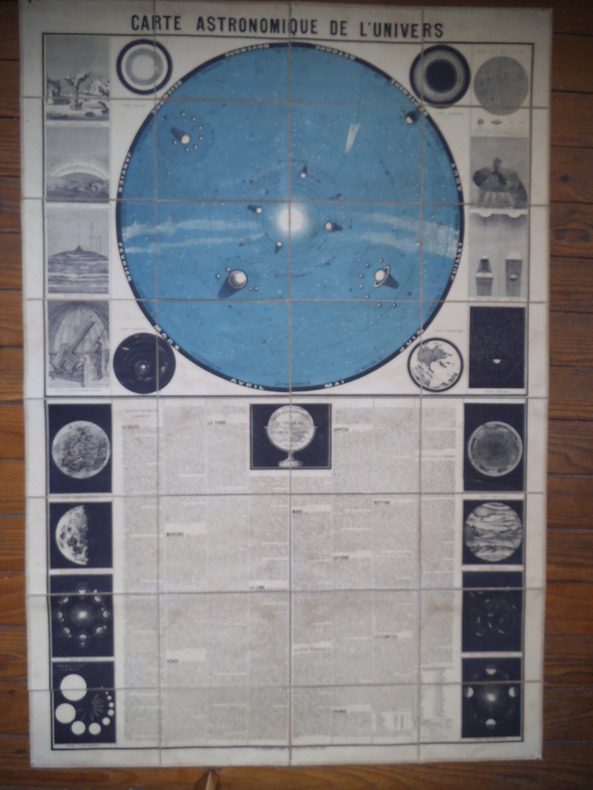
8680L.Révon éditeur vers 1877.rue d’Hauteville Paris.Le nom de l’auteur apparaît dans un globe sous la carte. Format 1300x900mm. Entourée de 25 figures astronomiques et complétée d’un texte imprimé en colonnes et intitulé Principes élémentaires d’astronomie.Carte entoilée;très bon état
182143750(Paris, Crochard, 1821). No wrappers. In: ""Annales de Chimie et de Physique, Par MM. Gay-Lussac et Arago."", tome 18 (Septembre Cahier). Pp. 337-443. (Entire issue offered). Faraday's paper: pp. 337-370 a. 2 folded engraved plates (showing the experimental apparatus). Ampère & Savary's Notes: pp. 370-379. Clean and fine.
182143750Paris Crochard 1821. No wrappers. In: "Annales de Chimie et de Physique Par MM. Gay-Lussac et Arago." tome 18 Septembre Cahier. Pp. 337-443. Entire issue offered. Faraday's paper: pp. 337-370 a. 2 folded engraved plates showing the experimental apparatus. Ampère & Savary's Notes: pp. 370-379. Clean and fine. <br/><br/><em>First French edition of Faraday's famous paper "On some new Electro-Magnetical Motion and on the Theory of Magnetism. By Michael Faraday Chemical Assistant in the Royal Institution. 1821" recording one of the most influential discoveries in physics in the 19th Century as Faraday here as the very first showed how to CONVERT THE ELECTRICAL AND MAGNETIC FORCES INTO CONTINUAL MECHANICAL MOVEMENT thus creating the first electric motor using the principle of electromagnetic rotation. In the first paper he introduced for the first time the concept of "LINE OF FORCE" and hereby deliniating "a picture of the universe as consisting of fields of various types one that was more subtle flexible and useful than the purely mechanical picture of Galileo and Newton. The FIELD UNIVERSE was to be recognized with Maxwell half a century later and with Einstein after an interval of another halfcentury."Asimov."Ever since Hans Christian oersted's announcement of the discovery of electromagnetism in the summer of 1820 editors of scientific journals had been inundated with articles on the phenomenon. Theories to explain it had multiplied and the net effect was confusion. Were all the effects reported real Did the theories fit the facts It was to answer these questions that Phillips turned to Faraday and asked him to review the experiments and theories of the past months and separate truth from fiction.Faraday agreed to to undertake a short historical survey.His entusiasm was aroused in September 1821 when he turned to the investigation of the peculiar nature of the magnetic force created by an electrical current. Oersted had spoken of the "electrical conflict" surrounding the wiree and had noted that "this conflict performs circles".Yet as he experimented he saw precisely what was happening. Using a small magnetic needle to map the pattern of magnetic force he noted that oneof the poles of the needle turned in a circle as it was carried around the wire. He immediately realized that a single magnetic pole would rotate unceasingly around a current-carrying wire so long as the current flowed. He then set about devising an instrument to illustrate this effect. His paper "On some new Electro-Magnetical Motion and on the Theory of Magnetism" appeared in the 21 October 1821 issue of the "Quarterly Journal of Science" The paper offered in the first French edition. It records the first conversion of electrical into mechanical energy. It also contained the first notion of the line of force."DSB IV pp. 533. </em> unknown
SLIVCN-9781685073619NOVA SCIENCE PUBLISHERS INC (12/2021)
1965ZB370830Mexico: Editorial Prometeo Libre 1965. 52 2 pp. softcover good. - If you are reading this this item is actually physically in our stock and ready for shipment once ordered. We are not bookjackers. Buyer is responsible for any additional duties taxes or fees required by recipient's country. Photos available upon request. Mexico: Editorial Prometeo Libre paperback
201016114Paris, Publié par firmin didot freres, 1835 ; grand in-12, cartonnage de l'éditeur. Les 5 volumes. Brésil , Etat Unis 2 volumes , Chili Paraguay , Mexique guatémala .plat bon etat dos frotté.
1736000248Londres et Amsterdam Pierre Dunoyer, et Jean Frédéric Bernard 1736
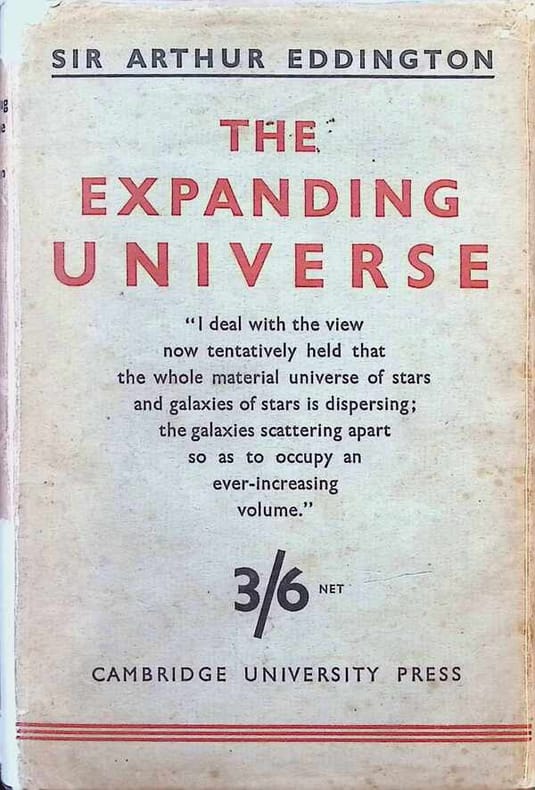
1933030610Cambridge 1933 Cambridge University Press Hardcover Poor 1st Edition