293 résultats
In 16, pp. (2) + 258. Cart. coeva. Ed. orig. Cordier, 'Bibliotheca Sinica', vol. 1, p. 573. Catalogue de la bibliotheque de M. Victor de Saint-M., p. 244.
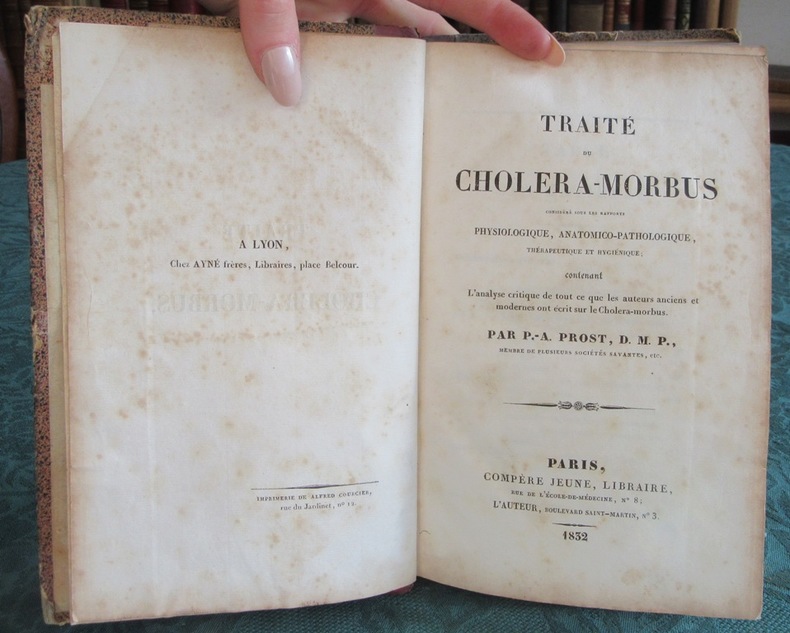
183218899Contenant l'analyse critique de tout ce que les auteurs anciens et modernes ont écrit sur le Choléra-Morbus, par P.A. Prost, D.M.P.Edition originale. Paris, Compère jeune, libraire, et chez l'auteur - 1832 - 528 pp. Suivi de :1/Lettres sur le choléra-morbus - seconde lettre (8 pp.)2/Lettres sur le choléra-morbus - troisième, quatrième, cinquième, sixième, septième, huitième lettre (36 pp.)3/Lettres sur le choléra-morbus - neuvième, dixième lettre (25 pp.)4/ Du choléra . Moyens de s'en préserver et d'en guérir par le docteur C.J.B. Comet - chez l'auteur - 1831 - 23 pp.5/ Avis au peuple pour prolonger la vie, prévenir et guérir les maladies, par C.J.B. Comet - 3pp.6/ instructions officielles relatives au choléra-morbus - 16 pp.7/ Instruction sanitaire contre le choléra-morbus - 12 pp.Reliure demi basane de l'époque. Dos lisse orné et doré avec titre. Coins émoussés. Coiffes frottées. Quelques rousseurs. Bon état. Format in-8°(21x13).
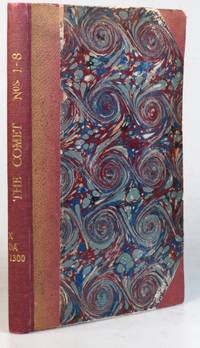
188434974Aberdeen: George Middleton 1884-85. Eight issues in one volume 8vo 11 1 12 12 11 1 12 11 1 13 1 10 pp. Bookplate of Edinburgh Public Libraries to paste down marked "withdrawn" plus small ink stamps to the first and last pages. Contemporary half cloth marbled sides neatly rebacked. An extremely scarce run of these radical Aberdeen pamphlets published anonymously under a variety of pseudonyms - Bearing-Rein Chronos A Ratepayer Brother Jack Recluse and Notarius. A Jubilee issue also appeared in 1887. OCLC lists a handful of single issues plus a complete set at Aberdeen University. Aberdeen: George Middleton unknown
[Fisica-Comete] (cm16,6) ottimo pieno vitello dell' epoca, maculato.-- cc. 3 nn., pp. 224; pp. 24 + una tabella f.t. ripiegata. La seconda parte di 24 pp. ha il seguente titolo: Explication des principes etablis par M. de Reaumur pour la construction des thermometres. La prima parte, pubblicata anonima, è divisa in 4 capitoli. Tratta anche del calore e raffreddamento dei corpi con relativi esperimenti, nonchè un capitolo: "De la chaleur relative du soleil, de la terre, des planetes et des cometes". Interessante raccolta di esperimenti espressi con varie tabelle numeriche e schematiche nel testo. Esemplare molto bello e nitido. Secondo il Census Iccu Sbn nessuna copia è presente nelle Biblioteche Italiane. * Cole 921; * Middleton 115.[f53] Libro
290 pages. Reproductions of black and white photos in text. "Whether by accident or design, governments and agencies have remained silent, so all the research has been up to us. However this true fifty year old shame must be revealed in the hope that mankind remembers and never allows it to be repeated." - from Foreword. "Our story tells what happened to 168 Allied Airmen who jumped into Northern Europe after their planes had met with an explosive and fiery end... Because our eventual betrayal to the Gestapo was accomplished so smoothly, a number of these encounters will be explained so that you can better understand our dilemma. The retelling of our encounter with our Gestapo hosts is mild, for many of us do not wish to recall the most unpleasant details that deserve to stay well hidden in the back of our minds... Now with this story told, we again wish to forget." - from Prologue. Moderate wear. Unmarked. Binding intact. A sound copy. Book
Slight edge wear to cover and small spots on cover, especially rear board. Brightly colored printed paper-covered boards with beige cloth spine. Text in Swedish. Follow Moomintroll through die-cut holes and cut-outs through the forest. "What do you think happened then?" Printed in bright primary colors on thick, heavy paper. Interior pages are very clean and crisp with no tears or damage to die-cuts. 22 pages. 8 1/8"w x 10 7/8"h. Hard-to-find.
In -12°, pp. 24, 1 tav., 9 cc. manoscritte, una c.b., rilegatura in carta marmorizzata coeva. L'autore dell'opera è il sacerdote tedesco Adam Kaldy, Pastore nell'Hauzenthal in Austria, e il titolo suona così: “Che cosa sono le comete? E quale relazione hanno col nostro Sistema solare?” Questo trattato di astronomia, non privo di elementi teologici, riflette le cognizioni contemporanee circa le comete: il testo tedesco è accompagnato da una graziosa tavola f.t. e rilegato con una traduzione manoscritta italiana. The author of this work about comets is the austrian priest Adam Kaldy: the german text is followed by a nice plate and an Italian manuscript translation.
In 4°; due opere in un volume: 8 , 264 pp. e 4 c. di tav.; 153 (i.e. 155), 13 pp. e 2 c. di tav. (le due tavole del secondo volume si trovano erroneamente legate all'interno del primo volume che così contiene 6 tavole invece di 4 come attestato anche dalla didascalia esplicativa riportata nelle tavole stesse). Comunque i due volumi sono completi ed in buone condizioni di conservazione. Legatura novecentesca in cartoncino molle. Alcune leggere bruniture in alcune pagine dovute alla qualità della carta e presenti in tutte le copie di quest'opera. Minima mancanza all'angolo superiore bianco di pagina 59, 61 e di una tavola (ininfluenti). Prima edizione latina di quello che è considerato il primo periodico medico. L'opera vide pubblicati solo i primi 3 anni (qui sono presenti il secondo e terzo anno). Si dice che fu proprio lo "Zodiacus medico-gallicus" che diede a Bayle l'idea delle "Nouvelles de la Republique des Letteres". Inizialmente l'opera uscì il primo anno in francese con il titolo "Nouvelles découvertes sur toutes les parties de la médecine" ma ben presto venne prima tradotta in tedesco e poi in latino, unica lingua con cui proseguì la sua esistenza. Il latino permise infatti al periodico di uscire per altri due anni potendo raggiungere un pubblico più ampio di lettori. All’inizio di ogni capitolo presente inciso il segno zodiacale del mese di riferimento. Anche se l'esperienza dello Zodiacus fu breve esso aprì la strada alla pubblicazioni periodiche a carattere medico-divulgativo che caratterizzarono la fine del XVII° secolo e l'inizio del XVIII° e proseguirono fino ad oggi. Nicolas de Blegny (Chaumont-en-Bassigny 1646 circa - Avignone 1722); fu valente medico (specializzato nello studio delle malattie veneree) e chirurgo personale dei reali di Francia e si interessò anche di storia e letteratura. Durante la sua avventurosa vita fu poi imprigionato per dieci anni nel castello di Angers, per aver fondato un falso ospedale per stranieri, in realtà luogo di malaffare. Blegny, come ricorda il Garrison-Morton fu il primo francese a dare un contributo importante alla medicina forense. All'interno dell'opera sono riportate alcune delle più importanti scoperte scientifiche del 1680 e 1681. Gli indici dei due volumi si trovano ambedue alla fine del secondo volume. fra i vari capitoli ne troviamo dedicati alle febbri, alle acque minerali, a problemi urologici, alla natura dei denti e alle loro malattie e patologie e al modo di curarli, a casi ginecologici o a bambini nati con malformazioni terribili, ma anche a curiosità fisico-naturali come la colorazione dei coralli, la filosofia dei colori e alcune sperimentazioni sui colori, studi su alcuni animali rari arrivati dall'Africa o su nuovi tipi di funghi, su una balena. Gli ultimi due capitoli sono assai curiosi e riportano, uno, alcune teorie relative ai folletti ed alla parte data loro nella tradizione francese ed irlandese nella creazione del "genio" e l'altro è dedicato ad una teoria sulle comete. Opera in buone condizioni di conservazione e assai rara. Rif. Bibl.: Caillet I, 1224; Garrison-Morton 1725; Waller I, 1133; Wellcome II,180.
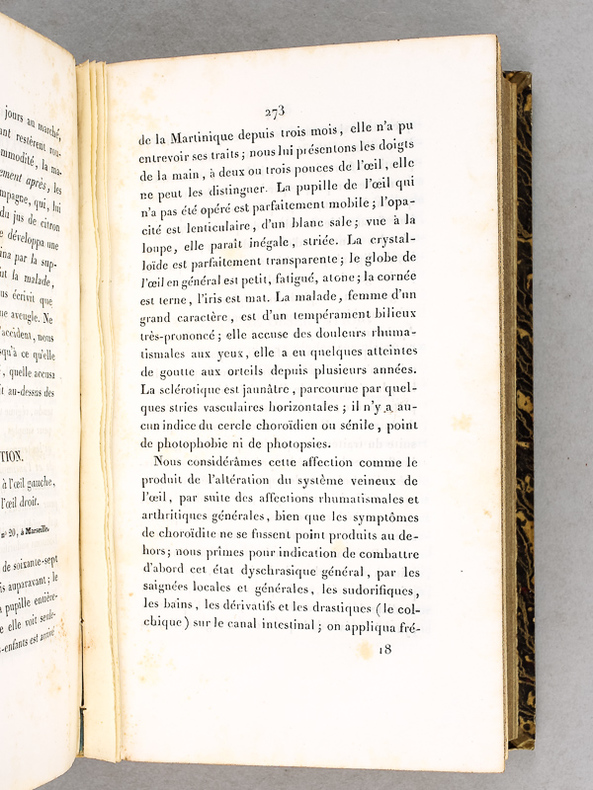
1841523371 vol. in-8 reliure de l'époque demi-basane marron, Nouveau Traité des cataractes : Chez Gayet, Libraire, et chez l'Auteur, Bordeaux, Chez les Libraires de l'Ecole de Médecine, Paris, s.d., 3 ff. n. ch., XVI-284 pp., avec 4 planches hors texte et 2 ff. de catalogue ; Des Maladies de l'Oeil : Chez l'auteur, Chez Bohaire, Paris, 1841, 222 pp. ; Méthode curative externe des Douleurs rhumatismales, neuvième édition, augmentée d'un grand d'Observations de guérisons et de développements pratiques, Chez l'Auteur, Paris, 1845, 335 pp.. Rappel du titre complet : Nouveau Traité des cataractes. Causes, symptômes, complications et traitements des altérations du crystallin et de la capsule sans opérations chirurgicales [ Edition originale ] [ Avec : ] Des maladies de l'oeil confondues sous les noms d'Amaurose, Goutte sereine paralysie, amblyopie, etc. Pour faire suite au Traité des Cataractes [ Edition originale ] [ Avec : ] Méthode curative externe des Douleurs rhumatismales, goutteuses, nerveuses, des maladies lymphatiques, et des viscéralgies, affections nerveuses des viscères, confondues avec les phlegmasies chroniques et les lésions organiques, telles que la Gastrite, l'Entérite, l'hypocondrie, etc., diachirismos de médicamens simples
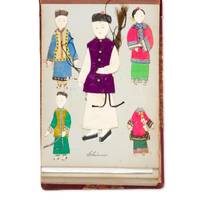
18893Photograph album circa 1900. Small oblong quarto 165 x 235 mm half morocco with ornamental gilt rule over faux crocodile papered boards original floral-patterned lining papers front pastedown with binder's ticket of bookseller and stationer Gilon Verviers Belgium; 20 leaves of thick card containing 4 cabinet card format portrait photographs of Lazarist missionary Father Jacques Jamar - 2 taken in China and showing him wearing Chinese clothing one taken in Amiens loose and the other probably in a Belgian studio - and a carte de visite format albumen print also showing the missionary in Chinese attire 4 of the 5 portraits are mounted and have contemporary captions in ink on the album pages identifying the subject as 'Jacques Jamar Missionnaire Lazariste Chine'; 8 pages on which are mounted 15 late Qing period traditional Chinese dolls depicting men women and children various sizes up to 200 mm made from paper and silk most embellished with seed pearl buttons and several with human hair all in very good condition apart from one which has lost the paper head; 5 tipped-in silver gelatin prints each 205 x 140 mm dating to around 1920 showing the Catholic Cathedral at Chengtingfu and various Chinese temples these are captioned Cathédrale de Tcheng Ting Fou Tchuan t'a Mou t'a Ts'ung t'a and Hoa t'a; 3 studio portraits dating to the early 1900s of Belgian Catholic nuns identified as Mère Célestine and Mère Léonie 2; a page with a religious dedication to 'Rita Comet' dated July 1964 likely written by a Chinese-speaking Belgian missionary but with indecipherable signature in Chinese calligraphy and in French: 'Sacrifice total Charité vraie et Joie constante: trois sentences du Père Lebbe' Father Frédéric-Vincent Lebbe was also a Belgian Roman Catholic missionary to China whose advocacy led the pope to appoint the first native Chinese bishops; he chose to become a Chinese citizen at a time when missionaries like all Westerners enjoyed legal privileges in China including immunity from Chinese law; he died in 1940 following his capture by the Chinese Communists; a loose black-and-white photograph of Chiang Kai-shek leader of the Republic of China Taiwan shaking hands with a Belgian missionary inscribed verso 'A Mademoiselle Rita Comet souvenir de la Chine Libre' with same indecipherable signature as that on the dedication page and wet stamps 'Photo by Wu Chung Yee' and 'Nov. 26 1964'; the remainder of the pages are taken up with several family photographs from the 1920s including the First Communion of a young girl Rita Comet and some early twentieth century views of London; album pages with occasional mild foxing but overall the contents are in very good condition. The Belgian missionary Jacques Jamar was born in 1876. He was ordained in the Congregation of the Mission of St. Vincent de Paul also known as the Lazarists Lazarites or Vincentians in 1895 and was sent to China as a missionary in 1903. For several decades Father Jamar worked at the Chengtingfu Mission in Hopeh Hebei province. See for example Catalogue des maisons et du personnel de la Congrégation de la Mission 1947 p 108. It seems likely that the present album originally belonged to a close member of Father Jamar's family; the photographs taken in China as well as the Chinese dolls would have been sent home to Belgium by the missionary and preserved for posterity in it along with other significant family photographs. The album appears to have been inherited later on by Mademoiselle Comet. Also a devout Catholic her additions to the album continue the theme of Belgian missionaries to China even though they were made 60 years after the portraits of Father Jamar. hardcover
Due opere legate in un volume, in-12, cartonatura coeva, pp. XXIV, 62, [10], 107, [1], XXIV, 137, [7] - [6], 138, [2]. Con 6 tavole incise in rame alla prima opera. Non è stato legato l'occhietto al secondo titolo. Alcune carte malposizionate nella prefazione del primo titolo.
167514546Paris, Guillaume Desprez, 1675 ; in-16 ; plein veau havane granité, dos à nerfs décoré et doré, titre doré, roulette sur les coupes (reliure de l'époque) ; (36) (titre, Epistre, Préface et Table), 457 pp., (1) p. de Privilège, 59 figures et schémas dont 13 hors-texte.
Perusiae, apud Augustos, 1608, in-12, legatura coeva in piena pergamena floscia, pp. 156. Stemma calcografico sul frontrspizio. Altro emblema - in xilografia - a c. A12v. Leggermente rosicchiato il margine superiore della copertina posteriore, per il resto ottime condizioni. Prima edizione. Marco Antonio Grisaldi (1594 – 1646) fu professore di medicina pratica presso l'Università di Perugia. Il suo nome, però, è legato all'astronomia, in quanto pubblicò alcuni scritti tesi a sfatare la superstizione secondo cui le comete erano portatrici di disgrazie. Il più interessante è questo “Cometologia contra portentosam cometarum apparitionem” che è censito in soli 4 esemplari in ICCU. Riccardi I, c. 633. Cantamessa "Astrologia ins & outs", scheda n. 3409: "Importante opera del matematico Grisaldi diretta [...] a negare che il passaggio delle comete sia apportatore di disgrazie [...] La cometa oggetto dell'opera è quella di Halley in uno dei suoi passaggi".
185617861Hall, Wurtemberg, librairie de W. Nitzschke ; Bruxelles, Kiessling et Comp. , s.d. [circa 1856] ; in-4 (planches 29x23,8 cm) en feuilles sous chemise cartonnée en percaline, plats à grand décor rocaille à froid et titre doré sur le premier, cordons de fermeture (chemise éditeur) ; 12 planches lithographiées en noir ou en couleurs.
Pages 185-220 plus 4 pages of ads. Features: Sensational page of six photos, with text, illustrating Dubai, the primary port and one of the most progressive towns in Trucial Oman - includes the Customs Building, the new bridge, Shaikh Rashid Bin Said, a general view of the town, the Al-Gaz Hotel, the old palace, and more; Cover photo of the Queen Mother upon her 63rd birthday; Article on the Moscow Test-Ban Treaty with photo of DeGaulle; Photo of the Vickers Hovertruck in action; Photo of the Corporal missile on parade at Larkhill; Photo of Mr. David Tapp driving his tractor, The Seahorse, across the English Channel; Photo of champion racing driver Graham Hill aboard replica of a Ford Quadricycle, marking the centenary of Henry Ford who is shown separately driving a Quadricycle in 1904; Photo of spectators swarming onto the pitch at Headingley after West Indies triumph in fourth test match; Illustration of the eminent conductor, Mr. Basil Cameron; Page of fascinating text and photos explain war in Yemen between the Royalist and Republican forces; Photo of engine of wrecked WWII British bomber found in Dutch field; Photo of examination of first wreckage recovered from the U.A.R. Comet which crashed in the Indian Ocean on July 28, killing 62 persons including 26 Boy Scouts from the Philippines; Photos of Japanese Emperor Hirohito examining marine life on Hayama Beach, Japan; Dramatic photos of rescue efforts at Skopje, Yugoslavia after earthquake; Photo of Peru's president-elect, Signor Fernando Belaunde Terry; Amazing photo of huge Australian wedge-tailed Eagle named 'Widgie' landing on the arm of young John Ryder who rescued the bird when it fell from its nest in its youth; Photo of the Bishop of Caltagirone blessing and Italian cradle bound for the unborn child of President Kennedy; Photo of disarmament conference at Geneva; Photo of Orville Freeman presenting Indian peace pipe to Khrushchev on July 30; Book review of "Dieppe - The Shame And The Glory", by Terrence Robertson; Page of news and illustrations from 100 years ago includes New York riots, reoccupation of Jackson, Mississippi, by the Confederates, and balloon reconnaissance at Aldershott; One page photo of London Heliolaters (swimmers) at the Oasis Pool, Holborn, during the fifth day of the current heatwave; Delacroix Centennial exhibition in the Louvre; Illustrated article on the highways and houses of Salsisbury before redevelopment; Major coverage of biblical Shechem in Jordan - its history and current excavations; Photo of Chesterfield Cup horserace at Goodwood on July 31; Aerial photo of Eastbourne showing the Devonshire Park lawn tennis courts; Photos of personalities of the week include Dr. Carl Borgward, Lady Hudson, Sir Horace Clark, Sir Robert Chapman, Miss Claudia Mcpherson of Canada (the youngest Channel swimmer), Miss Jane Allday, six railwaymen who have become mayors in South Wales, Harold Philby (granted asylum in Russia), Jazzman Don Aloysius Gordon (freed on appeal of assault charge), John Grigg, Lord Stansgate with his wife (now Mr. Wedgwood Benn and a commoner), and Mr. St. Clair; Four photos and text of 100 foot first century Roman ship discovered in the Blackfriars mud; Two pages of amazing photos and text describe dystopian life inside a communist Chinese agricultural commune - an exclusive glimpse of life behind the bamboo curtain; and more. Unmarked with average wear. A sound copy of this wonderful issue. Magazine
1681LFA-126725485Un ouvrage de 132 pages, format 195 x 260 mm, relié cuir dos à nerfs (en partie rongé), publié en 1681, A Paris Chez Estienne Michallet, bon état intérieur, très rare
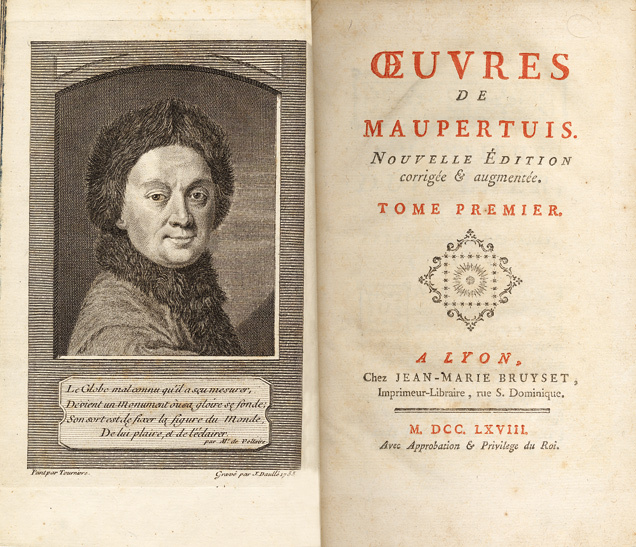
176815501Lyon, Jean-Marie Bruyset, 1768 ; 4 tomes in-8 ; veau fauve marbré, dos à faux-nerfs, décorés et dorés, pièces de titre et de tomaison grenat, filet doré sur les coupes, tranches marbrées (rel. de l'époque) ; (4) faux-titre et titre en rouge et noir à chaque tome ; XXXVI, 309, (3) pp. ; IV, 431 pp., (1 bl.), (1) f. blanc ; IV, 468, (4) pp. ; VIII, (12), 346, (4) pp., nombreuses figures ; portrait en frontispice gravé par J. Daullé d'après Tournière et carte hors-texte de l'arc méridien mesuré au cercle polaire au Tome 3.
Bononiae, typis Io. Baptistae Ferronij, 1665, in-4, piccolo, legatura in piena pergamena floscia (la pergamena è coeva ma legatura è stata rimontata con sguardie che, se pur in carta antica, non sono quelle originali), pp. 48. Con una tavola in calcografia più volte ripiegata. In fine sono ripetuti i dati editoriali, con una marca in xilografia. Prima edizione di questa rara relazione del passaggio della cometa su Bologna il 16 settembre 1664: la tavola mostra la traiettoria della cometa - che è anche raffigurata in basso, con la sua lunga coda - e il suo passaggio attraverso alcune costellazioni tolemaiche, registrato in numerose posizioni diverse, delle quali vengono date, in una tabella, anche la longitudine e latitudine. Ivano Dal Prete per il Dizionario Biografico degli Italiani: "Nel 1664 [il Montanari] osservò l’apparizione della grande cometa utilizzando un telescopio e un reticolo filare di propria costruzione. La misura della parallasse, e quindi della distanza dalla Terra, gli consentì di porre la cometa ben al di là della Luna, contro le concezioni aristoteliche che consideravano le comete un fenomeno sublunare (Cometes Bononiae observatus, Bononiae 1665). Tuttavia, egli non riteneva probabile che si trattasse di corpi stabili soggetti a ritorni periodici, vedendovi piuttosto momentanee condensazioni dell’etere interplanetario, un’opinione che non verrà scossa nemmeno dalle osservazioni delle grandi comete del 1680-82". Gemignano Montanari fu, da giovane, in stretti rapporti con il matematico fiorentino P. del Buono, uno degli ultimi allievi di Galileo che lo iniziò a un approccio in filosofia naturale tipico della scuola galileiana e dell’Accademia del Cimento. La sua attività nel campo astronomico si esercitò in rami diversi: effemeridi, osservazioni di comete, di stelle variabili, teorie planetarie e solari. Per primo segnalò nel 1668 la variabilità della stella Algol, fondamentale inizio del moderno studio sistematico delle variazioni di splendore delle stelle. Nelle sue frequenti polemiche demolì con vigore parecchie dottrine antiquate: prima tra tutte quella delle influenze astrologiche. Riccardi II, 170.