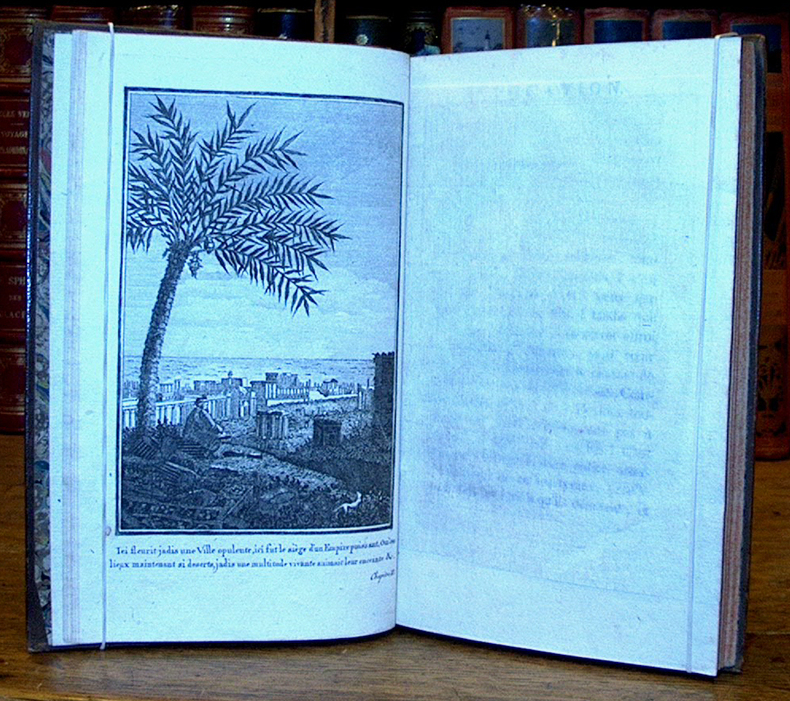
VOLNEY (Constantin François Chasseboeuf, Comte de)Livre Rare Book
766 résultats
1792000325Paris Desenne, Volland, Plassan 1792
181142810(London, W. Bulmer and Co., 1811 a.1814). 4to. No wrappers as extracted from ""Philosophical Transactions"" Year 1811-Part II. 269-336 and 2 engraved plates showing the shapes of 42 nebulae and star-clusters. And 1814 - Part I. Pp. 248-84 a. 1 engraved plate. Both fine and clean.
181142810London W. Bulmer and Co. 1811 a.1814. 4to. No wrappers as extracted from "Philosophical Transactions" Year 1811-Part II. 269-336 and 2 engraved plates showing the shapes of 42 nebulae and star-clusters. And 1814 - Part I. Pp. 248-84 a. 1 engraved plate. Both fine and clean. <br/><br/><em>First appearance of two milestone papers in cosmology in which Herschel demonstrates the irregular distribution of the stars in space and "for the first time recognized that the clusters in and near the Milky Way really belonged to it and were not independent systems that happened to lie in the same direction as seen by us."Berry Short History of Astronomy p. 340."In 1811 and 1814 the papers offered he published a complete theory of a possible process wherby the shining fluid consisting a diffused nebula might gradually condense - the denser portions of it being centres of attraction - first into a denser nebula or compressed star cluster then into one or more nebulous stars lastly into a single star or group of stars. Every supposed stage in this process was abundantly illustrated from records of actual nebulae and clusters which he had observed."Berry."Illustrated with many examples at every stage these papers 1811 a. 1814 showed brilliantly how dynamic changes can be inferred from virtually static evidence; and Herschel concluded by characterizing the Milky Way in its present stage of dissolution as "this mysterious chronometer". DSB VI p. 333. A paper by Henry Kater attached: "Further Experiments on the Light of the Cassegrainian telescope compared with that of the Georgian". 1814. Pp. 231-247. </em> unknown
167514546Paris, Guillaume Desprez, 1675 ; in-16 ; plein veau havane granité, dos à nerfs décoré et doré, titre doré, roulette sur les coupes (reliure de l'époque) ; (36) (titre, Epistre, Préface et Table), 457 pp., (1) p. de Privilège, 59 figures et schémas dont 13 hors-texte.
Very Good Turkish, Ottoman (1500-1928) Original decorative 1/4 leather bdg. Demy 8vo. (22 x 15 cm). In Ottoman script. 13, 2, 362 p., 1 plate, 17 numerous ills. [RARE OTTOMAN EDITION of COSMOGRAPHY by GILLEMIN & BRIEUX] Kozmografya yahud ilm-i ahvâl-i sema. Prep. and translated by Hasan Bedreddin. Amédée Guillemin was a French science writer and a journalist. Guillemin started his studies at Beaune college before taking his final degree in Paris. From 1850 to 1860 he taught mathematics in a private school while writing articles for the Liberal press criticizing the Second French Empire. In 1860, he moved to Chambéry where he became a junior deputy editor of the weekly political magazine La Savoie. After the annexation of Savoy by the French empire, he returned to Paris where he became the science editor of l'Avenir national (The Nation's Future). Guillemin presently started writing books of physics and astronomy which became very popular. He wrote "The Sky" which was translated into many languages. His major work, "The Physical World", consisted of five large volumes. His publisher, Hachette, encouraged him to write a series of booklets about astronomy and physics under the title "Small popular encyclopaedia", a scientifically sound but accessible collection about sciences and their applications. French astronomer Jacques Crovisier from the Observatoire de Paris suggests he may have been a source of inspiration for Jules Verne's 1865 novel, From the Earth to the Moon. Charles Auguste Briot was a French mathematician who worked on elliptic functions. The Académie des Sciences awarded him the Poncelet Prize in 1882. This is the rare translation of "Ele?ments de cosmographie" by Guillemin & Briot in the Turkish / Ottoman world. Second Edition. Özege 11206.; TBTK 11733.; Only two copies in OCLC: 949501098.
Very Good Turkish, Ottoman (1500-1928) In contemporary brown cloth bdg. with marbled boards. Spine re-backed masterfully. Minor fading on edges. Pages are clean. Demy 8vo. (21 x 12 cm). In Ottoman script (Old Turkish with Arabic letters). 178, [1] p. Litho. Melhame (c. Melâhim) as a term used to mean the great and bloody war that resulted in many casualties; the prophecies based on a prophecy on the future and destiny of the world, the universe, religions, states and societies, the astrologers making predictions based on astrology, and the saints based on discovery and inspiration; It means expressing big, important, terrible, horrible events or their symptoms that will take place in the future as well. In addition, melhâmes are weather forecasts based on meteorological observations. Daniel is said to be the originator of these works. Melhâmes are widespread in the Middle East, particularly in Mesopotamia. The most famous of melhâmes in Turkish is Yazici Salih's "Melhâme-i Semsiyye". This mathnawi [i.e. in prose], which is one of Cevri's well-known works, was composed of the rewriting of Semsiyye, written by Yazici Salih in 811 (1408), in 1044 (1635). This melhâme of Cevrî is smaller than the original (which is 4788 couplets) with its 3617 couplets, which include very interesting astrological and astronomical prophecies in prose. Cevrî Ibrahim Çelebi, (1596-1654), was a Mevlevî Turkish / Ottoman diwan poet and calligrapher. It has a decorative and ornamental head (serlevhâ) with traditional flowers including the calligraphic title "Melhâme-i Cevrî, aleyhi rahmet ül-Bârî", and it starts with Basmala. During the book, the text is separated into two blocks except for subheadings. Some pages have marginal texts and words originally. On the ketebe page, it's stated that the calligrapher of this book is Isfahanîzâde Mehmed Riza. A good example of lithography. Only two copies in OCLC (Harvard University, University of California, Los Angeles) 81057529.; National Library of Turkey 001255744.; TBTK 7482.
15424Paris, Bibliothèque Chacornac (La Roche sur Yon, Vendée, Petite Imprimerie Vendéenne ; puis Mayenne, Imprimerie Ch. Colin ; puis Paris, Imprimerie Bonvalot-Jouve) ; 1904 - 1905 - 1906 ; 3 volumes in-8 ; demi-veau vert foncé et coins de percaline verte, dos muet (reliure ancienne). 1904 : N°1 à 12 : (4) faux-titre et titre général, 576 pp. et astrolable mobile de 2 volvelles. 1905 : N°1 à 12 : (4), 576 pp. 1906 : N°1 à 11-12 : 384 pp. Très nombreuses figures.
64 pages. Author's inscription upon title page appears to read "yath ch aw? iyus al? always be happy" Author has signed using her Salish name which is Kwulasulwut, which means 'Many Stars". In this blend of original and traditional Salish stories, the magical characters pass through many magical experiences and adventures. In each story the young reader travels on a journey through both nature and the supernatural, and at the end discovers one of life's lessons, just as they were once revealed to Salish children by their traditional Storyteller. Author lives in Nanaimo, B.C. where she teaches Native Studies and the Coast Salish language. The five tales which make up this book have been adapted from stories which author uses to teach her students at Nanaimo area elementary schools about Native traditions and culture. Illustrator is a Nootkan artist from Nuchatlitz on Nootka Island. Soiling and above average wear to colour-illustrated boards. Doodling upon back board. Front endpaper removed. Erasures from remaining portion of front endpaper. Book
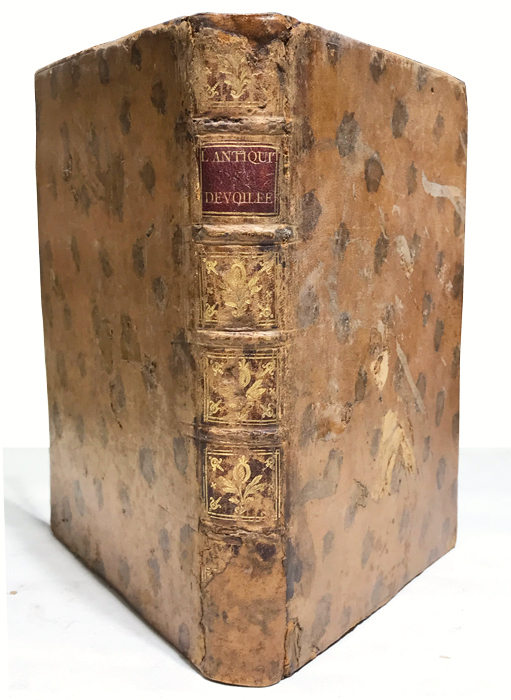
17663142Amsterdam, Marc Michel Rey, 1766 ; in-4 ; plein veau fauche tacheté, dos à nerfs décoré, pièce de titre bordeaux, tranches rouges cirées (reliure de l'époque) ; VIII pp., 412 pp.
180345133(London, Bulwer and Co., 1803 a. 1804). 4to. Without wrappers as extracted from ""Philosophical Transactions of the Royal Society of London."" Year 1803-Part II. Pp. 339-382 and 2 engraved plates. a. Year 1804-Part II. Pp. 353-384 a. 1 engraved plate. Light browning to a few margins. 2 plates with scattered brownspots, otherwise clean and wide-margined.
180345133London Bulwer and Co. 1803 a. 1804. 4to. Without wrappers as extracted from "Philosophical Transactions of the Royal Society of London." Year 1803-Part II. Pp. 339-382 and 2 engraved plates. a. Year 1804-Part II. Pp. 353-384 a. 1 engraved plate. Light browning to a few margins. 2 plates with scattered brownspots otherwise clean and wide-margined. <br/><br/><em>First appearance of these fundamental paper in cosmology and physics as they contains the FIRST OBSERVATIONAL DATA TO SUPPORT THAT NEWTON'S DYNAMICAL LAWS HOLDS OUTSIDE THE SOLAR SYSTEM. Herschel shows here that the circulating motions of double-stars were under gravitational forces. Until then the validity of the law of gravity was only established within the solar system. Now a century after the establishment of the law it was traced out in the motion of incredibly distant stars and the theory first truly earned its title of Universal. The exact proof of the mutual gravitation of the double-stars was only obtained five years after Herschel's death when the motions of the stars were more precisely dtermined.One of the most notable of Herschel's discoveries of double-stars binary stars. A first cataloque of such pairs was published early in 1782 and contained 269 of which 227 were new discoveries. "Twenty years after the publication of his first cataloque Herschel was of Michell's opinion - Michell had expressed the opinion that the odds in favour of a physical relation between the members of Herschel's newly discovered double stars were "beyond arithmetic" - but was able to support it by evidence of an entirely novel and much more direct character. A series of observations of Castor presented in two papers in the "Philosophical Transaction" in 1803 and 1804 the paperS offered which were fortunately supplemented by an observation of Bradley's in 1759 had shewn a progressive alteration in the direction of the line joining its two components of such a character as to leave no doubt that the two stars were revolving round one another; and there were five oher cases in which a similar motion was observed.it was shown that the double-star was really formed by a connected pair of stars near enough to influence one another's mortion."Berry in "A Short History of Astronomy" pp. 342-43. </em> unknown
198116127JLos Angeles: Privately Published 1981. Oblong octavo black cloth with a color pictorial cover with embroidered onlay of the title. 76 pages. This is a fine facsimile reproduction of the autograph book circulated by the cast and crew of the movie Hook to visitors to the sets as the fabulous Neverland and pirate ship sets became a must see among Hollywood elite with an invitation highly prized. A series of 10 superb color photographs from the production has been added at the front. With a full-page message from director Steven Spielberg and literally hundreds of autographs including the signature and usually a brief comment or job definition sometimes with drawings. Distributed as a personal memento for the cast and crew of the film production and thus very scarce. Among the many dozens of autographs shown are Steven Spielberg Julia Roberts Robin Williams Dustin Hoffman Bob Hoskins Glenn Close Demi Moore Laura Dern Denzel Washington Kate Capshaw Billy Crystal Penny Marshall Whoopi Goldberg Twiggy Warren Beatty Holly Hunter Amy Irving George Lucas Richard Donner Quincy Jones Barry Levinson Peter Bogdanovich Sid Sheinberg Terry Semel Michael Ovitz Peter Guber Jon Peters Debra Winger Kevin Costner Gena Rowlands Mel Gibson Danny Glover Lea Thompson Richard Dreyfuss Sean Connery Jon Voight Tim Burton Laura San Giacomo Richard Gere James L. Brooks Michelle Pfeiffer Brian De Palma Robert Zemekis Eliott Gould Carrie Fisher Pee-wee Herman Drew Barrymore Henry Thomas Irvin Kershner Liza Minnelli Harold Ramis Renny Harlin John Singleton Mick Fleetwood Gary Oldman Terry Gilliam Forest Whittaker Maurice Sendak Danny De Vito Martin Short Jack Valenti Michael Eisner Jeff Bridges Susan Sarandon Tim Robbins Christian Slater Ed Lauter M. Emmet Walsh Oliver Platt Ray Stark Polly Platt Richard Zanuck Glenn Caron Lea Thompson Wendy Wasserstein Lasse Helstrom Wolfgang Peterson Steven Seagal Charlie Sheen Milos Forman Jimmy Smits Christian Bale Frank Marshall Kathleen Kennedy John McTiernan etc. Privately Published hardcover books
182054235London, Tayler and Hessey, 1820. origi.Pappband, 4°, 101 Seiten. Particulary those that are useful for finding the longitude and latitude at sea. With twelve planishpheres.
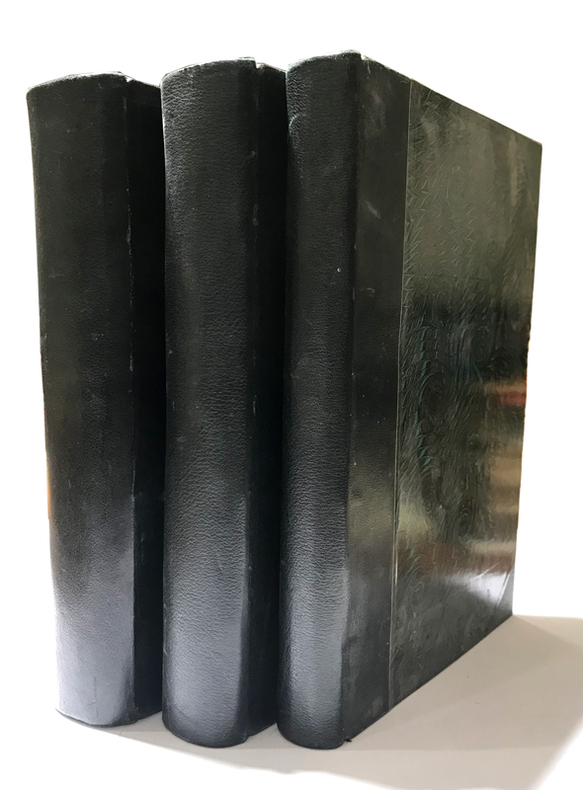
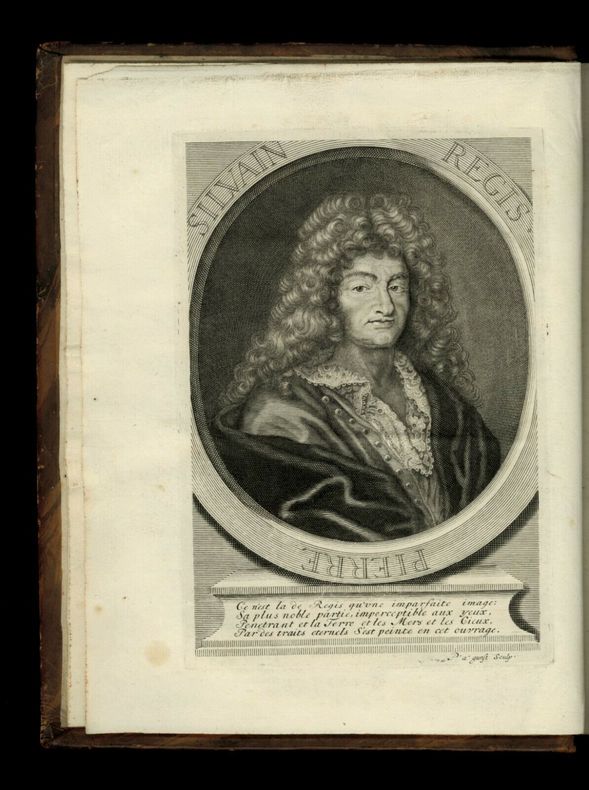
1691AMO-3782Cours entier de philosophie ou Système général selon les principes de M. Descartes, contenant LA LOGIQUE, LA MÉTAPHYSIQUE, LA PHYSIQUE ET LA MORALE. Par Pierre Silvain Régis. Dernière édition, enrichie d'un très-grand nombre de figures, et augmentée d'un discours sur la Philosophie ancienne et moderne, où l'on fait en abrégé l'histoire de cette science. Sur l'imprimé de Paris, A Amsterdam, aux dépens des Huguetan, M. DC. LXXXXI. [1691]. 3 volumes in-4 (25 x 20 cm) de 1 portrait-frontispice de l'auteur, (82)-480-(90), (16)-648-(48) et (16)-544-(43) pages. Nombreuses figures dans le texte (gravures sur bois et à l'eau-forte), une carte dépliante. Reliure de l'époque plein veau brun moucheté, dos à nerfs richement ornés aux petits fers dorés, tranches mouchetées de rouge. Reliures très bien conservées. Quelques frottements. Un petit manque de cuir sur un plat (sans gravité, un coin légèrement usé. Intérieur frais malgré quelques cahiers roussis ou brunis comme cela est constaté dans les autres exemplaires de cette édition. Onglets de parchemin. Seconde édition augmentée. La première édition a paru à Paris l'année précédente (1690), sans le portrait, sans la Préface (par Coste) et sans le Discours sur la Philosophie ancienne et moderne. "Parmi les cartésiens, seul Régis (1632-1707), a donné un système complet. Sa physique inclut une genèse des astres par les tourbillons, une discussion sur diverses explications de la pesanteur, des expériences hydrostatiques, pneumatiques, magnétiques, la mention des "volcans", la description d'instruments alors nouveaux (hygromètre, thermomètre, baromètre). Parmi les météores il mentionne la colonne de nues récemment décrite par F. Lamy. Surtout, ce qui n'avait pas été étudié par Descartes et ses disciples, il consacre tout un livre au développement des plantes et à la production de nouvelles variétés. Il termine son livre par une remarquable description des divers types de locomotion animale, en s'inspirant d'un ouvrage cité de Borelli et pour la reptation d'un autre de Perrault. Il reprend également les expériences de Redi contre la génération spontanée, décrit les fièvres et les principales maladies et la genèse des qualités sensibles. Sur l'imagination il emprunte beaucoup à Malebranche et il suit Descartes dans la description des passions". (G. Rodis-Lewis, Dictionnaire des philosophes). Les 3 volumes contiennent : TOME 1 : Des perceptions considérées en elles-mêmes et par rapport à leurs objet - De la manière de connaître par abstraction et de rendre les idées singulières générales et les idées générales particulières - Du raisonnement - De la méthode en général - De l'analyse - De la métaphysique - De la volonté - Ce que c'est que le mouvement et le repos - Loix du mouvement - Description d'une machine propre à faire les expériences qui sont nécessaires pour l'intelligence des règles du mouvement - Des règles du mouvement - Des tourbillons - Mouvement des planètes. - TOME 2 : Physique (du nombre, des points, de l'usage des cercles, observations sur le soleil, sur les étoiles, des pôles, mouvement de la lune, système de Tycho-Brahé, De la terre et de ses propriétés, de la dureté en général - Des plantes - Du cœur - Du cerveau - Des nerfs. - TOME 3 : Physique (description des organes de la génération de l'homme et de la femme, de la respiration, circulation du sang dans le fœtus, des fièvres, des sens, de la lumière, des couleurs, de la vision, de la dioptrique, des lunettes, des microscopes, de l'imagination, fonctions du jugement, de la raison, de la mémoire, des nerfs, des passions de l'âme, de la morale - etc. Pierre Sylvain Régis (1632–1707) was a French Cartesian philosopher and a prominent critic of Spinoza. Known as a philosopher, he was nominated to the French Academy of Sciences in 1699. Born at La Salvetat de Blanquefort, near Agen, he had a classical education, and then went to Paris. He attended the lectures of Jacques Rohault, and became a follower of the philosophy of René Descartes. He then taught the principles of Cartesianism at Toulouse (1665), Aigues-Mortes, Montpellier (1671), and Paris (1680). The prohibition issued against the teaching of Cartesianism put an end to his lectures. His major work was his Cours entier de philosophie ou Système général selon les principles de Descartes (3 vols., Paris, 1690), where he presented in a systematic way the principles of Cartesian philosophy. Opposed to Malebranche's idealism, against which he wrote in the Journal des Savants (1693 and 1694), Régis modified the system of Descartes on various points in the direction of empiricism. He denied that the human soul has innate and eternal ideas, maintained that all our ideas are modifications of the soul united to the body and that we can know our body and extension as immediately as our soul and thought. The Cours was criticized by Pierre Daniel Huet and the Parisian Professor Jean Duhamel. Régis then wrote Réponse au livre qui a pour titre Censura philosophiæ Cartesianæ (Paris, 1691), and Réponse aux reflexions critique de M. Duhamel sur le système cartésian de M. Régis (Paris, 1692). Among his other works were Usage de la raison et de la foi, ou l'accord de la raison et de la foi, with a Réfutation de l'opinion de Spinoza, touchant l'existence et la nature de Dieu. Provenance : P. B. Verdonck (signature ex libris - de l'époque - sur la première garde blanche du premier volume). Verdonck est un patronyme répandu à Amsterdam et aux Pays-Bas. Bel exemplaire, très pur, en agréable condition d'époque, de ce livre important pour l'histoire du cartésianisme.
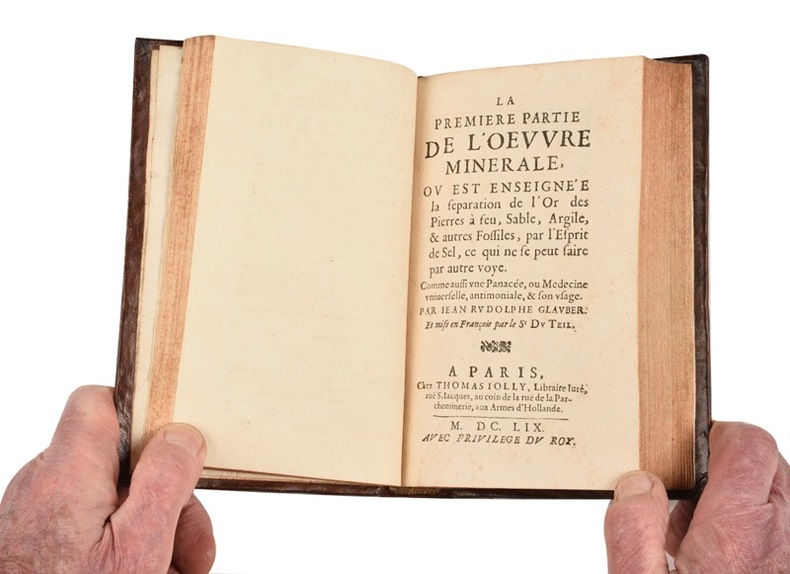
21548- Annotations sur l’appendix de la cinquiesme partie des “Fourneaux philosophiques”, où il est traitté de plusieurs secrets inconnus, et utiles. Mises en lumière, en faveur des incrédules et ignorans par Jean Rudolphe Glauber. Et traduites en françois par le Sr Du Teil. 62 pp., [1] f.bl. (Stanislas de Guaïta 1421-352)- L’Oeuvre minérale : La Première partie... ou est enseignée la séparation de l’or des pierres à feu, sable, argile, et autres fossiles, par l’esprit de sel, ce qui ne se peut faire par autre voye. Comme aussi une panacée, ou medecine universelle, antimoniale, et son usage. 64 pp.- L’Oeuvre minérale : La seconde partie... De la naissance et origine de tous les métaux et minéraux ; de quelle façon ils sont produits par les astres, sont composez d’eau et de terre, et reçoivent diverses formes. En faveur des curieux. 48 pp.- L’Oeuvre minérale : La troisième partie... ou commentaire sur le livre de Paracelse, appelé “le Ciel des Philosophes”, ou le livre des vexations, dans lequel sont enseignées les transmutations des métaux ; avec un appendix touchant la fonte, la séparation, et les autres opérations nécessaires. 111 pp., [1] bl.- La teinture de l’or ou le véritable or potable ; sa nature, et sa différence d’avec l’or potable, faux et sophistique. Sa préparation spargique et son usage dans la médecine. 22 pp., [1]f.bl. (Caillet 4588 - Stanislas de Guaïta 625)- Traité de la médecine universelle, ou le vray or potable. C’est à dire, une exacte description de la vraye médecine universelle, et de l’admirable vertu qu’elle exerce sur les végétaux, animaux et minéraux. Pour servir de clair flambeau au monde aveugle, luy enseignant le moyen de discerner le mensonge d’avec la vérité ; et de secourir les pauvres malades abandonnez. 61, [1] pp., [1] f.bl. (Stanislas de Guaïta 352 - Lenglet Du Fresnoy p.177)- La Consolation des navigants. Dans laquelle est enseigné à ceux qui voyagent sur mer un moyen de se garantir de la faim et de la soif, voire mesme des maladies qui leur pourraient survenir durant un long voyage. 64 pp. (E.O. trad. Caillet 4569 - Stanislas de Guaïta 352).
In -folio, pp. (28), 511 (ma 482, mancano le ppp. 429-458, in questa copia sostituite con fogli bianchi), 2 tavole doppie, bella marca editoriale al colophon. Legatura in mezza pelle. Prima edizione molto rara dell’opera completa di Tolomeo tradotta in latino, a cura di Gemuseo (Hieronymus Gemusaeus) e Giorgio di Trebisonda (Trapezuntius): al frontespizio sono elencate le opere con i rispettivi traduttori. La copia è arricchita da due rare tavole doppie, qui perfettamente conservate, incise a legno da Johannes Honter (1498-1549), e che rappresentano le volte celesti figurate, quella Boreale e quella Australe: si tratta di due mappe rarissime, che per la prima volta accompagnano l’opera di Tolomeo, incise dall’umanista ungherese e ispirate a quelle del Dürer, che e presentano due novità assolute: sono le prime mappe a rappresentare le costellazioni in modo geocentrico (cioè viste dalla Terra: quelle di Dürer mostrano una visione dall’esterno), ed è anche il primo caso noto in cui le figure indossano vestiti contemporanei: “These two woodcut maps are noteworthy for both their geocentrism and their novel constellation style. Whereas Dürer’s maps, the first important printed single-sheet maps, showed the stellar universe as from the outside, Honter’s were the first important printed […] showing the stars as seen from earth. Other cartographers who quickly adopted Honter’s point of view were Piccolomini and Postel […] Honter dressed five of the male figures - Auriga, Bootes, Erichtoni, Perseus and Orion - in contemporary fashions, with belted tunics and flamboyant hats” (D. Warner, “The Sky Explored, Celestial Geography, Theatrum Orbis Terrarum, 1979, pp. 123-26). Quest’esemplare è purtroppo scompleto, nel testo, delle pagine da 429 a 458. A first rare edition of the complete works of Ptolomaeus traslated into latin. This copy is enriched by the two woodcut plates by Johannes Honter: very rare, it’s the first time these plans accompany a printed text: “These two woodcut maps are noteworthy for both their geocentrism and their novel constellation style. Whereas Dürer’s maps, the first important printed single-sheet maps, showed the stellar universe as from the outside, Honter’s were the first important printed […] showing the stars as seen from earth. Other cartographers who quickly adopted Honter’s point of view were Piccolomini and Postel […] Honter dressed five of the male figures - Auriga, Bootes, Erichtoni, Perseus and Orion - in contemporary fashions, with belted tunics and flamboyant hats” (D. Warner, “The Sky Explored, Celestial Geography, Theatrum Orbis Terrarum, 1979, pp. 123-26). This copy is unfortunately uncomplete in the text part, missing pp. 429-58.