343 résultats
193946634Shanghai: Nishimura Company 1939. Edition not stated. Quarto 26.5cm; black simulated leather stamped in red and gilt in brown paper slipcover; unpaginated photo-illustrated plates w/ rice paper overlays. Wear minor scuffs and soiling to boards; toning and foxing intermittent throughout text especially on overlays; some overlays creased or torn. Slipcover worn and chapped with abrasions and two large one repaired tears across front panel. Photo-illustrated pastedowns and endpapers. Very Good in Good slipcover. All text in Japanese with some obsolete/antiquated kana/kanji oriented right to left. This is a privately-issued commemorative yearbook-type photo album shashin-cho published on behalf of the Imperial Japanese Army medical forces during the Second Sino-Japanese War 1937-1945. Specifically it was produced for those who served under military physician captains/commanding officers Nobuo Isa and Tetsuo Fukaya who were stationed in or near Shanghai at the time.<br /> <br /> By July 1939 the Imperial Japanese Army was beginning to feel the impact of its own mounting casualties and costs; the Chinese Red Army would launch a major offensive later that November. While the Japanese occupation of Shanghai was notably brutal there is little evidence of violence in this album. However some photographs do depict the aftermath of battle with ruined buildings and soldiers being treated for injuries. Other subjects are mundane in nature: Staff and group portraits hospitals and other facilities physicians at work company events and ceremonies. Also includes photographs of Shanghai and a fold-out map of the Hangzhou Bay area. Apparently not cataloged in OCLC or available commercially as of November 2019. Nishimura Company unknown
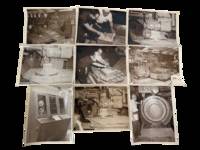
1960233821960. Industrial factory photograph archive documenting large scale machining systems automated tooling equipment and precision manufacturing processes during the height of postwar American industrial expansion circa 1960s. Several scenes feature Sundstrand branded machinery associated with the Sundstrand Corporation a major Rockford Illinois manufacturer of machine tools aerospace components and industrial automation systems during the Cold War industrial economy. By the 1960s American factories increasingly relied on massive numerically controlled machining equipment capable of producing aircraft parts turbine components and heavy industrial hardware with levels of precision unattainable in earlier manually operated machine shops. These photographs record the physical scale of that transition capturing the integration of computerized or semi automated production systems into factory environments that formed the backbone of aerospace defense transportation and heavy manufacturing industries during the period.<br /> <br /> Photo archive of 9 Large Silver Gelatin photographs each 8" x 10" circa 1960s. Interior factory scenes show enormous industrial machining centers occupying tiled production floors beneath overhead lighting and exposed structural systems. Multiple photographs depict large circular indexing tables rotary cutting assemblies suspended tooling heads and enclosed control units bearing visible "Sundstrand" identification. Engineers and machinists wearing shop coats and protective glasses appear adjusting tooling mechanisms calibrating machine components and servicing cutting assemblies surrounded by heavy cables hydraulic systems and banks of industrial controls. Several machines are shown actively engaged in metal cutting operations with curled metal shavings accumulating beneath rotating tooling heads and across surrounding platforms. One scene captures technicians removing or fitting a large machined component beneath a circular cutting apparatus while another documents reel based electronic control equipment integrated into the production system reflecting the growing use of automated process control in industrial manufacturing during the decade.<br /> <br /> The 1960s marked a decisive transformation in American manufacturing as industries shifted from conventional machining toward automated and numerically controlled production methods capable of supporting aerospace engineering military procurement automotive manufacturing and mass industrial output. Companies such as Sundstrand played a central role in supplying the specialized tooling and machine systems that allowed factories to machine increasingly complex metal components at industrial scale. Some curling scattered edge and surface wear as well as foxing to margins; images remain sharp with strong detail. Overall in good condition. The photographs preserve direct visual evidence of the machinery labor practices and production environments that defined late midcentury industrialization before many such facilities were modernized outsourced or dismantled during later waves of deindustrialization. unknown
Arvidsson, GöstaIn Pristine Condition. unknown
19782091202133101534Sanseisha 1978. Soft Cover. Fine. Volume: 1 Sanseisha paperback
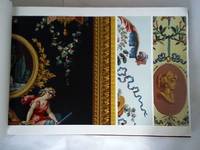
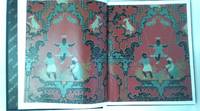
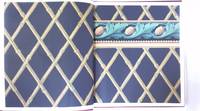
1q20008TZuber & Cie Rixheim um 1996. 26 Tapeten-Mustertafeln mit Bordüren original Leineneinband mit goldgeprägtem Deckeltitel und Schraubbindung Imperial-folio ca. 73 x 59 cm etwas bestoßen/am unteren Einbandrand durch Ablösung einer Nummer farbabweichend/hinterer Vorsatz Textbeigabe entfernt. - sonst gute Erhaltung / Text französisch - unknown
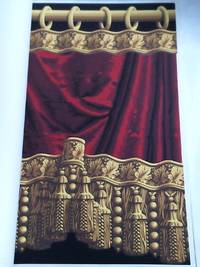
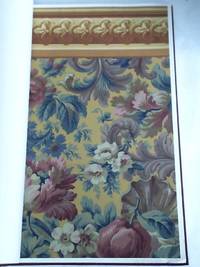
1q20010TZuber & Cie Rixheim um 1996. 38 Tapeten-Mustertafeln teils mit Bordüren jeweils durch kartonierte Seiten begrenzt original Leineneinband mit goldgeprägtem Deckeltitel und Schraubbindung Imperial-folio ca. 49 x 735 cm Einband leicht fleckig/etwas bestoßen/Titelseite mit leichten Knickspuren/am unteren Rand ein Feuchtigkeitsschaden dadurch fleckig/Atelier-Aufkleber auf Einband. - Dekors des 19. Jahrhunderts / Text französisch - unknown
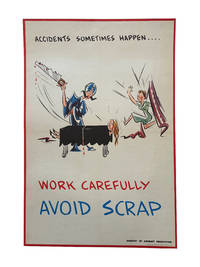
005079London: Ministry of Aircraft Production for H.M.S.O. Colour lithographic poster linen backed approximately 530mm x 780mm with backing poster being approximately 490mm x 740mm in size n.d. c. 1944. Lightly creased from old folds one tiny hole and one very small scuff to background otherwise quite bright and clean. Printed by J. Weiner for H.M.S.O. First Edition. Unbound. Good. Illus. by Harrison Nat. Double Elephant. Poster. Ministry of Aircraft Production for H.M.S.O. Paperback
2005572110112037The Time Factory 2005-08-01. Calendar. Good. Book has writing inside. The Time Factory unknown
191645078Chicago and New York:: Paris Garters made by A. Stein & Co. ca. 1916. Some light foxing; but extremely attractive. Consisting of a sample men's garter and men's arm band each with original printed cardboard mounting set into the original box illustrated in color with two attractive young ladies gathering roses. The garter "No metal can touch you" was patented in 1908 and 1914; the armband was patented 1916. Paris Garters, made by A. Stein & Co., unknown
19782091202133209362Not Available 1978. Soft Cover. Fine. Volume: 1 Not Available paperback
1m20000TZuber & Cie Rixheim 1970. Ca. 48 Tapeten-Mustertafeln mit Bordüren original Leineneinband mit goldgeprägtem Deckeltitel und Schraubbindung Imperialfolio-quer ca. 65 x 43 cm Einband leicht fleckig und gering berieben/Einbandecken leicht bestoßen/Vorsatzseite gering fleckig. - sonst gutes Exemplar / Dekore des 19. Jahrhunderts / Text französisch - unknown
1q20004TZuber & Cie Rixheim um 2000. 25 teils doppelblattgroße Tapeten-Mustertafeln original Leineneinband mit goldgeprägtem Deckeltitel und Schraubbindung Imperial-folio ca. 455 x 481 cm Einbandecken gering berieben. - sonst gutes Exemplar / Dekors des 19. Jahrhunderts / Text französisch - unknown
19892092902143801627Osaka Association of Architects 1989. Soft Cover. Fine. Number of books: 1 book Osaka Association of Architects paperback
19892092902143901403Osaka Association of Architects 1989. Soft Cover. Fine. Number of books: 1 book Osaka Association of Architects paperback
Lindblad, ThomasIn Pristine Condition. unknown
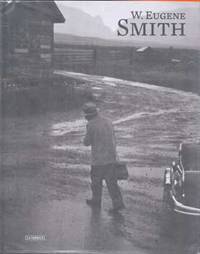
75-8168Madrid: La Fabrica Editorial 2008. Fo. Cloth Hard Cover ca. 240 pp. First Edition. B&W Plates. Version with Cover Image from Page 47. Very Good. Dust Jacket also Very Good with Creasing. Includes Belly Band of Terra Cotta Paper. Oversize Book May require extra Shipping ChargesWilliam Eugene Smith was born in 1918 in Wichita Kansas. He took his first photographs at the age of 15 for two local newspapers. In 1936 Smith entered Notre Dame University in Wichita where a special photographic scholarship was created for him. A year later he left the university and went to New York City. After studying with Helene Sanders at the New York Institute of Photography in 1937 he began working for News-Week later Newsweek. He was fired for refusing to use medium-format cameras and joined the Black Star agency as a freelancer……Smith worked as a war correspondent for Flying magazine 1943–44 and a year later for Life. He followed the island-hopping American offensive against Japan and suffered severe injuries while simulating battle conditions for Parade which required him to undergo surgery for the next two years……Once recuperated Smith worked for Life again between 1947 and 1955 before resigning in order to join Magnum Photos as an associate. In 1957 he became a full member of Magnum. Smith was fanatically dedicated to his mission as a photographer. Because of this dedication he was often regarded by editors as “troublesome.â€â€¦.A year after moving to Tucson to teach at the University of Arizona Smith died of a stroke. His archives are held by the Center for Creative Photography in Tucson Arizona. Today Smith’s legacy lives on through the W. Eugene Smith Fund to promote “humanistic photography†founded in 1980 which awards photographers for exceptional accomplishments in the field. Madrid: La Fabrica Editorial, 2008 hardcover
75-8167Madrid: La Fabrica Editorial 2008. Fo. Cloth Hard Cover ca. 240 pp. First Edition. B&W Plates. Version with Cover Image from Page 109. Very Good. Dust Jacket also Very Good with Creasing Abrasions now in Protective Mylar Cover. Oversize Book May require extra Shipping ChargesWilliam Eugene Smith was born in 1918 in Wichita Kansas. He took his first photographs at the age of 15 for two local newspapers. In 1936 Smith entered Notre Dame University in Wichita where a special photographic scholarship was created for him. A year later he left the university and went to New York City. After studying with Helene Sanders at the New York Institute of Photography in 1937 he began working for News-Week later Newsweek. He was fired for refusing to use medium-format cameras and joined the Black Star agency as a freelancer……Smith worked as a war correspondent for Flying magazine 1943–44 and a year later for Life. He followed the island-hopping American offensive against Japan and suffered severe injuries while simulating battle conditions for Parade which required him to undergo surgery for the next two years……Once recuperated Smith worked for Life again between 1947 and 1955 before resigning in order to join Magnum Photos as an associate. In 1957 he became a full member of Magnum. Smith was fanatically dedicated to his mission as a photographer. Because of this dedication he was often regarded by editors as “troublesome.â€â€¦.A year after moving to Tucson to teach at the University of Arizona Smith died of a stroke. His archives are held by the Center for Creative Photography in Tucson Arizona. Today Smith’s legacy lives on through the W. Eugene Smith Fund to promote “humanistic photography†founded in 1980 which awards photographers for exceptional accomplishments in the field. Madrid: La Fabrica Editorial, 2008 hardcover
12102Schauman catalogue: Jyväskylä Finland. 1932. Harbord catalogue: Harbor Plywood Corporation Chicago Illinois and Hoquiam Washington. 1930. Schauman catalogue: 59pp 4to consisting of 9pp. of letterpress and 50pp. of collotype illustrations. In original cream printed wraps with cover printed in red. In good condition. Written entirely in English with informative captions. Harbord catalogue: 16pp. 12mo. In original wraps printed in yellow and black. Stapled pamphlet on art paper. In good condition with staples beginning to rust. With numerous illustrations of 'the spacious new home of E. W. Daniels Vice-President of the Harbor Plywood Corporation and manager of its Door units'. The final page carries a list of 'Points About the Plywood Home' the first being that it was 'Erected at Hoquiam Washington 1930.' Schauman catalogue: Jyväskylä, Finland. 1932. Harbord catalogue: Harbor Plywood Corporation, Chicago, Illinois, and Hoquiam, W paperback
1q20005TZuber & Cie Rixheim um 2000. 22 Tapeten-Mustertafeln mit Bordüren original Leineneinband mit goldgeprägtem Deckeltitel und Schraubbindung Imperial-folio ca. 46 x 48 cm Einband gering fleckig/Einbandecken etwas berieben/Altelier-Aufkleber auf Einband. - sonst gutes Exemplar / Text französisch - unknown
19882091502135419339Not Available 1988. Soft Cover. Fine. Number of books: 1 Not Available paperback
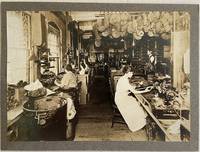
1900178581900. Women at Work Albumen photo of women at work in a small factory. Photograph measures 7.75" x 5.5" inches and is on gray photographer's board measuring 8.5" x 6.5" inches. Circa 1900s. Albumen print. Women sitting at long wooden tables in small manufacturing shop. Palm-sized rings hang in loops from the ceiling and can be seen scattered throughout the photo. One woman in a long white dress holds length of material looking it over while another sitting behind her and across and wooden aisle looks away from the camera toward her desktop. Two other women can be seen seated behind her further back into the shop. A man in shirt and vest appears to be observing the women at work while another man at the back of the shop appears to be using some sort of pressing device. It's unclear what's being manufactured but the details of materials and workplace layout give rich details to take in. The women would have been part of a growing female workforce utilized to support production in the midst of industrialization. Overall very good condition. unknown
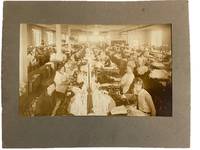
1920173461920. 1920s vintage sepia photograph of around 50 women at work in a textile factory. The photographer's board is 10" x 8" inches and image is 8.25" x 5" inches. The women are seated in long rows and armed with sewing machines and seem to be turning bundles of cloth into garments. Spools of thread hang down from a center rail in the middle of the table to be fed into the sewing machines. Some of the cloth appears to be polka-dotted similar to the dresses that several women pictured appear to be wearing. The factory is consisted almost entirely of women - there is one man in a waistcoat walking around accompanied by an older woman. The working women seem to be of varying ages from their early 20s into their 50s. Textile manufacturing was unique at the time for its overwhelmingly female labor force. Sepia toned very good condition with great detail. unknown
1871165651871. Women Employment Labor To the Right Honorable Richard Assheton Cross M.P. Secretary of Sate for the Home Department. 1871. 4 pages. 8 x 5 in. In this document women workers express fears regarding proposed labor regulations that would limit their ability to earn and would "restrict the paid labour of all women.or even make all married women half-timers." They claim it is unjust treatment that would harm women workers and pit their marriages at odds with their ability to work: "Your Memorialists assert that it is unjust to place restriction son the labour of unmarried women for the presumed protection of married women or mothers and further that any special restrictions upon the labour of married women is practically a penalty imposed on marriage as regards to the woman." Document that reveals the competing priorities for women factory workers between workplace safety and their earning power. Chipping with small losses along top and right edge. Repairs to two tears on page 2. Top left corner missing. Good only. unknown
BN328630Imagebooks & Stationery. Hardcover. Auf der Wiese- DE <br/><br/>Auf der Wiese- DE ImageBooks Factory Imagebooks & Stationery hardcover
2022BN228970ImageBooks Factory BV 2022. 2022. Handpopboek - Kom je Spelen - Schaap: Kom je spelen <br/><br/>Handpopboek - Kom je Spelen - Schaap: Kom je spelen ImageBooks Factory ImageBooks Factory BV unknown