Schaefer, Inc.MareMagnum

687 résultats
190 pages. Duo-tang binding. Many diagrams and black and white illustrations. Silver lettering and company crest on front cover. A very detailed service manual for refrigeration units manufactured by Schaefer Inc. which was established in Minneapolis in 1929. Includes an extensive and very useful table of contents and index. This is a revised issue of a manual first published in 1946. Moderate wear. Unmarked. A sound copy. Book
19911268351991 Editions Flammarion - 1991 - In-4 relié, cartonnage toilé, titré en doré au dos et sur le premier plat, sous jaquette illustrée - 223 pages - Nombreuses illustrations en couleurs et en N&B, in et hors texte, dans l'ouvrage
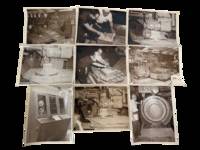
1960233821960. Industrial factory photograph archive documenting large scale machining systems automated tooling equipment and precision manufacturing processes during the height of postwar American industrial expansion circa 1960s. Several scenes feature Sundstrand branded machinery associated with the Sundstrand Corporation a major Rockford Illinois manufacturer of machine tools aerospace components and industrial automation systems during the Cold War industrial economy. By the 1960s American factories increasingly relied on massive numerically controlled machining equipment capable of producing aircraft parts turbine components and heavy industrial hardware with levels of precision unattainable in earlier manually operated machine shops. These photographs record the physical scale of that transition capturing the integration of computerized or semi automated production systems into factory environments that formed the backbone of aerospace defense transportation and heavy manufacturing industries during the period.<br /> <br /> Photo archive of 9 Large Silver Gelatin photographs each 8" x 10" circa 1960s. Interior factory scenes show enormous industrial machining centers occupying tiled production floors beneath overhead lighting and exposed structural systems. Multiple photographs depict large circular indexing tables rotary cutting assemblies suspended tooling heads and enclosed control units bearing visible "Sundstrand" identification. Engineers and machinists wearing shop coats and protective glasses appear adjusting tooling mechanisms calibrating machine components and servicing cutting assemblies surrounded by heavy cables hydraulic systems and banks of industrial controls. Several machines are shown actively engaged in metal cutting operations with curled metal shavings accumulating beneath rotating tooling heads and across surrounding platforms. One scene captures technicians removing or fitting a large machined component beneath a circular cutting apparatus while another documents reel based electronic control equipment integrated into the production system reflecting the growing use of automated process control in industrial manufacturing during the decade.<br /> <br /> The 1960s marked a decisive transformation in American manufacturing as industries shifted from conventional machining toward automated and numerically controlled production methods capable of supporting aerospace engineering military procurement automotive manufacturing and mass industrial output. Companies such as Sundstrand played a central role in supplying the specialized tooling and machine systems that allowed factories to machine increasingly complex metal components at industrial scale. Some curling scattered edge and surface wear as well as foxing to margins; images remain sharp with strong detail. Overall in good condition. The photographs preserve direct visual evidence of the machinery labor practices and production environments that defined late midcentury industrialization before many such facilities were modernized outsourced or dismantled during later waves of deindustrialization. unknown
Illustrated with 19 colour prints and over 200 black and white photographs as well as numerous line drawings. xxix, 265 pages. Includes Index. Blue cloth covers with gilt title on spine, foxing to page edges and lower edge of covers. Dust jacket has small tear and creasing to top edge of back and light wear to extremities.
1920134781920 percale grenat éditeur décorée à froid sur les plats - titre et décoration argent sur le dos et le premier plat grand in-octavo (garnet hard-back editor percale with blind-stamping decoration on the cover and title and decoration silver on the spine and tyhe front cover in-octavo) - mouillures sur les plats (waterstains on the cover), toutes tranches jaspées (all marbled edges), illustrations : figures in et hors-texte (pictures in text and full page engraving), XX+536 pages, 1920 à Paris et Liège Librairie Polytechnique Ch. Béranger Editeur,
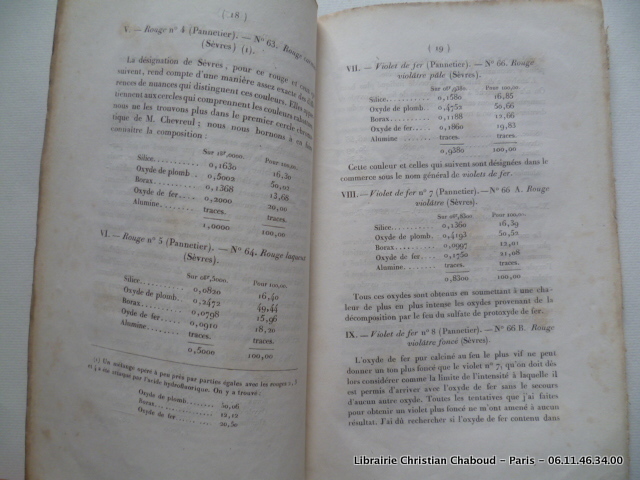
73208Paris, Imprimerie de Bachelier, in-8, plaquette sous couverture muette, circa 1850 pages. Bon état général.
1818, London, Archibald Constable & co, 1908., Bound, green leather, gilt title on spine, 21x14cm, 264pp.
61831N° 4 - 1977 - revue mensuelle illustrée - Couverture : Ange et factory - in-4 broché
18184Guarantee dated from Orwell Villa Cotham New Road Bristol; 24 August 1853. Engraving by Lavars Lithographer Bridge Street Bristol; undated. Guarantee: 1p. 4to. In fair condition on aged paper. Reads: 'Bristol 8mo 24. 1853 I hereby guarantee to the Great Western Railway Company payment for all the tickets which may be sold for the Cheap Trip to London on the 29th. Inst. undertaken by the promoters of the New Bedminster Temperance Hall Robert Charleton Orwell Villa Cotham New Road'. Written across the page in red ink: 'Cancelled M J Cairns'. Addressed by Charleton on reverse to 'The Manager Great Western Railway Company'. The engraving is on a 12 x 17.5 cm piece of paper. In fair condition with light signs of age and wear. Shows the outside of the hall with the caption 'Design for proposed Temperance Hall and Mechanics Institution Bedminster Bristol. Lavars Lithographer Bridge Street Bristol'. In pencil: 'Unaccepted plan' and 'Not accepted'. See Image. Guarantee dated from Orwell Villa, Cotham New Road, Bristol; 24 August 1853. Engraving by Lavars, Lithographer, Bridge Street, B unknown
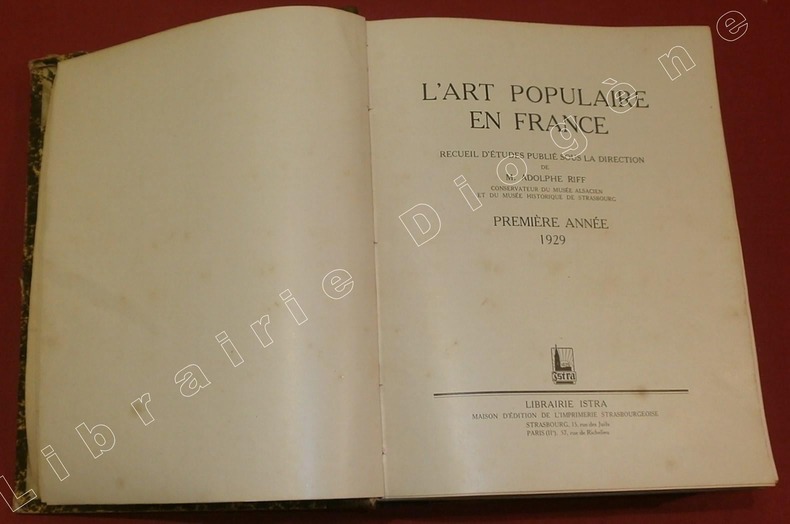
83812Strasbourg, Paris, Librairie Istra, Maison d'Edition de l'Imprimerie Strasbourgeoise, 1929-1933, 5 années reliées en 1 volume de 200x250 mm environ, 235-197-195-196-188 pages, demi basane brune, titres et fleurons dorés sur le dos, gardes marbrées avec un ex-libris de G. Jeanton sur la première. Nombreuses illustrations et figures. Des rousseurs, frottements sur la couverture, bon état pour le reste.
18555'The Queen's Prison i.e. the Fleet Prison Jany. 1. 1843.'. 1p. 4to. In fair condition on aged and worn paper with slight damage to corners caused by removal from album. For the context of the letter see Oastler's entry in the Oxford DNB which explains that he was nearing the end of a three and a half year sentence at the Fleet Prison for 'debts accumulated during his stewardship at Fixby' the charge being a 'Pretext' his 'campaign against the new poor law' having proved 'incendiary'. The letter begins: 'Maria! This comes from thy own Papa to wish thee a Happy new Year. I have just been wishing the same blessing - to dear mama.' The letter continues with warm and devout best wishes Oastler addressing his daughter as 'my Pet'. It concludes poignantly: 'I blow thee a Kiss while I assure thee that thou are indeed dear to thy own Papa & that he delights in his own child.' A postscript reads: 'P.S. Papa lives well and is well. A Hamper came to day - full of good stuff - Ham Pheasant Rabbit Chicken & mince pie. A Friend & I dine together on - Chicken Ham Sippet Pudding & mince Pie. Few bette<r> dinners in London to day! R O'. The Oxford DNB states that Oastler only had two children Sarah and Robert both of whom died in 1819. 'The Queen's Prison [i.e. the Fleet Prison ] | Jany. 1. 1843.' unknown
14957, Mercatorfonds / Fonds Mercator, 2004 relie, sous jaquette, 230 x 280mm., 320pp., 50 illustrations, dont 90 en couleurs ISBN 9789061535515.
awd-103New York, Kathmandu, Shivastan Publishing, 2004. In-8 agrafé, couverture bleue sur papier du Népal (24 pp.). Tirage à 200 ex. illustrés et signés au crayon. Dernier peintre et poète beat, proche de Warhol (pour qui il apparaît dans Kitchen et Chelsea Girls), Rene Ricard (1946, 2014) a aussi révélé Jean-Michel Basquiat dans Artforum en 1981. Très bon état.
0331315971.Ghardcover. Good. Access codes and supplements are not guaranteed with used items. May be an ex-library book. hardcover
0331041049.Gpaperback. Good. Access codes and supplements are not guaranteed with used items. May be an ex-library book. paperback
0331779293.Ghardcover. Good. Access codes and supplements are not guaranteed with used items. May be an ex-library book. hardcover
G8925888637I4N00Hak Sanmoonhwasa. Paperback. Very Good. May have limited writing in cover pages. Pages are unmarked. ~ ThriftBooks: Read More Spend Less.Dust jacket quality is not guaranteed. Hak Sanmoonhwasa paperback
No marks or inscriptions. No creasing to covers or to spine. A very clean crisp very tight copy with bright unmarked boards and no bumping to corners. Appears unread. 148pp. Story of the soap and food manufacturer from Port Sunlight, Ellesmere Port in the Wirral, Cheshire.
Slight marking. Light edge wear to cover. 8 3/8"w x 11"h. 130 pages. Sewn binding. Printed on heavy paper stock.
1902MRAMALB1Paris Imprimerie Lithographique Mongin 1902 Une plaquette cousue (31x24), couverture lithographiée, 8 ff. non chiffrés.
20042091202133212984Public Symposium “Distribution and Exchange in Medieval Warfare†Executive Committee 2004. Soft Cover. Fine. Volume: 1 Public Symposium “Distribution and Exchange in Medieval Warfare†Executive Committee paperback
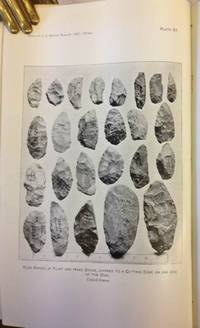
1897196997Smithsonian Institution Washington 1897. Booklet - Unbound Pages. Very Good Condition. A comprehensive study of stone projectile points and cutting tools analysing materials craftsmanship typology and function. The article draws on European and American examples supported by extensive plates and figures to illustrate technological development in early human cultures. This 1897 article written by Thomas Wilson was published in the Report of the Smithsonian Institution and provides a detailed study of prehistoric arrowpoints spearheads and knives. Wilson examines the materials craftsmanship and uses of these tools focusing on their significance in Paleolithic cultures across Western Europe and early America. He classifies different types of arrowheads and spearheads explaining their manufacturing techniques and functions from hunting and cutting to scraping and grinding. The article includes 65 plates and 201 figures offering microscopic details of flint and other stones used in tool-making. It remains an important reference for archaeologists and historians studying early human technology. 178 Pages 65 plates 201 figures. An authentic standalone article extracted from a larger volume. Not a reprint or reproduction but an original work in its own right. Supplied without title page or cover. Size: 16 x 24 cms. Category: Smithsonian Institution; Special Interest. Smithsonian Institution unknown
1989vf158Les Presses du Languedoc Dos carré collé 1989 In-8 (15,5 x 24 cm), dos carré collé, 222 pages, iconographie en noir et blanc ; dos et quatrième plat légèrement brunis, bel état. Livraison a domicile (La Poste) ou en Mondial Relay sur simple demande.
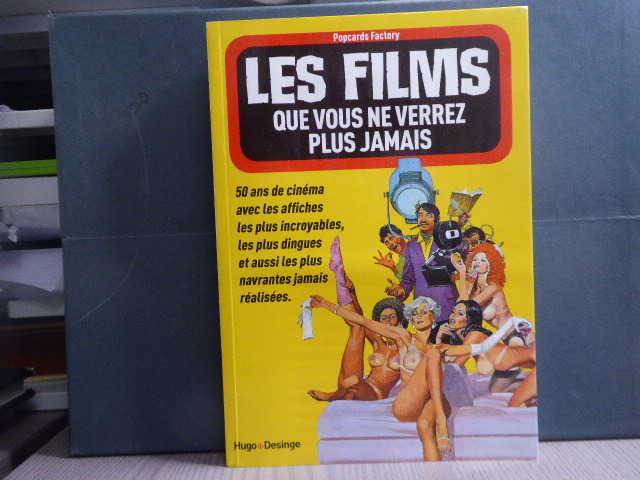
917175Hugo & Desinge S.L. 2014 In-8 carré ( 240 X 165 mm ) de 159 pages, broché sous couverture illustrée en couleurs. Très nombreuses reproductions d'affiches de cinéma en couleurs hors-texte. Très bel exemplaire.
booklet is in excellent condition. Binding is solid and square, covers have sharp corners, exterior shows no blemishes, text/interior is clean and free of marking of any kind. 15 pages with b&w photos, map. Sections include: Lithic raw materials, Principles of stoneworking, Manufacture of chipped stone tools, Pecking frinding and polishing, Determining prehistoric stone tool uses, Prehistoric craftsmanship, etc. references.