Ferber, Johann JakobAntiquariat.de

3 résultats
17933897Mit 18 Abb. auf 2 gefalt. gest. Tafeln. Halberstadt, in Kommission in der Buchhandlung der Grossschen Erben, 1793. 8vo. (17,1 x 10,5 cm). Titel, 92 S., 2 Bll. Zwischentitel u. Vorerinnerung, (S. 93)-166, 1 Bl. Inhalt. Einfacher Pappband d. Zt. mit Kiebitzpapierbezug. [3 Warenabbildungen]
170721533Utrecht, G. vande Water, 1707. 4°. Mit Holzschn.-Titelvignette u. 10 gefalt. Kupfertafeln. 6 Bll., 143 (1) S., 6 Bll. - Angeb. - Duverney, Guichard Joseph. Tractatus de organo auditus, continens structuram, usum et morbos omnium auris partium [...] e Gallico Latine versus. Nürnberg, J. M. Spörlin für J. Zieger, 1684. Mit 16 gefalt. Kupfertafeln. 6 Bll., 48 S., Blindgepr. Prgt. d. Zt. mit durchzogenen Bünden u. handschrift. Rückenschild.
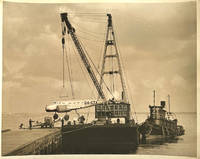
171961720Brooklyn NY: Brenack Inc. Moving & Shipping Co. Brenack Stevedoring Co. Inc. ca. 1917-1945. Two vols. 4to. 33; 70 leaves unnumbered. of archival mylar sleeves. Preserving 132 original photographs & negatives sized from 2.5 x 3.5 in. up to 8 x 10 in. many of them linen-backed including as well four 7.5 x 9.5 in. silver gelatin photos mounted on 8 x 10 in. studio boards all 4 w/ evidence of having been previously framed w/ old matting residue and mounting glue at fore-edges 2 original negatives; Vol. II’s majority of images are 8 x 10 in. several sized 4 x 6 in. and a few silver print negative prints with most of the images in both vols. bearing photographer’s imprint on verso w/in negative or embossed in lower fore-edge many w/ annotations several w/ typescript explanations occasional minor soiling edgewear some evidence that linen-backed were intended to be held in post-binder salesmen’s sample albums for the Brenack Co.; two TLS dated 1932 and second dated 1943 w/ several negative photo state silver prints to hand out to clients as endorsement letters during World War II. All now preserved in pair of cloth-bound 3-ring binders nearly all images with bright crisp contrast and excellent archive. This factory photo sales archive captures the innovations of Thomas P. Brenack 1882-1961 with his groundbreaking streamlined methods of employing vast warehouse spaces for disassembling packing and shipping of automobiles trucks aircraft and odd-sized industrial equipment overseas out of the Brooklyn NY docks during the opening decades of the 20th Century. Before FedEX UPS and other shipping companies became household names Brenack while working for B.J. Hall & Sons had concluded that the port of New York was so congested with freight awaiting shipment and every stevedoring enterprise overloaded with orders a new freight system was required. Subsequently beginning in 1916 he designed an entirely new system of specialist teams to quickly and efficiently disassemble and package difficult items as well as implementing better cranes upgrading flatbed trucks to carry the large shipping crates along with more systematic flow. Eventually the company developed logistics warehouses with capacity of 40000 tons of freight and entire lumber yards and companies fed the warehouses with supplies sufficient to disassemble and box up to 300 automobiles per day for shipment by sea along with other specialist items such as large amphibian clipper aircraft. Brenack Inc. employed several different commercial photographers including Rudy Arnold 1902-1966 Garcia & Zeuner Inc. Al Hoffmann Photo George W. King Commercial Photographers Union Photo Co. and even the photos of military freight shot by the U.S. Signal Corps. The first archive album opens with photos of a Mack Truck packed into a large crate being hauled by a 1924 Fordson Tractor followed by images of a open stave bed Mack Truck for the Orinoco Oil Company and image of a Mack Truck entirely disassembled and neatly in piles ready to be crated. Further images show Ford touring cars awaiting disassembly nested truck chassis being prepared for boxing along with images of a MACCAR dump truck and early Mack passenger buses. Many of the photos show the staged crates and frames to hold parts carefully boxed freight wooden boxes for M.S. Friede Co. and still more showing piles of boxed parts for shipment to the Soviet Union. Other images depict the vast warehouse floor filled with chain-driven conveyors and wooden crates unspecified drums being loaded into barges; aircraft parts from the Keystone Aviation Co.for the U.S. Navy being loaded into ships; followed by series of photos showing massive Sikorsky boxes 50 feet long being loaded from flatbeds. The second volume opens with images of the Brenack Inc. wooden boxes followed by series of photos capturing the company’s specialized service of shipping aircraft. Images encompass those of the Lockheed Electra fuselage with landing ear down onto the barge “Clermont;†Ford Tri-Motor parts loaded onto deck of a ship; stages of trucks being disassembled; vast piles of crates and boxes in warehouses along with a photo of the E.F. Ryman Lumber Co. yard and truck which was a supplier out of Wilkes-Barre PA. A 1932 letter to Brenack dated April 4 1932 outlines that “The equipment arrived there in very good shape with the exception of one job which had the case broken and showed signs of being roughly handled the lower crank case was cracked on this pumper. . . Everybody down there Bogota was pleased with these jobs.†The TLS is followed by series of photos showing the Mack Truck fire trucks operating and then crated for shipment to Colombia. Many other photos show the loading of several of Sikorsky S-43 “Baby Clippers†being disassembled and shipped which were used primarily for flights in the Caribbean to Cuba and within Latin America. Others depict the Naval versions of the Grumman G-21 Goose flying boars which were 8-seat commuter aircraft. Of particular interest are the several photos including silver prints of original negatives for the famed Martin M-156 “Russian Clipper†which had been rejected by Pan Am as they decided to use the Boeing 314 for the Clipper line in the Asia-San Francisco routes. The M-156 was packed up and shipped to the Soviet Union by Brenack where it flew with Aeroflot in the Soviet Union’s far-East routes under the designation of PS-30 flying until 1944. Also included is an original TLS from the Commanding officer of H.M.S. LST 428 of the British Royal Navy dated June 1st 1943 writing that “With reference to the cradles and securing of two tugs on the deck of this ship. You will be pleased to hear that your work stood the passage excellently and although at times we were rolling 35 degrees each side we hever had to touch any of your gear. . . .†Included in this archive are several photostat copies intended as promotional customer letters to hand out to Defense Dept. officials and other war materiel shippers during World War II. LST-428 was a tank landing ship transferred to the Royal Navy in Feb. 1943 after commissioning as part of Roosevel’s Lend-Lease program during the War and was returned to the US Navy June 10 1946 and decommissioned and scrapped by Oct. 1947. This cataloguer could find no similar archive of photos or even similar individual images in Institutional Collections; See: Germinal for Gravesend Bay The Success of a Brooklyn Boy Brooklyn Daily Eagle May 25 1919 p. 3; NY Marine News Service 1920. Brenack Inc., Moving & Shipping Co., Brenack Stevedoring Co., Inc., hardcover