Volney (Constantin-François de Chasseboeuf, comte de) :Livre Rare Book
1 451 résultats
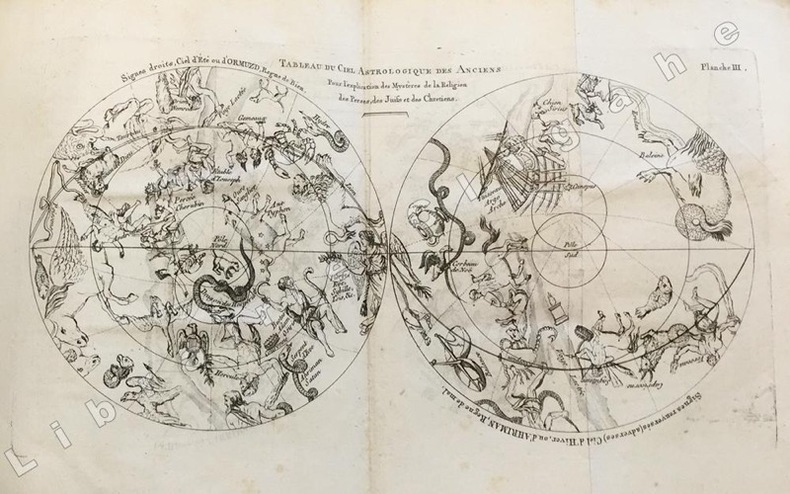
17914651Bourg, Louis Hyacinthe Goyffon, sans date (1791) ; in-4 ; demi-maroquin à grain long vert, dos lisse à faux-nerfs décoratifs dorés, fleurons et titre dorés (reliure du tout début XIXe) ; VIII, 242 pp. et 3 planches hors-texte.
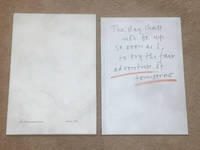
1979049674USA: I.B.M. 1979. Clean and tight and square with sharp corners. Published for the Data Processing Division for I.B.M. March 1979. Very little shelfwear. No dust jacket as issued. White boards with black lettering on the spine and black hand writing on the front with red underlining. Appears unread. Fold-out Bibliography. The slip case has just a tiny bit of soiling. Both the slip case and the book have the handmade paper qualities. Very rare. First Edition. Hardcover. Fine/Near Fine Slip Case. Folio - over 12" - 15" tall. Business Achievement . I.B.M. Hardcover
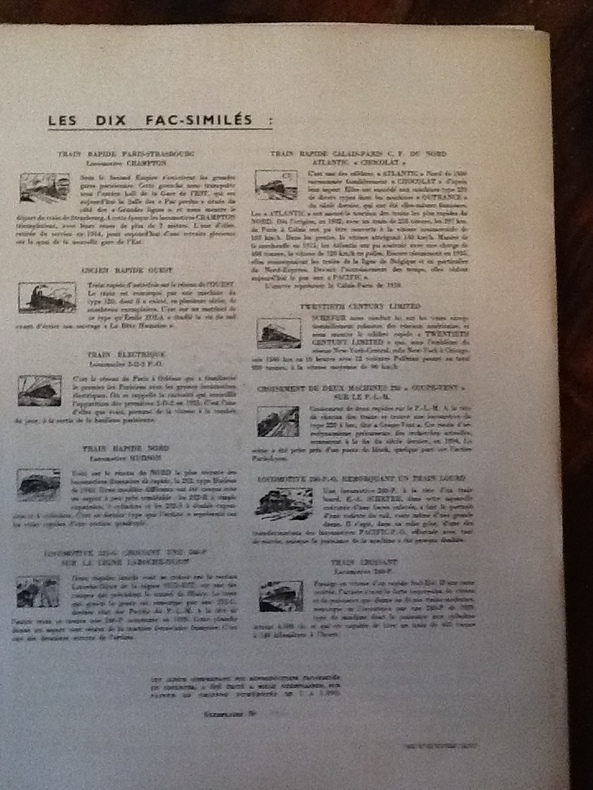
CCC-775mb. les dix fac-similes , cet album comprant dix reproductions fac-similés en couleurs, a ete edite a mille exemplaires, sur papier de chiffon numerote. format: 49 cm X 38,5 cm. Photos complementaires sur simple demande!
19902083002115706287Nigensha 1990. Soft Cover. Fine. Size: 31cm Number of books: 1 Nigensha paperback
N69P., Bernard, 1881. Texte in-4, 271pp., 171 fig. in-t., 13 planches gravées, album in-folio de 62 planches gravées, demi-chagrin.
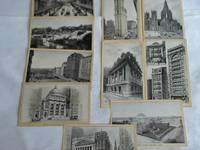
1h16175Singer New York 1905. 10 Fotokarten mit rückseitiger Beschreibung kartoniert a little bit spotted/etwas berieben. - nicht bei Köberich/Maße: 181 cm x 112 cm/enthalten: The Plaza-Fifth Avenue entrance to Central park/New York Clearing House Associated Banks/Columbia University Morningside HeightsStock Exchange Wall Street and Trinity Church/New Xork Chamber of Commerce/Typical New York Singer Shops/Central Park - The Terrace and Bethesda Fountain/Times Square North from 42d Street/Cathedral of St.John The Divine/The Bowery from Grand Street to Cooper Union - unknown
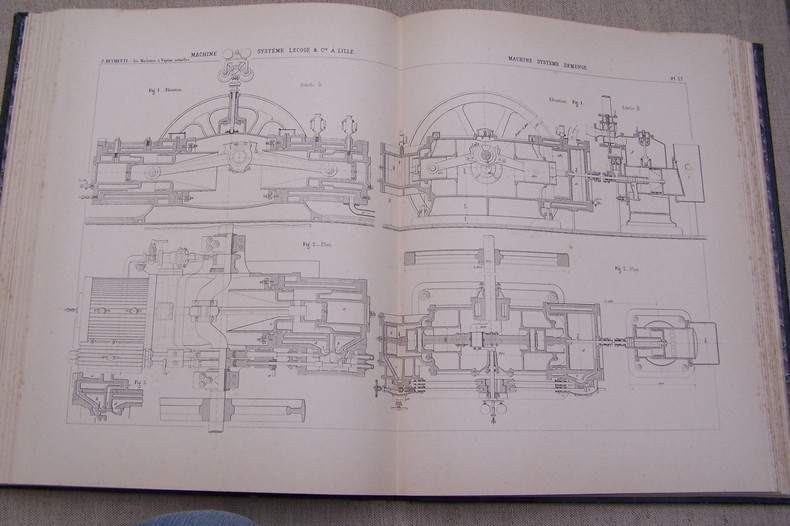
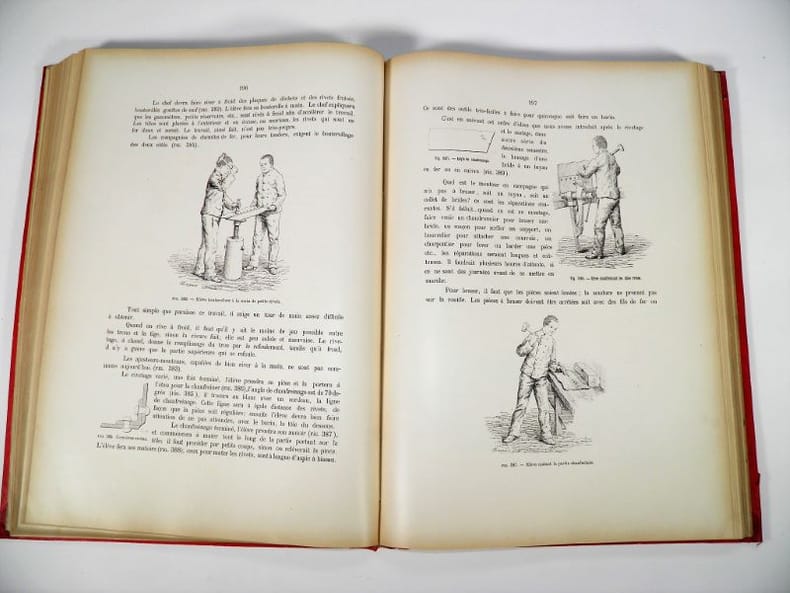
18892277Paris, Monrocq frères, éditeurs-Imprimeurs, 1889. Très grand in-4 – 31 x 42 cm. Reliure de l’éditeur en demi-percaline rouge, dos lisse, titre doré entre des triples filets dorés, filets à froid en encadrement des plats, titré doré sur le premier plat. 2 ff., 424 pp. Mécanique, partie élémentaire, seule publiée.Envoi autographe de l’auteur à son fils sur la page de faux-titre illustrée. Très rare, absent de la BNF et des collections publiques. Ouvrage illustré d'environ 3000 gravures dans le texte, 2 pages en couleurs sur l'acier trempé, 26 planches en noir et blanc avec explications en regard et 25 planches représentant des machines diverses.
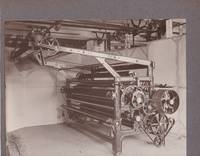
18908Archive consists of the trade catalog art work for cloth finishing and packaging machinery built by the Parks & Woolson Machine Co. of Springfield VT. The earliest art work 1890s was executed by the Lincoln & Smith Press of Boston then the James McKinnon Co. designers engravers and electrotypers of Springfield Mass. but all the 1920s work was by the Springfield Photo-Engraving Co. which may have been their successors. The normal procedure was for the artist to take a photograph in the earlier versions a mounted studio photograph then a "blue" from a glassplate negative then a glossy black & white photo and interpret it according to instructional notation. In the earlier work this was done by painting right on the photograph. But the 1920s work the majority of the collection is painted on separate board with tissue overlay. Some of the latest versions also have photographic proofs of the printing plate made from the artwork. In the marginal notes appear the names of some of Parks & Woolson's clients for specific machines: Renfrew Manufacturing Co.; Clinton Woolen Mfg. Co.; Lebanon Woolen Mills; Woonsocket Rubber Co.; Farr Alpaca Co. The names of such machines as have titles show the inheritance from the English textile manufacturing trade: Lancashire Winder and Uxbridge Inspecting Machine or their origin in the United States: the Vermont napper or the Pennsylvania plush shear and occasionally the inventor: Baird Webster P.T. Wilson etc. Parks & Woolson themselves were fond of strange combination words to describe their own multi-stage machines: Seamlethru; Transferotor. This archive shows in great detail the changes in a wide range of machinery to finish and fold or roll cloth over a crucial period in the textile industry as well as illuminating the interpretation of a machine photograph for half-tone duplication.
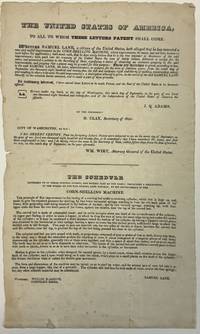
182525214Washington D.C. 1825. Printed broadside 8" x 13.5". Light toning untrimmed minor edgewear old folds couple of pinholes at junctions but not affecting any text. Very Good.<br /> <br /> This rare broadside announcement of a patent issued to Samuel Lane of Maine is signed in type by President John Quincy Adams Secretary of State Henry Clay and Attorney General William Wirt. It contains a complete Description "in the words of the said Samuel Lane himself" of his improvements to the corn-shelling machine. <br /> In 1828 Lane was the first to receive a patent for a combine. One of the witnesses to Lane's Description was William Blagrove probably the first full-time Patent Agent in Washington DC appointed in 1819.<br /> Not located on OCLC AAS Catalog American Imprints. unknown
182525214Washington D.C. 1825. Printed broadside 8" x 13.5". Light toning untrimmed minor edgewear old folds couple of pinholes at junctions but not affecting any text. Very Good.<br/><br/> This rare broadside announcement of a patent issued to Samuel Lane of Maine is signed in type by President John Quincy Adams Secretary of State Henry Clay and Attorney General William Wirt. It contains a complete Description "in the words of the said Samuel Lane himself" of his improvements to the corn-shelling machine. <br/> In 1828 Lane was the first to receive a patent for a combine. One of the witnesses to Lane's Description was William Blagrove probably the first full-time Patent Agent in Washington DC appointed in 1819.<br/>Not located on OCLC AAS Catalog American Imprints. unknown books
191344659New York 1913. <p>Tabulating Machine Company - C-T-R - IBM The Tabulating Machine Company. A business compass: Facts made immediately available for determining business policy. New York ©1913. Original gray printed wrappers. Very good. 48pp. Illustrated. 228 x 152 mm.</p> <p> Herman Hollerith a clerk at the U S Census Bureau invented the punch-card tabulator applying for his first patent in 1884; his punched-card system reigned as the primary large-scale data-processing system until the advent of the electronic digital computer. In 1896 Hollerith formed the Tabulating Machine Company; the British branch known as the British Tabulating Machine Company was formed in 1907 and remained connected to its American counterpart until 1949. Hollerith remained head of the Tabulating Machine Company until 1911 when he sold it to industrialist Charles R. Flint who renamed the company C-T-R. In 1915 Thomas J. Watson became president of the new company and in 1924 Watson renamed the company International Business Machines IBM. Origins of Cyberspace 373.</p> . unknown
191344659New York 1913. <p>Tabulating Machine Company - C-T-R - IBM The Tabulating Machine Company. A business compass: Facts made immediately available for determining business policy. New York ©1913. Original gray printed wrappers. Very good. 48pp. Illustrated. 228 x 152 mm.</p> <p> Herman Hollerith a clerk at the U S Census Bureau invented the punch-card tabulator applying for his first patent in 1884; his punched-card system reigned as the primary large-scale data-processing system until the advent of the electronic digital computer. In 1896 Hollerith formed the Tabulating Machine Company; the British branch known as the British Tabulating Machine Company was formed in 1907 and remained connected to its American counterpart until 1949. Hollerith remained head of the Tabulating Machine Company until 1911 when he sold it to industrialist Charles R. Flint who renamed the company C-T-R. In 1915 Thomas J. Watson became president of the new company and in 1924 Watson renamed the company International Business Machines IBM. Origins of Cyberspace 373.</p> . unknown books
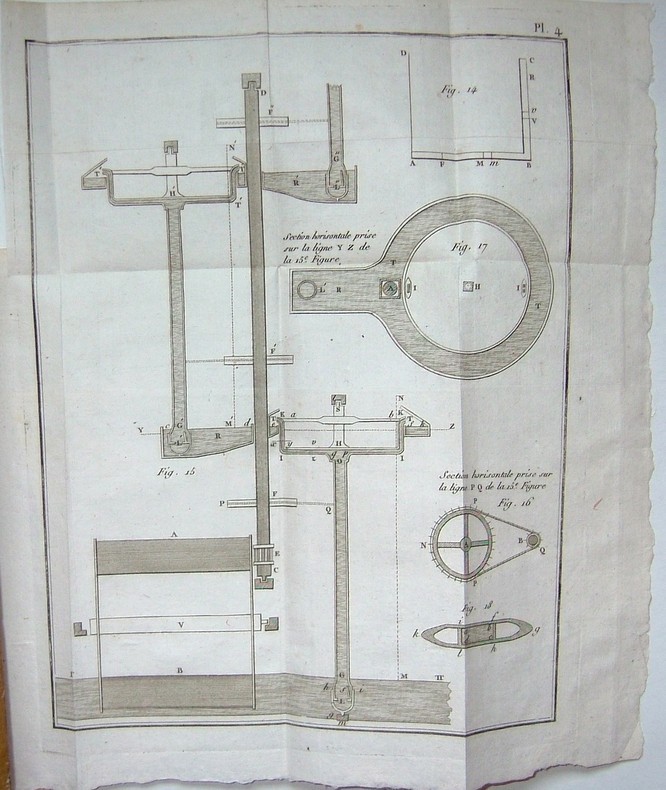
1777T1063A Paris, Chez Esprit 1777 – Avec 4 planches dépliantes en fin de volume. Contenant des recherches sur la manière de les calculer et de perfectionner en général leur construction, une méthode nouvelle pour construire les vaisseaux, la description de plusieurs machines nouvelles propres à porter l'hydraulique à un haut point de perfection et le détail d'un grand nombre d'expériences très intéressantes.
24417Bruxelles E-J Carlier In-8 29 numérosq 224 pp -8
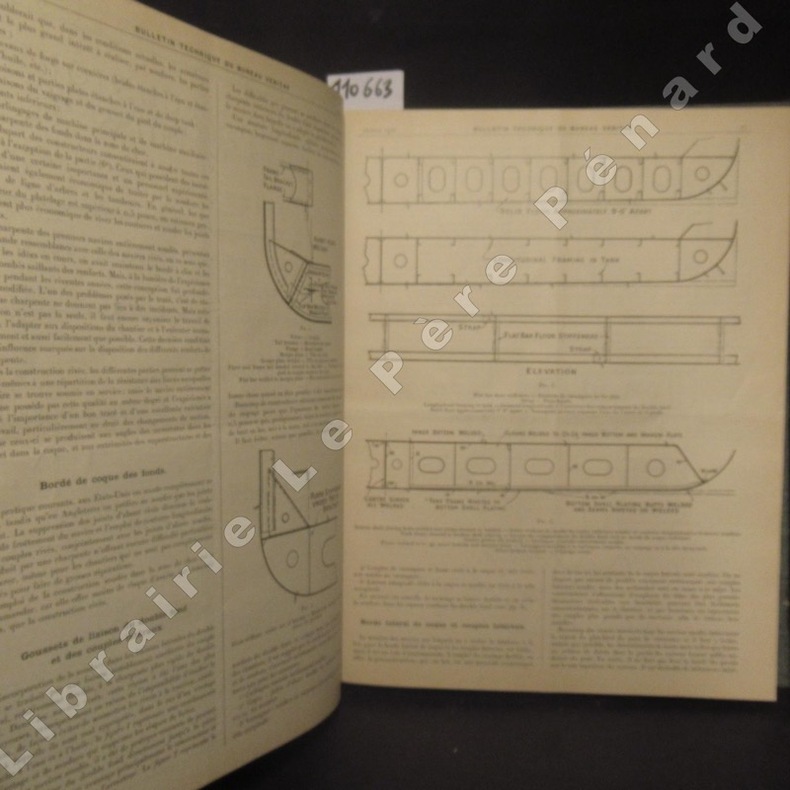
19511098441951 Du N° 1 de janvier 1951 au N° 12 de décembre 1951 - Année 1951 complète (33e année) - Bureau Veritas - Paris - Revue mensuelle - In-4, cartonnage toilé bleu - Dos toilé avec titre et année en dorés - Relié avec les couvertures et les pages de publicité - Illustrations en N&B
200011266Wien, [ohne Drucker], um 2000. Gicléedruck auf Büttenpapier, vom Künstler signiert und bezeichnet. Blattgröße: 40 x 32 cm.
196846401158New York, , The Museum of Modern Art, , 1968 ; petit in-4 carré, reliure métallique articulée, premier plat orné d'une composition en relief et en couleurs. (Reliure de l'éditeur). - Couverture intérieure avec une composition d'après Tinguely et 216 pp. EDITION ORIGINALE du catalogue de cette exposition organisée à New York par Pontus Hulten. Cette exposition était dévolue à l'intrusion de la machine dans l'art. Notices et illustrations sur Mélies, Boccioni, Man Ray, Ribemont-Dessaignes, Max Ernst, Popova, Moholy-Nagy, Fernand Léger, Ettore Bugatti, Calder, Magritte, Malevitch, Duchamp, Picabia, Bellmer, Tinguely, Oldenburg, Takis... Très beau spécimen de reliure "" pop art""."
64 pages. Features: Parker pen inside front cover features colour illustration of composer Henry Purcell; Colour Canada Dry ad; How the War Looks after Five Years; Editorial on Canadian inflation and Community Chest issues; Bright one-page GM ad features illustration of anti-aircraft crew in battle; Mr. Pemberton's Commission (short story); Hell Passage (short story); The Scientists Made it Possible - photo-illustrated article on military advances such as the Piat projector, which can penetrate the turrets of German tanks, and Britain's "Human Torpedoes"; Ghosts Don't Talk (short story); The Millionth Guest (short story); Canada's massive newsprint industry - article with wonderful photos; Roads rule the war - article with photos of roads being manually constructed in Northern Ireland and Burma; One-page ad by the Government of Canada entitled "One Man's Income is Another Man's Outgo" encourages wartime price stability; One-page black and white photo ad for Kodak features Sgt. F.L. "Bill" Perry of 58 King St., Summerside, P.E.I. with W)2 A.M. Casey of Peterborough, Ontario; Very militaristic one-page Gooderham & Worts, Limited ad explains their war alcohol production and shows air raid in progress; Bank of Nova Scotia (BNS) ad shows prospector and proclaims "Free Enterprise Made Canada's Mines"; Anaconda Copper & Brass ad features photo of Johnnie Religa, machine operator who came to Canada in 1909 from Piotrkow, Poland and now owns a home in New Toronto; Nice two-colour Cutex ad promotes their Honor Bright nail polish; Kitchen article on Pickling; Nice colour half-page ad for Clark's Governor Sauce; Reviving the age-old art of wine-making; Colour photo of Mary Sieburth's very popular Golliwogg doll; Fashion illustrations; One-page Singer sewing machine photo ad; Women of Canada and the cost of clothing; Charlie McCarthy colour-comic featured in Chase & Sanborn ad; World Sayings; Excellent colour Fort Truck/Military Vehicle ad shows war and farm applications of their products; Rare back cover colour ad for the Canadian Women's Army Corps says "The Canadian Army Needs More Women!", and requests questions to Lt. Dora Sweet of Ottawa; and more. Unmarked with moderate wear. A quality vintage copy. Book
BN107706IVAM Centre Julio Gonzalez. Hardcover. Francis Picabid <br/><br/>Francis Picabid IVAM Centre Julio Gonzalez hardcover
19692080502106912543Not Available 1969. Soft Cover. Fine. The book is in fine condition. Not Available paperback
Very Good Turkish, Ottoman (1500-1928) First and Only Edition of this extremely rare first user guide for the Ottoman market for a sewing machine manufactured by the Singer Company. This richly illustrated user guide in Ottoman Turkish, printed for "28 K" model (manufactured in 1882) of Singer sewing machines includes numerous diagrams showing the parts of the machine and threading the needle, sewing techniques, using the belt wheel and foot pedal, measuring techniques, the thickness of needles and threads, and how to detect and avoid counterfeits of the brand. In Ottoman Empire, Singer sewing machines were initially started to be offered for sale in Constantinople and Smyrna (today's Istanbul and Izmir) in the 1880s, soon after Isaac Merritt Singer & Company was incorporated with Edward B. Clark, Attorney-at-law from New York in 1851. The company opened its first dealer/dealership in the last period of the Imperial Ottoman at Cadde-i Kebîr [i.e. Istiklâl Street] in Pera, and became the first foreign company to open a dealer/dealership and issue an invoice in Turkey. As the first company to use the "direct marketing" method, Singer went to mountain villages in Turkey, together with its salespersons, instructors, and technicians, who were in charge of showing and informing people on how to use Singer sewing machines, for many years. Singer was the first company to prepare user's guides, to provide extensive service, to initiate the practice of "Guarantee Coupon", to deliver training on sewing - embroidery, and to introduce gas stoves and ovens to Turkish people. In addition, Schneidertempel (Tailors Synagogue), which was founded in 1894 by Mayer Schönman, who was the tailor of Sultan Abdulhamid II in the Ottoman palace, and the head of the tailor's guild at that time, broke the monopoly of male tailors in the Ottoman Empire and led the way for every woman to do sewing at home. At the beginning of the 20th century, free sewing courses for women started to be organized by Singer in Turkey. Furthermore, Singer played a role in the history of all leading garment-industry brands of Turkey. (Source: Official Singer Website - History). ABOUT ZELLICH PRINTING HOUSE: Antonio Zelic (Zellich) of Brela was one of many Dalmatians who left his homeland in pursuit of a better life during the 19th century. However, instead of going west, he set out toward the East, to the Ottoman imperial capital - Istanbul. Upon arrival in the city on the Bosphorus, Zelic found employment at the first lithographic print house founded by Henri Cayol in the Ottoman Empire. In 1869, Zelic opened his own lithographic print house called "Zellich and Sons" (A. Zellich et fils). His descendants continued his work with great success, and the Zellich Print House, now known as "Zellich Brothers" (Zellich frères), became one of the most renowned in the Empire. The Zellich Brothers won recognition due to the high quality of their products, and, above all, the amazing beauty of their postcards and posters. Their crowning achievement was an order for the printing of the Ottoman Turkish Lira banknotes in 1914. The Zellichs received many Ottoman and international awards, including medals conferred by the Pope, the Persian shah, and the Serbian king.". (Source: Documentary film "Zelic- Printers to the Empire", Levantineheritage). Original illustrated wrappers. Roy. 8vo. (24 x 16 cm). In Ottoman script (Old Turkish with Arabic letters, pre-1928). 24 p., [24] unnumbered b/w engraved ills. Heavily stains on top of the pages, a trace of folding. Overall a good copy. Özege 15450.; Only one institutional copy in the Library of Congress according to the WorldCat: OCLC 125421484.
19481106631948 Du N° 1 de janvier 1948 au N° 12 de décembre 1948 - Année 1948 complète (30e année) - Bureau Veritas - Paris - Revue mensuelle - In-4, cartonnage toilé bleu - Dos toilé avec titre et année en dorés - Relié avec les couvertures et les pages de publicité - Illustrations en N&B
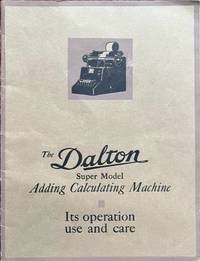
192258968Cincinnati OH: The Dalton Adding Machine Sales Co. 1922. 4to. 48 pp. Numerous photo illustrations text illustrations diagrams 1 printed in red & black. Illustrated tan softcovers lavender-coloured borders lozenge cover illust. of Dalton Super Model Machine minor shelfwear slight rubbing still VG bright copy. First edition of this uncommon promotional instruction manual and catalogue for the famed Dalton Adding Calculating Machine Super Model -- considered to be the first ten key adding machine. Dalton 1866-1926 was a successful amateur mechanic and businessman who was brought into developing the first adding machine by William & Hubert Hopkins who desperately needed money to finance their manufacturing. They set up a company in 1902 but afterwards through some secret and possibly illegal business moves by Hopkins who secretly sold his stock to the Addograph Co. Dalton managed to buy control of all rights to produce and develop adding machines and patented the invention by 1904. He would often carry a large sample machine with him fitted with glass sides to show the workings demonstrating his calculating machine becoming so successful that by 1922 over 150 models were available and over 50000 machines sold. After Lewis’ death the company was sold and merged with Remington-Rand in 1927. Worldcat locates 3 copies Oakland Pub. MT Hist. Soc. Ohio Hist. Connctn.; See: Dalton Adding Machine - Complete History of the Dalton Adding Machine History Computer Oct. 19 2021; The Computer Museum No. 106. The Dalton Adding Machine Sales Co., paperback
191444664London 1914. <p>Muldivo Calculating Machine Company. The Muldivo calculating machine. Made in France. London n.d. ca. 1914. Original printed wrappers. 12pp. Illustrated. 248 x 187 mm. VG. Advertising brochure published by the British branch of the Muldivo company. The brochure includes views of Muldivo's French factories. Origins of Cyberspace 340.</p> . unknown
191444664London 1914. <p>Muldivo Calculating Machine Company. The Muldivo calculating machine. Made in France. London n.d. ca. 1914. Original printed wrappers. 12pp. Illustrated. 248 x 187 mm. VG. Advertising brochure published by the British branch of the Muldivo company. The brochure includes views of Muldivo's French factories. Origins of Cyberspace 340.</p> . unknown books