Johan Huijsing M Jeroen FonderieBiblio.com

163 résultats
697859346Springer pp. 208 . Papeback. New. Springer unknown
63075652Springer pp. 212 . Hardback. New. Springer hardcover
1993Q-0792393171Springer 1993-02-28. Hardcover. New. In shrink wrap. Looks like an interesting title! Springer hardcover
19321190New York: J.B. Hirsch Foundry 1932. Original. Grey Metal and Celluloid. Near Fine. Signed on the side with "JBH" device. Classic set of bookends adapted from a sculpture by the French artist Ruel. In excellent condition. J.B. Hirsch Foundry unknown
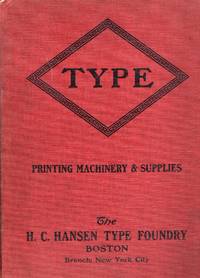
19099032930Boston: H. C. Hansen Type Foundry 1909. Hardcover. Very good. 384 pages. 12 x 9 inches. Bound in red cloth printed in black on the spine and front cxover. Shows exterior wear but tight and clean. <br/><br/> H. C. Hansen Type Foundry hardcover
187823581Louisville KY: Richmond and Lousville Medical Journal Book and Job Steam Press 1878. Paperback. Mr. Livingston's signed copy of a pamphlet pertaining to Florida as a suitable "health resort" for Northern patients by Frederick Lente MD. Dr. Lente 1823 - 1883 was the primary surgeon at the West Point Foundry Cold Spring NY during the Civil War. He served at the Foundry from 1851 to 1870; later he was head of gynecology and children's health at the University of the City of New York and founder of the American Academy of medicine.<br /> <br /> Livingston was a member of a family of the Hudson River Valley which at one point owned some 900000 acres of land and about three dozen mansions in the area giving the area the nickname "Livingston Valley".<br /> <br /> 8vo 56pp errata slip bound in. Printed paper wrappers. Wrappers chipped at edges and marked. Good condition but fragile. OCLC: 1648852. Richmond and Lousville Medical Journal Book and Job Steam Press paperback
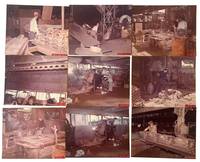
1970234811970. California metal foundry photo archive depicting integrated casting and machining operations during the decade when the state's traditional ironworks industry entered rapid decline under new environmental regulation OSHA enforcement foreign competition and industrial automation. California supported more than 2000 foundries during the mid twentieth century supplying cast metal components for construction transportation agricultural machinery shipbuilding and regional manufacturing before widespread closures accelerated during the late 1970s and 1980s. Passage of the Occupational Safety and Health Act in 1970 and expansion of California air pollution controls brought intensified scrutiny to foundries because of silica dust exposure furnace emissions grinding particulates and high heat production environments. The archive preserves the internal workflow of a functioning foundry and machine shop while older labor-intensive production methods were beginning to disappear from California industry.<br /> <br /> Photo archive of 17 large chromogenic color photographs 8 x 10 inches California circa 1970s. Red operational captions identify sequential production stages including "Boring mill" "Sand-mill" "Charging" "Toe-miller" "Grinder" "Lining" "Furnace" "Molding" and "Shakeout" effectively tracing the movement of cast metal components from mold preparation through machining and finishing. Workers wearing respirators protective shields heavy gloves and denim work uniforms operate grinders shovel molding sand feed conveyor furnace systems remove excess metal from castings and handle large industrial molds amid accumulations of casting residue and metal dust. Several interiors show overhead ventilation systems brick-lined furnace structures steel rollers suspended piping electrical conduit and heavy machining equipment associated with mid century foundry production before widespread computerized automation transformed the industry.<br /> <br /> The boring mill and toe milling stations distinguish the archive from generic factory photography by documenting on-site post-casting precision machining alongside furnace and molding operations preserving a nearly complete industrial production chain inside a single plant. Light surface wear and minor color fading; several prints with slight corner wear. Overall in very good condition. The archive captures a form of California heavy industry that largely disappeared within a generation as foundries closed relocated or converted to smaller automated production systems. unknown
55671Berlin: Norddeutsche Schriftgießerei GmbH Tilsiter Straße 22 ca. 1931. Large octavo 24.9 × 19 cm. Original staple-stitched gray wrappers printed in red and black; 16 pp. Minor toning and foxing to wrappers; still very good. Appealing promotional specimen by this Berlin type foundry which was known primarily for its modernist sans-serif Grotesk typefaces including Reichsgrotesk Wotangrotesk and Lessing-Grotesk. The introductory text contextualizes the foundry's main focus: "Every era has its own rhythm which becomes a visible form of expression through human perception . The profound transformations in our worldview have led people to the purest and most natural understanding of their feelings-to simplicity clarity and practicality. In typography the unadorned forms of the Grotesk typeface have prevailed in contemporary design giving expression to the spirit of the times" p. 3.<br /> <br /> The exact publication date remains unclear but given the inclusion of publisher's ads for several contemporary novels as typograpy use cases it was printed no earlier than 1931. An article by type historian Dan Reynolds chronicles the history and later fate of the type foundry which was founded in 1921. Being situated in East Germany after World War II it was eventually expropriated and incorporated into the VEB Typoart. See "The Norddeutsche Schriftgießerei and VEB Typoart" https://www.typeoff.de/2018/04/norddeutsche-schriftgieserei-veb-typoart/.<br /> <br /> As of April 2026 KVK OCLC only show the copy or copies at the Deutsche Nationalbibliothek Leipzig. unknown
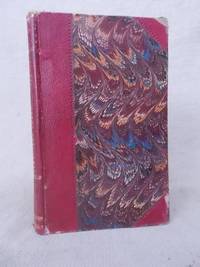
1776M112271776. Fletcher John Later red half morocco with marbled boards. Gilt lettering on spine. Cheshunt College book plate. 1st item lacks half title 2nd item is Baker #344 hardcover
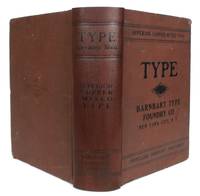
013990Chicago: Barnhart Brothers & Spindler. 1st Edition. Hardcover. Very Good/No Jacket. 8vo super. N.d. ca. 1907. Orig. brown cloth. A.E.R. xx 1022 pp. Rebacked new spine with black lettering. Spine tilted rubbing and some wear to extremities damp staining to boards and top edge of text block. Scuffing to edges of text block. Paper repair to fore edge of title page and rfep. 0. Barnhart Brothers & Spindler hardcover
19812091202132800490New Japan Foundry and Forging Association 1981. Soft Cover. Fine. Number of pages: 444p Size: 26cm Number of books: 1 New Japan Foundry and Forging Association paperback
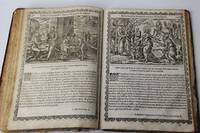
51-5682Paris: Chez Guillaume le BeÌ circa 1660. Folio 24 x 33cm. 8 272pp. Lacking title page and colophon . Contemporary calf covers with new goatskin spine by the artisan binder Sasha Mosalov. 268 half-page woodcuts by Jean Cousin. Original endpapers preserved with markings by previous owners.Avis au Lecteur dated 10 janvier 1660.References: Met: Accession Number: 31.65; OCLC Number 23954908.COUSIN Jean. Figures des histoires de la Sainte Bible . Suivi de Figures historiques du Nouveau Testament. Paris Guillaume Le Bé 1660 pour la 2e partie. 2 parties en pagination continue 4 272 et 2 pp. en un volume in-folio veau brun dos à nerfs orné reliure de l'époque. L'illustration se compose de 268 belles figures sur bois à mi-page d'après Jean Cousin. Il manque les 2 premiers feuillets et le dernier feuillet. La page de titre des Figures historiques du Nouveau Testament est elle bien présente. . Crayonnés sur la page titre de la seconde partie =p. 161. Paris: Chez Guillaume le BeÌ, circa 1660 unknown
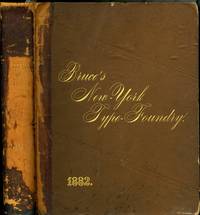
1882049661New York: George Bruce's Son & Co 1882. First Edition. Hardcover Quarter Leather. Very Good Condition. Original quarter leather spine worn and dry corners worn joints a touch tender but sound and intact. Printed on one side only a few minor marginal tears from turning these double pages title a bit browned in spots otherwise unmarked internally. The typesetting and text is built around the history of printing using text from The Invention of Printing by Theodore Low de Vinne which Bruce's had printed in 1878 - a remarkable and charming conceit for a specimen book. Portrait frontis 352 XVIpp.<br /> <br /> Founded in 1813 by Scottish immigrant George Bruce Bruce's Type Foundry began issuing specimen books under George's son in 1865 culminating in the 1882 book. Ten supplements were issued from 1883-1894. Bruce's merged with American Type Founders in 1901. <br /> <br /> "probably the largest most complete and finest typographical specimen book ever produced" .—La Cygne Journal La Cygne Kansas April 29 1882.<br /> <br /> "The book has been made absolutely readable by the curiosity and propriety of the quotations. It swarms with typographical information…"—New York Daily Tribune February 5 1882<br /> <br /> <br /> quotes lifted from "Grolier Club talk—The Greatest Type Specimen Ever Made: The 1882 Bruce Foundry specimen" The Grolier Club on June 13 2023. Size: Quarto 4to. Quantity Available: 1. Shipped Weight: 2-3 kilos. Category: Engineering Industrial & Trades; Inventory No: 049661. George Bruce's Son & Co hardcover