75 résultats
44515095-nnew. unknown
Q-0198241445Oxford Univ Press. hardcover. New. New. In shrink wrap. Looks like an interesting title! Oxford Univ Press hardcover
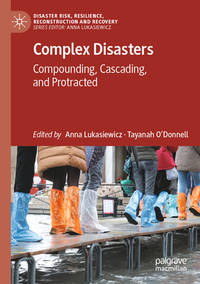
2023x-9811924309Palgrave Macmillan 2023. Paperback. New. 421 pages. 8.27x5.83x0.86 inches. Palgrave Macmillan paperback
2022x-9811924279Palgrave Macmillan 2022. Hardcover. New. 421 pages. 8.27x5.83x1.10 inches. Palgrave Macmillan hardcover
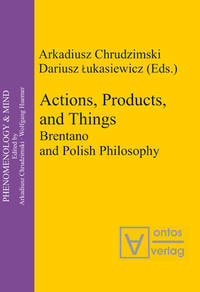
2006__3110325063De Gruyter 2006. Hardcover. New. 237 pages. 8.27x5.83x9.00 inches. De Gruyter hardcover
2011__3110319977Ed. Scholasticae 2011. Hardcover. New. 244 pages. 8.50x6.14x0.87 inches. Ed. Scholasticae hardcover
2024BN192652Wolters Kluwer 2024. 2024. Hardcover. Zarzad majatkiem dziecka sprawowany przez rodziców <br/><br/>Zarzad majatkiem dziecka sprawowany przez rodziców Jakub Lukasiewicz Wolters Kluwer hardcover
47456645-nnew. unknown
25315775-nnew. unknown
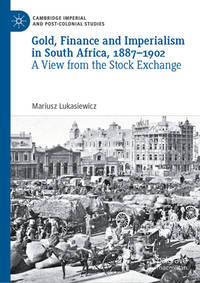
2024x-3031519469Palgrave Macmillan 2024. Hardcover. New. 242 pages. 8.50x6.00x1.00 inches. Palgrave Macmillan hardcover
2021x-9811504687Palgrave Macmillan 2021. Paperback. New. 408 pages. 8.26x5.82x0.91 inches. Palgrave Macmillan paperback
2012SONG3868381325Brand: Ontos Verlag 2012-08-06. hardcover. Used: Good. 6.00x0.75x8.25. Buy with confidence. Excellent Customer Service & Return policy. Brand: Ontos Verlag hardcover
2023x-9811648131Palgrave Macmillan 2023. Paperback. New. 401 pages. 8.27x5.83x0.83 inches. Palgrave Macmillan paperback
2022x-9811648107Palgrave Macmillan 2022. Hardcover. New. 401 pages. 9.25x6.10x0.94 inches. Palgrave Macmillan hardcover
20181-3319877194Palgrave Macmillan 2018. Paperback. New. reprint edition. 468 pages. 8.27x5.83x1.14 inches. Palgrave Macmillan paperback
2012DADAX3868381325Brand: Ontos Verlag 2012-08-06. hardcover. New. 6.00x0.75x8.25. Buy with confidence. Excellent Customer Service & Return policy. Brand: Ontos Verlag hardcover
2020BN99332Instytut Historii Polskiej Akademii Nauk 2020. 2020. Softcover. ZYCIE CODZIENNE W KRÓLESTWIE PRUS W LATACH 1701-1933 <br/><br/>ZYCIE CODZIENNE W KRÓLESTWIE PRUS W LATACH 1701-1933 Instytut Historii Polskiej Akademii Nauk paperback
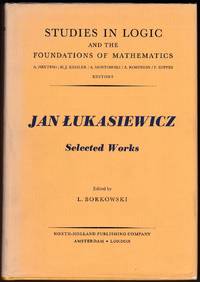
197071229North-Holland Publishing Company. VG. 1970. Hardcover. Hardback in Very Good condition with Very Good dust jacket. Studies In Logic And The Foundations Of Mathematics. 8vo 8" - 9" tall. 417 pages. Clean unmarked interior. Tight binding sharp corners and light shelf wear. Mylar protected dust jacket has a sunned spine and light wear to extremities. Quick shipping excellent customer service. All books carefully packaged in boxes and ship with tracking information. . North-Holland Publishing Company hardcover
1970biblio38022North-Holland Publishing Co.; 1st Edition 1970. 405 pages. Fine Hardcover no dj. 9.1"x6.5"x1.2". be45961. North-Holland Publishing Co. hardcover
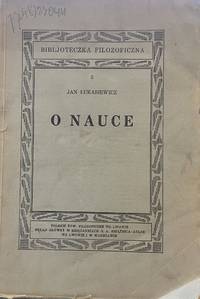
19343766Warsaw: Polskie Tow. Filoyoficzne 1934. First edition. In original paper. Very good condition. Cover worn. First edition. In original paper. 40 p. Jan Lukasiewicz 1878–1956 was a Polish logician and philosopher who introduced mathematical logic into Poland and who was a founding member of the Lwów–Warsaw school of logic which was later made internationally famous by Alfred Tarski and one of the principal architects and teachers of that school. Polskie Tow. Filoyoficzne unknown
56957Oxford At the Clarendon Press. New. N.D. Hardcover. 0198241445 . FREE UPGRADE to Courier/Priority Shipping Upon Request IN STOCK AND IMMEDIATELY AVAILABLE FOR SHIPMENT - Flawless copy brand new pristine never opened -- ND Copyright 1998 224 pages. -- with a bonus offer-- . Oxford At the Clarendon Press hardcover
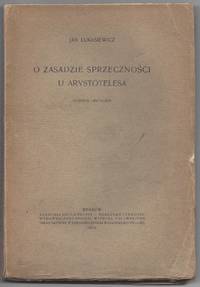
191044095Krakow: Akademia Umiejetnosci 1910. <p> ukasiewicz Jan 1878-1956. O zasadzie sprzeczno ci u Arystotelesa. Studyum krytyczne. 4 210 2pp. Krakow: Akademia Umiejetno ci 1910. 199 x 140 mm. Half cloth paste paper boards ca. 1913 number stamped on spine label and deaccessioning stamp of the University of Lodz's Biblioteka Instytutu Filosofii. Library stamps / markings on title verso title and one other leaf but very good.</p> <p> First Edition and very scarce on the market with no copies in auction records. ukasiewicz's first book on the principle of contradiction in Aristotle's writings marks his earliest attempt to "open up on logic vistas comparable to those opened in geometry by the introduction of non-Euclidian systems" McCall Polish Logic 1920-1938 p. 2. </p> <p> ukasiewicz a Polish logician and philosopher introduced mathematical logic into Poland and was one of the principal founders architects and teachers of the Warsaw school of logic. "His most famous achievement was to give the first rigorous formulation of many-valued logic. He introduced many improvements in propositional logic and became the first historian of logic to treat the subject's history from the standpoint of modern formal logic . . . </p> <p> "Of all the works ukasiewicz published before World War I one most clearly anticipated his later concerns. This was the 1910 monograph On the Principle of Contradiction in Aristotle. It marked a crucial turning point in the development of the Lwów-Warsaw school. For ukasiewicz it represented the first sustained questioning of the assumptions of traditional Aristotelian logic.</p> <p> " ukasiewicz introduces the project of his monograph a critical investigation of the legitimacy of the Principle of Contradiction PC as variously formulated by Aristotle in the context of its critique by Hegel and the opportunity to re-examine the PC in the light of the development of mathematical logic from Boole to Russell . . .</p> <p> " ukasiewicz distinguishes three different non-equivalent versions of PC in Aristotle: an ontological version a logical version and a psychological version as follows:</p> <p> Ontological OPC: No object may at the same time possess and not possess the same property.</p> <p> Logical LPC: Contradictory statements are not simultaneously true.</p> <p> Psychological PPC: No one can simultaneously believe contradictory things.</p> <p> " ukasiewicz criticises Aristotle for on the one hand claiming PC cannot be proved and on the other hand attempting an indirect or pragmatic 'proof' . . . ukasiewicz described himself later as attempting in the monograph to devise a 'non-Aristotelian logic' but admits that he did not succeed principally because at this stage he was not prepared to reject the principle of bivalence Stanford Encyclopedia of Philosophy. Rare in commerce. </p> . Akademia Umiejetnosci unknown
191044095Krakow: Akademia Umiejetnosci 1910. <p> ukasiewicz Jan 1878-1956. O zasadzie sprzeczno ci u Arystotelesa. Studyum krytyczne. 4 210 2pp. Krakow: Akademia Umiejetno ci 1910. 199 x 140 mm. Half cloth paste paper boards ca. 1913 number stamped on spine label and deaccessioning stamp of the University of Lodz's Biblioteka Instytutu Filosofii. Library stamps / markings on title verso title and one other leaf but very good.</p> <p> First Edition and very scarce on the market with no copies in auction records. ukasiewicz's first book on the principle of contradiction in Aristotle's writings marks his earliest attempt to "open up on logic vistas comparable to those opened in geometry by the introduction of non-Euclidian systems" McCall Polish Logic 1920-1938 p. 2. </p> <p> ukasiewicz a Polish logician and philosopher introduced mathematical logic into Poland and was one of the principal founders architects and teachers of the Warsaw school of logic. "His most famous achievement was to give the first rigorous formulation of many-valued logic. He introduced many improvements in propositional logic and became the first historian of logic to treat the subject's history from the standpoint of modern formal logic . . . </p> <p> "Of all the works ukasiewicz published before World War I one most clearly anticipated his later concerns. This was the 1910 monograph On the Principle of Contradiction in Aristotle. It marked a crucial turning point in the development of the Lwów-Warsaw school. For ukasiewicz it represented the first sustained questioning of the assumptions of traditional Aristotelian logic.</p> <p> " ukasiewicz introduces the project of his monograph a critical investigation of the legitimacy of the Principle of Contradiction PC as variously formulated by Aristotle in the context of its critique by Hegel and the opportunity to re-examine the PC in the light of the development of mathematical logic from Boole to Russell . . .</p> <p> " ukasiewicz distinguishes three different non-equivalent versions of PC in Aristotle: an ontological version a logical version and a psychological version as follows:</p> <p> Ontological OPC: No object may at the same time possess and not possess the same property.</p> <p> Logical LPC: Contradictory statements are not simultaneously true.</p> <p> Psychological PPC: No one can simultaneously believe contradictory things.</p> <p> " ukasiewicz criticises Aristotle for on the one hand claiming PC cannot be proved and on the other hand attempting an indirect or pragmatic ‘proof' . . . ukasiewicz described himself later as attempting in the monograph to devise a ‘non-Aristotelian logic' but admits that he did not succeed principally because at this stage he was not prepared to reject the principle of bivalence Stanford Encyclopedia of Philosophy. Rare in commerce. </p> . Akademia Umiejetnosci unknown books
19101130Kraków: Akademia UmiejÄ™tnoÅ›ci 1910. First edition. In publisher’s printed wrappers. Wrappers tanned due to aging somewhat chipped. Inside firm and clean. Overall in very good condition. First edition. In publisher’s printed wrappers. 4 1–210 2 p. <p><br /> One of the earliest works of Jan Lukasiewicz 1878–1956 the Polish logician and philosopher who introduced mathematical logic into Poland and who was a founding member of the Lwów–Warsaw school of logic which was later made internationally famous by Alfred Tarski and one of the principal architects and teachers of that school.<br /> <p><p><br /> Lukasiewicz is known to give the first rigorous formulation of many-valued logic and for introducing various improvements in propositional logic and for becoming the first historian of logic to treat the subject’s history from the standpoint of modern formal logic.<br /> <p><p><br /> In this early work which marks a crucial turning point in the development of the Lwów-Warsaw school Lukasiewicz questions the assumptions of traditional Aristotelian logic. He described later the treatise as an unsuccessful attempt to devise a “non-Aristotelian logic†however the monograph clearly anticipates his later concerns and the 1951 book “Aristotle's Syllogistic from the Standpoint of Modern Formal Logicâ€.<br /> Stanford Encyclopedia of Philosophy<br /> <p>. Akademia Umiejętności unknown
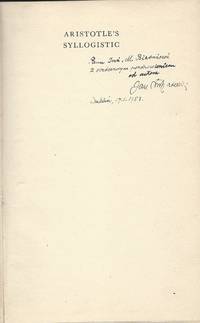
19511943Oxford: Oxford University Press 1951. First edition. Presentation copy inscribed by the author. With numerous inserted handwritten notes by the author in Polish and English. In publishers leather binding. Gilt spine. Notes in ink and pencil in German throughout. Overall in fine condition. First edition. Presentation copy inscribed by the author. With numerous inserted handwritten notes by the author in Polish and English. In publishers leather binding. Gilt spine. 10 2 141 3 p. <p><br /> Inscribed copy of one of Åukasiewicz’s most important works Aristotle’s Syllogistic with several handwritten notes by the author.<br /> <p><p><br /> Jan Lukasiewicz 1878–1956 was a Polish logician and philosopher who introduced mathematical logic into Poland and who was a founding member of the Lwów–Warsaw school of logic which was later made internationally famous by Alfred Tarski and one of the principal architects and teachers of that school. <br /> <p><p><br /> Lukasiewicz is known to give the first rigorous formulation of many-valued logic and for introducing various improvements in propositional logic and for becoming the first historian of logic to treat the subject’s history from the standpoint of modern formal logic. <br /> <p><p><br /> In this work he unfolds the principle of his notation Polish or Åukasiewicz notation which later was used as a basis of the Burroughs B5000 computer and a somewhat modified version the reverse Polish notation is still widely used in computer science.<br /> <p>. Oxford University Press unknown