140 résultats
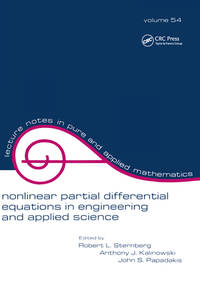
2001__0824706722Marcel Dekker Inc 2001. Paperback. New. 308 pages. 10.00x6.75x0.75 inches. Marcel Dekker Inc paperback
182143864Paris, Crochard, 1821. Without wrappers. In 'Annales de Chimie et de Physique', Volume 19, Cahier 3. Titlepage to vol. 19. Pp. 225-335. Navier's paper: pp. 244-260. Verso of titlepage with small stamps. Clean and fine.
182149138(Paris, Crochard, 1821). No wrappers. In 'Annales de Chimie et de Physique', Volume 19, Cahier 3. Pp. 225-236 (Entire issue offered with halftitle to vol. 19). Navier's paper: pp. 244-260. A few scattered brownspots. Some browning to halftitlepage.
182149138Paris Crochard 1821. No wrappers. In 'Annales de Chimie et de Physique' Volume 19 Cahier 3. Pp. 225-236 Entire issue offered with halftitle to vol. 19. Navier's paper: pp. 244-260. A few scattered brownspots. Some browning to halftitlepage. <br/><br/><em>First appearance of Navier's famous paper in which he describes the relations between fluid flow and friction giving the FUNDAMENTAL EQUATIONS OF THE MATHEMATICAL THEORY OF ELASTICITY. The full paper was not published until 1828. Stokes's analysis of the internal friction of fluids was published in 1845 and as he was not familiar with the French litterature of mathematical physics he derived independently his own equations which accounts for the double-name of the equations. "The Navier-Stokes equation is now regarded as the universal basis of fluid mechanics no matter how complex and unpredictable the behavior of its solutions may be. It is also known to be the only hydrodynamic equation that is compatible with the isotropy and linearity of the stress-strain relation." Olivier Darrigol."Navier studied the motion of solid and liquid bodies deriving the partial differential equations to which he applied Fourier's methods to find particular solutions. This theoretical research led him to formulate the well-known equation identified with his name and that of Stokes. Navier viewed bodies as made up of particles which are close to each other and which act on each other by means of two opposing forces - one of attraction and one of repulsion - which when in a state of equilibrium cancel each otherout. The repelling force resulted from the caloric that a body possessed. When equilibrium is disturbed in a solid a restoring force acts which is proportional to the change in distance between the particles."DSB X p. 4."The equations are useful because they describe the physics of many things of academic and economic interest. They may be used to model the weather ocean currents water flow in a pipe and air flow around a wing. The Navier-Stokes equations in their full and simplified forms help with the design of aircraft and cars the study of blood flow the design of power stations the analysis of pollution and many other things. Coupled with Maxwell's equations they can be used to model and study magnetohydrodynamics. "Wikipedia. </em> unknown
182143864Paris Crochard 1821. Without wrappers. In 'Annales de Chimie et de Physique' Volume 19 Cahier 3. Titlepage to vol. 19. Pp. 225-335. Navier's paper: pp. 244-260. Verso of titlepage with small stamps. Clean and fine. <br/><br/><em>First appearance of Navier's famous paper in which he describes the relations between fluid flow and friction giving the FUNDAMENTAL EQUATIONS OF THE MATHEMATICAL THEORY OF ELASTICITY. The full paper was not published until 1828. Stokes's analysis of the internal friction of fluids was published in 1845 and as he was not familiar with the French litterature of mathematical physics he derived independently his own equations which accounts for the double-name ofthe equations. "The Navier-Stokes equation is now regarded as the universal basis of fluid mechanics no matter how complex and unpredictable the behavior of its solutions may be. It is also known to be the only hydrodynamic equation that is compatible with the isotropy and linearity of the stress-strain relation." Olivier Darrigol."Navier studied the motion of solid and liquid bodies deriving the partial differential equations to which he applied Fourier's methods to find particular solutions. This theoretical research led him to formulate the well-known equation identified with his name and that of Stokes. Navier viewed bodies as made up of particles which are close to each other and which act on each other by means of two opposing forces - one of attraction and one of repulsion - which when in a state of equilibrium cancel each otherout. The repelling force resulted from the caloric that a body possessed. When equilibrium is disturbed in a solid a restoring force acts which is proportional to the change in distance between the particles."DSB X p. 4."The equations are useful because they describe the physics of many things of academic and economic interest. They may be used to model the weather ocean currents water flow in a pipe and air flow around a wing. The Navier-Stokes equations in their full and simplified forms help with the design of aircraft and cars the study of blood flow the design of power stations the analysis of pollution and many other things. Coupled with Maxwell's equations they can be used to model and study magnetohydrodynamics. "Wikipedia. </em> unknown
20012-0824706722Marcel Dekker Inc 2001. Paperback. New. 308 pages. 10.00x6.75x0.75 inches. Marcel Dekker Inc paperback
1980x-0824769961Marcel Dekker Inc 1980. Paperback. New. 1st edition. 504 pages. 10.00x7.25x1.00 inches. Marcel Dekker Inc paperback
20022-0824707923Marcel Dekker Inc 2002. Paperback. New. 474 pages. 9.75x6.75x1.00 inches. Marcel Dekker Inc paperback
176946556(Berlin, Haude et Spener, 1769). 4to. Without wrappers as issued in ""Mémoires de l'Academie Royale des Sciences et Belles-Lettres"", Année 1767, Tome XXXIII, pp. 311-352.
176946556Berlin Haude et Spener 1769. 4to. Without wrappers as issued in "Mémoires de l'Academie Royale des Sciences et Belles-Lettres" Année 1767 Tome XXXIII pp. 311-352. <br/><br/><em>First edition of a monumental paper in the theory of equations by "one of the greatest mathematicians of all times" Cajori. In this memoir which deals with the solutiuon of numerical equations Lagrange examines the roots of algebraic equations and provides methods of separating the real and imaginary roots and of approximating the real roots with continued fractions.Parkinson "Breakthroughs" 1767 P. </em> unknown
182147074Paris, Crochard, 1821. Contemp. hcalf. Spine gilt with tome-and titlelabels with gilt lettering. Wear to top of spine. A crack along first hinge, but cover not loose. In 'Annales de Chimie et de Physique', Volume 19. (Entire volume offered). 448 pp. a. 2 plates. Navier's paper: pp. 244-260. A faint dampstain to margins of the first 20 leaves and a bit seen on the following pages, decreasing.
182147074Paris Crochard 1821. Contemp. hcalf. Spine gilt with tome-and titlelabels with gilt lettering. Wear to top of spine. A crack along first hinge but cover not loose. In 'Annales de Chimie et de Physique' Volume 19. Entire volume offered. 448 pp. a. 2 plates. Navier's paper: pp. 244-260. A faint dampstain to margins of the first 20 leaves and a bit seen on the following pages decreasing. <br/><br/><em>First appearance of Navier's famous paper in which he describes the relations between fluid flow and friction giving the FUNDAMENTAL EQUATIONS OF THE MATHEMATICAL THEORY OF ELASTICITY. The full paper was not published until 1828. Stokes's analysis of the internal friction of fluids was published in 1845 and as he was not familiar with the French litterature of mathematical physics he derived independently his own equations which accounts for the double-name of the equations. "The Navier-Stokes equation is now regarded as the universal basis of fluid mechanics no matter how complex and unpredictable the behavior of its solutions may be. It is also known to be the only hydrodynamic equation that is compatible with the isotropy and linearity of the stress-strain relation." Olivier Darrigol."Navier studied the motion of solid and liquid bodies deriving the partial differential equations to which he applied Fourier's methods to find particular solutions. This theoretical research led him to formulate the well-known equation identified with his name and that of Stokes. Navier viewed bodies as made up of particles which are close to each other and which act on each other by means of two opposing forces - one of attraction and one of repulsion - which when in a state of equilibrium cancel each otherout. The repelling force resulted from the caloric that a body possessed. When equilibrium is disturbed in a solid a restoring force acts which is proportional to the change in distance between the particles."DSB X p. 4."The equations are useful because they describe the physics of many things of academic and economic interest. They may be used to model the weather ocean currents water flow in a pipe and air flow around a wing. The Navier-Stokes equations in their full and simplified forms help with the design of aircraft and cars the study of blood flow the design of power stations the analysis of pollution and many other things. Coupled with Maxwell's equations they can be used to model and study magnetohydrodynamics. "Wikipedia. </em> unknown
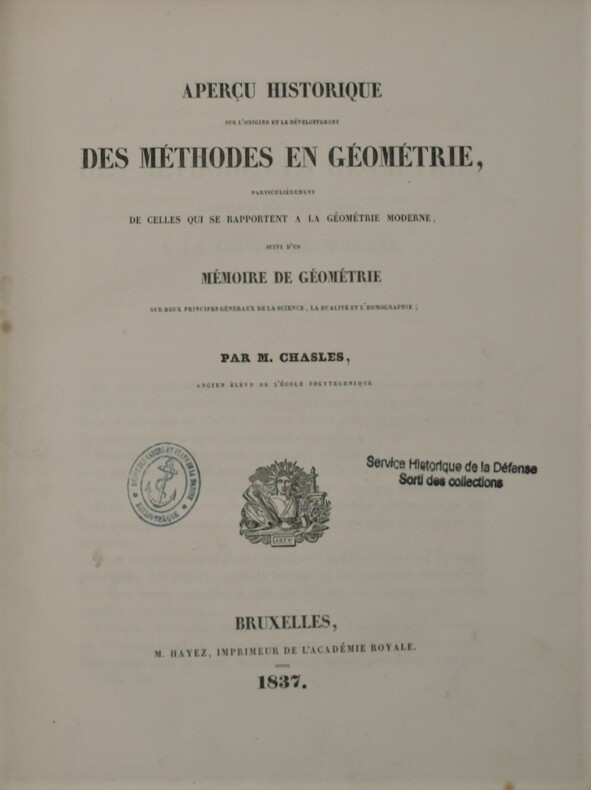
1837PHO-786Bruxelles, Hayez ,1837 , in-4 (275x220) relié demi basane époque , dos lisse avec pièce de titre et auteur , charnière fendue , coiffe arasée.
In-4°, (XVIII), pp. 667, legatura in mezza pelle, titolo al dorso Pubblicato nel 1870 è un capolavoro dell’architettura matematica. La bellezza dell’edificio eretto da Jordan è ammirevole (Van de Waerden, Storia dell’algebra, p.117).Nel 1870 Jordan raccolse tutti i suoi risultati sui gruppi di permutazione dei precedenti dieci anni in un grande volume, Traité des substitutions, che per trenta anni rimase la Bibbia di tutti gli specialisti della teoria dei gruppi. La sua fama si espanse oltre la Francia e gli studenti stranieri erano desiderosi di frequentare le sue lezioni. In particolare Felix Klein e Sophus Lie vennero a Parigi nel 1870 per studiare con Jordan, che a quel tempo stava sviluppando le sue ricerche in una direzione completamente diversa: la determinazione di tutti i gruppi di movimento nello spazio tridimensionale. (DSB VII 167/169) Published in 1870, it is a “masterpiece of mathematical architecture. The beauty organized by Jordan is admirable” (Van de Waerden, History of algebra, p.117). In 1870 Jordan collected all his results on the permutation groups of the previous ten years in a large volume, Traité des replacements, which for thirty years, was the Bible for all specialists in group theory. His fame expanded beyond France and foreign students were eager to attend his lessons. In particular Felix Klein and Sophus Lie came to Paris in 1870 to study with Jordan, which at that time was developing his research in a completely different direction: the determination of all movement groups in three-dimensional space. (DSB VII 167/169)
In-4°, (6 cc), 5-132, 2 tavole, 1 ritr., rilegatura in pelle seicentesca, con titolo al dorso in oro, completo delle due carte della tavola dei contenuti. Prima edizione. I Quesiti di Tartaglia contiene il suo più importante risultato matematico: la scoperta indipendente della regola per risolvere equazioni di terzo grado (cubiche), una regola inizialmente formulata ma non pubblicata da Scipione de Ferro nel primo o nel secondo decennio del XVI secolo. Tartaglia risolse nuovamente il problema nel 1535, ma mantenne i dettagli segreti per molti anni, usando le sue conoscenze per trarre vantaggio dalle frequenti controversie pubbliche tra gli studiosi della sua epoca. Alla fine rivelò la regola a Girolamo Cardano nel 1539 dopo che Cardano giurò di mantenerla segreta, ma sei anni dopo Cardano ruppe la sua promessa pubblicando la regola nella sua Ars magna ... Cardano attribuì sia a Tartaglia che a Ferro la scoperta della regola , ma Tartaglia fu infuriato per la violazione della promessa di Cardano e lo accusò duramente nel libro IX di Quesiti, in cui pubblicò anche la sua versione delle sue ricerche in equazioni di terzo grado. In-4°, (6 cc), 5-132, 2 plates, 1 portr., ,17th century leather binding, with title on the back in gold, complete with the contents table. First edition. Tartaglia's Questions contains his most important mathematical result: the independent discovery of the rule to solve third-degree (cubic) equations, a rule established but not published by Scipione de Ferro in the first or second decade of the sixteenth century. Tartaglia solved the problem again in 1535, but kept the details secret for many years, using his knowledge to take advantage of frequent public controversies between the studies of his time. Eventually he revealed the rule to Girolamo Cardano in 1539 after Cardano swore to keep it secret, but six years later Cardano broke his promise by publishing the rule in his Ars magna ... Cardano attributed both the discovery of the rule to Tartaglia and Ferro, but Tartaglia was infuriated by the violation of Cardano's promise and the accusation harshly in Book IX of Quesiti, in which he also published his version of his research in third-degree equations.