140 résultats
"Pitman Research Notes in Mathematics Series". Volume con rilegatura non originale in tela con, all'interno, mantenuta la brossura originale di 252 pagine. Libro in ottime condizioni nelle sue legature ben salde. Spedizione in 24 ore dalla conferma dell'ordine.
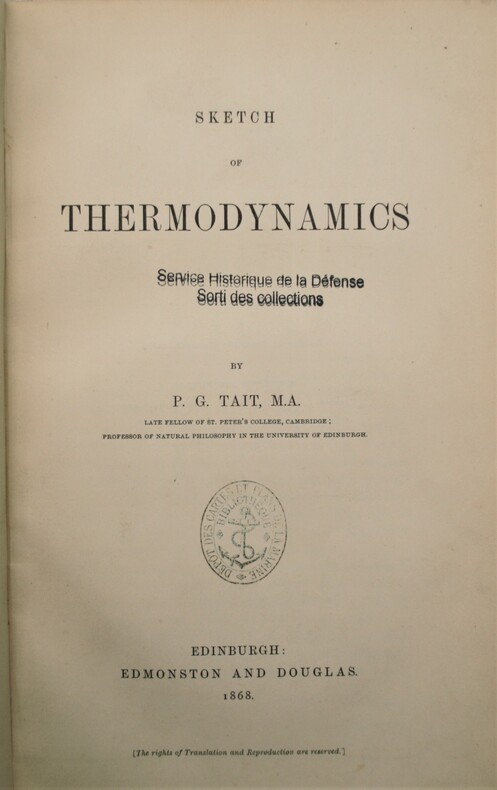
PHO-9671868 ,Edinburgh., Edmonston and Douglas , in-8 ,Maroon hardback cloth cover, title on the back , stamp on the title, viii-128pp-9pp (catalogue) , Content Historical sketch of the dynamical theory of the heat ,historical of the science of the energy , sketch of the fundamental principles of thermodynamics- notes rare édition originale
183441606Berlin G. Reimer 1834 4to. No wrappers. Extracted from "Journal für die reine und angewandte Mathematik. Hrsg. von A.L. Crelle" Bd.12. - Plücker's paper pp. 105-108. <br/><br/><em>First printing of the paper containing the famous "Plücker Equations". ".one of Plücker's great achievements published in Crelle's Journal for 1834 was the discovery of four equations bearing his name the paper offered that relate the class and order of a curve with the singularities of the curve." Boyer. History of Mathematics. </em> unknown
183441606(Berlin, G. Reimer, 1834) 4to. No wrappers. Extracted from ""Journal für die reine und angewandte Mathematik. Hrsg. von A.L. Crelle"", Bd.12. - Plücker's paper pp. 105-108.
197030731Oxford, Pergamon Press (International Series of Monographs in Natural Philosophy, Vol. 16), 1970. XI, 229 S. (22,5 cm) Leinen mit Umschlag / gebundene Ausgabe
197030780Oxford, Pergamon Press (International Series of Monographs in Natural Philosophy, Vol. 16), 1970. XI, 229 S. (22,5 cm) Leinen / gebundene Ausgabe
20022-0824707923Marcel Dekker Inc 2002. Paperback. New. 474 pages. 9.75x6.75x1.00 inches. Marcel Dekker Inc paperback
176946556Berlin Haude et Spener 1769. 4to. Without wrappers as issued in "Mémoires de l'Academie Royale des Sciences et Belles-Lettres" Année 1767 Tome XXXIII pp. 311-352. <br/><br/><em>First edition of a monumental paper in the theory of equations by "one of the greatest mathematicians of all times" Cajori. In this memoir which deals with the solutiuon of numerical equations Lagrange examines the roots of algebraic equations and provides methods of separating the real and imaginary roots and of approximating the real roots with continued fractions.Parkinson "Breakthroughs" 1767 P. </em> unknown
176946556(Berlin, Haude et Spener, 1769). 4to. Without wrappers as issued in ""Mémoires de l'Academie Royale des Sciences et Belles-Lettres"", Année 1767, Tome XXXIII, pp. 311-352.
19058657Paris Gauthier-Villars 1905 In-8 167 pp, Conférences faites en Amérique. Exemplaire non coupé. 1er plat légèrement passé avec faibles rousseurs et coins cornés ; frottis sur coiffe supérieure
182149138Paris Crochard 1821. No wrappers. In 'Annales de Chimie et de Physique' Volume 19 Cahier 3. Pp. 225-236 Entire issue offered with halftitle to vol. 19. Navier's paper: pp. 244-260. A few scattered brownspots. Some browning to halftitlepage. <br/><br/><em>First appearance of Navier's famous paper in which he describes the relations between fluid flow and friction giving the FUNDAMENTAL EQUATIONS OF THE MATHEMATICAL THEORY OF ELASTICITY. The full paper was not published until 1828. Stokes's analysis of the internal friction of fluids was published in 1845 and as he was not familiar with the French litterature of mathematical physics he derived independently his own equations which accounts for the double-name of the equations. "The Navier-Stokes equation is now regarded as the universal basis of fluid mechanics no matter how complex and unpredictable the behavior of its solutions may be. It is also known to be the only hydrodynamic equation that is compatible with the isotropy and linearity of the stress-strain relation." Olivier Darrigol."Navier studied the motion of solid and liquid bodies deriving the partial differential equations to which he applied Fourier's methods to find particular solutions. This theoretical research led him to formulate the well-known equation identified with his name and that of Stokes. Navier viewed bodies as made up of particles which are close to each other and which act on each other by means of two opposing forces - one of attraction and one of repulsion - which when in a state of equilibrium cancel each otherout. The repelling force resulted from the caloric that a body possessed. When equilibrium is disturbed in a solid a restoring force acts which is proportional to the change in distance between the particles."DSB X p. 4."The equations are useful because they describe the physics of many things of academic and economic interest. They may be used to model the weather ocean currents water flow in a pipe and air flow around a wing. The Navier-Stokes equations in their full and simplified forms help with the design of aircraft and cars the study of blood flow the design of power stations the analysis of pollution and many other things. Coupled with Maxwell's equations they can be used to model and study magnetohydrodynamics. "Wikipedia. </em> unknown
182147074Paris Crochard 1821. Contemp. hcalf. Spine gilt with tome-and titlelabels with gilt lettering. Wear to top of spine. A crack along first hinge but cover not loose. In 'Annales de Chimie et de Physique' Volume 19. Entire volume offered. 448 pp. a. 2 plates. Navier's paper: pp. 244-260. A faint dampstain to margins of the first 20 leaves and a bit seen on the following pages decreasing. <br/><br/><em>First appearance of Navier's famous paper in which he describes the relations between fluid flow and friction giving the FUNDAMENTAL EQUATIONS OF THE MATHEMATICAL THEORY OF ELASTICITY. The full paper was not published until 1828. Stokes's analysis of the internal friction of fluids was published in 1845 and as he was not familiar with the French litterature of mathematical physics he derived independently his own equations which accounts for the double-name of the equations. "The Navier-Stokes equation is now regarded as the universal basis of fluid mechanics no matter how complex and unpredictable the behavior of its solutions may be. It is also known to be the only hydrodynamic equation that is compatible with the isotropy and linearity of the stress-strain relation." Olivier Darrigol."Navier studied the motion of solid and liquid bodies deriving the partial differential equations to which he applied Fourier's methods to find particular solutions. This theoretical research led him to formulate the well-known equation identified with his name and that of Stokes. Navier viewed bodies as made up of particles which are close to each other and which act on each other by means of two opposing forces - one of attraction and one of repulsion - which when in a state of equilibrium cancel each otherout. The repelling force resulted from the caloric that a body possessed. When equilibrium is disturbed in a solid a restoring force acts which is proportional to the change in distance between the particles."DSB X p. 4."The equations are useful because they describe the physics of many things of academic and economic interest. They may be used to model the weather ocean currents water flow in a pipe and air flow around a wing. The Navier-Stokes equations in their full and simplified forms help with the design of aircraft and cars the study of blood flow the design of power stations the analysis of pollution and many other things. Coupled with Maxwell's equations they can be used to model and study magnetohydrodynamics. "Wikipedia. </em> unknown
182143864Paris Crochard 1821. Without wrappers. In 'Annales de Chimie et de Physique' Volume 19 Cahier 3. Titlepage to vol. 19. Pp. 225-335. Navier's paper: pp. 244-260. Verso of titlepage with small stamps. Clean and fine. <br/><br/><em>First appearance of Navier's famous paper in which he describes the relations between fluid flow and friction giving the FUNDAMENTAL EQUATIONS OF THE MATHEMATICAL THEORY OF ELASTICITY. The full paper was not published until 1828. Stokes's analysis of the internal friction of fluids was published in 1845 and as he was not familiar with the French litterature of mathematical physics he derived independently his own equations which accounts for the double-name ofthe equations. "The Navier-Stokes equation is now regarded as the universal basis of fluid mechanics no matter how complex and unpredictable the behavior of its solutions may be. It is also known to be the only hydrodynamic equation that is compatible with the isotropy and linearity of the stress-strain relation." Olivier Darrigol."Navier studied the motion of solid and liquid bodies deriving the partial differential equations to which he applied Fourier's methods to find particular solutions. This theoretical research led him to formulate the well-known equation identified with his name and that of Stokes. Navier viewed bodies as made up of particles which are close to each other and which act on each other by means of two opposing forces - one of attraction and one of repulsion - which when in a state of equilibrium cancel each otherout. The repelling force resulted from the caloric that a body possessed. When equilibrium is disturbed in a solid a restoring force acts which is proportional to the change in distance between the particles."DSB X p. 4."The equations are useful because they describe the physics of many things of academic and economic interest. They may be used to model the weather ocean currents water flow in a pipe and air flow around a wing. The Navier-Stokes equations in their full and simplified forms help with the design of aircraft and cars the study of blood flow the design of power stations the analysis of pollution and many other things. Coupled with Maxwell's equations they can be used to model and study magnetohydrodynamics. "Wikipedia. </em> unknown
182143864Paris, Crochard, 1821. Without wrappers. In 'Annales de Chimie et de Physique', Volume 19, Cahier 3. Titlepage to vol. 19. Pp. 225-335. Navier's paper: pp. 244-260. Verso of titlepage with small stamps. Clean and fine.
182147074Paris, Crochard, 1821. Contemp. hcalf. Spine gilt with tome-and titlelabels with gilt lettering. Wear to top of spine. A crack along first hinge, but cover not loose. In 'Annales de Chimie et de Physique', Volume 19. (Entire volume offered). 448 pp. a. 2 plates. Navier's paper: pp. 244-260. A faint dampstain to margins of the first 20 leaves and a bit seen on the following pages, decreasing.
182149138(Paris, Crochard, 1821). No wrappers. In 'Annales de Chimie et de Physique', Volume 19, Cahier 3. Pp. 225-236 (Entire issue offered with halftitle to vol. 19). Navier's paper: pp. 244-260. A few scattered brownspots. Some browning to halftitlepage.
DISPONIBILITÀ GARANTITA AL 99%; SPEDIZIONE ENTRO 12 ORE DALL'ORDINE. BUONE/OTTIME CONDIZIONI GENERALI, BRUNITURA, MACCHIETTE/FIORITURE DIFFUSE E SEGNI DEL TEMPO. RARO. Descrizione bibliografica Titolo: Teoría y problemas de Ecuaciones diferenciales: 560 problemas resueltos Autore: Frank Ayres, Jr. Traduzione di: Traducción y adaptación de Tomás Gómez de Dios Editore: Colombia, Mexico, Panama: Libros McGraw Hill, 1969 Lunghezza: 296 pagine; 25 cm ISBN: 9684511892, 9789684511897, 9780070026544 Collana: Serie de compendios Schaum Lingua: Spagnolo Language: Spanish Idioma: Español Soggetti: Matemáticas, Problemas, Ecuaciones Diferenciales, Elementales, Derivadas, Lugares geometricos, Calculo integral, Ejercicios, Matematica, Manuali, Esercizi, Calcolo, Geometria, Fisica, Teorie, Coefficienti, Costanti, Derivate, Varianti, Problemi risolti, Analisi, Fourier, Teoremi, Scolastica, Numeri, Collezionismo, Teoria e problemi delle equazioni differenziali, Libri rari, Libri Scolastici antichi e Vecchi, Vintage, Fuori catalogo, Theory and problems of differential equations, Louis Sandler, Cauchy, Mathematics, Manuals, Exercises, Calculus, Geometry, Physics, Theories, Coefficients, Constants, Derivatives, Variants, Problems solved, Analysis, Theorems, Scholastic, Numbers, Collectibles, Rare books, Ancient school books, Out of print
198952750Cambridge: Cambridge University Press (Cambridge texts in applied mathematics), 1989. Stretching, chaos, and transport XIV, 364 S. (23 cm) Broschierte Ausgabe
20012-0824706722Marcel Dekker Inc 2001. Paperback. New. 308 pages. 10.00x6.75x0.75 inches. Marcel Dekker Inc paperback
2001__0824706722Marcel Dekker Inc 2001. Paperback. New. 308 pages. 10.00x6.75x0.75 inches. Marcel Dekker Inc paperback
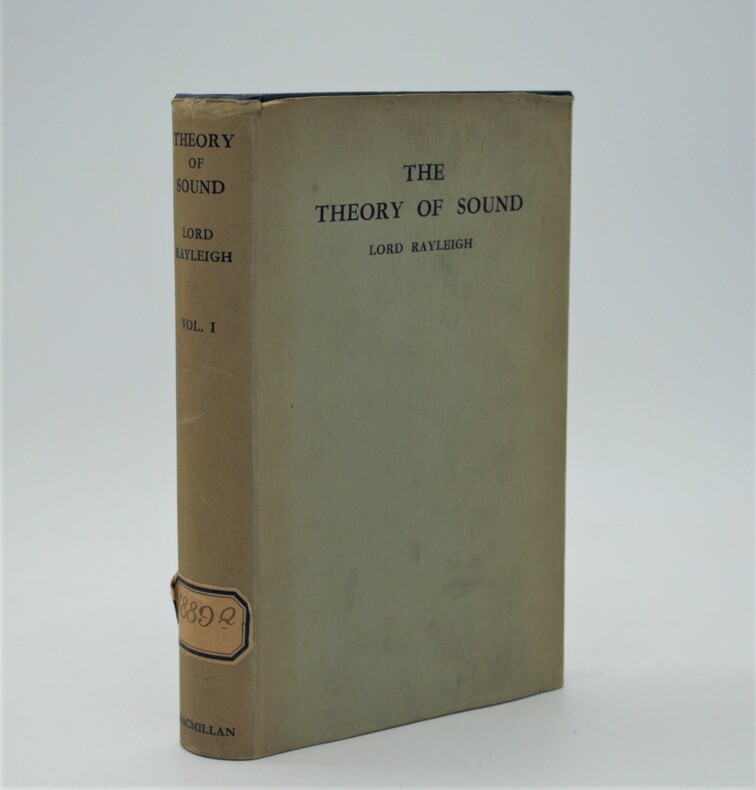
1944PHO-824London, Macmillan, 1944 , in-8° (220x130) , 1 volume sur 2 , VII-540pp , relié pleine percale éditeur avec jaquette , très bon état
Cover a little faded and worn, page block browned, but all contents in good condition. Research Notes in Mathematics; 35. Used
19659444-nnew. unknown
19659444like new. unknown
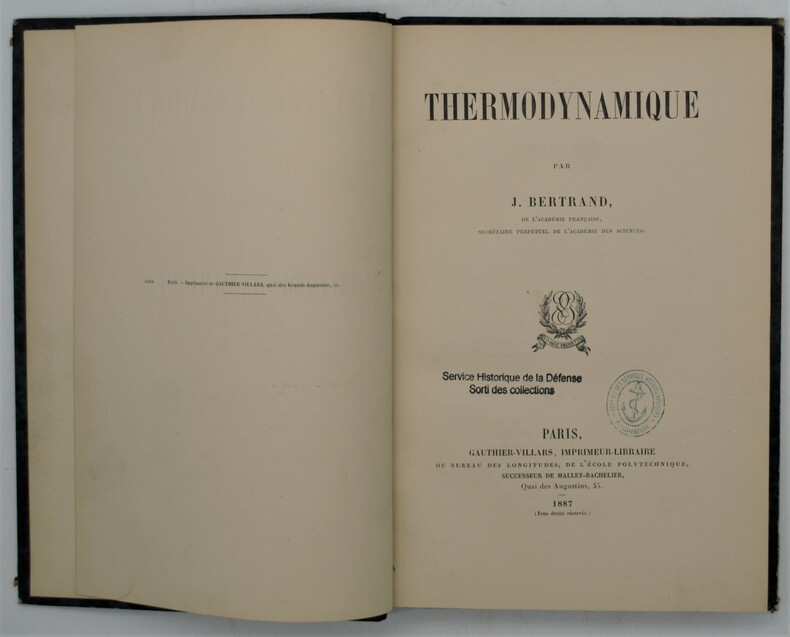
1887PHO-9171887, Paris, Gauthier-Villars , in-8 ,XVIII-294 pp demi-cuir époque, dos lisse avec auteur , titre et date, cachet , inscription sur le plat , bon exemplaire