Aude de TocquevilleLivre Rare Book
2 176 résultats
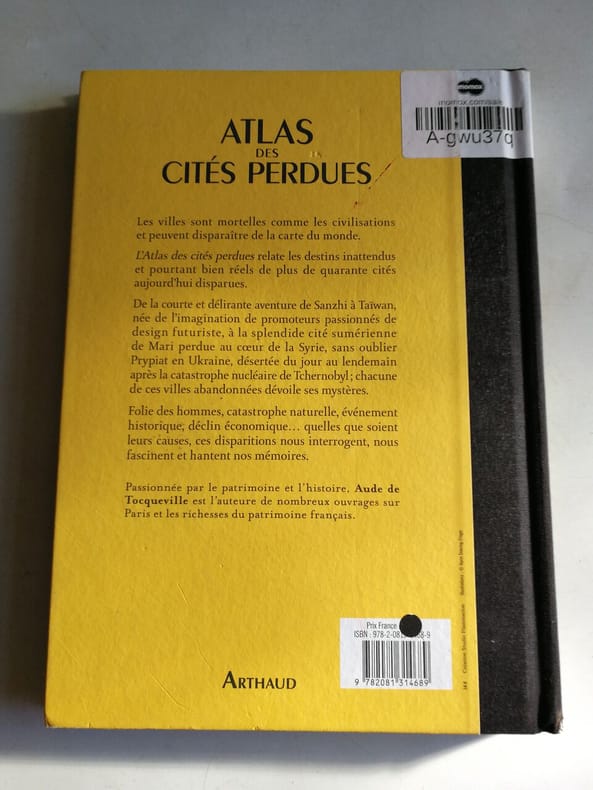
500321828Arthaud Sans date. Cet atlas explore le destin de plus de quarante cités aujourd'hui disparues illustrant la mortalité des villes et des civilisations à travers des récits inattendus mais bien réels
51669Bordeaux 2009.3 Vols in-4 couvertures à rabats illustrées en couleurs.Etui bleu-nuit.Etat de neuf.Tome 1: plans.Tome 2:334 p.Tome 3:450 p.Photos en couleurs
370x310 mm. 122 pages. Hardcover with dust-jacket. Jacket edges torn and worn. Spine edges slightly rubbed. Pages slightly yellowing. Else in good condition.
RARE comprehensive atlas of Israel covering all fields from physical, human and economic geography, to history, geology and geomorphology, botany and zoology, with numerous detailed large size maps. [SECTION EDITORS]: Cartography - Joseph Elster, Geomorphology - David H.K.Amiran, Geology - Leo Picard, Hydrology - Martin Julius Goldschmidt, Botany - Michael Zohary, Zoology - Jacob Wahrman, Land Utilization - Isaac Schattner, History - Michael Avi-Yonah, Population - Mordehai Gilead, Settlements - Joseph Elster, Agriculture - Emil Louis Levie & Samuel Pohoryles, Industry and Trade - Yitzhak Guelfat & Shaul Zarhi, Communications - Yehuda Karmon, Services - Helmut Muhsam & Amiram Gonen, Statistical Adviser - Roberto Bachi, Reproduction - Barukh Osri. The first edition in Hebrew was published in 1956-1964, this is the second English edition which was revised and published in 1970. 500x355mm. Unpaginated. Blue cloth Hardcover with plain dust-jacket laid cardboard slipcase. Gilt front cover and spine. Slipcase stained, worn and bumped (partly punctured). Jacket stained and slightly wrinkled. Jacket edges tattered. Jacket spine edges partly missing. Spine edges slightly bumped/wrinkled. Ex-libris sticker on front inner cover upper corner. Front whitepage and title page bottom corner creased. Title and first pages bottom corner slightly worn - NO damage to text. [SUMMARY]: This extremely rare, large and comprehensive atlas of Israel, especially revised and published in English as part of a collaborative project by the leading authorities in each field, is in good condition. PLEASE NOTE: This item is overweight. We may ask for extra shipping costs.
SIGNED BY AUTHOR. 22x14.5cm. 255 pages. Hardcover. Last page (containing part of plates index) and rear whitepage missing. Else in good condition.
290x225 mm. 237 pages. Hardcover with dust jacket. Cover water stained. Spine bumped. Else in good condition. PLEASE NOTE: This item is overweight. We may ask for extra shipping costs.
23.5x18cm. 157 pages. Gilt hardcover with dust jacket. Cover slightly rubbed. Cover corners and edges slightly bumped and rubbed. Spine bottom edge slightly wornt. Few pages age-stained. Stamp on page 4 - NO damage to text. Pages yellowing. Else in good condition.
Very Good Turkish, Ottoman (1500-1928) Original manuscript autograph letter signed (ALS) by Halid Fahri Ozansoy, (1891-1971), addressed to Turkish poetess Halide Nusret Zorlutuna, (1901-1984). 30x22 cm. In Ottoman script. (Signature in modern Turkish with Latin letters only). 1 p. 16 lines. Sent from Istanbul to Ankara. Dated April 18, 1970. Ozansoy was a famous Turkish poet, journalist, playwright, teacher. He is one of the Five Poets of Syllables. Ozansoy, who has worked as a literature teacher for 40 years, is a man of literature and culture who has written many works in the genres of theater and novels, especially poetry.
Very Good Turkish, Ottoman (1500-1928) Original manuscript autograph letter signed (ALS) addressed to Turkish female poet Halide Nusret Zorlutuna, (1901-1984). 22,5x17,5 cm. In Ottoman script written on a fine and special Italian hand-made paper with 'Aurelius' watermark. 1 p. on bifolium. Dated March 13, 1926. It starts as "Muhterem hemsire...". 4 lines. Signed as 'Maarif müdürü' [i.e. Director of Ministery of Education] by Mustafa Necati. Mustafa Necati Ugural was a Turkish statesman in the early years of the Turkish Republic, who served as the Minister of National Education during the reform period. He died before the Turkish Surname Law was adopted and the surname Ugural is actually the surname his family members adopted after his death. Mustafa Necati was born in 1894 in Izmir. His father was Halit and his mother was Naciye. After his primary and secondary education in Izmir, he went to Istanbul for higher education and studied law. He returned to Izmir in 1914 to serve as a lawyer and teacher. In 1915 he established a private school with his friend Vasif Çinar. He also served as a legal adviser for the local railway company. After the First World War in which the Ottoman Empire was defeated, the Allies fired the railway workers. He tried to defend the workers' rights by establishing a committee. Later he expanded his activities to defend the rights of the reserve officers who returned from the front. After Izmir was occupied by the Greek army, he fled to Istanbul and then to Balikesir, where he began to participate in the Turkish War of Independence. Among other things, he published a short-lived newspaper to defend Turkish rights against the Greek invasion. After the Ottoman parliament in Istanbul was abolished by the Allies on 16 March 1920, Turkish parliament was established in Ankara on 23 April 1920 and Mustafa Necati was elected as the Saruhan (present Manisa) MP. However, during the 1920-1922 term, he spent most of his time out of Ankara. He was appointed as a member of Independence Tribunals in Sivas and then Kastamonu. Finally, he was appointed as the chairman of Amasya Independence Tribunal. As soon as the Republic was proclaimed on 29 September 1923, Mustafa Necati became a government minister of Ismet Inönü's cabinets. His first seat was Minister of Exchange Construction and Settlement in the 1st government of Turkey. This was a very important seat for its main responsibility was the Population exchange between Greece and Turkey. In the 2nd government of Turkey, he was the Minister of Justice. However, his most important seat was that of the Minister of National Education following a revision in the 4th government of Turkey. He kept this post in the 5th government of Turkey till his death. Up to 1928, the Arabic script was used in Turkey. However, the Turkish language has 8 vowels and the Arabic script remained incapable of reproducing the Turkish words. Nevertheless, being the script of the Quran it was considered to be inalterable. But president Atatürk decided to adopt the Latin alphabet (with small changes). Moreover, he insisted that the reform should be carried out immediately. In addition to adding the Latin alphabet to school curricula, short term courses for the adults called Nation's schools (Turkish: Millet Mektebi) were established. As the minister of National Education, Mustafa Necati was responsible for establishing these courses. The courses were successful and Necati was later considered to be one of the pioneers of the new Turkish alphabet. (Wikipedia).
Very Good Turkish, Ottoman (1500-1928) Original manuscript autograph letter signed (ALS) addressed to Turkish female poet Halide Nusret Zorlutuna, (1901-1984). 20x13,5 cm. In Ottoman script written on a fine paper. 1 p. on bifolium. Dated June 16, 1926. It starts as "Azîz hemsire...". 4 lines. Signed as 'Maarif müdürü' [i.e. Director of Ministery of Education] by Mustafa Necati. Mustafa Necati Ugural was a Turkish statesman in the early years of the Turkish Republic, who served as the Minister of National Education during the reform period. He died before the Turkish Surname Law was adopted and the surname Ugural is actually the surname his family members adopted after his death. Mustafa Necati was born in 1894 in Izmir. His father was Halit and his mother was Naciye. After his primary and secondary education in Izmir, he went to Istanbul for higher education and studied law. He returned to Izmir in 1914 to serve as a lawyer and teacher. In 1915 he established a private school with his friend Vasif Çinar. He also served as a legal adviser for the local railway company. After the First World War in which the Ottoman Empire was defeated, the Allies fired the railway workers. He tried to defend the workers' rights by establishing a committee. Later he expanded his activities to defend the rights of the reserve officers who returned from the front. After Izmir was occupied by the Greek army, he fled to Istanbul and then to Balikesir, where he began to participate in the Turkish War of Independence. Among other things, he published a short-lived newspaper to defend Turkish rights against the Greek invasion. After the Ottoman parliament in Istanbul was abolished by the Allies on 16 March 1920, Turkish parliament was established in Ankara on 23 April 1920 and Mustafa Necati was elected as the Saruhan (present Manisa) MP. However, during the 1920-1922 term, he spent most of his time out of Ankara. He was appointed as a member of Independence Tribunals in Sivas and then Kastamonu. Finally, he was appointed as the chairman of Amasya Independence Tribunal. As soon as the Republic was proclaimed on 29 September 1923, Mustafa Necati became a government minister of Ismet Inönü's cabinets. His first seat was Minister of Exchange Construction and Settlement in the 1st government of Turkey. This was a very important seat for its main responsibility was the Population exchange between Greece and Turkey. In the 2nd government of Turkey, he was the Minister of Justice. However, his most important seat was that of the Minister of National Education following a revision in the 4th government of Turkey. He kept this post in the 5th government of Turkey till his death. Up to 1928, the Arabic script was used in Turkey. However, the Turkish language has 8 vowels and the Arabic script remained incapable of reproducing the Turkish words. Nevertheless, being the script of the Quran it was considered to be inalterable. But president Atatürk decided to adopt the Latin alphabet (with small changes). Moreover, he insisted that the reform should be carried out immediately. In addition to adding the Latin alphabet to school curricula, short term courses for the adults called Nation's schools (Turkish: Millet Mektebi) were established. As the minister of National Education, Mustafa Necati was responsible for establishing these courses. The courses were successful and Necati was later considered to be one of the pioneers of the new Turkish alphabet. (Wikipedia).
Very Good Turkish, Ottoman (1500-1928) Original manuscript autograph letter signed (ALS) addressed to Turkish female poet Halide Nusret Zorlutuna, (1901-1984). 22x13,5 cm. In Ottoman script written on a fine paper. "Maarif Vekâleti" [i.e. Ministry of Education] watermark. 1 p. Dated May 8, 1926. It starts as "Azîz hemsire...". 4 lines. Signed as 'Maarif müdürü' [i.e. Director of Ministery of Education] by Mustafa Necati. Mustafa Necati Ugural was a Turkish statesman in the early years of the Turkish Republic, who served as the Minister of National Education during the reform period. He died before the Turkish Surname Law was adopted and the surname Ugural is actually the surname his family members adopted after his death. Mustafa Necati was born in 1894 in Izmir. His father was Halit and his mother was Naciye. After his primary and secondary education in Izmir, he went to Istanbul for higher education and studied law. He returned to Izmir in 1914 to serve as a lawyer and teacher. In 1915 he established a private school with his friend Vasif Çinar. He also served as a legal adviser for the local railway company. After the First World War in which the Ottoman Empire was defeated, the Allies fired the railway workers. He tried to defend the workers' rights by establishing a committee. Later he expanded his activities to defend the rights of the reserve officers who returned from the front. After Izmir was occupied by the Greek army, he fled to Istanbul and then to Balikesir, where he began to participate in the Turkish War of Independence. Among other things, he published a short-lived newspaper to defend Turkish rights against the Greek invasion. After the Ottoman parliament in Istanbul was abolished by the Allies on 16 March 1920, Turkish parliament was established in Ankara on 23 April 1920 and Mustafa Necati was elected as the Saruhan (present Manisa) MP. However, during the 1920-1922 term, he spent most of his time out of Ankara. He was appointed as a member of Independence Tribunals in Sivas and then Kastamonu. Finally, he was appointed as the chairman of Amasya Independence Tribunal. As soon as the Republic was proclaimed on 29 September 1923, Mustafa Necati became a government minister of Ismet Inönü's cabinets. His first seat was Minister of Exchange Construction and Settlement in the 1st government of Turkey. This was a very important seat for its main responsibility was the Population exchange between Greece and Turkey. In the 2nd government of Turkey, he was the Minister of Justice. However, his most important seat was that of the Minister of National Education following a revision in the 4th government of Turkey. He kept this post in the 5th government of Turkey till his death. Up to 1928, the Arabic script was used in Turkey. However, the Turkish language has 8 vowels and the Arabic script remained incapable of reproducing the Turkish words. Nevertheless, being the script of the Quran it was considered to be inalterable. But president Atatürk decided to adopt the Latin alphabet (with small changes). Moreover, he insisted that the reform should be carried out immediately. In addition to adding the Latin alphabet to school curricula, short term courses for the adults called Nation's schools (Turkish: Millet Mektebi) were established. As the minister of National Education, Mustafa Necati was responsible for establishing these courses. The courses were successful and Necati was later considered to be one of the pioneers of the new Turkish alphabet. (Wikipedia).
Very Good Turkish, Ottoman (1500-1928) Original manuscript unpublished autograph poem signed by Kemal Edib. 22x16 cm. In Turkish (Modern). This is a poem / pray titled 'Hürmetine'. No date, ca. 1950. Text in Turkish: Bize lütfeyle, ilahi yüce din hürmetine! Nûr-i Kur'an-i mübin, feyz-i yakin hürmetine! Mazhar-i sirrin olan, mutlu zaman hürmetine! Vecd-i vahyin ile, kutlu zemin hürmetine - Kalem-i afvini çek, defter-i isyanimiza, Mustafa askin ile, ashab-i Güzîn hürmetine, Elimiz bos, yüzümüz kapkaradir Allah'im! Kerem et, merhamet et, ars-i berin hürmetine, Ihtirasin, hevesin, nefsin elinden kurtar, Bizi, Ta ile Ha, Ya ile Sin hürmetine, Dinle sekvâmizi, ey Rabb-i kavi, Kâbe'nde, Dökülen yas, edilen ah ü enin hürmetine - Koyma Kur'an'dan uzak, bizleri Allah'im aman Onu senden getiren, Ruh-i Emin hürmetine.". Kemal Edip Kürkçüoglu, (1902-1977), who had taught history, literature and Islamic mysticism in high schools and faculties and done administrative services, was a poet and scholar whose fifteen books about religion, history and literature had been published. Only a few of his poems had been published until today. (Source: The Poem Of Kemal Edip Kürkçüoglu Eulogizing Jalâl Al-Dîn Al-Rûmî, by Emine Terzioglu).
1972ROD0027731Non Renseigné. 1971-1972. In-8. Broché. Bon état, 1er plat abîmé, Dos satisfaisant, Intérieur frais. Brochure touristique de 64 p. - Manque sur le 1er plat - Illustrations in texte n&b.. . . . Classification Dewey : 908.449-Régionalisme : Provence-Alpes-Côte-d'Azur
192131671Paris Laurens 1921 Petit In-8 Collection "les villes d'Art célèbres" - 3ème édition revue ; Ouvrage illustré de 64 gravures (se trouvant à la fin après la table des matières) non comprises dans la pagination - 168 pp + 1 ff Table des matières
RARE comprehensive architectural and archaeological study of over forty Ayyubid monuments situated in and around the Old City of Jerusalem. The book comprises six chapters on the history and sources of the Ayyubid State, political context and architectural changes in Jerusalem under the Ayyubids, catalog of Ayyubid buildings in Jerusalem and Ayyubid architecture, as well as four appendices and numerous b&w photographs and drawings of plans, sections, elevations, etc. 295x210mm. XX+214 pages. Softcover. Text block edges slightly stained. Cover and spine slightly rubbed. Cover edges/corners and spine upper edge rubbed. Some pages bottom edge slightly bumped. Page XX bottom part wrinkled. [SUMMARY]: This extremely rare pioneering monograph on Ayyubid Jerusalem is in good condition.
Contains b&w plates. 165x115mm. VIII+244+16 pages. Dark-blue embossed cloth Hardcover. Gilt spine. Rear cover stained. Cover and spine dirty. Cover corners and spine edges bumped. Previous owners names written on front whitepages. Pages slightly yellowing and slightly wavy. Else in good condition.
Contains color and b&w plates. 19x13 cm. XI+89 pages. Gilt hardcover in dust jacket. In good condition.
303x240 mm. 137 pages. Gilt hardcover with dust jacket. In good condition. PLEASE NOTE: This item is overweight. We may ask for extra shipping costs.
Contains color plates. 340x245 mm. 137 pages. Gilt hardcover with dust-jacket. Cover slightly stained. Spine edges bumped. Else in good condition. PLEASE NOTE: This item is overweight. We may ask for extra shipping costs.
1987030137Autrement Reliure Rigide Illustrée Paris 1987 55 pages en format -12 - photographies
20984690-nnew. unknown
20984690like new. unknown
A9781138780606Paperback / softback. New. paperback
4138B. T. Batsford Ltd, London, 1945. In-8, reliure pleine toile éditeur, vii-117 pp. A note on the author - Foreword - Bath panorama - Chapter 1. Roman Bath - 2. Medieval Bath - 3. Tudor and Stuart Bath - 4. The Bath of Beau Nash - 5. The Bath of Smollett and Sheridan ...
New English Paperback. Pbo. Roy. 8vo. (24 x 17 cm). Color ills. [xxxvii], 468 p. Bati Karadeniz'de antik bir Osmanli kenti Prusias Ad Hyprium Üskübü (Konuralp).