Church of England Book of Common PrayerBiblio.com
64 résultats
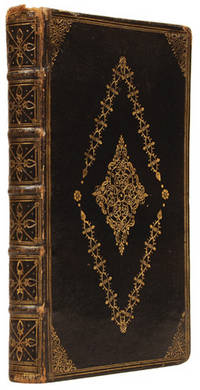
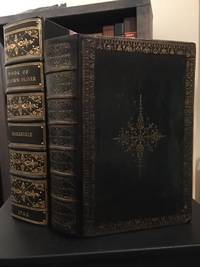
1760174<b>8vo 24.5 cm 9.6". 544 pp. contemporary full dark blue morocco rebacked with original spine panels laid down elaborately gilt-decorated spine and boards with armorial gilt centerpieces raised bands marbled endpapers all edges gilt. Second edition of Cambridge University printer John Baskerville's Book of Common Prayer including the Psalter the articles of religion and state prayers for George II. This impression printed in the same year as the first edition features decorative page borders; its title-page matches the description of Gaskell's Group 2 with the third line printed in roman and the price listed as "Seven Shillings and Six Pence unbound." Housed in a 1/4 morocco clamshell box with raised bands and gilt compartments by the Heritage bindery.</b> Printed by John Baskerville, Printer to the University; By whom they are sold, and by B. Dod, Bookseller, In Ave-Mary Lane, Lond hardcover
1717D19721London: John Baskett for John Sturt 1717. Hardcover. Very Good. 8vo 196x122 mm contemporary red morocco elaborately gilt-tooled to all-over pattern of floral and ornamental tools rebacked retaining most of worn original backstrip endpapers renewed. Volvelle on page v supplied in facsimile. xxii 166 pages; lacks the final ad leaf. Text and numerous illustrations entirely engraved throughout by John Sturt including micrographic portrait of George I double portrait of the Prince and Princess of Wales and different historiated or ornamental border on each page. 19th-century German owners' inscriptions on front endleaf. <br/><br/> John Baskett for John Sturt hardcover
171771427Oxford: imprimé par Jean Baskett imprimeur du Roi 1717. A pretty bilingual Book of Common Prayer An attractive early Georgian binding for this bilingual BCP. "A reissue of the French-English 1717 'Book of common prayer' with a new title page and preliminaries in French added before the original parallel French and English title pages and slight resetting by removal of ornaments in the direction lines" ESTC. In this copy the French title appears first followed by the French prelims and the English title precedes the text. Octavo 195 x 120 mm. Ruled in red throughout; double columns parallel English and French text. Contemporary black morocco spine divided in six compartments by raised bands compartments divided saltire-wise with dotted rules with tulip-head tools and dots sides gilt with a central lozenge built up of massed tools enclosed by an outer lozenge of rolls and flower-heads cornerpieces outer French fillet in gilt turn-ins gilt with floral roll comb-marbled endpapers gilt edges. An attractive copy with a little expert furbishment repairs to head and joints corners consolidated gilt retouched internally clean. A very good royal-ruled copy. hardcover
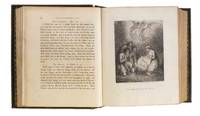
1794C3188<p><b>A splendid copy of the Good and Harding Book of Common Prayer in a striking masonic binding by John Lovejoy.</b><br /></p><p>The London bookbinder John Lovejoy <i>fl.</i> c. 1781–1812 is known by his distinctive Masonic bindings employing an array of Masonic tools often arranged in striking compositions. He was himself a Mason from around 1791 until 1812. His practices as an employer however earned him a certain notoriety among binders and the nickname 'the Tyrant': as a journeyman in 1781 he advocated a reduction in the working day from fourteen to thirteen hours but when a master binder he bitterly opposed such a change and was among the employers who prosecuted the leaders of the 1786 strike. Although it is accepted that Lovejoy was not as previously thought the only binder using Masonic motifs close comparison of the tools with other examples of his work suggests this binding to be his. </p><p>Good and Harding's 1794 Common Prayer appeared in two settings one octavo and the other a splendid large quarto as here. The fine series of stipple-engravings shows both biblical and liturgical scenes including several by Federico Bartolozzi and Luigi Schiavonetti after Thomas Stothard and Silvester Harding. The plates are variously dated between 1791 the date of the dedication and 1794 suggesting the work was several years in progress and perhaps issued in parts; copies are rarely seen with all fifteen engravings. </p><p>ESTC T88819; <i>for Lovejoy see</i> Ramsden <i>London Bookbinders 1780-1840</i> pl. XIX; <i>and </i>Howe & Childe <i>The Society of London Bookbinders 1780-1950</i>. </p><p>Large 4to 278 x 226 mm pp. xxviii 634 2 63 1 blank 176 with engraved dedication dated 23 July 1791 and 15 stipple-engraved plates by various artists; with part-titles stipple-engraved head-piece vignette to p. 1; a few signatures heavily spotted otherwise a very good copy; in contemporary green straight-grained morocco by Lovejoy borders gilt with masonic tools between swags of 3 foliate tools outer borders roll-tooled in gilt spine gilt in compartments lettered directly in one others with central Sun tool winged Asclepian staff as corner-pieces arranged with stars points fleurons and heads board edges turn-ins and morocco hinges roll-tooled in gilt edges gilt endbands sewn in red white and green on 2 cores ribbon place-markers marbled endpapers; a few minor scuffs and marks very short split to upper joint lower corners lightly bumped neatly retouched at extremities nonetheless very well-preserved; early ink ownership inscriptions 'Elizabeth Tynell' to front free endpaper verso and 'John Smith' to front flyleaf.</p> Millar Ritchie for J. Good and E. Harding
1794231248New York: Hugh Gaine 1794. hardcover. good. according to the use of the Protestant Episcopal Church in the United States of America: Together with the Psalter or Psalms of David. 364 171 5 pp. Thick 18mo contemporary calf spine and edges of corners worn corners bumped endpapers and title page lightly soiled some pages with very light foxing. New-York: By direction of the General Convention printed by Hugh Gaine 1794.<br/> <br/> In 1789 the Episcopal Church of the United States approved the use of text starting in 1790. It remained in use for the next 102 years. Evans 27577. Ford The Journals of Hugh Gaine Vol. I p. 170.<br/> <br/> Hugh Gaine unknown
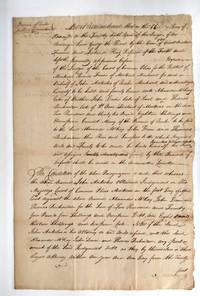
1786151130Montreal 1786-8. Very good. 7 handwritten documents and one printed document with written insertions. Folds staining chips. <br /> <br />1 Printed broadside dated April 1 and April 21 1786 and July 3 1786 with particulars of case written on recto and written text about judgment on verso. Signed by Edward Southouse as judge Edward William Gray as sheriff and T. Walker. Seal on top left corner. Folds. Stains at edges. <br /> <br />2-4 3 Documents attached two written in French. One French document signed by Languinet and the other dated August 27 1788 signed by Corbin. The latter notes receipt of 13 Louis 17 chelins 10 sols from M. Cairns. Document in English signed by Southouse and J. Beeke clerk April 25 1786. Verso dated January 8 1788. Some splitting. Small piece missing at side with no loss of text. <br /> <br />5 Reasons for Jannet McKay's opposition filed 1787. 8 p. Financial statement of the McKay estate signed by A. Davidson July 9 1787. <br /> <br />6-7 2 p. petition to have debtor appear in court. Signed by Walker for the plaintiff and John Fraser as judge March 20 1786. Affixed to this document is a note in French about the place of residene of Alexander McKay and John Davey signed by Jn Rival March 22 1786. <br /> <br />8 2 p. judgment by Southouse May 16 1786. <br/><br/>Judgement in favour of Antrobus for sum of £224 5s 9p plus £8 13s 2p and 5s for the writ. See article from the Quebec Gazette May 18 1786. <br /> <br />Antrobus is probably the merchant and office holder of this name in Trois Rivieres. Baptised July 6 1756 in Cockermouth Cumberland married on March 29 1787 in Trois Rivieres to Catherine Cuthbert died May 8 1820 and is buried in Trois Rivieres. He first appears in Quebec Cty in the 1780s as a grocer engaged in a sizable retail trade and engaged in provisioning fisheries and the West Indies. He and other merchants sent flour bread oats and biscuit to Newfoundland and imported fish seal oil and seal skins. One of the best-known merchants in the colony he was prosperous enough to buy land. unknown
171437200London: Printed by John Baskett. Printer to the Kings most Excellent Majesty and by the assigns of Thomas Newcomb and Henry Hills Deceased 1714. Engraved title page. Printed in black and red ruled in red. 1 vols. Folio. Bound in full red morocco richly gilt spine six panels raised bands gilt dentelles marbled endpapers a.e.g. Engraved title page. Printed in black and red ruled in red. 1 vols. Folio. Printed by John Baskett. Printer to the Kings most Excellent Majesty, and by the assigns of Thomas Newcomb and Henry Hills, Dece unknown
1708164124Oxford: University Printers Psalms: London William Pearson for the Company of Stationers 1709 1708. Contemporary red morocco gilt An attractive Oxford prayer book in a characteristic red morocco binding of the period. A closely related binding is recorded in Davis Gift 143 with a similar overall design and also with small stag stamps which is identified as a London binding from c.1693. The design is similar to those employed by the Spaniel Binder. Two parts in one vol. octavo 197 x 118 mm. Text ruled in red. Contemporary red morocco sides elaborately gilt including stags and small urns with flowering stems spine similarly gilt in compartments marbled endpapers gilt and gauffered edges. Extremities slightly rubbed headcaps pulled at ends; occasional light browning quire S in first work brittle with a few small holes and tears slight loss of text to lower outer corner of sig. S5 a few small marginal tears elsewhere very good. ESTC T87322 & T87301; Griffiths BCP 1708/4. unknown
1795371094New York: Hugh Gaine 1795. Printed in two columns. 208pp. A-d2 A-3B2. Folio. Contemporary black morocco gilt rebacked marbled endpapers gilt edges. Staining to title and first few leaves losses at lower outer corners of A1-C2 partly supplied in early manuscript Provenance: Christ Church Baltimore in gilt on upper cover. Printed in two columns. 208pp. A-d2 A-3B2. Folio. Very rare first folio edition of the 1789 United States Book of Common Prayer the second standard American prayer book beautifully printed by Gaine and designed for lecturn use. Most extant examples with the leaves containing the morning and evening daily prayers defective from overuse A1-C2 as here. Evans 29362; Griffiths Book of Common Prayer 1795:11; ESTC W29998 Hugh Gaine unknown
17182514The Hague: C. Fritsch 1718. Very good. 8vo. xliv 728 2 pp. text lightly foxed. Collation: a-b⸠cⶠA-2Y⸠2Zⶠ-2Z6 a blank as per the Emory Pitts copy. Bound in 18th-century red morocco boards elaborately gilt à la dentelle spine elaborately gilt with raised bands morocco label a.e.g. spine and extremities somewhat rubbed. Bookplate of the Washington Cathedral Library inside upper cover. Title-page trimmed at top removing the name of an early owner and backed with later paper. Preserved in a protective cloth case. AN ENIGMATIC BINDING AT ONE TIME ATTRIBUTED TO ROBERT AITKEN OF PHILADELPHIA THE MOST FAMOUS OF ALL EARLY AMERICAN BOOKBINDERS. CERTAINLY IT SHARES THE EXTREMELY DISTINCTIVE SPINE TOOL WITH THE NYPL-LENOX COPY OF AITKEN'S 1782 BIBLE WHICH WE EXAMINED PERSONALLY AND YET THE DENTELLE TOOLS ARE SIMILAR TO THOSE EMPLOYED BY RICHARD MONTAGU FOR THOMAS HOLLIS. <br /> <br /> This is the first complete German edition of the Book of Common Prayer including the Lections and Ordinals. It was probably translated into German by J.J. Caesar chaplain to King Frederick I of Prussia who had attempted to united the Lutheran and Reformed churches of Germany into a single episcopal church in communion with the Church of England.<br /> <br /> Published in 1718 our binding belongs certainly to the latter half of the 18th-century; it is therefore this book's second binding. The spine label reads "Prayer Book" and not "Gebet-Buch" and thus it was bound either in America or England and not in Germany or The Netherlands. Based on tool identification our binding may have been made in the same workshop as that which bound the Lenox-NYPL 1782 Aitken Bible. In 1902 the NYPL binding was attributed Aitken's own shop William Loring Andrews Bibliopegy in the United States p. 59 with a poor reproduction on plate XIV. Whereas the Lenox copy is by comparison relatively plain it shares with ours the unmistakable deformed bird / floral ornament in the spine compartments. The repeated tools on the covers have so far resisted identification despite extensive searching over a period of several years through innumerable reference works on early American and British bookbinding printed and online. Concerning the former there is a very serious lack of published scholarship and so we set our sights on the largest collection of unpublished notes on American bookbinding in the world namely Willman Spawn's gargantuan hopelessly disorganized archive of rubbings and files at the American Philosophical Society. We proceeded through Box 28 and yet more than 100 boxes remain to be explored. Whatever his nationality our binder was inspired by the work of Richard Montagu specifically his work for Thomas Hollis ca. 1758-1761 see Howard Nixon's Five Hundred Years of English Bookbinding nos. 68 and 69 although the tools are NOT identical to ours. <br /> <br /> According to a typed note from the American Cathedral Library where the present volume resided for at least 60 years until it was purchased by William Reese it was bound possibly for presentation to William White 1748-1836 the first Bishop of Philadelphia. On this card the identity of the binder is confidently assigned to Robert Aitken himself. Whether or not the binding originated from Aitken's shop or if indeed it is even American there can be no doubt that it was in Philadelphia at a very early date and its provenance is unbroken since that time see below. Certainly William White would have had need for a German language Book of Common Prayer to administer to his already significant German-speaking congregation. White knew well his Philadelphia neighbor Robert Aitken and as one of the Chaplains of the Congress of the United States he examined Aitken's Bible when it was in 1782. White was also the first President of the first Bible Society in the United States founded in Philadelphia in 1808. <br /> <br /> That Aitken printed and published the 1782 Bible does not automatically imply that he was the binder of the Lenox-NYPL copy or any others but the names of several of his former employees are known including James Muir who remained in Philadelphia and William Andrews who relocated to Boston. Another copy of the 1782 Aitken Bible remains unstudied namely that in the John Carter Brown Library which features a similarly decorated spine. <br /> <br /> Our binding was no doubt an expensive commission; that the tooling on it has remained so fresh is perhaps due to a paper or fabric covering that seems to have once surrounded it: inside the boards are traces of adhesive near the gutter margins at the top and bottom precisely where a covering would have been attached. <br /> <br /> Of this first edition of the German Language Book of Common Prayer there are copies at Huntington Lancaster Theological Seminary Colgate Rochester Crozer Divinity United Lutheran Seminary Philadelphia and Emory. <br /> <br /> ¶ PROVENANCE: William White Bishop of Philadelphia -- old presentation inscription excised from title-page no doubt written in English in the 18th century with one remaining word clearly visible: "To" -- Suffrage Episcopal Bishop of Pennsylvania Samuel Bowman 1800-1861 -- by descent to his daughter Ellen Ledlie Bowman married Thomas Hubbard Vail Episcopal Bishop of Kansas -- by descent to their daughter Kellen Sitrgreaves Vail Motter 1870-1952 -- donated to the National Cathedral Library of Washington DC -- purchased by William Reese who sold it to us on behalf of a private collector -- bought back by us in 2023. <br /> <br /> For an account of Robert Aitken's bindery see Willman and Carol Spawn's "The Aitken Shop: Identification of an Eighteenth Century Bindery and its Tools" in: PBSA LVII 1963 pp. 422-437 although the title is misleading as the images are unnecessarily few in number ditto Willman Spawn's "Extra-Gilt Bindings of Robert Aitken 1787-88" in: Proceedings of the AAS pp. 415-417. The dentelle tools on the covers of our binding appear to be reproduced here for the first time. C. Fritsch unknown
17541216301754. BOOK OF COMMON PRAYER. The Book of Common Prayer Cambridge: Printed by Joseph Bentham printer to the University by whom they are sold and by Benj. Dod in London 1760. Tall folio 10-1/2 by 16-1/2 inches full contemporary dark green morocco rebacked with elaborately gilt-decorated spine laid down with crowned monogram of George II in compartments covers with elaborately gilt-tooled borders and gilt centerpiece featuring the arms of King George II raised bands later marbled endpapers evidence of silk ties. $7500.Splendid folio Cambridge edition of the Book of Common Prayer in a beautiful armorial George II binding with broad gilt-tooled borders elaborate royal cypher in spine panels and splendid gilt centerpiece on each cover featuring the arms of King George II and text hand-ruled in red throughout.Born of Thomas Cranmer's desire for liturgical texts upon which all of Europe's Protestant English-speaking churches could agree the Book of Common Prayer first issued in 1549 with its magisterial liturgical language is ""as a source of spiritual inspiration for most Englishmen second only to the Bible"" PMM 75. This finely printed Cambridge editionset in large type with wide margins and hand-ruled in red throughoutboasts an impressive royal binding bearing the gilt monogram and crown device of King George II in the spine compartments and his gilt embossed armorial design on both boards within an ornate floral border. Griffiths 1754:1. Owner ink signature.Some faint foxing a very few leaves with light edge-wear. Expert restoration to lovely royal binding. hardcover
1769160645Oxford: Printed by T. Wright and W. Gill Printers to the University and sold by R. Baldwin and S. Crowder in London; and by W. Jackson in Oxford 1769. Extra-illustrated with a complete suite of engravings A handsome binding made for the Bible trade in contemporary red morocco. This style is sometimes called "Chippendale" acknowledging the contemporary trend towards the use of decorations on bookbindings resembling those popular in other forms of decorative art. This copy has been extra-illustrated with a complete suite of 59 engraved plates The Liturgy of the Church of England London printed by Edward Ryland 1755. The designs are by Samuel Wale 1721-1786 one of the most prolific book illustrators of the 18th century this suite being mentioned in Wale's biography in ODNB though not listed in ESTC. Among the engravers was the eldest of the copperplate printer Edward Ryland's seven sons William Wynne Ryland 1733-1783 a highly skilled engraver who was hanged for issuing two forged bills drawn on the East India Company. Provenance: John William Beaumont Pease Lord Wardington 1936-2019 bookplate; Sotheby's Wardington Library of English Bibles 12 July 2006 lot 126. Large quarto 275 x 210 mm. Extra-illustrated with a suite of 59 plates including title engraved by François Ravenet Charles Grignion Louis Gérard Scotin Walker and William Wynne Ryland after Samuel Wale. Contemporary red morocco spine gilt all over within six compartments between raised bands sides richly decorated in gilt with wide border of rococo scrollwork flowers and insects enclosing a central green morocco onlay enclosing the Sacred Monogram "J.H.S." surrounded by an oval red morocco onlay tooled with stars and dots within an oval onlay of blue morocco tooled with cherubs' heads stars dots and swags the whole surrounded by a gilt gloriole gilt turn-ins marbled endpapers gilt edges. Bookplate of Jeremy & Penny Martin. Small areas of rubbing to joints sig. A4 with marginal tears at upper inner corner and outer edge neatly closed I4 with closed tear at foot entering 10 lines of text but without loss a few minor blemishes still very good overall. ESTC T81296. hardcover
17231197771723. BOOK OF COMMON PRAYER. The Book of Common Prayer and Administration of the Sacraments. London: John Baskett and the Assigns of Thomas Newcomb and Henry Hills 1723. Tall folio 10-1/2 by 16 inches contemporary full mottled calf expertly rebacked with original spine neatly laid down corners and spine panels with gilt device of the crown of King George I raised bands renewed endpapers all edges gilt. $8250.Beautiful early 18th-century tall folio edition of the venerable Book of Common Prayer the treasury of ritual prayer and Scripture that has indelibly shaped the piety and literature of the English-speaking worldwith fine engraved frontispiece handsome in nicely restored contemporary calf featuring the gilt device of King George I in the corners and spine panels.Born of Thomas Cranmer's desire for liturgical texts upon which all of Europe's Protestant English-speaking churches could agree the beautiful and dignified language of the Book of Common Prayer first issued in 1549 has considerably influenced not only ecclesiastical practice but also literature in English. ""The language of the Prayer Book is now part of the whole language and as a source of spiritual inspiration it is for most Englishmen second only to the Bible"" PMM 75. This 1723 London edition is handsomely bound in full mottled calf with King George I's gilt monogram cipher in each corner of the boards as well as in each spine panel. Ornamented with fine engraved frontispiece dated 1710 decorative headpieces and woodcut initials. Griffiths 1723:1. A few ink corrections and marginal annotations.A few short wormtraces; text clean. Evidence of cloth ties corners expertly restored. A very handsome volume. hardcover
17151067831715. London: printed by John Baskett and by the assigns of Thomas Newcomb and Henry Hills 1715. <br /> <br /> Folio 380 23 3 pp. unpaginated text ends on Aaa4 as per ESTC. Engraved frontispiece by Loggan after Caspars. Title-page printed in red and black ruled in red throughout. Contemporary red morocco covers tooled in gilt with a wide scrolled border central gilt block of the arms of the Duke of Chandos backstrip richly gilt gilt edges a lovely binding of the period in the style of Mearne skillfully restored at head and foot and along joints. Armorial bookplate of John van Hatten.<br /> <br /> § Lovely prayer book bound for James Brydges 1st Duke of Chandos 1674-1744. It once rested on an embroidered cushion in the Duke and Duchess's private pew in his magnificent chapel at Cannons described by the architect Gibbs as "the finest in England." The centerpiece of the elaborately-tooled binding is the Duke's gilt arms supported by two otters beneath a ducal coronet. Four other bindings with the block are recorded by the British Armorial Bindings database. Full description and provenance available on request. ESTC T81463. unknown