1 880 résultats
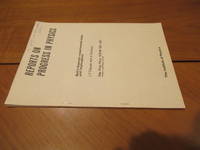
043042Institute Of Physics 1978. First Separate Ediiton . Soft cover. Fine. Pp 1881-1927 Staplebound Offprint Format With Printed Cover. First Separate Edition. Fine. Inscribed From Shimony To Adolf Grunbaum "With Best Wishes". <br/> <br/> Institute Of Physics paperback
1950046939American Physical Society / American Institute Of Physics 1950. 1st Edition . Hardcover. Near Fine. 422 Pp. Annual Volume 1950 Bound With Green Morocco Spine And Tips No Wrapers. Patterned Boards Speckled Edges Gilt Title On Spine. Near Fine No Wear Immaculate Gilt Brilliant "Hauptbucherel" Stamp And Circular Ownership Stamp In Ludwigshafen On Title Page Vertical Crease On Title Page Else Fine. Chien-Shiung Wu Chinese: ; 1912 - 1997 Was A Chinese-American Particle And Experimental Physicist Who Made Significant Contributions In The Field Of Nuclear And Particle Physics. Wu Worked On The Manhattan Project Where She Helped Develop The Process For Separating Uranium Into Uranium-235 And Uranium-238 Isotopes By Gaseous Diffusion. She Is Best Known For Conducting The Wu Experiment Which Proved That Parity Is Not Conserved. This Discovery Resulted In Her Colleagues Tsung-Dao Lee And Chen-Ning Yang Winning The 1957 Nobel Prize In Physics While Wu Herself Was Awarded The Inaugural Wolf Prize In Physics In 1978. Her Expertise In Experimental Physics Evoked Comparisons To Marie Curie. Her Nicknames Include The "First Lady Of Physics" The "Chinese Madame Curie" And The "Queen Of Nuclear Research". In September 1944 Wu Was Contacted By The Manhattan District Engineer Colonel Kenneth Nichols. Wu Was Frustrated With Her Lack Of Professorships And Volunteered To Help Out In The Project. The Newly Commissioned B Reactor The First Practical Nuclear Reactor Ever Built Which Was Located At The Hanford Site Had Run Into An Unexpected Problem Starting Up And Shutting Down At Regular Intervals. John Archibald Wheeler And Partner Enrico Fermi Suspected That A Fission Product Xe-135 With A Half-Life Of 9.4 Hours Was The Culprit And Might Be A Neutron Poison Or Absorber. Segrè Then Remembered The 1940 Phd Thesis That Wu Had Done For Him At Berkeley On The Radioactive Isotopes Of Xe And Told Fermi To "Ask Ms. Wu". After Fermi Contacted Wu Segrè Visited Her Dorm Room Together With Nichols And Collected The Typewritten Draft Prepared For The Physical Review. The Suspicions Of Fermi And Wheeler Came True Wu's Paper Unknowingly Verified That Xe-135 Was Indeed The Culprit For The B Reactor; It Turned Out To Have An Unexpectedly Large Neutron Absorption Cross-Section. Wu Also Used Her Findings In Radioactive Uranium Separation To Build The Standard Model For Producing Enriched Uranium To Fuel The Atomic Bombs At The Oak Ridge Tennessee Facility As Well As Build Innovative Geiger Counters. Wu Like Most Involved Physicists In Their Later Years Distanced Herself From The Manhattan Project Due To Its Destructive Outcome And Recommended To The Taiwanese President Chiang Kai-Shek In 1962 To Never Build Nuclear Weapons. In November 1949 Wu Experimented With The Conclusions Of Einstein's Epr Thought Experiment Which Called Quantum Entanglement "Spooky Action At A Distance". Wu Managed To Be The First To Establish The Phenomenon And Validity Of Entanglement Using Photons Through Observing Angular Correlation. Specifically The Experiment Carried Out By Wu Was The First Important Confirmation Of Quantum Results Relevant To A Pair Of Entangled Photons As Applicable To The Einstein-Podolsky-Rosen Epr Paradox. In Her Post-War Research Wu Continued To Investigate Beta Decay. In 1949 Wu Completely Established Fermi's Theory And Showed How Beta Decay Worked Especially In Creating Electrons Neutrinos And Positrons.At Columbia Wu Knew The Chinese-Born Theoretical Physicist Tsung-Dao Lee Personally. In The Mid-1950S Lee And Another Chinese Theoretical Physicist Chen Ning Yang Grew To Question A Hypothetical Law Of Elementary Particle Physics The "Law Of Conservation Of Parity". The Discovery Of Parity Violation Was A Major Contribution To Particle Physics And The Development Of The Standard Model. The Discovery Actually Set The Stage For The Development Of The Model As The Model Relied On The Idea Of Symmetry Of Particles And Forces And How Particles Can Sometimes Break That Symmetry. See The Much Longer Wikipedia Article. <br/> <br/> American Physical Society / American Institute Of Physics hardcover
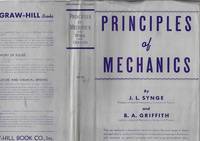
74-0069New York; London: McGraw-Hill 1970. 8vo. Dust Jacket. Signs of shelf wear. Some creasing. Some discoloration. Good with minor tears. Original Price on Dust Jacket: $4.50. First edition.advert for another book on flyleaf New York; London: McGraw-Hill, 1970. unknown
2002040334Cambridge: Harvard University Press 2002. 1st Edition 1st Printing. Hardcover. Fine/Near Fine. Photographs And Drawings In Text. 288 Pp. Black Cloth Over Black Boards. Fine In Near Fine Dust Jacket Not Price Clipped No Marks 1/8" Tear At Bottom Of Front Spine Edge Small Crease At Bottom Corner Of Front Flap. <br/> <br/> Harvard University Press hardcover
THPU-64910Paperback. NEW. US Standard Edition. We will ship same day or next day with trackable delivery method. Expedited Shipping Available. We don't entertain INTERNATIONAL orders ATM. 30-day money-back guarantee. paperback
THPU-64334Paperback. NEW. US Standard Edition. We will ship same day or next day with trackable delivery method. Expedited Shipping Available. We don't entertain INTERNATIONAL orders ATM. 30-day money-back guarantee. paperback
1961714370PN. New. 1961. Soft Cover. Date is original print. This is a reprint edition. . PN paperback
1978757079PN. New. 1978. Soft Cover. Date is original print. This is a reprint edition. . PN paperback
1978756412PN. New. 1978. Soft Cover. Date is original print. This is a reprint edition. . PN paperback
19451340403PN. New. 1945. Soft Cover. md . PN paperback
1976752878PN. New. 1976. Soft Cover. Date is original print. This is a reprint edition. . PN paperback
1950709007PN. New. 1950. Soft Cover. Date is original print. This is a reprint edition. . PN paperback
1988783336PN. New. 1988. Soft Cover. Date is original print. This is a reprint edition. . PN paperback
1968736211PN. New. 1968. Soft Cover. Date is original print. This is a reprint edition. . PN paperback
1961714488PN. New. 1961. Soft Cover. Date is original print. This is a reprint edition. . PN paperback
1962715015PN. New. 1962. Soft Cover. Date is original print. This is a reprint edition. . PN paperback
1952709730PN. New. 1952. Soft Cover. Date is original print. This is a reprint edition. . PN paperback
1952709750PN. New. 1952. Soft Cover. Date is original print. This is a reprint edition. . PN paperback
1961714335PN. New. 1961. Soft Cover. Date is original print. This is a reprint edition. . PN paperback
1964723891PN. New. 1964. Soft Cover. Date is original print. This is a reprint edition. . PN paperback
1953711903PN. New. 1953. Soft Cover. Date is original print. This is a reprint edition. . PN paperback
1957705579PN. New. 1957. Soft Cover. Date is original print. This is a reprint edition. . PN paperback
198052615Laurel MD: Johns Hopkins APL 1980. Presumed First Edition First printing thus. Hardcover. very good. 313 pages. Illustrations some in color. Maps. References. Notes. Indexes. Minor wear/soiling to boards. Bound volume includes Numbers 1-4. Binding has the name of R. J. Thompson in gilt lettering on front board. Dr. Thompson was Special Assistant to the Director of the Applied Physics Laboratory and had a long professional involvement with rocket technology development. He joined the Applied Physics Laboratory in 1974. The Johns Hopkins APL Technical Digest is an unclassified technical journal published quarterly by APL. The objective of the publication is to communicate the work performed at the Laboratory to its sponsors and to the scientific and engineering communities defense establishment academia and industry. Founded on March 10 1942-just three months after the United States entered World War II-APL was created as part of a federal government effort to mobilize scientific resources to address wartime challenges. APL was assigned the task of finding a more effective way for ships to defend themselves against enemy air attacks. The Laboratory designed built and tested a radar proximity fuze that significantly increased the effectiveness of anti-aircraft shells in the Pacific-and later ground artillery during the invasion of Europe. The product of the Laboratory's intense development effort was later judged to be along with the atomic bomb and radar one of the three most valuable technology developments of the war. On the basis of that successful collaboration the government The Johns Hopkins University and APL made a commitment to continue their strategic relationship. The Laboratory rapidly became a major contributor to advances in guided missiles and submarine technologies. Today more than seven decades later the Laboratory's numerous and diverse achievements continue to strengthen our nation. APL continues to relentlessly pursue the mission it has followed since its first day: to make critical contributions to critical challenges for our nation. Johns Hopkins APL hardcover
199152625Laurel MD: Johns Hopkins APL 1991. Presumed First Edition First printing thus. Hardcover. very good. 362 illus. some in color diagrams indexes bound volume includes Numbers 1-4. The Johns Hopkins APL Technical Digest is an unclassified technical journal published quarterly by APL. The objective of the publication is to communicate the work performed at the Laboratory to its sponsors and to the scientific and engineering communities defense establishment academia and industry. Johns Hopkins APL hardcover
199352627Laurel MD: Johns Hopkins APL 1993. Presumed First Edition First printing thus. Hardcover. fair. 379 pages. Illustrations. some in color. Diagrams. References. Notes. Indexes. Covers bound in. Large tear at bottom of spine. Bound volume includes Numbers 1-4. The Johns Hopkins APL Technical Digest is an unclassified technical journal published quarterly by APL. The objective of the publication is to communicate the work performed at the Laboratory to its sponsors and to the scientific and engineering communities defense establishment academia and industry. In this volume are articles on: spacecraft mechanisms Theater Missile Defense Unmanned Undersea Vehicles Tactical Oceanographic Monitoring System and Advanced Microwave Technology. Founded on March 10 1942-just three months after the United States entered World War II-APL was created as part of a federal government effort to mobilize scientific resources to address wartime challenges. APL was assigned the task of finding a more effective way for ships to defend themselves against enemy air attacks. The Laboratory designed built and tested a radar proximity fuze that significantly increased the effectiveness of anti-aircraft shells in the Pacific-and later ground artillery during the invasion of Europe. The product of the Laboratory's intense development effort was later judged to be along with the atomic bomb and radar one of the three most valuable technology developments of the war. On the basis of that successful collaboration the government The Johns Hopkins University and APL made a commitment to continue their strategic relationship. The Laboratory rapidly became a major contributor to advances in guided missiles and submarine technologies. Today more than seven decades later the Laboratory's numerous and diverse achievements continue to strengthen our nation. APL continues to relentlessly pursue the mission it has followed since its first day: to make critical contributions to critical challenges for our nation. Johns Hopkins APL hardcover