Barr, Thomas HBiblio.com
1 880 résultats
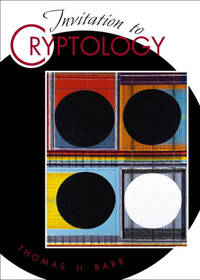
200207185Upper Saddle River NJ: Prentice Hall 2002. USA 1st printing. Owner's name to corner of endpaper Fine; no dust jacket as published. Hardcover 396pp index diagrams. This book introduces a wide range of up-to-date cryptological concepts along with the mathematical ideas that are behind them. The new and old are organized around a historical framework. A variety of mathematical topics that are germane to cryptology e.g. modular arithmetic Boolean functions complexity theory etc. are developed. 2.3 JM HOJ 303/0. 1st. Hardcover. Fine/No Dust Jacket. 8vo - over 7¾" - 9¾". Prentice Hall Hardcover
199400001966Oxford University Press USA 1994. reprint. Paperback. As New. <br/><br/> Oxford University Press, USA paperback
1925529568.Gpaperback. Good. Access codes and supplements are not guaranteed with used items. May be an ex-library book. paperback
1959040892Utrecht: Rijksuniversiteit Te Utrecht 1959. 1st Edition . Soft cover. Near Fine. 19 Pp. Printed Beige Wrappers. Near Fine. Nicolaas 'Nico' Godfried Van Kampen 1921 -2013 Was A Dutch Theoretical Physicist Who Worked Mainly On Statistical Mechanics And Non-Equilibrium Thermodynamics. Van Kampen Was Born In Leiden And Was A Nephew Of Frits Zernike. He Studied Physics At Leiden University Where In 1952 Under The Direction Of Hendrik Anthony Kramers He Earned His Phd With Thesis Contributions To The Quantum Theory Of Light Scattering. He Showed In His Thesis How To Deal With Singularities In Quantum Mechanical Scattering Processes Which Was An Important Step In The Development Of Renormalization According To Kramers. Van Kampen Made Fundamental Contributions To Non-Equilibrium Processes In Particular On The Master Equation And In Many-Body Theory Especially In Plasma Physics. His Work On Non-Equilibrium Processes Began In 1953 In The Research Group Of Sybren Ruurds De Groot The Successor To Kramers In Leiden. In 1955 Van Kampen Joined The Institute Of Theoretical Physics At Utrecht University Where He Later Became Full Professor And Professor Emeritus After His Retirement. His Monograph Stochastic Processes In Physics And Chemistry 1981 Is Considered A Classic. In His 2002 Book Waanwetenschap Science Van Kampen Condemned What He Saw As Pseudoscience Even Within The Scientific Community; The Book Met With A Mixed Reaction - Five Scientists Including Vincent Icke Floris Takens And Dennis Dieks Wrote A Commentary On His Book. Nico Van Kampen Was An Uncle Of The Dutch Theoretical Physicist And Nobel Prize Winner Gerard 'T Hooft And He Encouraged 'T Hooft To Study Physics In Utrecht.7 Van Kampen Was A Member Of The Royal Netherlands Academy Of Arts And Sciences Since 1973. Nico Van Kampen Was A Severe Critic Of Non-Orthodox Interpretations Of Quantum Mechanics. Some Of His Views On This Subject Were Published In An Article Entitled The Scandal Of Quantum Mechanics . He Disclosed His Own Approach To Quantum Mechanics In A Paper Entitled Ten Theorems About Quantum Mechanical Measurements. Courtesy Wikipedia. <br/> <br/> Rijksuniversiteit Te Utrecht paperback
059841Joseph Henry Laboratories Princeton Unibversity 1975. 1st Edition . Soft cover. Fine. I 538-605 Pp. Offprint In Card Covers With Cutout Front Cover Black Binding. Near Fine Slight Aging To Covers. Inscribed By Wheeler To Adolf Grunebaum. Per Wikipedia Adolf Grünbaum 1923 - 2018 Was A German-American Philosopher Of Science And A Critic Of Both Psychoanalysis And Karl Popper's Philosophy Of Science. He Was The First Andrew Mellon Professor Of Philosophy At The University Of Pittsburgh From 1960 Until His Death And Also Served As Co-Chairman Of Its Center For Philosophy Of Science From 1978 Research Professor Of Psychiatry From 1979 And Primary Research Professor In The Department Of History And Philosophy Of Science From 2006. His Works Include Philosophical Problems Of Space And Time 1963 The Foundations Of Psychoanalysis 1984 And Validation In The Clinical Theory Of Psychoanalysis 1993. <br/> <br/> Joseph Henry Laboratories, Princeton Unibversity paperback
1980035787Cambridge: Cambridge University Press 1980. 1st Edition 1st Printing. Soft cover. Fine. 26 Pp. Yellow Wrappers Printed In Black. First Printing. Fine No Wear Or Marks Or Fading. <br/> <br/> Cambridge University Press paperback
1958019579Cambridge: Harvard University Press 1958. First Edition . Cloth. Fine/Fine DJ. 501 Pp. Red Brown Cloth Gilt. First Printing Fine In Fine Dust Jacket. Bright Clean No Names Or Marks Except Price On Dj Is Neatly Inked Out. <br/> <br/> Harvard University Press hardcover
1970049990Japan Electron Optics Laboratory Co 1970. 1st Edition . Soft cover. Fine. Group Of 28 Catalogs Staple-Bound But All Attached Together With Large Acco-Fastener Else Fine No Marks. Undated In General One Dated 1965 Anothernear The End Is Dated 1970 So Probably Late 1960'S To Early 1970'S. A Very Rare Set Of Catalogs/ Manuals As This Was Very Expensive Cutting Edge Equipment And Few Institutions Could Afford To Purchase Them. All Well Illustrated With Photos Of The Equipment Tables Charts And Multiple Examples Of Images Taken By The Equipment. <br/> <br/> Japan Electron Optics Laboratory Co paperback
19432082402113500133Japan Mathematical Physics Society 1943. Soft Cover. Fine. Volume: 1 Japan Mathematical Physics Society paperback
1985004443New York:: William Morrow and Company Inc. 1985. A beautiful copy. Bright shiny clean square and tight. Sharp corners. Jacket is NOT price clipped 15.95. No chips. No tears. No creases. Protected by a removable Brodart clear plastic sleeve. No owner's name or bookplate. No remainder mark. Text is fresh and crisp. No underlining. No highlighting. No margin notes. List of sources. Index. "First Edition" is so stated with complete number row 1234567890 on the copyright page. Bound in the original gray boards with a black cloth spine lettered in silver. From the Dust Jacket: "Wilcox gives the first detailed account of Japan's version of the Manhattan Project -- from its earliest days to the possible testing of an actual weapon. The story involves not only Japan's leading scientists but also a network of Spanish spies working in North America and a German U-boat desperately trying to reach Japan with a cargo of uranium." Keywords: WW2. WWII. . First Printing of the First Edition. Hard Cover. Fine condition./Fine dust jacket. 8vo. 236pp. William Morrow and Company, Inc. Hardcover
2008058689Pasadena: Armory Center For The Arts 2008. 1st Edition 1st Printing. Soft cover. Fine. Color Illustrations Throughout. 40 Pp. Brochure For The Art Exhibition In 2008 Text And Many Color Illustrations Of Work By Zorthian And Feynman. One Of Only 1000 Copies. <br/> <br/> Armory Center For The Arts paperback
198052615Laurel MD: Johns Hopkins APL 1980. Presumed First Edition First printing thus. Hardcover. very good. 313 pages. Illustrations some in color. Maps. References. Notes. Indexes. Minor wear/soiling to boards. Bound volume includes Numbers 1-4. Binding has the name of R. J. Thompson in gilt lettering on front board. Dr. Thompson was Special Assistant to the Director of the Applied Physics Laboratory and had a long professional involvement with rocket technology development. He joined the Applied Physics Laboratory in 1974. The Johns Hopkins APL Technical Digest is an unclassified technical journal published quarterly by APL. The objective of the publication is to communicate the work performed at the Laboratory to its sponsors and to the scientific and engineering communities defense establishment academia and industry. Founded on March 10 1942-just three months after the United States entered World War II-APL was created as part of a federal government effort to mobilize scientific resources to address wartime challenges. APL was assigned the task of finding a more effective way for ships to defend themselves against enemy air attacks. The Laboratory designed built and tested a radar proximity fuze that significantly increased the effectiveness of anti-aircraft shells in the Pacific-and later ground artillery during the invasion of Europe. The product of the Laboratory's intense development effort was later judged to be along with the atomic bomb and radar one of the three most valuable technology developments of the war. On the basis of that successful collaboration the government The Johns Hopkins University and APL made a commitment to continue their strategic relationship. The Laboratory rapidly became a major contributor to advances in guided missiles and submarine technologies. Today more than seven decades later the Laboratory's numerous and diverse achievements continue to strengthen our nation. APL continues to relentlessly pursue the mission it has followed since its first day: to make critical contributions to critical challenges for our nation. Johns Hopkins APL hardcover
199152625Laurel MD: Johns Hopkins APL 1991. Presumed First Edition First printing thus. Hardcover. very good. 362 illus. some in color diagrams indexes bound volume includes Numbers 1-4. The Johns Hopkins APL Technical Digest is an unclassified technical journal published quarterly by APL. The objective of the publication is to communicate the work performed at the Laboratory to its sponsors and to the scientific and engineering communities defense establishment academia and industry. Johns Hopkins APL hardcover
199352627Laurel MD: Johns Hopkins APL 1993. Presumed First Edition First printing thus. Hardcover. fair. 379 pages. Illustrations. some in color. Diagrams. References. Notes. Indexes. Covers bound in. Large tear at bottom of spine. Bound volume includes Numbers 1-4. The Johns Hopkins APL Technical Digest is an unclassified technical journal published quarterly by APL. The objective of the publication is to communicate the work performed at the Laboratory to its sponsors and to the scientific and engineering communities defense establishment academia and industry. In this volume are articles on: spacecraft mechanisms Theater Missile Defense Unmanned Undersea Vehicles Tactical Oceanographic Monitoring System and Advanced Microwave Technology. Founded on March 10 1942-just three months after the United States entered World War II-APL was created as part of a federal government effort to mobilize scientific resources to address wartime challenges. APL was assigned the task of finding a more effective way for ships to defend themselves against enemy air attacks. The Laboratory designed built and tested a radar proximity fuze that significantly increased the effectiveness of anti-aircraft shells in the Pacific-and later ground artillery during the invasion of Europe. The product of the Laboratory's intense development effort was later judged to be along with the atomic bomb and radar one of the three most valuable technology developments of the war. On the basis of that successful collaboration the government The Johns Hopkins University and APL made a commitment to continue their strategic relationship. The Laboratory rapidly became a major contributor to advances in guided missiles and submarine technologies. Today more than seven decades later the Laboratory's numerous and diverse achievements continue to strengthen our nation. APL continues to relentlessly pursue the mission it has followed since its first day: to make critical contributions to critical challenges for our nation. Johns Hopkins APL hardcover
198552620Laurel MD: Johns Hopkins APL 1985. Presumed First Edition First printing thus. Hardcover. very good. 392 illus. some in color diagrams references notes indexes minor wear/soiling to boards bound volume includes Numbers 1-4. This copy belonged to R. J. Thompson special assistant to the Director of the Applied Physics Laboratory. This volume includes an insightful discussion on technology and national security No. 4 pages 161-163 by Harold Brown formerly Secretary of the Air Force Secretary of Defense and President of the California Institute of Technology. The Johns Hopkins APL Technical Digest is an unclassified technical journal published quarterly by APL. The objective of the publication is to communicate the work performed at the Laboratory to its sponsors and to the scientific and engineering communities defense establishment academia and industry. Founded on March 10 1942-just three months after the United States entered World War II-APL was created as part of a federal government effort to mobilize scientific resources to address wartime challenges. APL was assigned the task of finding a more effective way for ships to defend themselves against enemy air attacks. The Laboratory designed built and tested a radar proximity fuze that significantly increased the effectiveness of anti-aircraft shells in the Pacific-and later ground artillery during the invasion of Europe. The product of the Laboratory's intense development effort was later judged to be along with the atomic bomb and radar one of the three most valuable technology developments of the war. On the basis of that successful collaboration the government The Johns Hopkins University and APL made a commitment to continue their strategic relationship. The Laboratory rapidly became a major contributor to advances in guided missiles and submarine technologies. Today more than seven decades later the Laboratory's numerous and diverse achievements continue to strengthen our nation. APL continues to relentlessly pursue the mission it has followed since its first day: to make critical contributions to critical challenges for our nation. Johns Hopkins APL hardcover
198252617Laurel MD: Johns Hopkins APL 1982. Presumed First Edition First printing thus. Hardcover. very good. 368 pages. Illustrations some in color. Diagrams. References. Notes. Indexes. Minor wear/soiling to boards. Bound volume includes Numbers 1-4. The Johns Hopkins APL Technical Digest is an unclassified technical journal published quarterly by APL. The objective of the publication is to communicate the work performed at the Laboratory to its sponsors and to the scientific and engineering communities defense establishment academia and industry. Includes articles on: Airborne Radiometric Measurements WAVDYN ELF Electromagnetic Richard Kershner Talos Missile Propulsion System Booster Rockets Guidance System Flight Tests Combat Casualty Care Persons with Disabilities Rehabilitation Assistive Technology Handicapped Magsat Gregorian Calendar and Radio Proximity Fuze. Founded on March 10 1942-just three months after the United States entered World War II-APL was created as part of a federal government effort to mobilize scientific resources to address wartime challenges. APL was assigned the task of finding a more effective way for ships to defend themselves against enemy air attacks. The Laboratory designed built and tested a radar proximity fuze that significantly increased the effectiveness of anti-aircraft shells in the Pacific-and later ground artillery during the invasion of Europe. The product of the Laboratory's intense development effort was later judged to be along with the atomic bomb and radar one of the three most valuable technology developments of the war. On the basis of that successful collaboration the government The Johns Hopkins University and APL made a commitment to continue their strategic relationship. The Laboratory rapidly became a major contributor to advances in guided missiles and submarine technologies. Today more than seven decades later the Laboratory's numerous and diverse achievements continue to strengthen our nation. APL continues to relentlessly pursue the mission it has followed since its first day: to make critical contributions to critical challenges for our nation. Johns Hopkins APL hardcover
198452619Laurel MD: Johns Hopkins APL 1984. Presumed First Edition First printing thus. Hardcover. good. 420 pages. Illustrations some in color. Diagrams. References. Notes. Indexes. Some wear/soiling to boards. Scuff at bottom of spine. Bound volume includes Numbers 1-4. This copy belonged to R. J. Thompson special assistant to the Director of the Applied Physics Laboratory. The Johns Hopkins APL Technical Digest is an unclassified technical journal published quarterly by APL. The objective of the publication is to communicate the work performed at the Laboratory to its sponsors and to the scientific and engineering communities defense establishment and industry. Issue #3 has a computer technology theme. This volume also includes articles on: Command and Control Photoradiation Therapy Drag Reduction Image Processing HILAT Spacecraft Ocean Thermal Energy Autopilot ADA AMPTE APLNET Navigation Satellite Loran-C Global Positioning System Remote Sensing Radar Altimetry Spaceborne Synthetic Aperture Radar Industrial Innovation Waveguide Acoustics and Prime Meridian. Founded on March 10 1942-just three months after the United States entered World War II-APL was created as part of a federal government effort to mobilize scientific resources to address wartime challenges. APL was assigned the task of finding a more effective way for ships to defend themselves against enemy air attacks. The Laboratory designed built and tested a radar proximity fuze that significantly increased the effectiveness of anti-aircraft shells in the Pacific-and later ground artillery during the invasion of Europe. The product of the Laboratory's intense development effort was later judged to be along with the atomic bomb and radar one of the three most valuable technology developments of the war. On the basis of that successful collaboration the government The Johns Hopkins University and APL made a commitment to continue their strategic relationship. The Laboratory rapidly became a major contributor to advances in guided missiles and submarine technologies. Today more than seven decades later the Laboratory's numerous and diverse achievements continue to strengthen our nation. APL continues to relentlessly pursue the mission it has followed since its first day: to make critical contributions to critical challenges for our nation. Johns Hopkins APL hardcover
199452628Laurel MD: Johns Hopkins APL 1994. Presumed First Edition First printing thus. Hardcover. very good. 372 illus. some in color diagrams references notes indexes bound volume includes Numbers 1-4. The Johns Hopkins APL Technical Digest is an unclassified technical journal published quarterly by APL. The objective of the publication is to communicate the work performed at the Laboratory to its sponsors and to the scientific and engineering communities defense establishment academia and industry. Founded on March 10 1942-just three months after the United States entered World War II-APL was created as part of a federal government effort to mobilize scientific resources to address wartime challenges. APL was assigned the task of finding a more effective way for ships to defend themselves against enemy air attacks. The Laboratory designed built and tested a radar proximity fuze that significantly increased the effectiveness of anti-aircraft shells in the Pacific-and later ground artillery during the invasion of Europe. The product of the Laboratory's intense development effort was later judged to be along with the atomic bomb and radar one of the three most valuable technology developments of the war. On the basis of that successful collaboration the government The Johns Hopkins University and APL made a commitment to continue their strategic relationship. The Laboratory rapidly became a major contributor to advances in guided missiles and submarine technologies. Today more than seven decades later the Laboratory's numerous and diverse achievements continue to strengthen our nation. APL continues to relentlessly pursue the mission it has followed since its first day: to make critical contributions to critical challenges for our nation. Johns Hopkins APL hardcover
199052624Laurel MD: Johns Hopkins APL 1990. Presumed First Edition First printing thus. Hardcover. good. 433 pages. Illustrations some in color. Diagrams. References. Notes. Indexes. Some wear to boards. Bound volume includes Numbers 1-4. Minor discoloration at rear page. The Johns Hopkins APL Technical Digest is an unclassified technical journal published quarterly by APL. The objective of the publication is to communicate the work performed at the Laboratory to its sponsors and to the scientific and engineering communities defense establishment academia and industry. Issues 1 and 2 are combined. This is a 10th anniversary issue of the APL Technical Digest. Topics include Fleet Defense Oceanography Space Science and technology Computer Design and Applications Microelectronics Biomedical Research and Basic Science. Topics in issues 3 and 4 also a joint issueinclude: Space Air and Oceans National Aerospace Plane and Directional Ocean Wave Spectra. Founded on March 10 1942-just three months after the United States entered World War II-APL was created as part of a federal government effort to mobilize scientific resources to address wartime challenges. APL was assigned the task of finding a more effective way for ships to defend themselves against enemy air attacks. The Laboratory designed built and tested a radar proximity fuze that significantly increased the effectiveness of anti-aircraft shells in the Pacific-and later ground artillery during the invasion of Europe. The product of the Laboratory's intense development effort was later judged to be along with the atomic bomb and radar one of the three most valuable technology developments of the war. On the basis of that successful collaboration the government The Johns Hopkins University and APL made a commitment to continue their strategic relationship. The Laboratory rapidly became a major contributor to advances in guided missiles and submarine technologies. Today more than seven decades later the Laboratory's numerous and diverse achievements continue to strengthen our nation. APL continues to relentlessly pursue the mission it has followed since its first day: to make critical contributions to critical challenges for our nation. Johns Hopkins APL hardcover
198652621Laurel MD: Johns Hopkins APL 1986. Presumed First Edition First printing thus. Hardcover. good. 423 illus. some in color diagrams references notes index bound volume includes Numbers 1-4. Scuff/chip to top of front board at spine. This copy belonged to R. J. Thompson special assistant to the Director of the Applied Physics Laboratory. The Johns Hopkins APL Technical Digest is an unclassified technical journal published quarterly by APL. The objective of the publication is to communicate the work performed at the Laboratory to its sponsors and to the scientific and engineering communities defense establishment academia and industry. Issue 3 has 11 articles in its 'Theme Articles' section-- most related to computing and microelectronics in significant ways. Other articles address: Artificial Intelligence Computer Vision Expert System Molecular Electronics Nuclear Winter Solar Seismology Satellite Transmitter Viking Satellite Program and Magnetospheres. Founded on March 10 1942-just three months after the United States entered World War II-APL was created as part of a federal government effort to mobilize scientific resources to address wartime challenges. APL was assigned the task of finding a more effective way for ships to defend themselves against enemy air attacks. The Laboratory designed built and tested a radar proximity fuze that significantly increased the effectiveness of anti-aircraft shells in the Pacific-and later ground artillery during the invasion of Europe. The product of the Laboratory's intense development effort was later judged to be along with the atomic bomb and radar one of the three most valuable technology developments of the war. On the basis of that successful collaboration the government The Johns Hopkins University and APL made a commitment to continue their strategic relationship. The Laboratory rapidly became a major contributor to advances in guided missiles and submarine technologies. Today more than seven decades later the Laboratory's numerous and diverse achievements continue to strengthen our nation. APL continues to relentlessly pursue the mission it has followed since its first day: to make critical contributions to critical challenges for our nation. Johns Hopkins APL hardcover
198352618Laurel MD: Johns Hopkins APL 1983. Presumed First Edition First printing thus. Hardcover. good. 306 pages. Illustrations some in color. Diagrams. References. Notes. Indexes. Some abrasion at lower spine. Bound volume includes Numbers 1-4. This copy belonged to R. J. Thompson special assistant to the Director of the Applied Physics Laboratory. The Johns Hopkins APL Technical Digest is an unclassified technical journal published quarterly by APL. The objective of the publication is to communicate the work performed at the Laboratory to its sponsors and to the scientific and engineering communities defense establishment academia and industry. Founded on March 10 1942-just three months after the United States entered World War II-APL was created as part of a federal government effort to mobilize scientific resources to address wartime challenges. APL was assigned the task of finding a more effective way for ships to defend themselves against enemy air attacks. The Laboratory designed built and tested a radar proximity fuze that significantly increased the effectiveness of anti-aircraft shells in the Pacific-and later ground artillery during the invasion of Europe. The product of the Laboratory's intense development effort was later judged to be along with the atomic bomb and radar one of the three most valuable technology developments of the war. On the basis of that successful collaboration the government The Johns Hopkins University and APL made a commitment to continue their strategic relationship. The Laboratory rapidly became a major contributor to advances in guided missiles and submarine technologies. Today more than seven decades later the Laboratory's numerous and diverse achievements continue to strengthen our nation. APL continues to relentlessly pursue the mission it has followed since its first day: to make critical contributions to critical challenges for our nation. Johns Hopkins APL hardcover
198952623Laurel MD: Johns Hopkins APL 1989. Presumed First Edition First printing thus. Hardcover. very good. 446 illus. some in color diagrams references notes indexes minor wear/soiling to boards bound volume includes Numbers 1-4. The Johns Hopkins APL Technical Digest is an unclassified technical journal published quarterly by APL. The objective of the publication is to communicate the work performed at the Laboratory to its sponsors and to the scientific and engineering communities defense establishment academia and industry. The third issue in this volume has the theme articles focuses on "Computing at APL Moves into the Nineties." Other notable articles in this volume are: Optical Processing Radar Signal Analysis. APL's Master's Degree Program in Computer Science Delta-K Radar Synthetic Aperture Radar Geosat Altimetry and Spacecraft Altimeters. Founded on March 10 1942-just three months after the United States entered World War II-APL was created as part of a federal government effort to mobilize scientific resources to address wartime challenges. APL was assigned the task of finding a more effective way for ships to defend themselves against enemy air attacks. The Laboratory designed built and tested a radar proximity fuze that significantly increased the effectiveness of anti-aircraft shells in the Pacific-and later ground artillery during the invasion of Europe. The product of the Laboratory's intense development effort was later judged to be along with the atomic bomb and radar one of the three most valuable technology developments of the war. On the basis of that successful collaboration the government The Johns Hopkins University and APL made a commitment to continue their strategic relationship. The Laboratory rapidly became a major contributor to advances in guided missiles and submarine technologies. Today more than seven decades later the Laboratory's numerous and diverse achievements continue to strengthen our nation. APL continues to relentlessly pursue the mission it has followed since its first day: to make critical contributions to critical challenges for our nation. Johns Hopkins APL hardcover
198152616Laurel MD: Johns Hopkins APL 1981. Presumed First Edition First printing thus. Hardcover. very good. 342 illus. some in color diagrams references notes indexes minor wear/soiling to boards bound volume includes Numbers 1-4. This copy belonged to R. J. Thompson Special Assistant to the Director of the Applied Physics Laboratory. The Johns Hopkins APL Technical Digest is an unclassified technical journal published quarterly by APL. The objective of the publication is to communicate the work performed at the Laboratory to its sponsors and to the scientific and engineering communities defense establishment academia and industry. Founded on March 10 1942-just three months after the United States entered World War II-APL was created as part of a federal government effort to mobilize scientific resources to address wartime challenges. APL was assigned the task of finding a more effective way for ships to defend themselves against enemy air attacks. The Laboratory designed built and tested a radar proximity fuze that significantly increased the effectiveness of anti-aircraft shells in the Pacific-and later ground artillery during the invasion of Europe. The product of the Laboratory's intense development effort was later judged to be along with the atomic bomb and radar one of the three most valuable technology developments of the war. On the basis of that successful collaboration the government The Johns Hopkins University and APL made a commitment to continue their strategic relationship. The Laboratory rapidly became a major contributor to advances in guided missiles and submarine technologies. Today more than seven decades later the Laboratory's numerous and diverse achievements continue to strengthen our nation. APL continues to relentlessly pursue the mission it has followed since its first day: to make critical contributions to critical challenges for our nation. Johns Hopkins APL hardcover
198752622Laurel MD: Johns Hopkins APL 1987. Presumed First Edition First printing thus. Hardcover. very good. 430 illus. some in color diagrams references notes index minor wear/soiling to boards bound volume includes Numbers 1-4. This copy belonged to R. J. Thompson special assistant to the Director of the Applied Physics Laboratory. The Johns Hopkins APL Technical Digest is an unclassified technical journal published quarterly by APL. The objective of the publication is to communicate the work performed at the Laboratory to its sponsors and to the scientific and engineering communities defense establishment academia and industry. Founded on March 10 1942-just three months after the United States entered World War II-APL was created as part of a federal government effort to mobilize scientific resources to address wartime challenges. APL was assigned the task of finding a more effective way for ships to defend themselves against enemy air attacks. The Laboratory designed built and tested a radar proximity fuze that significantly increased the effectiveness of anti-aircraft shells in the Pacific-and later ground artillery during the invasion of Europe. The product of the Laboratory's intense development effort was later judged to be along with the atomic bomb and radar one of the three most valuable technology developments of the war. On the basis of that successful collaboration the government The Johns Hopkins University and APL made a commitment to continue their strategic relationship. The Laboratory rapidly became a major contributor to advances in guided missiles and submarine technologies. Today more than seven decades later the Laboratory's numerous and diverse achievements continue to strengthen our nation. APL continues to relentlessly pursue the mission it has followed since its first day: to make critical contributions to critical challenges for our nation. Johns Hopkins APL hardcover
199252626Laurel MD: Johns Hopkins APL 1992. Presumed First Edition First printing thus. Hardcover. good. 537 illus. some in color diagrams references notes indexes small tear at bottom of spine bound volume includes Numbers 1-4. The Johns Hopkins APL Technical Digest is an unclassified technical journal published quarterly by APL. The objective of the publication is to communicate the work performed at the Laboratory to its sponsors and to the scientific and engineering communities defense establishment academia and industry. This volume celebrates the 50th anniversary of the Applied Physics Laboratory. Topics in this issue include: Surface Fleet Defense Air and Underwater Systems Space Development and Research Neural Network Complex Systems Scanning Tunneling Microscopy Materials Research Thermal Shock Missile Radome Gallium Arsenide. The fourth issue has a focus on The Johns Hopkins National Search for Computing Applications to Assist Persons with Disabilities Founded on March 10 1942-just three months after the United States entered World War II-APL was created as part of a federal government effort to mobilize scientific resources to address wartime challenges. APL was assigned the task of finding a more effective way for ships to defend themselves against enemy air attacks. The Laboratory designed built and tested a radar proximity fuze that significantly increased the effectiveness of anti-aircraft shells in the Pacific-and later ground artillery during the invasion of Europe. The product of the Laboratory's intense development effort was later judged to be along with the atomic bomb and radar one of the three most valuable technology developments of the war. On the basis of that successful collaboration the government The Johns Hopkins University and APL made a commitment to continue their strategic relationship. The Laboratory rapidly became a major contributor to advances in guided missiles and submarine technologies. Today more than seven decades later the Laboratory's numerous and diverse achievements continue to strengthen our nation. APL continues to relentlessly pursue the mission it has followed since its first day: to make critical contributions to critical challenges for our nation. Johns Hopkins APL hardcover