Einstein, Albert; [Hans A Einstein]Biblio.com
850 résultats
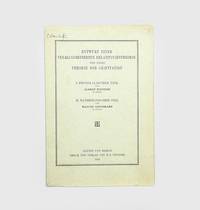
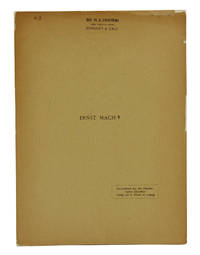
1916140941831Leipzig Germany: S. Hirzel 1916. First separate edition. First separate edition. 4 pp. Illustrated with portrait of August Mach from photograph. Publisher's original printed wrappers. Very Good with some small chips to fragile wrappers faint crease to top of front wrap contents toned with age. This copy belonged to Hans Albert Einstein Albert Einstein’s oldest son with his inkstamp at top of front wrapper; likely a presentation copy from his father. Neatly written at top of front wrapper is "43" and date "14.III.16." OCLC/WorldCat locates four copies two at the University of Toronto one at the Smithsonian Institution and one at the American Philosophical Society. Weil 89.<br /> <br /> <p>Very rare author's offprint stating "Uberreicht vom Verfasser" of the eulogy by Albert Einstein for fellow physicist Ernst Mach as first published in Physikalischen Zeitschrift. A noted scientist in his own right Mach is best known for the concept of "Mach's principle" which asserts that an entity's inertial mass is determined by all the other masses in the universe. Einstein in fact coined the phrase "Mach's principle" and his application of it had major ramifications for the development of his theory of general relativity Einstein in 1918 labeling it one of the "three pillars" of general relativity. S. Hirzel unknown
1951WB16897New York: Van Vechten Press 1951. Limited Edition. Hardcover. Fine. One of a total edition of 350. Full blue morocco binding by Suzanne Schrag; housed in clamshell box also by Schrag. With dedicatory essays by John Berryman Herman Broch Albert Einstein Ben Shahn Thomas Mann and others. <br/><br/> Van Vechten Press hardcover
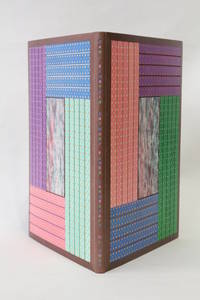
193067602Paris: Edition de la Galerie Simon 1930. Fine. Edition de la Galerie Simon Paris 1930 19 x 25 cm relié Entwurf einer Landschaft Sketch of a Landscape Édition de la Galerie Simon Paris 1930 19 x 25 cm full calf First edition one of 90 numbered copies on Holland paper signed by Carl Einstein and Gaston-Louis Roux on the justification page the only issue with 10 copies on Japan paper and 10 on Chapelle paper. With five full page black lithographs by Gaston-Louis Roux one of which on the frontispiece. Binding in full brown-pink box spine with blue pink and green title in ser significant inlaid decoration on the boards four bands of five strips of pink purple green and blue calf arranged around a central piece of rectangular multi-colored marbled box endpapers in flesh-side pink suede wrappers and spine preserved all edges gilt dust jacket in half brown-pink box spine with blue pink and green title in ser slip case lined with brown-pink box binding signed by Georges Leroux and dated 1994. Carl Einstein is an anarchist writer art historian friend of George Grosz Georges Braque and Pablo Picasso collaborator of Jean Renoir lived through the wars and revolutions that shook Europe during the first part of the twentieth century. He volunteer during the Spanish civil revolution in 1936 and went to Barcelona to fight in the ranks of the Confédération nationale du tra vail National Labor Confederation before joining the Groupe international de la Colonne Durruti Durruti Column International Group. Of Jewish faith he committed suicide in 1940 to avoid failing into the hands of the Nazis. Magnificent copy perfectly set in a full inlaid box binding signed by Georges Leroux one of the greatest binders of the second part of the 20th century. Edition de la Galerie Simon hardcover
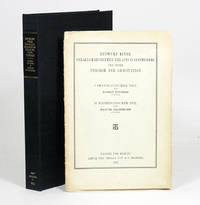
1913188059Leipzig and Berlin: B. G. Teubner 1913. Generalizing relativity First edition of Einstein's early articulation of general relativity his first paper to describe gravity as the curvature of spacetime containing "virtually all the essential features of his general theory of relativity" Norton p. 253. In 1912 Einstein's old school friend Marcel Grossman 1878-1936 secured him a professorship at ETH Zurich where they had both studied as undergraduates. The two men began a collaboration to provide a firmer mathematical foundation to Einstein's concept of gravity as a geometrical property of time and space. The two sections of the Entwurf outline the resulting theory in full complete with gravitational field equations relating the curvature of spacetime to the distribution of mass and energy within it. Einstein contributed the initial section focussing on physical theories while Grossman added the following section developing the more complex mathematical formulae. Michel Janssen editor of the Einstein Papers Project notes that the Entwurf "was published as a separatum in early 1913 and was reprinted the following year in Zeitschrift für Mathematik und Physik" p. 1. The Zeitschrift reprint includes an added section outlining the famed "Hole" argument. An offprint dated 1914 was published with the journal. Provenance: Edward Vermilye Huntington 1874-1952 the American academic who studied the foundations of mathematics at Harvard for 40 years with his signature on the front wrapper. Octavo. Device to title page formulae in the text. Original light green wrappers printed in black. Light rubbing chipping and creasing to wrappers contents clean: a very good copy indeed. Boni 50; Norman 693; Weil 58a. Michael Janssen "Einstein's First Systematic Exposition of General Relativity" 2004; John Norton "How Einstein found his field equations: 1912-1915" Historical Studies in the Physical Sciences vol. 14 no. 2 1984. unknown
191343305Leipzig & Berlin: Teubner 1913. 38pp. 254 x 170 mm. Original printed wrappers chipped. Library stamps. Very good. First separate edition. "After his first discussions with Grossmann Einstein had found the correct starting point for general relativity. The real work could now begin . . . The Einstein-Grossmann paper published in 1913 contains profound physical insight into the nature of measurement some correct general relativistic equations some faulty reasoning and clumsy notation" Pais Subtle is the Lord p. 216. Weil Albert Einstein Bibliography 58. Teubner unknown
19132064Leipzig and Berlin: Teubner 1913. First edition. Original wrappers. Very Good. FIRST EDITION COMMERCIAL OFFPRINT ISSUE of Einstein's breakthrough work on general relativity: the famous "Entwurf" paper. "In this book Einstein and Grossman investigated curved space and curved time as they relate to a theory of gravity. They presented virtually all the elements of the general theory of relativity with the exception of one striking omission: gravitational field equations that were not generally covariant. Einstein soon reconciled himself to this lack of general covariance through the 'hole argument' which sought to establish that generally covariant gravitational field equations would be physically uninteresting. Einstein did not adopt the gravitational field equations until late in 1915 in his final formulations of the general theory. Here Einstein contributed the physics and Grossman the mathematics" Calaprice The Einstein Almanac 40. Weil 59a. Offprint from Zeitschrift für Mathematik und Physik volume 62. Leipzig and Berlin: Teubner 1913. Octavo original wrappers; custom box. Pencil notation on title. Small chips at spine ends. An outstanding copy without any of the cover-foxing so common with this issue. Teubner unknown
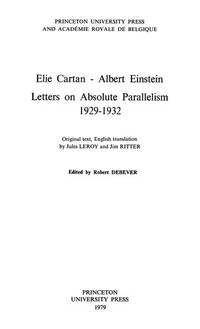
1979030708Princeton NJ: Princeton University Press 1979. Book. Fine. Cloth. First Edition. 8vo - over 7¾" - 9¾" tall. Orange cloth lettered in black. As issued. Dust jacket as issued now in archival mylar. xvii235 pp. Princeton University Press Hardcover
191150316Leipzig: Johann Ambrosius Barth 1911. Einstein Albert 1879-1955. Elementare Betrachtungen über die thermische Molekular bewegung in festen Körpern. In Annalen der Physik 35 9: 679-694 pp. Whole issue disbound from larger volume but still stitched together front wrapper detached chipped with loss and tears else very good. Whole issue: pp. 617-816 3 plates.<br /> <br /> <p>First edition of Einstein's sequel and complement to his 1907 paper on Planck's theory of radiation and heat translated as Elementary Observations on Thermal Molecular Motion in Solids. Einstein tries to improve upon his model of specific heats after realizing the model was inocrrect at very low temperatures. The correct answer would come a year later with the Debye model. </p> <p>"Elementary observations on thermal molecular motion in solids. . . Here Einstein continues the work he had begun in 1907 on the specific heat of solids where the heat agitation of solids was reduced to a monochromatic oscillation of the atom and the specific heat was determined based on the quantum treatment of an oscillator in a radiation field. He explains the discrepancies between his formula and the measurements at low temperatures." p. 291. Calaprice Kennefick & Shulmann. An Einstein Encyclopedia. 2015. </p> <br /> <br /> <p>Weil's Einstein Bibliography no. 42. </p> . Johann Ambrosius Barth unknown
1911003227Leipzig: J. A. Barth 1911. Contemporary three-quarters cloth marbled boards. Discusses bending of light in gravitational field. First Edition. Very Good. J. A. Barth hardcover
191146958Leipzig Barth 1911. Plain wrappers. In: "Annalen der Physik" Vierte Folge Bd. 35 No 9. With titlepage to vol. 35. Pp. 617-816 a. 3 plates. Entire issue offered. Einstein'spaper: pp. 679-694. Clean and fine. <br/><br/><em>First edition. In the paper "Elementary observations concerning the thermal molecular motion in solid bodie" he continues his earlier investigations of the specific heat of solids in which the heat agitation of solids was reduced to a monochromatic oscillation of the atom and the specific heat calculated on the basis of the quantum treatment of an oscillator put in the radiation field. Here he deals with with the discrepancies between his formula of the measurements at low temperature." Cornelius Lanzos.Weil: 42. - Boni: 38. </em> unknown
191647015Berlin Julius Springer 1916. Royal8vo. Bound in contemporary half calf with gilt lettering to spine. In "Die Naturwissenschaften" 4 Jahrgang 1916. A very nice and clean copy. Pp. 509-510. Entire volume: XIV 866 pp. <br/><br/><em>First printing of Einstein's only paper on aircrafts. In it he proposed a new shape for aircraft wings. Disappointed that nobody took up his idea he took it to an airline in Berlin. A prototype was constructed but it performed poorly and it was never put into service. </em> unknown
192514131925. 1st Edition. FIRST EDITION IN ORIGINAL PICTORIAL WRAPPERS. Near fine condition. <br /> <br /> "This paper is an early example of a series of papers - which continued until his death - in which he explored within the confines of general relativity possible pathways in the direction of a unified field theory. Here he discusses whether it is possible to explain why electrons and protons have equal charge but unequal masses. He notes that a more natural solution to the field equations would be particles of opposite sign and equal mass thus anticipating but for unrelated "Select Annotated Biography 114 p. 307. <br /> <br /> ALSO INCLUDED: Zeeman "Lorentz en de Hypothese der Licht-Quanta Bij de Voortplanting Van Licht" pp. 325-330 Lorentz was Zeeman's mentor. <br /> <br /> ALSO INCLUDED: Some of the issue is a memorial to Lorentz. CONDITION DETAILS: Complete issue. Very slight wear at the spine. Bright and clean inside and out. Near fine condition. unknown
1976233935University Park Press 1976 hardback book and dust jacket in very gooD condition.name stamped on top page edges. 1st Edition. Hardcover. Very Good/Fair. University Park Press hardcover
1976233662University Park Press 1976 hardback book and dust jacket in very good to near fine conditionname stamped on page edges3 sideslight edgewear to dj. 1st Edition. Hardcover. Very Good/Very Good. University Park Press hardcover
192478904London: Methuen & Company 1924. First edition of this classic account of Born's analysis and interpretation of Einstein's theory of relativity. Octavo original cloth frontispiece of Einstein. Signed by Max Born on the verso of the frontispiece. Translated by Henry L. Brose. Very good in a very good dust jacket. Housed in a custom half morocco clamshell box. First editions are uncommon signed examples rare. Einstein's Theory of Relativity is a book in which one great mind explains the work of another great mind in terms comprehensible to the layman is a significant achievement. This is such a book. Max Born was awarded the Nobel Prize in 1954 and was one of the world's great physicists: in this work he analyzes and interprets the theory of Einsteinian relativity. The result is undoubtedly the most lucid and insightful of all the books that have been written to explain the revolutionary theory that marked the end of the classical and the beginning of the modern era of physics. Born follows a quasi-historical method of presentation. The book begins with a review of the classical physics covering such topics as origins of space and time measurements geometric axioms Ptolemaic and Copernican astronomy concepts of equilibrium and force laws of motion inertia mass momentum and energy Newtonian world system absolute space and absolute time gravitation celestial mechanics centrifugal forces and absolute space laws of optics the corpuscular and undulatory theories speed of light wave theory Doppler effect convection of light by matter electrodynamics including magnetic induction electromagnetic theory of light electromagnetic ether electromagnetic laws of moving bodies electromagnetic mass and the contraction hypothesis. Born then takes up his exposition of Einstein's special and general theories of relativity discussing the concept of simultaneity kinematics Einstein's mechanics and dynamics relativity of arbitrary motions the principle of equivalence the geometry of curved surfaces and the space-time continuum among other topics. Born then points out some predictions of the theory of relativity and its implications for cosmology and indicates what is being sought in the unified field theory. This work steers a middle course between vague popularizations and complex scientific presentations. This is a careful discussion of principles stated in thoroughly acceptable scientific form yet in a manner that makes it possible for the reader who has no scientific training to understand it. Only high school algebra has been used in explaining the nature of classical physics and relativity and simple experiments and diagrams are used to illustrate each step. The layman and the beginning student in physics will find this an immensely valuable and usable introduction to relativity. Methuen & Company hardcover
1979311182Cambridge: Harvard University Press 1979. hardcover. fine/fine. Edited by A.P. French. Illustrated throughout with black and white photographs and diagrams. xx 332 pages. Tall 8vo red cloth d.w. Cambridge: Harvard University Press 1979. A fine copy in a fine dust wrapper.<br/> <br/> Harvard University Press unknown
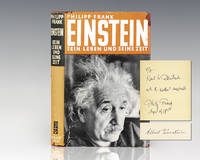
1949133215Munchen: Paul List Verlag 1949. First German edition of this classic work by Frank a famed contemporary of Einstein. Octavo original cloth. Signed by Albert Einstein on the slip to the title page and inscribed by the author on the front free endpaper "To Karl W. Deutsch with the author's compliments Philipp Frank August 10 1950." Philipp Frank was a physicist mathematician and also a philosopher during the first half of the 20th century. He was a logical-positivist and a member of the Vienna Circle. He was influenced by Mach and was one of the Machists criticised by Lenin in Materialism and Empirio-criticism. He studied physics at the University of Vienna and graduated in 1907 with a thesis in theoretical physics under the supervision of Ludwig Boltzmann. Albert Einstein recommended him as his successor for a professorship at the German Charles-Ferdinand University of Prague a position which he held from 1912 until 1938. Very good in a good dust jacket. Much has been written about Albert Einstein technical and biographical but very little remains as valuable as this unique hybrid of a book written by Einstein's colleague and contemporary. Both rich in personal insights and grounded in a deep knowledge of twentieth-century science Phillip Frank's biography anchors the reader with a lucid overview of physics and draws an intimate portrait of the Nobel Prize–winner. Paul List Verlag hardcover
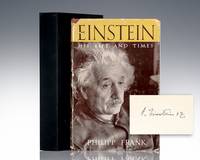
1947147192New York: Alfred A. Knopf 1947. First edition of this classic work by Frank a famed contemporary of Einstein. Octavo original cloth. Signed by the subject in the year of publication on the front free endpaper "A. Einstein 47." Translated from a German manuscript by George Rosen. Edited and Revised by Shuichi Kusaka. Housed in a custom half morocco slipcase. Rare and desirable signed by Einstein. Much has been written about Albert Einstein technical and biographical but very little remains as valuable as this unique hybrid of a book written by Einstein's colleague and contemporary. Both rich in personal insights and grounded in a deep knowledge of twentieth-century science Phillip Frank's biography anchors the reader with a lucid overview of physics and draws an intimate portrait of the Nobel Prize–winner. Very good in a very good dust jacket name to the front pastedown side edges. Alfred A. Knopf hardcover
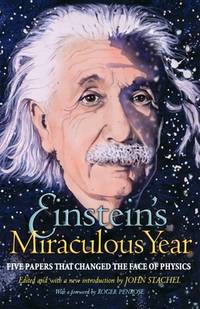
19981-0691059381Princeton Univ Dept of Art & 1998. Hardcover. New. illustrated edition. 198 pages. 8.75x6.00x0.75 inches. Princeton Univ Dept of Art & hardcover
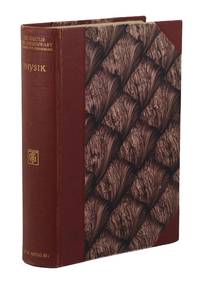
1915140945614Leipzig & Berlin: B.G. Teubner 1915. First edition. First edition. iv viii 762 8 pp. Bound in publisher's three quarter maroon cloth with marbled paper sides gilt spine lettering. Near Fine with rubbing along edges; a few marks to prelims text otherwise free of markings; hint of foxing to edges. Bookplate on paste down. <p>A German-language physics review with the first book publication of two articles by Albert Einstein as well as work by a number of famous physicists of the early 20th century. B.G. Teubner unknown
1998Q-0691059381Princeton University Press 1998-03-30. Hardcover. New. New. In shrink wrap. Looks like an interesting title! Princeton University Press hardcover
1996Q-0807614173George Braziller 1996-01-01. Hardcover. New. In shrink wrap. Looks like an interesting title! George Braziller hardcover
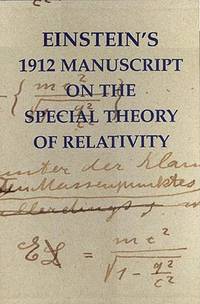
19960010399New York: George Braziller 1996. Hardcover. As New/issued without dj. Folio 192 pages clothbound in publisher's slipcase shrinkwrapped unopened <br/><br/>A highly detailed and accurate facsimile of the earliest surviving autograph manuscript published by George Braziller in association with the Jacob E. Safra Philanthropic Foundation and the Israel Museum. An English translation is provided for each page. Introduction by Hanoch Gutfreund. OP in hardcover original list price $195. George Braziller hardcover
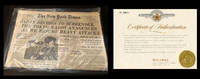
19311435New York: New York Times 1931. 1st Edition. First edition of the October 19th 1931 issue of the New York Times complete with "Certificate of Authentication" by the Historic Newspaper Archives. The certificate is #379912; it is signed and includes the seal of the archive. <br /> <br /> Einstein was asked to contribute to the New York Times' "World Mourns the Death of Edison; Body to Lie in State in Laboratory.". CONDITION: Historic Newspaper Archives see above has placed the issue in archival plastic and then into an Archive snap close bag. see photo By any measure this complete issue appears in very good condition. New York Times unknown
1949160919012Philosophical Library 1949. Hardcover. very good/Good - considerable wear. Hardcover very good condition typical reader wear. Gift inscription inside front cover DJ very good but considerable wear. Philosophical Library hardcover