4 619 résultats
True author's presentation offprint in the original wrappers, of Einstein's obituary for Austrian physicist and philosopher Ernst Mach. - Edition: Mach is particularly known as influential philosopher of science for his contemporaries. Through his criticism of Newton's theories of space and time he for instance foreshadowed Einstein's theory of relativity. - Condition: Corners and margins of wrappers with some very small faults, cover slightly water-stained, paper minimally foxy, otherwise solid copy. - Rarity: Present copy is imprinted „Überreicht vom Verfasser“ (presented by the author) on the upper right corner of the first page, which indicates it's utmost rarity, as author's presentation offprints of Einstein papers, from any journal or any period, were printed in a small print run for the use of the author only. ABPC (1973ff.) and APO (1988ff.) show no record at all. - Reference: Collected Papers, vol. 6, 29; Schilpp-Shields 96; Weil 89.
Particularly rare, early anastatic reprint from the original separate edition of Einstein's »General Theory of Relativity«, using the original cover. - Edition: The „original edition“ (Weil) of this classic paper was published in 1916 as vol. 49 from »Annalen der Physik«. According to Weil present reprint, which uses the original cover, is of better printing quality than others. - Condition: Cover loose at front hinge, margins with some small faults, front cover with shelf wear, paper heavily time-stained, otherwise clean copy. - Rarity: ABPC (1973ff.) and /APO (1988ff.) record 4 copies of this edition at auction (2015, 2014, 2013, 2006). - Reference: BRL 78; Carter-Muir 408; Norman 696; Schilpp-Shields 86; Weil 80a
First print run (with no date printed on title) of the first separate edition (the 1st print was published as the concluding section of the author's »Protomathesis« in 1532) of this early, important and profusely illustrated account on sundials, clepsydrae and other ancient time-keeping instrument including diptychs, rings, multi-faceted and pillar dials, quadrants, mariner's astrolobes, as well as the mathematical or astronomical principles governing their use and design. The woodcuts by „G. Bordei“ (as mentioned in the preface) are elaborate adaptions of or newly cut versions taken from the blocks of those depicted in the »Protomathesis«. Oronce Finé (1494-1555), a famous French scholar and chair of mathematics at the Collège Royal since 1531, had also constructed an ivory sundial in the form of a ship, nowadays housed by the Milan Museo Poldi Pezzoli. Several woodcuts of the book refer to this construction. - Present copy was separated of a Sammelband and is protected with mould paper wrappers. Top edge of block with tighter cut, no text loss however, p. 202 with tight cut front edge, some pages foxy and stained, spine in parts loose, otherwise well preserved copy indeed. - Particularly hard to find with the big (37,5:29 cm) folded diagram usually bound in at the end of the volume. - Adams F 473 (copy without folded diagram); Fairfax-Murray 165; Harvard 232; Houzeau-L. 11351; Mortimer I, 232; Poggendorf I, 747ff. Description thanks to Heritage Book Shop, USA.
In-4°; 2 parti in 2 volumi rilegati in mezza pelle coeva con tassello e titolo in oro al dorso (del primo vol. lievemente difettosa); tagli spruzzati. Pp. 321, (1), 3 tavole f.t. a piena pagina incise su rame (una raffigura il vulcano Pambamarca nella zona di Quito in Ecuador), 2 grandi tavole ripiegate con tabelle; Pp. 400, 4 tavole a piena pagina incise su rame di cui una raffigura il, vulcano di Pichincha vicino Quito, e l’altra il vulcano Chimborazo sempre in Ecuador; 2 grandi tavole ripiegate con tabelle. Al verso dei frontespizi piccoli timbri di possesso. Interessante e poco nota opera di fisica sperimentale e sienze naturali del gesuita spagnolo Francesco Perez (1720-1807 Bologna), matematico e missionario in Ecuador, Quito, fino alla espulsione dei gesuiti dai domini spagnoli (1767); in Italia si dedicò alla scrittura di opere scientifiche che vennero pubblicate dopo la soppressione della Compagnia nel 1773. Il suo nome è legato anche all’invenzione di strumenti scientifici, tra cui uno per misurare gli angoli. Oggetto del trattato il Barometro, “istrumento in grado eminente per condurre l’intelletto alla cognizione dell’elemento dell’aria”, e il Termometro, strumenti dei quali si ricordano gli inventori, i metodi costruttivi, le evoluzioni tecniche; si esaminano le differenze tra aria e atmosfera, “l’elasticità” della materia eterea, l’atmosfera equinoziale dell’America, specialmente delle montagne e vulcani dell’Ecuador (Caraburo, Oyambaro, Pichincha Pambamarca ecc.) dove l’atmosfera fu misurata con l’aerometro, come ampiamente si descrive nella seconda parte. Un capitolo, in fine, è dedicato all’atmosfera europea.
DISPONIBILITÀ GARANTITA AL 99%; SPEDIZIONE ENTRO 12 ORE DALL'ORDINE. BUONE/OTTIME CONDIZIONI GENERALI, LIEVE INGIALLIMENTO DELLE PAGINE, LIEVI SEGNI DEL TEMPO. TIMBRI/SEGNI SPARSI DI BIBLIOTECA. RILEGATO IN ELEGANTE TELA VERDE, VOLUME RARO E INTROVABILE. SECONDA EDIZIONE RIVEDUTA DALL'AUTORE E AUMENTATA. GOOD / EXCELLENT CONDITIONS, GREAT INJECTION OF THE PAGES, SLIGHT SIGNS OF TIME. STAMPS AND SIGNS OF LIBRARY. BOUND IN ELEGANT GREEN CANVAS, EXTREMELY RARE BOOK. SECOND EDITION, REVISED BY THE AUTHOR AND INCREASED. Descrizione bibliografica Titolo: Meteorology. Practical and applied Autore: Sir John William Moore (1845-1937) Editore: Londra (London): Rebman Limited, 1910 Edizione: 2, seconda, rivista e aumentata rispetto alla Prima edizione del 1894 Edition: 2, second, revised and enlarged Edition: 2, 2e édition, revue et augmentée Lunghezza: 492 pagine; 22 cm Lenght: 492 pages, III leaves of plates: illustrations (some color), diagrams; 22 cm Peso: 1,1 Kg Formato: rilegato (hardcover) Lingua: Inglese Language: English ISBN (edizione moderna): 1151742325, 9781151742322; 1177322919 9781177322911 Soggetti: Meteorologia applicata, Scienze dell'atmosfera, Leggi fisiche, Teorie, Clima, Climatologia, Misurazioni, Tempo, Previsioni, Manuali, Trattati, Collezionismo, Studi, Previsioni meteorologiche, Fenomeni atmosferici, Osservazione, Elaborazione, Strumenti, Geografia, Stazione meteorologica, Radar, Radiometri, Termometro, Igrometro, Pluviometro, Anemometro, Osservatori, Satelliti, Temperatura, Barometro, Umidità, Aria, Fisica, Geo-stazioni, Circolazione atmosferica, Nubi, Anticicloni, Venti, Vento, Gas, Elio, Ozono, Anidride carbonica, Carte sinottiche, Scala di Beaufort, Isobare, Ossigeno, Acqua, Precipitazioni, Pioggia, Neve, Grandine, Storia, Divulgazione scientifica, Scienza, Gradi centigradi, Celsius, Bollitura, Altitudine, Pressione, Fahrenheit, Réaumur, Mercurio, Negretti, Zambra, Zero termico, Radiazioni, Calore, Sole, Canada, Stati Uniti, Gran Bretagna, Galileo Galilei, Evangelista Torricelli, Barometro, Glicerina, Jordan, Robert Hooke, Altitudine, Elettricità, Fluttuazioni, Cicloni, Vapore acqueo, Von Lamont, Greenwich, McPherson, Nuvole, Fineman, Mannucci, Abercromby, Hildebrandsson, Royal Society, Rain-Gauge, Anemometri, Benjamin Franklin, Ballon, Blue Hill Observatory, Stagioni, Influenza, Malattie, Natura, Ambiente, Dublino, Inghilterra, Isole, Tavole, Trinity College, Tifo, Infezioni, Febbre, Esperimenti, Libri Vintage, Libri antichi e rari, Edizioni pregiate, Introvabili, Novecento, Ottocento, Human beings, Effect of climate on, Weather, Climatology, Meteorological services, Climate, United States, Great Britain, Météorologie appliquée, Applied Meteorology, Atmospheric Sciences, Physical Laws, Theories, Measurements, Predictions, Manuals, Treatises, Collectibles, Studies, Meteorological Forecasts, Phenomena, Observation, Instruments, Geography, Meteorological Station, Physics, Atmospheric Circulation, Synopsis maps, Precipitation, History, Scientific disclosure, Science, Radiation, Heat, Sun, Environment, England, Islands, Tables, Old and rare books, Fine editions, Untraceable, Twentieth century Parole e frasi comuni amount anemometer annual anticyclone aqueous vapour Atlantic atmospheric pressure average balloons barograph barometer Beaufort Scale British Islands British Isles Buchan Bureau centre charts cistern climate cloud coast cold condensation cyclonic dew-point diameter diarrhoea difference direction districts Dublin dust earth's surface electricity evaporation F.R.Met.Soc fall feet forecasts freezing-point gauge glass ground heat height horizontal hygrometer inches instrument Ireland isobars isothermal January July latitude light London temperature measured mercury Meteorological Office metres miles millimetres moisture mountain nephoscope observations Observatory ocean oxygen ozone particles Professor Quarterly Journal R. H. Scott radiation rain-gauge rainfall reading recorded regions Report rise Royal Meteorological Society scale Scotland sea-level season snow stations storm summer Sunshine Recorder telegraphic temperature thermometer thunderstorms tube velocity vertical Weather wind winter
Sammelband with the major works by eminent Italian Renaissance mathematician and engineer Niccolò Tartaglia. – Author, Content: Present Sammelband contains 3 profusely illustrated volumes with early editions of the major works of Niccolò Fontana Tartaglia (1499/1500-1557), an important Venetian mathematician, engineer, translator (of Archimedes and Euclid into Italian) and author of scientific works: (1) The 2nd edition of 1554 (1st in 1546) of his seminal work about mathematics and their technical application in the fields of military ballistics (for calculating canon trajectories in particular), fortification, statics and topographic surveying, with the addendum to part no. 6 (of 9), which is considered one of the most important early publications on fortification. Present copy also includes the often missing folding flap (depicting a fortification wall) to the addendum, mounted to fore-edge of l. 71r. „Tartaglia's »Quesiti« contains his most important mathematical accomplishment: the independent discovery of the rule for solving third-degree (cubic) equations...“ (Norman). (2) The 3rd edition of 1562 (1st in 1554) of Tartaglia's »Regola«, a particularly rich illustrated treatise on retrieving sunken ships, on which subject he was also interested in his function as accountant for the Venetian Republic. The book, written in the form of imaginary dialogues between Tartaglia and his student, Richard Wentworth, also deals with deep sea diving (3 striking woodcuts with divers for illustration), meteorology for maritime shipping, as well as it prints extracts of Archimedes treatise »De insidentibus aquae«, completely translated and published by Tartaglia in Italian only 3 years later. (3) The 4th edition from 1558 of Tartaglia's Chef d'Œuvre »Nova Scientia« (1st published in 1537), the very first printed treatise on ballistics and a seminal work on motion in general, that led to the discoveries of Galileo and others in this area. The title page of »Nova Scientia« consists of a large woodcut illustration with the coat of arms of Francesco Maria II della Rovere, Duke of Urbino, and a full-paged allegorical depiction showing the author in the midst of the scientific disciplines (all incorporated female) and surrounded with the great scholars of the ancients, like Euclid, Aristotle and Plato.– These three treatises were probably issued together by Venetian printer and co-publisher Curzio Troiano Navò in 1562, using sheets left over from previous editions of (1) and (2), originally printed Niccolò de Bascarini. – Provenance: Engraved pictorial ex-libris with the monogram „F. C.“ at front paste down. – Condition: Cover at corners and edges bumped and worn, boards creased, ll. 1 and 2 of (3) with old repair at bottom, some leaves with water-stains at margins and occasionally foxy, (3) with tight bookbinder's cut to lower margin, no text loss however; generally a solid copy of this Sammelband of particular importance for the history of mathematics and military engineering. – Reference: (1) Adams T 184; Breman 293; CNCE 31875; Cockle 660; Norman 2055; Riccardi I/2, 499. (2) Adams T 187, CNCE 31563; Cockle 660, Riccardi, I/2, 504. (3) Adams T 191; CNCE 31552; Riccardi I/2, 496; Scherrer 49.
First edition of Olbers' groundbreaking work on computing the orbit of comets, together with the substantially corrected and enlarged 3rd edition from 1864 as well as a rare offprint of a paper by Ladislaus Weinek from 1904 depicting graphical evidence of Olbers' method. – Contents, Author: With this treatise, the Bremen based physician and astronomer Heinrich Wilhelm Olbers (1758-1840) established his reputation as one of the leading scholars on astronomy of his time. Olbers had discovered a comet in 1796 and developed a new method for calculating his path. This method replaced the tedious and often inaccurate calculations of Euler and La Place. „In a letter to F.X. von Zach, director of the newly founded observatory on the Seeberg, near Gotha, Olbers asked weather his treatise on this method should be printed, and if so, how this could be done. After reading the treatise and using it with excellent results to compute the orbit of the comet of 1779, which had presented great difficulties to many astronomers, von Zach decided to see it through the press himself. It appeared at Weimar 1797.“ (DSB). – Enclosed: (1) 3rd ed., enlarged by J. G. Galle. With Olbers' portrait as frontispiece and 1 folded plate. Leipzig: Voigt & Günther 1864. 8vo. XXXVI, 334 p. Contemporary half leather. (2) L.[adislaus] Weinek: Graphische Nachweise zur Olbersch'schen Methode der Kometenbahnbestimmung (…) Mit 8 Textfiguren. Aus den Sitzungsberichten der kaiserl. Akademie der Wissenschaften in Wien. Mathem.-naturw. Klasse; Bd. CXIII. Abt. IIa. Juli 1904. Vienna: Verlag der Kaiserlichen Akademie der Wissenschaften (in commission at Alfred Hölder [K.-k. Hof- und Staatsdruckerei]) 1904. 8vo. 20 p. Original publisher's wrappers. – Condition: Cover at edges and corners slightly worn, title page with some ink staines and one restored fault at lower right corner, some pages slightly foxy and water-stained, generally a solid copy. Cover of present copy of the 3rd edition (enclosure 1) with some small wear, paper in parts foxy, with owner's stamp on pre-title. Wrappers of the academy paper (enclosure 2) slightly stained, minimally torn at margins, otherwise well preserved. – Rarity: Very hard to find in this set, particularly with the late but important supplement by Weinek, during this period director of the Prague observatory. – Reference: DSB X, 198; Houzeau-L. 11965; Poggendorff II, 320.
First offprint in the original wrappers, of this important paper by Einstein about electromagnetism. - Condition: Wrappers minimally dusty, otherwise very well preserved copy. - Rarity: According to Weil early offprints of Einstein’s papers may also be qualified as original and also highly collectable editions, however they were printed in a certain, but still small print run for commercial use (mainly to sell them to fellow natural scientists): „No doubt, the first appearance in a periodical is the „original edition“, but I have to leave it open for collectors, librarians and others to decide whether these offprints in wrappers, mostly with a printed title on them (especially in the »Sitzungsberichte der Königlich Preussischen Akademie der Wissenschaften«) are also „original editions“. These offprints are printed from the same setting as the text, but often with new pagination.“ (p. 4). Additionally to offprints like the present, some copies bearing the imprint „Überreicht vom Verfasser“ [Presented by the Author] were printed for the use of the author. ABPC (1973ff.) and APO (1988ff.) record only 2 copies of this edition at auction (2011, 1998). - Reference: Boni-Russ-L. 86; Collected Papers, vol. 6, 27; Schilpp-Shields 97; Weil 79.
First offprint in the original wrappers, of Einstein's important follow-up paper on the field equations in his General Theory of Relativity. - Contents: In present paper Einstein suggests a modification of his field equations to allow for stable elementary particles. According to Pais this text "may be considered Einstein's first attempt at a unified field theory"” (Pais, Subtle is the Lord, p. 287). - Condition: Cover at margins minimally dusty, otherwise very fine indeed, probably unread. - Rarity: According to Weil early offprints of Einstein’s papers may also be qualified as original and also highly collectable editions, however they were printed in a certain, but still small print run for commercial use (mainly to sell them to fellow natural scientists): „No doubt, the first appearance in a periodical is the „original edition“, but I have to leave it open for collectors, librarians and others to decide whether these offprints in wrappers, mostly with a printed title on them (especially in the »Sitzungsberichte der Königlich Preussischen Akademie der Wissenschaften«) are also „original editions“. These offprints are printed from the same setting as the text, but often with new pagination.“ (p. 4). Additionally to offprints like the present, some copies bearing the imprint „Überreicht vom Verfasser“ [Presented by the Author] ABPC (1973ff.) and JAP/APO (1950ff.) record only 1 copy of this edition at auction (2011). - Reference: Boni-Russ-L. 111; Collected Papers, vol. 7, 17; Schilpp 123; Weil 106.
Erste Ausgabe des maßgeblichen Werks zu Leben und Wirken von 366 Nürnberger Naturwissenschaftlern, Mathematikern, Erfindern und Techniker, Künstlern und Kunsthandwerkern seit dem 15 Jh., hier in einem um 1900 gefertigten historistischen Handeinband der belgischen Meisterbuchbinder „De Samblanx & Weckesser“. – Inhalt, Autor: Der vom Nürnberger Astronomen, Mathematiker und Physiker Johann Gabriel Doppelmayr (1677 (1671?) - 1750) kompilierte Band ist „von bleibendem Werth (…) im höchsten Grade zuverlässig und geeignet, sowohl auf anderweitige Quellenschriften für die Geschichte der Mathematik hinzuweisen, als auch dieselben zu ersetzen.“ (Cantor). – Illustration: Die Tafeln zeigen zahlreiche Meisterwerke aus Nürnberger Provenienz, u.a. des Kunsthandwerks, des Instrumentenbaus u.v.a. der Architektur, wie etwa das Sebaldus-Grab von Peter Vischer, das »Sakramentshaus« von Adam Krafft, den Neptunbrunnen (1797 an den Zarenhof verkauft), die Holzschnitzerei »Der Englische Gruß« von Veit Stoß, eine Kutsche des Zeugschmieds und Erfinders Johann Hautsch, insbesondere auch Martin Behaims Globus (Weltkarte in 2 Hemisphären auf einer doppelblattgroßen Kupfertafel), etc. – Einband: Den attraktiven, von üppiger floraler Ornamentik dominierten Einband aus Schweinsleder fertigten die belgischen Meisterbuchbinder Charles De Samblanx und Jacques Weckesser, die in den Jahren 1889 bis 1909 gemeinsam firmierten. – Erhaltung: Einband an den Rückenbünden und den Kapitale geringfügig berieben, die Decken aufgrund des Schutzes durch den Schuber hervorragend erhalten, Titelblatt und einige wenige Seiten gering fingerfleckig, sonst ungewöhnlich wohlerhaltenes, breitrandiges Exemplar mit sauberen Kupfern und kräftigem Druck. Der mit Kleisterpapier farblich zum Einband passende Kartonschuber stammt vermutlich ebenfalls aus der Werkstatt De Samblanx & Weckesser, dieser mit einigen Einrissen und and den Rändern mitunter berieben und bestoßen. – Literatur: Bestermann, 2. Aufl., 1817; Cantor III, 502; DSB IV, 166; Graesse II, 427; Dt. Museum: Libri rari 87; Petzholdt 522; Poggendorff I, 594.
Erste lateinische, gleichenjahrs wie das niederländische Original erschienene Ausgabe dieser posthum veröffentlichten wichtigen Abhandlung des Mathematikers, Fechtmeisters und Professors für Militärtechnik an der Leidener Ingenieurschule Ludolph van Ceulen (1539-1610), übersetzt von seiner Witwe Adriana Symonsz in Zusammenarbeit mit Ceulens Schüler Willebrord Snell (1580-1626). - Inhalt: Mehr humanistischer Gelehrter als Praktiker wie noch sein Lehrer, bearbeitete und kommentierte Snell die Arbeit Ceulens während des Übersetzens, ja er kritisierte sie teilweise sogar. Daher ist die vorliegende lateinische Ausgabe ein veritabler Dialog zwischen zwei Ansätzen zur Mathematik der frühen Neuzeit. Van Ceulen ist heute noch berühmt für seine Berechnungen der Zahl ?, die er im vorliegenden Werk auf 35 Dezimalstellen berechnete. "Keine Aufgabe lag ... mehr in dem Bereiche seiner [Ceulens, Anm. DJ] Neigungen wie seiner Fertigkeit als die der Auffindung der Verhältnißzahl des Kreisumfanges zum Durchmesser, der sogenannten Zahl p, welche er zuerst durch wiederholte Wurzelausziehungen bis auf 35 Decimalstellen genau bestimmte, und welche deshalb mit um so mehr Recht die Ludolphische Zahl genannt werden darf ..." (ADB) - 2 Blätter mit der gedruckten Widmung von Symonsz fehlen (vgl. dazu das digitalisierte Exemplar der BSB). Ebenfalls 1615 druckte Colster in Lyon eine weitere Ausgabe mit der gleichen Paginierung, aber unterschiedlichen Titelblättern (siehe Exemplar des Museo Galileo, Florenz). - Erhaltung: Pappband mit Gebrauchsspuren und Wurmlöchern, leere Vorsatzblätter fehlen, Titelblatt mit einer kleinen Fehlstelle am unteren Rand, diese ohne Textverlust, die letzten 3 Blätter lose und an den Falzstellen eingerissen, Fehlpaginierung "2014" statt "214", Papier mäßig stockfleckig und gebräunt, einige Marginalien mit Eisengallustinte. - Seltenheit: Obschon in institutionellen Beständen weltweit verfügbar, ist dieses bedeutende mathematikgeschichtliche Dokument im Handel heute selten, worauf lediglich zwei Auktionsergebnisse in den letzten rund 30 Jahren gemäß JAP/APO und RHB bezeugen. - Referenz: Bierens de Haan, Bibliographie néerlandaise historique-scientifique, 840; Sotheran, Bibl. Chem.-Math., 749 - ADB IV, S. 93 (Symonsz).
23139aaf1) Neuchâtel, Samuel Fauche, père et fils M. DCC. LXXXIII. / 2) Genève, Barde, Manget, et se trouve à Paris, chez Buisson, M. DCC. LXXXVIII., 1783 -1788, fort in-8°, 2) XII (faux-titre, titre avec vignette, préface) + 524 p., illustré d'une vignette gravée (en-tête du premier essai) + 2 planches gravées dépliantes (dont une montre l'appareil) et 11 tables. / 2) 1 f. (faux-titre) + 82 p. (recte: 84) + 1 planche gravée, timbre ‘Bibliothèque d'Alfred ..... (rature)’ sur faux-titre, brochure d'attente, papier non rogné, dos dénudé et fendillé.
First offprint in the original wrappers, of Einstein's first conclusive attempt toward creating a unified field theory. - Content: This seminal paper of Einstein marks „a new theory of space with a view to unification of all forms of activity that fall within the sphere of physics, giving them a common explanation" (PMM). The task of unifying nuclear, electromagnetic, and gravitational force is nowadays by many considered the holy grail of theoretical physics. - Condition: Mint. - Rarity: ABPC (1973ff.) and APO (1988ff.) record only 3 copies of this edition at auction (2012, 1994, 1984). - Reference: Boni-Russ-L. 155; Printing and the Mind of Man 416; Schilpp-Shields 196; Weil 147.
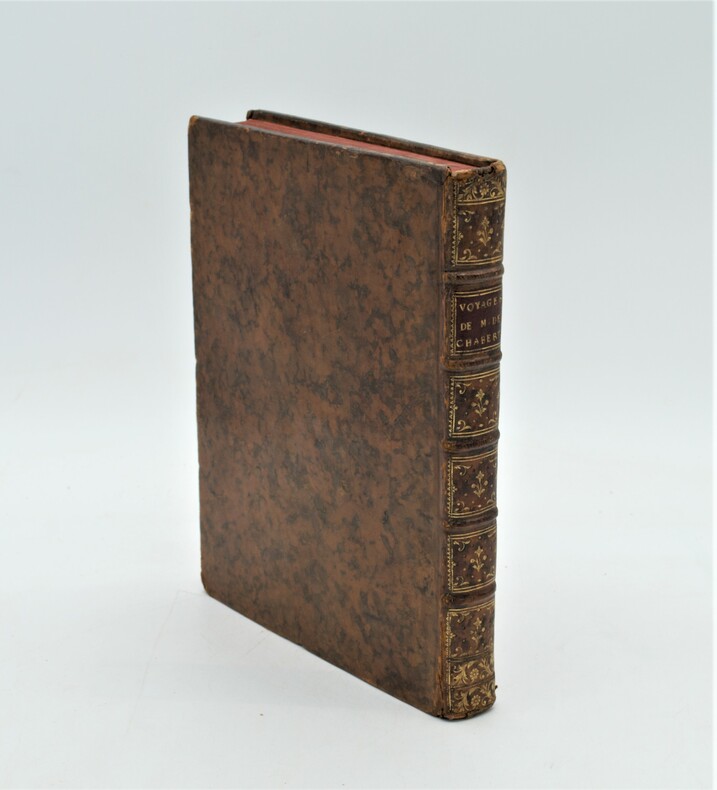
17875061Ouvrage dans lequel on traité de l'Eléctricité Naturelle en général, & des Météores en particulier; contenant l'exposition & l'explication des principaux phénomenes qui ont rapport à la Météorologie Electrique, d'après l'observation & l'expérience; avec figures. 2 Bände. Mit 6 gefalt. gest. Tafeln von L. Le Grand. Lyon, Bernuset, 1787. 8vo. (19,0 x 12,0 cm). 1: XXVIII, 446 (recte 436) S. 2: 2 Bl., 391, (3) S. Gefleckte Kalblederbände d. Zt. mit reicher Rückenvergoldung, Stehkantenvergoldung, 2 farbigen Rückenschildern u. Marmorpapiervorsätzen.
Tête de collection (volumes 1 à 23 complet): ensemble plus de 13000 pages, illustré de figures dans le texte et de +/- 400 planches hors texte (dont la plupart dépliantes), 22cm., reliures cart. (plats marbrés, dos en cuir bleu avec titre doré - sauf pour volumes 19,20,21 & 23: reliures plein toile avec titre doré au dos, petit manque au premier plat du 3e vol.), feuilles de garde marbrées, qqs.rousseurs, bon état, rare, [Contient des articles scientifiques en matière d'astronomie, météorologie, géographie et physique du globe], W81879
1880W81879Bruxelles, Institut National de Géographie, puis: Weissenbruch, e.a. 1880-1903 Tête de collection (volumes 1 à 23 complet): ensemble plus de 13000 pages, illustré de figures dans le texte et de +/- 400 planches hors texte (dont la plupart dépliantes), 22cm., reliures cart. (plats marbrés, dos en cuir bleu avec titre doré - sauf pour volumes 19,20,21 & 23: reliures plein toile avec titre doré au dos, petit manque au premier plat du 3e vol.), feuilles de garde marbrées, qqs.rousseurs, bon état, rare, [Contient des articles scientifiques en matière d'astronomie, météorologie, géographie et physique du globe], W81879
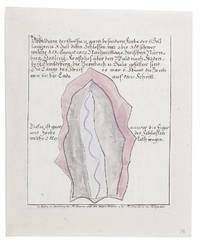
1802FAOEI9M1HTV7Nuremberg 1802. 4to 20.5 x 17.5 cm. Frau Kraerin Frau. Daucherin Mounted on a piece of laid paper ca. 1926. Engraved print on laid paper showing a cross-section of an enormous and colourful hail stone coloured by a contemporary hand as published. Title image and caption in a thin-line border with the imprint below the border at the foot. 1 leaf. An engraved print an illustrated flier or Flugschrift reporting a curious meteorological event showing a cross-section of one of the enormous hail stones that fell near Heroldsberg about 11 km northeast of Nuremberg on 13 August 1802. It weighed 2 17/32 Pfund nearly 1.5 kg measured 6 Zoll long and 3 Zoll thick about 15×7.5 cm and was unusually colourful as depicted in the colouring of the print in pink and grey. The print also shows the distinctive layered structure of the hail stoneWith the margins trimmed off removing the thin-line border at the head but without affecting the texts image or the other borders. Otherwise in very good condition.l Monathliche . . . Anzeigen zur ältern und neuern Geschichte Nürnbergs 6 1802 pp. 119-120; not in KVK & WorldCat. ABE CAT Art History unknown
First and very rare offprint in the original wrappers, of this profusely illustrated paper by Doppler, who through the use of spherical mirrors has made a significant contribution to the development of microscopy. Among other things, Doppler in this paper points out the importance of grinding and polishing glasses and metal mirrors. (Cf. Clay: History of the Microscope). - Condition: Spine with five tiny cuttings of former binding, wrappers with some barely seeable spots and wear, overall in good condition. – Rarity: ABPC (1973ff.) and JAP/APO (1988ff.) record no copies at all at auction; no copies in trade. – Reference: Poggendorf I, 595; Schuster: Doppler IV, 42 and 43.
109 fascicoli, per un totale di oltre 11000 pagine e nuerose tavv. f.t. in lit. La rivista si presenta legata in br. ed. ed e' in buone condizioni generali, qualche fascicolo presenta lievi mancanze ai d. Collezione quasi completa, rarissima, della nota rivista che comincio' il suo corso di pubblicazioni nel 1890 e usci' con scadenza trimestrale con una media di 4 fascicoli l'anno (talvolta uscirono 3 fascicoli in un anno con l'ultimo numero doppio 3-4). In nostro possesso tutte le annate complete dal 1893 al 1924 con le seguenti eccezioni: mancano completamente gli anni 1902 e 1916; del 1911 mancano 3 numeri (presente il solo no 2 di giugno), del 1919 manca un numero, il 4o, presenti i primi 3. Moltissimi articoli di archeologia preistorica, geologia, speleologia, biologia, geografia, fisica, chimica, meteorologia, riguardanti in particolar modo la Liguria ma non solo. Fra gli autori i maggiori studiosi delle diverse discipline: Issel, Pellizzari, Rovereto, Negri, Cattaneo, Squinabol, Lessona, Morelli, Lupi, Carazzi, Sacco, Traverso, Celesia, Bozano, Parona, Setti.
First offprint in the original wrappers, of Einstein's paper on the subject of intermolecular forces. - Edition: In this work Einstein calculated the rate of chemical reactions in a gas by means of observations on the propagation of sound (see Mason, »Physical Acoustics«, p. 13), an important contribution to modern acoustics. - Condition: Very fine indeed. - Rarity: According to Weil early offprints of Einstein’s papers may also be qualified as original and also highly collectable editions, however they were printed in a certain, but still small print run for commercial use (mainly to sell them to fellow natural scientists): „No doubt, the first appearance in a periodical is the „original edition“, but I have to leave it open for collectors, librarians and others to decide whether these offprints in wrappers, mostly with a printed title on them (especially in the »Sitzungsberichte der Königlich Preussischen Akademie der Wissenschaften«) are also „original editions“. These offprints are printed from the same setting as the text, but often with new pagination.“ (p. 4). Additionally to offprints like the present, some copies bearing the imprint „Überreicht vom Verfasser“ [Presented by the Author]. ABPC (1973ff.) and APO (1988ff.) record only 1 copy of this edition at auction (2011). - Reference: Boni-Russ-L. 119; Collected Papers, vol. 7, 39; Schilpp-Shields 135; Weil 110.
166814953Paris, Girard, 1668. 2 Bll., 413 Seiten. (Mod.) Halbleder mit vergold. Rückentitel. [3 Warenabbildungen]
First offprint in the original wrappers of this „fundamental paper on nuclear fission which eventually lead to the creation of the atomic bomb.“ (Dibner) – Contents, Edition: The German radio and nuclear chemists Otto Hahn and Fritz Straßmann "bombarding uranium with neutrons (as indicated by Fermi in the mid-1930s), found that treating the bombarded uranium with barium resulted in some strongly radioactive material. By late 1938 they suspected that uranium fission had occurred.“ These epochal findings had been presented by Hahn and Straßmann to the Prussian Academy on May 25th 1939. Their paper indicates in detail „fission of the uranium nucleus into two parts of about equal size with the release of much energy.“ – The publication date for the present offprint is stated „18th Sept. 1939“ in the colophon (not numbered p. 2). Known are also separate printings in the same typeset with wrappers on orange stock quoting „Einzelausgabe“ (separate edition) and the price information („RM 1,50“) on title page, and with a different list of „Sonderausgaben“ (separate printings) published by the Prussian Academy between 1927 and 1939 at rear cover. – Alongside the aforementioned an Austrian woman scientist of Jewish descent, Lise Meitner, colleague of the authors at the Berlin Kaiser-Wilhelm-Institute of Chemistry for decades, also contributed heavily to their findings. Meitner had to flee Nazi Germany in 1938 but continued her research in exile, e.g. in Copenhagen, where she worked in the laboratory of Niels Bohr. Through Bohr and Fermi this nuclear energy was to become a reality in the atomic pile and the bomb blasts of 1945 as well as in the nuclear power stations of the following decades. Hahn received the Nobel Prize for Chemistry in 1944, and together with Meitner and Strassmann, the Fermi award in 1966.“ (All quotes Dibner). If the 1st paper from 1939 contains the first comprehensive description of this core nuclear achievement, the following two corresponding papers published by Hahn and Straßmann with support by chemist Hans Götte during the Second World War in 1942 („Einiges über die experimentelle Entwirrung der bei der Spaltung des Urans auftretenden Elemente und Atomarten.“) and 1944 („Die chemische Abscheidung der bei der Spaltung des Urans entstehenden Elemente und Atomarten.“) describe experiments to identify the fission fragments. - Condition: Cover with some finger stains and traces of water stains, otherwise well preserved copy indeed. - Reference: Dibner, Heralds of Science, 168; Norman 963 (paper 1 only); Poggendorff VIIa/2, 355; Scheld 191.
Rare and profusely illustrated Wittenberg edition of this most important compendium of mediaeval astronomy. – Contents: Seminal work in two parts ("Libellus de sphaera" and the appended handbook on chronology "Computus ecclesiasticus") by Joannes de Sacrobosco (c. 1195-1256), professor of astronomy at Paris University, a treatise considered the authoritative astronomical textbook until well into the 17th century. “Sacrobosco’s Sphaera, written in Paris around 1220, enjoyed a long popularity as the leading introduction to spherical astronomy. First printed in 1472, it went through at least a score of editions in the 15th cent. And something over 100 in the 16th cent. Publishing Sacrobosco entered a new and different phase in Wittenberg in 1531. Prior to that year all the editions were folio or quarto, often quite expensive. In 1531 the Lutheran University of Wittenberg apparently sponsored a version cheap enough to become a required textbook for the astronomy course. It is fully illustrated with didactic figures, and comes with a preface in praise of astronomy by Philipp Melanchthon. In 1538 a revised revision appeared: for the first time three of the diagrams incorporated moving parts. This proved to be such a popular feature that virtually every octavo Sacrobosco from the 1540’s on – regardless where printed – included these same identical volvelles." (Gingerich). Also included in present 1561 edition, printed by the famous protestant printer Johann Krafft in Wittenberg, are two folded tables (17,5:23 cm 15,2:24,5 cm), „Tabula continens ingrissum solis“ and „Tabula continens gradus eclipticae“. – Provenance: Handwritten short biography of printer Krafft signed, located and dated „Carl Fried Teschen Böhmen 1888“ as well as owner's stamp „Carl Fried“ on fly leaf recto. – Condition: Volvelles at B7r, B8r and D5v not tipped-in (as unfortunately much too often), first folded table with faults at lower margin affecting the print, title page stained, some pages slightly finger-stained and foxy, several old ink marginals (text and calculations) from different hands, dating probably from 16th and 17th century, front paste-down with printed title lable from around 1900, book-block marginally cut to fit the binding, a wide-margined however. – Rarity: Altough the moveable parts are missing, present copy is of rare state, for it comes with the prefaces of Melanchthon, which were frequently suppressed by Catholic censors, and also with the undamaged title page, on which Melanchthon's name was often blackened. This copy also includes the two often lacking blanks at the end, i.e. has 136 leaves instead of only 134. VD16 locates 6 copies of present 1561 edition at Budapest (Szécheny), Dresden (SLUB), Freiburg/Breisgau (UB), Göttingen (SUB), Munich (BSB) and Wolfenbüttel (HAB). – Reference: VD16 J 730; Zinner 2271; Houzeau-Lancaster 1653; O. Gingerich: »Sacrobosco as a textbook«, in: History of Astronomy XIX (1988), p. 269-273.
1753PHO-10961753 , à Paris de l'Imprimerie Royale , in-4 (260 x 200 mm) , relié plein veau marbré époque , dos à nerf orné ave pièce de titre rouge , tranches rouge , léger accidents aux coiffes , une charnière fendillée , bel exemplaire illustré d'un bandeau gravé par Gobin d'après le peintre Flotte de Saint-Joseph, et 7 planches dépliantes : 6 cartes gravées par Dheulland, un tableau de calculs astronomiques.
Tête de collection (volumes 1 à 17 complet): ensemble plus de 10.000 pages, illustré de figures dans le texte et de nombreuses planches hors texte (dont la plupart dépliantes), 22cm., reliures cart. (plats marbrés, dos en toile avec titre doré), qqs.rousseurs, bon état, rare, [Contient des articles scientifiques en matière d'astronomie, météorologie, géographie et physique du globe], W89889