1 504 résultats
1970743921970. Presumed First Edition First printing. Hardcover. Good. 2 volumes. Volume 1 x 858 2 pages and Volume 2 vi 859-1785 5 pages. Illustrations. Footnotes. Formulae. References. Binding added proceeding soft covers present. Cover has some wear and soiling. Sponsored by the American Nuclear Society in cooperation with the Atomic Energy Commission. Related to the Plowshare program. In structuring the technical presentations contributions of the broadest interest were placed at the beginning thus forming a common base of current information and applied science understanding developed in support of Plowshare technology. Sessions of specialty or pertaining to specific areas of application and engineering follow logically in the program. Name of previous owner Jerry R. Kline present on fep of each volume. This is believed to be the Jerry Kline who served at the Puerto Rico Nuclear Center 1965-68 Argonne National Laboratories 1968-1973 and with the Atomic Energy Commission and as an Administrative Judge on the Atomic Safety and Licensing Board. Edward Teller was a presenter! This proceedings includes 112 papers presented at 15 technical sessions covered all technical aspects of the Plowshare Program. The conference summary reviewed the principal themes areas of significant advance and subjects requiring further attention that emerged during the technical conference. This proceeding is the record of this symposium. At this symposium there were 620 registrations peak attendance in technical sessions was 800 and 28 members of the press attended. There were 16 foreign countries represented and 24 universities. In terms of industrial firms 117 were from the United States and 18 were foreign. The International Atomic Energy Agency participated as did representatives from 5 foreign governments. hardcover
284 pages. Index. Photo illustrated endpapers. Black and white photographic plates. "This startling story, never revealed in its entiretly before, is told with full documentation by Major Jordan, who served as liaison officer with the Russians at Great Falls, Montana - the staging base for Russian Lend-Lease supplies... Documents the two known shipments of uranium; explains how engraving plates from the U.S. Treasury were made available to Russia with the help of Harry Dexter White... This book could well be titled 'How We Helped Russia and How the Russians Helped Themselves'." - from dust jacket. Unmarked book bears moderate wear and sound binding. Average wear to dust jacket which is now preserved in a glossy new archival-grade Brodart cover. Quality copy of this important record. Book
Secondo manifesto del Movimento Arte Nucleare che, dopo l'affermazione della volontà di combattere ogni accademismo, risalente al primo manifesto, afferma ora l'irripetibilità dell'opera d'arte. Testo in italiano, francese e inglese, stampato fronte retro su foglio di cartoncino ripiegato in tre parti, da un lato con scritte gialle su fondo nero e dall'altro lato con scritte nere su fondo grigio. Copertine di velina azzurra. Il manifesto è firmato da Armand, Enrico Baj, Bemporad, Gianni Bertini, Jaques Calonne, Stanley Chapmans, Mario Colucci, Danerlo, Enrico De Miceli, Reinhout D'Haese, Wout Hoeboer, Hundertwasser, Yves Klein, Théodore Koenig, Piero Manzoni, Nando, Joseph Noiret, Arnaldo Pomodoro, Giò Pomodoro, Pierre Restany, Saura, Ettore Sordini, Serge Vandercam, Angelo Verga / The second manifesto of the Arte Nucleare Group. Folded card sheet, printed in black and yellow on heavy black card within printed turquoise tissue wrapper . 4to (cm 30,5x17). . . Ottimo (Fine). . . .
198491047Washington DC: Defense Nuclear Agency 1984. Presumed First or early issuance. Three Ring Binder showing wear and tear with text disc and effects calculator in a slip case. Very good. This is one of the Defense Nuclear Agency's Electronic Handbook Series. This includes: Weapon Effects Rule WEG-1 Instructions for Use dated December 1983 tabbed section title DD From 1473 and 8 pages with illustrations; Weapon Effects Program for IBM PC/XT dated 7 December 1984 tabbed section title DD From 1473 and 16 pages disc with version 2.1 in pocket after IBM PC/XT tabbed material. The front pocket holds Weapon Effects Rule WEG-1 DNA-EH-84-01-J. The pocket has summary Instructions and Examples. Also laid in is a very rare surviving copy of DNA NWE Calculation Aids User Bulletin Issue 1-85-1 May 1985. In this issue 6 sheets printed on one side only was a statement of purpose announcement of Cratering & Ground Shock and Blast Programs Obtaining Help General Trends in NWE Calculation Aids Programs Quick Reference Matrix of NWE Calculation Aides and C&GS and Blast Order Form and Description. This is a RARE SURVIVING COPY. The Defense Nuclear Agency DNA now known as the Defense Threat Reduction Agency DTRA developed various tools manuals and aids to calculate the effects of nuclear weapons including blast thermal radiation and fallout. These tools are critical for nuclear safety survivability studies and operational planning. Key Calculation Aids and Tools: Nuclear Bomb Effects Computer Slide Rule: Included with the 1957/1962/1964 editions of The Effects of Nuclear Weapons by Samuel Glasstone and Philip J. Dolan. This circular slide rule developed by the Lovelace Foundation allows for the evaluation of 28 different effects including blast thermal radiation fallout and cratering as a function of yield and range; DOS-Based Weapons Effects Programs 1984: Validated computer simulations and models developed under contract for the Defense Nuclear Agency which are still used in some contexts. DTRA Effects Manual One EM-1: Known as "Capabilities of Nuclear Weapons" this is a foundational multi-chapter manual providing in part validated calculations and data for nuclear effects. These tools cover a range of parameters including air blast overpressure initial radiation thermal dose and crater size. Defense Nuclear Agency unknown
9810208014New. Brand new and still unused unknown
997150751XNew. Brand new and still unused unknown
198706450Washington D.C.: U.S. Department of Energy 1987. First Edition. Paperback. Good/No dust jacket. 11.0 x 8.7 x 0.8 inches. Report providing information concerning the Soviet designed water-cooled water-moderated energy reactor the VVER. Contains technical schematics and details in English on the operation of soviet energy reactors. Very rare text in Good condition. Red plain wrap The covers look great with only light edge wear and a split repaired at the bottom of the front hinge. Hint of wrinkling to front cover. A few small specs and faint staining to top edge of text block. The binding is tight. The interior pages are clean and unmarked. Electronic delivery tracking will be issued free of charge. U.S. Department of Energy paperback
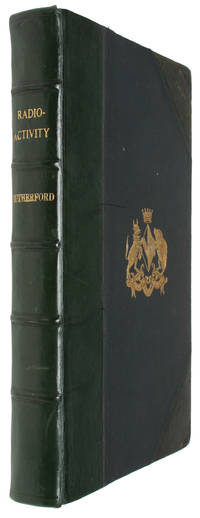
190438588Cambridge University Press, 1904. Fine hcalf, raised bands, gilt lettering. Probably with renewed spine. On both covers a large gilt crowned coat of arms. Corners professionally repaired. (2),VIII,(2),399,(1) pp. Textfigs. and 1 plate facing p. 169. Halftitle and a few leaves with small brownspots in upper margin, otherwise a fine clean copy.
190438588Cambridge University Press 1904. Fine hcalf raised bands gilt lettering. Probably with renewed spine. On both covers a large gilt crowned coat of arms. Corners professionally repaired. 2VIII23991 pp. Textfigs. and 1 plate facing p. 169. Halftitle and a few leaves with small brownspots in upper margin otherwise a fine clean copy. <br/><br/><em>First edition. This work marks a new epoch in the understanding of the nature of nuclear physics. "After the discovery of thorium in 1900 new concepts of atomic structure followed from the brilliant experiments of Rutherford. A new theory of atomic disentegration was proposed then the nuclear nature of the atom. He discovered and named alpha and beta rays emitted from radioactive salts and predicted that disintegration of some radioactive elements would generate helium. he also produced in the laboratory the first artificial transmutation of one element into another." Dibner Heralds of Science No. 51. - Horblit No 91. </em> hardcover
198580983Washington DC: President's Blue Ribbon Task Group on Nuclear Weapons Program Management 1985. Presumed First Edition First printing of Executive Secretariat Report Tabbed items appear to be reprints/copies. Three Ring Binder. Good. Some documents between 1985-1990. Includes Volume # I Nuclear Weapons Program hole punched and disbound Part 1 Organizations and Responsibilities iii 34 pages Part 2 Processes and Procedures 35-65 3 pages. Volume II Previous Studies iii 1 66--Bound laid in Volume II Appendix Previous Studies various paginations approximately 50 pages lain in Volume III Recent Initiatives various paginations approximately 80 pages lain in and Summary of Background Material iii 1 29 3 pages laid in. Volume #I Parts 1 and 2 is in a three-ring binder with 25 tabbed sections. William Clark was the Chairman of the Blue Ribbon Task Group. This report was submitted in compliance with Section 1632 of the Department of Defense Authorization Act 1985 Public Law 98-525 and Executive Order 12499 of January 18 1985. The Task Group addressed procedures used by the Departments of Defense and Energy in establishing requirements and providing resources for the research development testing production surveillance and retirement of nuclear weapons. Members of the Task Group included James Schlesinger Former Secretary of Energy and Defense Former Chairman of the Atomic Energy Commission Harold Agnew former Director of the Los Alamos National Laboratory Jeane Kirkpatrick Former Ambassador to the United Nations and William Perry Former Under Secretary of Defense for Research and Engineering. A second copy of Tab R laid in with meeting agenda . A second copy of Tab S laid in. This mass of information is approximately 3 inches thick. "The President established by Executive Order 12499 the Blue Ribbon Task Group on Nuclear Weapons Program Management at the direction of the Congress to address fiscal accountability and discipline in the nation's nuclear weapons program. The Task Group was asked to ''examine the procedures used by DOD Department of Defense and DOE Department of Energy in establishing requirements for and providing resources for the research development testing production surveillance and retirement of nuclear weapons'' and to recommend any needed change in coordination budgeting or management procedures. The Task Group was also asked to address ''whether DOD should assume the responsibility for funding current DOE weapon activities and material production programs.'' The Task Group found that the present relationship between DOD and DOE for managing the nuclear weapons program is sound. Accordingly the Task Group sought a process for improving the integrated determination of nuclear weapon requirements and the management of nuclear weapon production." <br/><br/>Tabs are: A: 1983 MOU on Joint Nuclear Weapon Activities B: Agreement for the Development Production and Standardization of Atomic Weapons C: 1977 Supplement to B D: 1984 Supplement to B E: DOD Directive 3150.1 Joint Nuclear Weapons Development Studies and Engineering Projects; F: no hole punched document present but Policy and Procedures for Certifying High-Yield Nuclear Warhead Designs for Stockpile G: Interim Rules for Procedure for the Nuclear Weapon Council H: DOD Instruction 5000.2 Major System Acquisition Procedures 1980 I: DOD Directive 5000.1 Major System Acquisition Procedures J: DOD Instruction 5000.2 Major System Acquisition Procedures 1987 K: DOD Directive 5000.49 Defense Acquisition Board L: Department of Defense Directive 5134.1 Under Secretary of Defense Acquisition M. Department of Defense Instruction 5030.55 Joint AEC-DoD Nuclear Weapons Development Procedures Mc DOD and DOE Acquisition Activities hardcopy vugraphs N: AEC-DOD Project Officer Liaison Procedures O: 1987 Memorandum on Warhead Costs P: Memorandum on Management of AEC Weapons Development/Production Interface Q: Proposal for a revised supplement to the 1953 agreement R; MOU on Stockpile Confidence Testing S: Revisions to the Implementation Action Plan IAP for the Blue Ribbon Task Group BRTG Recommendations T: Information on Decision Cost U: Key Selection Drivers V: Briefing Outline W: Reprint on article on Defense System Acquisition and XYZ: Definitions of Sigma categories. President's Blue Ribbon Task Group on Nuclear Weapons Program Management unknown
192146992(London, Taylor and Francis), 1921. Blank wrapper. In: ""The London, Edinburgh, and Dublin Philosophical Magazine and Journal of Science"" Sixth Series, Vol.42, No. 252, December 1921. Pp. 873-1024, textillustr. a. 1 plate. (Entire issue offered). Chadwick & Bieler's paper: pp. 923-940, textillustr.
192146992London Taylor and Francis 1921. Blank wrapper. In: "The London Edinburgh and Dublin Philosophical Magazine and Journal of Science" Sixth Series Vol.42 No. 252 December 1921. Pp. 873-1024 textillustr. a. 1 plate. Entire issue offered. Chadwick & Bieler's paper: pp. 923-940 textillustr. <br/><br/><em>First printingof this milestone paper in which the strong nuclear forces are mentioned for the first time."It was only in 1921 that Chadwick had first shown that at very small distances the interactions of alpha particles with the atomic nucleus did not follow exactly the inverse square law predicted from the repulsion of their positive electrical scharges. Chadwick concluded that his experiments showed that these nuclear forces are of "very great intensity". According to Pais this is THE FIRST PUBLISHED STATEMENT ABOUT THE EXISTENCE OF A STRONG NUCLEAR FORCE. This 'new force' interpretation was disputed untill well into 1920s."Hey & Walters."In any event Chadwick and Bieler's final conclusion avoid all reference to a possible electromagnetic cause for the deviations from the simple theory: "The present experiments do not seem to throw any light on the nature of the law of variation of the forces at the seat of an electric charge but merely show that the forces are of very great intensity. It is our task to find some field of force which will reproduce these effects." I consider this statement made in 1921 as marking the birth of the strong interaction."Pais in "Inward Bound" p. 240. </em> unknown
19751100421.25United States Nuclear Regulatory Commission 1975. Second printing. Paperback. Good. 4to paperback. Good condition. 11 volumes bound as 7: Executive Summary and Main Report 10 of 11 Appendices: LACKS Appendix 6 which would have been the 8th volume to complete the set. Ex-lib set minimal institutional stamping to cover no interior marking labels or card pockets. Appendices VII-X bound as one have stressed and mended spine all vols. with binding still sturdy and tight. United States Nuclear Regulatory Commission paperback
197464132Portland OR: Portland General Electric Company 1974-1979. Two vols. hick 4to. 11.25 x 11.75 x 3.25 in. Approx. 1200 leaves sections variously numbered. w/ thumb tab sections printed affixed at fore-edges w/ over 100 maps many large folding most colour folding charts graphs diagrams; large folding site map in vol. 2. Original green vinyl 3-ring binders black lettering stamped on front covers & spines occasional interior age toning shelfwear rubbing still a VG set from the library of Dr. Clive F. “Rick†Kienle 1942-2025 geologist and specialist in aerial photo mapping . First edition of this very scarce original safety analyses reports for Portland General Electric’s pair of nuclear power plants to have been constructed at Pebble Springs in Gilliam County Oregon as part of a group with the proposed Trojan Nuclear Power plant licensed to run beginning in 1976 at 1100 Megawatts. These nuclear power plants had been proposed and begun development soon after construction began at the Trojan Nuclear Power Plant and by 1979 over $ 250 million had been spent by the State of Oregon and PGE on development costs. The two reactors would have been located 3 miles southeast of the Columbia River would have consisted of a Nuclear Steam System for each plant with a Reactor Coolant System supplied by Babcock & Wilcox square lattice reactor cores and abundant auxiliary systems. These reports include a myriad of updates carried out during the regulatory review of the project and the preliminary development work but after passage in 1980 of Ballot Measure 7 by Oregon voters no nuclear power plants could be considered for construction unless there was a Federal high-level waste repository and approval by Oregon voters. Several nuclear power plants had been proposed and received geotechnical studies in the Pacific Northwest following up the Trojan Nuclear Power Plant constructed upon the site of the former Trojan Powder Co. plant site as well as adjacent properties beginning in 1967. Pitched to PGE as a means to solve the exploding power usage demand in the fast-growing Portland OR area in the Mid-20th-Century by Admiral Lewis Strauss of the Atomic Energy Commission PGE and 13 other utilities began planning in 1967 and construction began July 30 1968. PGE chose to build a pressurized water reactor plant and the enormous plant and huge construction cost were projected at the time to be cheaper than coal-fired power plants to supplement the massive hydropower presence in the PNW. Oregon Governor Tom McCall established the first Nuclear Siting Task Force of the Nuclear Development Coordinating Committee in 1969 in order to approve location of nuclear power plants consistent with Oregon’s environmental protections as well as comply with the forthcoming Clean Air Act passed in 1970. Should be noted that the original Pebble Springs site is now the location of a massive 99 Megawatt Wind Farm. Worldcat locates 4 copies of similar reports divided into more volumes - Multnomah County PSU UO WA State Lib; See: Timeline of Oregon’s Energy History Oregon Department of Energy 2026; McTeague Renewable Energy Not Nuclear is the Oregon Way Oregon Capital Chronicle March 26 2026. Portland General Electric Company, unknown
2018x-9811355363Springer Verlag 2018. Paperback. New. reprint edition. 650 pages. 9.25x6.10x1.38 inches. Springer Verlag paperback
684 pages. "A unique combination of textbook and reference." - from dust jacket. Book clean and unmarked with light wear. Average wear to dust jacket now preserved in glossy new archival-grade Brodart. A sound copy. Book
190747937Berlin, Julius Springer, 1907. Royal8vo. Uncut in orig. printed wrappers. A small nick to lower left part of frontwrapper. Stamps to titlepage. (10),597 pp., textillustrations. Internally clean. From the library of the Danish logician and philosopher Jørgen Jørgensen, with his name on top of frontwrapper.
190747937Berlin Julius Springer 1907. Royal8vo. Uncut in orig. printed wrappers. A small nick to lower left part of frontwrapper. Stamps to titlepage. 10597 pp. textillustrations. Internally clean. From the library of the Danish logician and philosopher Jørgen Jørgensen with his name on top of frontwrapper. <br/><br/><em>First German edition of this importent work which is recognized as a classic being the first textbook on Radio-Activity. To this German edition translated from the second English of 1905 Rutherford himself has added further descriptions of the results obtained in the years in between.Rutherford made "Proposal of a new theory of atomic disintegration and of the nuclear nature of the atom. Rutherford discovered and named the alpha beta and gamma rays." Horblitt "One Hundred Books famous in Science" No 91 Engl. ed."After the discovery of thorium emanations in 1900 new concepts of atomic structure followed from the brilliant experiments of Rutherford. A new theory of atomic disintegration was proposed then the nuclear nature of the atom. "Dibner "Heralds of Science" No 51 Engl. ed. </em> unknown
197464130Portland OR & Burlingame CA: Shannon & Wilson Inc. November - December 1974. Thick 4to. 11.25 x 12 x 3.25 in. Approx. 400 leaves sections variously numbered. w/ thumb tab sections printed typed captions included at fore-edges w/ over 100 maps many large folding boring core sample printed photos on matte finish stock folding charts graphs diagrams; additional appendix envelope w/ 2 large folding appendix updated blueprint maps inserted at rear. Original green vinyl 19-ring binder silver lettering stamped on front cover & spine occasional interior age toning shelfwear rubbing still a VG copy from the library of Dr. Clive F. “Rick†Kienle 1942-2025 geologist and specialist in aerial photo mapping w/ ownership signature on title. First edition of this exceedingly rare geotechnical report for a Pacific Power & Light Co. proposed nuclear power plant to have been constructed at West Roosevelt Washington along the edge of Lake Umatilla in the Columbia River Gorge as part of a group of similar nuclear power plants with the proposed Trojan Nuclear Power plant licensed to run beginning in 1976 at 1100 Megawatts. PP&L together with PG&E had previously examined 2 sites near Arlington OR but then shifted to this site near the Columbia River down from the Hanford Sites later developed for the WPPSS projects. Included are five borings for subsurface conditions 3 borings in the landslide areas geophysical survey to depth of 229 feet geologic mapping of faults stratigraphy and assessment of ground motion. The Slope Stability and Aerial Geological survey results were included in a later separate report by Dr. Rick Kienle.Several nuclear power plants had been proposed and received geotechnical studies in the Pacific Northwest following up the Trojan Nuclear Power Plant constructed upon the site of the former Trojan Powder Co. plant site as well as adjacent properties beginning in 1967. Pitched to PGE as a means to solve the exploding power usage demand in the fast-growing Portland OR area in the Mid-20th-Century by Admiral Lewis Strauss of the Atomic Energy Commission PGE and 13 other utilities began planning in 1967 and construction began July 30 1968. PGE chose to build a pressurized water reactor plant and the enormous plant and huge construction cost were projected at the time to be cheaper than coal-fired power plants to supplement the massive hydropower presence in the PNW. Oregon Governor Tom McCall established the first Nuclear Siting Task Force of the Nuclear Development Coordinating Committee in 1969 in order to approve location of nuclear power plants consistent with Oregon’s environmental protections as well as comply with the forthcoming Clean Air Act passed in 1970. No copies in Worldcat or other collections; See: Timeline of Oregon’s Energy History Oregon Department of Energy 2026. Shannon & Wilson, Inc., unknown
197464128Portland OR & Burlingame CA: Shannon & Wilson Inc. November - December 1974. Thick 4to. 11.25 x 12 x 3.25 in. Approx. 400 leaves sections variously numbered. w/ thumb tab sections printed typed captions included at fore-edges w/ over 100 maps many large folding boring core sample printed photos on matte finish stock folding charts graphs diagrams; additional appendix envelope w/ 4 large folding appendix updated blueprint maps inserted at rear. Original green vinyl 19-ring binder silver lettering stamped on front cover & spine occasional interior age toning shelfwear rubbing still a VG copy from the library of Dr. Clive F. “Rick†Kienle 1942-2025 geologist and specialist in aerial photo mapping w/ ownership signature on title. First edition of this exceedingly scarce geotechnical report for a Pacific Power & Light Co. proposed nuclear power plant to have been constructed on Calapooya Creek near Sutherlin Oregon as part of a group with the proposed Trojan Nuclear Power plant licensed to run beginning in 1976 at 1100 Megawatts. This report examined the borings for subsurface conditions and proposed companion dam site for the nuclear plant seismic refraction survey geological studies Side Looking Airborne Radar SLAR survey seismic faults ground water condition reviews and more. Regional geological studies consisted of surveying local similar geologic and mining literature an in-depth examination of the aerial photographs carried under the direction of Dr. Kienle as well as in-field reconnaissance of several faults and folds to define the major geologic structures in the area to determine feasibility for siting a nuclear power plant.Several nuclear power plants had been proposed and received geotechnical studies in the Pacific Northwest following up the Trojan Nuclear Power Plant constructed upon the site of the former Trojan Powder Co. plant site as well as adjacent properties beginning in 1967. Pitched to PGE as a means to solve the exploding power usage demand in the fast-growing Portland OR area in the Mid-20th-Century by Admiral Lewis Strauss of the Atomic Energy Commission PGE and 13 other utilities began planning in 1967 and construction began July 30 1968. PGE chose to build a pressurized water reactor plant and the enormous plant and huge construction cost were projected at the time to be cheaper than coal-fired power plants to supplement the massive hydropower presence in the PNW. Oregon Governor Tom McCall established the first Nuclear Siting Task Force of the Nuclear Development Coordinating Committee in 1969 in order to approve location of nuclear power plants consistent with Oregon’s environmental protections as well as comply with the forthcoming Clean Air Act passed in 1970. No copies in Worldcat or other collections; See: Timeline of Oregon’s Energy History Oregon Department of Energy 2026. Shannon & Wilson, Inc., unknown
197464129Portland OR & Burlingame CA: Shannon & Wilson Inc. November - December 1974. Thick 4to. 11.25 x 12 x 3.25 in. Approx. 400 leaves sections variously numbered. w/ thumb tab sections printed typed captions included at fore-edges w/ over 100 maps many large folding boring core sample printed photos on matte finish stock folding charts graphs diagrams; additional appendix envelope w/ 2 large folding appendix updated blueprint maps inserted at rear. Original green vinyl 19-ring binder silver lettering stamped on front cover & spine occasional interior age toning shelfwear rubbing still a VG copy from the library of Dr. Clive F. “Rick†Kienle 1942-2025 geologist and specialist in aerial photo mapping. First edition of this exceedingly scarce geotechnical report for a Pacific Power & Light Co. proposed nuclear power plant to have been constructed at Lebanon Oregon as part of a group with the proposed Trojan Nuclear Power plant licensed to run beginning in 1976 at 1100 Megawatts. This report examined the site due to its very low historic seismic activity. Included are seven borings for subsurface conditions a laboratory test program measuring the dynamic and static engineering properties of the boring core samples seismic refraction survey geological studies Side Looking Airborne Radar SLAR survey seismic faults ground water condition reviews and more. Regional geological studies consisted of surveying local similar geologic and mining literature as well as a more abbreviated December 1973 report incorporated into this much larger in-depth examination OSU Professor Richard Couch serving as seismology consultant the aerial photographs carried under the direction of Dr. Kienle as well as in-field reconnaissance of several faults and folds to define the major geologic structures in the area to determine feasibility for siting a nuclear power plant.Several nuclear power plants had been proposed and received geotechnical studies in the Pacific Northwest following up the Trojan Nuclear Power Plant constructed upon the site of the former Trojan Powder Co. plant site as well as adjacent properties beginning in 1967. Pitched to PGE as a means to solve the exploding power usage demand in the fast-growing Portland OR area in the Mid-20th-Century by Admiral Lewis Strauss of the Atomic Energy Commission PGE and 13 other utilities began planning in 1967 and construction began July 30 1968. PGE chose to build a pressurized water reactor plant and the enormous plant and huge construction cost were projected at the time to be cheaper than coal-fired power plants to supplement the massive hydropower presence in the PNW. Oregon Governor Tom McCall established the first Nuclear Siting Task Force of the Nuclear Development Coordinating Committee in 1969 in order to approve location of nuclear power plants consistent with Oregon’s environmental protections as well as comply with the forthcoming Clean Air Act passed in 1970. No copies in Worldcat or other collections; See: Timeline of Oregon’s Energy History Oregon Department of Energy 2026. Shannon & Wilson, Inc., unknown
3381Ensemble constitué de 19 photographies originales ( dim: 240 x 182 mm), au dos tampon humide "Service Cinématographique des Armées", 6 pages dactylographiées sur papier vergé datant de février 1960 (dim: 310 x 210 mm), une lettre dactylographiée du service d'information et d'étude datant du 27 août 1960 (dim: 270 x 210 mm), pliures d'origine.
195876552Cape Canaveral: N.p. 1958-1973. This was the personal archive of missile installation foreman Joseph H. Lendle and the majority of it relates to Operation Hardtack I Project 9.31a. Project 9.3a was a series of U.S. nuclear tests conducted in 1958. Specifically Project 9.3a was responsible for the preparation and launch of two Redstone missiles carrying nuclear warheads for high-altitude detonations known as Shots Teak and Orange. These tests were part of Operation Newsreel a subset of Hardtack I focusing on high-altitude nuclear explosions and EMPs.The primary goal of Project 9.3a was to study the effects of nuclear detonations at high altitudes including their impact on communications electromagnetic pulse EMP generation and atmospheric phenomena. The Redstone missiles were modified to carry nuclear devices to altitudes of approximately 76.8 kilometers 47.7 miles. Each missile was also equipped with instrumented pods designed to collect data on pressures thermal and gamma radiation neutron flux and EMP effects. Both missiles were launched from the Johnston Atoll in the Pacific. Shot Teak was a failure and exploded directly over the Johnston Atoll but Shot Orange was an unqualified success. Despite Shot Teak's high-altitude detonation at 252000 feet the explosion was visible from Hawaii with observers reporting an aurora-like effect and a red shell that appeared to pass overhead. The EMP caused a temporary blackouts in Australia and Hawaii.The archive consists of includes 2 black and white snapshots of operations crew and the missile both 5 x 7†3 certificates honoring the participation of Joseph Frank Lendle 1921-2017 lead foreman of Operation Hardtack 2 typed letters signed to Lendle both signed by Kurt H. Debus Director Missile Firing Lab a birthday card from the Launch Operations Directorate a 2 pp. press release for The Florida Times-Union 3 printed memos 5 printed letters with facsimile signatures congratulating Operation Hardtack personnel for their excellent work including one from Dr. Werner van Braun. Sheets generally toned and with staple holes at upper left corners but generally quite nice. One "Certificate of Participation" has a two inch tear and three holes at the upper blank margin where pushpins once held to to a wall. Also included is a later plaque 1975 honoring Lendle’s contribution to the NASA rocket programs listing the launches that he participated in. He participated in 129 launches including those of Redstone Juniper "C' Jupiter Redstone-Mercury Juno Saturn Apollo and Skylab. Lendle worked in the space program for nearly 28 years after his military service in WWII. N.p. unknown
196085542Princeton New Jersey: Princeton University Press 1960. First Edition. Octavo. 24cm. Publisher's terracotta cloth titled and ruled in black and gilt to spine. Dustjacket. xx; 651pp. Very light wear and bumping to spine ends and extremities strong and bright; internally clean and fresh; in a grey dustjacket with some minor edgewear and shallow chipping to the spine ends and edges a hint of toning to the spine panel and some light soiling and wear to the white rear panel. A very good handsome copy indeed.<br /> <br /> Kahn's deeply influential analysis of the spectre of thermonuclear war partly intended as a counterpoint to von Neumann's apocalyptic concept of MAD or Mutually Assured Destruction. Kahn posits the strategic possibility of a 'winnable' nuclear conflict questions the solidity of a peace structure based on thermonuclear threat and makes the highly controversial for the time suggestion that the spectre of thermonuclear conflict itself isn't actually that terrifying and that the spectre of it is really what most people get worked up about. Kahn is an analytical strategist his conclusions are based in a zone in which emotion only plays the smallest part and upon publication the book elicited some powerful reactions from readers uncomfortable with the potential at the time inevitable deaths of millions being presented in the form of graphs and calm inexorable strategic detachment. Hubert Humphrey's contemporary review of the work stated "New thoughts particularly those which contradict current assumptions are always painful for the human mind to contemplate. On Thermonuclear War is filled with such thoughts."<br /> <br /> Perhaps as inevitable antidote to the grimly sardonic nature of his analysis Kahn's work earned him a place in the eternal halls of pop culture being the impromptu scriptwriter for the character of General Buck Turgidson in "Dr. Strangelove" and with popular understanding of his theories featuring prominently in fiction from Tom Clancy to "Wargames." Kahn is also credited with the coining of the phrases "Megadeath" as a unit of fatality and "Wargasm" describing the focus of the military personnel he worked with both of which have seeped into common usage. Kahn's borderline crude delivery combining horrifying statistics with jokes about how women will come to love their two-headed babies was deliberately jarring and intended to be equally disruptive to those locked in fearful uninformed paralysis and those working towards the wargasm. The reception of his book was one of the catalyzing elements that led Kahn to be a co-founder of The Hudson Institute after his work at RAND reached its inevitable close. Regardless of how divisive Kahn was both in theory and delivery "On Thermonuclear War" ranks as one of the most important 20th century works of strategic analysis right down to the title being an updated and expanded nod to von Clausewitz's "On War. Princeton University Press unknown