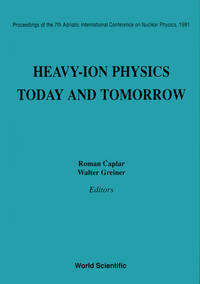
HEAVY-ION PHYSICS: TODAY AND TOMORROW - PROCEEDINGS OF THE 7TH ADRIATIC INTERNATIONAL CONFERENCE ON NUCLEAR PHYSICS 1991
9810208014New. Brand new and still unused unknown
Jubilee Books · États-Unis1 503,50 $US≈ 1 272,11 €
335 résultats
20081348697PN. New. 2008. Soft Cover. This is a reprint edition. . PN paperback
9810208014New. Brand new and still unused unknown
100-26131L. Ron Hubbard. Hardcover. Good. Good condition with wear and markings. L. Ron Hubbard hardcover
197859785Portland OR: Trojan Decommissioning Alliance 1978. One atlas folio poster. 17 x 21.25 in. printed in blue & brick-red on tan-coloured textured paper unidentified photo of couple on verso minor creasing edgewear very minor pinholes at corners still a VG exemplar from the library of Sam Oakland 1934-2014 was an English professor poet and author and bicycle advocate who started rallying bicycle riders in the late 1960’s and led groups in support of Oregon’s groundbreaking 1971 Bike Bill. First edition of this exceedingly scarce protest poster for Jesse Colin Young of the “Youngbloods†benefit concert raising funds for the famed Oregon-based anti-nuclear protest group Trojan Decommissioning Alliance. The previous August 1977 the group led by Nina Bell and Norman Solomon had carried out the first civil disobedience protest occupation of a U.S. nuclear power plant. Sixty-eight protesters were arrested and the group continued to organize and protest in the remaining months of 1977. By the time this poster was issued they had even issued the Trojan Decommission Alliance Occupation Handbook for another series of civil disobedience protests held August 6-9 1978 which resulted in 100’s more arrests. No copies located in Worldcat; See: Gregory Nipper Progress and Economy: The Clash of Values Over Oregon’s Trojan Nuclear Plant 2005. Trojan Decommissioning Alliance, unknown
195656600Baton Rouge LA: Army & Navy Publishing Inc. 1956. 8vo. 80 pp unpaginated. Photo-illustrated throughout many colour plates text & captions printed in blue & red black white photo illustrations colour borders. Colour-illustrated softcovers red plastic comb binding as issued minor soiling front cover minor shelfwear still VG- copy. First edition of this souvenir yearbook detailing the largest field trials held in the United States following World War II testing Army and Air Force personnel under conditions of simulated nuclear war even including the faked dropping of an atomic bomb. A number of experimental groups were introduced including a Sky Cavalry which combined the 82nd Airborne with a helicopter unit although there was controversy following the exercises with Armor wanting helicopters attached to mechanized cavalry units and Intelligence wanting aircraft with radar and infrared sensors. Unfortunately the massive maneuvers covering 45 days resulted in massive traffic jams with mechanized units trying to attack during torrential downpours and other logistics issues emerged which the US military attempted to correct when they later applied many of the results to new tactics during the Vietnam War. Worldcat locates 3 copies Filson Historical Society US Army War College Artillery School only copy dated correctly; Rickey Robertson Exercise Sage Brush 1955 Stephen F. Austin State University January 2013. Army & Navy Publishing, Inc., paperback
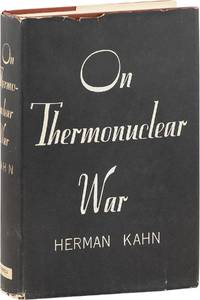
196085542Princeton New Jersey: Princeton University Press 1960. First Edition. Octavo. 24cm. Publisher's terracotta cloth titled and ruled in black and gilt to spine. Dustjacket. xx; 651pp. Very light wear and bumping to spine ends and extremities strong and bright; internally clean and fresh; in a grey dustjacket with some minor edgewear and shallow chipping to the spine ends and edges a hint of toning to the spine panel and some light soiling and wear to the white rear panel. A very good handsome copy indeed.<br /> <br /> Kahn's deeply influential analysis of the spectre of thermonuclear war partly intended as a counterpoint to von Neumann's apocalyptic concept of MAD or Mutually Assured Destruction. Kahn posits the strategic possibility of a 'winnable' nuclear conflict questions the solidity of a peace structure based on thermonuclear threat and makes the highly controversial for the time suggestion that the spectre of thermonuclear conflict itself isn't actually that terrifying and that the spectre of it is really what most people get worked up about. Kahn is an analytical strategist his conclusions are based in a zone in which emotion only plays the smallest part and upon publication the book elicited some powerful reactions from readers uncomfortable with the potential at the time inevitable deaths of millions being presented in the form of graphs and calm inexorable strategic detachment. Hubert Humphrey's contemporary review of the work stated "New thoughts particularly those which contradict current assumptions are always painful for the human mind to contemplate. On Thermonuclear War is filled with such thoughts."<br /> <br /> Perhaps as inevitable antidote to the grimly sardonic nature of his analysis Kahn's work earned him a place in the eternal halls of pop culture being the impromptu scriptwriter for the character of General Buck Turgidson in "Dr. Strangelove" and with popular understanding of his theories featuring prominently in fiction from Tom Clancy to "Wargames." Kahn is also credited with the coining of the phrases "Megadeath" as a unit of fatality and "Wargasm" describing the focus of the military personnel he worked with both of which have seeped into common usage. Kahn's borderline crude delivery combining horrifying statistics with jokes about how women will come to love their two-headed babies was deliberately jarring and intended to be equally disruptive to those locked in fearful uninformed paralysis and those working towards the wargasm. The reception of his book was one of the catalyzing elements that led Kahn to be a co-founder of The Hudson Institute after his work at RAND reached its inevitable close. Regardless of how divisive Kahn was both in theory and delivery "On Thermonuclear War" ranks as one of the most important 20th century works of strategic analysis right down to the title being an updated and expanded nod to von Clausewitz's "On War. Princeton University Press unknown
1957106646<p>Large 8vo softcover illustrated 579 pp. Lower spine and bottom front cover chipped and missing a small portion paper fragile some aging; otherwise fair to good condition. Published by the government and edited by Samuel Glasstone this work tells the reader everything they need to know about nuclear weapons. Illustrated with photographs and charts to make sure you get the picture.</p> United States Atomic Energy Commission.
196161500N.p. New York: Carl C. Burns 1961. Offset broadside 11" x 8-1/2"; text printed in black on thin wove paper. Heavy stains verso bleeding through to recto conspicuous but not affecting legibility of text. Just Good. Dated at end of text August 1961.<br /> <br /> A resounding evangelical response to the threat of nuclear war published a few months after the Bay of Pigs Invasion during the build-up of Soviet nuclear defenses in Cuba. The author who signs himself "Carl C. Burns B.D. and Front Line Soldier" promises that New York City "will be in flames" and asks "not what but Who is your defense" Burns cites several lines of scripture to make clear his message that only God may be counted on to protect citizens from the flaming hell of nuclear war. Not separately catalogued in OCLC. We note one other copy recorded in commerce D. Anthem Bookseller Dec. 2021 but can find no contemporary references to the author whose hysteria no doubt spoke for millions. Carl C. Burns unknown
197464130Portland OR & Burlingame CA: Shannon & Wilson Inc. November - December 1974. Thick 4to. 11.25 x 12 x 3.25 in. Approx. 400 leaves sections variously numbered. w/ thumb tab sections printed typed captions included at fore-edges w/ over 100 maps many large folding boring core sample printed photos on matte finish stock folding charts graphs diagrams; additional appendix envelope w/ 2 large folding appendix updated blueprint maps inserted at rear. Original green vinyl 19-ring binder silver lettering stamped on front cover & spine occasional interior age toning shelfwear rubbing still a VG copy from the library of Dr. Clive F. “Rick†Kienle 1942-2025 geologist and specialist in aerial photo mapping w/ ownership signature on title. First edition of this exceedingly rare geotechnical report for a Pacific Power & Light Co. proposed nuclear power plant to have been constructed at West Roosevelt Washington along the edge of Lake Umatilla in the Columbia River Gorge as part of a group of similar nuclear power plants with the proposed Trojan Nuclear Power plant licensed to run beginning in 1976 at 1100 Megawatts. PP&L together with PG&E had previously examined 2 sites near Arlington OR but then shifted to this site near the Columbia River down from the Hanford Sites later developed for the WPPSS projects. Included are five borings for subsurface conditions 3 borings in the landslide areas geophysical survey to depth of 229 feet geologic mapping of faults stratigraphy and assessment of ground motion. The Slope Stability and Aerial Geological survey results were included in a later separate report by Dr. Rick Kienle.Several nuclear power plants had been proposed and received geotechnical studies in the Pacific Northwest following up the Trojan Nuclear Power Plant constructed upon the site of the former Trojan Powder Co. plant site as well as adjacent properties beginning in 1967. Pitched to PGE as a means to solve the exploding power usage demand in the fast-growing Portland OR area in the Mid-20th-Century by Admiral Lewis Strauss of the Atomic Energy Commission PGE and 13 other utilities began planning in 1967 and construction began July 30 1968. PGE chose to build a pressurized water reactor plant and the enormous plant and huge construction cost were projected at the time to be cheaper than coal-fired power plants to supplement the massive hydropower presence in the PNW. Oregon Governor Tom McCall established the first Nuclear Siting Task Force of the Nuclear Development Coordinating Committee in 1969 in order to approve location of nuclear power plants consistent with Oregon’s environmental protections as well as comply with the forthcoming Clean Air Act passed in 1970. No copies in Worldcat or other collections; See: Timeline of Oregon’s Energy History Oregon Department of Energy 2026. Shannon & Wilson, Inc., unknown
197464128Portland OR & Burlingame CA: Shannon & Wilson Inc. November - December 1974. Thick 4to. 11.25 x 12 x 3.25 in. Approx. 400 leaves sections variously numbered. w/ thumb tab sections printed typed captions included at fore-edges w/ over 100 maps many large folding boring core sample printed photos on matte finish stock folding charts graphs diagrams; additional appendix envelope w/ 4 large folding appendix updated blueprint maps inserted at rear. Original green vinyl 19-ring binder silver lettering stamped on front cover & spine occasional interior age toning shelfwear rubbing still a VG copy from the library of Dr. Clive F. “Rick†Kienle 1942-2025 geologist and specialist in aerial photo mapping w/ ownership signature on title. First edition of this exceedingly scarce geotechnical report for a Pacific Power & Light Co. proposed nuclear power plant to have been constructed on Calapooya Creek near Sutherlin Oregon as part of a group with the proposed Trojan Nuclear Power plant licensed to run beginning in 1976 at 1100 Megawatts. This report examined the borings for subsurface conditions and proposed companion dam site for the nuclear plant seismic refraction survey geological studies Side Looking Airborne Radar SLAR survey seismic faults ground water condition reviews and more. Regional geological studies consisted of surveying local similar geologic and mining literature an in-depth examination of the aerial photographs carried under the direction of Dr. Kienle as well as in-field reconnaissance of several faults and folds to define the major geologic structures in the area to determine feasibility for siting a nuclear power plant.Several nuclear power plants had been proposed and received geotechnical studies in the Pacific Northwest following up the Trojan Nuclear Power Plant constructed upon the site of the former Trojan Powder Co. plant site as well as adjacent properties beginning in 1967. Pitched to PGE as a means to solve the exploding power usage demand in the fast-growing Portland OR area in the Mid-20th-Century by Admiral Lewis Strauss of the Atomic Energy Commission PGE and 13 other utilities began planning in 1967 and construction began July 30 1968. PGE chose to build a pressurized water reactor plant and the enormous plant and huge construction cost were projected at the time to be cheaper than coal-fired power plants to supplement the massive hydropower presence in the PNW. Oregon Governor Tom McCall established the first Nuclear Siting Task Force of the Nuclear Development Coordinating Committee in 1969 in order to approve location of nuclear power plants consistent with Oregon’s environmental protections as well as comply with the forthcoming Clean Air Act passed in 1970. No copies in Worldcat or other collections; See: Timeline of Oregon’s Energy History Oregon Department of Energy 2026. Shannon & Wilson, Inc., unknown
197464129Portland OR & Burlingame CA: Shannon & Wilson Inc. November - December 1974. Thick 4to. 11.25 x 12 x 3.25 in. Approx. 400 leaves sections variously numbered. w/ thumb tab sections printed typed captions included at fore-edges w/ over 100 maps many large folding boring core sample printed photos on matte finish stock folding charts graphs diagrams; additional appendix envelope w/ 2 large folding appendix updated blueprint maps inserted at rear. Original green vinyl 19-ring binder silver lettering stamped on front cover & spine occasional interior age toning shelfwear rubbing still a VG copy from the library of Dr. Clive F. “Rick†Kienle 1942-2025 geologist and specialist in aerial photo mapping. First edition of this exceedingly scarce geotechnical report for a Pacific Power & Light Co. proposed nuclear power plant to have been constructed at Lebanon Oregon as part of a group with the proposed Trojan Nuclear Power plant licensed to run beginning in 1976 at 1100 Megawatts. This report examined the site due to its very low historic seismic activity. Included are seven borings for subsurface conditions a laboratory test program measuring the dynamic and static engineering properties of the boring core samples seismic refraction survey geological studies Side Looking Airborne Radar SLAR survey seismic faults ground water condition reviews and more. Regional geological studies consisted of surveying local similar geologic and mining literature as well as a more abbreviated December 1973 report incorporated into this much larger in-depth examination OSU Professor Richard Couch serving as seismology consultant the aerial photographs carried under the direction of Dr. Kienle as well as in-field reconnaissance of several faults and folds to define the major geologic structures in the area to determine feasibility for siting a nuclear power plant.Several nuclear power plants had been proposed and received geotechnical studies in the Pacific Northwest following up the Trojan Nuclear Power Plant constructed upon the site of the former Trojan Powder Co. plant site as well as adjacent properties beginning in 1967. Pitched to PGE as a means to solve the exploding power usage demand in the fast-growing Portland OR area in the Mid-20th-Century by Admiral Lewis Strauss of the Atomic Energy Commission PGE and 13 other utilities began planning in 1967 and construction began July 30 1968. PGE chose to build a pressurized water reactor plant and the enormous plant and huge construction cost were projected at the time to be cheaper than coal-fired power plants to supplement the massive hydropower presence in the PNW. Oregon Governor Tom McCall established the first Nuclear Siting Task Force of the Nuclear Development Coordinating Committee in 1969 in order to approve location of nuclear power plants consistent with Oregon’s environmental protections as well as comply with the forthcoming Clean Air Act passed in 1970. No copies in Worldcat or other collections; See: Timeline of Oregon’s Energy History Oregon Department of Energy 2026. Shannon & Wilson, Inc., unknown
197464132Portland OR: Portland General Electric Company 1974-1979. Two vols. hick 4to. 11.25 x 11.75 x 3.25 in. Approx. 1200 leaves sections variously numbered. w/ thumb tab sections printed affixed at fore-edges w/ over 100 maps many large folding most colour folding charts graphs diagrams; large folding site map in vol. 2. Original green vinyl 3-ring binders black lettering stamped on front covers & spines occasional interior age toning shelfwear rubbing still a VG set from the library of Dr. Clive F. “Rick†Kienle 1942-2025 geologist and specialist in aerial photo mapping . First edition of this very scarce original safety analyses reports for Portland General Electric’s pair of nuclear power plants to have been constructed at Pebble Springs in Gilliam County Oregon as part of a group with the proposed Trojan Nuclear Power plant licensed to run beginning in 1976 at 1100 Megawatts. These nuclear power plants had been proposed and begun development soon after construction began at the Trojan Nuclear Power Plant and by 1979 over $ 250 million had been spent by the State of Oregon and PGE on development costs. The two reactors would have been located 3 miles southeast of the Columbia River would have consisted of a Nuclear Steam System for each plant with a Reactor Coolant System supplied by Babcock & Wilcox square lattice reactor cores and abundant auxiliary systems. These reports include a myriad of updates carried out during the regulatory review of the project and the preliminary development work but after passage in 1980 of Ballot Measure 7 by Oregon voters no nuclear power plants could be considered for construction unless there was a Federal high-level waste repository and approval by Oregon voters. Several nuclear power plants had been proposed and received geotechnical studies in the Pacific Northwest following up the Trojan Nuclear Power Plant constructed upon the site of the former Trojan Powder Co. plant site as well as adjacent properties beginning in 1967. Pitched to PGE as a means to solve the exploding power usage demand in the fast-growing Portland OR area in the Mid-20th-Century by Admiral Lewis Strauss of the Atomic Energy Commission PGE and 13 other utilities began planning in 1967 and construction began July 30 1968. PGE chose to build a pressurized water reactor plant and the enormous plant and huge construction cost were projected at the time to be cheaper than coal-fired power plants to supplement the massive hydropower presence in the PNW. Oregon Governor Tom McCall established the first Nuclear Siting Task Force of the Nuclear Development Coordinating Committee in 1969 in order to approve location of nuclear power plants consistent with Oregon’s environmental protections as well as comply with the forthcoming Clean Air Act passed in 1970. Should be noted that the original Pebble Springs site is now the location of a massive 99 Megawatt Wind Farm. Worldcat locates 4 copies of similar reports divided into more volumes - Multnomah County PSU UO WA State Lib; See: Timeline of Oregon’s Energy History Oregon Department of Energy 2026; McTeague Renewable Energy Not Nuclear is the Oregon Way Oregon Capital Chronicle March 26 2026. Portland General Electric Company, unknown
197664131Portland OR: Shannon & Wilson Inc. Northwest Geological Services Inc. February 1976. 4to. 11.25 x 12 in. Approx. 250 leaves sections variously numbered. w/ several maps many large folding hand-coloured folding charts graphs diagram 7 mounted colour photos folding maps inserted into rear pocket. Original green vinyl 19-ring binder silver lettering stamped on front cover & spine occasional interior age toning shelfwear rubbing still a VG copy from the library of Dr. Clive F. “Rick†Kienle 1942-2025 geologist and specialist in aerial photo mapping w/ business card mounted on front inner cover. First edition of this exceedingly rare slope stability report for a Pacific Power & Light Co.’s proposed nuclear power plant to have been constructed at West Roosevelt Washington along the edge of Lake Umatilla in the Columbia River Gorge as part of a group of similar nuclear power plants with the proposed Trojan Nuclear Power plant licensed to run beginning in 1976 at 1100 Megawatts. PP&L together with PG&E had previously examined 2 sites near Arlington OR but then shifted to this site near the Columbia River down from the Hanford Sites later developed for the WPPSS projects. This report focuses on the stability of the slopes to the north of the proposed site and estimate the effect of the design earthquake on slope stability and plant safety. This required nine additional borings geologic mapping of the area identification of basalt outrcops by chemical petrographic and remnant magnetism analyses lab studies liquefaction analyses along with construction of a 3-D model of the site. Several nuclear power plants had been proposed and received geotechnical studies in the Pacific Northwest following up the Trojan Nuclear Power Plant constructed upon the site of the former Trojan Powder Co. plant site as well as adjacent properties beginning in 1967. Pitched to PGE as a means to solve the exploding power usage demand in the fast-growing Portland OR area in the Mid-20th-Century by Admiral Lewis Strauss of the Atomic Energy Commission PGE and 13 other utilities began planning in 1967 and construction began July 30 1968. PGE chose to build a pressurized water reactor plant and the enormous plant and huge construction cost were projected at the time to be cheaper than coal-fired power plants to supplement the massive hydropower presence in the PNW. Oregon Governor Tom McCall established the first Nuclear Siting Task Force of the Nuclear Development Coordinating Committee in 1969 in order to approve location of nuclear power plants consistent with Oregon’s environmental protections as well as comply with the forthcoming Clean Air Act passed in 1970. No copies in Worldcat or other collections; See: Timeline of Oregon’s Energy History Oregon Department of Energy 2026. Shannon & Wilson, Inc., Northwest Geological Services, Inc., unknown
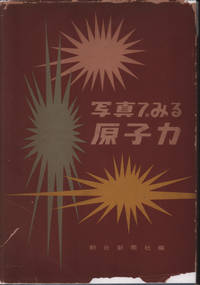
1955221443東京. Tokyo.: 朝日新聞社. Asahi Shinbunsha. Showa 30 1955. Black and white photographic illustrations maps 26.7 x 18.7cm 160pp. First and last leaves browned original blue cloth covered boards with decorative device and characters printed in white dustjacket worn and torn with loss on rear inside panel. A good copy. This fascinating book was published in 1955 ten years after Hiroshima and Nagasaki by the Asahi Newspaper. The editor claims that the book is the first publication to explain nuclear power visually by using many photographic illustrations. Starting with nuclear weapons and their outcomes in war and radiation it then explores research on nuclear power for industrial usage. It also covers radio isotopes and their possible usage in medicine and other scientific areas. The last section features nuclear power developments in Britain Russia France and Japan. Every page is filled with numerous photographic illustrations with detailed captions. The majority of photographs were sourced from the United States. A comprehensive study on nuclear power and its potential as of 1955. . 朝日新聞社. [Asahi Shinbunsha]. hardcover
15306At foot of final page: '1204 WT. 39620. number of copies: 22500 date of publication i.e. July 1955: 7/55 printer: D & G Ltd.'. 39pp. small 4to. Stud-bound in brown card printed wraps. In good condition lightly aged and worn with crease to front cover to which the enamel badge is also attached beside the ownership signature of 'E J Sayer' Downing Street secretary Elizabeth Sayer later Cooper. First page dated in pencil '8th Sept' and pencil note in text of the 'permitted dose' of radiation. At head of front cover: 'ESTACIDVOL Code 5-96-0' and at foot: 'RESTRICTED The information given in this document is not to be communicated either directly or indirectly to the Press or to any person not authorised to receive it.' Printed inside the front cover: 'The accompanying notes have been prepared for your guidance. Additional information is contained in the Home Office Civil Defence Training Manuals which may be obtained on loan through your Instructor.' Divided into the main sections: Civil Defence Organisation; Fire Fighting; High Explosive Missiles; Atomic Warfare; Biological Warfare; Chemical Warfare; Protective Measures. Also present is a full-page 'Civil Defence Report Form'. The first section begins: 'Civil Defence is the responsibility of the Central Government and needs the assistance of Local Authorities Industry and public bodies of many kinds. It includes all measures short of actual combat necessary to mitigate the effects of enemy attack.' The 'Atomic Warfare' section is divided into four subsections: Features of Atomic Explosion; Delayed Radiation Risks; Radiation Sickness; Individual Dosimeter. The enamel badge is roughly 2.5 x 2cm and features red and blue enamel on brass. It consists of a crown topping a circle the latter having an image of a lion surrounded by a blue border with 'I.C.D.S.' The pamphlet is scarce: no copy on OCLC WorldCat and the only copy on COPAC at the Imperial War Museum. At foot of final page: '(1204) WT. 39620. [number of copies:] 22,500 [date of publication, i.e. July 1955:] 7/55 [printer:] D & paperback
26609Civil Defence 1964-1965. Five items 1-26pp. folio most undated but one 1964 another 1965 staples rusty minor damage to one with no loss. Item I: 26pp. with diagrams "Layout of an Emergency Kitchen" with sub-headings Site Layout of Cookers Layout of Swill area General Food Untensil and Fuel Storage Food Preparation Facilities Cooking Apparatus Serving Arrangements Improvised Washing Up Arrangements Disposal of Fouled Water Disposal of Swill Latrines; Item 2; 5pp. inc. A form headed Council Civil Defence Department Emergency Meals Service Goods Received Book Site. Period . Signed . columnised Date/Description/ Quantity and dated "WAJ/MC. 26.11.64 with further forms Stock Sheet Record of Meals served at . Record of Meals prepared and despatched from . Appendix for "Rest Centre Register"; Item 3: 3pp. the building of a "Double Drum Oven" dated 3 May 1965 with diagrams; Item 4 one page form in duplicate "For Training Purposes Only Clothing form for use in rest centres Stock Sheet" 1965; Item 5 3pp. "Appendix A This is a provisional form for use in training only Dispersal mainly relates to billeting "9.1.15/63/200". [Civil Defence, 1964-1965] hardcover
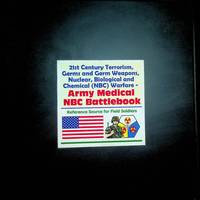
2000B158Washington D.C.: US Army Medical Agencies 2000. Various. 3-ring binders. Near Fine. This is a group of three fascinating but sobering military medical training manuals on the risks effects and treatment of injury from chemical biological and nuclear warfare from the 21st Century Terrorism Germs and Germ Weapons Nuclear Biological and Chemical NBC Warfare Series.<br /> 1. The Medical NBC Battlebook- Reference Source for Field Soldiers USACHPPM Tech Guide 244 2000 approx. 100 pages<br /> 2. Chemical Weapons Excerpted from Medical Aspects of Chemical and Biological Warfare 1997 approx. 200 pages<br /> 3. Biological Weapons Excerpted from Medical Aspects of Chemical and Biological Warfare 1997 approx. 200 pages<br /> <br /> All three volumes are near fine in black vinyl 3-ring binders with paper title labels on the spines and front covers. Binders have just slight shelf wear but could pass for new. All pages are printed single sided. No marks or damage at all. All three appear unused.<br /> <br /> Note: This is a very heavy set of books and so will require additional shipping cost even within the US but especially to any destination outside the US. US Army Medical Agencies unknown
195876552Cape Canaveral: N.p. 1958-1973. This was the personal archive of missile installation foreman Joseph H. Lendle and the majority of it relates to Operation Hardtack I Project 9.31a. Project 9.3a was a series of U.S. nuclear tests conducted in 1958. Specifically Project 9.3a was responsible for the preparation and launch of two Redstone missiles carrying nuclear warheads for high-altitude detonations known as Shots Teak and Orange. These tests were part of Operation Newsreel a subset of Hardtack I focusing on high-altitude nuclear explosions and EMPs.The primary goal of Project 9.3a was to study the effects of nuclear detonations at high altitudes including their impact on communications electromagnetic pulse EMP generation and atmospheric phenomena. The Redstone missiles were modified to carry nuclear devices to altitudes of approximately 76.8 kilometers 47.7 miles. Each missile was also equipped with instrumented pods designed to collect data on pressures thermal and gamma radiation neutron flux and EMP effects. Both missiles were launched from the Johnston Atoll in the Pacific. Shot Teak was a failure and exploded directly over the Johnston Atoll but Shot Orange was an unqualified success. Despite Shot Teak's high-altitude detonation at 252000 feet the explosion was visible from Hawaii with observers reporting an aurora-like effect and a red shell that appeared to pass overhead. The EMP caused a temporary blackouts in Australia and Hawaii.The archive consists of includes 2 black and white snapshots of operations crew and the missile both 5 x 7†3 certificates honoring the participation of Joseph Frank Lendle 1921-2017 lead foreman of Operation Hardtack 2 typed letters signed to Lendle both signed by Kurt H. Debus Director Missile Firing Lab a birthday card from the Launch Operations Directorate a 2 pp. press release for The Florida Times-Union 3 printed memos 5 printed letters with facsimile signatures congratulating Operation Hardtack personnel for their excellent work including one from Dr. Werner van Braun. Sheets generally toned and with staple holes at upper left corners but generally quite nice. One "Certificate of Participation" has a two inch tear and three holes at the upper blank margin where pushpins once held to to a wall. Also included is a later plaque 1975 honoring Lendle’s contribution to the NASA rocket programs listing the launches that he participated in. He participated in 129 launches including those of Redstone Juniper "C' Jupiter Redstone-Mercury Juno Saturn Apollo and Skylab. Lendle worked in the space program for nearly 28 years after his military service in WWII. N.p. unknown
a49672Columbus 1988. Office of Crystalline Respository Development. BMI/OCRD-29. 4to. 73pp. wraps. VG. paperback
j153Fort Sam Houston 1990. Subcourse Med447. 4to. about 200pp. tables large foldout chart at rear original stapled wraps. A few date and one ink number and Depository Library stamp on front. Staple removed from right margin leaving some residue on front and rear wrappers. VG light wear. . paperback
a1026701952 first edition. US Atmospheric Nuclear Weapons Tests. DNA 6019F. 216p. some photo illus and charts. 4to wraps. LIght non-circulating depository library stamps on cover no pocket no spine numbers no bookplate Text clean; VG. . paperback
a1026671951 first edition. US Atmospheric Nuclear Weapons Tests. DNA 6022F. 4to wraps.180P. LIght non-circulating depository library stamps on cover no pocket no spine numbers no bookplate Text clean; VG. . paperback
a1026711951 first edition. US Atmospheric Nuclear Weapons Tests. DNA 6023F. 188p. some photo illus and charts. 4to wraps. LIght non-circulating depository library stamps on cover no pocket no spine numbers no bookplate Text clean; VG. . paperback
a1033451953 first edition. US Atmospheric Nuclear Weapons Tests. DNA 6015F. 98p. Some photo illus. 4to wraps. LIght non-circulating depository library stamps on cover no pocket no spine numbers no bookplate Text clean; VG. . paperback
a1026691953 first edition. US Atmospheric Nuclear Weapons Tests. DNA 6016F. 92p. 4to wraps. LIght non-circulating depository library stamps on cover no pocket no spine numbers no bookplate Text clean; VG. . paperback