233 résultats
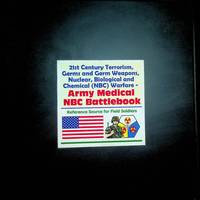
2000B158Washington D.C.: US Army Medical Agencies 2000. Various. 3-ring binders. Near Fine. This is a group of three fascinating but sobering military medical training manuals on the risks effects and treatment of injury from chemical biological and nuclear warfare from the 21st Century Terrorism Germs and Germ Weapons Nuclear Biological and Chemical NBC Warfare Series.<br /> 1. The Medical NBC Battlebook- Reference Source for Field Soldiers USACHPPM Tech Guide 244 2000 approx. 100 pages<br /> 2. Chemical Weapons Excerpted from Medical Aspects of Chemical and Biological Warfare 1997 approx. 200 pages<br /> 3. Biological Weapons Excerpted from Medical Aspects of Chemical and Biological Warfare 1997 approx. 200 pages<br /> <br /> All three volumes are near fine in black vinyl 3-ring binders with paper title labels on the spines and front covers. Binders have just slight shelf wear but could pass for new. All pages are printed single sided. No marks or damage at all. All three appear unused.<br /> <br /> Note: This is a very heavy set of books and so will require additional shipping cost even within the US but especially to any destination outside the US. US Army Medical Agencies unknown
1974019032University Park Pennsylvania: Pennsylvania State University 1974. Paper Back. Very Good/No Jacket. 4to - over 9¾" - 12" tall. chapt.paginationone-sided; SC yellow w/blk.; rubbed w/some hilite&inkotherwise cleantight pgs; last page detached. 19 experiments. illus. <br/> <br/> Pennsylvania State University unknown
195876552Cape Canaveral: N.p. 1958-1973. This was the personal archive of missile installation foreman Joseph H. Lendle and the majority of it relates to Operation Hardtack I Project 9.31a. Project 9.3a was a series of U.S. nuclear tests conducted in 1958. Specifically Project 9.3a was responsible for the preparation and launch of two Redstone missiles carrying nuclear warheads for high-altitude detonations known as Shots Teak and Orange. These tests were part of Operation Newsreel a subset of Hardtack I focusing on high-altitude nuclear explosions and EMPs.The primary goal of Project 9.3a was to study the effects of nuclear detonations at high altitudes including their impact on communications electromagnetic pulse EMP generation and atmospheric phenomena. The Redstone missiles were modified to carry nuclear devices to altitudes of approximately 76.8 kilometers 47.7 miles. Each missile was also equipped with instrumented pods designed to collect data on pressures thermal and gamma radiation neutron flux and EMP effects. Both missiles were launched from the Johnston Atoll in the Pacific. Shot Teak was a failure and exploded directly over the Johnston Atoll but Shot Orange was an unqualified success. Despite Shot Teak's high-altitude detonation at 252000 feet the explosion was visible from Hawaii with observers reporting an aurora-like effect and a red shell that appeared to pass overhead. The EMP caused a temporary blackouts in Australia and Hawaii.The archive consists of includes 2 black and white snapshots of operations crew and the missile both 5 x 7†3 certificates honoring the participation of Joseph Frank Lendle 1921-2017 lead foreman of Operation Hardtack 2 typed letters signed to Lendle both signed by Kurt H. Debus Director Missile Firing Lab a birthday card from the Launch Operations Directorate a 2 pp. press release for The Florida Times-Union 3 printed memos 5 printed letters with facsimile signatures congratulating Operation Hardtack personnel for their excellent work including one from Dr. Werner van Braun. Sheets generally toned and with staple holes at upper left corners but generally quite nice. One "Certificate of Participation" has a two inch tear and three holes at the upper blank margin where pushpins once held to to a wall. Also included is a later plaque 1975 honoring Lendle’s contribution to the NASA rocket programs listing the launches that he participated in. He participated in 129 launches including those of Redstone Juniper "C' Jupiter Redstone-Mercury Juno Saturn Apollo and Skylab. Lendle worked in the space program for nearly 28 years after his military service in WWII. N.p. unknown
1996027210La Grange Illinois: American Nuclear Society Inc 1996. Appears unread. Fine condition. Bright shiny clean. NOT a library discard. NO owner's name or bookplate. NOT a remainder. Pages are clean and unmarked - apparently seldom if ever read. Glossary. Appendix. Bound in the original white wraps stamped in blue and green. 1st ed No additional printings listed. Softcover stapled wraps. Fine condition. Illus. by NOT a library discard. ix 71pp. Great Packaging Fast Shipping. American Nuclear Society, Inc Paperback
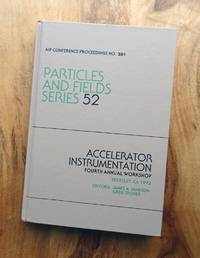
1993204575New York: AIP Press: American Institute of Physics 1993. Printed Gray Boards. Very Good/No Jacket. 9 1/2"; 21.6cm. This is AIP Conference Proceedings No. 281. Representative of the nine invited papers are Multibunch Feedback -- Strategy Technology and Implementation Fox Eisen et al.; Introduction to Beam Diagnostics and Physics for Circular Accelerators Billing; and Log-Ratio Signal-Processing Technique for Beam Position Monitors Shafer. In addition there are nine contributed papers Bunch Shape Monitors Using Low Energy Secondary Electron Emission Feschenko; and 15 Poster Sessions Beam Current and Beam Lifetime Measurements at the HERA Proton Storage Ring Schütte Unser. 350 xi pages with List of Participants and Author Index. Boards show insignificant shelf use; name of prior owner on front endpaper; text is strong and unmarked. <br/> <br/> AIP Press: American Institute of Physics hardcover
20003TWDDA002YV9Imperial College Pr 8/1/2002 12:00:01 AM. hardcover. Very Good. 1.4016 in x 6.4016 in x 6.0000 in. Imperial College Pr hardcover
1977753687PN. New. 1977. Soft Cover. Date is original print. This is a reprint edition. . PN paperback
197500001641Bulletin of the Atomic Scientists 1975. Reprint. Hardcover. good . r. 236 pages. Very rare book. Ex-library book . No dust jacket. Black boards with white text. <br/><br/> Bulletin of the Atomic Scientists hardcover
1987NATW2232(Wien), Vlg. d. Österr. Akademie d. Wissenschaften (1987). gr.-8°, 215 S., mit einigen Fig. im Text, OKart., geringe Gebrauchsspuren. Beiträge tlw. in Englisch.
199850760Augsburg, Weltbild Verlag GmbH, 1998. Genehmigte Lizenzausgabe für 375 Seiten , 24 cm, Hardcover/Pappeinband
1927NATW2058(Bln., Springer 1927). S. (466)-598, mit 41 Abb., Bibl.-Expl., HLn. d. Zt. m. kl. Klebezettel u. eingepr. Inv.-Nr. am RüSchwanz, aufkasch. Titel (beschäd.), berieben, bestoß., erste und letzte Seite gestemp. Aus: Handbuch der Physik. Bd. XXIV.
19952090502113717139Not Available 1995. Soft Cover. Fine. The book is in fine condition. Not Available paperback
19751715<p>Good Softback Volume specifically designed for the undergraduate physics student. 357pp with index and appendicies ISBN 0471949310 ~ 102.95 ~ Rutherford X-Rays Electrons Hydrogen Atom Spectrometer ~ Physics</p> John Wiley & Sons Ltd paperback
1929NATW1511Jena, Fischer 1929. gr.-8°, 15 S., mit 2 Textabb., OKart., verstaubt, randknitterig.
1936NATW2347Dresden u. Leipzig, Steinkopff 1936. XV, 188 S., 2 Bl. Vlgsanz., mit 79 Abb. u. 21 Tabellen, OBrosch., abgegriff., verstaubt, schwache Knickspuren, dunkler Fleck an Unterkante d. Vorderdeckels, Rücken rissig, Name auf Vor- u. Innentit. (= Wissenschaftliche Forschungsberichte. Naturwissenschaftl. Reihe Bd. 36).
199345110Prag, J.M. Marci Spectroscopie Society and University of Agriculture, 1993. 202 Seiten , 30 cm , kartoniert
1971004711New York, Praeger Publishers, 1971. -- Cloth -- Gr. 8°
19672092902143900652Japan Atomic Industry Council 1967. Soft Cover. Fine. Number of books: 1 book Japan Atomic Industry Council paperback
19672092902143800650Japan Atomic Industry Council 1967. Soft Cover. Fine. Number of books: 1 book Japan Atomic Industry Council paperback
1996291467PN. New. 1996. Soft Cover. Date is original print. This is a reprint edition . PN paperback
199287382La Grange Park IL: American Nuclear Society 1992. Presumed First Edition First printing. Hardcover. Very good. xii 193 3 pages. Footnotes. Illustrations a few with color. Tabular data. Bibliography. Illustrated front cover. No dust jacket present. It's been 50 years since the Chicago Pile experiment and the first controlled chain reaction. Anonymous volunteer contributors from the ANS have put together this history which ends with a celebration of the future of nuclear power but does not talk of what to do with radioactive waste. This book was prepared by a volunteer effort of a large number of people over several months. The authors take responsibility for the choice of material on the many possible issued covered. It was the belief of the authors that the beneficial impacts of nuclear energy while already enormous represent only a small fraction of the benefits yet to be gained and that this brief history of the first 50 years of the controlled nuclear chain reaction represents only the first phase of the nuclear era. The contents include Introduction Chicago Pile No. 1: The First Controlled Nuclear Chain Reaction; Development of Nuclear Power Plants in the United States; Development of Nuclear Power Plants in Canada and Europe; Status of Nuclear Power Development; Other Peaceful Applications of Nuclear Energy; Nuclear Fuel Technology; Nuclear Safety; and Working Toward a Nuclear Future. Chicago Pile-1 CP-1 was the world's first artificial nuclear reactor. On 2 December 1942 the first human-made self-sustaining nuclear chain reaction was initiated in CP-1 during an experiment led by Enrico Fermi. The secret development of the reactor was the first major technical achievement for the Manhattan Project the Allied effort to create nuclear weapons during World War II. Developed by the Metallurgical Laboratory at the University of Chicago CP-1 was built under the west viewing stands of the original Stagg Field. Although the project's civilian and military leaders had misgivings about the possibility of a disastrous runaway reaction they trusted Fermi's safety calculations and decided they could carry out the experiment in a densely populated area. Fermi described the reactor as "a crude pile of black bricks and wooden timbers." After a series of attempts the successful reactor was assembled in November 1942 by a team of about 30 that in addition to Fermi included scientists Leo Szilard Leona Woods Herbert L. Anderson Walter Zinn Martin D. Whitaker and George Weil. The reactor used natural uranium. This required a very large amount of material in order to reach criticality along with graphite used as a neutron moderator. The reactor contained 45000 ultra-pure graphite blocks weighing 360 short tons and was fueled by 5.4 short tons of uranium metal and 45 short tons of uranium oxide. Unlike most subsequent nuclear reactors it had no radiation shielding or cooling system as it operated at very low power - about one-half watt. The success of Chicago Pile-1 provided the first vivid demonstration of the feasibility of the military use of nuclear energy by the Allies as well as the reality of the danger that Nazi Germany could succeed in producing nuclear weapons. Previously estimates of critical masses had been crude calculations leading to order-of-magnitude uncertainties about the size of a hypothetical bomb. The successful use of graphite as a moderator paved the way for progress in the Allied effort. The Germans had failed to account for the importance of boron and cadmium impurities in the graphite samples on which they ran their test of its usability as a moderator while Leo Szilard and Enrico Fermi had asked suppliers about the most common contaminations of graphite after a first failed test. They consequently ensured that the next test would be run with graphite entirely devoid of them. In 1943 CP-1 was moved to Red Gate Woods and reconfigured to become Chicago Pile-2 CP-2. There it was operated for research until 1954 when it was dismantled and buried. The stands at Stagg Field were demolished in August 1957; the site is now a National Historic Landmark and a Chicago Landmark. American Nuclear Society hardcover
1992Q-0894485571Amer Nuclear Society 1992-12-01. Hardcover. New. In shrink wrap. Looks like an interesting title! Amer Nuclear Society hardcover
197845407Washington DC: GPO 1978. First Edition. First Printing. good. 24 cm 146 wraps. H.A.S.C. No. 95-62. GPO paperback