CLEMENTE MARIA DA SILVA-NIGRA, DomAntiquariat.de

403 résultats
1950135451Salvador-Bahia: Tipografia Beneditina Ltda. 1950. 210, fig. 226, 110 S und 309 S. 33,5*24,5 cm. privater Halblederband.
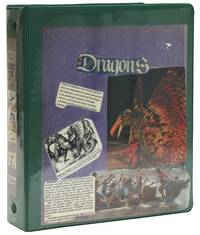
199833115New Jersey 1998. Very Good. New Jersey 1998. Green plastic three-ring binder with collaged covers and spine. 114 plastic sheaths filled to completion with all dragon-themed mythological summaries Chinese restaurant menus poetry artwork astrology dragon boat racing Stevie Nicks tributes debates about Christian metal band Stryper Puff the Magic Dragon etc.; principally printed from the internet along with some typed and manuscript material and original art. Light edgewear; a few scuffs. Very Good. <br /> <br /> An impressive and incredibly touching gift from a woman to her goddaughter assembled and given in the wake of the death of the goddaughter's husband. In the introductory typed letter the godmother counsels that alcohol is not the answer to her pain advises her to visit a "wise Indian man" she knows and hopes that the Dragon Book she has assembled will be of some comfort. A fascinating mix of pre-Wikipedia early internet material culture. The bulk of the material is printed internet articles: draconian.com still active and more or less in its same form gives a wide-ranging dragon background and articles from Emergency Librarian People Magazine the South Florida Business Journal and many many others are included painting a full picture of dragons in mythology and popular culture. <br /> <br /> The compiler has also included two excised Yellow Pages pages and highlighted the "Dragon" entries several pages of Stevie Nicks internet fanpages a few hand-written student reports original color drawings and dozens of poems printed and typed all dragon themed of course. A heartfelt collection highlighting mid to late 90s internet culture and the comfort fantasy can offer well before the nerd wall was broken in the early 2000s. . unknown
196089850Moscow: Foreign Languages Publishing House 1960. Presumed First Edition First printing. Hardcover. Good/Good in a clear plastic sleeve--with some wear tears and soiling. A few text pages--English portion is at pages 7 and 8. Illustrations one fold-outs some in color--reported as 149 Numbered Plates. Publication date derived from Internet research. This work is published in Russian English French German and Spanish. Major inscription on the fep--The inscription is in Russian and translates as "To Colonel Griffith in memory of meeting with Soviet Veterans of War in Moscow June 1 1963 Moscow." The signatures are believed to be. Vasilevsky Marshal first head of the Committee. Sukhoi or Serov; Sergey Smirnov WWII writer and Aleksey Maresyev Executive of Soviet Committee of Veterans WWII--he was a fighter Act and and his legs amputated. Between the end of mass demobilization in 1948 and the foundation of the Soviet Committee of War Veterans in 1956 former soldiers were integrated neither as a generation nor as a status group with formal privileges and their own organization as would be the case in later years. What held them together was instead a shared sense of entitlement based on wartime sacrifice. During the first postwar decade therefore Soviet veterans are best understood as an “entitlement group.†Only in the 1960s and 1970s was this entitlement group transformed into a status group that became one of the major pillars of the late Soviet order. This album contains examples of all the basic forms of photographic art works by Soviet photographers of various generations from the veterans who started taking pictures as long ago as the end of the last century to young photography only just setting out on their artistic careers. Aleksandr Mikhaylovich Vasilevsky 30 September O.S. 10 September 1895 – 5 December 1977 was a Soviet general who served as a top commander during World War II and achieved the rank of Marshal of the Soviet Union. During World War II he served as the chief of the General Staff and deputy Minister of Defense and later served as Minister of Defense from 1949 to 1953. Aleksey Petrovich Maresyev 20 May 1916 – 18 May 2001 was a Soviet and Russian military pilot who became a Soviet fighter ace during World War II despite becoming a double amputee. On 5 April 1942 his Yakovlev Yak-1 was shot down near Staraya Russa. Despite being badly injured he managed to return to the Soviet-controlled territory. His injuries deteriorated so badly that both of his legs had to be amputated above the knee. Desperate to return to his fighter pilot service he subjected himself to nearly a year of exercise to master the control of his prosthetic devices and succeeded at that returning to flying in June 1943. During a dog fight in August 1943 he shot down three German Focke-Wulf Fw 190 fighters. In total he completed over 80 combat sorties and shot down an estimated 7 German aircraft. He was awarded the title Hero of the Soviet Union on 24 August 1943. In 1944 he joined the Communist Party and in 1946 he retired from the military. In 1952 Maresyev graduated from the Higher Party School. In 1956 he obtained a Ph.D. in history and started working in the Soviet War Veterans Committee. Sergey Sergeyevich Smirnov 1915–1976 was a Soviet writer a historian a radio- and TV-presenter a public figure a Lenin Prize winner 1965. Member of the RCP since 1946. Smirnov entered the Maxim Gorky Literature Institute. In 1941 he went to the front. After the war he worked as an editor in Voenizdat. Sergey was the deputy editor-in-chief of Novy Mir November 1953 – October 1954 the editor-in-chief of Literaturnaya Gazeta in 1959—1960. The Secretary of the Union of Soviet Writers 1975—1976. Smirnov was famous for his books about heroes of the Great Patriotic War. He did a lot to immortalize heroic deeds of unknown soldiers and to find soldiers missing in action. Signature is possibly of General Ivan Aleksandrovich Serov August 13 1905 – July 1 1990 was a prominent leader of Soviet security and intelligence agencies head of the KGB between March 1954 and December 1958 as well as head of the GRU between 1958 and 1963. He was Deputy Commissar of the NKVD under Lavrentiy Beria and was to play a major role in the political intrigues after Joseph Stalin's death. Serov helped establish a variety of secret police forces in Central and Eastern Europe after the rise of the Iron Curtain and played an important role in crushing the Hungarian Revolution of 1956. Serov headed both the political intelligence agency KGB and the military intelligence agency GRU making him unique in Soviet/Russian history. Foreign Languages Publishing House hardcover