24 résultats
199833115New Jersey 1998. Very Good. New Jersey 1998. Green plastic three-ring binder with collaged covers and spine. 114 plastic sheaths filled to completion with all dragon-themed mythological summaries Chinese restaurant menus poetry artwork astrology dragon boat racing Stevie Nicks tributes debates about Christian metal band Stryper Puff the Magic Dragon etc.; principally printed from the internet along with some typed and manuscript material and original art. Light edgewear; a few scuffs. Very Good. <br /> <br /> An impressive and incredibly touching gift from a woman to her goddaughter assembled and given in the wake of the death of the goddaughter's husband. In the introductory typed letter the godmother counsels that alcohol is not the answer to her pain advises her to visit a "wise Indian man" she knows and hopes that the Dragon Book she has assembled will be of some comfort. A fascinating mix of pre-Wikipedia early internet material culture. The bulk of the material is printed internet articles: draconian.com still active and more or less in its same form gives a wide-ranging dragon background and articles from Emergency Librarian People Magazine the South Florida Business Journal and many many others are included painting a full picture of dragons in mythology and popular culture. <br /> <br /> The compiler has also included two excised Yellow Pages pages and highlighted the "Dragon" entries several pages of Stevie Nicks internet fanpages a few hand-written student reports original color drawings and dozens of poems printed and typed all dragon themed of course. A heartfelt collection highlighting mid to late 90s internet culture and the comfort fantasy can offer well before the nerd wall was broken in the early 2000s. . unknown
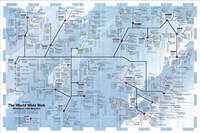
List2993New York: Ziff-Davis 1995. 24 ¾ x 37 inch two-sided poster. Some slight creasing; near fine. A 1995 “road map†of the Web designed by technical artist and graphic designer Timothy Edward Downs for PC Computing. In 1995 the World Wide Web had only been available to the public for a handful of years – but it was growing massively with over ten times as many websites in 1995 as in 1994. This guide to the Web inspired by subway maps and packaged for PC Computing readers like a AAA road map organizes the interesting and useful sites on the early Internet by type of content with URLs and opinionated summaries. It includes links to everything from the US EPA website to the live info page for the disastrous Woodstock 94 music festival described on the map as “Worth seeing.â€<br /> <br /> We find five copies of Downs’ map on OCLC. A scarce piece of interest to Internet historians – and users. Ziff-Davis unknown
1024012638.Gpaperback. Good. Access codes and supplements are not guaranteed with used items. May be an ex-library book. paperback
1024007502.Ghardcover. Good. Access codes and supplements are not guaranteed with used items. May be an ex-library book. hardcover
12201557like new. unknown
BN168767Universität Hannover Institut für Marketing & Management. Die Wirkung von Reputation und User Experience auf das Kundenverhalten im Internet Wiedmann Klaus P; Gückel Ramona; Kondering Wiebke; Schmidt Steffen and Wüstefeld Thomas <br/><br/>Die Wirkung von Reputation und User Experience auf das Kundenverhalten im Internet Wiedmann Klaus P; Gückel Ramona; Kondering Wiebke; Schmidt Steffen and Wüstefeld Thomas Die Wirkung von Reputation und User Experience auf das Kundenverhalten im Internet Wiedmann Klaus P; Gückel Ramona; Kondering Wiebke; Schmidt Steffen and Wüstefeld Thomas Universität Hannover Institut für Marketing & Management unknown
ria9780197509685_inpHardback. New. New Book; Fast Shipping from UK; Not signed; Not First Edition; Rethinking Cyber Warfare provides a fresh understanding of the role that digital disruption plays in contemporary international security and proposes a new approach to more effectively restrain and manage cyberattacks. hardcover
19972081502112001426Mainichi Communications 1997. Soft Cover. Fine. Number of pages: 255p Size: 24cm Number of books: 1 Mainichi Communications paperback
1938628New York: Oxford University Press 1938. Presumed First Edition First printing. Hardcover. Good. vi 323 3 pages. Frontis illustration. Dunant's Principal Works. Works Consulted. No DJ present. Boards discolored and scuffed discoloration inside boards and stamp inside front board. Martin Gumpert 13 November 1897 - 18 April 1955 was a German-born physician dermatologist historian and author. Born in Berlin Gumpert specialized in dermatology and medical history. His early life included service as a medical orderly during WI and academic pursuits in Berlin and Heidelberg culminating in a dissertation on syphilis in 1923. Gumpert also engaged in expressionist poetry and literature. He went on to write texts on pediatrics and developmental deformity. In 1933 Gumpert was forced out of his medical position by the Nazi rise to power. Over the next few years he wrote several texts of literature and the history of science and medicine. He was further excluded from the association of German writers the Reichsverband deutscher Schriftsteller as a Jew in 1935 and emigrated to the United States in 1936. Gumpert opened a dermatology practice in New York in 1936 and became a US citizen in 1942. During these years Gumpert became a friend of the siblings Erika and Klaus Mann and in 1949 visited their father Thomas Mann in Germany. Thomas Mann used Gumpert's medical knowledge on the course of syphilis in writing his novel Doktor Faustus. From 1952 Gumpert edited the gerontology journal Lifetime Living and worked as a geriatrician at the Jewish Memorial Hospital New York. Gumpert continued to write about the exile experience in poems and literary publications. Henry Dunant born Jean-Henri Dunant; 8 May 1828 - 30 October 1910 also known as Henri Dunant was a Swiss humanitarian businessman social activist and the co-founder of Red Cross movement. His humanitarian efforts won him the first Nobel Peace Prize in 1901.<br /> Dunant was born in Geneva to a devout Calvinist family and had business interests in French Algeria and Tunisia. In 1859 while on his way to petition Napoleon III he witnessed the aftermath of the Battle of Solferino in northern Italy. Horrified by the suffering of the wounded and the lack of care they received Dunant took the initiative to organize the local population in providing aid for the soldiers. After returning to Geneva he recorded his experiences in the book A Memory of Solferino in which he advocated the formation of an organization that would provide relief for the wounded without discrimination in times of war. In February 1863 Dunant was a member of a five-person committee that sought to put his plan into action which in effect founded the organization that would become the International Committee of the Red Cross. A year later he took part in a diplomatic conference organized by the Swiss government that led to the signing of the First Geneva Convention. . In 1895 Dunant was rediscovered by a journalist which brought him renewed attention and support and in 1901 he was awarded the first Nobel Peace Prize alongside French pacifist Frédéric Passy. The organized International Red Cross and Red Crescent Movement is a humanitarian movement with approximately 16 million volunteers members and staff worldwide. It was founded to protect human life and health to ensure respect for all human beings and to prevent and alleviate human suffering. Within it there are three distinct organizations that are legally independent from each other but are united within the movement through common basic principles objectives symbols statutes and governing organizations. In 1863 Gustave Moynier a Geneva lawyer and president of the Geneva Society for Public Welfare received a copy of Dunant's book and introduced it for discussion at a meeting of that society. As a result of this initial discussion the society established an investigatory commission to examine the feasibility of Dunant's suggestions and eventually to organize an international conference about their possible implementation. The members of this committee which has subsequently been referred to as the "Committee of the Five" aside from Dunant and Moynier were physician Louis Appia who had significant experience working as a field surgeon; Appia's friend and colleague Théodore Maunoir from the Geneva Hygiene and Health Commission; and Guillaume-Henri Dufour a Swiss army general of great renown. Eight days later the five men decided to rename the committee to the "International Committee for Relief to the Wounded". The Swiss government invited the governments of all European countries as well as the United States the Empire of Brazil and the Mexican Empire to attend an official diplomatic conference. Sixteen countries sent a total of 26 delegates to Geneva. On 22 August 1864 the conference adopted the first Geneva Convention "for the Amelioration of the Condition of the Wounded in Armies in the Field". Representatives of 12 states and kingdoms signed the convention. Oxford University Press hardcover
073560858X.Gpaperback. Good. Access codes and supplements are not guaranteed with used items. May be an ex-library book. paperback
0692755039.Gpaperback. Good. Access codes and supplements are not guaranteed with used items. May be an ex-library book. paperback
19991222587PN. New. 1999. Reprint Edition. Soft Cover. Date is copyright date; this is a later reprint edition . PN paperback
2020x-1649190123Notion Press 2020. Paperback. New. 458 pages. 5.00x1.02x8.00 inches. Notion Press paperback
2020x-1649191251Notion Press 2020. Paperback. New. 450 pages. 10.98x8.46x1.14 inches. Notion Press paperback
2011BN256820Hamburg : Hamburger Edition 2011. 2011. Blogistan : Politik und Internet im Iran. Annabelle Sreberny ; Gholam Khiabany. Aus dem Engl. von Richard Barth. Institut für Sozialforschung <br/><br/>Blogistan : Politik und Internet im Iran. Annabelle Sreberny ; Gholam Khiabany. Aus dem Engl. von Richard Barth. Institut für Sozialforschung Iran / Zeitgeschichte / Internet / - Sreberny Annabelle und Gholam Khiabany Hamburg : Hamburger Edition unknown
143276778X.Gpaperback. Good. Access codes and supplements are not guaranteed with used items. May be an ex-library book. paperback
9786556277455-11-73284FisicalBook. New. FisicalBook unknown
20172-152114186XIndependently published 2017. Paperback. New. 46 pages. 9.00x6.00x0.12 inches. Independently published paperback
1997321066New York NY U.S.A.: John Wiley & Sons Incorporated 1997. Wraps show no wear spine unbent. Pages are clean with no markings in text. . Soft Cover. As New. 4to - over 9¾" - 12" tall. John Wiley & Sons, Incorporated Paperback
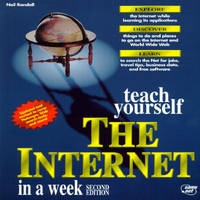
L11B-02377Sams Publishing. Used - Very Good. Very Good condition. 2nd edition. A copy that may have a few cosmetic defects. May also contain light spine creasing or a few markings such as an owner’s name short gifter’s inscription or light stamp. Sams Publishing unknown
1995USD_9780672307355Sams 1995. 2nd. Paperback. UsedLikeNew/UsedLikeNew. Sams paperback
1996Q-1562764500Ziff Davis Pr 1996-09-01. Paperback. New. In shrink wrap. Looks like an interesting title! Ziff Davis Pr paperback
20032082702114607273In puresu 2003. Soft Cover. Fine. Number of books: 1 In puresu paperback
196089850Moscow: Foreign Languages Publishing House 1960. Presumed First Edition First printing. Hardcover. Good/Good in a clear plastic sleeve--with some wear tears and soiling. A few text pages--English portion is at pages 7 and 8. Illustrations one fold-outs some in color--reported as 149 Numbered Plates. Publication date derived from Internet research. This work is published in Russian English French German and Spanish. Major inscription on the fep--The inscription is in Russian and translates as "To Colonel Griffith in memory of meeting with Soviet Veterans of War in Moscow June 1 1963 Moscow." The signatures are believed to be. Vasilevsky Marshal first head of the Committee. Sukhoi or Serov; Sergey Smirnov WWII writer and Aleksey Maresyev Executive of Soviet Committee of Veterans WWII--he was a fighter Act and and his legs amputated. Between the end of mass demobilization in 1948 and the foundation of the Soviet Committee of War Veterans in 1956 former soldiers were integrated neither as a generation nor as a status group with formal privileges and their own organization as would be the case in later years. What held them together was instead a shared sense of entitlement based on wartime sacrifice. During the first postwar decade therefore Soviet veterans are best understood as an “entitlement group.†Only in the 1960s and 1970s was this entitlement group transformed into a status group that became one of the major pillars of the late Soviet order. This album contains examples of all the basic forms of photographic art works by Soviet photographers of various generations from the veterans who started taking pictures as long ago as the end of the last century to young photography only just setting out on their artistic careers. Aleksandr Mikhaylovich Vasilevsky 30 September O.S. 10 September 1895 – 5 December 1977 was a Soviet general who served as a top commander during World War II and achieved the rank of Marshal of the Soviet Union. During World War II he served as the chief of the General Staff and deputy Minister of Defense and later served as Minister of Defense from 1949 to 1953. Aleksey Petrovich Maresyev 20 May 1916 – 18 May 2001 was a Soviet and Russian military pilot who became a Soviet fighter ace during World War II despite becoming a double amputee. On 5 April 1942 his Yakovlev Yak-1 was shot down near Staraya Russa. Despite being badly injured he managed to return to the Soviet-controlled territory. His injuries deteriorated so badly that both of his legs had to be amputated above the knee. Desperate to return to his fighter pilot service he subjected himself to nearly a year of exercise to master the control of his prosthetic devices and succeeded at that returning to flying in June 1943. During a dog fight in August 1943 he shot down three German Focke-Wulf Fw 190 fighters. In total he completed over 80 combat sorties and shot down an estimated 7 German aircraft. He was awarded the title Hero of the Soviet Union on 24 August 1943. In 1944 he joined the Communist Party and in 1946 he retired from the military. In 1952 Maresyev graduated from the Higher Party School. In 1956 he obtained a Ph.D. in history and started working in the Soviet War Veterans Committee. Sergey Sergeyevich Smirnov 1915–1976 was a Soviet writer a historian a radio- and TV-presenter a public figure a Lenin Prize winner 1965. Member of the RCP since 1946. Smirnov entered the Maxim Gorky Literature Institute. In 1941 he went to the front. After the war he worked as an editor in Voenizdat. Sergey was the deputy editor-in-chief of Novy Mir November 1953 – October 1954 the editor-in-chief of Literaturnaya Gazeta in 1959—1960. The Secretary of the Union of Soviet Writers 1975—1976. Smirnov was famous for his books about heroes of the Great Patriotic War. He did a lot to immortalize heroic deeds of unknown soldiers and to find soldiers missing in action. Signature is possibly of General Ivan Aleksandrovich Serov August 13 1905 – July 1 1990 was a prominent leader of Soviet security and intelligence agencies head of the KGB between March 1954 and December 1958 as well as head of the GRU between 1958 and 1963. He was Deputy Commissar of the NKVD under Lavrentiy Beria and was to play a major role in the political intrigues after Joseph Stalin's death. Serov helped establish a variety of secret police forces in Central and Eastern Europe after the rise of the Iron Curtain and played an important role in crushing the Hungarian Revolution of 1956. Serov headed both the political intelligence agency KGB and the military intelligence agency GRU making him unique in Soviet/Russian history. Foreign Languages Publishing House hardcover