[NEWTON, Isaac] Robert PALTER [ed]Biblio.com

13 068 résultats
1970S10566Cambridge MA:: MIT Press 1970. 1970. 8vo. viii 351 pp. Index. Metallic silver cloth white-stamped spine dust-jacket; front jacket torn spine ends chipped. Ownership signature. Near fine in good jacket. ISBN: 0262160358 MIT Press, (1970). hardcover
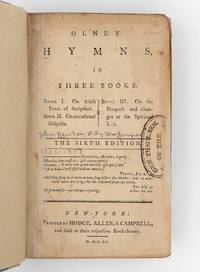
1790374363New York: Printed by Hodge Allen & Campbell and sold at their respective book-stores 1790. Second American edition. vi 1 8-348. 12mo. Recent paper backed boards. Repairs at gutter of title and first leaf. Bookplate and ink stamp of General Theological Seminary. Second American edition. vi 1 8-348. 12mo. Olney Hymns was published in London in 1779 but it was not until publication in the United States the they hymn flourished. The first American printing of Amazing Grace appeared within the New York 1787 edition of Olney Hymns Evans 20588 followed by the New York 1789 edition of the Psalms of David . for the Use of the Dutch Reformed Church Evans 21688. The present 1790 reprinting of the 1787 edition by Hodge Allen and Campbell followed with Amazing Grace appearing on pp. 48-9.<br /> <br /> ESTC records only two other examples of this 1790 edition AAS and NYHS and we find no example of either the first or second American Olney Hymns in the auction records for over a century. Evans 22734; ESTC W26651. On Amazing Grace see D. Bruce Hindmarsh "'Amazing Grace': The History of a Hymn and a Cultural Icon" in: Sing Them Over Again to Me: Hymns and Hymnbooks in America ed. Noll and Blumhofer 2006 Printed by Hodge, Allen, & Campbell, and sold at their respective book-stores unknown
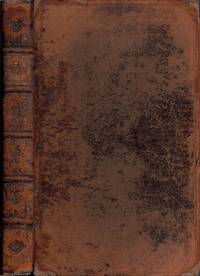
174435969London: J. Osborn and J. Rivington 1744. Hardcover. Very Good. Hardcover. Second Edition which contains a previously unpublished copy of a letter to the author with a copy of the answering letter. Written by Richard Newton 1676 - 1753 the Presbyter of the English Church in response to Henry Wharton's "Defense of Pluralities" 1692. Bound in full tan leather boards with maroon and gilt title label to spine. Most of spine label is no longer present but several gilt letters remain. The leather on both hinges is cracked but the cords remain intact and the boards are still securely attached. Rubbing and wear to spine edges and corners. A few very light spots of foxing to first and last few pages else clean and bright. 402 pages. REL/081722. J. Osborn and J. Rivington hardcover
1733293624London: Printed for J. Strahan 1733. Softcover. Very Good. Second edition. 52pp. Disbound. Some staining good only. Authorship attributed to Richard Newton as per Mansell v. 417 p. 500. Printed for J. Strahan unknown
1156171733. 271 1 s. Samtidig helskinnb. Bindets ytterkanter oppskrapet og med sår. Falsene med brist. De første sidene med en fuktskjold i venste marg. Brunplettet. Noen svake bretter. Enkelte fingermerker. . unknown
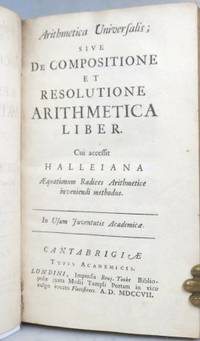
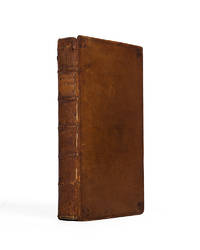
170751058Cantabrigiæ Cambridge: Typis academicis; Londini London impensis Benj. Tooke 1707. First edition. 8vo. viii 343 1 pp. 19th century full diced calf spine with raised bands gilt lettered black label blind tooled borders to the boards ownership inscription of a William Fitton dated June 1800 to the half title another contemporary owner's inscription - that of a Philip Crampton the date cropped "180" mathemetical annotations to the front and rear leaves and in the margins at intervals within. Joints skilfully repaired some mild soiling to the front and rear leaves an attractive copy. A mathemetical text composed entirely in Latin by Newton and edited by William Whiston who had succeeded him as the Lucasian professor of Mathematics at Cambridge University in 1702. The two had become acquainted during the previous decade and Newton was impressed enough with his acolyte that he invited him to lecture at the university when he was occupied with his other work. It was Whiston who persuaded Newton to publish some of his lectures on algebra but Newton was dissatisfied with Whiston's editing and additions to the text - to the extent that he considered buying the entire stock of the book to prevent its appearance in public. That clearly didn't happen although Newton succeeded in having the book published anonymously and its relative scarcity in commerce suggests a truncated print run. The first ownership inscription is that of the Irish geologist William Fitton 1780-1861. The son of a Dublin lawyer his paternal grandfather had been a mathematical instrument maker. Fitton began his studies at Trinity College Dublin in 1794 and earned his B.A. in 1799 but continued studying there until 1803. He went on to study medicine at Edinburgh University becoming a doctor in 1810 and continued his medical studies in London and Cambridge during the following six years. Fitton's interest in geology and mineralogy were his true passions and after marrying into a wealthy family he was able to devote his studies exclusively to these subjects. He subsequently served as secretary and later as president of the Geological Society published numerous reviews and papers plus a small number of books including 'A Geological Sketch of the Vicinity of Hastings' in 1833. Fitton was awarded the Wollaston Medal the society's highest prize in 1852. The other inscription is almost certainly that of Sir Philip Crampton 1777-1858 an Irish surgeon who awarded many honours and held various senior positions in a long and illustrious career: "elected FRS in 1812. In 1813 he was appointed surgeon-general to the forces in Ireland and he was surgeon to the queen in Ireland a member of the senate of the Queen's University of Ireland and four times president of the Royal College of Surgeons in Ireland in 1811 1820 1844 and 1855. In 1839 he was created baronet" ODNB. Cantabrigiæ [Cambridge]: Typis academicis; Londini [London], impensis Benj. Tooke unknown
116359Cambridge & London Typis Academicis; Benj. Tooke 1707. . First edition; 8vo 20 x 12.5 cm; contemporary ownership inscription in ink to front endpapers contents fresh; contemporary sprinkled calf ruled in blind with floral tools in the corners red speckled edges spine lettered in gilt but rubbed with loss of the gilt joints ends of spine and hinges professionally conserved very good condition; 343 pp.<br /> First edition of Newton's treatise on algebra his 'most often read and republished mathematical work' Whiteside.<br /><br />'Sometime between the autumn of 1683 and early winter of 1684 Newton according to the statues of the Lucasian Chair deposited with the university his Lucasian Lectures on Algebra. The lectures bear dates from 1673 to 1683 but these were added in retrospect and it is highly unlikely that they were ever delivered to Cambridge students. From one point of view Arithmetica Universalis can be seen as a fulfilment of the program outlined by Descartes in Géometrie because it teaches how problems especially geometrical problems but also arithmetical and mechanical ones can be translated into the language of algebra which is here seen as the tool for problematic analysis; on the other hand Arithmetica Universalis contains two criticisms directed at Descartes' those being the preference for Apollonian geometry over Cartesian algebra in solving indeterminate problems and the argument that Descartes relied too heavily on algebraic criteria Guicciardini Isaac Newton on Mathematical Certainty and Method pp 61-62.<br /><br />By 1707 Newton had moved to London and his successor mathematician William Whiston took it upon himself to edit and publish the text. It is unclear how much say Newton had in this but he was unhappy with various aspects of the editing and typesetting and refused to have his name on the title page though in the end most of Whiston's changes would be retained in the 1722 edition seen through the press by Newton himself Cohen 'The Case of the Missing Author' in Isaac Newton's Natural Philosophy pp. 35-38.<br /> Cambridge & London, Typis Academicis; Benj. Tooke, 1707. unknown
1021134910.Ghardcover. Good. Access codes and supplements are not guaranteed with used items. May be an ex-library book. hardcover
1730788711730. NEWTON William. The Life of the Right Reverend Dr. White Kennett Late Lord Bishop of Peterborough. With Several Original Letters of the Late Archbishop of Canterbury Dr. Tennison the Late Earl of Sunderland Bishop Kennett &c. and Some Curious Original Papers and Records Never before Publish'd. London: Printed for S. Billingsley 1730. 1st ed. xx2881 postscript 1 advertisement pp. 19th-century paneled calf raised spine bands gilt-chamfered edges. Hinges tender but holding else a very good copy. Sabin 37449. European Americana 730/164. Kennett was the author of the first English bibliography of the New World the Bibliothecae Americanae Primordia published in 1713. He had many American connections and interests and this work includes an account of the Society for the Propagation of the Gospel in America. unknown
1950S6657New York:: Herbert Reichner 1950. 1950. 258 x 177 mm. 8vo. xiv 228 pp. Frontis. illus. index. Brick-red cloth. Ownership signature of Martha Teach Gnudi. Fine. 606 items. Herbert Reichner, 1950. hardcover
2002S6135Boston:: Burndy Library 2002. 2002. 8vo. xxvii 95 pp. Frontis. port. figs. index. Gilt-stamped brick red cloth. NEW. First edition designed and printed by the Stinehour Press. Burndy Library, 2002. hardcover
0333907353.Ghardcover. Good. Access codes and supplements are not guaranteed with used items. May be an ex-library book. hardcover
172819285London: S. Palmer 1728. FIRST EDITION. With engraved title-vignette of an observatory within a border of instruments 12 folding plates and historiated initials all engraved by J. Pine after J. Grison including the arms of Sir Robert Walpole to whom the work is dedicated. Complete with subscriber’s list including Isaac Newton’s 12 books. Half-calf over marbled boardsspine with gilt decorations and morocco label. An absolutely exquisite wide-margined copy preserved in a slipcase. First edition. Pemberton’s ability in mathematical problems impressed Newton and consequently he asked him to edited the third and definitive edition of his Principia mathematica 1726. The preface contains Pemberton’s recollections of Newton especially in his old age. However this work is most notable for its explanation of Newtonia philosophy. Pemberton 1694-1771 studied under Boerhaave at Leiden and was attached to St. Thomas’ Hospital in London. <br /> <br /> Babson 98; Gray 132. S. Palmer unknown
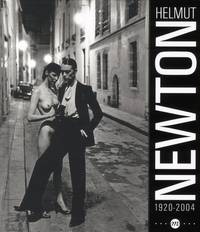
2012PMV513001EParis: RMN-Grand Palais 2012. Hardcover. Good/Not issued. 213 x 247 x 30 cm. Hardcover • Illustrations en noir et en couleurs couverture illustrée • <b><i>French text original</i></b> • Printed 2012. RMN-Grand Palais hardcover
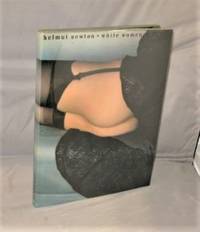
197627458<p>New York:: Stonehill 1976. First Printing of the First US Edition. A Fine copy with a discreet name on the flyleaf in a Fine unclipped dust jacket. White Women Helmut Newton's legendary first work appeared more than twenty years ago. With its superior mixture of aesthetics technical perfection and bourgeois decadence it has lost nothing of its potency and attractiveness. Newton's work encompasses a wealth of themes also embodying facets of the mass-media world of glamour masquerade and show. Using subtle yet striking images--like those of Paloma Picasso Veruschka Elsa Peretti Karl Lagerfeld David Hockney and Charlotte Rampling--Newton embraces the delicate natural beauty of the naked female body. White Women is a masterpiece of erotic visual literature.</p> Stonehill, hardcover
197625359New York:: Stonehill 1976. Second Printing of the First US Edition. A Fine copy in a Fine price-clipped dust jacket. White Women Helmut Newton's legendary first work appeared more than twenty years ago. With its superior mixture of aesthetics technical perfection and bourgeois decadence it has lost nothing of its potency and attractiveness. Newton's work encompasses a wealth of themes also embodying facets of the mass-media world of glamour masquerade and show. Using subtle yet striking images--like those of Paloma Picasso Veruschka Elsa Peretti Karl Lagerfeld David Hockney and Charlotte Rampling--Newton embraces the delicate natural beauty of the naked female body. White Women is a masterpiece of erotic visual literature. Stonehill, unknown
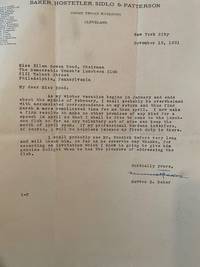
1940List1819V.P. 1940. With fifty-eight letters from Newton Baker 1924-1937. Generally fine condition. Ellen Gowen Hood was active in the Democratic party at both the local and national levels. An obituary from the Philadelphia Daily News in 1970 described her as “one of the earliest local advocates of women in politics.†She was the chairman of the Democratic Women’s Luncheon Club of Philadelphia for 20 years and had regular correspondence with women such as Edith Bolling Wilson and Eleanor Roosevelt. <br /> <br /> Democratic women’s clubs became active across the country after the 19th amendment passed in 1920 and the democratic party sought to mobilize women voters. As chairman of the Democratic Women’s Luncheon Club of Philadelphia Hood organized events with prominent political speakers and then had the speeches printed in book format. Without Hood’s side of the correspondence we don’t get insight into her philosophy of women’s participation in politics. We do however get a sense for the role that the club played in the Democratic Party. Baker was a periodic guest of the luncheon club and in his letters he praised the organization saying “I think I have never addressed a more intelligent or obviously influential audience†and "I think there is no more useful forum anywhere. They print the addresses made at their luncheons and give them a wide circulation throughout the country so that their pamphlets are now in libraries and in the hands of studious and thoughtful people everywhere." As an avid supporter of Wilsonian ideas and the League of Nations Hood’s political intention with the club seems more focused on bringing speakers that would highlight those causes than specifically speaking to women’s participation in politics.<br /> <br /> The letters from Baker to Hood reveal their shared political beliefs and goals. Their letters are ongoing conversations about the League of Nations and the World Court; the Democratic Conventions in 1924 1928 and 1932; and how democrats should govern following the Great Depression and prohibition. Baker frequently recommends essays and speeches for Hood to read and also helps connect her with potential speakers for the Luncheon Club. He addresses her as a political peer and we also get a sense of her professional persistence and savvy -- in nearly every letter for twenty years Baker responds to her requests for him to come and speak at the club.<br /> <br /> The letters give insight into Baker’s political beliefs as they evolve through the 1920s and 1930s. In the 20s-30s he writes as his thinking on the League of Nations changes from strongly feeling that the United States should join to discouraging it until there is complete support. In one letter Baker describes in confidence one of the only times he disagreed with President Wilson as Secretary of War -- when Wilson sent American troops to North Russia at the end of World War I. In a few memorable letters from 1932 Baker writes about his experience of the 1932 democratic convention and his sense of relief when he was not chosen for nomination.<br /> <br /> The letters also exhibit Baker’s writing style and his tendency to wax poetic about democratic politics. For example speaking about the limitations of the Democratic Party he writes “The trouble about it all is that nobody has yet invented anything better for the long run and the steady pull than democracy and so we just have to be patient with it as we are with the small misdoings of our children and take our joy out of the sure forecast of their fine performance when they have matured.â€<br /> <br /> Other correspondences in the collection include letters from Edith Bolling Wilson Eleanor Roosevelt Secretary of State Cordell Hull historian and diplomat Claude Bowers and Bess Truman. There are also several letters from Ralph Hayes Baker’s wartime secretary in the war department and a central figure in Baker’s 1932 presidential campaign. These letters go into detail about Baker’s role at the 1932 convention his legacy on labor issues and a rumor that he was Jewish.<br /> <br /> Overall the collection provides insight into Democratic Women’s Clubs of the period. We suspect the Baker letters to exist in duplicate at his archive but the collection still provides a succinct opportunity for research on the subject. <br /> <br /> Please contact us for a full inventory. unknown
1947428Racine Wis: Whitman Publishing Co 1947. Staplebound. Very good. Ruth E. NEWTON. 4to; 11pp with back wrapper last page of story; linen-like color illustrated paper wrapper title author and publisher on front; 11 pages of color illustration followed by text; a few light creases to front wrapper and light scuffing of paper; very good. Unauthorized Peter Rabbit story. Whitman Publishing Co unknown
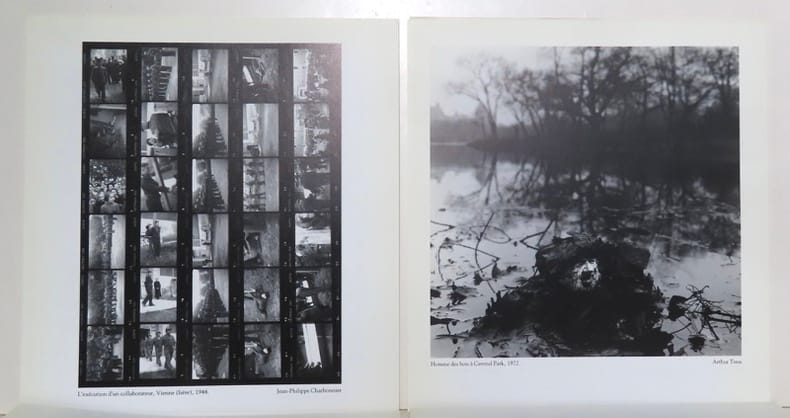
12320Clichés, n°12, décembre 1984. In-4, broché.
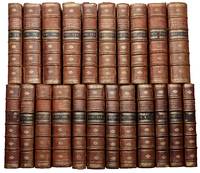
17326441London: Various printers to the Royal Society 1732. 1665-1732. <p>First edition of the first 426 issues an unbroken run from March 1665 to December 1732 of the world's oldest continuous scientific journal and the single most important record of the first announcement and communication of scientific discoveries and inventions PMM. It contains groundbreaking research by Newton - all 17 of his optical papers and therefore his first printed contribution to science - and by Halley Hooke Boyle Flamsteed Leeuwenhoek Cassini Hevelius Huygens and many others across astronomy physics chemistry mathematics medicine and natural history. Through Newton's optical papers of 1672-1676 the Transactions saw the first experimentally grounded proposal for the radical reform of a scientific theory to be advanced through a technical journal - a proposal that became the first to arouse international discussion and debate in print and within the pattern of public announcement discussion and professional consensus then established science has advanced ever since. Provenance: armorial bookplate of Sir Marcus Beresford 1st Earl of Tyrone 1694-1763; contemporary inscription at the end of one issue January 1692/3 noting its donation by Robert Hooke; manuscript corrections and notes on more than eighty pages with eight further pages on the measurement of the Earth bound in at the end.</p>. The World's Oldest Continuous Scientific Journal. <p>First edition of the first 426 issues an unbroken run from March 1665 to December 1732 of the world's oldest continuous scientific journal and the single most important record of the first announcement and communication of scientific discoveries and inventions PMM. It contains groundbreaking research by Newton - all 17 of his optical papers and therefore his first printed contribution to science - and by Halley Hooke Boyle Flamsteed Leeuwenhoek Cassini Hevelius Huygens and many others in astronomy physics chemistry mathematics medicine and natural history. Thomas Henry Huxley observed in his 1866 address On the Advisableness of Improving Natural Knowledge that if every book in the world apart from the Philosophical Transactions were destroyed the foundations of physical science would remain secure and the intellectual progress of the last two centuries largely recoverable. Long unbroken runs of the first four-and-a-half decades are now of the greatest rarity. ABPC and RBH record only two comparable sets at auction in the last three decades - Norman 1694 Christie's New York 15 June 1998 lot 716 $112500 and Macclesfield 1782 Sotheby's 25 October 2005 lot 1782 £96000 = $171400 - and a set of just the seven volumes containing Newton's papers on light realised $75600 at Christie's in October 2022.</p> <br /> <br /> <p>Provenance: armorial bookplate of Sir Marcus Beresford 1st Earl of Tyrone 1694-1763 Anglo-Irish peer and politician on the front pastedowns; contemporary inscription at the end of one issue January 1692/3 noting its donation by Robert Hooke; numerous manuscript corrections on more than sixty pages additional notes on about twenty pages and eight pages of manuscript notes on the measurement of the Earth bound in at the end.</p> <br /> <br /> <p>In November 1660 members of the Oxford Philosophical Club - John Wilkins John Wallis Robert Boyle Christopher Wren Robert Hooke among them - met a group of London natural philosophers at Gresham College and agreed to form a philosophical society that would meet weekly to exchange information and to conduct experiments. The society received its charter from the newly restored Charles II in 1662 and Henry Oldenburg a German-English diplomat and friend of Boyle was installed as one of its two secretaries. One of the charter's terms called for the exchange of information with other learned societies and Oldenburg almost at once began a sustained correspondence - with the Cimento Academy in Florence the Montmor Academy in Paris and after its foundation in 1666 the Académie Royale des Sciences - and with hundreds of working natural philosophers in places that had no scientific society of their own. Oldenburg was fluent in German Dutch French English and Latin and he was able to translate most foreign correspondence himself including Antoni van Leeuwenhoek's letters on his microscopical investigations and the communications of Johannes Hevelius of Gdansk and Marcello Malpighi of Bologna. After some years writing letters without salary Oldenburg decided to compile a monthly newsletter summarising a month's Royal Society activities and send it out to his correspondents in a single printing. On 6 March 1665 Old Style; 16 March by the Gregorian calendar then in use on the continent the first issue of the Philosophical Transactions appeared. It consisted of letter-excerpts reviews and summaries of recently published books and accounts of observations and experiments from European natural philosophers. Some of the pieces Oldenburg wrote himself summarising the minutes of Society meetings; others he translated or adapted from printed sources; still others were composite pieces assembled from the letters of several correspondents on a common subject. After his death in 1677 the journal passed through the hands of a succession of editors frequently also Secretaries of the Society - Edmond Halley and Hans Sloane the best-known among them - and through a succession of printers its form and content broadly reflecting the priorities of the current editor and to a degree of the Society. The Royal Society assumed financial responsibility for the journal only in 1752.</p> <br /> <br /> <p>Until the last third of the seventeenth century most original contributions to science appeared in books in which an author's own findings were embedded within a systematic exposition of a larger subject. The chartering of the Royal Society in 1662 and of the Académie Royale des Sciences in 1666 and the launching in 1665 of the Journal des Sçavans at Paris and the Philosophical Transactions at London gave institutional expression to a new conception of science as a cooperative enterprise: the immediate objective of the individual scientist became the experimental contribution to an eventual system of nature rather than the construction of the system itself and the journal article began to replace the book as the unit in which that contribution was made. Newton was the first to advance through this new medium an experimentally grounded proposal for the radical reform of a scientific theory and his proposal was the first to arouse international debate within the columns of a scientific journal. Through that exchange - in which all the participants modified their positions - a consensus of scientific opinion was produced; and within the same pattern of public announcement discussion and professional consensus science has advanced ever since Kuhn in Cohen Isaac Newton's Papers and Letters on Natural Philosophy 2nd ed. 1978 pp. 27-29.</p> <br /> <br /> <p>Newton's seventeen optical papers comprising his entire published optical contribution to the journal across the 1670s run as a single intellectual sequence: the seminal 1672 New Theory paper No. 80 pp. 3075-3087 introducing the prism experiment and the spectral analysis of white light; the catadioptrical-telescope paper No. 81; a series of exchanges with the French Jesuit Pardies Nos. 82 84 85 with Christiaan Huygens via an 'ingenious person from Paris' Nos. 96 97 and with the Liège Jesuits Linus and Lucas Nos. 110 121 123 128 - together more than half of the seventeen papers all responding to objections raised against the New Theory. Newton's answer to Hooke's objections No. 88 is the most polemical of the set prefiguring the priority dispute that would dominate the Principia years; the answer to Sir Robert Moray on behalf of the Royal Society No. 83 the most measured. Across the seven volumes containing them the papers transformed optics from a body of empirical reports into a quantitative experimental science driven by decisive testing among hypotheses and supplied the methodological core that Newton would eventually assemble decades later into the Opticks of 1704.</p> <br /> <br /> <p>These papers together constitute the first major contribution to science made through a technical journal - the medium that rapidly became the standard mode of communication among scientists - and as Christianson puts it if Newton had published nothing else the optical papers alone would guarantee him a place among the immortals of modern science Christianson In the Presence of the Creator 1984 p. 150. They yield further an insight into Newton's mental processes that the Principia and the Opticks - formal impersonal Olympian - conceal; it is in these early brief sometimes hasty letters to Oldenburg as in his notebooks and unpublished manuscripts that the creative scientist is to be found Kuhn in Cohen pp. 27-29.</p> <br /> <br /> <p>When Newton was first appointed Lucasian Professor at Cambridge in 1669 he chose optics for the subject of his first lectures and researches and by the end of that year he had worked out in detail the decomposition of a beam of white light into rays of different colours by means of a prism the complete explanation of the rainbow following from this discovery. These results formed the subject of his Lucasian lectures in 1669 1670 and 1671 and their principal conclusions were communicated to the Royal Society in February 1672 and printed soon afterwards in the Transactions No. 80. Before Newton light had been believed to be a homogeneous substance and colour was held to be produced by the mixture of light with darkness - the prism in the standard account supplying the darkness that coloured the light with all rays of white light striking the prism at the same angle being equally refracted. Newton's experiments led him to the radically different conclusion that white light is a mixture of rays of many distinct types each refracted at a slightly different angle and each responsible for producing one spectral colour. He set up a prism near his window at Trinity College and projected the spectrum onto a wall twenty-two feet away; to prove that the prism refracted light rather than colouring it he refracted the beam a second time back to white. The crucial experiment that confirmed the theory was to isolate a narrow ray of a single colour from the first spectrum and pass it through a second prism where no further elongation or separation occurred - a demonstration that each spectral ray was itself unmixed and uniformly refrangible. The reception of the paper was mixed. Many contemporaries simply ignored it; Mariotte in 1679 Pardies 1672 and Linus 1675 all claimed to have failed to replicate the basic experiments described. Rather than argue with them in detail Newton invited his critics to repeat his experiments with greater care; they did so without success. Others - Hooke among them who confirmed the experiments himself before a committee of the Royal Society in April 1676 - conceded the results but held that they could be accommodated by minor modification of existing theories making Newton's radical interpretation unnecessary. The controversy lasted six years after the paper's first appearance and left Newton conspicuously wary of publication.</p> <br /> <br /> <p>Newton's invention of the reflecting telescope reported in the issue immediately following his first optical paper No. 81 had in fact prompted the optical work rather than the other way round: the chromatic aberration of refracting lenses - their inability to bring different colours of light to a single focal point - was the original stimulus for Newton's investigation of the nature of light. Newton had sent Oldenburg his letter describing the telescope before his letter describing the new theory and had hoped to present the telescope as a practical test-piece for the theory. Oldenburg however printed the material in the reverse order the theory first followed by the description of the instrument. The telescope made a considerable impression at the Royal Society which promptly elected Newton a Fellow; a corresponding notice appeared in the Journal des Sçavans in February 1672 with emphasis on the instrument's compactness and it was the telescope rather than the theory of light that first made Newton's name known on the Continent Dilaura Bibliotheca Opticoria 1475-1925 2019 pp. 235-236.</p> <br /> <br /> <p>Newton published three non-optical papers in his lifetime all anonymously. His only published paper on chemistry Scala Graduum Caloris No. 270 April 1701 pp. 824-829 states what has since become known as Newton's law of cooling - that the rate at which a hot body loses heat is proportional to the difference between its temperature and that of its surroundings - and describes the construction of a thermometer capable of measuring temperatures up to almost 1000 °C. An Account of the Book entituled Commercium Epistolicum Collinii & Aliorum De Analysi promota No. 342 February 1715 pp. 173-224 is Newton's anonymous review of the Commercium epistolicum the official report of the committee appointed by the Royal Society to adjudicate in the dispute between Newton and Leibniz over priority in the invention of calculus - the most bitter and consequential priority dispute in the history of science; the Account purports to be impartial but was in fact written like the Commercium epistolicum itself by Newton. In the same volume No. 347 March 1716 pp. 399-400 appeared Newton's Problematis Mathematicis Anglis Nuper Propositi Solutio Generalis his response to a challenge problem set by Johann Bernoulli to the English mathematicians; tradition has it that Newton solved it in a single evening after returning from a day's work at the Mint. With the exception of this minor paper none of Newton's original work on gravitation or on mathematics was published in the Transactions. Edmond Halley's review of the Principia however appeared soon after its publication No. 186 pp. 291-297 - Halley was then the journal's editor - and is prefaced by an advertisement apologising for the fact that the Transactions had been delayed for some months because Halley had had the entire care of the Principia's own edition and had therefore as he put it been more serviceable to the Commonwealth of Learning in seeing Newton's book into print than he would have been in issuing his own periodical on time. Halley pointed out with justice that one of the most striking features of the Principia was Newton's great skill in using the new mathematics - by which Halley meant Newton's own method of infinite series.</p> <br /> <br /> <p>Edmond Halley 1656-1742 was one of the most original minds of his time and he made a long series of important contributions of his own to the Transactions. The best-known of them is Astronomiae cometicae synopsis No. 297 March 1705 pp. 1882-1899 the first printing of the theory according to which comets belong to the solar system and move in eccentric elliptical orbits; it was here that Halley set out his method of computing the motion of comets of establishing their periodicity in elliptical orbits and of identifying the comet that would bear his name DSB. The confirmation of the comet's return - in 1759 after Halley's death - was the first time that a body other than a planet had been shown to orbit the Sun the earliest successful observational test of Newtonian physics and a vivid demonstration of its explanatory power; the comet was named after Halley by the French astronomer Nicolas-Louis de Lacaille in 1759. Halley's other major contributions to the journal include his Methodus singularis No. 348 June 1716 pp. 454-464 in which he challenged the international astronomical community to use the transits of Venus across the Sun predicted for 1761 and 1769 to transform astronomy into a fully empirical science by measuring the Earth-Sun distance - a challenge that astronomers took up organising expeditions to the farthest corners of the globe and overcoming obstacles of every kind; A short History of the several New-Stars No. 346 December 1715 pp. 354-356 in which he observed that the new stars of 1572 and 1604 Tycho's and Kepler's stars were not the only changing stars on record that others had been observed in 1596 1600 1670 and 1686 some of them fading and reappearing and one of them - Mira - appearing to wax and wane with a regular 330-day period; An Account of several Nebulae or lucid Spots like Clouds No. 347 March 1716 pp. 390-392 in which Halley assembled the first list of known nebulae with their discoverers crediting the Great Nebula in Orion to Huygens the Andromeda nebula to Boulliau and the two spherical nebulae in Centaurus and Hercules to himself; 'Of the infinity of the sphere of fix'd stars & Of the number order and light of the fix'd stars' No. 364 April 1720 pp. 22-26 in which Halley posed what later generations would call Olbers's paradox a century before Olbers did; and outside astronomy his paper on the Breslaw life table No. 196 January 1692/3 pp. 596-610 which produced the first life table based on sound demographic data and gave the first correct calculation of annuities using essentially the methods still in use today - a paper of first importance in the history of statistics.</p> <br /> <br /> <p>John Flamsteed 1646-1719 was with Halley the most important English astronomer of his generation; his major works are the Historiae coelestis first published in 1712 without his consent by Halley and Newton and the Atlas coelestis published posthumously in 1729 but he also contributed more than thirty articles to the Transactions chiefly on observational astronomy. No other Astronomer Royal before Airy displayed anything like Flamsteed's concern for the reduction and manipulation of his own data: far from bequeathing the mass of raw observations that Bradley would he reduced and applied them himself DSB.</p> <br /> <br /> <p>Robert Boyle 1627-1691 contributed some thirty-seven papers to the Transactions Fulton p. 138 among them his influential questionnaire General Heads for the Natural History of a Country a number of major experimental essays that sometimes filled a whole issue and most revealingly An Experimental Discourse of Quicksilver growing hot with Gold No. 122 February 1675/6 pp. 515-533 - a paper on a kind of mercury that would incalesce when amalgamated with gold suggesting that Boyle had achieved the long-sought alchemical philosophical mercury capable of transmuting base metals. Boyle's trials went back to 1652 when he had received the recipe from his American mentor George Starkey; his decision to go public in 1676 signalled a newly intense period of alchemical activity on his part. The paper drew from Newton - himself a committed alchemical enthusiast - a letter to Oldenburg urging that such matters were not to be communicated without immense damage to the world if there should be any truth in the Hermetic writers; Oldenburg took the hint and the incalescence paper remained a one-off in the Transactions Hunter Alchemy in the Transactions Royal Society blog 1 July 2015.</p> <br /> <br /> <p>The Dutch microscopist Antoni van Leeuwenhoek 1632-1723 contributed 116 articles to the Transactions over the half-century 1673-1723; the most famous of them the letter on the protozoa No. 133 March 1677 pp. 821-831 gives the first detailed description of protists and bacteria in a range of environments. Leeuwenhoek is universally acknowledged as the father of microbiology: he discovered both protists and bacteria but more than being the first to see the microscopic world of his animalcules he was the first even to think of looking - certainly the first with the power to see. Using his own deceptively simple single-lensed microscopes he did not merely observe but conducted ingenious experiments exploring and manipulating his microscopic universe with a curiosity that belied his lack of any map or bearings. The verification of Leeuwenhoek's new world by the natural philosophers of the Royal Society set out the ground rules that still define experimental science today Lane The unseen world: reflections on Leeuwenhoek 1677 Philosophical Transactions B370 2015 pp. 1-10.</p> <br /> <br /> <p>Martin Lister 1639-1712 contributed in 1673 what is now regarded as the earliest journal article on palaeontology: A description of certain stones figured like plants No. 100 pp. 6181-6191 on the preservation of St Cuthbert's beads - crinoid remains - in the approximately 350-million-year-old Carboniferous limestones of northern England. The biological nature of fossils was then controversial: Kircher had argued that they formed by abiogenic plastic forces within the rock while Hooke and Steno had suggested they were the remains of living organisms. Lister was the first to explore how direct observation could decide between the two making observations about what modern geobiology calls taphonomy and biogenicity criteria - observations that presage current debates about the earliest signs of life on Earth and Mars Brasier Philosophical Transactions A373 2015 pp. 1-16. Other natural-historical papers scattered through the journal's first century - Account of a very odd monstrous calf Some experiments and observations on May-dew Some observations on strange swarms of insects - are in places fanciful but in many others acute; Hooke's own contributions which began in the very first issue March 1665 with A spot in one of the belts of Jupiter are sometimes held to include the first observation of the Great Red Spot still visible on Jupiter today.</p> <br /> <br /> <p>The early volumes also contain the record of the world's first experiments with blood transfusion conducted in England in the mid-1660s. The procedure - gruesome - was first carried out between dogs with arteries and veins in the animals' necks opened and blood transferred from one to another through quills most likely of goose feather inserted into the vessels and clamped with running knots; in the physician Richard Lower's account No. 20 pp. 353-358 the transfusion came to an end when the emittent dog fell into convulsions and died. Shortly afterwards Boyle published a remarkable set of questions about the likely effects of transfusion on the animal receiving blood No. 22 pp. 385-388 asking whether transfusion might change a dog of one breed into another alter its temperament render a fierce dog cowardly transmit satiety or hunger obliterate learned behaviours or make a dog forget its master - a sequence of questions which as recent commentators have noted read like an alchemical programme turned inward upon the living body. Researchers soon proposed transfusion into a human subject. Since the procedure generally killed the emittent a human-to-human transfusion was thought impossible and a sheep was settled upon as donor. The choice of human recipient fell in 1667 upon Arthur Coga - mentally unstable but sufficiently educated to report in Latin on the effects of the procedure - and the operation was performed by Lower and the physician Edmund King No. 30 pp. 557-559 who judged that Coga had received nine or ten ounces of sheep's blood. A few days afterwards Coga reported back to the Society in Latin and Samuel Pepys meeting him at a dinner party shortly thereafter found him to speak very reasonably though cracked a little in his head.</p> <br /> <br /> <p>Other contributors in these decades include Cassini on the satellites of Jupiter Huygens on mechanics and optics Malpighi Swammerdam Borelli Steno Fahrenheit and Redi whose experimental refutation of spontaneous generation appeared in the journal alongside a steady stream of domestic material from Harvey Wren Ray Petty Locke Wallis Winthrop Tyson Lancisi Leibniz and Hales. To turn the pages of these thirty-seven volumes is to watch the first two generations of a new scientific public discover how to work together - how to record observation propose hypothesis invite replication agree or disagree in print and build by open argument the provisional consensus that is the hallmark of modern science.</p> <br /> <br /> <p>References: Grolier/Horblit 95b - Macclesfield 1782 - Norman 1694 - PMM 148 Vol. 1 - Brasier Deep questions about the nature of early-life signals: a commentary on Lister 1673 Philosophical Transactions A373 2015 pp. 1-16 - Christianson In the Presence of the Creator 1984. Cohen ed. Isaac Newton's Papers and Letters on Natural Philosophy 2nd ed. 1978 - Dilaura Bibliotheca Opticoria 1475-1925 2019 - Fulton A Bibliography of the Honourable Robert Boyle 1932 - Lane The unseen world: reflections on Leeuwenhoek 1677 Philosophical Transactions B370 2015 pp. 1-10.</p> <br /> <br/> <br/> 37 vols. bound in 22 4to 215 × 165 mm containing all issues from March 1665 No. 1 through December 1732 No. 426 with 380 engraved plates 306 folding 176 woodcut illustrations and diagrams and 7 folding tables occasional damp-staining a few tears and small holes occasionally affecting a word or two a few headlines shaved the plate in No. 56 map of part of Languedoc with a 7 cm tear that in No. 60 apparatus shaved at head and that in No. 196 with bottom corner repaired with loss of about a quarter of the plate relating to the dissection of a rat. Uniformly bound in eighteenth-century probably mid-1730s sprinkled calf spines ruled and tooled in gilt in compartments with title and volume-number labels some joints cracking but firm a few labels missing slightly rubbed. Generally very clean and well-preserved. Various printers to the Royal Society unknown
1987LFA-126737228Revue de culture néerlandaise : 96 pages, format 175 x 235 mm, brochée, Fondation Stichting Ons Erfdeel vzw, bon état
202222380MAM - Musée d'art Moderne de la ville de Paris, Paris musée, 2022. Grand in-8 en feuilles sous chemise illustrée. Plis au second plat, pour le reste en belle condition.
188852264Durham NC & New York NY: W. Duke Sons & Co. Lithographed by Knapp & Co.; Schumacher & Etlinger 1888-1889. Three works in one vol. Oblong 4to. With 18 colour chromolithograph plates slight thumbing to fore-edges very minor spotting on first leaf. Original cloth-backed chromolithograph softcovers printed on thick paper stock cover art of Miss Sadler & Phoebe Russell on front cover in Yacht Colours violin on back cover minor shelfwear very minor creasing faint tide mark at spine still a VG copy. First edition of this trio of scarce and beautifully printed souvenir books issued by the Duke Sons & Co. tobacco company thanking their patrons for smoking Duke Cigarettes Cameo Cigarettes Turkish Cross-Cut Cigarettes and Cross Cut Cigarettes. The plates are composed of trading cards featuring the famed actresses and notable women across the world including Phoebe Russell Kate Blancke Mabel Jordan Estelle Clayton Zelie de Lussan for the American Canoe Association Royal Cork Yacht Club Seawanhaka Yacht Club Calshot Castle Yacht Club Oceanic Yacht Club New Brunswick Yacht Club and many others. The ball costumes feature stars dressed in a wide range of elaborate ball costumes with headdresses including those of parrots watermelon slices horns cricket ball & bat and even a woman with goldfish bowl and fish-themed jewelry. The third work featuring musical instruments was printed by a newly constituted Schumacher & Ettlinger Lithographers who had suffered a devastating fire just a few years before and includes a wide range of women musicians including a young African-American woman playing the banjo. Duke Sons & Co. headed by James Buchanan Duke was one of the founding members of the American Tobacco Company largely due to their ability to produce all cigarettes at a cheaper rate due to the invention of James Bonsack’s cigarette-rolling machine. W. Duke, Sons & Co., [Lithographed by Knapp & Co.; Schumacher & Etlinger], paperback
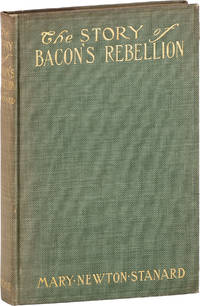
190781415Nashville: Neale Publishing Company 1907. First Edition. First printing. Small octavo 20cm. Sage green cloth titled in gilt on spine and front cover; to edge gilt; 1811pp. Spine cloth subtly faded else tight clean and unmarked with gilt still bright on spine and cover; Very Good. Neale Publishing Company unknown
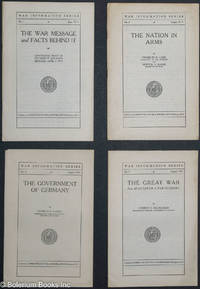
1917287586Washington DC: Committee on Public Information 1917. Pamphlet. Four issues Nos. 1-4 5.5x8.5 inches newsprint wraps with staple bindings. Minor shelf and edge wear some toning else in very good condition. Issue contents: 1: The war message and facts behind it annotated text of President Wilson's message April 2 1917. 2: The nation in arms by Franklin K. Lane and Newton D. Baker. 3: The government of Germany by Charles D. Hazen. 4: The great war from spectator to participant by Andrew C. McLaughlin. The Committee on Public Information was a short lived 1917-1919 independent agency of the government of the United States set up to by President Woodrow Wilson to build support domestically in the U.S. for WWI and U.S. policies for Europe post-war. Committee on Public Information unknown