San Francisco FireBiblio.com
339 résultats
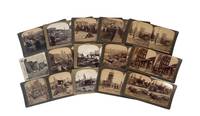
1906221651906. San Francisco 1906 earthquake and fire aftermath stereoview archive. One of the most devastating events in U.S. history Archive includes 15 stereoview photograph cards. Albumen and hand-colored prints on curved mounts. San Francisco California: Underwood & Underwood Keystone View Co. and others ca. 1906. Each measure 7" x 3.5". Many with detailed captions en verso. An extraordinary visual archive of fifteen stereoscopic photographs documenting the catastrophic destruction and human response to the 1906 San Francisco earthquake and fires. Published by prominent companies such as Underwood & Underwood and Keystone View Co. these stereoviews provide a layered immersive record of one of the most devastating urban disasters in U.S. history. The photographs vividly capture the obliteration of the cityscape the resilience of displaced residents and the scale of humanitarian relief efforts following the April 18 earthquake which killed more than 3000 people and left hundreds of thousands homeless. The stereoviews include panoramic views of leveled downtown blocks collapsed masonry and scorched ruins with iconic San Francisco landmarks-such as City Hall-looming gutted in the distance. Many images show military personnel laborers and civilians navigating streets reduced to rubble. Several cards portray temporary relief camps: refugees lining up for food under military supervision ad-hoc kitchens operated by volunteers and makeshift shelters constructed from salvaged corrugated iron. One notable hand-tinted card emphasizes the surreal almost painterly quality of the wreckage. Another particularly poignant image depicts a soup line under the caption "The bread line-at world's gift of food to the victims of earthquake and fire" highlighting the philanthropic aid provided to survivors. Overall this set exemplifies how stereoview photography functioned as both journalistic evidence and mass media spectacle offering middle-class Americans across the country a first-hand look at urban catastrophe. Beyond its documentary value the archive also reflects early 20th-century social hierarchies as the relief lines and laborers are primarily composed of working-class individuals and immigrants. Cards remain in very good condition overall with some edge wear and light soiling to mounts. Images retain strong contrast and clarity. A powerful immersive visual archive of America's most infamous natural disaster illustrating not only devastation but also the collective response and resilience that followed. unknown
19752091202133211693Iwasaki bijutsusha 1975. Soft Cover. Fine. Number of books: 1 box Iwasaki bijutsusha paperback
1993DBS.Management-9780471584Wiley 1993. 2nd. Hardcover. New. Wiley hardcover
1993DBS.Management-9780471584Wiley 1993. 2nd. Hardcover. New. Wiley hardcover
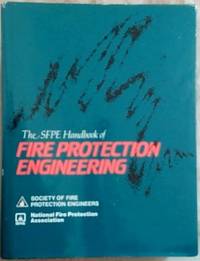
19883110jNatl Fire Protection Assn 1988. First Edition. Hardcover. Very Good/Very Good. 1x9x11. The dust jacket is a little shelf rubbed and edge worn but remains whole and intact. Likewise for the boards. Internally there are no markings or inscriptions and the pages within are neat crisp and complete. Securely bound and presents handsomely in cellophane. JK. Our orders are shipped using tracked courier delivery services. Natl Fire Protection Assn hardcover
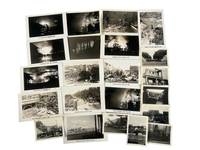
1940220171940. Panama Latin America Panama's Great Fire of Colón Photo Archive This rare photographic archive documents the catastrophic fire that ravaged the city of Colón Panama on April 13-14 1940-an event that left over 25 city blocks in ruins and displaced thousands.<br /> <br /> Archive of 22 original silver gelatin prints and real photo postcards 10 of the 22 are captioned real photo postcards this collection offers a powerful visual narrative of both the inferno and its human aftermath. Each measure between 3.5" x 5.5" to 2.5" x 3.5". The fire which broke out in the commercial district and rapidly spread through Colón's densely packed wooden buildings destroyed much of the city's historic core. Several of the images in this archive capture the conflagration itself: nighttime exposures show buildings engulfed in flames with thick smoke billowing skyward and firefighting efforts visibly overwhelmed. Other photos reveal the skeletal remains of businesses and residences twisted signage and storefronts reduced to charred shells. The RPPCs are cleanly captioned "Great Fire of Colon April 13-14 1940" and depict both panoramic and street-level views of the destruction. One RPPC of a fiery building is taken from one of the original photos in the lot. One photo shows a massive crowd gathered around a relief station in front of the statue of Columbus; another shows refugee encampments set up in the city's parks including orderly rows of tents and makeshift shelters. One striking image captures a line of uniformed soldiers patrolling the rubble-strewn streets likely part of the U.S. military or Panamanian National Guard underscoring the strategic importance of Colón as the Atlantic gateway to the Panama Canal Zone. Several other images uncaptioned depict interior views of still-burning structures and nighttime firefighting scenes with silhouettes and reflections rendered in stark chiaroscuro. The photographic style is consistent with local press and professional freelance documentation of the time. The fire struck during a tense period of Panamanian history when U.S. influence over the Canal Zone inflamed nationalist tensions and Colón's working-class Afro-Caribbean population-many of whom descended from West Indian laborers brought during canal construction-struggled for political inclusion and economic security. The destruction of working-class housing in Colón exacerbated long-standing issues of racial and economic segregation and the government's response was criticized as inadequate. This archive not only captures the physical devastation but also offers an unfiltered glimpse into class race and imperial infrastructure in crisis. Very minor edge wear. Overall very good condition. A vivid scarce visual record of one of the most significant disasters in 20th-century Panamanian history. unknown
19822091502135420947Not Available 1982. Soft Cover. Fine. Volume: 41 Not Available paperback
197659994Dallas TX: Taylor Publishing Co. 1976. 4to. xxviii 523 1 pp. Illustrated title numerous colour plates many photo illustrations diagrams charts. Embossed black publisher’s simulated calf raised embossed Colt on front cover raised gilt lettering front cover & spine slight shelfwear NF/VG. First edition thus of this lavishly illustrated history of Colt revolvers and automatics including the New Service Double Action Revolver Colt Army Special Double Action Revolver Officers’ Model Target Police-Positive Special Bisley Model Target the discontinued Colt Automatic Pistol Military Model .45 caliber .38 caliber Military Model Automatic Pistol decorative grips medallion inserted for ivory and pearl handle grips and parts. Taylor Publishing Co., unknown
19752110502150906934Iwasaki bijutsusha 1975. Soft Cover. Fine. Volume: 1 Iwasaki bijutsusha paperback
1999DADAX1566767997CRC Press 1999-10-15. 1. hardcover. New. 8.27x0.37x11.69. Buy with confidence. Excellent Customer Service & Return policy. CRC Press hardcover
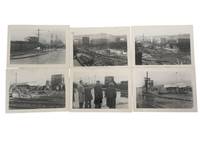
1948232471948. Seattle freight yard fire photo archive documenting the destruction and emergency aftermath of a rail served maritime industrial site in 1948. The photographs center a burned yard associated with the American Hawaiian Steamship Company a major intercoastal carrier that linked Pacific ports with Atlantic and Gulf Coast trade and maintained a substantial presence on Seattle's waterfront during the first half of the twentieth century. Rather than isolating a single ruined structure the group shows the working system around it: street access fire response rail lines lumber storage cargo handling space and the industrial buildings that tied Seattle's urban growth to port commerce.<br /> <br /> Photo archive of 6 black and white photographs each 3" x 4.5" Seattle Washington studio stamp en verso dated December 4 1948. The images show a broad debris field of charred timbers collapsed framing burned posts pooled water and smoke rising across a freight yard crossed by railroad tracks. Two views prominently include the sign for American Hawaiian S.S. Co. while another visible sign reads Keystone Steel & Wire Company placing the site within Seattle's maritime industrial district. One street view shows fire hoses snaking across wet pavement toward the still smoking yard and another frames a group of men in long overcoats and hats standing at the edge of the destruction surveying the scene. Utility poles warehouse buildings sidings stacked material and the hillside cityscape beyond the yard anchor the fire within a dense industrial section of Seattle shaped by port traffic and rail distribution.<br /> <br /> Seattle's maritime industry shaped the city from its earliest waterfront settlement into a major Pacific port where rail lines piers warehouses and steamship companies made Elliott Bay the engine of urban growth and commercial expansion. Minor edgewear and curling. Overall very good condition. These photographs preserve a short concentrated record of emergency aftermath on a working Pacific Coast waterfront at the start of the postwar shipping era when Seattle remained a major junction of rail and ocean transport and steamship firms still occupied prominent waterfront facilities. unknown
1990128212Various Publishers 1990s. Near Fine. Vintage promotional reprint photographs c. 1990s featuring burlesque legend and Baltimore regular Blaze Starr. A broad scope of her career from camera club to nightclub. Photos are 8.5 x 11 inches and 2 8 x 10 inches b/w 1 color glossy small borders signed in holograph ink with "Love and Lust" salutations or a variant salutation. All about Near Fine. Several photos feature nudity so the lot is for mature consenting audiences. Various Publishers unknown
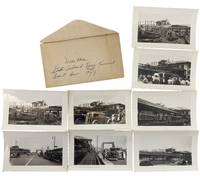
1946234361946. Photographs documenting the emergency response to the nine-alarm fire that destroyed the St. George ferry and railway terminal on Staten Island in June 1946 recording fire apparatus a hospital ambulance crew and rescue workers amid the smoking wreckage. The fire began at 2:30 in the afternoon of June 25 1946 under a car and spread to the terminal's wooden support pilings. Nine alarms were transmitted within half an hour summoning fifty land companies and six fireboats; three civilians were killed and more than 250 firemen and 30 civilians were injured or overcome by smoke.<br /> Photo archive of 8 silver gelatin snapshot photographs approximately 5 x 3 inches Staten Island New York with the original mailing envelope inscribed in ink "Martha Staten Island Ferry Terminal burnt down June 1947." One image centers a panel-body ambulance lettered "St. Vincent's Hospital" and "Staten Island" parked beside an open rear ambulance where attendants in white tend a patient. Another shows workmen uniformed officers and helmeted firemen clustered around the rescue vehicles below the gutted upper story. Several frames show pairs of wooden and steel rapid transit cars standing scorched on the rails beneath the twisted collapsed ribs of the train shed windows blown out and roofs caved in. A trackside view captures fire engines lined nose to tail along the roadway.<br /> The nine alarms transmitted within thirty minutes the fifty land companies and the Manhattan units racing through the Holland Tunnel show standard FDNY multi-borough mutual aid working at full stretch recorded by a bystander close enough to walk the platforms. The St. George fire ranks among the worst in Staten Island history and FDNY commanders called it one of the most stubborn blazes they had faced the burning rooted deep in the terminal's wooden pilings over the water. The destroyed structure was replaced by an entirely new $21 million terminal that opened in 1951. Overall in very good condition. A direct on-the-ground record of a multi-borough emergency response to a fatal nine-alarm fire that erased a major New York transit terminal. unknown
1949142756New York: City of New York 1949/50. 799 pp. Quarto. Bound ledger in bound in original black cloth covered boards. Quite worn and soiled but generally very good in the interior. It would appear Engine Company No. 75 is in the Bronx. It would appear this is the ledger where details of events the Fire Dept. attended were recorded. The records are detailed and provide how signals were received and down to how much water was used. A very interesting record just after the war in the history of the New City Fire Department. Amazing this record showed up in Canada. 1949 City of New York hardcover
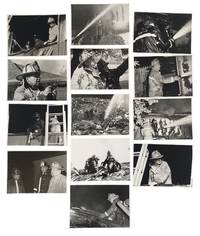
1980233751980. Rescue Operations Richardson Texas Fire Department photo archive documenting the sequential order of a small city rescue operation circa 1980s recording municipal crews as they move from arrival and exterior assessment to ladder access hose deployment radio communication breathing apparatus use residential fire suppression interior inspection overhaul and salvage. The archive documents firefighters wearing RFD helmets working from roofs windows ladders burned interiors refuse piles and exterior hose lines showing not just isolated scenes of fire suppression but the step by step process by which a suburban fire department managed an active emergency. Scenes capture fire crews masking up beside engines directing water into smoking structures removing material from upper floors inspecting charred rooms and coordinating around damaged buildings after flame knockdown.<br /> <br /> Photo archive of 24 glossy silver gelatin photographs 5 by 7 inches Richardson Texas circa 1980s. Firefighters wear leather turnout coats helmets marked RFD portable radios self contained breathing apparatus face masks and reflective striping. Hose streams strike wood siding rooflines and debris piles; ladders reach second story windows and eaves; crews stand on damaged roofing with hose and equipment; command and line personnel confer inside burned rooms and at exterior thresholds. Several scenes show active suppression at night with smoke water spray and charred structural elements surrounding firefighters at close range. Other scenes record quieter stages of the same work including radio use air pack preparation interior inspection and removal of burned material.<br /> <br /> By the 1980s local fire departments across the United States were increasingly shaped by portable radio communication standardized protective gear air pack training and coordinated incident response even in smaller cities outside major metropolitan departments. This archive captures that transition in practical terms with Richardson firefighters working fires in houses apartment style buildings refuse areas and heavily damaged interiors rather than posed station scenes. All complete and in very good to near fine condition. A grounded record of small town firefighting physical labor technical procedure and public safety work in a rapidly modernizing suburban fire department. unknown
1918642306General Fire Extinguisher Company; Grinnell Co 1918. First Edition. Paperback. Good. Complete run of 36 issues starting with #1 in May 1918 through March 1925 of the company magazine of America's largest manufacturer of automatic sprinkler sytems and fire safety equipment. QUITE RARE. Illustrated in b/w throughout. Bound in two black cloth Emerson binders several covers loose some wear. Bound in is a typed letter signed by the editor. One issue the 'Special Smile Issue' is entirely devoted to smiling employees while another - covering an employee theatrical performance - features employees in blackface. General Fire Extinguisher Company; Grinnell Co paperback
1993mon0000135118Fire Protection Association 1993-01-01. Unknown Binding. Good. in x in x in. NOT ex-library. Clean copy in good condition. Fire Protection Association unknown
19702091502135419023Industrial Firearms Association 1970. Soft Cover. Fine. Number of books: 55 Industrial Firearms Association paperback
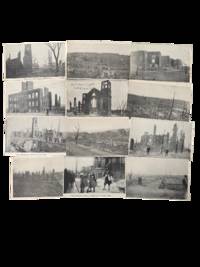
1908232131908. Chelsea fire real photo postcard archive documenting the destruction of civic religious medical and financial institutions in Chelsea outside of Boston Massachusetts after the November 1908 fire one of the most destructive urban fires in early twentieth century New England. This collection displays not only the ruined architecture but on the functions that had to be reestablished after the fire including places of worship schooling banking and medical care. Not only do these images display a developing New England city in ruins but the involvement of the surrounding community that was left displaced to pick up the pieces.<br /> <br /> Photo archive of 12 silver gelatin real photo postcards each 3" x 5.5" Chelsea Massachusetts circa 1908. The cards show skeletal masonry walls roofless church towers leveled residential blocks ash fields and streets lined with stripped tree trunks and scattered debris. Printed captions identify multiple sites including "Ruins of Unitarian Church Chelsea Mass." "Universalist Church Fourth & Chestnut St." "Ruins of Fay School Chelsea Mass." "Ruins of Public Library" "Central Church from Broadway Chelsea Mass." "Ruins of Williams School & First Universalist Church Chelsea Mass." and "Remains of Frost Hospital." Several views are wide panoramas taken from elevated ground or across open lots showing block after block reduced to foundations and chimneys while others isolate single institutional buildings left standing as shells. Human figures appear throughout as scale markers and witnesses with pedestrians moving through cleared streets and one especially important card showing uniformed cadets and coast artillery guards with rifles outside the Chelsea Savings Bank.<br /> <br /> The Great Chelsea Fire burned through a substantial section of the city in 1908 and displaced thousands making it one of the most destructive urban fires in New England in its period. These postcards preserve the public facing record created immediately after the disaster when churches schools hospitals libraries and banks were photographed not as isolated ruins but as essential parts of a city whose institutional framework had to be defended and rebuilt. Some edge and corner wear; minor toning. Overall very good condition. A concentrated record of urban destruction emergency security and civic reconstruction in Chelsea Massachusetts. unknown
19822110502150901892Japan Firefighting Association 1982. Soft Cover. Fine. Number of books: 4 Japan Firefighting Association paperback
19992081502111900055Chinese archives 1999. Soft Cover. Fine. Size: B5 hardcover book Chinese archives paperback
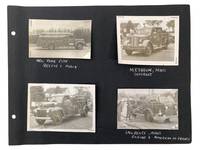
1910233921910. TechnologyRescue Operations American fire engine modernization archive documenting the transition from horse drawn steam engines to motorized trucks and rescue wagons in Massachusetts and across the Northeast between the 1910s and 1940s. Fire departments across the U.S. began to transition from horses and steam pumpers to gasoline powered apparatus to account for urban growth taller buildings electrical wiring and automobile traffic changing the speed and scale of emergency response. The archive records identified departments and apparatus makers including Mack GMC Ford Seagrave Studebaker American LaFrance and Maxim mostly showing departments across Massachusetts departments and with additional images from New York Pennsylvania New Jersey Rhode Island and Vermont.<br /> <br /> Photo archive of 33 silver gelatin photographs many with captions ranging from 2 x 3 to 4 x 6 inches chiefly Massachusetts with additional material from Vermont Pennsylvania New York New Jersey and Rhode Island 1910s to 1940s. Fire engines and firefighters appear in station fronts street parades apparatus portraits airport grounds and active fire scenes. Captions identify New York City Rescue 1 Mack; Syracuse Rescue 1 GMC; Highland Park Pennsylvania Rescue 2 Mack; Plainfield New Jersey Rescue GMC; Chelmsford Massachusetts Emergency No. 7 Studebaker; Camp Edwards Massachusetts Mack Engine 4; Needham Massachusetts Mack Engine 3; Lawrence Massachusetts Engine 3 American LaFrance; Boston Ladder 8 Ladder 9 and Ladder 21; Cambridge Engine 3; Canton Massachusetts Mack engine; Shrewsbury Massachusetts Engine 3 and Ladder 3; Barrington Vermont; Stoneham Massachusetts Bell Block; River Street Boston; First Scientist Church Somerville; and Fort House Somerville. Horse drawn apparatus appears outside Hope No. 1 in Pittsburgh and in a parade scene while motorized ladder trucks carry long wooden extension ladders hose reels searchlights bells sirens polished pumps and side mounted tools.<br /> <br /> The images provide a side by side record of old and new fire protection: horse teams exposed steam machinery open cab ladder trucks and later motorized emergency vehicles. Chas. E. Beckwith's Fire Dept. Photographer stamp connects at least part of the group to a specialist working for Massachusetts fire departments. Photographs stapled to eight disbound black album pages; scattered fading handling wear with legible captions. Some with additional handwritten captions on versos. Overall in good condition. unknown
190685196Hamburg, Koppmann & Cie. 1906. 24 Original-Fotografien von G Koppmann, auf braunem Trägerkarton montiert. (Photogröße ca. 22 x 18 cm, Kartongröße ca. 32 x 25 cm), lose in Folio-OLn.-Mappe.
1999x-1566767997Technomic Pub Co 1999. Hardcover. New. 1st edition. 163 pages. 10.75x8.50x0.25 inches. Technomic Pub Co hardcover