[MANUSCRIT]. [BLAZE (Sébastien)].Livre Rare Book
2 475 résultats
231001S.l., s.d. (1826-28) in-folio, en feuilles ou broché sous couverture d'attente de cartonnage souple orange moucheté, le tout dans double emboîtage de carton vert moderne.
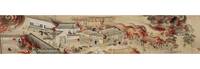
11026Scroll 190 x 3980 mm. outer front endpaper covered with blue silk inner endpaper of gold & silver paper manuscript title label on outside “Meiwa kasai zu†明和ç«ç½å›³ “Meiwa Fire illustratedâ€. Japan: late Edo.<br /> <BR> <BR> Japanese cities have always been plagued by terrible fires. Regarding Edo “the wooden construction of all of the city and the narrow lanes of commoner quarters made fire a devastating experience and it came sufficiently frequently to be called ‘the flowers of Edo.’ Fires were no respecters of status and rank and when driven by winter winds in the dry season they roared through the city.…In the 268 years of Tokugawa rule the Tosa ‘upper’ yashiki at ‘Blacksmith Bridge’ suffered eighteen fires and the Shiba middle residence burned twelve times. Four of these were citywide conflagrations. Merchant areas burned thirty-one times in two centuries and even the shogun’s castle suffered major damage seven times.â€â€“Jansen The Making of Modern Japan Harvard: 2000 p. 151.<br /> <BR> <BR> This wonderfully detailed scroll is a record of the Great Meiwa Fire of 1772 in Edo one of the three most severe fires of the Edo era destroying a 30-square-mile section of the city including an estimated 178 temples and shrines 127 daimyo residences 878 non-official residences 8705 houses of bannermen and 628 blocks of merchant dwellings. Almost 15000 people died and another 4000 went missing. The fire was deliberately set by a Buddhist priest of the Daien-ji temple on the eastern side of the Meguro River. Because of the regularity of such fires the city of Edo organized 48 brigades of trained firefighters with each group having a specific name after the old i ro ha alphabet.<br /> <BR> <BR> Our scroll begins with introductory text dated and signed “Meiwa Mizunoe tatsu aki / GuyÅ« bÅ shi / Tanaka Totsugen hitsu†明和壬辰秋 / æ„šå‹æŸèªŒ / 訥言 ç† â€œ1772 Autumn / text by anonymous friend / painted by Totsugenâ€. Tanaka Totsugen 1767-1823 was a prominent artist and we believe that our scroll is a copy of Totsugen’s original creation. The text gives details of the origins of the fire its path and a summary of the incredible devastation.<br /> <BR> <BR> This remarkable scroll consists of four long panoramic scenes. The first depicts the origins of the fire at the temple. We seeing a priest running from the burning temple carrying a precious scroll. Adjacent modest thatch roofed homes are on fire with residents fleeing carrying their valuables. Next to them is a grand mansion in danger. We see servants removing precious objects burying some of them in the ground. A kura warehouse is being replastered to protect it. Workers are on the roofs pouring water fanning the wind away from the house and brushing off embers. A fireman is rushing by on horseback while residents seek relief in ponds.<br /> <BR> <BR> The next scene shows the fire making its way through the city. In the desperate attempts to flee the fire two palanquins carrying noble people have collided on a bridge completely blocking the way for others. A samurai is in the water swimming away and on land we see people on fire collapsing onto the ground. <br /> <BR> <BR> The following two scenes depict the inferno of the fire in vivid oranges and reds. Desperate residents are crossing the river and all the vegetation is aflame. A samurai is seen committing seppuku in despair a fireman is carrying a person away from the fire and all the houses right up to the waterside are burning.<br /> <BR> <BR> In fine condition preserved in a wooden box. unknown
1985748DG1985. Zwei Entwürfe und 48 Bleistiftzeichnungen auf Pergaminpapier. Blattformat: 42 x 29,5 cm. + Wichtig: Für unsere Kunden in der EU erfolgt der Versand alle 14 Tage verzollt ab Deutschland / Postbank-Konto in Deutschland vorhanden +, A|B [2 Warenabbildungen]
1985748DG1985. Zwei Entwürfe und 48 Bleistiftzeichnungen auf Pergaminpapier. Blattformat: 42 x 29,5 cm.
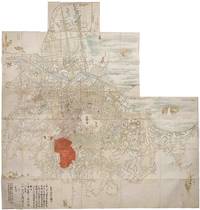
215931Japan. Very large hand coloured folding map 200 x 189.5cm at the largest section six panels have been removed from one corner while another two and a half panels have been included along one edge to show the reach of the city. Some insect damage repaired with washi but overall in very good condition. An exceptionally beautiful and detailed rare map of Tokyo in the Edo period the latter half of the 17th century. This remarkable delicately executed map of Edo around the 1660s offers a wealth of detailed information about the city and its population during the early Edo period. Hundreds of names of landholders are neatly recorded. Family crests or mons are shown across Edo indicating locations of daimyo's or feudal lord mansions temples depicted with even ferry routes named! <br> <br>Edo Castle takes centre stage with the Sumida River flowing from north to south and emptying into the bay. Here several boats are delicately illustrated in colour some carrying images of lucky gods. Prominently displayed in red is the mansion of Sakai Shurinosuke namely Sakai Tadanao 1630-1682 who received the rank of Shuri-Taiyfu 修理大夫 from the Emperor. He was a daimyo from the domain of Obama Fukui Prefecture and successor to his prominent father Sakai Tadakatsu 1587-1662. Tadakatsu served as one of the most trusted ministers of Tokugawa Iemitsu 1604-1651 the third shogun. His son Tadanao was active as a daimyo between 1656 and 1677. <br> <br>A handwritten section at the top right details the Sakai family's fire responsibility area. The borders are defined by street names and landmarks and distances are listed from the main mansion and residence to Ushigome-mon one of Edo Castle's gates. In summary the area of responsibility is approximately 10 cho 1 kilometre east to west and 12 cho 1.2 kilometres north to south. <br> <br>Though not explicitly dated beyond the mention of "November" the map was probably created in the 1660s. The Meireki Fire 1657 caused a large scale devastation around the castle and the Tokugawa government heightened the need of fire fighting activities in the capital. The government firstly allocated responsible areas for each daimyo to carry out fire fighting and secondly started to produce large maps of Edo based on actual measurement. Consequently this map was most probably produced around the 1660s. Furthermore the dating is supported by the presence of Ryogoku Bridge built in 1659 and the absence of Shin-Ohashi Bridge which wasn't constructed until 1693. Additionally the map provides detailed information on residents street names around the castle and other areas with major temples and shrines highlighted in colour illustrations. <br> <br>This truly exceptional map leaves many questions unanswered. Indeed who gathered the vast amount of information to be found on the map What was the exact purpose behind its creation The more we examine this map the more we learn and the more questions we have. However it is very clear that this rare and beautiful manuscript map provides a depth of information about Edo in the 1660s rarely found making the map a vital key to the city at this period. A handsome map which calls for more research. <br> <br>We have not been able to find a similar map nor have we ever handled anything comparable. . unknown
1842123046Paris: L. Curmer 1842. First edition of this collection which Carteret considers to be one of the most important illustrated books of the 19th century. Octavo elaborately bound in full red morocco with elaborate gilt titles and tooling to the spine in six compartments within raised gilt bands elaborate gilt ruling and stamping to the front and rear panels gilt turn-ins and inner dentelles elaborately decorated green morocco doublures hand-stitched patterned endpapers all edges gilt with intricate botanical carvings illustrated with eleven frontispiece titles by Trimolet Charles Jacque Penguilly etc. and numerous vignettes throughout the text. In fine condition. Rare and desirable. This collection of ten short narratives mostly Gothic or exotic from the literatures of several countries is one of the most charming books of the Romantic period" Ray. L. Curmer unknown
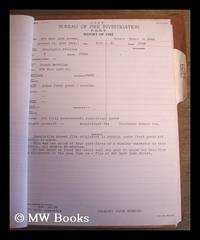
1937219744New York : FDNY 1937. First Edition. Paperback. The documents are bound by metal clasp in a brown portfolio folder. The contents are in a very good to near fine condition with just some minor edge nicks and dust-toning as with age. Remains particulalry well-preserved overall. Further scans images etc. and additional bibliographical material available on request.; 8vo 8"" - 9"" tall; 0 pages; A unique collector's item. New York Fire Department's 1937 case files in typescript regarding the case of George S. Preston who set a large number of fires around the Bronx area of New York between 1935 & 1937. A number of fires were also set while he was employed by the New Haven Railroad. Contents: File and case reports some on headed Bureau of Fire Investigation paper statements from the accused and witnesses employment records police statements interview transcripts and an original b/w portrait photo of the accused. Also includes 'George S. Preston's Confession' in a sealed Fire Department envelope. New York : FDNY paperback
93113Depot De Lbrairie. As New. HARDCOVER. FREE UPGRADE to Courier/Priority Shipping Upon Request - IN STOCK AND IMMEDIATELY AVAILABLE FOR SHIPMENT - AS NEW THE TEXT BLOCK IS PRISTINE CLEAN UNMARKED AND IN EXCELLENT CONDITION - - HARDCOVER. Text in French. No date Individual volumes published between 1851 - 1854 The Almanach includes the image of an engraving after Daubigny. -- with a bonus offer-- . Depot De Lbrairie hardcover
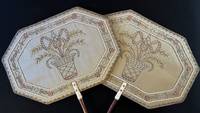
18304479France 1830. Two matching embroidered pole fire screens oblong octagonals 202 x 290 mm. sides of silk over thin boards or scaleboards the decorated side of beige satin silk with a large central flowerpot containing sprigs and a large pink bow within ornate floral border between two white braided thread borders outermost gilt ribbon border with tiny loops; the designs composed of metallic thread pink flat sequins molded white or silvery sequins and couched gilt leaves: embossed leaves on the plant and flat leaves in the border; the reverse sides covered in plain dark rose silk contemporary bone and wood handles with small screws on back. Condition: one screen lacking one embossed leaf the other screen lacking four of the same and with one leaf almost detached; else fine.<br /> <br /> A handsome pair of embroidered hand-held fire screens probably from the first decades of the 19th century in fine condition.<br /> <br /> “A beautiful addition to any room decorative pole screens served an important function in the 18th century: The tall thin screens shielded people’s faces from the direct heat of the fire. In the 17th and 18th centuries both men and women wore makeup to hide blemishes. It was said that before he turned fifty the Prince Regent’s face had turned waxen and copper colored from make up. The cosmetic preparation worn to hide small pox was thick and made up of wax and white lead. The lead was toxic especially when warmed and the heat from a fire could be life threatening. A pole screen protected the face from intense heat and prevented the wax from melting and the cosmetics from interacting with the skin. The earliest panels were made of wicker but these were replaced with beautiful needlework or embroidered panels that came in many shapes and sizes – oval heart-shaped rectangular etc. By the late 18th century skin disfiguration caused by plagues was no longer as prevalent as before and smaller polescreens became more fashionable.â€- Jane Austen’s World website viewed 4-6-26. unknown
18542111902160201214Izumiya Hanbei version 1854. Soft Cover. Fine. Volume: 1 Izumiya Hanbei version paperback
2005mon0000076893Jones and Bartlett Publishers I 2005-09-27. DVD Audio. New. 1.7766 in x 32.2335 in x 28.1726 in. Jones and Bartlett Publishers, I unknown
93110Depot De Lbrairie. As New. N.D. Paperback. FREE UPGRADE to Courier/Priority Shipping Upon Request - IN STOCK AND IMMEDIATELY AVAILABLE FOR SHIPMENT - AS NEW THE TEXT BLOCK IS PRISTINE CLEAN UNMARKED AND IN EXCELLENT CONDITION - - Text in French. No date Circa 1853 . Vignette de titre gravée d'après Daubigny. -- with a bonus offer-- . Depot De Lbrairie paperback
201194163Gestalten. New. 2011. Hardcover. 3899553810 . FREE UPGRADE to Courier/Priority Shipping Upon Request - IN STOCK AND IMMEDIATELY AVAILABLE FOR SHIPMENT - Flawless copy brand new pristine never opened -- 144 pages. Description: "Studio On Fire is at the forefront of the current letterpress movementthe rediscovery of old printing machines and techniques by young designers. The phenomenal detail and haptic sensuousness of their work have made this Minnesota-based company a seminal reference for how to effectively blend current and classical graphic design styles with production methods. " -- with a bonus offer-- . Gestalten hardcover
1975ZB394025National Fire Protection Association 1975. volumes 11-17; 20-23; 26-33. 1975-1997. partly bound library markings textually clean & tight PRICE IS FOR THE LOT. - If you are reading this this item is actually physically in our stock and ready for shipment once ordered. We are not bookjackers. Buyer is responsible for any additional duties taxes or fees required by recipient's country. Photos available upon request. National Fire Protection Association unknown
Second edition, with addition of 'many new and beautiful Fire-Works', 8vo (206 x 116 mm), xxvi, 262, [2]pp., with the final errata leaf and list of subscribers, turn-ins slightly offset onto title, 8 folding engraved plates, cont. calf, red morocco spine label lettered in gilt, a very nice clean copy. A reissue, with a cancel title page, of the original edition of 1765 which was "remarkable as it is the first book dealing exlusively with recreational fireworks in English since Babington's classic work of 1655." This reissue has pages 253-255 have been excised from the original with the additional 11 pages from 253 to 262 describing the set-pieces depicted on the extra 3 plates. Provenance: Early armorial bookplate of Philip Earl Stanhope; From the library Military Library of Thomas Francis Fremantle (3rd Lord Cottesloe). Philip, A Bibliography of Firework Books, J020.2.
191961612Utica NY: O.J. Childs Co. Fire Apparatus 138 Liberty ca. 1919-1922. 4to. 36 leaves unnumbered. linen-backed silver gelatin photos some hinged most negative numbers w/in negative at lower fore-edge all w/ typed captions & identifying text on versos a few w/ caption on recto below the image. Contemporary black-simulated calf vinyl 3-ring loose-leaf binder rounded corners yapp fore-edges minor edgewear & fraying to some of the linen backing on images minor occasional creasing indications of use wear & bumping to covers still a VG exemplar. This uncommon salesman sample photo album includes excellent original photographs of many significant O.J. Childs Co. fire engines and firefighting equipment manufactured in Utica NY following World War I. These factory images encompass Type “B†Triple Combination on REO chassis; Triple Combination Pump Chemical & Hose Car on Federal 1 1/2 ton chassis; Straight Chemical Equipment o 1921 Brookway 1 1/2 ton chassis; and many other variations thereof. O.J. Childs built their own engines like American-La France because commercial truck engines not only lacked the torque but also the endurance to drive a fire pump for hours without overheating or damaging pistons connecting rods and valves. The images include fire engines supplied to the Morristown NJ Basking Ridge NJ Winsted CT Orenda Hose Co. Griffith IN East Greenwich NJ Mt. Carmel PA Loch Sheldrake NY and many others. Also used by the Childs’ Co. customers were such manufacturers as Dodge-Graham Ford pleasure chassis Packard Model EX White 20-45 Chassis a Ward-La France and many more. Orlando J. Childs organized the O.J. Childs Co. Fire Apparatus in 1899 to take over the business of the Utica Fire Extinguisher Co. who were best known for their chemical fire extinguishers designed and patented originally in 1896-97 by William Pomfret and Thomas Keating. They quickly began actively selling fire extinguishers to businesses individuals and even specialized on fire extinguishers for early automobile enthusiasts during the Brass Era who suffered frequent engine fires. After producing their first Triple Combination Pump Wagon about 1910 they quick espanced into ready-made chemical tank truck fire-engines for rural fire departments. Wallace Childs acquired the Foamite Firefoam Co. in New York in 1922 and in 1926 the entire company was acquired and became a subsidiary of American-La France Fire Engine Co. No similar albums images or catalogues located in Worldcat; See: Mark Theobald O.J. Childs & Co. Foamite-Childs Corp American-LaFrance Corp. Coachbuilt 2004. O.J. Childs Co., Fire Apparatus, 138 Liberty, unknown
1906List821San Francisco 1906. Thirty-one silver gelatin prints measuring 4 x 3 inches with four accompanying sheets measuring 8 x 5 ½ inches identifying the images. Also included is the original envelope to an illegible recipient or possibly crediting the images. Fading to images else about fine very good minus overall. Many photographers amateur and professional alike took to the streets of San Francisco to document devastation caused by the earthquake and subsequent fire of 1906. Collected here are thirty-one images taken by one such photographer - likely an amateur based on the image quality and perspectives. What is unusual about the collection here is that the photographer took meticulous notes on each image and the images as found in a rather illegible envelope included several sheets explaining the location of each image. The photographer travelled through most of downtown with varied locations represented. The title is likely misleading as the fire raged for several days and the pictures were likely taken several days after the 18th of April. The envelope has the name “Mrs H. Thof illegible†which suggests that perhaps the photographer was a woman or possibly that these were given to the same as a gift by another photographer. Overall a scarce survival of images of which we find no other copies. unknown
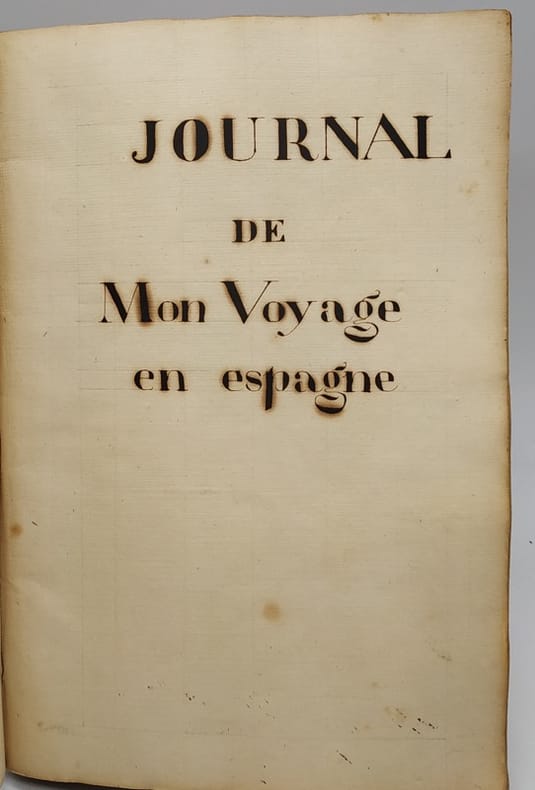
1839114561839 en ff. 64ff. et 117 ff. (certains sont ecrits recto verso.) 225 x 180mm.
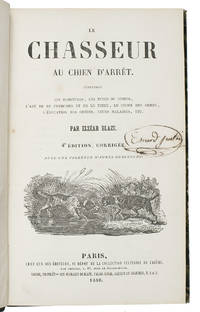
1846234711846. XXVII 420; 6 440; 6 448 pp. Ad. 1: Fourth edition of this elaborate treatise on hunting by Elzéar Jean Louis Joseph Blaze 1786-1848 forming together with his Le Chasseur au chien courant ad. 2 a complete course on hunting "à tir et à cour". Ad 2. Re-issue of the first edition of 1838 of this elaborate treatise on hunting by Elzéar Jean Louis Joseph Blaze1786-1848. This treatise contains information on the habits and tricks of animals the method for watching judging and divert them the method for attacking shoot and emprison them and information on the education of the tracker dogs foxhounds and on their diseases. In the title is emphasised that this work forms together with Le Chasseur au chien d' arrêt a treatise on pointer dogs by the same author a complete course on hunting 'à tir et à courre'.Ad.1: Owners's inscription on the title-page "Eduard Justing". Ad. 2: Waterstain in first 130 pp. of vol. 1 and smaller stain in first and last part of vol. 2l Souhart col. 58; Thiébaud col. 98-100; Sotheby's Bibliothèque Marcel Jeanson 73 3rd ed.; Schwerdt Hunting hawking shooting p. 71 first ed.; ABE CAT Falconry & Hunting unknown
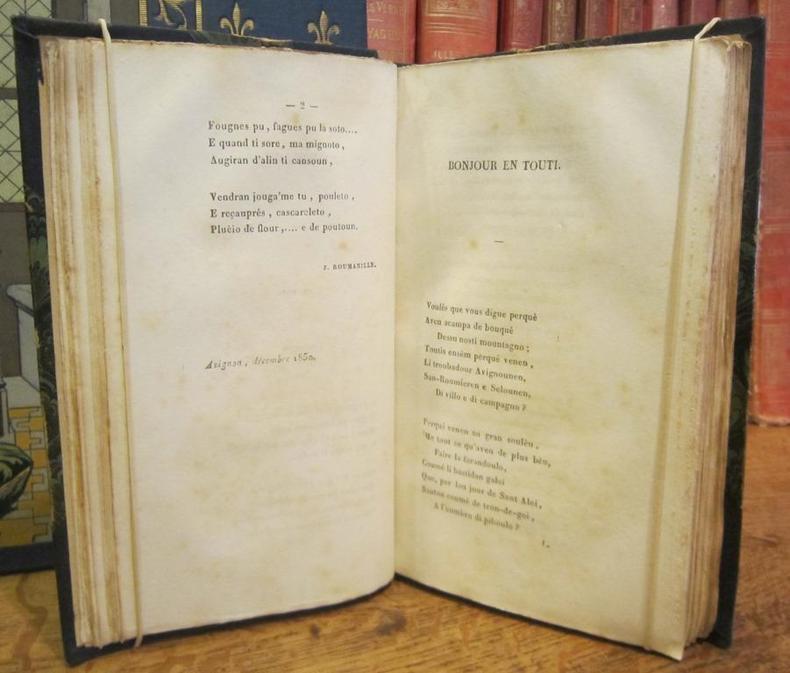
1852000273Avignon Seguin Aîné 1852
2010SONG0064641333Brand: Nfpa 01/01/2010. paperback. Used: Good. 10.90x8.40x0.80. Buy with confidence. Excellent Customer Service & Return policy. Brand: Nfpa paperback
1912AQ32120Calcutta: Printed at the Criterion Printing Works 1912. 4 222pp. Original publisher's red cloth-backed printed buff paper boards. Heavily rubbed marked and discoloured upper joint starting. Upper hinge partially exposed occasional marginal staining/dust-soiling very occasional early manuscript annotations to text. Together with: Rules of the fire offices' committee foreign for automatic sprinkler installations. s.i. s.n. 1909. Second edition. 8vo. 30 3pp 1. Stapled as issued in original publisher's printed powder blue wrappers. A trifle dust-soiled contemporary manuscript note and inked ownership inscription of W. Crawford to upper wrapper staples rusted. Internally clean and crisp. And: Rules of the fire offices' committee foreign for automatic sprinkler installations. s.i. s.n. 1912. Third edition. 8vo. 2 31pp 1. Stapled as issued in original publisher's printed powder blue wrappers. A trifle dust- soiled contemporary inked ownership inscription of W. Crawford to upper wrapper coloured pencil annotation to lower wrapper staples rusted. Internally clean and crisp. And: The Calcutta Fire Insurance Agents' Association. Wiring rules for electrical installations. Adopted 22nd May 1908. Calcutta. Printed at the Industrial Printing Works 1908. 12mo. 2 41pp 1. With a folding chart. Original publisher's red cloth-backed printed red wrappers. Clean and crisp. And: Calcutta Fire Insurance Agents' Association. Fire Extinguishing Appliances. Specification of requirements necessary to obtain special reductions in Insurance Rates. Calcutta. Printed at the Industrial Printing Works 1909. 12mo. 4 59pp. Original publisher's red cloth-backed printed red wrappers. Extremities a trifle marked. A clutch of five apparently unrecorded publications relating to and issued for private circulation by the Calcutta Fire Insurance Agents' Association. . Quarto. Printed at the Criterion Printing Works hardcover
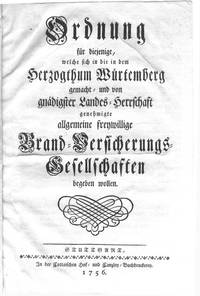
175660002Stuttgart: Cotta 1756. 19 pp. 1 vols. Small folio. Later drab wrappers. Dampstaining along top edge. Very good. 19 pp. 1 vols. Small folio. Cotta unknown
190660850San Francisco & Los Angeles CA: Clinton Johnson 1906. Ten albumen mounted stereoview photos sized 6.4 x 3.25 in. mounted on 7 x 3.5 in. flat gray studio board mimeographed typescript title labels mounted on all versos most images w/ photographer’s imprint w/in the negative at lower fore-edge all w/ rounded corners very minor edgewear still a NF grouping. This outstanding group of very scarce albumen Woodbury-type stereograph photos vividly capture the widespread damage from the April 18 1906 earthquake and subsequent fires which destroyed over 80% of the city of San Francisco which at the time was the largest city on the West Coast. Nearly three-fourths of the population were left homeless and makeshift refugee camps in Golden Gate Park the Presidio the Panhandle and the beaches between Ingleside and North Beach operated for years after the disaster as the city rebuilt. Reconstruction and commercial activities began almost immediately with a couple of these images showing the roadways largely cleared of debris with piles of rubble and devastation spreading into the distance. Many of the images show gutted buildings advertising signs faintly visible in the ruined brick facades and immense piles of masonry and smoking ruins. One of the images capture groups of men hunkering down reading papers smoking and largely shell-shocked waiting in the refugee line for aid. The historic James Lick Baths are depicted in ruins ine one of the images and were rebuilt following the disaster utilizing as much of the original structure as possible in order to remain in operation and the facade was simplified from the original Richardson Romanesque Revival to Renaissance Revival and would operate as one of five public baths from 1906 to 1920. The structure was later converted to the People’s Laundry in operation until 1973. Another of the stereoviews depicts the remnants of the McCormick Hotel before it would later be destroyed along with all of the surrounding ruins by the US Army Corps of Engineers. In fact one sergeant of the battalion narrowly escaped death as the building collapsed while he was placing the charge in the basement. Johnson 1875-1948 appears in street directories in Los Angeles as photographer from 1896-1906 but appears on no census or business trade listings for the period and also managed to eschew registering for the draft. His stereograph series for the 1906 San Francisco Earthquake & Fire appears to be relatively uncommon and the only major institutional holdings are in the Bancroft library with 39 BANC PIC 1905.02074-.02118--STER however nearly all of the images in this collection are not represented. In addition these images correspond mostly closely in format to the Bancroft’s version which were issued with decorative printed boards and captions rubber stamped below while these do not bear the printed boards and captions are mounted on versos. Clinton Johnson, hardcover
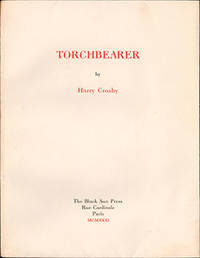
51-6516Paris: Black Sun Press MCMXXXI. 4to. 18 x 23cm. Original wraps. One of 50 numbered copies on Holland paper. Volume IV of "The Collected Poems of Harry Crosby.".Caresse published this work 2 years after Harry killed his lover Josephine Rotch and himself. Crosby revered Rimbaud and with Rimbaud’s self-deregulation in mind believed in his own idealizations of suicide. To his wife Caresse Crosby he had proposed suicide pacts on several occasions since early in their relationship.He wrote about such pacts in his poems and in his diaries and he talked about them most consequentially with the most significant of his many mistresses Josephine Rotch Bigelow with whom he was found dead in bed—a bullet hole to her left temple a bullet hole to his right temple his right hand holding a .25 caliber pistol his free hand joined in Josephine’s—in a New York hotel room on December 11th 1929. The couple was fully clothed and there was no suicide note. They had consumed immense quantities of gin and opium pills not unusual for Harry or his “fire-princess†as he called Josephine who like himself was thoroughly a product of Back Bay Boston. Had Josephine been the first to call Harry’s bluff and insist that he carry through in action the belief he expressed to her that the greatest expression and fulfillment of love was for two lovers to die together in suicide"Minkoff A-42. OCLC Number / Unique Identifier:471859Provenance… Collection of Dr. Gregory R. Bonomo Paris: Black Sun Press, MCMXXXI paperback