246 résultats
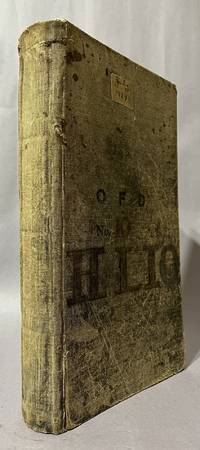
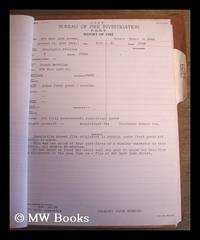
1937219744New York : FDNY 1937. First Edition. Paperback. The documents are bound by metal clasp in a brown portfolio folder. The contents are in a very good to near fine condition with just some minor edge nicks and dust-toning as with age. Remains particulalry well-preserved overall. Further scans images etc. and additional bibliographical material available on request.; 8vo 8"" - 9"" tall; 0 pages; A unique collector's item. New York Fire Department's 1937 case files in typescript regarding the case of George S. Preston who set a large number of fires around the Bronx area of New York between 1935 & 1937. A number of fires were also set while he was employed by the New Haven Railroad. Contents: File and case reports some on headed Bureau of Fire Investigation paper statements from the accused and witnesses employment records police statements interview transcripts and an original b/w portrait photo of the accused. Also includes 'George S. Preston's Confession' in a sealed Fire Department envelope. New York : FDNY paperback
1975ZB394025National Fire Protection Association 1975. volumes 11-17; 20-23; 26-33. 1975-1997. partly bound library markings textually clean & tight PRICE IS FOR THE LOT. - If you are reading this this item is actually physically in our stock and ready for shipment once ordered. We are not bookjackers. Buyer is responsible for any additional duties taxes or fees required by recipient's country. Photos available upon request. National Fire Protection Association unknown
191961612Utica NY: O.J. Childs Co. Fire Apparatus 138 Liberty ca. 1919-1922. 4to. 36 leaves unnumbered. linen-backed silver gelatin photos some hinged most negative numbers w/in negative at lower fore-edge all w/ typed captions & identifying text on versos a few w/ caption on recto below the image. Contemporary black-simulated calf vinyl 3-ring loose-leaf binder rounded corners yapp fore-edges minor edgewear & fraying to some of the linen backing on images minor occasional creasing indications of use wear & bumping to covers still a VG exemplar. This uncommon salesman sample photo album includes excellent original photographs of many significant O.J. Childs Co. fire engines and firefighting equipment manufactured in Utica NY following World War I. These factory images encompass Type “B†Triple Combination on REO chassis; Triple Combination Pump Chemical & Hose Car on Federal 1 1/2 ton chassis; Straight Chemical Equipment o 1921 Brookway 1 1/2 ton chassis; and many other variations thereof. O.J. Childs built their own engines like American-La France because commercial truck engines not only lacked the torque but also the endurance to drive a fire pump for hours without overheating or damaging pistons connecting rods and valves. The images include fire engines supplied to the Morristown NJ Basking Ridge NJ Winsted CT Orenda Hose Co. Griffith IN East Greenwich NJ Mt. Carmel PA Loch Sheldrake NY and many others. Also used by the Childs’ Co. customers were such manufacturers as Dodge-Graham Ford pleasure chassis Packard Model EX White 20-45 Chassis a Ward-La France and many more. Orlando J. Childs organized the O.J. Childs Co. Fire Apparatus in 1899 to take over the business of the Utica Fire Extinguisher Co. who were best known for their chemical fire extinguishers designed and patented originally in 1896-97 by William Pomfret and Thomas Keating. They quickly began actively selling fire extinguishers to businesses individuals and even specialized on fire extinguishers for early automobile enthusiasts during the Brass Era who suffered frequent engine fires. After producing their first Triple Combination Pump Wagon about 1910 they quick espanced into ready-made chemical tank truck fire-engines for rural fire departments. Wallace Childs acquired the Foamite Firefoam Co. in New York in 1922 and in 1926 the entire company was acquired and became a subsidiary of American-La France Fire Engine Co. No similar albums images or catalogues located in Worldcat; See: Mark Theobald O.J. Childs & Co. Foamite-Childs Corp American-LaFrance Corp. Coachbuilt 2004. O.J. Childs Co., Fire Apparatus, 138 Liberty, unknown
1906List821San Francisco 1906. Thirty-one silver gelatin prints measuring 4 x 3 inches with four accompanying sheets measuring 8 x 5 ½ inches identifying the images. Also included is the original envelope to an illegible recipient or possibly crediting the images. Fading to images else about fine very good minus overall. Many photographers amateur and professional alike took to the streets of San Francisco to document devastation caused by the earthquake and subsequent fire of 1906. Collected here are thirty-one images taken by one such photographer - likely an amateur based on the image quality and perspectives. What is unusual about the collection here is that the photographer took meticulous notes on each image and the images as found in a rather illegible envelope included several sheets explaining the location of each image. The photographer travelled through most of downtown with varied locations represented. The title is likely misleading as the fire raged for several days and the pictures were likely taken several days after the 18th of April. The envelope has the name “Mrs H. Thof illegible†which suggests that perhaps the photographer was a woman or possibly that these were given to the same as a gift by another photographer. Overall a scarce survival of images of which we find no other copies. unknown
1912AQ32120Calcutta: Printed at the Criterion Printing Works 1912. 4 222pp. Original publisher's red cloth-backed printed buff paper boards. Heavily rubbed marked and discoloured upper joint starting. Upper hinge partially exposed occasional marginal staining/dust-soiling very occasional early manuscript annotations to text. Together with: Rules of the fire offices' committee foreign for automatic sprinkler installations. s.i. s.n. 1909. Second edition. 8vo. 30 3pp 1. Stapled as issued in original publisher's printed powder blue wrappers. A trifle dust-soiled contemporary manuscript note and inked ownership inscription of W. Crawford to upper wrapper staples rusted. Internally clean and crisp. And: Rules of the fire offices' committee foreign for automatic sprinkler installations. s.i. s.n. 1912. Third edition. 8vo. 2 31pp 1. Stapled as issued in original publisher's printed powder blue wrappers. A trifle dust- soiled contemporary inked ownership inscription of W. Crawford to upper wrapper coloured pencil annotation to lower wrapper staples rusted. Internally clean and crisp. And: The Calcutta Fire Insurance Agents' Association. Wiring rules for electrical installations. Adopted 22nd May 1908. Calcutta. Printed at the Industrial Printing Works 1908. 12mo. 2 41pp 1. With a folding chart. Original publisher's red cloth-backed printed red wrappers. Clean and crisp. And: Calcutta Fire Insurance Agents' Association. Fire Extinguishing Appliances. Specification of requirements necessary to obtain special reductions in Insurance Rates. Calcutta. Printed at the Industrial Printing Works 1909. 12mo. 4 59pp. Original publisher's red cloth-backed printed red wrappers. Extremities a trifle marked. A clutch of five apparently unrecorded publications relating to and issued for private circulation by the Calcutta Fire Insurance Agents' Association. . Quarto. Printed at the Criterion Printing Works hardcover
190660850San Francisco & Los Angeles CA: Clinton Johnson 1906. Ten albumen mounted stereoview photos sized 6.4 x 3.25 in. mounted on 7 x 3.5 in. flat gray studio board mimeographed typescript title labels mounted on all versos most images w/ photographer’s imprint w/in the negative at lower fore-edge all w/ rounded corners very minor edgewear still a NF grouping. This outstanding group of very scarce albumen Woodbury-type stereograph photos vividly capture the widespread damage from the April 18 1906 earthquake and subsequent fires which destroyed over 80% of the city of San Francisco which at the time was the largest city on the West Coast. Nearly three-fourths of the population were left homeless and makeshift refugee camps in Golden Gate Park the Presidio the Panhandle and the beaches between Ingleside and North Beach operated for years after the disaster as the city rebuilt. Reconstruction and commercial activities began almost immediately with a couple of these images showing the roadways largely cleared of debris with piles of rubble and devastation spreading into the distance. Many of the images show gutted buildings advertising signs faintly visible in the ruined brick facades and immense piles of masonry and smoking ruins. One of the images capture groups of men hunkering down reading papers smoking and largely shell-shocked waiting in the refugee line for aid. The historic James Lick Baths are depicted in ruins ine one of the images and were rebuilt following the disaster utilizing as much of the original structure as possible in order to remain in operation and the facade was simplified from the original Richardson Romanesque Revival to Renaissance Revival and would operate as one of five public baths from 1906 to 1920. The structure was later converted to the People’s Laundry in operation until 1973. Another of the stereoviews depicts the remnants of the McCormick Hotel before it would later be destroyed along with all of the surrounding ruins by the US Army Corps of Engineers. In fact one sergeant of the battalion narrowly escaped death as the building collapsed while he was placing the charge in the basement. Johnson 1875-1948 appears in street directories in Los Angeles as photographer from 1896-1906 but appears on no census or business trade listings for the period and also managed to eschew registering for the draft. His stereograph series for the 1906 San Francisco Earthquake & Fire appears to be relatively uncommon and the only major institutional holdings are in the Bancroft library with 39 BANC PIC 1905.02074-.02118--STER however nearly all of the images in this collection are not represented. In addition these images correspond mostly closely in format to the Bancroft’s version which were issued with decorative printed boards and captions rubber stamped below while these do not bear the printed boards and captions are mounted on versos. Clinton Johnson, hardcover
1903000006bBoston Massachusetts MA. Fair. 1903. Hardcover. Wonderful all handwritten 9" x 11" hardback daily hour by hour journal from an unspecified fire department but almost certainly Boston. Dated July 1903 through Oct. 1903. The day of horse drawn fire engines. 300 pages. No missing pages. The log is written in black ink with all the fire calls written in red ink. Contains information on the care of the engines and horses roll call who's in charge of meals who's absent and on vacation fire call addresses and names of all the fire men etc etc. Items too numerous to mention. A typical days entry: Sunday Oct 4th 1903. 12am York relieved Ryan on house patrol. 1am Water in Engine 38 and 39 at 4th and 3rd gauge . Steam at 100 lbs. 2am Hart relieved York on house patrol. 3am 3 and 4 G's of water in engines 38 and 39. Steam 95 lbs 4am Heaters OK. Patrol completed York and Hart. 4am Burke relieved Hart on house patrol. 6:45am Morning call struck. 7am Lt. Lynch Marden Ryan Doughtery Burke Gilligan to breakfast. 7:25am Received alarm from box 38 Tapper and Gong. Engine 39 responded to fire at #70 Long Wharf. Connected to hydrant opposite 62 Long Wharf. Company services not required. Reports to Chief Cheswell and ordered to quarters by same. 1 officer and 5 men responded with apparatus. 2 officers and 6 men responded to fire. While responding to the above alarm horse #677 was injured by colliding with post of elevated structure receiving injuries that caused him to be killed. Company returned. Absent 35 minutes. Other entry: Responded to Railroad car #355 in NY NH & H railroad yard caused by fierce exploding company. Used 1 extinguisher. Another entry: Still alarm for fire inside building #33 and 37 Wormwood St. Engine 39 hose wagon responded to fire on 2nd floor. Run 200 feet of hose from hydrant on Wormwood St and passed water 5 minutes. Absent 55 minutes. THIS IS A WONDERFUL ONE OF A KIND FIREFIGHTER HISTORICAL ITEM. Most of the pages are loose with yellowing on the edges with some tatters. The spine is missing and taped.; Manuscript; 4to - over 9¾" - 12" tall; Hand Written Personal Americana Memoir Fire Department Fireman Fire Stations Public Service Arson Handwritten hand written autograph autographs signed letters document documents manuscript manuscripts writers writer author holograph personal Americana Firefighters Fireman BOSTON MASSACHUSETTS MA . hardcover
1924005993Cleveland Ohio 1924. Cloth. Good. Folio. Cloth bound ledger 13.75 x 8.75 inches 500 pages. Original manuscript hand-written in black and red ink log book for the Cleveland Ohio Fire Department Engine 10 East 101st Street in the heart of University Circle and the Cleveland Clinic. Entries cover the period between July 1 1924 and December 31 1924. Entries contain records of the daily operations of the station names and roll calls payrolls inspections standard procedures including firefighter deaths calls incident reports statistics monthly report summaries equipment lists supplies and more. The log is Indexed for reference. These logs were kept just before all the Cleveland fire stations were provided with motorized engines in 1925 during a period of rapid fire station expansion in the city. An original and unique item of Cleveland and firefighting history. Covers show expected heavy wear and soiling contents are clean and well preserved binding remains tight <br/> <br/> hardcover
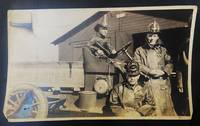
1912177181912. Fire department photo album ca 1912 a visual record of early motorized firefighting that documents the transition from horse drawn apparatus to mechanized emergency response in California. The album centers on a small town department identified by the uniform insignia "CCFD" capturing a moment when motor vehicles were beginning to replace traditional equipment even as many larger cities still relied on horse drawn engines. The presence of specialized vehicles and organized crews reflects the modernization of municipal and volunteer fire services in the early twentieth century as departments adopted new technologies to improve response speed and operational capacity.<br /> <br /> Photo album containing 42 silver gelatin photographs housed in original string bound black leather covers. Images depict firefighters posed with motorized apparatus including vehicles associated with Kissel an early automobile manufacturer known for producing service and utility vehicles. Several photographs show crews at fire scenes alongside the charred remains of structures while others document equipment group portraits and operational contexts. One loose photograph bears the caption "This Rig is used for carrying back dirty hose. The other three are useless" providing a candid comment on equipment function and intra crew perspective. Additional imagery includes a woman seated on a Kissel automobile indicating the broader presence of early motor vehicles within the community.<br /> <br /> The album documents a transitional phase in firefighting history when mechanization reshaped emergency services reducing reliance on animal power and enabling more complex logistical coordination. Departments adopting motorized equipment during this period often represented early adopters of automotive technology within their communities and their visual documentation provides insight into both technological change and local organization of public safety. The combination of posed and candid images captures both formal representation and everyday practice within a fire brigade adapting to new tools and methods. Covers show light wear with secure string binding; photographs remain clear and well preserved. Overall very good condition. unknown
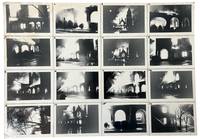
1968233001968. Fire destruction of Trinity United Methodist Church on South 2nd Street in Clearfield Pennsylvania photographed during the active overnight blaze of December 21 1968 in a dramatic sequential record of one of the borough's largest twentieth century urban fires. The archive captures the church while fully engulfed preserving flames erupting through the roofline smoke pouring from the arcaded façade hose streams striking the structure from darkened streets and the silhouette of the church tower rising above the fire. The photographs record not only the destruction of a major downtown religious landmark led at the time by Rev. Oliver H. R. Krapf but also the operational reality of late 1960s volunteer firefighting systems in small town Pennsylvania where borough police volunteer companies ladder apparatus hydrant pressure and regional mutual aid networks were rapidly assembled in an effort to contain a spreading structural fire. The blaze was first spotted around 2:10 a.m. by taxi driver Billy Knepp after which Fire Chief William Swisher summoned neighboring companies to prevent the fire from spreading beyond the church into the surrounding civic center.<br /> <br /> Photo archive of 16 silver gelatin photographs mounted to a large cardstock sheet measuring approximately 20" x 14" each image roughly 3.5" x 5" Clearfield Pennsylvania December 1968. Each photograph is numbered by hand from 1 to 16 and together they function almost cinematically moving through different stages and vantage points of the firefight. The images center the church's cut stone arcades and bell tower as bright interior firelight blows outward through the large arched openings and flames tear across the roof structure above. Several photographs show powerful hose streams cutting diagonally across the frame toward the burning façade while others pull back into wider nighttime street scenes where bare winter trees utility poles parked cars wet pavement and gathered onlookers remain visible beneath smoke and reflected firelight. One frame includes a firefighter seen from behind at street level facing the inferno while another captures a bicyclist or passerby entering the foreground as the church burns behind him. Multiple views emphasize the repetition of the long arcade row transforming the church exterior into a glowing sequence of arches illuminated by active fire inside the structure. The resulting series preserves not only the destruction itself but the visual atmosphere of the emergency response: steam smoke glare darkness reflective pavement and shifting vantage points from the surrounding streets as firefighters attempted to control the blaze.<br /> <br /> The archive is especially significant as documentation of pre modernized municipal fire response during a period when Pennsylvania boroughs depended heavily on intercompany volunteer assistance for major structural fires. The identified responding companies from Lawrence Township Hyde Curwensville Philipsburg and Chester Hill gives the group great specificity within the history of regional mutual aid firefighting networks. At the same time the photographs preserve the loss of an architecturally prominent early twentieth century Methodist church before widespread sprinkler retrofitting and later fire protection standards transformed many American religious and civic structures in the decades that followed. Mount toning with expected contrast loss and glare in several high intensity night exposures. Overall good condition. unknown
199467133Milano: Scheiwiller Libri d'Artista 1994. Quartini sciolti in camicia e custodia in tela loose as issued in original cloth chemise and slip-case. Perfetto Mint. In memory of my feelings. Ten poems and ten Corbacciò"; etchings. 10 acqueforti acquetinte originali in nero firmate di Corbacciò cm 19x135. Poesie di Frank O'Hara. Titoli delle poesie in linoleografia tirati dall'Artista. 4to cm 30x24. pp. 44. Perfetto Mint. Edizione di 60 X es. numerati e firmati. Corbacciò" pseudonimo di Aliano Viola Milano 1938 Scheiwiller, Libri d'Artista hardcover
1999x-1566767997Technomic Pub Co 1999. Hardcover. New. 1st edition. 163 pages. 10.75x8.50x0.25 inches. Technomic Pub Co hardcover
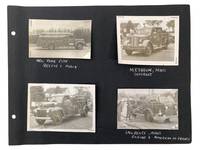
1910233921910. TechnologyRescue Operations American fire engine modernization archive documenting the transition from horse drawn steam engines to motorized trucks and rescue wagons in Massachusetts and across the Northeast between the 1910s and 1940s. Fire departments across the U.S. began to transition from horses and steam pumpers to gasoline powered apparatus to account for urban growth taller buildings electrical wiring and automobile traffic changing the speed and scale of emergency response. The archive records identified departments and apparatus makers including Mack GMC Ford Seagrave Studebaker American LaFrance and Maxim mostly showing departments across Massachusetts departments and with additional images from New York Pennsylvania New Jersey Rhode Island and Vermont.<br /> <br /> Photo archive of 33 silver gelatin photographs many with captions ranging from 2 x 3 to 4 x 6 inches chiefly Massachusetts with additional material from Vermont Pennsylvania New York New Jersey and Rhode Island 1910s to 1940s. Fire engines and firefighters appear in station fronts street parades apparatus portraits airport grounds and active fire scenes. Captions identify New York City Rescue 1 Mack; Syracuse Rescue 1 GMC; Highland Park Pennsylvania Rescue 2 Mack; Plainfield New Jersey Rescue GMC; Chelmsford Massachusetts Emergency No. 7 Studebaker; Camp Edwards Massachusetts Mack Engine 4; Needham Massachusetts Mack Engine 3; Lawrence Massachusetts Engine 3 American LaFrance; Boston Ladder 8 Ladder 9 and Ladder 21; Cambridge Engine 3; Canton Massachusetts Mack engine; Shrewsbury Massachusetts Engine 3 and Ladder 3; Barrington Vermont; Stoneham Massachusetts Bell Block; River Street Boston; First Scientist Church Somerville; and Fort House Somerville. Horse drawn apparatus appears outside Hope No. 1 in Pittsburgh and in a parade scene while motorized ladder trucks carry long wooden extension ladders hose reels searchlights bells sirens polished pumps and side mounted tools.<br /> <br /> The images provide a side by side record of old and new fire protection: horse teams exposed steam machinery open cab ladder trucks and later motorized emergency vehicles. Chas. E. Beckwith's Fire Dept. Photographer stamp connects at least part of the group to a specialist working for Massachusetts fire departments. Photographs stapled to eight disbound black album pages; scattered fading handling wear with legible captions. Some with additional handwritten captions on versos. Overall in good condition. unknown
19992081502111900055Chinese archives 1999. Soft Cover. Fine. Size: B5 hardcover book Chinese archives paperback
19822110502150901892Japan Firefighting Association 1982. Soft Cover. Fine. Number of books: 4 Japan Firefighting Association paperback
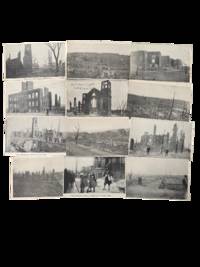
1908232131908. Chelsea fire real photo postcard archive documenting the destruction of civic religious medical and financial institutions in Chelsea outside of Boston Massachusetts after the November 1908 fire one of the most destructive urban fires in early twentieth century New England. This collection displays not only the ruined architecture but on the functions that had to be reestablished after the fire including places of worship schooling banking and medical care. Not only do these images display a developing New England city in ruins but the involvement of the surrounding community that was left displaced to pick up the pieces.<br /> <br /> Photo archive of 12 silver gelatin real photo postcards each 3" x 5.5" Chelsea Massachusetts circa 1908. The cards show skeletal masonry walls roofless church towers leveled residential blocks ash fields and streets lined with stripped tree trunks and scattered debris. Printed captions identify multiple sites including "Ruins of Unitarian Church Chelsea Mass." "Universalist Church Fourth & Chestnut St." "Ruins of Fay School Chelsea Mass." "Ruins of Public Library" "Central Church from Broadway Chelsea Mass." "Ruins of Williams School & First Universalist Church Chelsea Mass." and "Remains of Frost Hospital." Several views are wide panoramas taken from elevated ground or across open lots showing block after block reduced to foundations and chimneys while others isolate single institutional buildings left standing as shells. Human figures appear throughout as scale markers and witnesses with pedestrians moving through cleared streets and one especially important card showing uniformed cadets and coast artillery guards with rifles outside the Chelsea Savings Bank.<br /> <br /> The Great Chelsea Fire burned through a substantial section of the city in 1908 and displaced thousands making it one of the most destructive urban fires in New England in its period. These postcards preserve the public facing record created immediately after the disaster when churches schools hospitals libraries and banks were photographed not as isolated ruins but as essential parts of a city whose institutional framework had to be defended and rebuilt. Some edge and corner wear; minor toning. Overall very good condition. A concentrated record of urban destruction emergency security and civic reconstruction in Chelsea Massachusetts. unknown
19702091502135419023Industrial Firearms Association 1970. Soft Cover. Fine. Number of books: 55 Industrial Firearms Association paperback
1993mon0000135118Fire Protection Association 1993-01-01. Unknown Binding. Good. in x in x in. NOT ex-library. Clean copy in good condition. Fire Protection Association unknown
1918642306General Fire Extinguisher Company; Grinnell Co 1918. First Edition. Paperback. Good. Complete run of 36 issues starting with #1 in May 1918 through March 1925 of the company magazine of America's largest manufacturer of automatic sprinkler sytems and fire safety equipment. QUITE RARE. Illustrated in b/w throughout. Bound in two black cloth Emerson binders several covers loose some wear. Bound in is a typed letter signed by the editor. One issue the 'Special Smile Issue' is entirely devoted to smiling employees while another - covering an employee theatrical performance - features employees in blackface. General Fire Extinguisher Company; Grinnell Co paperback
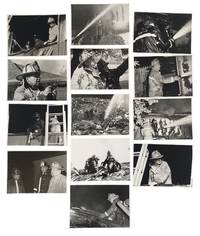
1980233751980. Rescue Operations Richardson Texas Fire Department photo archive documenting the sequential order of a small city rescue operation circa 1980s recording municipal crews as they move from arrival and exterior assessment to ladder access hose deployment radio communication breathing apparatus use residential fire suppression interior inspection overhaul and salvage. The archive documents firefighters wearing RFD helmets working from roofs windows ladders burned interiors refuse piles and exterior hose lines showing not just isolated scenes of fire suppression but the step by step process by which a suburban fire department managed an active emergency. Scenes capture fire crews masking up beside engines directing water into smoking structures removing material from upper floors inspecting charred rooms and coordinating around damaged buildings after flame knockdown.<br /> <br /> Photo archive of 24 glossy silver gelatin photographs 5 by 7 inches Richardson Texas circa 1980s. Firefighters wear leather turnout coats helmets marked RFD portable radios self contained breathing apparatus face masks and reflective striping. Hose streams strike wood siding rooflines and debris piles; ladders reach second story windows and eaves; crews stand on damaged roofing with hose and equipment; command and line personnel confer inside burned rooms and at exterior thresholds. Several scenes show active suppression at night with smoke water spray and charred structural elements surrounding firefighters at close range. Other scenes record quieter stages of the same work including radio use air pack preparation interior inspection and removal of burned material.<br /> <br /> By the 1980s local fire departments across the United States were increasingly shaped by portable radio communication standardized protective gear air pack training and coordinated incident response even in smaller cities outside major metropolitan departments. This archive captures that transition in practical terms with Richardson firefighters working fires in houses apartment style buildings refuse areas and heavily damaged interiors rather than posed station scenes. All complete and in very good to near fine condition. A grounded record of small town firefighting physical labor technical procedure and public safety work in a rapidly modernizing suburban fire department. unknown
1949142756New York: City of New York 1949/50. 799 pp. Quarto. Bound ledger in bound in original black cloth covered boards. Quite worn and soiled but generally very good in the interior. It would appear Engine Company No. 75 is in the Bronx. It would appear this is the ledger where details of events the Fire Dept. attended were recorded. The records are detailed and provide how signals were received and down to how much water was used. A very interesting record just after the war in the history of the New City Fire Department. Amazing this record showed up in Canada. 1949 City of New York hardcover
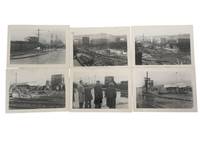
1948232471948. Seattle freight yard fire photo archive documenting the destruction and emergency aftermath of a rail served maritime industrial site in 1948. The photographs center a burned yard associated with the American Hawaiian Steamship Company a major intercoastal carrier that linked Pacific ports with Atlantic and Gulf Coast trade and maintained a substantial presence on Seattle's waterfront during the first half of the twentieth century. Rather than isolating a single ruined structure the group shows the working system around it: street access fire response rail lines lumber storage cargo handling space and the industrial buildings that tied Seattle's urban growth to port commerce.<br /> <br /> Photo archive of 6 black and white photographs each 3" x 4.5" Seattle Washington studio stamp en verso dated December 4 1948. The images show a broad debris field of charred timbers collapsed framing burned posts pooled water and smoke rising across a freight yard crossed by railroad tracks. Two views prominently include the sign for American Hawaiian S.S. Co. while another visible sign reads Keystone Steel & Wire Company placing the site within Seattle's maritime industrial district. One street view shows fire hoses snaking across wet pavement toward the still smoking yard and another frames a group of men in long overcoats and hats standing at the edge of the destruction surveying the scene. Utility poles warehouse buildings sidings stacked material and the hillside cityscape beyond the yard anchor the fire within a dense industrial section of Seattle shaped by port traffic and rail distribution.<br /> <br /> Seattle's maritime industry shaped the city from its earliest waterfront settlement into a major Pacific port where rail lines piers warehouses and steamship companies made Elliott Bay the engine of urban growth and commercial expansion. Minor edgewear and curling. Overall very good condition. These photographs preserve a short concentrated record of emergency aftermath on a working Pacific Coast waterfront at the start of the postwar shipping era when Seattle remained a major junction of rail and ocean transport and steamship firms still occupied prominent waterfront facilities. unknown
1990128212Various Publishers 1990s. Near Fine. Vintage promotional reprint photographs c. 1990s featuring burlesque legend and Baltimore regular Blaze Starr. A broad scope of her career from camera club to nightclub. Photos are 8.5 x 11 inches and 2 8 x 10 inches b/w 1 color glossy small borders signed in holograph ink with "Love and Lust" salutations or a variant salutation. All about Near Fine. Several photos feature nudity so the lot is for mature consenting audiences. Various Publishers unknown
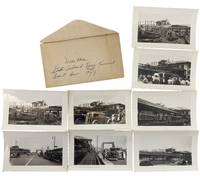
1946234361946. Photographs documenting the emergency response to the nine-alarm fire that destroyed the St. George ferry and railway terminal on Staten Island in June 1946 recording fire apparatus a hospital ambulance crew and rescue workers amid the smoking wreckage. The fire began at 2:30 in the afternoon of June 25 1946 under a car and spread to the terminal's wooden support pilings. Nine alarms were transmitted within half an hour summoning fifty land companies and six fireboats; three civilians were killed and more than 250 firemen and 30 civilians were injured or overcome by smoke.<br /> Photo archive of 8 silver gelatin snapshot photographs approximately 5 x 3 inches Staten Island New York with the original mailing envelope inscribed in ink "Martha Staten Island Ferry Terminal burnt down June 1947." One image centers a panel-body ambulance lettered "St. Vincent's Hospital" and "Staten Island" parked beside an open rear ambulance where attendants in white tend a patient. Another shows workmen uniformed officers and helmeted firemen clustered around the rescue vehicles below the gutted upper story. Several frames show pairs of wooden and steel rapid transit cars standing scorched on the rails beneath the twisted collapsed ribs of the train shed windows blown out and roofs caved in. A trackside view captures fire engines lined nose to tail along the roadway.<br /> The nine alarms transmitted within thirty minutes the fifty land companies and the Manhattan units racing through the Holland Tunnel show standard FDNY multi-borough mutual aid working at full stretch recorded by a bystander close enough to walk the platforms. The St. George fire ranks among the worst in Staten Island history and FDNY commanders called it one of the most stubborn blazes they had faced the burning rooted deep in the terminal's wooden pilings over the water. The destroyed structure was replaced by an entirely new $21 million terminal that opened in 1951. Overall in very good condition. A direct on-the-ground record of a multi-borough emergency response to a fatal nine-alarm fire that erased a major New York transit terminal. unknown
1999DADAX1566767997CRC Press 1999-10-15. 1. hardcover. New. 8.27x0.37x11.69. Buy with confidence. Excellent Customer Service & Return policy. CRC Press hardcover