DISCORSI INTORNO AL SANGUINAR I CORPI HUMANI IL MODO DI ATACCARE LE SANGUISUCHE E VENTOSE E FAR FRITTIONI E VESICATORII
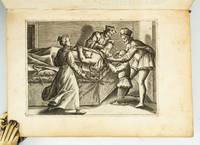
1584ST20779Rome: Bartolomeo Bonfadino & Tito Diani 1584. FIRST EDITION. 215 x 150 mm. 8 1/2 x 6". 6 p.l. 106 pp 1 leaf errata. <br/> 17th century sprinkled vellum raised bands leather spine panels with gilt lion ornaments red morocco label. Engraved title page woodcut initials and headpieces and 11 engraved plates of bloodletting. Title page with ink owner inscription of "Joann De Ville Chirurgo Lugdunesse 1629"; a couple of neat marginal annotations in Italian apparently by the same hand; four ink numbers on lower cover. Wellcome I 3959; EDIT16 CNCE 46661; Mortimer Italian II 267 second edition; USTC 839623. Boards a bit splayed gilt on spine a little rubbed moderate wear and soiling to the vellum text slightly browned at edges and with occasional minor foxing half a dozen leaves slightly browned but still an excellent unrestored copy quite fresh internally the engravings sharp and the binding completely solid.<br/> <br/> This is a 17th century surgeon's copy of a strikingly illustrated and centrally important 16th century treatise on bloodletting. Piacenza physician Pietro Paolo Magni's detailed discussion of the use of leeches and cupping-glasses long served as the standard work on the topic. Its 11 well-executed engravings are visually compelling as well as providing a rich source of information on the details of 16th century medical practice. There is some debate about their creator: Wellcome and Hirsch attribute them to Adamo Ghisi also Scultori ca. 1530-85 who executed the illustrated title page of this edition; Graesse and Mortimer on the other hand assign them to Cherubino Alberti 1553–1615 who was responsible for the engraved title in the second edition. Either way they are as evocative to modern-day viewers as they must have once been useful to surgeons and physicians of the 16th century. The dramatically lit scenes feature focused doctors armed with lancets and bowls to catch the blood attending to patients who grimace wilt or look away in stoic resignation. Our former owner Jean de Ville identifies himself as a Lyonnaise surgeon on the title page in an inscription dated 1629. His occasional notes on the text and illustrations indicate he was consulting this book as a reference for his own practice he writes above one illustration for example that "this operation should be performed on the left arm". This seems to be a rare work in institutional collections USTC finding only one copy in North America. Bartolomeo Bonfadino & Tito Diani unknown