26 résultats
178200TP08Paris France 1782. On June 13th 1782 'Docteur rege de la Faculte de Medecine en L'Universite de Paris ancien Proffesseur de les Ecoles.' Etienne Pourfour-de-Petit first hired by the University in 1732 writes the Faculty beseeching that the Faculty honor and uphold his 1760 retirement 'edict'. Superbly interesting document that highlights the struggles of the revolutionary period and transition of power. The Professor obviously a monarchist and of the 'ancien regime' is faced with a new board made up of the rebels. Easily read is a certain disdain to the new Faculty members his deep respect for the Monarch but also an embracing of the new revolutionary ideas. Biographical Notes: SIR THOMAS PHILLIPPS 1792-1872. Born in 1792 Sir Thomas Phillipps from childhood was obsessed with the idea of obtaining virtually anything written or printed on paper including cartloads of documents from wastepaper merchants and the entire inventories of booksellers. "I wish to have one copy of every book in the world" he declared to a friend. He very nearly succeeded. His collection ultimately grew to more than 100000 books and at least 60000 manuscripts. As a result of his extravagant purchases Sir Thomas was permanently on the verge of bankruptcy and was constantly pursued by creditors. So many books arrived at his house that it was impossible to unpack his acquisitions much less keep pace with them. Visiting scholars driven to distraction would spend days hunting for an elusive text in the dusty heaps that filled every room. Because Sir Thomas has a morbid dread of fire most of his collection was housed in coffinlike boxes that could be carted away quickly. Visitors to Middle Hill were struck too by the presence of numerous logs a ploy he used to lure beetles away from his books. As Sir Thomas relentlessly pursued his passion the house itself began to crumble and its floors started to sag under the cast weight of hundreds of tons of paper. His neglect of Middle Hill was partly deliberate however. Sir Thomas's chief enemy in life James Halliwell had married his daughter against his wishes. It appears that Halliwell was in Sir Thomas' eyes the worst kind of criminal a book thief who had stolen valuable works from university libraries and even from his father-in-law. Having no sons Sir Thomas was unable to prevent Halliwell from inheriting his estate. To ensure that his detested heir would never receive anything of value Sir Thomas's solution was to allow Middle Hill to fall unto complete disrepair. He even went so far as to chop down and sell for lumber the centuries-old oak trees that lined the majestic mile-long drive to his home. In 1863 Sir Thomas decided to move - in order to accommodate his books. With the aid of 160 men 103 wagonloads of books and papers drawn by 230 horses the books were lumbered from Middle Hill top their new estate in nearby Cheltenham. It is said that for years afterwards the countryside was littered with the remains of carts that had collapsed under the sheer weight of the Phillipps collection. Sir Thomas continues to add to his library until his death in 1872. After Sir Thomas's death his immediate family had no room for his collection. So vast was the library that although individual items and large sections were sold privately or through numerous auction sales the Phillipps collection is still being sold more than a century after the death of its owner. In the course of its sales many treasures have come to light. As late as 1964 part of the long-lost and unique medieval manuscript of the Roman poet Ovid's Metamorphoses appeared and was subsequently reunited with its other half at Magdalen College Oxford. Once destined for destruction as worthless wastepaper this and many other priceless works were saved by the single-minded obsession of the greatest bibliomaniac of all time. Autograph. Manuscript. Very Fine. Folio - over 12" - 15" tall. Paperback
1778D19572Dublin: William Sleater 1778. Fifth Edition. Hardcover. Very Good. 8vo. Original calf. 404 pp. Complete with the 11 folding plates. Ink names to title. Some scratches and wear to calf but still a lovely copy of this uncommon Dublin edition. <br/><br/> William Sleater hardcover
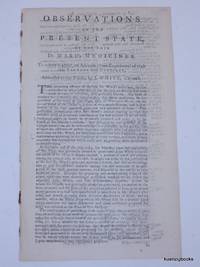
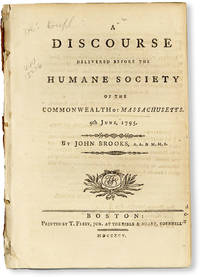
179550032Boston: T. Fleet Jun 1795. First Edition. Octavo 19.5cm.; removed; 32pp. Long shallow loss along fore-edge of title page serving as upper wrapper slightly touching text without loss of meaning else Good or better overall. Address on the state of medicine in the country by John Brooks future Governor of Massachusetts followed by appendices including correspondence with the Humane Society in London; "Premiums adjudged by the Trustees"; and a "Catalogue of the Members of the Humane Society." AUSTIN 278; ESTC W20162; EVANS 28351; SABIN 8355. T. Fleet, Jun unknown
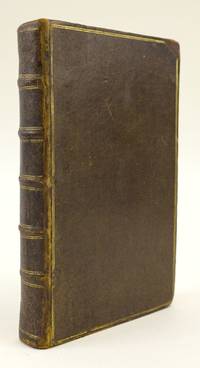
1742ST16000London: Printed for the author 1742. FIRST EDITION. 205 x 130 mm. 8 x 5". xxiv 285 1 pp. 3 leaves index. <br/> Contemporary sprinkled calf covers with double gilt-ruled borders raised bands flanked by gilt rules neatly rebacked preserving original backstrip one corner restored. Front flyleaf with ink inscription of Wm. Barber dated 1790. Weinberger "Introduction to the History of Dentistry" p. 330; Garrison-Morton 3672; Wellcome II 320; ESTC T63467. ◆Joints lightly rubbed corners a little bumped and worn but the binding solid and perfectly satisfactory; a handful of creased corners and a couple of trivial blemishes but the contents in very fine condition the paper clean and bright and obviously read very little.<br/> <br/> This is a fresh appealing copy of the first modern book on teething and the second book on dentistry in English. Weinberger says that "as far as English dental literature is concerned it began with Joseph Hurlock in 1742. Hurlock was a strong advocate of lancing the gums of infants to permit teeth to erupt more readily and thus prevent convulsions. His treatise was a plea for parents and nurses to allow him to carry out this procedure." The book documents symptoms of dentition difficulties and reports on cases in which our author lanced the gums of children whose health problems he attributed to teething trouble--not always with happy outcomes. The book does contain advice that was more beneficial. Weinberger notes "Hurlock apparently was a keen observer of dental conditions then found in children noticing that the havoc wrought by caries in the deciduous teeth was undoubtedly due to diet and recommended that such youngsters be sent to the country where fresh air and better food could be obtained." Little is known of the author who has no other works recorded in libraries or bibliographies. It has been suggested that he was related to the Joseph Hurlock 1715-93 who was a director of the East India Company. We are fortunate that Mr. Hurlock did not stint when it came to the quality of paper on which his treatise was printed; the text here has come down to us crisp and bright as a result. Printed for the author unknown
1778D19569Dublin: P. Higly 1778. First Edition. Hardcover. Good. 12mo. 223 pp. Original calf worn spine cracked. But internally in a very good state. A rare volume far more common in later editions published elsewhere. <br/><br/> P. Higly hardcover
1769224071769. Extract pp 357-379. 1 vols. 8vo. Bound in 3/4 red morocco. Extract pp 357-379. 1 vols. 8vo. <br/><br/> unknown
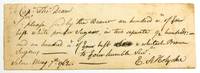
1762305478Salem MA 1762. 2 pp. pen and ink on paper. 6-1/2 x 2-1/2 inches 3-1/2 x 4-3/4 inches. Old fold minor soiling stains very good. 2 pp. pen and ink on paper. 6-1/2 x 2-1/2 inches 3-1/2 x 4-3/4 inches. These items offer a quaint glimpse of a beloved New England Physician. Edward Augustus Holyoke 1728-1829 the son of Rev. Edward Holyoke 1689-1769 and Margaret Appleton was born in Marblehead Massachusetts on August 1 1728. Holyoke moved with his family to Cambridge when his father was appointed president of Harvard and graduated from the college in 1746. After a brief tenure as a school teacher he apprenticed himself to a physician in Ipswich. He later opened his own practice in Salem where he gained his greatest notoriety as an early pioneer in small pox treatment and prevention during an outbreak in 1777. During his lifetime he would serve as president of the Massachusetts Medical Society was awarded the first M.D. degree given by Harvard Medical School and spent six years as president of the American Academy of Arts and Sciences. Holyoke continued to practice medicine in Salem until 1821 and was honored by the town during a tribute at the Essex House on his 100th birthday. <br /> <br /> 1. Autograph Document Signed. To Capt. Thos. Dean. Reading: "Sir please send by the bearer an hundred w. of your best white powder sugar in two separate 1/2 hundreds: - and an hundred w. of your best & whitest Brown Sugar - to your humble sevt. E.A. Holyoke"<br /> <br /> 2. Prescription listing four ingredients including "camomilla" and "gentian" with the directions: "Steep in one quart maderah & take a glass every noon. unknown
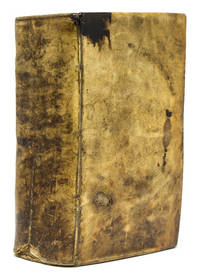
1741224902Halle: Waysenhaus 1741. Collation; 1 a-c8A-pppp8. 7 ff. 1-1232 pp. 56 ff. index. 1 vols. 8vo. Contemporary vellum soiled foot of spine worn some browning of text. A few faint contemporary ink markings in prelims. A fresh sound copy. Collation; 1 a-c8A-pppp8. 7 ff. 1-1232 pp. 56 ff. index. 1 vols. 8vo. Mid-eighteenth-century edition of this popular German medical work by Christian Friedrich Richter 1676-1711 medical doctor and theologian and medical director of the Halle orphanages.<br /> <br /> From the library of Dr. Ernst L. Wynder co-author of the first large-scale study of smoking and lung cancer JAMA 143:329 and FOUNDING EDITOR of the journal Preventive Medicine. cf. Blake 381 12th ed. Leipzig same year; Hirsch/H. IV 799 Waysenhaus] unknown
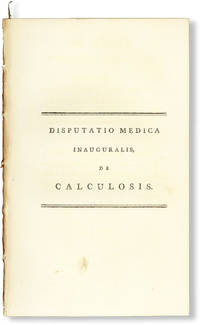
179848836Edinburgi: Alex Smellie 1798. First Edition. 12mo 19.5cm.; removed; 629pp. Old leather remnants to spine else Very Good or better retaining half title page this state with no author attribution. Medical dissertation on the instruments used to treat diseases of the kidneys. OCLC locates two copies in the United States as of April 2020 at the NLM and U. Wisconsin. ESTC T90796. Alex Smellie unknown
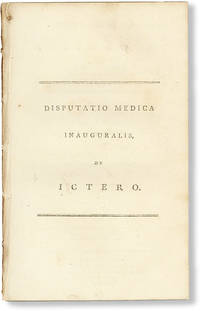
179748838Edinburgi: Robertum Allan 1797. First Edition. Octavo 19.5cm.; removed; 840pp. Old spine leather remnants else Very Good retaining half title. Medical thesis on jaundice the author later practicing medicine at Versailles following the restoration of Louis XVIII. ESTC T125835. Robertum Allan unknown
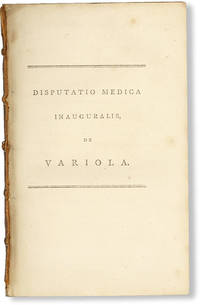
179648861Edinburgi: Robert Allan 1796. First Edition. Octavo 19.5cm.; removed but retaining half title; 849pp. Some light foxing most heavily to E1 else Very Good or better. Medical thesis on smallpox text entirely in Latin. ESTC N6282. Robert Allan unknown
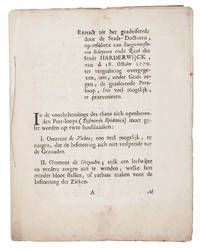
1779K9RG9WLEOJN7Harderwijk 1779. 4to. Johannes Mooijen Bound as sewn. 11 1 blank pp. First edition one of two simultaneously published issues of a decree listing the measures taken to prevent the spread of dysentery in Harderwijk.With a manuscript note on the last blank page. Slightly stained otherwise in good condition.l Cf. STCN 316330051 other issue. unknown
179060889No place Windsor Vt. Boston: Prepared by F. Newbury after 1790. printed broadside. . Fine. 8vo. First appeared in the London Times 1790. Prepared by F. Newbury, unknown
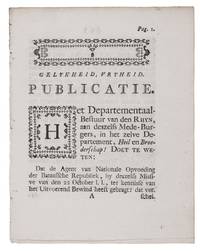
1800K9QFLQVGL7CSArnhem: Abraham van Goor 1800. Disbound. 4to. Official publication of the so-called Departement van de Rijn Gelderland and Utrecht concerning the medical exams that were going to be implemented in the region. As a result some incapable physicians apothecaries and surgeons left the cities and settled themselves in rural areas or smaller towns to avoid these exams. The present publication prohibits these "quacks" to sell any of their goods or services and prohibits newspapers to advertise for any of these goods. In very good condition.l STCN 238642259 2 copies. Abraham van Goor, unknown
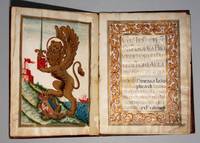
17175670<p>4to manuscript on vellum 23.5 x 17.1 cm 7 ff. 4 ff. vellum blanks including a full-page frontispiece illumination of Venetian Lion of St. Mark each text page with foliate borders in gold ink headings and initials in gold ink. Bound in contemporary Venetian morocco elaborately gold tooled gold block-printed foliate pastedowns. Edge wear and minor rubbing to spine and boards manuscript loose in binding oxidizing to edges of pastedowns. Marginal flaws to frontispiece illumination just touching border in places a few small wormholes elsewhere minor handsoiling.<br /></p><p>Finely illuminated early 18th-century Venetian manuscript issued by the city's Magistrato alla Sanità Health Department as a license to certify the physician Antonio Damugliano d. 1747 to practice medicine in the Venetian Republic using his propriety formula for topical salves <i>balsami</i> to treat "wounds and ulcers" f. 3v-3r. The manuscript ornately written out and decorated in gold and colored ink opens with a full-page image of the winged Lion of San Marco in the Venetian landscape which serves as an official seal of the document's authenticity and is inscribed by five <i>Provveditori</i> of the Magistrato and one notary who witnessed the certification.</p><p>This pharmaceutical license represents a rare material survival of how Venice's Magistrato alla Sanità regulated the practice of medicine in its territories even down to the level of controlling how individual practitioners could work with specific drugs. Damugliano presumably was required to keep the document on his person while plying his trade and to present it to the relevant authorities or even to his patients should his practice be called into question. The text of the document is written out twice – first in Italian and then in Latin – to suit the linguistic preferences of both the common Venetian citizen and the professional medical class.</p><p>Damugliano also known as Antimo Damulianos is noted in the document dated April 1717 as being a native of the Ionian island of Zante or Zakynthos at the time a Venetian colony and having recently returned from Moscow "where with good success and for a long time he practiced medicine with full official permission of many noteworthy people" f. 2v. Damugliano is said to have studied medicine in Europe likely in Italy specializing in contagious diseases and eventually practicing in Asia Minor Persia India China Egypt Constantinople and Trieste and to have been ordered by Emperor Charles VI 1685-1740 to treat the sick of a plague outbreak in Corinth see L. Zoes passim. Damugliano's name is also associated with a 1725 treatise entitled 'Medicina' which circulated in manuscript form in Venice and dealt with the use of salves pills and stones to treat hydrophobia see L. Zoes; we have been unable to locate a copy of this treatise. Damugliano is also recorded as having worked in Vienna where an April 1746 news magazine comments that the "very famous" Damugliano having traveled through numerous kingdoms has arrived to demonstrate the curative powers of "the wondrous Chinese stone called Bezoar" which is effective against fevers snake bites fatigue colic etc. <i>Nachtrag</i> p. 64. The bezoar stone an indigestible mass formed in the digestive tract of ruminants was lauded from the middle ages as a universal antidote to poison.</p><p> R. Palmer "Pharmacy in the Republic of Venice in the Sixteenth Century" in A. Wear et al. eds. <i>The Medical Renaissance of the Sixteenth Century</i> pp. 100-17; <i>Epeteris: Hetaireia Byzantinon Spoudon</i> vol. 43-44 1977 p. 417; H. Schmuck <i>Grieschischer Biographischer Index</i> vol. 1 p. 247; L. Zoes <i>Lexikon historikon kai laographikon Zakynthou</i> vol. 1; S. Carbone <i>Provveditori e sopraprovveditori alla Santità della Repubblica di Venezia</i>; P. Selmi "Il Magistrato all Sanità" in <i>Difesa della Sanità a Venezia Secoli XIII-XIX</i> pp. 28-50; <i>Nachtrag zu denen wöchentlich-kurtzgefaßter historischer Nachrichten Der neuern Europäischen Begebenheiten auf das Jahr 1746</i> p. 64.</p>
1775SZEPEBKS007513INapoli: Vincenzo Manfredi both 1775 and 1776 1775. Hardcover. Good. Small 12mo. - xv5108;751 pp. - Early 1/2-leather black title in gilt on spine with 6 gilt bands marbled boards corners somewhat worn else fine. - Interior has some light water spots on last 9 leaves else fine. - With an armorial bookplate and a label "Ex-libris Marini". - Zeviani 1725-1808 was an eminent physician in Verona and the author of many noted medical books. <br/> <br/> Vincenzo Manfredi (both) 1775 and 1776 hardcover
177910470Yverdon .et Paris: P. Fr. Didot le jeune. and Méquignon l'aîné 1779. First edition. xii 130 2 pp. 1 vols. 12mo. Contemporary quarter leather and boards slightly rubbed fine copy bound with two other titles see below. First edition. xii 130 2 pp. 1 vols. 12mo. Rare treatise on Rabies by this surgeon physician 1742-1832 and author of several medical treatises including a six volume History of Anatomy and Surgery Paris 1770-73. Bound with two other works:<br /> <br /> 2 Levret André 1703-1780. Observations sur l'Alaitement des Enfans.132pp. 8vo Paris: Chez Méquignon 1781. First Edition. Rare work by this obstetrician and pediatrician who according to Garrison-Morton "improved the obstetric forceps and was a famous teacher in Paris." Not in NLM; not in NUC nor RLIN.<br /> <br /> 3 Maret Hugues 1726-1786. Mémoire dans lequel on cherche à déterminer quelle influence les mœurs des François ont sur leur santé.4 159 3 pp. 8vo Amiens: chez la veuve Godard 1772. First Edition. NLM 18th-C. p. 287. Fascinating essay on a subject much in the news today. NLM 18th-C. p. 359 P. Fr. Didot le jeune... and Méquignon l'aîné unknown
177525679London : np 1775. First Edition. Disbound. Very Good. First Edition. 1-4 pp. 8vo. Extracted from a bound volume with offsetting on the last page indicating it was bound opposite the September 1770 issue title page of Gentleman's Magazine. Small marginal hole not affecting text. Disbound. Caption title from page one. English Short Title Catalog N12918. Blake J. NLM 18th cent.; p. 488 both copies at NLM are extracts. While well represented in digital form this title is only found at the National Library of Medicine from what we have been able to determine which guesses that the publication date is 1775. Our copy with the offsetting from a September 1770 title page may help in further scholarship on the date of publication. np unknown
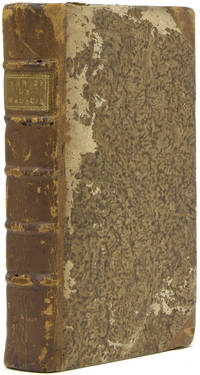
17079585London: Printed by T. Dawks for R. Chiswell M. Wotton et al. 1707. The Seventh edition corrected and amended. 8vo 877pp plus 3pp errata and ads at rear. Table of characters at front printed in two columns index at rear. Contemporary paneled calf red morocco spine label gilt tooled board edges. Expertly rebacked with original spine laid down and likely a newer label. Boards moderately rubbed. Corner chip to front endpaper title and prelims a bit soiled mild foxing throughout. An attractive copy. <br /> <br /> Very nice copy of William Salmon's eccentric and popular London Dispensatory which blended vernacular medicine with Galenic practice and Paracelsian alchemy. This is a greatly expanded edition from the original 1676 issue which consisted of only 3 parts. Though it was not sanctioned by the College of Physicians Salmon's anti-establishment writing gave the book a broader and more accessible appeal. It went through numerous editions and was widely used by apothecaries surgeons and independent practitioners alike. <br /> <br /> <br /> A cornerstone English medical compendium with fringe elements and in an attractive contemporary binding. . Printed by T. Dawks for R. Chiswell, M. Wotton, et al. unknown
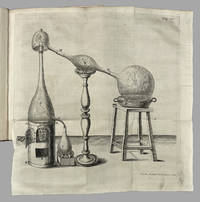
173685<p>EXTREMELY RARE ILLUSTRATED FIRST EDITION OF THE RENOWNED "PHARMACOPOEA TAURINENSIS"</p><p>MEDICAL/GASTRONOMICAL RECEIPT BOOKS PRINTED IN TORINO CONTAINING NUMEROUS RECIPES OF SPIRITS AND LIQUORS</p><p>THE FIRST APPEARANCE OF THE <em>VERMOUTH </em>RECIPE<br /><em><br />Pharmacopœa Taurinensis nunc primum edita jussu augustissimi regis. </em>Augustae Taurinorum : in Aedibus Academicis apud Joannem-Baptistam Chais typographum regium 1736.<br /><br />4to 238 x 180 mm contemporary stiff vellum title on leather label at spine pp. 8 246 16 Coat of arms of the House of Savoy at title page woodcut head-pieces and head-letters woodcut <em>cul-de-lampe<br /><br /></em>TWO LARGE ENGRAVED FOLDING PLATES 46X34 CM BY THE FRENCH ARTIST GEORGES TASNIERE ACTIVE IN TORINO AND WIEN DEPICTING THE DISTILLATORY APPARATUS NECESSARY FOR THE <em>SPIRITUS SULPHURIS</em> PLATE I AND <em>THE SPIRITUS VINI</em> PLATE II. THE PLATE II IS EXYTREMELY RARE BEING NOT PRESENT IN THE majority of the COPIES OFFERED ON THE MARKET IN THE LAST YEARS.<br /><br />The two plates were in fact meant to be used as project drawings to develop the instruments to perform distillation and so very often detached from the book.<br /><br />Officially presented in Turin by Antonio Battista Carpano in 1786 and based on the receipt of "<em>Vinum Absinthites</em>" Absinthe Wine described for the first time in the present book the <em>Vermouth</em> quickly become one of the best known liquor in the world and Vittorio Emanuele III di Savoia Victor Emmanuel III of Italy immediately appointed it as the "Official Aperitif" of the Court of Savoy.<br /><br />The <em>Pharmacopœa Taurinensis </em>is a complete and detailed illustrated spagyrical manual containing the most important and renowned receipts of the Savoy tradition and many spirits including the first receipt of the Vermouth. Many of the receipts originally meant to be used a medicine have also a great interest from a gastronomical point of view.<br /><br />The manual is formed by two parts; the first contains a list in alphabetical order of all the most important medicinal substances known at the time while the second composed by 21 chapters contains a rich and complete list of receipt regarding Essences Brews Decoctions Conserves Syrups Powders Liquors Oils Ointments Poultices<br /><br /></p><p>In the second half of the 18th century the town of Torino Piedmont Italy was already the main market in the production of flavored sweet wines to be used use as simple drugs. Pandering this market the <em>Pharmacopoea Taurinensis</em> gives a large list of recipes recommended for many diseases. It is also described for the first time the original recipe of vermouth that will have a great spread not only as medicinal elixir but also as a delicious drink.</p><p>Its diffusion was so great that the Duke Vittorio Amedeo III of Savoy declared the vermouth the "Court's Official Aperitive" preferring it to the "rosolio" the so far favorite liquor of Piedmont aristocracy.</p><p>Many local liqueurs makers claimed its making but as shows its presence in this book the proceeding was diffusely applied in Torino for many years before Benedetto Carpano in 1786 claimed its fabrication. Carpano developed his own recipe to face the increasing tax imposed by French and Spain on drugs so far used to produce sweet wines in Italy followed by all the other vermouth maker among them Martini e Cinzano.</p><p>The most important producers had their shop in the center of Torino where the bourgeoisie of the town went to celebrate the rite of the aperitive. From Torino the vogue of vermouth spread all over Europe as a typical Piedmont drink and contributed to the great industrialization process of Torino.</p><p>Provenance: I. Ownership signature <em>Rumianus Michael Antonius Chirurgus 1797</em> at title page and flyleaf. II. Paper <em>exlibris "Biblioteca di Pier Paolo Vaccarino"</em> pasted at front inside board</p> Joannem-Baptistam Chais hardcover
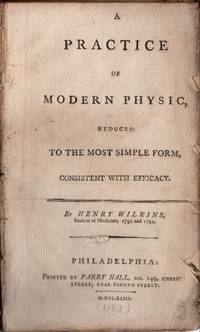
17931787<p>This First Edition copy of<strong> A Practice of Modern Physic Reduced To The Most Simple Form Consistent With Efficacy by Henry Wilkins Student of Medicine 1791 and 1792 </strong>was published and printed by Parry Hall of Philadelphia in 1793. The book which measures approximately 4 inches wide by 6 ½ inches tall by ½ inch thick contains 94 pages of text devoted to descriptions of the causes symptoms management and cures for all sorts of diseases and health problems. It is probable that several pages of the book may be missing such as pages 4-5 which appears to have been cut out and 2 or more pages at the end of the book that would have better completed the book's text.</p><p>The book is hard bound in brown cloth covered boards which are in poor condition with wear on all surfaces a semi-detached front cover and a break in the spine cover. The pages of the book show the signs of aging with tanning brittleness along the edges and instances of detached or semi-detached pages or page groups. The text however is clear and easy to read. The overall condition of the book is fair.</p><p>There are three inscriptions on the front free end papers. The first two on a deeply darkened page read<em> "Dr. John Worthington from his friend H. Wilkins"</em> and the second<em> "From your friend Lyde Goodwin to Ebin. H. Win.".</em> On the following sheet the Goodwin inscription is repeated in a more easily read form as <em>"From your friend Lyde Goodwin of Baltimore to Ebin. H. Min. - June 1805".</em></p><p>The illustrations accompanying this description show the book's covers the Title page one inscription page and one typical 2-page spread of text.</p> Parry Hall hardcover
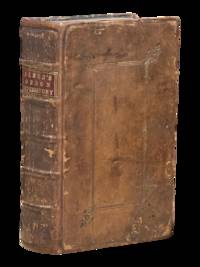
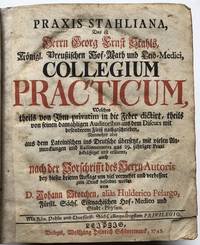
1745H5068Leipzig: Wolfgang Heinrich Schönermarck 1745. Hardcover. Good. 3rd edition 1745. Thick small quarto 8.5 inches 21.5 cm good copy lacking front flyleaf last two pages of index with edgewear binding good but dry and rubbed with some loss of leather to bottom edges of boards light wear and loss to rear board contents otherwise very good and complete. 12 1440 44 pp. Text in German. Wolfgang Heinrich Schönermarck hardcover
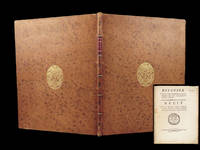
177729277<p>Printed in Paris by Quillau in 1777 this volume documents one of the earliest landmarks in modern obstetrics. Issued by the Faculté de médecine de Paris it reports the successful symphysiotomy performed on Madame Souchot intended as an alternative to the Caesarean section in obstructed childbirth. The first section contains the proceedings of the Faculty printed in both Latin and French while the second part includes the memoir of Dr. Jean-René Sigault who described the procedure in detail and addressed its clinical application. Bound in contemporary leather with gilt stamp on the front cover the book remains tight and secure with only minimal rubbing along the extremities. Quarto format 10.5 x 8.25 inches 26.7 x 21 cm. Collation: Part I 13 pp; Part II 16 pp. First edition. #29277 PHOTOS AVAILABLE UPON REQUEST.</p> Impr. de Quillau hardcover
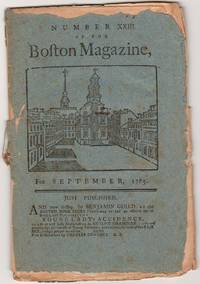
17853784<b><i>Founding of Harvard Medical School</i></b><br /><br /><i>The Boston Magazine</i> was published from October 1783 to December 1786 and was the first magazine to be published in Boston in the aftermath of the American Revolution. A major attraction of this issue is the presence of the front and rear printed wrappers although they are frayed and detached. The front wrapper features a large woodcut of the State House and surrounding buildings in Boston.The first 3 1/2 pages of the<i> Magazine</i> are Harvard's announcement from September 1783 of the creation of "the Medical Institution" now known as Harvard Medical School. This is followed by about two pages of an address "to the students in physic" i.e. the medical students reflecting upon the first two years of the medical school and outlining the requirements for a medical degree. About two pages are devoted to the sailing directions into and out of Plymouth Harbour. A brief news item in the "Monthly Chronology" reports a meeting to be held in October in Falmouth in the District of Maine on creating a "separate government" for the eastern counties -- a very early report on a separation that would not happen for another 35 years. Issues of <i>The Boston Magazine</i> in the original wrappers are extremely uncommon.<b>References</b>: Mott<i> A History of American Magazines 1741-1850</i>: Vol. I p. 28. Richardson <i>A History of Early American Magazines 1741-1789</i>: pp. 212-227. Lomazow <i>American Periodicals</i>: 15. <br /><br /><br /><b>Condition:</b> Signatures loose. Front and back wrappers present but frayed and detached; top 1/2" or so of front wrapper lacking. Occasional spotting. Interior pages very good. ICN 2933. Printed and published by Edmund Freeman
17979625Breslau: Wilhelm Gottlieb Korn 1797. First edition. 8vo 1 257pp. Folding plate at rear engraved title page text in German. Plain paper binding bound without endpapers with manuscript title on front and spine. Bookplate of Waldemar Schwalbe on front pastedown and stamp on title. Damp stain to top edge of plate marginal. Text clean. Boards stained along spine. A very good copy. <br /> <br /> An early work on the common ailments and diseases of the horse by German physician Georg Philipp Mogalla 1766-1831. This was published in 2 volumes and acted as a handbook/guide with a more systematic approach and organization to correspond with the advancement in the field. A practical and appealing example of early veterinary literature bridging traditional horse doctoring and the beginnings of modern equine medicine. Scarce. Wilhelm Gottlieb Korn unknown