VUE D'OPTIQUEBiblio.com
3 191 résultats
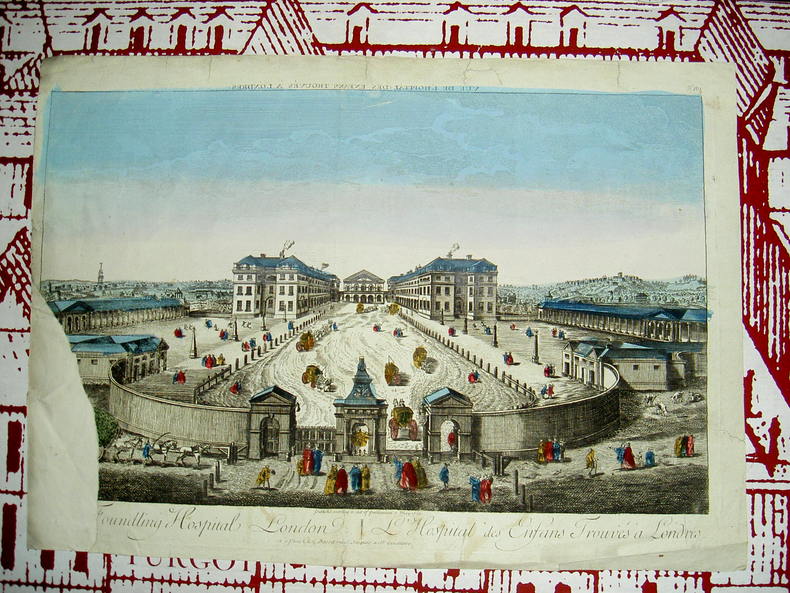
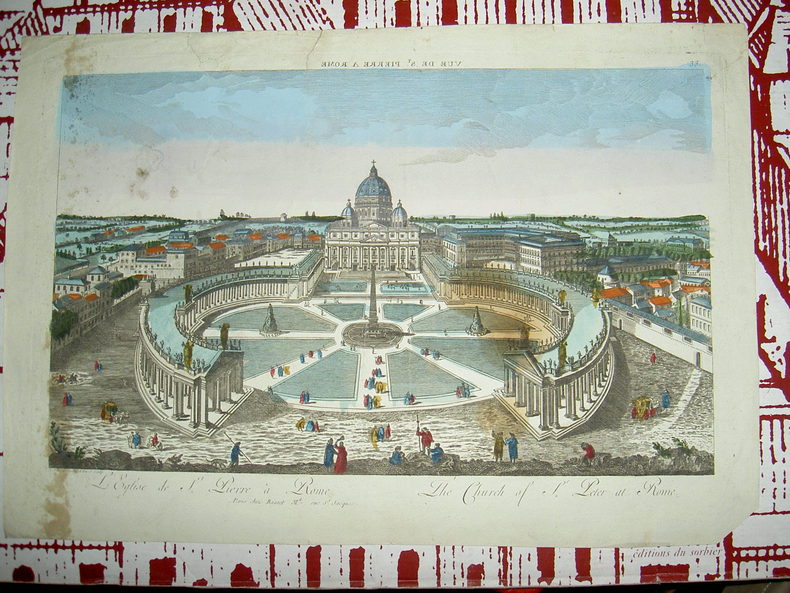
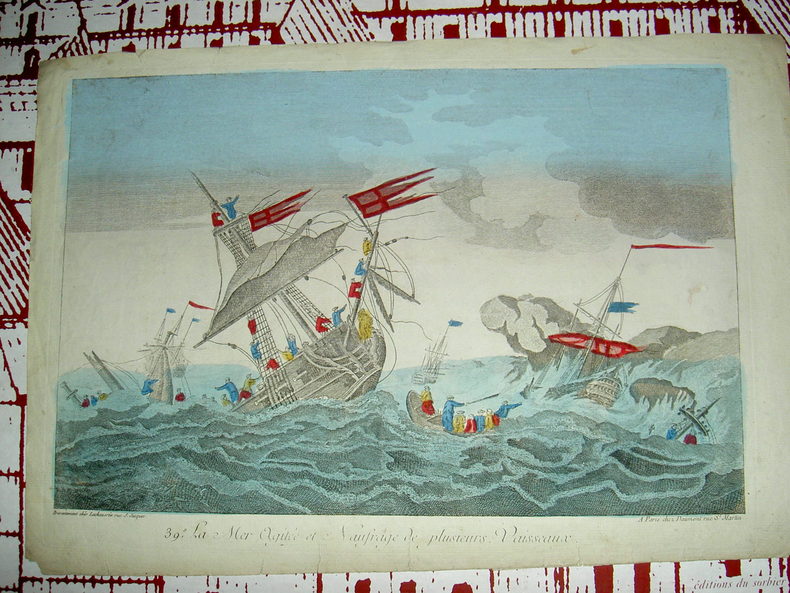
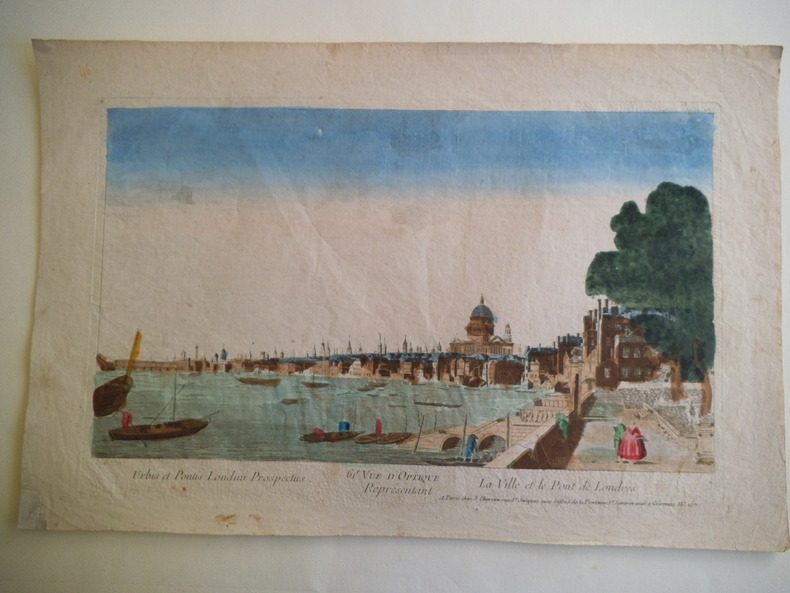
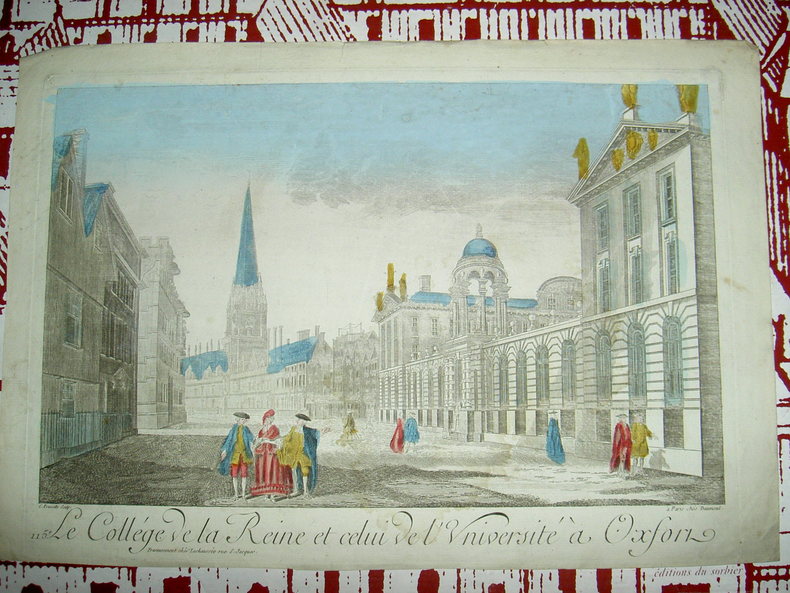
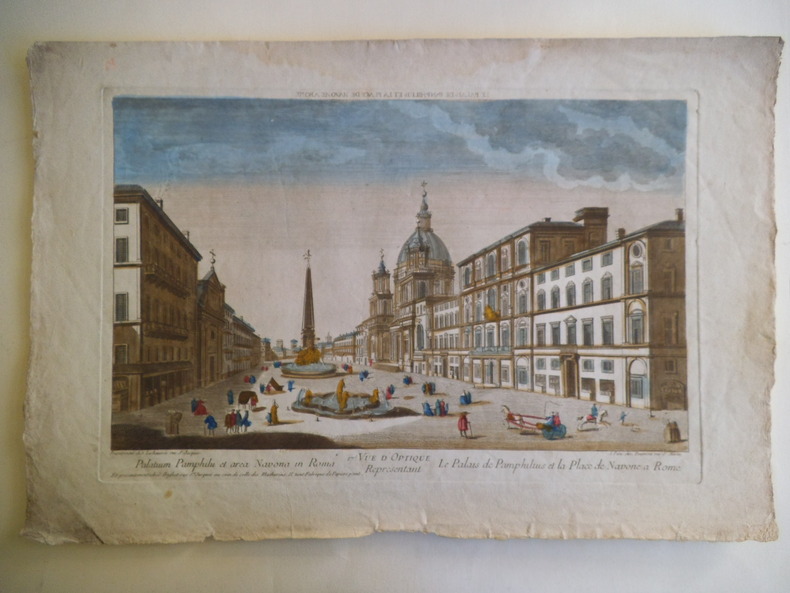
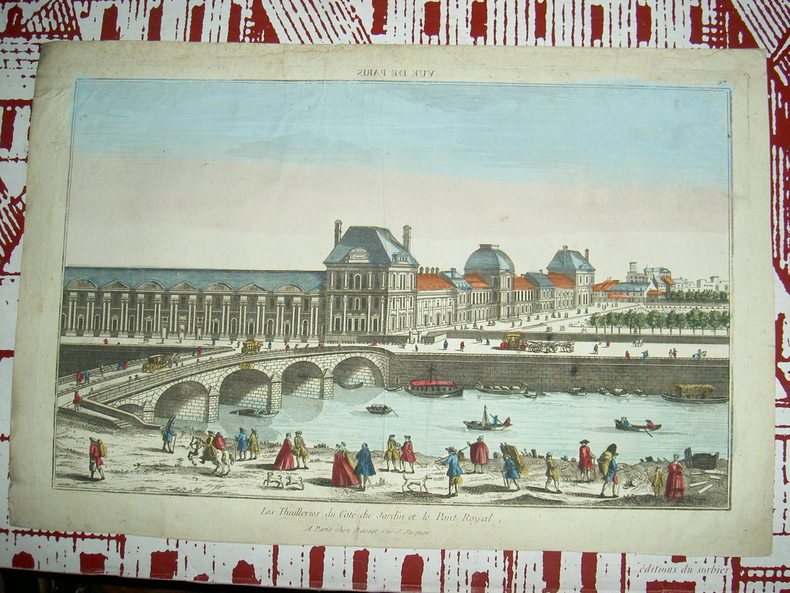
176010384Paris: chez Daumont rue St. Martin 1760. Engraving with original colour. Printed on watermarked laid paper. In excellent condition with the exception of some surface soiling in the upper section of the image. Image size: 8 7/8 x 15 13/16 inches. A wonderful "vue d'optique" of St. Mary's Church in London<br/> <br/> During the eighteenth century "vues d'optique" or "perspective views" became extremely popular in England and Europe. Like other optical prints they capitalized on a connoisseur market eager for the latest novelty. English publishers such as John Bowles and Robert Sayer had great success with these optical views which quickly developed into a collecting craze that swept through print shops on both sides of the Channel. "Vues d'optiques" were specifically designed to create the illusion of perspective when viewed with a zograscope or perspective glass. These viewing devices used a series of reflecting mirrors to enhance the illusion of depth in the print creating a veritable "view" for the onlooker. Typically these prints depicted city or landscape views and were horizontal in format. They had roughly the same dimensions and were sold with heavy opaque colouring so as to show the tints when viewed through the lens. In their heyday optical prints were a technical revolution; they could be seen in almost every fashionable drawing room and were enjoyed by the poorer classes in print shops or at traveling fairs. For a small fee the citizens of Europe and England could travel the world without leaving their village. The "vue d'optique" was the first medium to bring the visible appearance of the wider world to a large European public. Ironically the artists and engravers who created these prints rarely had first hand knowledge of the scenes depicted hence the views were often not as accurate as they were advertised to be. As a result of their constant handling optical prints such as these are rare especially in good condition. They are not only beautiful images but a fascinating glimpse into the history of printmaking.<br/> <br/> Clayton The English Print 1688-1802 140-141. chez Daumont rue St. Martin unknown
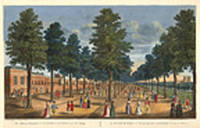
180010694London: Printed for Bowles & Carver No. 69 St. Pauls Church Yard 1800. Engraving with beautiful hand-colour. In excellent condition with the exception of tape on the verso of sheet. Image size: 9 3/8 x 15 3/4 inches. Vue d'Optique of the Royal Palace in St. James' Park in London<br/> <br/> During the eighteenth century "vues d'optique" or "perspective views" became extremely popular in England and Europe. Like other optical prints they capitalized on a connoisseur market eager for the latest novelty. English publishers such as John Bowles and Robert Sayer had great success with these optical views which quickly developed into a collecting craze that swept through print shops on both sides of the Channel. "Vues d'optiques" were specifically designed to create the illusion of perspective when viewed with a zograscope or perspective glass. These viewing devices used a series of reflecting mirrors to enhance the illusion of depth in the print creating a veritable "view" for the onlooker. Typically these prints depicted city or landscape views and were horizontal in format. They had roughly the same dimensions and were sold with heavy opaque colouring so as to show the tints when viewed through the lens. In their heyday optical prints were a technical revolution; they could be seen in almost every fashionable drawing room and were enjoyed by the poorer classes in print shops or at traveling fairs. For a small fee the citizens of Europe and England could travel the world without leaving their village. The "vue d'optique" was the first medium to bring the visible appearance of the wider world to a large European public. Ironically the artists and engravers who created these prints rarely had first hand knowledge of the scenes depicted hence the views were often not as accurate as they were advertised to be. As a result of their constant handling optical prints such as these are rare especially in good condition. They are not only beautiful images but a fascinating glimpse into the history of printmaking.<br/> <br/> Clayton The English Print 1688-1802 140-141. Printed for Bowles & Carver, No. 69 St. Pauls Church Yard unknown
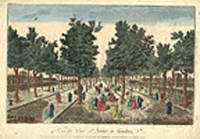
178010559Paris: Chez. Daumont rue St. Martin. Presentement chés Lachaussée rue S. Jacques 1780. Engraving with original colour. Printed on wove paper. This is a later copy of the earlier print of St. James' published by Daumont. In good condition with the exception of some scattered brown marks. Trimmed within the platemark. Image size: 9 1/4 x 14 1/2 inches. Vue d'Optique of St. James' Park in London<br/> <br/> During the eighteenth century "vues d'optique" or "perspective views" became extremely popular in England and Europe. Like other optical prints they capitalized on a connoisseur market eager for the latest novelty. English publishers such as John Bowles and Robert Sayer had great success with these optical views which quickly developed into a collecting craze that swept through print shops on both sides of the Channel. "Vues d'optiques" were specifically designed to create the illusion of perspective when viewed with a zograscope or perspective glass. These viewing devices used a series of reflecting mirrors to enhance the illusion of depth in the print creating a veritable "view" for the onlooker. Typically these prints depicted city or landscape views and were horizontal in format. They had roughly the same dimensions and were sold with heavy opaque colouring so as to show the tints when viewed through the lens. In their heyday optical prints were a technical revolution; they could be seen in almost every fashionable drawing room and were enjoyed by the poorer classes in print shops or at traveling fairs. For a small fee the citizens of Europe and England could travel the world without leaving their village. The "vue d'optique" was the first medium to bring the visible appearance of the wider world to a large European public. Ironically the artists and engravers who created these prints rarely had first hand knowledge of the scenes depicted hence the views were often not as accurate as they were advertised to be. As a result of their constant handling optical prints such as these are rare especially in good condition. They are not only beautiful images but a fascinating glimpse into the history of printmaking.<br/> <br/> Clayton The English Print 1688-1802 140-141. Chez. Daumont rue St. Martin. Presentement chés Lachaussée rue S. Jacques unknown
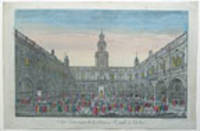
177015059Paris: Chez Daumont rue St. Martin 1770. Engraving with beautiful early colour. Printed on watermarked laid paper. In excellent condition with the exception of being trimmed within the platemark on the lower margin. Small tear on upper margin. Small puncture mark on left margin. Image size: 10 1/8 x 16 1/8 inches. This is a beautiful perspective view of the courtyard of the Royal Stock Exchange in London published by a Parisian printseller at the close of the eighteenth century.<br/> <br/> During the eighteenth century "vues d'optique" or "perspective views" became extremely popular in England and Europe. Like other optical prints they capitalized on a connoisseur market eager for the latest novelty. English publishers such as John Bowles and Robert Sayer had great success with these optical views which quickly developed into a collecting craze that swept through print shops on both sides of the Channel. "Vues d'optiques" were specifically designed to create the illusion of perspective when viewed with a zograscope or perspective glass. These viewing devices used a series of reflecting mirrors to enhance the illusion of depth in the print creating a veritable "view" for the onlooker. Typically these prints depicted city or landscape views and were horizontal in format. They had roughly the same dimensions and were sold with heavy opaque colouring so as to show the tints when viewed through the lens. In their heyday optical prints were a technical revolution; they could be seen in almost every fashionable drawing room and were enjoyed by the poorer classes in print shops or at traveling fairs. For a small fee the citizens of Europe and England could travel the world without leaving their village. The "vue d'optique" was the first medium to bring the visible appearance of the wider world to a large European public. Ironically the artists and engravers who created these prints rarely had first hand knowledge of the scenes depicted hence the views were often not as accurate as they were advertised to be. As a result of their constant handling optical prints such as these are rare especially in good condition. They are not only beautiful images but a fascinating glimpse into the history of printmaking.<br/> <br/> Clayton The English Print 1688-1802 140-141. Chez Daumont rue St. Martin unknown
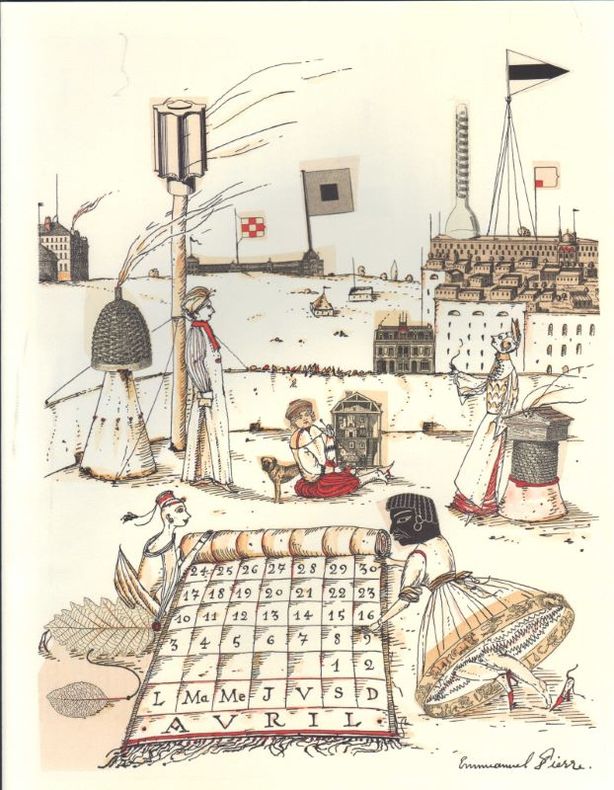
1999221681999 Collage, encre de Chine et aquarelle, signée en bas à droite, 1999, 40 x 30 cm.
1780LBW-6283[circa 1780]. 266 x 383 mm.
18555,Reims, A. Borderia, Photographe-Editeur sans date, circa 1898, pp., 1 vol. in folio oblong relié demi-toile, cartonnage editeur, le plat superieur est illustre, en couleurs, d'une scene d'agapes champenoise en plein air, sous une tonnelle, au coeur des 'galipes'. Cet ouvrage comprend 1 titre, 16 reproductions photographiques d'apres les cliches de A. Borderia, representant les principaux 'vignobles grand cru' en 1887 : Ay, Mareuil-sur-Ay, Rilly, Avenay, Verzenay, Hautvillers, Cumieres, Bouzy, Ambonnay, Mailly, Verzy, Avize, Cramant, Le Mesnil-sur-Oger, Vertus et 1 reproduction sur la manutention des vins de Champagne en 1889 . Bel exemplaire, temoignage photographique tres rare des vignobles champenois a la fin du 19ème siècle.
1991252001991-2013 Calendrier Vue sur la Ville, Paris, 2000, grand in-4, (36 x 28 cm.), couverture en relief titrée.
8625Eau-forte du XVIIIème siècle, en couleurs.435x255mm à la cuvette,501x320mm avec marge Quelques petits raccommodages en marge.Dont une plus importante en marge supérieure A Paris Chez CHERAU
16666Paris, 2012 Errance 256 p., broché. 16 x 24
1866AUB-5389Paris, J.-B. Baillière et Fils 1866 (4e éd.). Bon exemplaire broché, in-8, 320 pages.
8662Eau-forte du XVIIIème siècle, en couleurs. 290x422mm à la cuvette, 520x335mm avec la marge. A Paris J Chereau rue St jacques.Epreuve sur vergé fort.
1972R160015916La Pensée Universelle. 1972. In-12. Broché. Bon état, Couv. légèrement passée, Dos satisfaisant, Intérieur frais. 188 pages.. . . . Classification Dewey : 840-Littératures des langues romanes. Littérature française
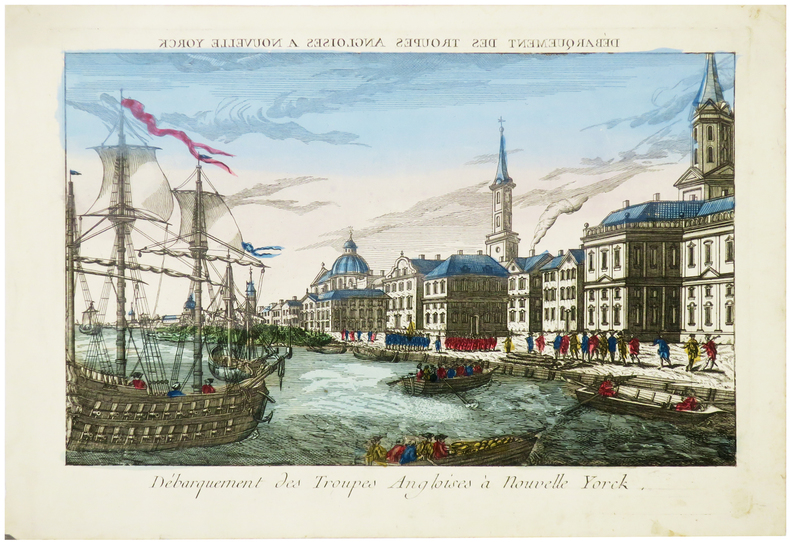
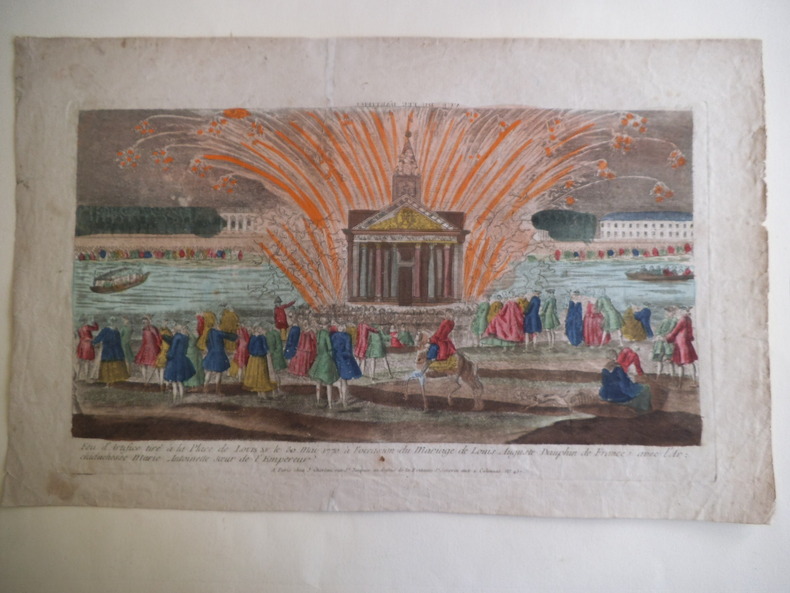
vue_opt_042.jpegVue d'Optique du dix-huitième siècle
vue_opt_099.jpegVue d'Optique du dix-huitième siècle
vue_opt_090.jpegVue d'Optique du dix-huitième siècle
ORD-14682A Paris. chez Daumont rue St Martin. s.d. (fin XVIII°, vers 1780). Dimensions de la feuille 461 x 290mm, dimensions de la gravure 426 x 273mm, cuvette comprise. Estampe couleurs, Petit accident à un coin, pli à un autre sans atteinte à la gravure, qq. petits trous de vers visibles seulement à la lumière. Image très animée.
ORD-14683A Paris. chez Daumont rue St Martin. s.d. (fin XVIII° vers 1780). Dimensions de la feuille 520 x 346mm, dimensions de la gravure 430 x 268mm, cuvette comprise. Estampe couleurs, bords de feuille un peu salis, intérieur très correct malgré de tout petits trous de vers visibles seulement à la lumière. Bel exemplaire.
vue_opt_062.jpegVue d'Optique du dix-huitième siècle
8641Eau-forte du XVIIIème siècle,en couleurs.390x250mm à la cuvette et 465x300mm avec la marge.A Paris Chez Jacques Chereau marchand d’estampes
vue_opt_081.jpegVue d'Optique du dix-huitième siècle
8640Eau-forte du XVIIIème siècle, en couleurs. A Paris chez Daumont.430x29mm à la cuvette et 505x345mm avec la marge. Petite déchirure réparée. Sinon bon épreuve, coloris frais
8666eau forte du XVIIIème siècle, en couleurs 430x275mm à la cuvette et 530x345mm avec la marge. A Paris chez Daumont-se trouve aussi chez Lachaussée, chez Basset.
vue_opt_064.jpegVue d'Optique du dix-huitième siècle
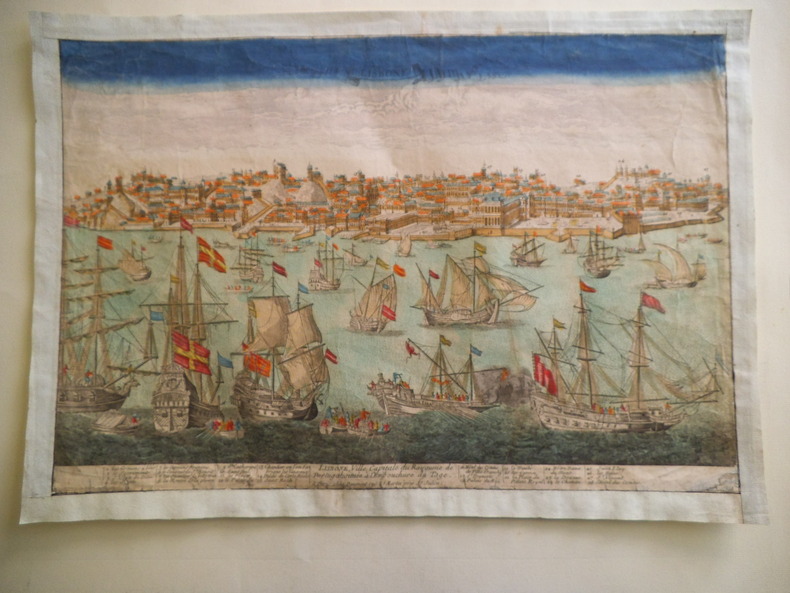
8568ville capitale du Royaume de Portugal, située à l’embouchure du Tage 515x345mm et 554x390mm avec marges. Graure du XVIIème siècle en couleurs,rehaussée.Renmargée, quelques déchirures réparées.Dans l’état.Très décorative