62 résultats
194148COPYRIGHT 1899; MEADVILLE PA. NEW YORK CHICAGO & LONDON UNDERWOOD AND UNDERWOOD. TWO PANORAMIC PHOTO VIEWS OF GLACIER POINT YOSEMITE VALLEY CALIFORNIA TO BE USED IN A STEREO VIEWER; 3 3/8" X 6 7/8"; NUMBER 5004 VERY GOOD. COPYRIGHT 1899; MEADVILLE, PA. NEW YORK, CHICAGO, & LONDON, UNDERWOOD AND UNDERWOOD unknown books
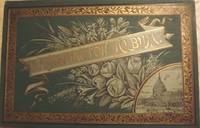
1890450151890. WASHINGTON DC VIEW BOOK. WASHINGTON VICTORIAN SOUVENIR VIEW ALBUM. Portland Maine: Chisholm Brothers 1890. A Charles Frey Souvenir Album. Oblong 16mo. pictorial green cloth stamped in gilt & white. First Edition. Contains dozens of Washington DC images. Very Good bright. $75.00. <br/><br/> hardcover books
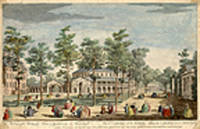
175110664London: Printed for & Sold by Rob. Sayer at the Golden Buck opposite Fetter Lane Fleet Street. & Hen. Overton at the White Horse without Newgate 1751. Engraved by N. Parr after Canaleti. Engraving with original colour. Printed on laid paper. In good condition with the exception of being trimmed within the platemark. Corners are stained. Image size: 9 3/16 x 15 3/16 inches. A beautiful Vue d'Optique of the Rotunda House at Ranelagh.<br/> <br/>During the eighteenth century "vues d'optique" or "perspective views" became extremely popular in England and Europe. Like other optical prints they capitalized on a connoisseur market eager for the latest novelty. English publishers such as John Bowles and Robert Sayer had great success with these optical views which quickly developed into a collecting craze that swept through print shops on both sides of the Channel. "Vues d'optiques" were specifically designed to create the illusion of perspective when viewed with a zograscope or perspective glass. These viewing devices used a series of reflecting mirrors to enhance the illusion of depth in the print creating a veritable "view" for the onlooker. Typically these prints depicted city or landscape views and were horizontal in format. They had roughly the same dimensions and were sold with heavy opaque colouring so as to show the tints when viewed through the lens. In their heyday optical prints were a technical revolution; they could be seen in almost every fashionable drawing room and were enjoyed by the poorer classes in print shops or at traveling fairs. For a small fee the citizens of Europe and England could travel the world without leaving their village. The "vue d'optique" was the first medium to bring the visible appearance of the wider world to a large European public. Ironically the artists and engravers who created these prints rarely had first hand knowledge of the scenes depicted hence the views were often not as accurate as they were advertised to be. As a result of their constant handling optical prints such as these are rare especially in good condition. They are not only beautiful images but a fascinating glimpse into the history of printmaking.<br/> <br/>Clayton The English Print 1688-1802 140-141. Printed for & Sold by Rob. Sayer at the Golden Buck, opposite Fetter Lane, Fleet Street. & Hen. Overton at the White Horse witho unknown books
176618808London and Paris: a Londres ches Wichnyther A Paris chez J. Chereau rue St. Jacques au dessus de la Fontaine St. Severin aux 2 Colonnes No. 257 1766. Engraving with original colour. Printed on laid paper. In good condition with mild soiling and creasing. A beautiful Vue d'Optique with strong early colour depicting the old Palace of Westminster where the Lords and Commons met.<br/> <br/>An interesting late 18th century view of Westminster prior to the great fire of 1834 which brought into being the present Houses of Parliament. Westminster had been a royal residence until Henry VIII left it after a fire to reside at Whitehall. After that the Houses of Parliament met there. During the eighteenth century "vues d'optique" or "perspective views" became extremely popular in England and Europe. Like other optical prints they capitalized on a connoisseur market eager for the latest novelty. English publishers such as John Bowles and Robert Sayer had great success with these optical views which quickly developed into a collecting craze that swept through print shops on both sides of the Channel. "Vues d'optiques" were specifically designed to create the illusion of perspective when viewed with a zograscope or perspective glass. These viewing devices used a series of reflecting mirrors to enhance the illusion of depth in the print creating a veritable "view" for the onlooker. Typically these prints depicted city or landscape views and were horizontal in format. They had roughly the same dimensions and were sold with heavy opaque colouring so as to show the tints when viewed through the lens. In their heyday optical prints were a technical revolution; they could be seen in almost every fashionable drawing room and were enjoyed by the poorer classes in print shops or at traveling fairs. For a small fee the citizens of Europe and England could travel the world without leaving their village. The "vue d'optique" was the first medium to bring the visible appearance of the wider world to a large European public. Ironically the artists and engravers who created these prints rarely had first hand knowledge of the scenes depicted hence the views were often not as accurate as they were advertised to be. As a result of their constant handling optical prints such as these are rare especially in good condition. They are not only beautiful images but a fascinating glimpse into the history of printmaking.<br/> <br/>Clayton The English Print 1688-1802 140-141. a Londres ches Wichnyther (?) A Paris chez J. Chereau rue St. Jacques au dessus de la Fontaine St. Severin aux 2 Colonnes No. 25 unknown books
1760103861760. Engraving with original colour. Printed on laid paper. In good condition with the exception of some creases within the image. Sides have been remargined with laid paper and bottom edge is trimmed within the platemark. Surface soiling within image. Image size: 11 x 16 1/4 inches. A wonderful "vue d'optique" of Somerset House on the Strand in London.<br/> <br/>During the eighteenth century "vues d'optique" or "perspective views" became extremely popular in England and Europe. Like other optical prints they capitalized on a connoisseur market eager for the latest novelty. English publishers such as John Bowles and Robert Sayer had great success with these optical views which quickly developed into a collecting craze that swept through print shops on both sides of the Channel. "Vues d'optiques" were specifically designed to create the illusion of perspective when viewed with a zograscope or perspective glass. These viewing devices used a series of reflecting mirrors to enhance the illusion of depth in the print creating a veritable "view" for the onlooker. Typically these prints depicted city or landscape views and were horizontal in format. They had roughly the same dimensions and were sold with heavy opaque colouring so as to show the tints when viewed through the lens. In their heyday optical prints were a technical revolution; they could be seen in almost every fashionable drawing room and were enjoyed by the poorer classes in print shops or at traveling fairs. For a small fee the citizens of Europe and England could travel the world without leaving their village. The "vue d'optique" was the first medium to bring the visible appearance of the wider world to a large European public. Ironically the artists and engravers who created these prints rarely had first hand knowledge of the scenes depicted hence the views were often not as accurate as they were advertised to be. As a result of their constant handling optical prints such as these are rare especially in good condition. They are not only beautiful images but a fascinating glimpse into the history of printmaking.<br/> <br/>Clayton The English Print 1688-1802 140-141. unknown books
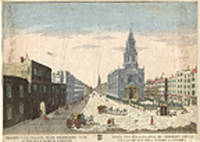
176010384Paris: chez Daumont rue St. Martin 1760. Engraving with original colour. Printed on watermarked laid paper. In excellent condition with the exception of some surface soiling in the upper section of the image. Image size: 8 7/8 x 15 13/16 inches. A wonderful "vue d'optique" of St. Mary's Church in London<br/> <br/>During the eighteenth century "vues d'optique" or "perspective views" became extremely popular in England and Europe. Like other optical prints they capitalized on a connoisseur market eager for the latest novelty. English publishers such as John Bowles and Robert Sayer had great success with these optical views which quickly developed into a collecting craze that swept through print shops on both sides of the Channel. "Vues d'optiques" were specifically designed to create the illusion of perspective when viewed with a zograscope or perspective glass. These viewing devices used a series of reflecting mirrors to enhance the illusion of depth in the print creating a veritable "view" for the onlooker. Typically these prints depicted city or landscape views and were horizontal in format. They had roughly the same dimensions and were sold with heavy opaque colouring so as to show the tints when viewed through the lens. In their heyday optical prints were a technical revolution; they could be seen in almost every fashionable drawing room and were enjoyed by the poorer classes in print shops or at traveling fairs. For a small fee the citizens of Europe and England could travel the world without leaving their village. The "vue d'optique" was the first medium to bring the visible appearance of the wider world to a large European public. Ironically the artists and engravers who created these prints rarely had first hand knowledge of the scenes depicted hence the views were often not as accurate as they were advertised to be. As a result of their constant handling optical prints such as these are rare especially in good condition. They are not only beautiful images but a fascinating glimpse into the history of printmaking.<br/> <br/>Clayton The English Print 1688-1802 140-141. chez Daumont rue St. Martin unknown books
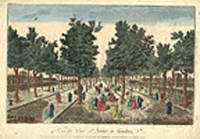
180010694London: Printed for Bowles & Carver No. 69 St. Pauls Church Yard 1800. Engraving with beautiful hand-colour. In excellent condition with the exception of tape on the verso of sheet. Image size: 9 3/8 x 15 3/4 inches. Vue d'Optique of the Royal Palace in St. James' Park in London<br/> <br/>During the eighteenth century "vues d'optique" or "perspective views" became extremely popular in England and Europe. Like other optical prints they capitalized on a connoisseur market eager for the latest novelty. English publishers such as John Bowles and Robert Sayer had great success with these optical views which quickly developed into a collecting craze that swept through print shops on both sides of the Channel. "Vues d'optiques" were specifically designed to create the illusion of perspective when viewed with a zograscope or perspective glass. These viewing devices used a series of reflecting mirrors to enhance the illusion of depth in the print creating a veritable "view" for the onlooker. Typically these prints depicted city or landscape views and were horizontal in format. They had roughly the same dimensions and were sold with heavy opaque colouring so as to show the tints when viewed through the lens. In their heyday optical prints were a technical revolution; they could be seen in almost every fashionable drawing room and were enjoyed by the poorer classes in print shops or at traveling fairs. For a small fee the citizens of Europe and England could travel the world without leaving their village. The "vue d'optique" was the first medium to bring the visible appearance of the wider world to a large European public. Ironically the artists and engravers who created these prints rarely had first hand knowledge of the scenes depicted hence the views were often not as accurate as they were advertised to be. As a result of their constant handling optical prints such as these are rare especially in good condition. They are not only beautiful images but a fascinating glimpse into the history of printmaking.<br/> <br/>Clayton The English Print 1688-1802 140-141. Printed for Bowles & Carver, No. 69 St. Pauls Church Yard unknown books
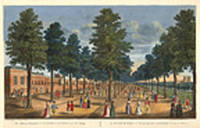
178010559Paris: Chez. Daumont rue St. Martin. Presentement chés Lachaussée rue S. Jacques 1780. Engraving with original colour. Printed on wove paper. This is a later copy of the earlier print of St. James' published by Daumont. In good condition with the exception of some scattered brown marks. Trimmed within the platemark. Image size: 9 1/4 x 14 1/2 inches. Vue d'Optique of St. James' Park in London<br/> <br/>During the eighteenth century "vues d'optique" or "perspective views" became extremely popular in England and Europe. Like other optical prints they capitalized on a connoisseur market eager for the latest novelty. English publishers such as John Bowles and Robert Sayer had great success with these optical views which quickly developed into a collecting craze that swept through print shops on both sides of the Channel. "Vues d'optiques" were specifically designed to create the illusion of perspective when viewed with a zograscope or perspective glass. These viewing devices used a series of reflecting mirrors to enhance the illusion of depth in the print creating a veritable "view" for the onlooker. Typically these prints depicted city or landscape views and were horizontal in format. They had roughly the same dimensions and were sold with heavy opaque colouring so as to show the tints when viewed through the lens. In their heyday optical prints were a technical revolution; they could be seen in almost every fashionable drawing room and were enjoyed by the poorer classes in print shops or at traveling fairs. For a small fee the citizens of Europe and England could travel the world without leaving their village. The "vue d'optique" was the first medium to bring the visible appearance of the wider world to a large European public. Ironically the artists and engravers who created these prints rarely had first hand knowledge of the scenes depicted hence the views were often not as accurate as they were advertised to be. As a result of their constant handling optical prints such as these are rare especially in good condition. They are not only beautiful images but a fascinating glimpse into the history of printmaking.<br/> <br/>Clayton The English Print 1688-1802 140-141. Chez. Daumont rue St. Martin. Presentement chés Lachaussée rue S. Jacques unknown books
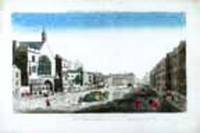
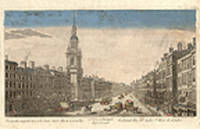
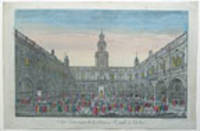
177015059Paris: Chez Daumont rue St. Martin 1770. Engraving with beautiful early colour. Printed on watermarked laid paper. In excellent condition with the exception of being trimmed within the platemark on the lower margin. Small tear on upper margin. Small puncture mark on left margin. Image size: 10 1/8 x 16 1/8 inches. This is a beautiful perspective view of the courtyard of the Royal Stock Exchange in London published by a Parisian printseller at the close of the eighteenth century.<br/> <br/>During the eighteenth century "vues d'optique" or "perspective views" became extremely popular in England and Europe. Like other optical prints they capitalized on a connoisseur market eager for the latest novelty. English publishers such as John Bowles and Robert Sayer had great success with these optical views which quickly developed into a collecting craze that swept through print shops on both sides of the Channel. "Vues d'optiques" were specifically designed to create the illusion of perspective when viewed with a zograscope or perspective glass. These viewing devices used a series of reflecting mirrors to enhance the illusion of depth in the print creating a veritable "view" for the onlooker. Typically these prints depicted city or landscape views and were horizontal in format. They had roughly the same dimensions and were sold with heavy opaque colouring so as to show the tints when viewed through the lens. In their heyday optical prints were a technical revolution; they could be seen in almost every fashionable drawing room and were enjoyed by the poorer classes in print shops or at traveling fairs. For a small fee the citizens of Europe and England could travel the world without leaving their village. The "vue d'optique" was the first medium to bring the visible appearance of the wider world to a large European public. Ironically the artists and engravers who created these prints rarely had first hand knowledge of the scenes depicted hence the views were often not as accurate as they were advertised to be. As a result of their constant handling optical prints such as these are rare especially in good condition. They are not only beautiful images but a fascinating glimpse into the history of printmaking.<br/> <br/>Clayton The English Print 1688-1802 140-141. Chez Daumont rue St. Martin unknown books
197874944Amherst:: Vista Trust. Very Good in Very Good dust jacket. 1978. Hardcover. 0960171215 . First edition. Light foxing on edges else very good in a very good minor edge wear fading along the spine dust jacket. . Vista Trust, hardcover books
19451674291945. DUCHAMP Marcel. View. Series V. No. 1. With texts by Andre Breton Robert Desnos and others. Profusely illustrated including a foldout plate. Small folio bound in stapled wraps in a new navy cloth folding box. New York: March 1945. A fine copy of the regular edition of the sought-after Duchamp number of Charles Henri Ford's celebrated magazine with the original cover designed by Duchamp. The centerfold "Les Larves D'Imagie D'Henri Robert Marcel Duchamp" is by Frederick J. Kiesler. The issue contains numerous important texts on Duchamp by among others Andre Breton Gabrielle Buffet Robert Desnos Harriet and Sidney Janis. Schwarz The Complete Work of Marcel Duchamp No.508. Andel Avant Garde Page Design 460-461. hardcover books
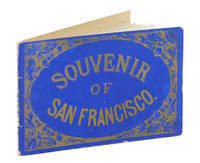
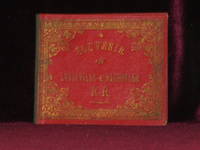
5831Published by Ward Bros. Colum c. 1885. Oblong 12mo original blue coated-paper wrappers title gilt-lettered on front wrapper within elaborate gilt border advertisement for M. J. Flavin & Co. of San Francisco gilt-lettered on rear wrapper within matching border. Twelve accordion-folded pp. bearing 14 sepia-printed images of San Francisco landmarks after photographs. Minor rubbing at backstrip & corners; but a very good fresh copy. § First edition of this seemingly unrecorded viewbook. Ward Bros. of Columbus Ohio whose imprint appears in the margin of the final plate produced a great many such viewbooks for locations both famous and obscure. This one includes the usual images of the Palace Hotel the California Street Hill Fort Point the Cliff House and Seal Rocks etc.; but there is one unexpected view: a full-page plate of a four-story edifice captioned "The Great I. X. L. San Francisco." The presence of this image is explained by the rear-wrapper advertisement which reads in full: "The Great I. X. L. / M. J. Flavin & Co. / Leading Clothiers / Furnishers and Hatters / of the Pacific Coast. / 924 to 928 Market St. / San Francisco." It is clear that this viewbook was issued as a promotional gimmick for this now-forgotten clothier. Not recorded in OCLC Rocq Cowan etc. or in any online library catalogue consulted. Rocq does record a single copy at the Bancroft Library but not appearing in its online catalogue of a "Catalogue and price list of M. F. Flavin's great IXL" issued in San Francisco around 1883; see Rocq 9383. a full-page plate of a four-story edifice captioned "The Great I. X. L hardcover books
4948Np/nd ca.1890. Hard Cover. 6" x 5". 16 panels folded accordion style with black & white photo-lithographs of various landmarks along the L & N Railroad route at such cities as Cincinnati Mobile Louisville Evansville Mammoth Cave & Nashville. A very good copy with separation at rear but not torn. <br/><br/> Np/nd (ca.1890) hardcover books
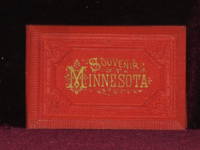
4939New York; 1883: Witteman Bros. First Edition. Hard Cover. 5" x 3 3/8" 16 panels folded accordion style with black and white photo-lithographs of landmarks around Minnesota; Maiden Rock St. Anthony Falls Minnehaha Falls and several others. With folding Wittemann Brothers catalogue in rear. Bound in red embossed cloth title gilt within frame Near fine. <br/><br/> Witteman Bros hardcover books
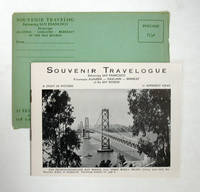
194531637San Francisco: W. M. Smith Publisher 1945. Not in Rocq nor any copies listed on OCLC. Photographically illustrated self-wrappers stapled. Original green mailing envelope. A Fine copy in a slightly worn albeit unused mailing envelope. Unpaginated though 32 pp including wrapers. One page of introductory text. Illustrated from b/w photographs with textual captions. Oblong 16mo: 4-5/8" x 6" <br/><br/> W. M. Smith, Publisher unknown books
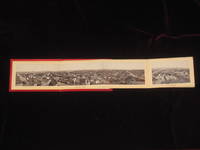
4934San Francisco; ca. 1885: C. P. Heininger. Hard Cover. 5" x 3 ½";. 24 panels folded accordion style each with black and white photolithographs the first 3 panels showing a panorama birds-eye view of Los Angeles; another shows a view of Los Angeles in 1857; verso of last panel is a map depicting carriage drive and railroad of Los Angeles County and San Bernardino County at rear bound in embossed red cloth title gilt within frame.Very nice. pastedown is an ad of publisher C. P. Heininger. small booksellers' ticket on rear pastedown; scarce; near fine. <br/><br/> C. P. Heininger hardcover books
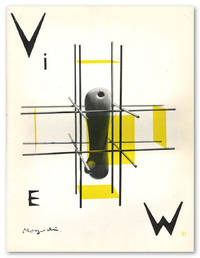
1946WRCLIT81263New York 1946. Series seven number one. Quarto. Pictorial wrappers by Isamu Noguchi. Heavily illustrated. Faint dust tanning to white wrapper but very good or better. Edited by Charles Henri Ford and a large and impressive board of associate and advisory editors. VIEW carried on in the tradition of the continental surrealists displaced by the war and featured many of the expatriated artists and writers as well as their American heirs and other young writers. Contributors to this number include Schapiro Janis Seligmann Ford Tyler Sitwell Bowles "By the Water" Goodman W.C. Williams et al. MILLER C564. unknown books
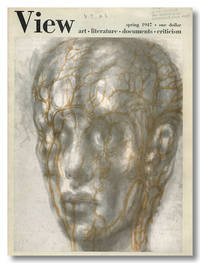
1947WRCLIT81274New York 1947. Series Seven Number Three the final number published. Quarto. Pictorial wrappers. Heavily illustrated. Library stamp and ink serial designation mar the upper wrapper wrapper otherwise a bit dust-dimmed otherwise a very good copy. Edited by Charles Henri Ford and a large and impressive board of associate and advisory editors. VIEW carried on in the tradition of the continental surrealists displaced by the war and featured many of the expatriated artists and writers as well as their American heirs and other young writers. Contributors to this number include Tyler Goodman McLuhan Russell Atkins identified as his first publication et al. unknown books
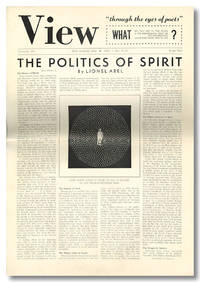
1942WRCLIT81259New York 1942. Series one double number 11/12. Folio. Tabloid format printed self-wrappers. Folded across middle spine partially and neatly split otherwise very good. Edited by Charles Henri Ford and eventually a large and impressive board of associate and advisory editors VIEW carried on in the tradition of the continental surrealists displaced by the war and featured many of the expatriated artists and writers as well as their American heirs in its often profusely illustrated pages. This early double number includes contributions by Abel Seligmann H. Miller Duncan Durrell Jarrell Tyler Carrington et al. unknown books
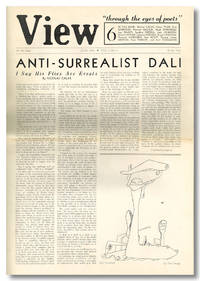
1941WRCLIT81256New York 1941. Series one number six. Folio. Tabloid format printed self-wrappers. Folded across middle spine of outer bifolia partially split otherwise very good. Edited by Charles Henri Ford and eventually a large and impressive board of associate and advisory editors VIEW carried on in the tradition of the continental surrealists displaced by the war and featured many of the expatriated artists and writers as well as their American heirs in its often profusely illustrated pages. This early number includes contributions by Calas Tanguy Merton Tyler Seligmann et al. unknown books
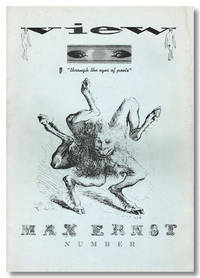
1942WRCLIT81253New York 1942. Second series number one. Small quarto. Pictorial wrapper. Illustrations. Trace of light soiling to pale blue pictorial wrapper faint shallow tidemark at extreme fore-edge toward upper corner otherwise very good. Edited by Charles Henri Ford and eventually a large and impressive board of associate and advisory editors VIEW carried on in the tradition of the continental surrealists displaced by the war and featured many of the expatriated artists and writers as well as their American heirs in its often profusely illustrated pages. This is the special issue devoted to Max Ernst with contributions by Breton Janis Carrington Tyler Henry Miller Calas Levy et al. unknown books
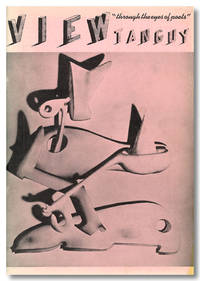
1942WRCLIT81252New York 1942. Second series number two. Small quarto. Pictorial wrapper. Illustrations. Trace of light soiling to pale pink pictorial wrapper otherwise near fine. Edited by Charles Henri Ford and eventually a large and impressive board of associate and advisory editors VIEW carried on in the tradition of the continental surrealists displaced by the war and featured many of the expatriated artists and writers as well as their American heirs in its often profusely illustrated pages. This is the special dual issue devoted to Tanguy and Tchelitchew with the sections bound dos-a- dos. Contributors include Tyler Soby Kirstein W.C. Williams Henry Miller Masson "O'Reilly" Calas Seligmann Breton et al. unknown books
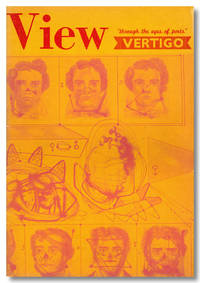
1942WRCLIT81255New York 1942. Second series number three. Small quarto. Pictorial wrapper. Illustrations. Some sunning to wrapper edges and spine shallow faint tidemark and ripple to fore-edge toward upper forecorner otherwise very good. Edited by Charles Henri Ford and eventually a large and impressive board of associate and advisory editors VIEW carried on in the tradition of the continental surrealists displaced by the war and featured many of the expatriated artists and writers as well as their American heirs in its often profusely illustrated pages. This is the special thematic "Vertigo" issue with contributions by Seligmann Tyler Calas Reeve W. C. Williams Ford Bayliss W. Stevens Jarrell Loy M. Moore MacLeish et al. unknown books
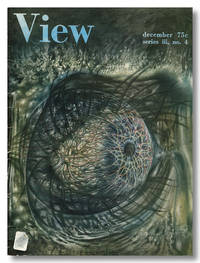
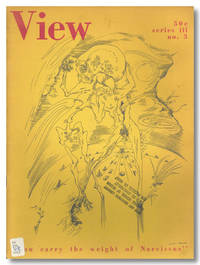
1943WRCLIT81275New York 1943. Series Three Number Four. Quarto. Pictorial wrapper by Tchelitchew. Heavily illustrated. Library stamp and a small sticker scar mar the upper wrapper the former nearly invisible in the illustration otherwise a very good copy. Edited by Charles Henri Ford and a large and impressive board of associate and advisory editors. VIEW carried on in the tradition of the continental surrealists displaced by the war and featured many of the expatriated artists and writers as well as their American heirs and other young writers. Contributors to this number include Leon Kelly Calas Roussel translated by Edouard Roditi Ford et al. unknown books
1943WRCLIT81294New York 1943. Series Three Number Four. Quarto. Pictorial wrapper by Masson. Heavily illustrated. Library stamp and a small sticker scar mar the upper wrapper otherwise a very good copy. Edited by Charles Henri Ford and a large and impressive board of associate and advisory editors. VIEW carried on in the tradition of the continental surrealists displaced by the war and featured many of the expatriated artists and writers as well as their American heirs and other young writers. Contributors to this number include Fowlie Tyler Calas Man Ray Paul Bowles "Bluey" Durrell N. Moore Zukofsky et al. MILLER c234. unknown books