38 résultats
184629781ABWeimar, B.F. Voigt, 1846. Kl.-8°. XVI, 420, (6) S. Halbleinenband der Zeit.
184629781ABWeimar, B.F. Voigt, 1846. Kl.-8°. XVI, 420, (6) S. Halbleinenband der Zeit. + Wichtig: Für unsere Kunden in der EU erfolgt der Versand alle 14 Tage verzollt ab Deutschland / Postbank-Konto in Deutschland vorhanden +
1813017143Baltimore: E. J. Coale 1813. First Edition . Full Leather. Good. 5 3/4 " Tall. 299 Pp. First Year Of Issue Of The Annual Publication. Full Leather Morocco Label With Title And Seven Pairs Of Gilt Rules On Spine Hinges And Binding Sound Worn At Edges Frayed Through At Two Rear Tips Only Dampstaining To Lower Right Of Front Endpaper And Title A Little Less Than 1/4 Of Pages. No Illustrations But An Interesting Unattributed Article "An Inquiry Into The Nature Of Man" Which In Very General Layman's Language Discusses Evolution Of All Races Of Man From A Common Ancestor. <br/> <br/> E. J. Coale hardcover
1871031862New York: D. Appleton and Company 1871. First American Edition First Printing 1st Printing. Hardcover. Very Good . Drawings. Vi 409; V "Postscript" 436. Brown Cloth Gilt. First Edition Later Issue Still Dated 1871 On Title Page No Indication Of Later Printing But Later Issue As The First Issue Identifies 16 Errata In Volume I. Two Volumes In Original Brown Cloth Gilt Lettering On Spine Black Border And Design On Covers Light Yellow Endpapers. Two Page Catalog Origin Of Species And A Book By T H Huxley At End Of First Volume; 12 Pp Catalog Mostly Works By Spencer But Again Including Origin Of Species At End Of Second Volume. A Very Clean Unmarked Set Possibly Unread. Edges Of Page Block Still Show Original Polish. Gilt Bright Cloth Evenly Colored Endpapers Immaculate Hinges Strong And Without Cracking Attractive. Points Of Fraying At Corners And Tips Tips With Minute Professional Repairs To Cloth And Color; Faint Dampstain In Parts Of Lower Covers Of Vol. Ii Also Professionally Refurbished And Almost Invisible With No Trace Of Dampstaining Inside. <br/> <br/> D. Appleton and Company hardcover
190048208Paris, Gauthier-Villars, 1900. 4to. No wrappers. In: ""Comptes Rendus Hebdomadaires des Séances de L'Academie des Sciences"", Tome 130, No 13. Titlepage to tome 130 a. pp. (809-) 864. (Entire issue offered). De Vries paper: pp. 845-847. Rather poor paperquality, fragile. Small nicks to margins of titlepage.
190048208Paris Gauthier-Villars 1900. 4to. No wrappers. In: "Comptes Rendus Hebdomadaires des Séances de L'Academie des Sciences" Tome 130 No 13. Titlepage to tome 130 a. pp. 809- 864. Entire issue offered. De Vries paper: pp. 845-847. Rather poor paperquality fragile. Small nicks to margins of titlepage. <br/><br/><em>First appearance of a milestone paper in genetics being the "REDISCOVERY" OF MENDEL'S LAWS OF HEREDITY" - This paper together with the two other papers from the same year by Carl Correns and Erich Tschermak laid the foundations of a new scientific discipline that in 1906 was given the name "genetics" and less than a century later rose to become the leading science in Western society. This French announcement was published 4 days before his longer paper "Das Spaltungsgesetzt der Hybride" in which Mendel is mentioned.De Vries completed most of his hybridization experiments without knowing about Mendel's work. Based on his own results de Vries drew the same conclusions as Mendel. De Vries published his work in 1900 first in French then in German. In the French report there was no mention of Mendel but this was amended by de Vries in the German paper. It is possible that de Vries read Mendel's paper before he published his own and included Mendel's name in the later printing when he realized that other people also knew about Mendel's work. De Vries may have thought that his own conclusions were superior to Mendel's. "During the 1880s de Vries became interested in heredity. In 1889 he published Intracellular Pangenesis in which he critically reviewed previous research on inheritance and advanced the theory that elements in the nucleus ‘pangenes’ determine hereditary traits. To investigate his theories he began breeding plants in 1892 and by 1896 had obtained clear evidence for the segregation of characters in the offspring of crosses in 3:1 ratios. He delayed publishing these results proposing to include them in a larger book but in 1900 he came across the work of Gregor Mendel published 34 years earlier and announced his own findings. This stimulated both Karl Correns and Erich von Tschermak-Seysenegg to publish their essentially similar observations." Oxford Dictionary of Scientists.Parkinson "Breakthroughs" 1900 B. - PMM 356 the note. </em> unknown
1869023422New York: D. Appleton and Company 1869. Fourth American Edition First Printing . Brown Pebbled Cloth Gilt. Near Fine. Folding Chart. 116 Pp 116 - 121 117-425; 426-432 Supplement; 443-440; 2 Pp Ads At Rear. "A New Edition Revised And Augmented By The Author" Containing The Entire Fourth British Edition With Additions And Corrections From The 1869 British Fifth Edition Added As Asterisked Pages And In A Supplement At End Indicating Corrections/Insertions To Be Made Throughout The Fourth Edition To Update It To The Fifth Edition But Not Including Heading "Survival Of The Fittest" Which Occurred In That Edition. Catalog At End Beginning With Page 2 No Page One But Apparently As Bound And Issued Perhaps To Remove A Now Obsolete Listing For The Fourth Edition Of This Work Continuing With P. 3. Original Pebbled Brown Cloth Covers With No Wear No Fraying Or Tears Evenly Colored And Without The Usual Fading Gilt Bright But Now With Some Reddish Toning Original Yellow Endpapers With Solid Hinges Pages Square And Crisp. Previous Owner's Signature "G A. Hadley Sep 20Th 1869" In Pencil On Front Endpaper Possibly Dr. George A. Hadley Of Chicago Who Also Owned An 1871 Descent Of Man With His February 1887 Ownership Signature One Other Pencil Marginal Word In Same Hand No Other Marks No Bookplates. Very Light Dampstaining Along Part Of Foredge Of Pages And Endpapers Wider And Intruding A Little Into Page Block On About 100 Pages Near Center Of Book 2 1/2" X 1/2" To 1 1/2" Damp Spot On Top Edge Of Pages Near Foredge Small Losses Along Foredge Of Front Yellow Endpaper Rear Yellow Endpapers Partly Adhering And Have Not Been Separated. A Very Scarce Edition Apparently Issued For A Short Time Prior To The Regular 1870 American Printing Of The Fifth British Edition; "Darwin On Line" Shows 440 Pp. But States Same As 1863-1868 Editions And Makes No Mention Of The Asterisked Pages Or The Supplement For The Fifth Edition. <br/> <br/> D. Appleton and Company hardcover
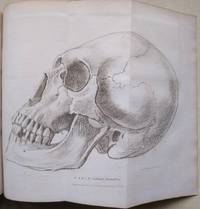
1819020733Princes Street Corner of Gerard Street Soho: J. Callow 1819. First edition. Illustrated with 12 engraved plates several of them folding octavo pp xxiv 579 i slight age-toning to the front endpaper the half-title and the frontispiece otherwise very clean internally neatly bound in a recent brown half-leather and cloth. With the bookplate of Robert Washington Oates on the front endpaper. Sir William Lawrence 1st Baronet FRCS FRS 1783 -1867 was an English surgeon who became President of the Royal College of Surgeons of London and Serjeant Surgeon to the Queen. In his mid-thirties he published two books of his lectures which contained pre-Darwinian ideas on man's nature and effectively on evolution. In 1819 the second book known by its short title of the Natural history of Man caused a storm of disapproval from conservative and clerical quarters for its supposed atheism and within the medical profession because he advocated a materialist rather than vitalist approach to human life. He was linked by his critics with such other 'revolutionaries' as Thomas Paine and Lord Byron. It was "the first great scientific issue that widely seized the public imagination in Britain a premonition of the debate over Darwin's theory of evolution by natural selection exactly forty years later". It contained some remarkable anticipations of later thought but was ruthlessly suppressed. To this day many historical accounts of evolutionary ideas do not mention Lawrence's contribution. He is omitted for example from many of the Darwin biographies from some evolution textbooks essay collections and even from accounts of pre-Darwinian science and religion. Although the only idea of interest which Darwin found in Lawrence was that of sexual selection in man the influence on Alfred Russel Wallace was more positive. Wallace "found in Lawrence a possible mechanism of organic change that of spontaneous variation leading to the formation of new species". First Edition. Half-Leather. Very Good. J. Callow Hardcover
18627863CBZweite verbesserte und sehr vermehrte Auflage. Stuttgart, Schweizerbart, (1862–)1863. 8°. VIII, 551 S. Mit einem fotografischen Portrait und einer Tafel. Halblederband der Zeit.
18627863CBStuttgart, Schweizerbart, (1862?)1863. 8°. VIII, 551 S. Mit einem fotografischen Portrait und einer Tafel. Halblederband der Zeit. + Wichtig: Für unsere Kunden in der EU erfolgt der Versand alle 14 Tage verzollt ab Deutschland / Postbank-Konto in Deutschland vorhanden +, 7863CB|7863CB_2|7863CB_3 [3 Warenabbildungen] Zweite verbesserte und sehr vermehrte Auflage.
18820159981882 - 1898: Various Publishers 1882. 1st Edition . Hardcover. Very Good. The Author's Personal Copies No Duplicates Of His Nineteenth Century Works On Paleontology And Related Areas Of Biology 127 Of His Published Writings Including Original Offprints Extracts Title Pages Manuscripts And Notes In German Or English With A Few Clippings And Photographs Laid In Loosely. Three Volumes Dark Brown Pebbled Cloth Over Brown Patterned Boards. Bindings Worn And Frayed Material Should Be Professionally Rebound With Archival Materials. His Obituary In The American Naturalist Sept 1898 Pp 717-718 Refers To A Total Output Of 143 Papers Being Reported By His Brother Which Possibly Includes Reprints And Translations As He Wrote In Both German And English And This Collection Appears Complete. Baur Was Last A Professor At The University Of Chicago 1892 -1898. Baur Wrote Extensively On Various Paleontological Topics. He Also Built On The Late Nineteenth Century Theory Of Evolution And Wrote Extensively On His Idea That Changes In Morphology Might Be Brought Out By A Change In Environment Including Nutrition Etc. Such That These Changed Characteristics Would Persist In Successive Generations So Long As The Changed Conditions Persisted For Which There Is Now Some Evidence For At Least Three Generations. He Cited Extensively To Personal Observations And Reports From Others. His Work Differs From Weizmann Etc. In That He Maintained That Changes In Environment Could Bring Out Changes In Morphology Without Changes In The Genetic Material Such Changes Persisting In Successive Generations When The Environmental Changes Also Persisted. In One Such 1891 Paper He Concludes With A Citation To Darwin's Letter To Wagner: "In My Opinion The Greatest Error Which I Have Committed Has Been Not Allowing Sufficient Weight To The Direct Action Of The Environment - I.E. Food Climate Etc. -Independently Of Natural Selection." Although Now Dismissed Some Because Of His Neo-Lamarckian Ideas His Departures From Rigorous Scientific Evidence In Genetics Is Perhaps Less Serious Than The Acceptance And Promotion Of The Ideas Of "Phlogiston" By Important Earlier Chemists And Of "Ether" By His Contemporaries Among Important Physicists; And The Emphasis Of The Neo-Lamarckians On Environmental Nutritional And Physiological Factors Is More In Keeping With Modern Understanding Of Individual Development Than The Emphasis Upon Purely Genetic Evolution Which Treats Only Classes Of Individuals By Arbitrary Groupings Into Classes Of Individuals . Complete Collections Of Original Manuscripts And Scientific Offprints From This Period Are Increasingly Uncommon In The Market. All Material In Excellent Condition Bound Into Three Volumes Bindings Very Worn. <br/> <br/> Various Publishers hardcover
18665323DB4, Auflage (8. Tsd.) mit Ergänzungen und Korrekturen. London, John Murray, 1866. XXI S., 593 S. mit gefalterter Tafel (Diagramm), 32 S, (Werkverzeichnis vom Murray Verlag, London). Orignal Leinenband.
1835037486London: Longman Rees Orme Brown Green And Longmans 1835. 1st Edition . Hardcover. Fine. Frontispiece Illustrated Title Page Illustrations In Text. Viii 688 Pp. Full Year With "Corrections" On Last Page. Recent Full Green Cloth Red Morocco Spine Label Retaining Original Preliminary And Final Blanks. Articles By Edward Blyth At Pp 40 "An Attempt To Classify The 'Varities' Of Animals." P. 198 "A Few Remarks On Hybrids." P. 325 "Observations On The Cuckoo" P. 364 " A Notice Of A Very Remarkable Individual Of The Common Shrike."; Charles Waterton P. 166 251 322 361 453 451 663; W. J. Clarke P. 1 "On Certain Meteoric Phenomena"; Etc. The Blyth Article Is The First Extended Discussion Of The Basic Principles Of Natural Selection; Darwin Read Blyth's Work Carefully And Was A Friend Of Blyth; Loren Eiseley's "Darwin And The Mysterious Mr. X" Is An Account Of Their Relationship With Some Errors But Generally Correct. Binding As New; Preliminary And Final Blanks With Browning And Light Chipping At Corners; Contents Fine Clean Square Unworn. No Names Or Marks. <br/> <br/> Longman, Rees, Orme, Brown, Green, And Longmans hardcover