DARWIN CharlesMareMagnum

2 119 résultats
8vo., Fifth Thousand, [Second Edition, Second Issue], with folding diagram, neat contemporary signature in pencil at head of title, with second pencilled signature lower down, front free endpaper a little chafed at fore-edge, three or four small fox-spots each on half-title, title and diagram; original green cloth, boards elaborately blocked in blind, gilt back, , brown endpapers, uncut, expertly recased with original endpapers preserved, a remarkably bright, fresh copy in minimally restored publisher's binding. With 32pp publisher's catalogue (dated January, 1860) bound in at end, and the binder's ticket of Edmonds & Remnants on rear paste-down. The second edition, second issue is not so named on title but simply labelled 'Fifth Thousand'; Freeman records that 3000 copies were printed following the 1250 copies of the first edition. Although Darwin considered this edition a rapid revision to meet demand, his changes are much more than mere correction. 'The total number [of changes] in this edition is impressive enough. No chapter was untouched' (Peckham). The most famous alteration is the dilution of the whale bear passage on p.184, which Darwin later regretted although he never restored it. With the signed and ruled advertisements which Freeman considers the first issue. Freeman 113 variant a; Freeman F376.
1835037486London: Longman Rees Orme Brown Green And Longmans 1835. 1st Edition . Hardcover. Fine. Frontispiece Illustrated Title Page Illustrations In Text. Viii 688 Pp. Full Year With "Corrections" On Last Page. Recent Full Green Cloth Red Morocco Spine Label Retaining Original Preliminary And Final Blanks. Articles By Edward Blyth At Pp 40 "An Attempt To Classify The 'Varities' Of Animals." P. 198 "A Few Remarks On Hybrids." P. 325 "Observations On The Cuckoo" P. 364 " A Notice Of A Very Remarkable Individual Of The Common Shrike."; Charles Waterton P. 166 251 322 361 453 451 663; W. J. Clarke P. 1 "On Certain Meteoric Phenomena"; Etc. The Blyth Article Is The First Extended Discussion Of The Basic Principles Of Natural Selection; Darwin Read Blyth's Work Carefully And Was A Friend Of Blyth; Loren Eiseley's "Darwin And The Mysterious Mr. X" Is An Account Of Their Relationship With Some Errors But Generally Correct. Binding As New; Preliminary And Final Blanks With Browning And Light Chipping At Corners; Contents Fine Clean Square Unworn. No Names Or Marks. <br/> <br/> Longman, Rees, Orme, Brown, Green, And Longmans hardcover
18665323DB4, Auflage (8. Tsd.) mit Ergänzungen und Korrekturen. London, John Murray, 1866. XXI S., 593 S. mit gefalterter Tafel (Diagramm), 32 S, (Werkverzeichnis vom Murray Verlag, London). Orignal Leinenband.
1492A collection of original offprints in the fields of genetics heredity and evolution. From the library of Alfred Henry Sturtevant 1891-1970 renowned American geneticist. All items unless stated bear Sturtevant's signature and/or stamp and many are presentation copies. Included are works by Bateson Boveri Calvin Bridges Julian Huxley Jacques Loeb Raymond Pearl Reginald Punnett and Edmund Wilson. unknown
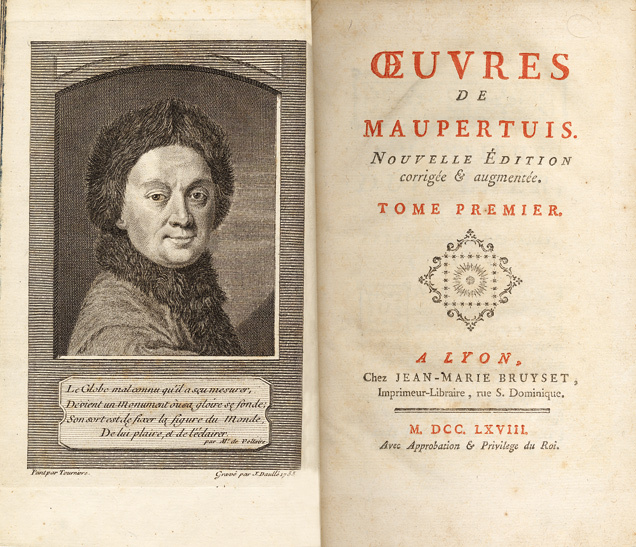
176815501Lyon, Jean-Marie Bruyset, 1768 ; 4 tomes in-8 ; veau fauve marbré, dos à faux-nerfs, décorés et dorés, pièces de titre et de tomaison grenat, filet doré sur les coupes, tranches marbrées (rel. de l'époque) ; (4) faux-titre et titre en rouge et noir à chaque tome ; XXXVI, 309, (3) pp. ; IV, 431 pp., (1 bl.), (1) f. blanc ; IV, 468, (4) pp. ; VIII, (12), 346, (4) pp., nombreuses figures ; portrait en frontispice gravé par J. Daullé d'après Tournière et carte hors-texte de l'arc méridien mesuré au cercle polaire au Tome 3.
18820159981882 - 1898: Various Publishers 1882. 1st Edition . Hardcover. Very Good. The Author's Personal Copies No Duplicates Of His Nineteenth Century Works On Paleontology And Related Areas Of Biology 127 Of His Published Writings Including Original Offprints Extracts Title Pages Manuscripts And Notes In German Or English With A Few Clippings And Photographs Laid In Loosely. Three Volumes Dark Brown Pebbled Cloth Over Brown Patterned Boards. Bindings Worn And Frayed Material Should Be Professionally Rebound With Archival Materials. His Obituary In The American Naturalist Sept 1898 Pp 717-718 Refers To A Total Output Of 143 Papers Being Reported By His Brother Which Possibly Includes Reprints And Translations As He Wrote In Both German And English And This Collection Appears Complete. Baur Was Last A Professor At The University Of Chicago 1892 -1898. Baur Wrote Extensively On Various Paleontological Topics. He Also Built On The Late Nineteenth Century Theory Of Evolution And Wrote Extensively On His Idea That Changes In Morphology Might Be Brought Out By A Change In Environment Including Nutrition Etc. Such That These Changed Characteristics Would Persist In Successive Generations So Long As The Changed Conditions Persisted For Which There Is Now Some Evidence For At Least Three Generations. He Cited Extensively To Personal Observations And Reports From Others. His Work Differs From Weizmann Etc. In That He Maintained That Changes In Environment Could Bring Out Changes In Morphology Without Changes In The Genetic Material Such Changes Persisting In Successive Generations When The Environmental Changes Also Persisted. In One Such 1891 Paper He Concludes With A Citation To Darwin's Letter To Wagner: "In My Opinion The Greatest Error Which I Have Committed Has Been Not Allowing Sufficient Weight To The Direct Action Of The Environment - I.E. Food Climate Etc. -Independently Of Natural Selection." Although Now Dismissed Some Because Of His Neo-Lamarckian Ideas His Departures From Rigorous Scientific Evidence In Genetics Is Perhaps Less Serious Than The Acceptance And Promotion Of The Ideas Of "Phlogiston" By Important Earlier Chemists And Of "Ether" By His Contemporaries Among Important Physicists; And The Emphasis Of The Neo-Lamarckians On Environmental Nutritional And Physiological Factors Is More In Keeping With Modern Understanding Of Individual Development Than The Emphasis Upon Purely Genetic Evolution Which Treats Only Classes Of Individuals By Arbitrary Groupings Into Classes Of Individuals . Complete Collections Of Original Manuscripts And Scientific Offprints From This Period Are Increasingly Uncommon In The Market. All Material In Excellent Condition Bound Into Three Volumes Bindings Very Worn. <br/> <br/> Various Publishers hardcover
18627863CBStuttgart, Schweizerbart, (1862?)1863. 8°. VIII, 551 S. Mit einem fotografischen Portrait und einer Tafel. Halblederband der Zeit. + Wichtig: Für unsere Kunden in der EU erfolgt der Versand alle 14 Tage verzollt ab Deutschland / Postbank-Konto in Deutschland vorhanden +, 7863CB|7863CB_2|7863CB_3 [3 Warenabbildungen] Zweite verbesserte und sehr vermehrte Auflage.
18627863CBZweite verbesserte und sehr vermehrte Auflage. Stuttgart, Schweizerbart, (1862–)1863. 8°. VIII, 551 S. Mit einem fotografischen Portrait und einer Tafel. Halblederband der Zeit.
199634127Somerset New Jersey U.S.A.: John Wiley & Son Ltd. New. 1996. Hardcover. 0471957194 . FREE UPGRADE to Courier/Priority Shipping Upon Request - IN STOCK AND IMMEDIATELY AVAILABLE FOR SHIPMENT - FLAWLESS COPY PRISTINE NEVER OPENED -- Choose us for the information you need. -- TABLE OF CONTENTS: Introduction: concepts of antisocial behaviour of cause and of genetic influences 1 Issues in the search for candidate genes in mice as potential animal models of human aggression 21 Aggression from a developmental perspective: genes environments and interactions 45 A twin study of self-reported criminal behaviour 61 Heterogeneity among juvenile antisocial behaviours: findings from the Virginia Twin Study of Adolescent Behavioural Development 76 Predisposition to criminality: Swedish adoption studies in retrospect 99 Assessing the role of genetics in crime using adoption cohorts 115 Direct analysis of candidate genes in impulsive behaviours 139 MAOA deficiency and abnormal behaviour: perspectives on an association 155 Serotonin in alcoholic violent offenders 168 Evolutionary adaptationism: another biological approach to criminal and antisocial behaviour 183 Chronic problems in understanding tribal violence and warfare 202 The implications for responsibility of possible genetic factors in the explanation of violence 237 Legal implications of genetics and crime research 248 Concluding remarks 265 Index of contributors 272 Subject index 274. -- DESCRIPTION: -- Papers presented at the symposium held at the Ciba Foundation in London February 14-16 1995. Multidisciplinary research on the genetic contributions to criminal and antisocial behavior for behavioral geneticists theorists neuroscientists philosophers and criminologists. -- Criminal and antisocial behaviour threaten cooperative social organization and each culture has developed methods to isolate and punish criminals. However criminal behaviour has not been eliminated in any culture and so it is rational to try to use scientific approaches to explain the origins and causes of criminal behaviour and to suggest ways of preventing crime or rehabilitating offenders. There has been extensive research on environmental causes of criminal behaviour: this book examines the evidence for genetic contributions. Twin and adoption studies suggest that there may be genetic contributions to some criminal behaviours. The data are examined in detail in this book which includes discussion of the methodological problems of disentangling genetic and environmental sources of variance in behaviour. In animals aggression is commonly an appropriate response to environmental stimuli: data from the relevant animal studies of the inheritance of aggressiveness are included in the book. There have been reports suggesting neuropharmacological abnormalities in violent offenders. These represent potential underlying mechanisms whereby genetic influences could be mediated. The recent evidence regarding brain and in particular neurotransmitter abnormalities is discussed. A heritable tendency to behave in a particular way would have significant implications for criminology particularly for rehabilitation strategies. Important issues also arise for moral philosophy. Separate chapters examine evolutionary and anthropological aspects of violence and warfare. The book is truly multidisciplinary and contains contributions from behavioural geneticists population geneticists evolutionary theorists neuroscientists philosophers and criminologists. -- with a bonus offer-- . John Wiley & Son Ltd hardcover
199634165Somerset New Jersey U.S.A.: John Wiley & Son Ltd. New. 1996. Hardcover. 0471957194 . FREE UPGRADE to Courier/Priority Shipping Upon Request - IN STOCK AND IMMEDIATELY AVAILABLE FOR SHIPMENT - FLAWLESS COPY PRISTINE NEVER OPENED -- TABLE OF CONTENTS: Introduction: concepts of antisocial behaviour of cause and of genetic influences 1 Issues in the search for candidate genes in mice as potential animal models of human aggression 21 Aggression from a developmental perspective: genes environments and interactions 45 A twin study of self-reported criminal behaviour 61 Heterogeneity among juvenile antisocial behaviours: findings from the Virginia Twin Study of Adolescent Behavioural Development 76 Predisposition to criminality: Swedish adoption studies in retrospect 99 Assessing the role of genetics in crime using adoption cohorts 115 Direct analysis of candidate genes in impulsive behaviours 139 MAOA deficiency and abnormal behaviour: perspectives on an association 155 Serotonin in alcoholic violent offenders 168 Evolutionary adaptationism: another biological approach to criminal and antisocial behaviour 183 Chronic problems in understanding tribal violence and warfare 202 The implications for responsibility of possible genetic factors in the explanation of violence 237 Legal implications of genetics and crime research 248 Concluding remarks 265 Index of contributors 272 Subject index 274. -- DESCRIPTION: -- Univ. Of Maryland. An explanation of the debate concerning behavioral genetics in particular the practice of genetic research into criminal behavior. Examines the broader issues surrounding the debate such as causation and moral responsibility. For scholars philosophers and scientists. -- This volume brings together a group of essays by leading philosophers of science ethicists and legal scholars commissioned for an important and controversial conference on genetics and crime. The essays address basic conceptual methodological and ethical issues raised by genetic research on criminal behavior but largely ignored in the public debate. They explore the complexities in tracing any genetic influence on criminal violent or antisocial behavior the varieties of interpretation to which evidence of such influences is subject and the relevance of such influences to the moral and legal appraisal of criminal conduct. The volume provides a critical overview of the assumptions methods and findings of recent behavioral genetics. -- with a bonus offer-- . John Wiley & Son Ltd hardcover
199634499Somerset New Jersey U.S.A.: John Wiley & Son Ltd. New. 1996. Hardcover. 0471957194 . FREE UPGRADE to Courier/Priority Shipping Upon Request - IN STOCK AND IMMEDIATELY AVAILABLE FOR SHIPMENT - FLAWLESS COPY PRISTINE NEVER OPENED -- clean and crisp tight and bright pages with no writing or markings to the text. -- TABLE OF CONTENTS: Introduction: concepts of antisocial behaviour of cause and of genetic influences 1 Issues in the search for candidate genes in mice as potential animal models of human aggression 21 Aggression from a developmental perspective: genes environments and interactions 45 A twin study of self-reported criminal behaviour 61 Heterogeneity among juvenile antisocial behaviours: findings from the Virginia Twin Study of Adolescent Behavioural Development 76 Predisposition to criminality: Swedish adoption studies in retrospect 99 Assessing the role of genetics in crime using adoption cohorts 115 Direct analysis of candidate genes in impulsive behaviours 139 MAOA deficiency and abnormal behaviour: perspectives on an association 155 Serotonin in alcoholic violent offenders 168 Evolutionary adaptationism: another biological approach to criminal and antisocial behaviour 183 Chronic problems in understanding tribal violence and warfare 202 The implications for responsibility of possible genetic factors in the explanation of violence 237 Legal implications of genetics and crime research 248 Concluding remarks 265 Index of contributors 272 Subject index 274. -- DESCRIPTION: -- Univ. Of Maryland. An explanation of the debate concerning behavioral genetics in particular the practice of genetic research into criminal behavior. Examines the broader issues surrounding the debate such as causation and moral responsibility. For scholars philosophers and scientists. -- This volume brings together a group of essays by leading philosophers of science ethicists and legal scholars commissioned for an important and controversial conference on genetics and crime. The essays address basic conceptual methodological and ethical issues raised by genetic research on criminal behavior but largely ignored in the public debate. They explore the complexities in tracing any genetic influence on criminal violent or antisocial behavior the varieties of interpretation to which evidence of such influences is subject and the relevance of such influences to the moral and legal appraisal of criminal conduct. The volume provides a critical overview of the assumptions methods and findings of recent behavioral genetics. -- with a bonus offer-- . John Wiley & Son Ltd hardcover
199623495Somerset New Jersey U.S.A.: John Wiley & Son Ltd. New. 1996. Hardcover. 0471957194 . FREE UPGRADE to Courier/Priority Shipping Upon Request - IN STOCK AND IMMEDIATELY AVAILABLE FOR SHIPMENT - FLAWLESS COPY AVOID WEEKS OF DELAY ELSEWHERE. -- clean and crisp tight and bright pages with no writing or markings to the text. -- with a bonus offer-- . John Wiley & Son Ltd hardcover
1819020733Princes Street Corner of Gerard Street Soho: J. Callow 1819. First edition. Illustrated with 12 engraved plates several of them folding octavo pp xxiv 579 i slight age-toning to the front endpaper the half-title and the frontispiece otherwise very clean internally neatly bound in a recent brown half-leather and cloth. With the bookplate of Robert Washington Oates on the front endpaper. Sir William Lawrence 1st Baronet FRCS FRS 1783 -1867 was an English surgeon who became President of the Royal College of Surgeons of London and Serjeant Surgeon to the Queen. In his mid-thirties he published two books of his lectures which contained pre-Darwinian ideas on man's nature and effectively on evolution. In 1819 the second book known by its short title of the Natural history of Man caused a storm of disapproval from conservative and clerical quarters for its supposed atheism and within the medical profession because he advocated a materialist rather than vitalist approach to human life. He was linked by his critics with such other 'revolutionaries' as Thomas Paine and Lord Byron. It was "the first great scientific issue that widely seized the public imagination in Britain a premonition of the debate over Darwin's theory of evolution by natural selection exactly forty years later". It contained some remarkable anticipations of later thought but was ruthlessly suppressed. To this day many historical accounts of evolutionary ideas do not mention Lawrence's contribution. He is omitted for example from many of the Darwin biographies from some evolution textbooks essay collections and even from accounts of pre-Darwinian science and religion. Although the only idea of interest which Darwin found in Lawrence was that of sexual selection in man the influence on Alfred Russel Wallace was more positive. Wallace "found in Lawrence a possible mechanism of organic change that of spontaneous variation leading to the formation of new species". First Edition. Half-Leather. Very Good. J. Callow Hardcover
1869023422New York: D. Appleton and Company 1869. Fourth American Edition First Printing . Brown Pebbled Cloth Gilt. Near Fine. Folding Chart. 116 Pp 116 - 121 117-425; 426-432 Supplement; 443-440; 2 Pp Ads At Rear. "A New Edition Revised And Augmented By The Author" Containing The Entire Fourth British Edition With Additions And Corrections From The 1869 British Fifth Edition Added As Asterisked Pages And In A Supplement At End Indicating Corrections/Insertions To Be Made Throughout The Fourth Edition To Update It To The Fifth Edition But Not Including Heading "Survival Of The Fittest" Which Occurred In That Edition. Catalog At End Beginning With Page 2 No Page One But Apparently As Bound And Issued Perhaps To Remove A Now Obsolete Listing For The Fourth Edition Of This Work Continuing With P. 3. Original Pebbled Brown Cloth Covers With No Wear No Fraying Or Tears Evenly Colored And Without The Usual Fading Gilt Bright But Now With Some Reddish Toning Original Yellow Endpapers With Solid Hinges Pages Square And Crisp. Previous Owner's Signature "G A. Hadley Sep 20Th 1869" In Pencil On Front Endpaper Possibly Dr. George A. Hadley Of Chicago Who Also Owned An 1871 Descent Of Man With His February 1887 Ownership Signature One Other Pencil Marginal Word In Same Hand No Other Marks No Bookplates. Very Light Dampstaining Along Part Of Foredge Of Pages And Endpapers Wider And Intruding A Little Into Page Block On About 100 Pages Near Center Of Book 2 1/2" X 1/2" To 1 1/2" Damp Spot On Top Edge Of Pages Near Foredge Small Losses Along Foredge Of Front Yellow Endpaper Rear Yellow Endpapers Partly Adhering And Have Not Been Separated. A Very Scarce Edition Apparently Issued For A Short Time Prior To The Regular 1870 American Printing Of The Fifth British Edition; "Darwin On Line" Shows 440 Pp. But States Same As 1863-1868 Editions And Makes No Mention Of The Asterisked Pages Or The Supplement For The Fifth Edition. <br/> <br/> D. Appleton and Company hardcover
4216Snell was the co-recipient of the 1980 Nobel Prize in Medicine for his work on the genetics of the mouse immune system which led to a better understanding of cancer cell behavior in humans. One of the leading authorities on the genetics of "transplant reaction" his work was key in making organ transplants possible. All of the offprints are from the library of L.C. Dunn of Columbia University. unknown
8vo., Sixth Edition, Thirtieth Thousand, with folding diagram, neat contemporary signature on front free endpaper; original green cloth, boards with Oxford frame in blind, gilt back, chocolate endpapers, uncut, a remarkably bright, fresh, firm copy. The sixth edition is the last published in Darwin's lifetime and contains his final major corrections and revisions. It is the first edition with the title The Origin of Species, and includes among many other revisions a new chapter inserted to confute the views of the Catholic biologist St. George Mivart. There is a glossary, and the word 'evolution' is used in the text for the first time. SCARCE IN THIS CONDITION. Freeman 423.
a96270105 hardcover large octavo volumes. First 5 bound in black buckram; all rest in blue buckram. All NEAR FINE appear unused with very light library markings just library stamps and NO spine numbers. First published by Princeton University in New Jersey then published in Baltimore by Wiilliams and Wilkins then Austin Texas etc. Many different editors. Some illustrations. Original covers bound in. Collection contains volumes 2-14 ; lacks 1; 15-23 volumes 24-94 lacks 32; 95-97 volumes 98-103 lacks 104 105 and final group of 6 random volumes are present: vols 114 116 117 127 129 132. Additional postage will be needed. Cannot be sent by priority mail - can only be mailed by media mail. 105 large hardcover volumes. Picturres available. . hardcover
190048208Paris, Gauthier-Villars, 1900. 4to. No wrappers. In: ""Comptes Rendus Hebdomadaires des Séances de L'Academie des Sciences"", Tome 130, No 13. Titlepage to tome 130 a. pp. (809-) 864. (Entire issue offered). De Vries paper: pp. 845-847. Rather poor paperquality, fragile. Small nicks to margins of titlepage.
190048208Paris Gauthier-Villars 1900. 4to. No wrappers. In: "Comptes Rendus Hebdomadaires des Séances de L'Academie des Sciences" Tome 130 No 13. Titlepage to tome 130 a. pp. 809- 864. Entire issue offered. De Vries paper: pp. 845-847. Rather poor paperquality fragile. Small nicks to margins of titlepage. <br/><br/><em>First appearance of a milestone paper in genetics being the "REDISCOVERY" OF MENDEL'S LAWS OF HEREDITY" - This paper together with the two other papers from the same year by Carl Correns and Erich Tschermak laid the foundations of a new scientific discipline that in 1906 was given the name "genetics" and less than a century later rose to become the leading science in Western society. This French announcement was published 4 days before his longer paper "Das Spaltungsgesetzt der Hybride" in which Mendel is mentioned.De Vries completed most of his hybridization experiments without knowing about Mendel's work. Based on his own results de Vries drew the same conclusions as Mendel. De Vries published his work in 1900 first in French then in German. In the French report there was no mention of Mendel but this was amended by de Vries in the German paper. It is possible that de Vries read Mendel's paper before he published his own and included Mendel's name in the later printing when he realized that other people also knew about Mendel's work. De Vries may have thought that his own conclusions were superior to Mendel's. "During the 1880s de Vries became interested in heredity. In 1889 he published Intracellular Pangenesis in which he critically reviewed previous research on inheritance and advanced the theory that elements in the nucleus ‘pangenes’ determine hereditary traits. To investigate his theories he began breeding plants in 1892 and by 1896 had obtained clear evidence for the segregation of characters in the offspring of crosses in 3:1 ratios. He delayed publishing these results proposing to include them in a larger book but in 1900 he came across the work of Gregor Mendel published 34 years earlier and announced his own findings. This stimulated both Karl Correns and Erich von Tschermak-Seysenegg to publish their essentially similar observations." Oxford Dictionary of Scientists.Parkinson "Breakthroughs" 1900 B. - PMM 356 the note. </em> unknown
Hardcover, first edition of Dawkins' sequel to The Selfish Gene, and what is considered his principal contribution to evolutionary theory. Original green cloth boards and original dust jacket, in very good condition. Jacket has minor edgewear, no other notable flaws. AD Used
204361745. Petit in-12 de [8]-194 pages [π 4; A-S6 (dernier feuillet blanc)]. Plein veau brun moucheté, dos é nerfs orné de filet slet fleurons dorés, pièce de titre bordeaux, tranche rouges.
8vo., Sixth Edition, Fifty-Sixth Thousand, with folding diagram, neat contemporary inscription on half-title, endpapers and preliminary leaves (to Contents) lightly spotted; original green cloth, boards with Oxford frame in blind, gilt back, uncut, a remarkably bright, fresh, firm copy.
1975ZB244411Plenum Press 1975. volumes 5-15 17-18 1975-1988 mostly original paper wrappers or library buckram ex library price is for the lot. - If you are reading this this item is actually physically in our stock and ready for shipment once ordered. We are not bookjackers. Buyer is responsible for any additional duties taxes or fees required by recipient's country. Photos available upon request. Plenum Press hardcover
1871031862New York: D. Appleton and Company 1871. First American Edition First Printing 1st Printing. Hardcover. Very Good . Drawings. Vi 409; V "Postscript" 436. Brown Cloth Gilt. First Edition Later Issue Still Dated 1871 On Title Page No Indication Of Later Printing But Later Issue As The First Issue Identifies 16 Errata In Volume I. Two Volumes In Original Brown Cloth Gilt Lettering On Spine Black Border And Design On Covers Light Yellow Endpapers. Two Page Catalog Origin Of Species And A Book By T H Huxley At End Of First Volume; 12 Pp Catalog Mostly Works By Spencer But Again Including Origin Of Species At End Of Second Volume. A Very Clean Unmarked Set Possibly Unread. Edges Of Page Block Still Show Original Polish. Gilt Bright Cloth Evenly Colored Endpapers Immaculate Hinges Strong And Without Cracking Attractive. Points Of Fraying At Corners And Tips Tips With Minute Professional Repairs To Cloth And Color; Faint Dampstain In Parts Of Lower Covers Of Vol. Ii Also Professionally Refurbished And Almost Invisible With No Trace Of Dampstaining Inside. <br/> <br/> D. Appleton and Company hardcover
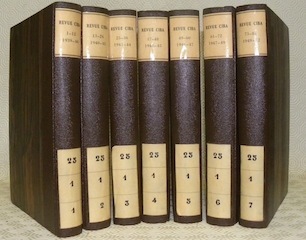
77385Bâle, Ciba 1939 - 1952, 240x175mm, demi-percaline. Plats papier bois. Couvertures supérieures conservées. Etiquettes de titre imprimé sur le haut et de cotation sur le bas. Hormis cachets de bibliothèques, très bel exemplaire. SOMMAIRE: n.° 1: L’Ecole de médecine de Montpellier. - n.° 2: La médecine à la cour de Louis XIV. - n.° 3: Le développement de la génétique. - n.° 4: Les symboles de la médecine. - n.° 5: L’Islam et la médecine. - n.° 6: Superstitions médicales des Tziganes. - n.° 7: Benins et animaux venimeux. - n.° 8: Médecine et mesure du temps. - n.° 9: Médecine babylonienne. - n.° 10: Les Peaux-Rouges et leur médecins. - n.° 11: Le rôle des médecins pendant la Révolution française. - n.° 12: Les Grands Mongols et leurs médecins. - n.° 13: La Croix-Rouge, son histoire et son oeuvre. - n.° 14: Le médecin chez les anciens Romains. - n.° 15: Evolution de la médecine hindoue. - n.° 16: L’apprivoisement et le dressage des animaux sauvages. - n.° 17: La promotion au grade de docteur en médecine. - n.° 18: Portraits de médecins du début de la photographie. - n.° 19: La médecine dans l’Egypte ancienne. - n.° 20: La culture des tissus. - n.° 21: Napoléon et ses médecins. - n.° 22: La Faculté de médecine de Bologne. - n.° 24: Hachich. - n.° 25: La médecine dans l’art de la porcelaine. - n.° 26: L’hermaphrodisme. - n.° 27: Salerne. - n.° 28: Le développement de la technique de coloration histologique. - n.° 29: Portraits de médecins. - n.° 30: Réalisations techniques de médecins. - n.° 31: Animaux sauvages en captivité. - n.° 32: L’enseignement médical à Oxford et à Cambridge. - n.° 33: La main. - n.° 34: Les sciences iatriques. - n.° 35: Le nourrisson. - n.° 36: Problèmes de symétrie. - n.° 37: Le vêtement et l’hygiène. - n.° 38: La médecine dans l’Espagne de l’âge d’or. - n.° 39: L’embryon. - n.° 40: L’hygiène au moyen âge. - n.° 41: Le sel. - n.° 42: Le tatouage. - n.° 43: La respiration. - n.° 44: Le bétel. - n.° 45: L’évolution de l’hygiène urbaine et domestique. - n.° 46: Le rêve. - n.° 47: La médecine dans l’ancien Pérou. - n.° 48: Les fondements littéraires de la pharmacologie arabe. - n.° 49: Vases à médicaments. - n.° 50: Le thermomètre. - n.° 51: La médecine des Aztèques. - n.° 52: La médecine en Angleterre à l’époque des Tudors. - n.° 53: La coca. - n.° 54: L’anatomie galénique. - n.° 55: Le soufre. - n.° 56: Les médecins et la politique. - n.° 57: Le masque et la maladie. - n.° 58: Fétiches, amulettes, talismans. - n.° 59: La renaissance de l’anatomie. - n.° 60: Le chamanisme. - n.° 61: L’initiation. - n.° 62: L’oreille et l’ouïe - n.° 63: Culte du crâne, têtes-trophées et scalps. - n.° 64: L’injection. - n.° 65: La Faculté de médecine de Paris. - n.° 66: L’eau. - n.° 67: Le mesmérisme. - n.° 68: La médecine à Bali. - n.° 69: Anatomia animata. - n.° 70: Médecine et cinéma. - n.° 71: Le thé. - n.° 72: La surdi-mutité. - n.° 73: L’école de médecine d’Edimbourg. - n.° 74: Yoga. - n.° 75: Le Lait. - n.° 76: La médecine en Russie jusau’à la mort de Pierre le Grand. - n.° 77: Le microscope. - n.° 78: Le tabac. - n.° 79: Antisepsie et asepsie. - n.° 80: La sécrétion interne. - n.° 81: L’iode. - n.° 82: L’hystérie. - n.° 83: Les débuts de l’obstétrique. - n.° 84: Le test psychologique.