ALEMBERT (Jean Le Rond d').Livre Rare Book
958 résultats
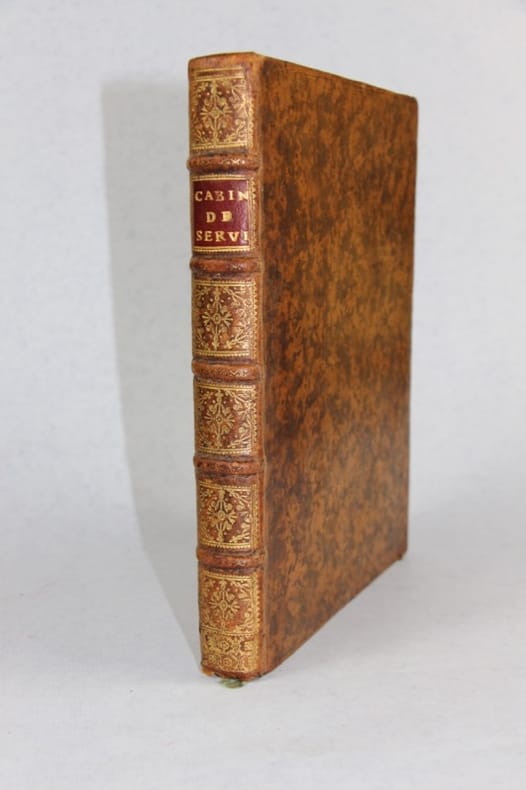
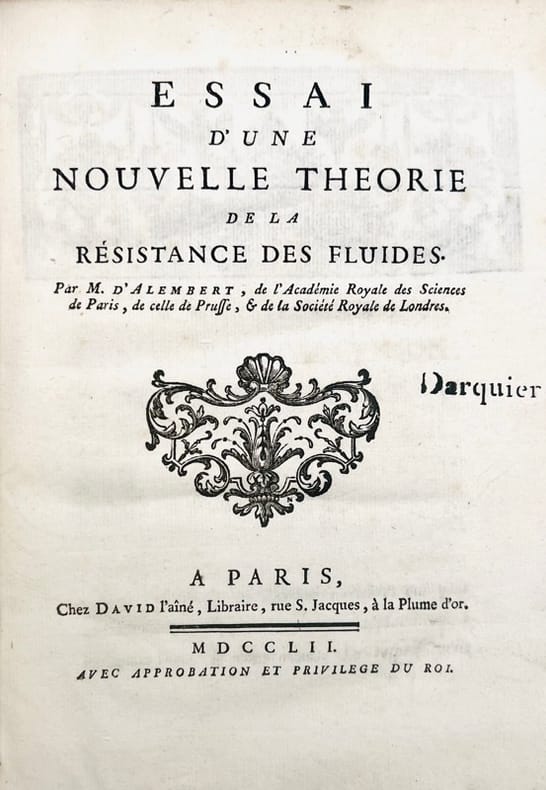
175244469Paris, David l'aîné, 1752. In-4 de XLVI-212 pp., 2 planches repliées, veau marbré, dos orné à nerfs, pièce de titre fauve, tranche rouges (reliure de l'époque).
179086816chez l'auteur, rue & île Saint Louis, n° 105 | Paris 1790 | 13.30 x 20.90 cm | relié
176982929Chez Gueffier | à Paris 1769 - 1770 | 12 x 20.30 cm | 4 volumes reliés
174160837Chez Jean Desaint , Charles Saillant | Paris 1741 | 20 x 27.20 cm
1787601511 vol. petit in-8 reliure début XIXe pleine basane racinée, format 17,8 x 11,5 cm (mesures en marges), [ Salvator Rosa : ] A Paris, chez Chéreau rue St Jacques, aux 2 Piliers d'Or, s.d. [ circa 1718-1729 ? ], 60 planches (y compris le titre) ; [Martinet : ], s.n., s.l., s.d. [ circa 1787-1796 ], 38 planches rehaussées en couleurs
17627505Chez Pierre Gosse Junior | à La Haye 1762 | 19.5 x 25.4 cm | Deux tomes en un Vol. relié
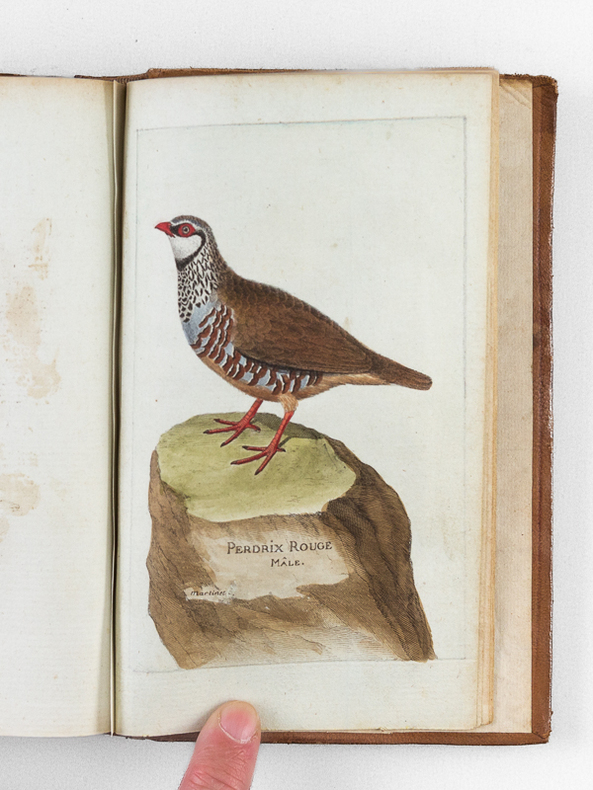
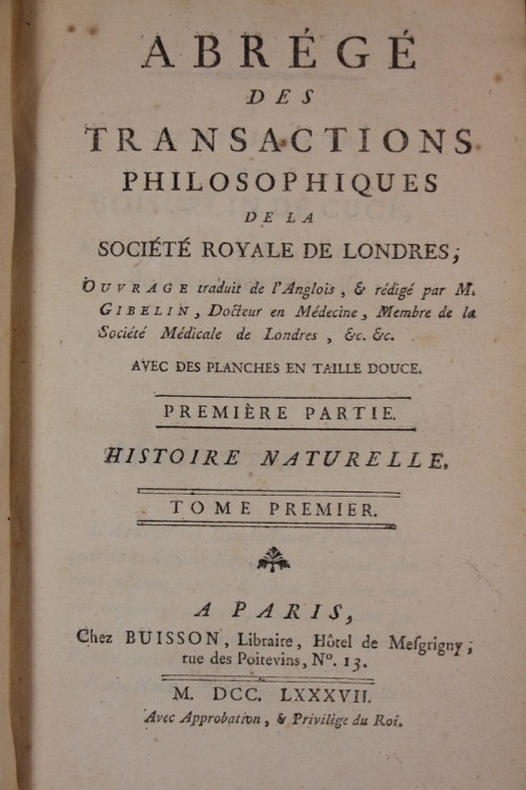
1790136810Buisson, 1787 1790 Douze parties en 14 volumes in-8 plein veau marbré, dos lisses ornés, pièces de titre et de tomaison rouge et verte, filet sur les coupes. Table des articles et index à ch. vol. Planches. Divisé en douze parties : I. Histoire naturelle. 2 vol. 21 pl. repl. ; II. Botanique. 2 vol. 2 pl. ; III. Physique expérimentale. Etablie par M. Reynier. 2 vol. 7 pl. 1 déliée ; V. Chimie. Etablie par M. Pinel. 1 vol. ; VI. Anatomie et physique animale. Etablie par M. Pinel. 1 vol. 2 pl. ; VII. Médecine et chirurgie. Etablie par M. Pinel. 2 pl. ; VIII. Matière médicale et pharmacie. Etablie par MM. Wilmet, Bosquillon & Pinel. 2 vol. ; X. Mélanges, observations, voyages. Etablie par M. Millin de Grandmaison; XI - XII. Antiquités et beaux-arts, inventions et machines. Etablie par M. Millin de Grandmaison. 2 vol. 4 pl. & 2 diagr. repliées. Les 3e et 9e partie n’ont été publiées. L’exemplaire est complet des 9 sections en 14 volumes et 38 planches, tel que diffusé à Paris, par le citoyen Buisson. Quelques rousseurs éparses. Petites usures et frottements. Une coiffe usée en pied. Très bon exemplaire.
1771LRB677Herissant le fils Paris 1771 Édition : Première édition française — Nombre de volumes : 3 — Reliure : Plein veau marbré d'époque, dos à nerfs ornés de fleurons dorés, pièces de titre et de tomaison en maroquin rouge — Format : in-12 (env. 17 x 10 cm) — Illustrations : Figures gravées en taille-douce, dont plusieurs planches dépliantes hors-texte (machines électriques, batteries de bouteilles de Leyde, etc.) — Langue : Français — État du livre : Bon exemplaire d'usage. Frottements aux plats et aux coupes, coiffes émoussées, petites fentes aux mors, coins arrondis. Quelques rousseurs éparses et très rares taches, papier bien préservé. Planches propres et bien complètes pour l'ensemble vu
1785876331785. American Academy of Arts and Sciences. MEMOIRS OF THE AMERICAN ACADEMY OF ARTS AND SCIENCES: TO THE END OF THE YEAR MDCCLXXXIII. Vol. 1: Boston: Adams and Nourse 1785. i-iii - xxxii 568pp. 1 f.errata. 4to 10 1/2" x 8 1/2". Six folding plates. Contemporary calf binding. Front and rear hinges cracked but attached. Vol. 2: pt.1 Isaiah Thomas & Ebenezer T. Andrews 1793. i-v- 200. pt.2 Charlestown: Samuel Etheridge 1804. i-iii - 24. 1- -168. Bound as one in contemporary calf. Contains 3 plates including one folding plate of a reproduction of James Winthrop's sketch of the Deighton Rock petroglyphs.Front board detached; rear hinge cracked. Ex-library copy previously owned by noted Boston physician Buckminster Brown. Text is mostly clean with some mild foxing and ink staining . First two volumes of the series published by one of the oldest and most prestigious honorary societies in the country. Created during the Revolution it included John Adams Thomas Jefferson and John Hancock among other luminaries. Volume 2 which includes an obituary of George Washington published in 1804 is quite scarce. $3250.00. unknown books
17974009A Paris, de l'Imprimerie de Du Pont, 1797-1804. 90 livraisons reliées en 1 vol. in-4 de 192-192-336 (mal chiffré 236) pp., veau raciné, dos lisse orné, pièces de titre et de tomaison en maroquin havane et vert (reliure de l'époque).
1760607455Amsterdam, Mortier, 1706-1760. M. gest. Tit.-Vign. u. Front. u. zahlr. Kpfr.-Taf. Versch. geb. (Prgt., Ldr. d. Zt.), wenige brosch. Einbde. teils berieben, bestoßen u. angeschmutzt, wenige leicht beschäd. u. m. Rsign. Teils m. St. Gebräunt bzw. braunfl.
173744514Napoli, , 1737. In-4 de XI-(1)-300-(2) pp., frontispice gravé, errata, veau brun, dos orné à nerfs, pièce de titre en maroquin rouge (reliure de l'époque).
1733129299Lyon, David Forey, 1733 In-4, basane marbree, dos orne, tranches jaspees Reliure de l'époque, 12ff. n.ch. 152 pp. & 4ff. n.ch. 93 planches hors texte de machines gravees en taille-douce par Étienne-Joseph Daudet, ainsi qu'un bandeau aux armes du duc d’Orleans par André Houat. Trois piqures de ver sur un caisson, rares petites rousseurs éparses.
171743065Firenze, Nella Stamperia S.A.R. Per Gio: Gaetano, e Sant Franchi, 1717. 4to. Contemporary full vellum with handwritten title to spine. A bit of wear to capitals and a bit of minor soiling to boards, but a fine and handsome copy. Inner hinges a bit weak. Internally nice and clean, with just a bit of light minor occasional brownspotting. Large engraved pictorial vignette (heading: Accdemia Fiorentina) to title-page. Very nice woodcut vignettes and initials throughout. XXXI, (1), 676, (2, - Approvazioni) pp. [Viviani's Galilei-biography: pp. 397-431].
175971753Chez Thomas Herissant | à Paris 1759 | 10 x 17.20 cm | 3 volumes reliés
17166490CBZürich, Bodmerische Truckerey, 1716-1718. Kl.-4°. (4), 268, (6) S.; (16), 480, (8) S.; (16), 336 S. Mit gest. Frontispiz; Tl. I: Tafeln I, II und V sowie 1 unn. Taf.; Tl. II: Tafeln I-XII plus 2 unn. gef. Tafeln zu Teil I gehörend (Bergsturz von Plurs); Tl. III: 17 unn. Tafeln (mit fortlaufend num. Abbildungen). Pergamentband der Zeit mit hs. Rückentitel, goldgepr. Wappensupralibros. + Wichtig: Für unsere Kunden in der EU erfolgt der Versand alle 14 Tage verzollt ab Deutschland / Postbank-Konto in Deutschland vorhanden +, bild 3 Teile in 1 Bd.
179962602Kiøbenhavn, Thiele, 1781 - 1799. 4to. Uniformly bound, uncut, in recent blue boards. Stamp to title-page in vol. 1 (Det Kongelige Danske Videnskabernes Selskab). Washed. A very nice and clean copy. XII, 640, (20) pp. 19 plates VIII, (4), 603, (13) pp. + 17 plates XII, 576, (1) pp. + 18 plates XII, 621 pp. + 7 plates XII, 670 pp. + 10 plates.
1734D4425Paris: Par La Compagnie des Libraires 1734. Hardcover. Very Good. Three volumes comprising Vol. III parts I to III of Memoires de lAcadémie Royale des Sciences depuis 1666 jusquà 1699. Paris: Par La Compagnie des Libraires 1733-1734. Part I: 231pp.; Part II: 294pp.; Part III: 215pp. 97 engraved folding plates depicting animals and skeletal diagrams. Engraved portrait frontispiece of Claude Perrault in first volume. Contemporary French calf spines gilt edges red; some occasional browning; repairs to joints some rubbing. Unidentified armorial bookplate to front pastedown beneath monogrammed bookplate D.P. with chipmunk and two mice. A later reduced format edition of Perraults Memoires of 1671-1676 Perraults study of this nature was first published in 1669 with the results of investigations of five animals and later expanded with studies of over forty animals. Prior to 1670 most descriptions of animals paid little attention to their internal structure and there were very few images in natural history encyclopedias that depicted skeletons or muscles. That changed with the establishment of the Académie des Sciences in Paris in 1666 by Jean-Baptiste Colbert with the approval of King Louis XIV. The Academy functioned with neither statutes nor regulations until 1699. At that time the Academy used the term mathématique to encompass the fields that are now called astronomy mathematics and physics and the term physique to encompass the fields that are now called anatomy botany zoology and chemistry. In January 1699 Louis reorganized the Academy giving it first regulations. The effect was to give the King more control over their activities in exchange for becoming an official institution under his protection with the new name Académie Royale des Sciences. One of the original academicians the physician Claude Perrault organized regular sessions at which participants could dissect deceased animals from Louis XIVs royal menagerie and record all they observed. Lions chameleons bears gazelles wolves ostriches crocodiles monkeys eagles tigers porcupines and salamanders among some were all laid open by the academics scalpels. These superb folding plates record in great detail the pioneering work at the Academy. These three volumes in three parts focus on the transformative and foundational years of the French Royal Academy of Sciences and Claude Perraults efforts which had made comparative anatomy a vital tool for the classifying naturalist. <br/><br/> Par La Compagnie des Libraires hardcover books
1734D4425Paris: Par La Compagnie des Libraires 1734. Hardcover. Very Good. Three volumes comprising Vol. III parts I to III of Memoires de lAcadémie Royale des Sciences depuis 1666 jusquà 1699. Paris: Par La Compagnie des Libraires 1733-1734. Part I: 231pp.; Part II: 294pp.; Part III: 215pp. 97 engraved folding plates depicting animals and skeletal diagrams. Engraved portrait frontispiece of Claude Perrault in first volume. Contemporary French calf spines gilt edges red; some occasional browning; repairs to joints some rubbing. Unidentified armorial bookplate to front pastedown beneath monogrammed bookplate D.P. with chipmunk and two mice. A later reduced format edition of Perraults Memoires of 1671-1676 Perraults study of this nature was first published in 1669 with the results of investigations of five animals and later expanded with studies of over forty animals. Prior to 1670 most descriptions of animals paid little attention to their internal structure and there were very few images in natural history encyclopedias that depicted skeletons or muscles. That changed with the establishment of the Académie des Sciences in Paris in 1666 by Jean-Baptiste Colbert with the approval of King Louis XIV. The Academy functioned with neither statutes nor regulations until 1699. At that time the Academy used the term mathématique to encompass the fields that are now called astronomy mathematics and physics and the term physique to encompass the fields that are now called anatomy botany zoology and chemistry. In January 1699 Louis reorganized the Academy giving it first regulations. The effect was to give the King more control over their activities in exchange for becoming an official institution under his protection with the new name Académie Royale des Sciences. One of the original academicians the physician Claude Perrault organized regular sessions at which participants could dissect deceased animals from Louis XIVs royal menagerie and record all they observed. Lions chameleons bears gazelles wolves ostriches crocodiles monkeys eagles tigers porcupines and salamanders among some were all laid open by the academics scalpels. These superb folding plates record in great detail the pioneering work at the Academy. These three volumes in three parts focus on the transformative and foundational years of the French Royal Academy of Sciences and Claude Perraults efforts which had made comparative anatomy a vital tool for the classifying naturalist. <br/><br/> Par La Compagnie des Libraires hardcover
174014160Paris: de L’Imprimerie Royale 1740. Complete with errata’s and original blank leaves two of three finely engraved frontispieces chapter vignettes ornamental head and tail pieces and 82 folding plates. Full mottled calf rebacked the corners a bit worn. Interior is lightly toned with some browning on the preliminaries and last leaves. Generally this is an excellent set. First editions of these three volumes from a series published by the Academy of Sciences. It is a summary of the activities and inventions that have been made and contains the most important discoveries of the time. These periodicals which were at the forefront of scientific development during the Enlightenment contain works produced by an elite class of French scientist for the years 1722 1731 and 1740. Each volume provided an overview of advancements in math and science for each year and the writings therein shaped the world’s understanding of physics mathematics astronomy anatomy and other fields of science. They further provide invaluable historical data such as meteorological and astrological records for each year. <br /> <br /> The memoirs for 1722 include data recorded on both a lunar and solar eclipse as well as other astronomical observations by Jacques Cassini 1677-1756 best know for completing his fathers work on determining the meridian of Paris. The distinguished astronomer provided further research on lunar eclipses in the memoirs of 1731 where he is in great company alongside distinguished mathematicians Alexis-Claude Clairaut 1713-1765 Pierre Bouguer 1698-1758 known for his work in physics photometry and hydrography and the foremost proponent of the Newtonian movement in France Pierre de Maupertuis 1698-1759. Of special note in the 1731 memoirs is Maupertuis’s ballistic arithmetic which was used to try to better understand the movement of the earth and its gravity. Too an article by Clairaut on new formulas for finding the center of gravity. These articles contributed greatly to a better understanding of the earth’s shape and the mechanics of its rotation particularly Bouguer’s essay on the tendency of objects set in motion to move in a curvilinear fashion. The 1740 edition contains Cassini De Thury’s De la Maridienne de Paris. which was an important step in the process of mapping the shape of the earth. Cassini 1714-1784 representing the third generation of the distinguished family of astronomers was the first to question <br /> <br /> <br /> Picard’s measurements which had been used to map the Maridian of Paris. Clairaut’s essay on integral calculus in the same volume which established the existence of an integrating factor for linear differential equations was an important step in the history of mathematics and Mairan’s treatise on reflection and refraction of light and the human eye was essential to the advancement of optics. Mairan 1678-1771 would set the foundation for optical theory with this treatise. de L’Imprimerie Royale unknown
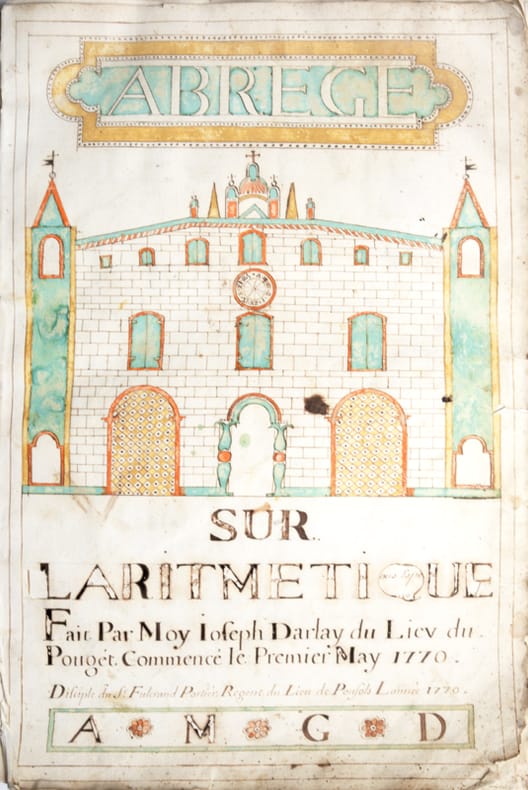
177042912Le Pouget, , 1770. In-folio manuscrit (29 x 42 cm) de (38) ff., vélin (reliure de l’époque).
175166681chez Jacques Rollin chez Charles Antoine Jombert | à Paris 1751 | 20.50 x 26.50 cm | relié
176226629Berlin Stettin und Leipzig Johann Heinrich Rüdigern 1762-75. 4to. Bound in 13 fine uniform full calf raised bands gilt backs. Remains of paperlabels on backs. Top of spine on one volume frayed. Small rubber stamp on titles. A few brownspots. A good copy. Having in all 374 of 585 fine engraved plates 1 plate supplied in xerox-copy. Plates measure around 37x24cm. <br/><br/><em>First German edition of one of the main works of the 18th century in the fields of crafts and technology as it is a translation of the famous series "Description des Arts et Metiers" issued by Academie Royale des Sciences 1760-75. The French edition was published in folio. Band 1: Kohlenbrennen Lichtziehen Ankerschmieden Nadler Papiermacher. 31 plates and 1 table;Band 2: Eisenhämmer. Teil 1-2 Wachsziehen Pergamentmachen Leder-Vergoldung Schieferbrüche. 22 plates; Band 3: Eisenhämmer. Teil 3-4 Spielkartenherstellung Seidenfärberei Pappenmacher. 29 plates 1 plate supplied in xerox-copy; Band 4: Böttcherkunst Weißgerber Ziegelstreichen Zuckersieden Silber affinieren. 30 plates; Band 5: Messingherstellung Tuchmacherkunst Lohgerberei. 33 plates. Band 6: Tuchfrisierkunst Saffianleder-Herstellung Leder auf ungarische Art Weißgerber Hutmacher Dachdecker. 19 plates; Band Band 7: Tapetenweberei Kalkbrennerkunst Ziegelstreichen in Holland Ziegelhütten Ball- und Raquettenmacher. 30 plates and 1 table; Band 8: Perückenmacherkunst Müller Nudelmacher und Bäcker. 15 plates; Band 9: Schuster Schlösserkunst. 48 plates; Band 10: Steinkohlenbergbau Indigobereiter. 22 plates; Band 11: Eisenbergwerke und Hüttenwerke in der Steiermark Leimsiederei Fischerei Teil 1. 25 plates and 1 table; Band 12: Fischerei Teil 2. 50 plates; Band 13: Fischerei Teil 3 Porzellanherstellung. 23 plates and 1 engr. frontisp.; Band 14: Glasmalerei und Glasarbeiten. Mit 13 von 14 Tafeln; Band 15: Wollenzeugfabrikant. 17 plates; Band 16: Seifensider Leinwandhandel Schneiderhandwerk Leinenmanufaktur Tabaksmanufaktur. 27 plates; Band 17: Bleiarbeiter mathematische und astronomische Instrumente Baumwoll-Samtfabrikation. 38 plates; Band 18: Stickerkunst Siebmacher Riemer und Sattler mit Kutschenbau Drahtzieherei Stahlblattmacher. 51 plates Band 19: Schiffbaukunst. 18 plates and 1 engr. frontisp.;Band 20: Zinngießerkunst. 32 plates; Band 21: der Strumpfwirkerstuhl und sein Gebrauch. 14 plates. </em> hardcover
17385783A Amsterdam, chez Etienne Ledet & Compagnie, 1738. In-8 de 1 frontispice gravé, 2 portraits, (6)-XII-(2)-399-(1)-(400 à) 410-(6) pp., veau brun, dos orné à nerfs, pièce de titre en maroquin rouge (reliure de l'époque).
176256316Königsberg und Leipzig Kanter Berlin Stettin Leipzig Rüdigern 1762-75. 4to. Bound in 13 uniform contemp. full calf. Raised bands. Richly gilt spines. Titlelabels with gilt lettering. On all boards the gilt monogram on red background of King Christian VII. A stamp on title-pages. Around 6000 pp. 4 folded tables and 366 folded engraved plates 1 plate in xerox-copy. Occassionally a few minor brownspots but fine and clean. <br/><br/><em>First German edition of this importent collection of books on crafts which is a translation of "Descriptions des Arts et Métiers." published in French between 1761 and 1788. The full French series comprises 113 parts cahiers in 27 folio volumes along with three supplements and "provide detailed accounts of a wide range of handcraft and manufacturing processes carried out in France at that time. The volumes are well-illustrated with precise engravings by Jean Elie Bertrand 1737-1779 a noted typographer from Neuchâtel where the printing was done. Many of them provide the background for shorter articles in Diderot's Encyclopedia which was appearing at much the same time. The project had its origin in request from Colbert in 1675 to the Academy Royal des Sciences for detailed accounts of various mechanic arts to be prepared and for new machines to be reported upon. This led to the formation of the Bignon Commission under Abbé Bignon. René-Antoine Ferchault de Réaumur 1683-1757 became editor soon after he joined the Academy. He inherited number of drawings the earliest prepared in 1693 and an illustrated manuscript on printing type and book binding which had been prepared in 1704. It was left to Réaumur's successor Duhamel du Monceau to bring about the publication of the series probably as the result of the competition from the Encyclopedia." Wikipedia.Brunet II618 ff. only French editions - Graesse II 367 only the French editions. - Fromm 7040. </em> hardcover