Brookshaw, GeorgeBiblio.com

388 résultats
1817746London:: Longmans Hurst Rees Orme & Brown 1817. First edition. Fine with original hand-coloring. Fine original hand-colored stipple engraving. Pl. XXVII Duke of Marlborough's & Rumbullion Peaches. Large Quarto Edition 11 x 13.5 inches. Pomona Britannica is considered one of the most distinguished pomologies ever produced and is described as "one of the finest colour-plate books in existence." Prideaux. Named for Pomona the Roman Goddess of Fruit and Fruit Trees a pomology is simply a treatise on fruit culture. However there was nothing simple about the intent and execution of this fine work. In an effort to educate the landed country gentleman on the cultivation of fruit George Brookshaw 1751-1823 rendered and described the finest fruit under cultivation in the most esteemed gardens in London and the Royal Gardens particularly around Hampton Court and Kensington. Very little is known about the early years of Brookshaw's life and education. He was born in Birmingham and died an undistinguished death in London. However during the late 18th Century Brookshaw enjoyed significant notoriety as a talented cabinetmaker distinguished by royal patronage. Receipts from the Prince of Wales dating 1783 document the finely painted furniture commissioned from G. Brookshaw. Elegant cabinets tables and chimney pieces were painted with exquisite allegorical scenes bouquets of flowers and abundant cornucopias offering a glimpse into what was to become the hallmark of Brookshaw's talent; elegant and fluid renditions of fruit and flowers. George's talent as an engraver was perhaps influenced by Richard Brookshaw brother an established and talented mezzotint engraver in Paris during the 19th Century. Richard Brookshaw engraved several of the plates for the Folio edition of Pomona Britannica c.1812 however as the last of Richard's engravings are dated 1804 we conclude every one of the plates in this large Quarto edition were engraved by George Brookshaw himself. This edition should not be considered a miniature version of the Folio edition where the fruit is set on dark mezzotint grounds. This large Quarto edition features beautifully hand-colored stipple engravings which float on soft ivory backgrounds. Ref. Dunthorne 55 Christie's 4-97. Longmans, Hurst, Rees, Orme, & Brown, unknown
1817744London:: Longmans Hurst Rees Orme & Brown 1817. First edition. Fine with original hand-coloring. Fine original hand-colored stipple engraving. Pl. XXV Montauban Grosse Mignonne & Old Royal George Peaches. Large Quarto Edition 11 x 13.5 inches. Pomona Britannica is considered one of the most distinguished pomologies ever produced and is described as "one of the finest colour-plate books in existence." Prideaux. Named for Pomona the Roman Goddess of Fruit and Fruit Trees a pomology is simply a treatise on fruit culture. However there was nothing simple about the intent and execution of this fine work. In an effort to educate the landed country gentleman on the cultivation of fruit George Brookshaw 1751-1823 rendered and described the finest fruit under cultivation in the most esteemed gardens in London and the Royal Gardens particularly around Hampton Court and Kensington. Very little is known about the early years of Brookshaw's life and education. He was born in Birmingham and died an undistinguished death in London. However during the late 18th Century Brookshaw enjoyed significant notoriety as a talented cabinetmaker distinguished by royal patronage. Receipts from the Prince of Wales dating 1783 document the finely painted furniture commissioned from G. Brookshaw. Elegant cabinets tables and chimney pieces were painted with exquisite allegorical scenes bouquets of flowers and abundant cornucopias offering a glimpse into what was to become the hallmark of Brookshaw's talent; elegant and fluid renditions of fruit and flowers. George's talent as an engraver was perhaps influenced by Richard Brookshaw brother an established and talented mezzotint engraver in Paris during the 19th Century. Richard Brookshaw engraved several of the plates for the Folio edition of Pomona Britannica c.1812 however as the last of Richard's engravings are dated 1804 we conclude every one of the plates in this large Quarto edition were engraved by George Brookshaw himself. This edition should not be considered a miniature version of the Folio edition where the fruit is set on dark mezzotint grounds. This large Quarto edition features beautifully hand-colored stipple engravings which float on soft ivory backgrounds. Ref. Dunthorne 55 Christie's 4-97. Longmans, Hurst, Rees, Orme, & Brown, unknown
1817745London:: Longmans Hurst Rees Orme & Brown 1817. First edition. Fine with original hand-coloring. Fine original hand-colored stipple engraving. Pl. XXVI Late Admirable Double Mountain & Red Magdalen Peaches. Large Quarto Edition 11 x 13.5 inches. Pomona Britannica is considered one of the most distinguished pomologies ever produced and is described as "one of the finest colour-plate books in existence." Prideaux. Named for Pomona the Roman Goddess of Fruit and Fruit Trees a pomology is simply a treatise on fruit culture. However there was nothing simple about the intent and execution of this fine work. In an effort to educate the landed country gentleman on the cultivation of fruit George Brookshaw 1751-1823 rendered and described the finest fruit under cultivation in the most esteemed gardens in London and the Royal Gardens particularly around Hampton Court and Kensington. Very little is known about the early years of Brookshaw's life and education. He was born in Birmingham and died an undistinguished death in London. However during the late 18th Century Brookshaw enjoyed significant notoriety as a talented cabinetmaker distinguished by royal patronage. Receipts from the Prince of Wales dating 1783 document the finely painted furniture commissioned from G. Brookshaw. Elegant cabinets tables and chimney pieces were painted with exquisite allegorical scenes bouquets of flowers and abundant cornucopias offering a glimpse into what was to become the hallmark of Brookshaw's talent; elegant and fluid renditions of fruit and flowers. George's talent as an engraver was perhaps influenced by Richard Brookshaw brother an established and talented mezzotint engraver in Paris during the 19th Century. Richard Brookshaw engraved several of the plates for the Folio edition of Pomona Britannica c.1812 however as the last of Richard's engravings are dated 1804 we conclude every one of the plates in this large Quarto edition were engraved by George Brookshaw himself. This edition should not be considered a miniature version of the Folio edition where the fruit is set on dark mezzotint grounds. This large Quarto edition features beautifully hand-colored stipple engravings which float on soft ivory backgrounds. Ref. Dunthorne 55 Christie's 4-97. Longmans, Hurst, Rees, Orme, & Brown, unknown
1817747London:: Longmans Hurst Rees Orme & Brown 1817. First edition. Fine with original hand-coloring. Fine original hand-colored stipple engraving. Pl. XXIX Bourdine Nivette or Belle de Vitry Peaches. Large Quarto Edition 11 x 13.5 inches. Pomona Britannica is considered one of the most distinguished pomologies ever produced and is described as "one of the finest colour-plate books in existence." Prideaux. Named for Pomona the Roman Goddess of Fruit and Fruit Trees a pomology is simply a treatise on fruit culture. However there was nothing simple about the intent and execution of this fine work. In an effort to educate the landed country gentleman on the cultivation of fruit George Brookshaw 1751-1823 rendered and described the finest fruit under cultivation in the most esteemed gardens in London and the Royal Gardens particularly around Hampton Court and Kensington. Very little is known about the early years of Brookshaw's life and education. He was born in Birmingham and died an undistinguished death in London. However during the late 18th Century Brookshaw enjoyed significant notoriety as a talented cabinetmaker distinguished by royal patronage. Receipts from the Prince of Wales dating 1783 document the finely painted furniture commissioned from G. Brookshaw. Elegant cabinets tables and chimney pieces were painted with exquisite allegorical scenes bouquets of flowers and abundant cornucopias offering a glimpse into what was to become the hallmark of Brookshaw's talent; elegant and fluid renditions of fruit and flowers. George's talent as an engraver was perhaps influenced by Richard Brookshaw brother an established and talented mezzotint engraver in Paris during the 19th Century. Richard Brookshaw engraved several of the plates for the Folio edition of Pomona Britannica c.1812 however as the last of Richard's engravings are dated 1804 we conclude every one of the plates in this large Quarto edition were engraved by George Brookshaw himself. This edition should not be considered a miniature version of the Folio edition where the fruit is set on dark mezzotint grounds. This large Quarto edition features beautifully hand-colored stipple engravings which float on soft ivory backgrounds. Ref. Dunthorne 55 Christie's 4-97. Longmans, Hurst, Rees, Orme, & Brown, unknown
1817748London:: Longmans Hurst Rees Orme & Brown 1817. First edition. Fine with original hand-coloring. Fine original hand-colored stipple engraving. Pl. XXX Chancellor Catherine & Old Newington Peaches. Large Quarto Edition 11 x 13.5 inches. Pomona Britannica is considered one of the most distinguished pomologies ever produced and is described as "one of the finest colour-plate books in existence." Prideaux. Named for Pomona the Roman Goddess of Fruit and Fruit Trees a pomology is simply a treatise on fruit culture. However there was nothing simple about the intent and execution of this fine work. In an effort to educate the landed country gentleman on the cultivation of fruit George Brookshaw 1751-1823 rendered and described the finest fruit under cultivation in the most esteemed gardens in London and the Royal Gardens particularly around Hampton Court and Kensington. Very little is known about the early years of Brookshaw's life and education. He was born in Birmingham and died an undistinguished death in London. However during the late 18th Century Brookshaw enjoyed significant notoriety as a talented cabinetmaker distinguished by royal patronage. Receipts from the Prince of Wales dating 1783 document the finely painted furniture commissioned from G. Brookshaw. Elegant cabinets tables and chimney pieces were painted with exquisite allegorical scenes bouquets of flowers and abundant cornucopias offering a glimpse into what was to become the hallmark of Brookshaw's talent; elegant and fluid renditions of fruit and flowers. George's talent as an engraver was perhaps influenced by Richard Brookshaw brother an established and talented mezzotint engraver in Paris during the 19th Century. Richard Brookshaw engraved several of the plates for the Folio edition of Pomona Britannica c.1812 however as the last of Richard's engravings are dated 1804 we conclude every one of the plates in this large Quarto edition were engraved by George Brookshaw himself. This edition should not be considered a miniature version of the Folio edition where the fruit is set on dark mezzotint grounds. This large Quarto edition features beautifully hand-colored stipple engravings which float on soft ivory backgrounds. Ref. Dunthorne 55 Christie's 4-97. Longmans, Hurst, Rees, Orme, & Brown, unknown
1817749London:: Longmans Hurst Rees Orme & Brown 1817. First edition. Fine with original hand-coloring. Fine original hand-colored stipple engraving. Pl. XXXIV Murry & Newington Nectarine. Large Quarto Edition 11 x 13.5 inches. Pomona Britannica is considered one of the most distinguished pomologies ever produced and is described as "one of the finest colour-plate books in existence." Prideaux. Named for Pomona the Roman Goddess of Fruit and Fruit Trees a pomology is simply a treatise on fruit culture. However there was nothing simple about the intent and execution of this fine work. In an effort to educate the landed country gentleman on the cultivation of fruit George Brookshaw 1751-1823 rendered and described the finest fruit under cultivation in the most esteemed gardens in London and the Royal Gardens particularly around Hampton Court and Kensington. Very little is known about the early years of Brookshaw's life and education. He was born in Birmingham and died an undistinguished death in London. However during the late 18th Century Brookshaw enjoyed significant notoriety as a talented cabinetmaker distinguished by royal patronage. Receipts from the Prince of Wales dating 1783 document the finely painted furniture commissioned from G. Brookshaw. Elegant cabinets tables and chimney pieces were painted with exquisite allegorical scenes bouquets of flowers and abundant cornucopias offering a glimpse into what was to become the hallmark of Brookshaw's talent; elegant and fluid renditions of fruit and flowers. George's talent as an engraver was perhaps influenced by Richard Brookshaw brother an established and talented mezzotint engraver in Paris during the 19th Century. Richard Brookshaw engraved several of the plates for the Folio edition of Pomona Britannica c.1812 however as the last of Richard's engravings are dated 1804 we conclude every one of the plates in this large Quarto edition were engraved by George Brookshaw himself. This edition should not be considered a miniature version of the Folio edition where the fruit is set on dark mezzotint grounds. This large Quarto edition features beautifully hand-colored stipple engravings which float on soft ivory backgrounds. Ref. Dunthorne 55 Christie's 4-97. Longmans, Hurst, Rees, Orme, & Brown, unknown
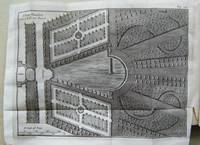
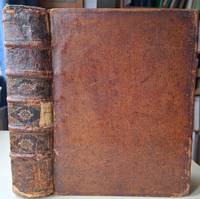
1724016588The Half-Moon over against St Dunstan's Church: Tho. Woodward 1724. Illustrated with three folding engraved plates commendation leaf title page pp 22 333 though actually 332 14 three page bookseller's advertisement the largest plate has several splits at the folds but there is no loss slight age-toning internally but otherwise clean and sound contemporay calf blind-stamped unlettered spine some rubbing wear scuffs and marks but still very sound and with an attractive patina. Blanche Henrey 1413 - mentioning the gap in pagination. Switzer c.1683 - 1745 was a nurserymanseedsman and garden designer. A sound practical gardener and an early advocate of naturalistic gardening - "If the Beauties of Nature were not corrupted by Art gardens would be much more valuable". First Edition. Full Leather. Good. Tho. Woodward Hardcover
1724016682The Half-Moon over against St Dunstan's Church: Tho. Woodward 1724. Illustrated with three folding engraved plates commendation leaf title page pp 22 333 though actually 332 14 three page bookseller's advertisement the plates have slight wear and small tears but there is no loss some age-toning internally throughout endpapers browned a small neat number written on the front endpaper but otherwise clean and sound contemporay panelled calf blind-stamped some rubbing wear scuffs and marks neatly re-backed with a new leather spine with raised bands probably twentieth century very sound. Blanche Henrey 1413 - mentioning the gap in pagination. Switzer c.1683 - 1745 was a nurserymanseedsman and garden designer. A sound practical gardener and an early advocate of naturalistic gardening - "If the Beauties of Nature were not corrupted by Art gardens would be much more valuable". First Edition. Full Leather. Good. Tho. Woodward Hardcover
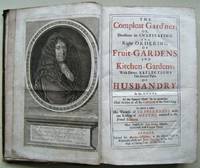
1697021059Amsterdam: Henri Desbordes 1697. Third edition revised and augmented with a chapter on the culture of melons and new instructions for cultivating flowers. Two volumes bound in one small quarto with five title pages four of which are printed in red and black 13 engraved plates of which two are folding. an engraved portrait 11 attractive engraved chapter headings 12 small engravings within the text pp 13 274 2; 344 8 140 19 one marginal tear to one page and one slight tear to a folding plate slightly age-toned internally but generally clean and sound contemporary full speckled calf rubbed and a bit worn at margins and corners the spine with more wear and lacking several pieces. Signature on the front endpaper of The Earl of Harrington. Full-Leather. Good. Henri Desbordes Hardcover
1692015779Amsterdam: Henri Desbordes 1692. Second edition revised. Two volumes bound in one small quarto with two title pages 13 engraved plates of which two are folding. a folding engraved portrait 8 attractive engraved chapter headings 7 small engravings within the text pp 30 276; 244 red speckled edges contemporary full calf raised bands and spine label slightly rubbed but very sound. There are three early signatures on the title page - one being Alexander Brodie. A small hole in the margins of three pages a slight marginal tear to one plate otherwise this is an exceptionally clean and bright copy internally. Very good indeed. Full-Leather. Very Good. Henri Desbordes Hardcover
1693016899Spread Eagle Westminster hall : Matthew Gillyflower & James Partidge 1693. First English edition. Illustrated with an engraved portrait frontispiece nine engraved plates of eleven - so LACKING two plates a few small wooducts in the text many charming engraved chapter headings folio title page printed in red and black pp 42 188 208 4 80 the top bottom and fore-edge red a few blemishes internally but overall very clean the hinge before the frontispiece cracked but sound contemprary calf rebacked probably in the ealy nineteenth century a little bumped and worn the spine with more wear and a little splitting and fraying at the head and tail. An early un-named owner obviously a knowledgeable and proficient gardener has contributed half a page of manuscript notes on the first front blank in which he questions inter alia why the author has not included mustard-seed in the list of all things that a kitchen-garden should contain; there are also neat marginal notes throughout in the same hand - these are in no way detrimental and indeed enhance the book. Blanche Henrey 218. One of the most influential books in the history of fruit culture. Evelyn's edition though almost certainly the translation work of George London not only brought the French work to an entirely new audience it added short sections on the culture of orange trees and melons which were not in the original. First English edition. Full-Leather. Good. Matthew Gillyflower & James Partidge Hardcover
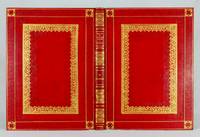
1819ST12549London: Published by Thomas McLean 1819. Second Edition. 368 x 273 mm. 14 1/2 x 10 3/4". 26 leaves of text including 3 pp. ads. Three parts in one volume. <br/> SPLENDID CONTEMPORARY ENGLISH RED STRAIGHT-GRAIN MOROCCO ELABORATELY TOOLED IN GILT AND BLIND covers with concentric filigree frames in alternating gilt and blind tooling raised bands spine panels intricately gilt with two large lozenges formed by rectangular and triangular tools surrounded by curling botanical ornaments turn-ins gilt all edges gilt. In an excellent recent matching morocco-lipped slipcase. WITH 36 VERY APPEALING ILLUSTRATIONS BEING 18 ENGRAVINGS six flowers six fruits six birds EACH IN TWO STATES monochrome and fully hand colored. Dunthorne 53-55; Sitwell "Fine Bird Books" p. 82. Text leaves with faint mottled foxing and minor browning and off-setting just a few plates with negligible faint spots or smudges otherwise A WONDERFUL COPY THE ORIGINAL SPARKLING BINDING IN AN AMAZING STATE OF PRESERVATION.<br/> <br/> This is a sumptuously bound copy of three manuals intended to teach the art of drawing to young persons written by the accomplished botanical painter who produced the renowned "Pomona Britannia." In an earlier career Brookshaw ca. 1751-1823 was a successful London cabinet-maker whose painted Neoclassical furniture attracted such titled enthusiasts as the Duke of Devonshire and the Prince of Wales but he suddenly abandoned this livelihood in the 1790s. Art historian Lucy Wood speculates that the sudden change was prompted by involvement in a financial or sexual scandal as he also parted company with his wealthy wife around this time. He spent a decade living under the name "G. Brown" teaching flower painting to refined young ladies before producing his first manual "A New Treatise of Flower Painting" which was finally issued under his real name in 1816. The three guides that make up the present volume were intended as a supplement to that work and they expand the subjects covered to fruit and birds. In the preface to this work Brookshaw observes that flower painting is a "peculiarly appropriate" accomplishment that may be obtained "without the expense of a Master a few elementary instructions and good copies being sufficient." The plates here are more highly finished than the examples in his original "Treatise" in order to "lead the young artist onward in a progressive line of improvement." Fruits and birds are added to offer a new challenge for the pupil and Brookshaw notes that while avian subjects lack the variety of botanical ones they compensate with "the inifinite number of attitudes they assume." Our elaborate and immaculately preserved binding is testament that our volume was never used as a drawing manual but was more likely enjoyed for its own merits as an attractive object. Published by Thomas McLean unknown
TM 466ELEGANT MANUSCRIPT CONTAINING TWO WORKS OF SPIRITUAL AND MORAL EDIFICATION IN FRENCH TRANSLATION. Illuminated manuscript on parchment in French France after 1482 c. 1490. Dimensions 274 x 175 mm. 70 folios written in a Gothic <i>bâtarde</i> bookhand 18 large initials parti-colored in red and/or blue inserted leaf in first quire with FULL-PAGE HERALDIC COMPOSITION IN GOLD SILVER RED BLUE AND BLACK. BINDING: Bound in modern nineteenth-century blue velvet over wooden boards pink paper pastedowns and endleaves edges gilt. TEXT: Manuscript contains two works that reflect the spirituality of fifteenth-century Carthusians and their quest for the contemplative life. The first text <i>Sept fruits de la tribulation</i> is known in only five extant manuscript and is still unedited. A free French version probably dating from the fifteenth century of either the longer <i>Latin Tractatus de tribulacione</i> or an abridged adaptation of the French <i>Livre de tribulacion</i>. The second text<i> Miroir d'or de l'ame pecheresse</i> is a work of spiritual edification which consists of seven sections: on human misery sin especially lechery penance rejection of the world the vanity of human wishes death and hell and heaven. There is neither a modern critical edition of the second text nor a complete census of the existing manuscripts; the copy here was apparently made from an incunable edition of c. 1490. This manuscript begins with a remarkable added full-page illuminated frontispiece with the coat of arms and motto of Louis de Grolée fl. late fifteenth-early sixteenth century the abbot of Bonnevaux and Saint-Pierre de Vienne. PROVENANCE: Copied in France perhaps northeastern based on script and linguistic characteristics as well as internal evidence. It belonged to Louis de Grolée fl. late fifteenth-early sixteenth century. It then belonged Charles Chardin bibliophile. It was later a part of the collection of Sir Thomas Phillipps 1792-1872 who has been described as the greatest private manuscript collector of all time. CONDITION: Gold slightly rubbed some off-setting from heraldic painted composition to opening text page slight staining in upper margin and into three lines of text ff. 68-69. Overall good condition. Full description and pictures available. TM 466