Emmons, MD, Ebenezer M DBiblio.com
388 résultats
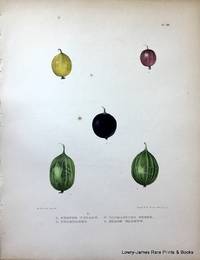
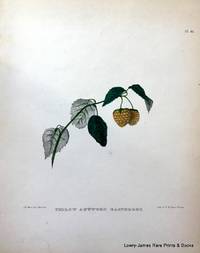
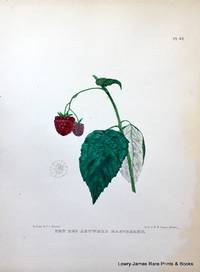
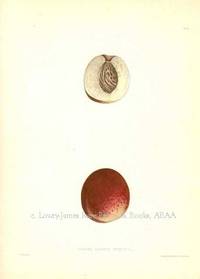
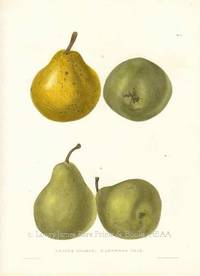
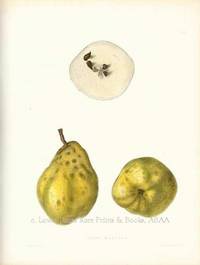
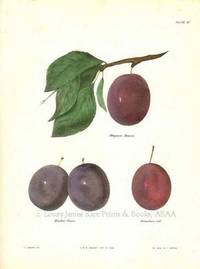
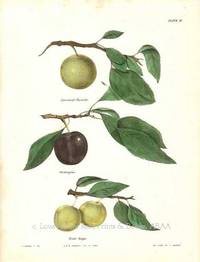
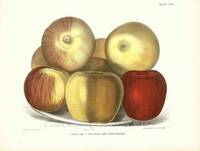
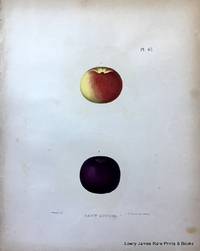
18517148New York:: D. Appleton & Co. 1851. First edition. Near Fine. A Near Fine original hand-colored lithograph. Folio 11.25 x 9 inches. In Ivory rag mat and suitable for framing; sized to14 x 17 inches. Drawn on stone by F. Swinton and printed by R. H. Pease Albany A finely colored early depiction of one such variety of the useful and not strictly ornamental fruit being cultivated in national soil during Nineteenth Century America. Single sheet matted in rag board D. Appleton & Co., unknown
18517147New York:: D. Appleton & Co. 1851. First edition. Near Fine. A Near Fine original hand-colored lithograph. Folio 11.25 x 9 inches. In Ivory rag mat and suitable for framing; sized to14 x 17 inches. Drawn on stone by F. Swinton and printed by R. H. Pease Albany A finely colored early depiction of one such variety of the useful and not strictly ornamental fruit being cultivated in national soil during Nineteenth Century America. Single sheet matted in rag board D. Appleton & Co., unknown
18517145New York:: D. Appleton & Co. 1851. First edition. Near Fine. A Near Fine original hand-colored lithograph. Folio 11.25 x 9 inches. Archivally matted to 14 x 17 inches and suitable for framing. Drawn on stone by F. J. Swinton and printed by R. H. Pease Albany an early depiction of one such variety of the useful and not strictly ornamental fruit being cultivated in national soil during Nineteenth Century America. Single sheet matted in rag board D. Appleton & Co., unknown
18517146New York:: D. Appleton & Co. 1851. First edition. Near Fine. A Near Fine original hand-colored lithograph. Folio 11.25 x 9 inches. Archivally matted to 14 x 17 inches and suitable for framing. Drawn on stone by F. J. Swinton and printed by R. H. Pease Albany a finely colored early depiction of one such variety of the useful and not strictly ornamental fruit being cultivated in national soil during Nineteenth Century America. Single sheet matted in rag board D. Appleton & Co., unknown
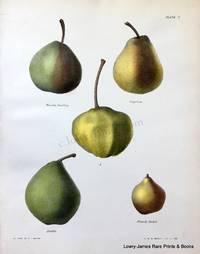
18515036New York:: D. Appleton & Co. 1851. First edition. Fine. A Fine original hand-colored aquatint. Folio 11.25 x 9 inches. Archivally matted to 14 x 17 inches and suitable for framing. Drawn from nature by J. Prestile aquatinted and printed by JI & RH Pease a finely colored early depiction of one such variety of the useful and not strictly ornamental fruit being cultivated in national soil during Nineteenth Century America. Single sheet matted in rag board D. Appleton & Co., unknown
18515049New York:: D. Appleton & Co. 1851. First edition. Fine. A Fine original hand-colored engraving. Folio 11.25 x 9 inches. In Ivory rag mat and suitable for framing; sized to14 x 17 inches. Drawn from nature by E. Emmons Jr. engraved and printed by Gavit & Duthie a finely colored depiction of useful and not strictly ornamental fruit being cultivated in national soil during Nineteenth Century America. Single sheet matted in rag board D. Appleton & Co., unknown
18515031New York:: D. Appleton & Co. 1851. First edition. Fine. A Fine original hand-colored engraving. Folio 11.25 x 9 inches. In Ivory rag mat and suitable for framing; sized to14 x 17 inches. Drawn from nature by E. Emmons Jr. and engraved and printed by J.I. & R. H. Pease a finely colored early depiction of one such variety of the useful and not strictly ornamental fruit being cultivated in national soil during Nineteenth Century America. Single sheet matted in rag board D. Appleton & Co., unknown
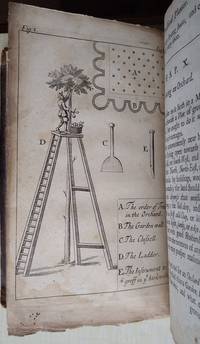
1696019573Rose and Crown in St Paul's Churchyard: Richard Chiswell 1696. Second edition. Illustrated with one engraved plate only of two - lacking one plate 12mo pp 30 220 publisher's advertisement of six pages a bit age-toned and marked throughout some staining in the lower margins towards the centre of the book the plate rather marked and frayed a tight copy. Original calf a bit worn lacking small portions of the lower cover neatly rebacked with unlettered leather spine new endpapers. RARE. Blanche Henrey 216. Little is known of the author but the work in its first edition was highly praised by both John Evelyn and Samuel Gilbert. This second edition includes an extra chapter on evergreens and greenhouses; it also includes a catalogue of fruit trees and shrubs for sale from Brompton Park Nursery. Second edition. Half Leather. Good. Richard Chiswell Hardcover
0365676772.Ghardcover. Good. Access codes and supplements are not guaranteed with used items. May be an ex-library book. hardcover
193263740Newark New York State: Fruit Growers Nurseries 1932. Soft cover. Good/No Dust Jacket. 64pp. Index inside rear cover. Color illustrated thru-out. Several houses pictured the rest being brilliant color floral & fruit illustrations. Printed by A. B. Morse St. Joseph MI. Cover uniformly soiled as are edges from general use but a decent copy. Pencil marks on last color page - strawberries. Size: 4to - over 9¾" - 12" tall <br/> <br/> Fruit Growers Nurseries paperback
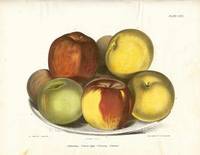
18515026New York:: D. Appleton & Co. 1851. First edition. Fine. A Fine original hand-colored lithograph. Folio 11.25 x 9 inches. In Ivory rag mat and suitable for framing; sized to14 x 17 inches. Drawn from nature by E. Emmons Jr. drawn on stone by F. Swinton and printed by J.J. Audubon's occasional lithographers; G. & W. Endicott New York an early depiction of one such variety of the useful and not strictly ornamental fruit being cultivated in national soil during Nineteenth Century America. Single sheet matted in rag board D. Appleton & Co., unknown
18515050New York:: D. Appleton & Co. 1851. First edition. Near Fine. A Fine original hand-colored lithograph. Folio 11.25 x 9 inches. In Ivory rag mat and suitable for framing; sized to14 x 17 inches. Drawn from nature by E. Emmons Jr. drawn on stone by F. Swinton and printed by J.J. Audubon's occasional lithographers; G. & W. Endicott New York finely colored depiction of one such variety of the useful and not strictly ornamental fruit being cultivated in national soil during Nineteenth Century America. Single sheet matted in rag board D. Appleton & Co., unknown
18517149New York:: D. Appleton & Co. 1851. First edition. Fine. A Fine original hand-colored lithograph. Folio 11.25 x 9 inches. In Ivory rag mat and suitable for framing; sized to14 x 17 inches. Drawn on stone by G.T. Sanford and printed by J.J. Audubon's occasional lithographers; G. & W. Endicott New York a finely colored depiction of a variety of the useful and not strictly ornamental fruit being cultivated in national soil during Nineteenth Century America. Single sheet matted in rag board D. Appleton & Co., unknown
18515048New York:: D. Appleton & Co. 1851. First edition. Fine. A Fine original hand-colored lithograph. Folio 11.25 x 9 inches. In Ivory rag mat and suitable for framing; sized to14 x 17 inches. Drawn from nature by E. Emmons Jr. drawn on stone by F. Swinton and printed by J.J. Audubon's occasional lithographers; G. & W. Endicott New York an early depiction of one such variety of the useful and not strictly ornamental fruit being cultivated in national soil during Nineteenth Century America. Single sheet matted in rag board D. Appleton & Co., unknown
18515047New York:: D. Appleton & Co. 1851. First edition. Fine. A Fine original hand-colored lithograph. Folio 11.25 x 9 inches. In Ivory rag mat and suitable for framing; sized to14 x 17 inches. Drawn from nature by E. Emmons Jr. drawn on stone by F. Swinton and printed by J.J. Audubon's occasional lithographers; G. & W. Endicott New York an early depiction of a variety of the useful and not strictly ornamental fruit being cultivated in national soil during Nineteenth Century America. Single sheet matted in rag board D. Appleton & Co., unknown
0366366858.Ghardcover. Good. Access codes and supplements are not guaranteed with used items. May be an ex-library book. hardcover
1822015837Princes Street Hanover Square London: T & J Allmann 1822. Illustrated with three simple hand-coloured plates octavo pp xii 378 extremely clean and sound inyternally half calf and marbled boards raised bands and leather label to the spine very slight signs of wear. With the armorial bookplate of Sir Charles William Hamilton 2nd Baronet and his small neat signature on the title page. Phillips lived much of his life on the south coast and gained a national reputation as a landscape gardener. His first plan for the development of a lrge site in Kemp Town Brighton was rejected but the second attempt five years later was accepted. His grandiose Anthaeum project an elaborate indoor botanical garden topped by "the largest dome in the world" ended in disaster when the structure spectacularly collapsed just before its official opening. His ideas on the layout of plants and flowers in relation to their surroundings were influential. When Brighton and Hove City Council restored the gardens and grounds of the Royal Pavilion to show how they would have appeared at the height of the Regency era they did so according to Phillips' ideas - specifically his belief that "a well-planted shrubbery depends on the selection of trees and shrubs which succeed each other in blossoming throughout the year as well as contrasting shades of green . and under-planted flowers". Second edition. Half Leather. Very Good. T & J Allmann Hardcover
1949021990Berne: Editions Imprimerie Federative for la Fruit-Union Suisse 1949. First edition. Illustrated with colour plates and line drawings small octavo pp xvi 120 ringbound slightl age-toned internally but otherwise very good orange cloth a little dull very slightly worn. VERY SCARCE. . First Edition. Cloth. Very Good. Editions Imprimerie Federative (for la Fruit-Union Suisse) Hardcover
1817742London:: Longmans Hurst Rees Orme & Brown 1817. First edition. Fine with original hand-coloring. Fine original hand-colored stipple engraving.Pl. XXIII Smith's Early Newington Buckinghamshire Minion & Barrington Peaches. Large Quarto Edition 11 x 13.5 inches. Pomona Britannica is considered one of the most distinguished pomologies ever produced and is described as "one of the finest colour-plate books in existence." Prideaux. Named for Pomona the Roman Goddess of Fruit and Fruit Trees a pomology is simply a treatise on fruit culture. However there was nothing simple about the intent and execution of this fine work. In an effort to educate the landed country gentleman on the cultivation of fruit George Brookshaw 1751-1823 rendered and described the finest fruit under cultivation in the most esteemed gardens in London and the Royal Gardens particularly around Hampton Court and Kensington. Very little is known about the early years of Brookshaw's life and education. He was born in Birmingham and died an undistinguished death in London. However during the late 18th Century Brookshaw enjoyed significant notoriety as a talented cabinetmaker distinguished by royal patronage. Receipts from the Prince of Wales dating 1783 document the finely painted furniture commissioned from G. Brookshaw. Elegant cabinets tables and chimney pieces were painted with exquisite allegorical scenes bouquets of flowers and abundant cornucopias offering a glimpse into what was to become the hallmark of Brookshaw's talent; elegant and fluid renditions of fruit and flowers. George's talent as an engraver was perhaps influenced by Richard Brookshaw brother an established and talented mezzotint engraver in Paris during the 19th Century. Richard Brookshaw engraved several of the plates for the Folio edition of Pomona Britannica c.1812 however as the last of Richard's engravings are dated 1804 we conclude every one of the plates in this large Quarto edition were engraved by George Brookshaw himself. This edition should not be considered a miniature version of the Folio edition where the fruit is set on dark mezzotint grounds. This large Quarto edition features beautifully hand-colored stipple engravings which float on soft ivory backgrounds. Ref. Dunthorne 55 Christie's 4-97. Longmans, Hurst, Rees, Orme, & Brown, unknown
1817746London:: Longmans Hurst Rees Orme & Brown 1817. First edition. Fine with original hand-coloring. Fine original hand-colored stipple engraving. Pl. XXVII Duke of Marlborough's & Rumbullion Peaches. Large Quarto Edition 11 x 13.5 inches. Pomona Britannica is considered one of the most distinguished pomologies ever produced and is described as "one of the finest colour-plate books in existence." Prideaux. Named for Pomona the Roman Goddess of Fruit and Fruit Trees a pomology is simply a treatise on fruit culture. However there was nothing simple about the intent and execution of this fine work. In an effort to educate the landed country gentleman on the cultivation of fruit George Brookshaw 1751-1823 rendered and described the finest fruit under cultivation in the most esteemed gardens in London and the Royal Gardens particularly around Hampton Court and Kensington. Very little is known about the early years of Brookshaw's life and education. He was born in Birmingham and died an undistinguished death in London. However during the late 18th Century Brookshaw enjoyed significant notoriety as a talented cabinetmaker distinguished by royal patronage. Receipts from the Prince of Wales dating 1783 document the finely painted furniture commissioned from G. Brookshaw. Elegant cabinets tables and chimney pieces were painted with exquisite allegorical scenes bouquets of flowers and abundant cornucopias offering a glimpse into what was to become the hallmark of Brookshaw's talent; elegant and fluid renditions of fruit and flowers. George's talent as an engraver was perhaps influenced by Richard Brookshaw brother an established and talented mezzotint engraver in Paris during the 19th Century. Richard Brookshaw engraved several of the plates for the Folio edition of Pomona Britannica c.1812 however as the last of Richard's engravings are dated 1804 we conclude every one of the plates in this large Quarto edition were engraved by George Brookshaw himself. This edition should not be considered a miniature version of the Folio edition where the fruit is set on dark mezzotint grounds. This large Quarto edition features beautifully hand-colored stipple engravings which float on soft ivory backgrounds. Ref. Dunthorne 55 Christie's 4-97. Longmans, Hurst, Rees, Orme, & Brown, unknown
1817744London:: Longmans Hurst Rees Orme & Brown 1817. First edition. Fine with original hand-coloring. Fine original hand-colored stipple engraving. Pl. XXV Montauban Grosse Mignonne & Old Royal George Peaches. Large Quarto Edition 11 x 13.5 inches. Pomona Britannica is considered one of the most distinguished pomologies ever produced and is described as "one of the finest colour-plate books in existence." Prideaux. Named for Pomona the Roman Goddess of Fruit and Fruit Trees a pomology is simply a treatise on fruit culture. However there was nothing simple about the intent and execution of this fine work. In an effort to educate the landed country gentleman on the cultivation of fruit George Brookshaw 1751-1823 rendered and described the finest fruit under cultivation in the most esteemed gardens in London and the Royal Gardens particularly around Hampton Court and Kensington. Very little is known about the early years of Brookshaw's life and education. He was born in Birmingham and died an undistinguished death in London. However during the late 18th Century Brookshaw enjoyed significant notoriety as a talented cabinetmaker distinguished by royal patronage. Receipts from the Prince of Wales dating 1783 document the finely painted furniture commissioned from G. Brookshaw. Elegant cabinets tables and chimney pieces were painted with exquisite allegorical scenes bouquets of flowers and abundant cornucopias offering a glimpse into what was to become the hallmark of Brookshaw's talent; elegant and fluid renditions of fruit and flowers. George's talent as an engraver was perhaps influenced by Richard Brookshaw brother an established and talented mezzotint engraver in Paris during the 19th Century. Richard Brookshaw engraved several of the plates for the Folio edition of Pomona Britannica c.1812 however as the last of Richard's engravings are dated 1804 we conclude every one of the plates in this large Quarto edition were engraved by George Brookshaw himself. This edition should not be considered a miniature version of the Folio edition where the fruit is set on dark mezzotint grounds. This large Quarto edition features beautifully hand-colored stipple engravings which float on soft ivory backgrounds. Ref. Dunthorne 55 Christie's 4-97. Longmans, Hurst, Rees, Orme, & Brown, unknown
1817745London:: Longmans Hurst Rees Orme & Brown 1817. First edition. Fine with original hand-coloring. Fine original hand-colored stipple engraving. Pl. XXVI Late Admirable Double Mountain & Red Magdalen Peaches. Large Quarto Edition 11 x 13.5 inches. Pomona Britannica is considered one of the most distinguished pomologies ever produced and is described as "one of the finest colour-plate books in existence." Prideaux. Named for Pomona the Roman Goddess of Fruit and Fruit Trees a pomology is simply a treatise on fruit culture. However there was nothing simple about the intent and execution of this fine work. In an effort to educate the landed country gentleman on the cultivation of fruit George Brookshaw 1751-1823 rendered and described the finest fruit under cultivation in the most esteemed gardens in London and the Royal Gardens particularly around Hampton Court and Kensington. Very little is known about the early years of Brookshaw's life and education. He was born in Birmingham and died an undistinguished death in London. However during the late 18th Century Brookshaw enjoyed significant notoriety as a talented cabinetmaker distinguished by royal patronage. Receipts from the Prince of Wales dating 1783 document the finely painted furniture commissioned from G. Brookshaw. Elegant cabinets tables and chimney pieces were painted with exquisite allegorical scenes bouquets of flowers and abundant cornucopias offering a glimpse into what was to become the hallmark of Brookshaw's talent; elegant and fluid renditions of fruit and flowers. George's talent as an engraver was perhaps influenced by Richard Brookshaw brother an established and talented mezzotint engraver in Paris during the 19th Century. Richard Brookshaw engraved several of the plates for the Folio edition of Pomona Britannica c.1812 however as the last of Richard's engravings are dated 1804 we conclude every one of the plates in this large Quarto edition were engraved by George Brookshaw himself. This edition should not be considered a miniature version of the Folio edition where the fruit is set on dark mezzotint grounds. This large Quarto edition features beautifully hand-colored stipple engravings which float on soft ivory backgrounds. Ref. Dunthorne 55 Christie's 4-97. Longmans, Hurst, Rees, Orme, & Brown, unknown
1817747London:: Longmans Hurst Rees Orme & Brown 1817. First edition. Fine with original hand-coloring. Fine original hand-colored stipple engraving. Pl. XXIX Bourdine Nivette or Belle de Vitry Peaches. Large Quarto Edition 11 x 13.5 inches. Pomona Britannica is considered one of the most distinguished pomologies ever produced and is described as "one of the finest colour-plate books in existence." Prideaux. Named for Pomona the Roman Goddess of Fruit and Fruit Trees a pomology is simply a treatise on fruit culture. However there was nothing simple about the intent and execution of this fine work. In an effort to educate the landed country gentleman on the cultivation of fruit George Brookshaw 1751-1823 rendered and described the finest fruit under cultivation in the most esteemed gardens in London and the Royal Gardens particularly around Hampton Court and Kensington. Very little is known about the early years of Brookshaw's life and education. He was born in Birmingham and died an undistinguished death in London. However during the late 18th Century Brookshaw enjoyed significant notoriety as a talented cabinetmaker distinguished by royal patronage. Receipts from the Prince of Wales dating 1783 document the finely painted furniture commissioned from G. Brookshaw. Elegant cabinets tables and chimney pieces were painted with exquisite allegorical scenes bouquets of flowers and abundant cornucopias offering a glimpse into what was to become the hallmark of Brookshaw's talent; elegant and fluid renditions of fruit and flowers. George's talent as an engraver was perhaps influenced by Richard Brookshaw brother an established and talented mezzotint engraver in Paris during the 19th Century. Richard Brookshaw engraved several of the plates for the Folio edition of Pomona Britannica c.1812 however as the last of Richard's engravings are dated 1804 we conclude every one of the plates in this large Quarto edition were engraved by George Brookshaw himself. This edition should not be considered a miniature version of the Folio edition where the fruit is set on dark mezzotint grounds. This large Quarto edition features beautifully hand-colored stipple engravings which float on soft ivory backgrounds. Ref. Dunthorne 55 Christie's 4-97. Longmans, Hurst, Rees, Orme, & Brown, unknown
1817748London:: Longmans Hurst Rees Orme & Brown 1817. First edition. Fine with original hand-coloring. Fine original hand-colored stipple engraving. Pl. XXX Chancellor Catherine & Old Newington Peaches. Large Quarto Edition 11 x 13.5 inches. Pomona Britannica is considered one of the most distinguished pomologies ever produced and is described as "one of the finest colour-plate books in existence." Prideaux. Named for Pomona the Roman Goddess of Fruit and Fruit Trees a pomology is simply a treatise on fruit culture. However there was nothing simple about the intent and execution of this fine work. In an effort to educate the landed country gentleman on the cultivation of fruit George Brookshaw 1751-1823 rendered and described the finest fruit under cultivation in the most esteemed gardens in London and the Royal Gardens particularly around Hampton Court and Kensington. Very little is known about the early years of Brookshaw's life and education. He was born in Birmingham and died an undistinguished death in London. However during the late 18th Century Brookshaw enjoyed significant notoriety as a talented cabinetmaker distinguished by royal patronage. Receipts from the Prince of Wales dating 1783 document the finely painted furniture commissioned from G. Brookshaw. Elegant cabinets tables and chimney pieces were painted with exquisite allegorical scenes bouquets of flowers and abundant cornucopias offering a glimpse into what was to become the hallmark of Brookshaw's talent; elegant and fluid renditions of fruit and flowers. George's talent as an engraver was perhaps influenced by Richard Brookshaw brother an established and talented mezzotint engraver in Paris during the 19th Century. Richard Brookshaw engraved several of the plates for the Folio edition of Pomona Britannica c.1812 however as the last of Richard's engravings are dated 1804 we conclude every one of the plates in this large Quarto edition were engraved by George Brookshaw himself. This edition should not be considered a miniature version of the Folio edition where the fruit is set on dark mezzotint grounds. This large Quarto edition features beautifully hand-colored stipple engravings which float on soft ivory backgrounds. Ref. Dunthorne 55 Christie's 4-97. Longmans, Hurst, Rees, Orme, & Brown, unknown
1817749London:: Longmans Hurst Rees Orme & Brown 1817. First edition. Fine with original hand-coloring. Fine original hand-colored stipple engraving. Pl. XXXIV Murry & Newington Nectarine. Large Quarto Edition 11 x 13.5 inches. Pomona Britannica is considered one of the most distinguished pomologies ever produced and is described as "one of the finest colour-plate books in existence." Prideaux. Named for Pomona the Roman Goddess of Fruit and Fruit Trees a pomology is simply a treatise on fruit culture. However there was nothing simple about the intent and execution of this fine work. In an effort to educate the landed country gentleman on the cultivation of fruit George Brookshaw 1751-1823 rendered and described the finest fruit under cultivation in the most esteemed gardens in London and the Royal Gardens particularly around Hampton Court and Kensington. Very little is known about the early years of Brookshaw's life and education. He was born in Birmingham and died an undistinguished death in London. However during the late 18th Century Brookshaw enjoyed significant notoriety as a talented cabinetmaker distinguished by royal patronage. Receipts from the Prince of Wales dating 1783 document the finely painted furniture commissioned from G. Brookshaw. Elegant cabinets tables and chimney pieces were painted with exquisite allegorical scenes bouquets of flowers and abundant cornucopias offering a glimpse into what was to become the hallmark of Brookshaw's talent; elegant and fluid renditions of fruit and flowers. George's talent as an engraver was perhaps influenced by Richard Brookshaw brother an established and talented mezzotint engraver in Paris during the 19th Century. Richard Brookshaw engraved several of the plates for the Folio edition of Pomona Britannica c.1812 however as the last of Richard's engravings are dated 1804 we conclude every one of the plates in this large Quarto edition were engraved by George Brookshaw himself. This edition should not be considered a miniature version of the Folio edition where the fruit is set on dark mezzotint grounds. This large Quarto edition features beautifully hand-colored stipple engravings which float on soft ivory backgrounds. Ref. Dunthorne 55 Christie's 4-97. Longmans, Hurst, Rees, Orme, & Brown, unknown